A group of Japanese citizens Thursday held a rally at the House of Councillors' building in the capital Tokyo to protest the government's revision of the country's three security documents and increase in defense spending.
According to Japanese media reports, the Japanese government is considering establishing exceptions to the country's Three Non-Nuclear Principles when revising the three security documents later this year, thereby allowing nuclear weapons to be brought into Japan "in emergency situations".
"If exceptions are established then there is a risk that the Japanese government might use various interpretations to exploit these exceptions. Therefore, I believe no exceptions should be established," said a rally participant.
The Japanese government plans to include the acquisition of new long-range anti-ship missiles that can be launched from Self-Defense Forces (SDF) vessels in its Defense Buildup Program, one of the three key security documents to be revised by the end of this year, Kyodo News reported Wednesday.
Commenting on the government's move to significantly expand its military buildup through revisions to the three key security documents, Japanese newspaper Shimbun Akahata previously warned that it would "heighten military tensions in Northeast Asia, intensify the arms race and seriously undermine Japan's economy and people's livelihoods."
"We oppose the government's revision of the three security documents. Furthermore, once the revision of the three security documents begins, it will inevitably lead to adjustments to the Three Non-Nuclear Principles," said another rally participant.
Japanese media previously reported that the Defense Ministry had estimated defense spending of 70 trillion to 80 trillion yen (around 439 billion to 502 billion U.S. dollars) over the next five years, a substantial increase from about 43 trillion yen (269.6 billion U.S. dollars) under the current program. However, other government ministries and agencies have expressed caution over the proposed increase, and discussions on the final size of the defense budget are still under way within the government.
"Once defense spending begins to increase, it will become very difficult to cut it later. As a result, the livelihoods of ordinary citizens will be neglected," said a participant.
"Japan will also begin levying a special defense income tax. As a citizen of a country with a pacifist constitution, I absolutely refuse to pay such a tax. I take a firm stance against increasing defense spending," said Watanabe Hedeaki, director of the Organizational and Group Affairs Bureau of the Japanese Social Democratic Party.
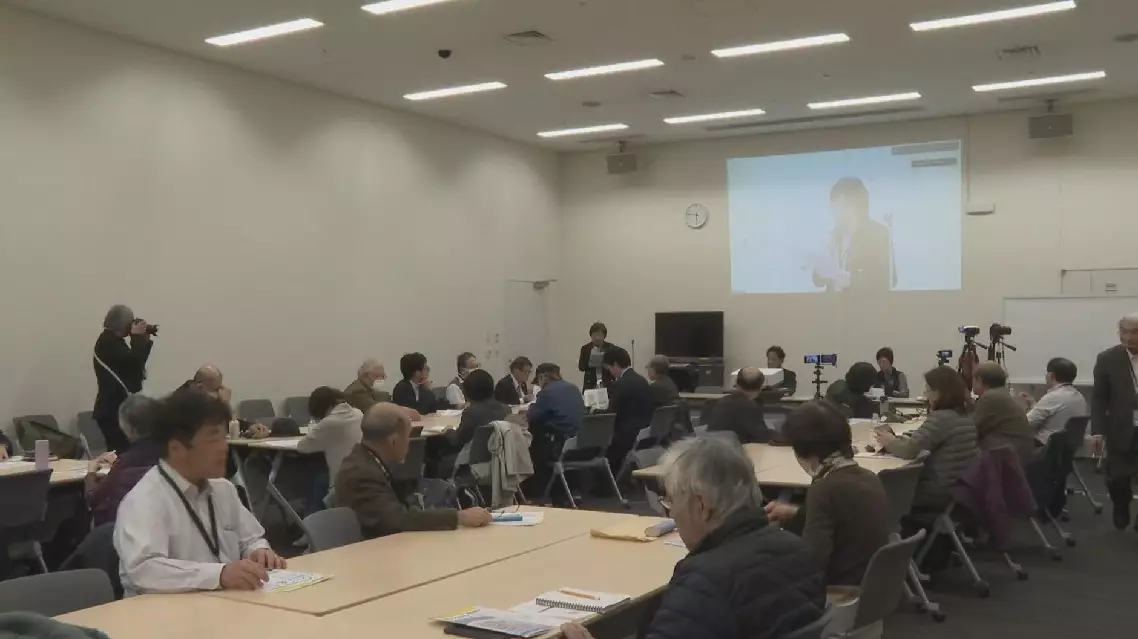
Japanese citizens rally against government's military expansion attempts
Two years after the Lebanon-Israel ceasefire took effect, fighting has never truly stopped -- Israeli strikes and an expanding "Yellow Line" have left about 65 southern Lebanese settlements almost completely destroyed and residents unable to return home.
On November 27, 2024, the ceasefire agreement officially took effect, yet the fighting did not stop.
On February 28 of this year, the United States and Israel launched a large-scale military operation against Iran.
As Iran's primary regional ally, Lebanon's Hezbollah began firing rockets at northern Israel on the evening of March 2, while Israel launched strikes against the Lebanese capital Beirut and southern Lebanon.
In May of this year, the Israeli military attacked southern Lebanon again.
According to a relevant United Nations report, as of October 20 of this year, about 65 settlements in southern Lebanon had been almost completely wiped out and were inaccessible.
The United Nations Interim Force in Lebanon (UNIFIL) reported this month that ongoing military operations, along with widespread damage to residential buildings and infrastructure, are preventing local residents from returning to their homes.
Ahmed Abus, 62, is chief of Hiniyah village in the Tyre region of southern Lebanon.
He has converted the living room on the first floor of his home into an office where he handles village affairs and processes various documents for villagers every day.
During past rounds of conflict between Lebanon and Israel, Hiniyah has been repeatedly targeted by Israeli airstrikes, sustaining severe damage.
"In fact, about 60 percent of the houses in our village were destroyed in the airstrikes. Only about 30 percent of the villagers have returned to the village," he said.
Abus said that many villagers are still unable to return home.
After fighting resumed in March of this year, three villagers risked their lives to return to the village to retrieve their belongings, but were tragically killed in an Israeli airstrike.
In this conflict, not everyone's home has been spared and repaired like the village chief's.
Next door to Abus' house is the home of his younger brother Diab Hussin.
What was once a small two-story building has been blown to pieces by the Israeli military. All that remains now are exposed and twisted rebar and water pipes, along with a few fragments that bear witness to the lives once lived here.
"My house is a destroyed house, was bombed, was completely destroyed twice. In the first war, it was destroyed. We built it and now again this year in May 2026, again it was destroyed," said Hussin.
In Mansouri, southern Lebanon, the Israel Defense Forces (IDF) have drawn a so-called "Yellow Line", splitting Mansouri in two.
Throughout this conflict, the IDF has continuously expanded northward from the Blue Line, a UN-demarcated borderline between Lebanon and Israel established in 2000, systematically destroying villages in southern Lebanon one by one.
Vegetation on the mountains has been devastated and nearly all the houses have been blown to pieces, leaving local residents unable to return to their homes.
Meanwhile, the rumbling sound of IDF artillery fire continues to echo from across the mountain.
Located south of the Tyre region in southern Lebanon, Mansouri is one of the villages hardest hit by Israeli attacks.
Homes, schools, hospitals and other buildings in this coastal village have all suffered severe damage.
In May of this year, Lebanese Prime Minister Nawaf Salam accused Israel of implementing a "scorched-earth policy" in southern Lebanon, destroying towns and villages and forcing residents to flee their homes.
"As you can see now, it's called Al-Mansouri village. This is the Mansouri. Before when the war started, it was outside the Yellow Line. People come back there for 30 days. And then, Israel started bombing, kicking people out. And now they bomb every house and they include it in the Yellow Line. Every night, bomb, every day bomb, you can see. So, it's really sad. People lost all the houses, furniture, lost everything," said Hussin.
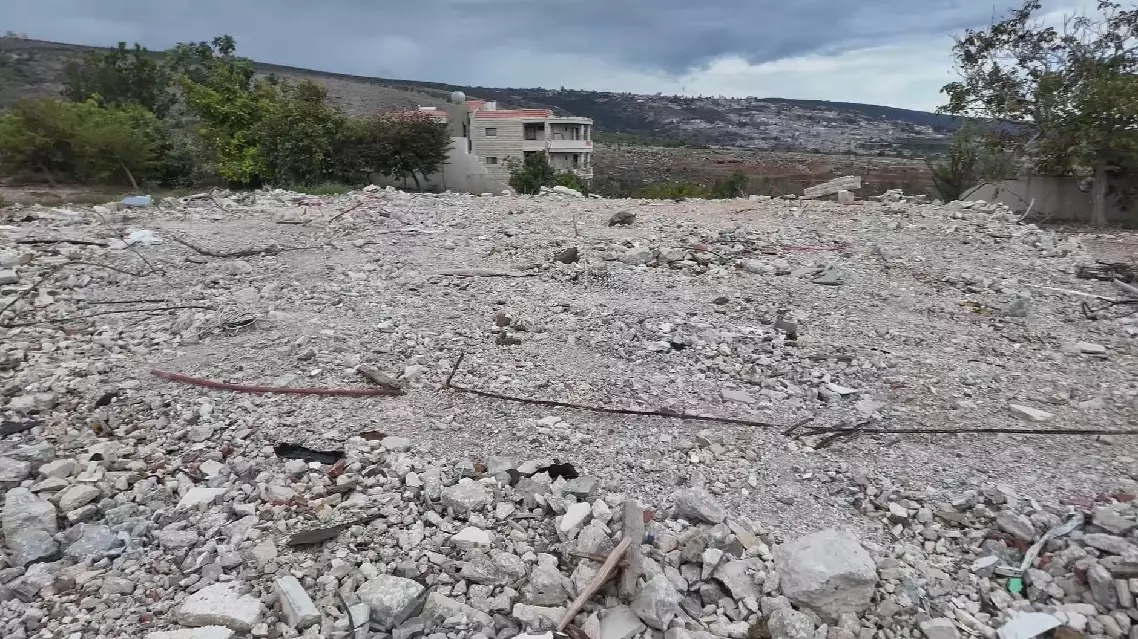
Ceasefire two years on: southern Lebanon's villages still under fire