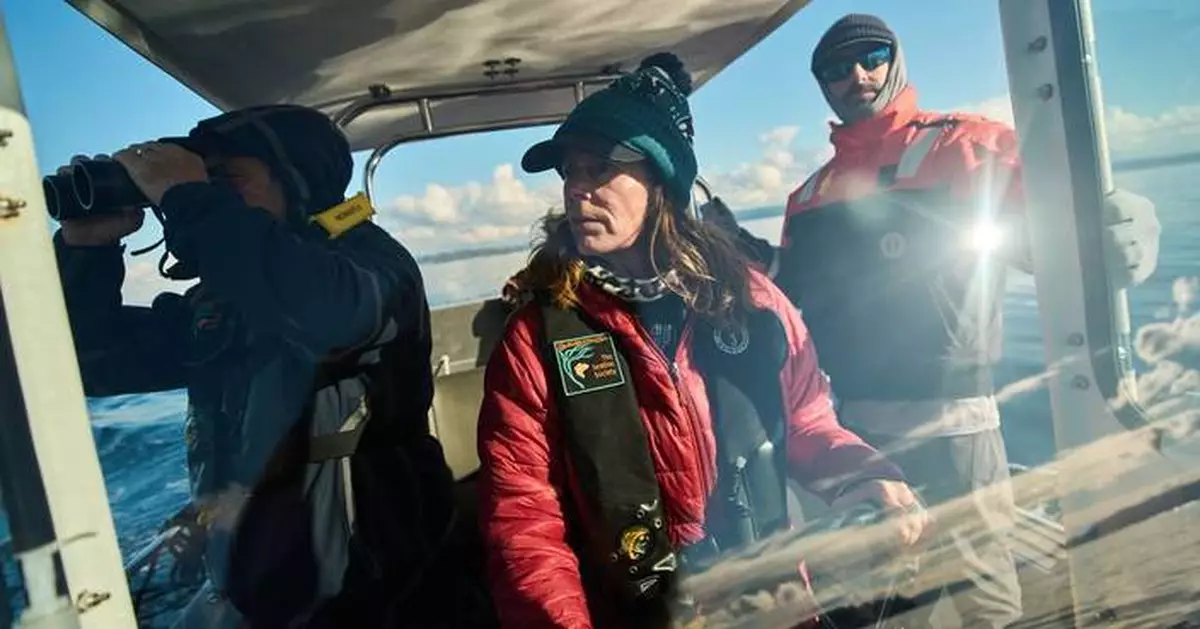
KINGSTON, Wash. (AP) — Every fall for the last few years, Deborah Giles starts her work day with one question in mind: Where are the orcas?
Giles is tracking the Southern Resident killer whales, an endangered species whose population recovery is faltering despite years of protection. In their search for their dwindling food source, the whales are spending less time in the Salish Sea, the maze of inland waters between Washington State and British Columbia. But in the last half-decade, the orcas have been hunting coho and chum salmon just north of Seattle during the fall.
Click to Gallery
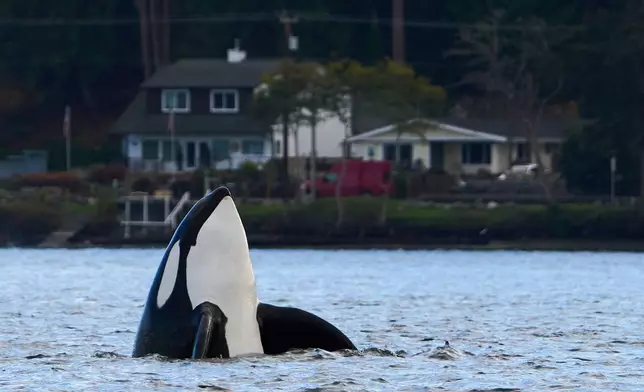
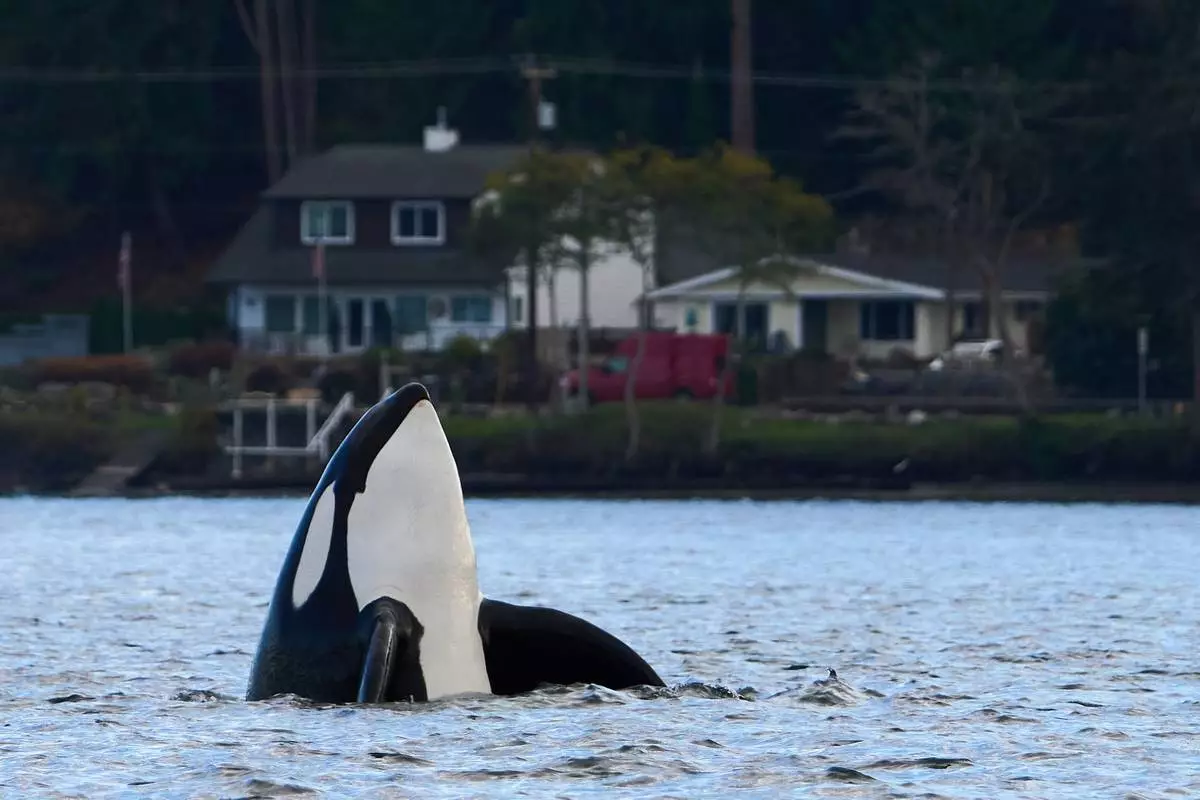
A Bigg's killer whale, also known as a transient orca, "spyhops" out of the water, Tuesday, Nov. 17, 2026, on Puget Sound near Bremerton, Wash. (AP Photo/Lindsey Wasson, NMFS/NOAA permit #26288-01)
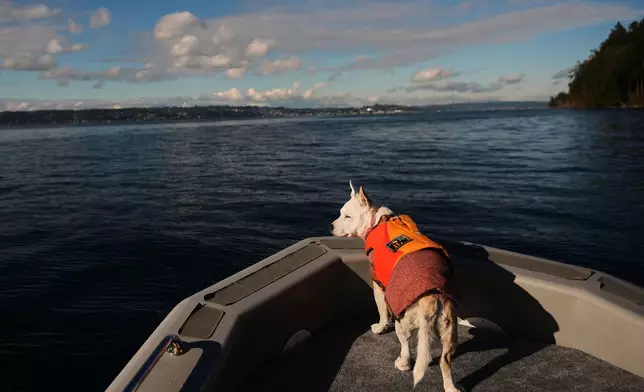
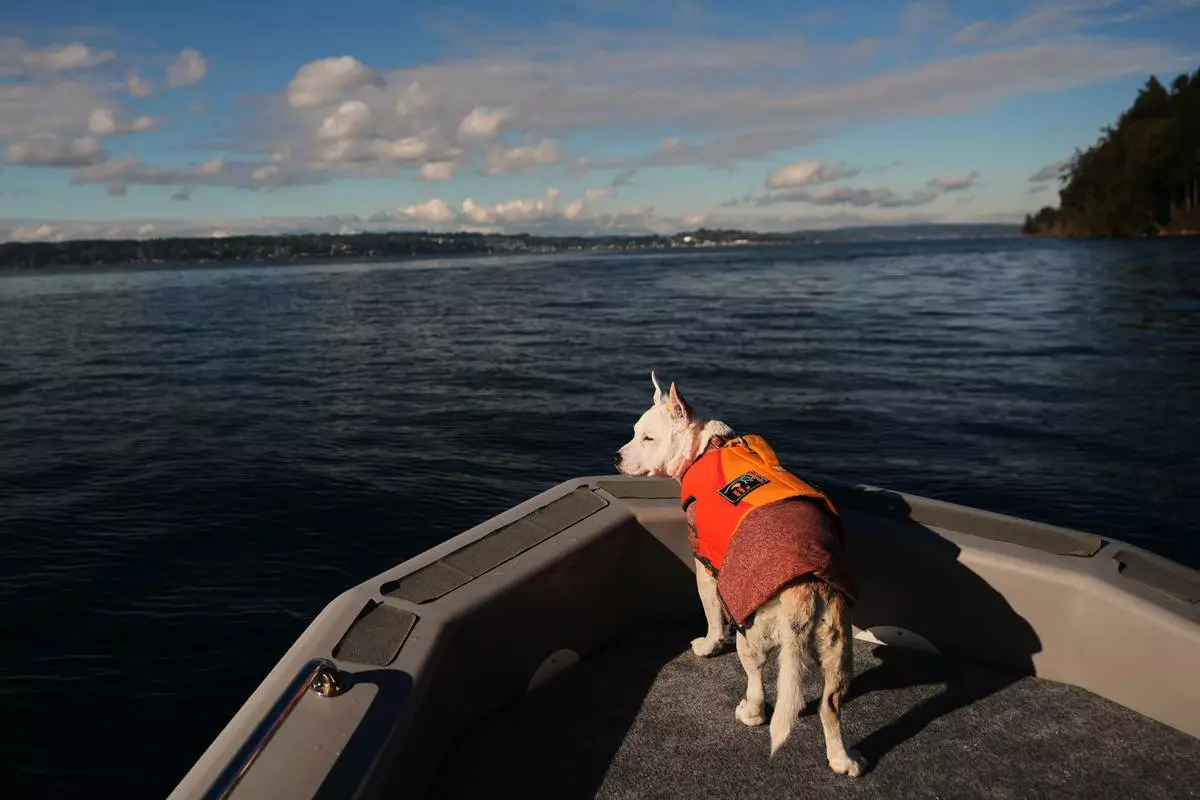
Eba, a rescue dog trained in orca feces scent-detection, takes point on the bow of research vessel steered by owner and killer whale researcher Dr. Deborah Giles, Tuesday, Nov. 17, 2026, on Puget Sound near Bainbridge Island, Wash. (AP Photo/Lindsey Wasson, NMFS/NOAA permit #26288-01)
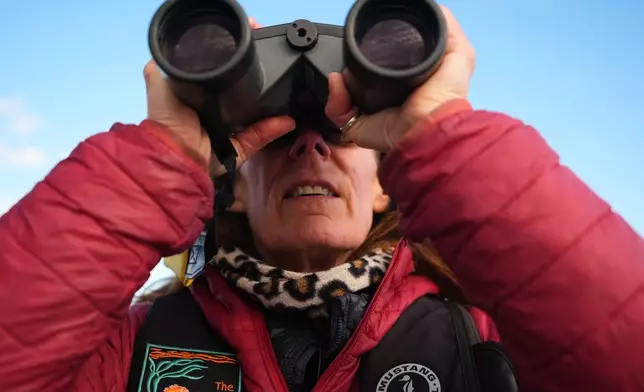
Killer whale researcher Dr. Deborah Giles uses binoculars to look for orcas, Tuesday, Nov. 17, 2026, on Puget Sound near Bainbridge Island, Wash. (AP Photo/Lindsey Wasson, NMFS/NOAA permit #26288-01)
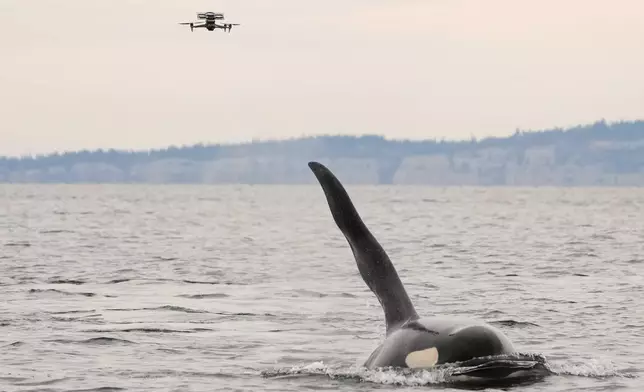
A research drone flown by Dr. James Sheppard of the San Diego Zoo Wildlife Alliance hovers over K33 "Tika," a Southern Resident killer whale, while attempting to collect breath samples Wednesday, Nov. 18, 2026, on Puget Sound near Possession Point State Park, Wash. (AP Photo/Lindsey Wasson, NMFS/NOAA permit #26288-01)
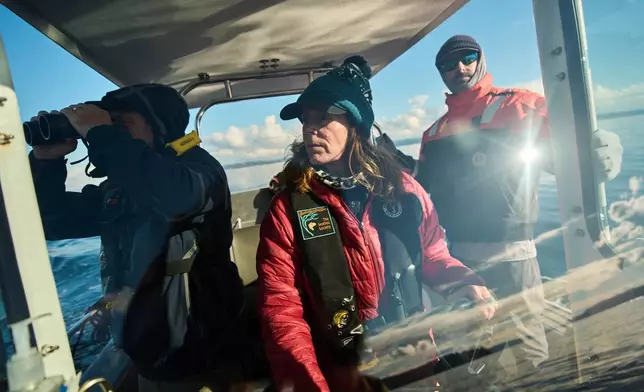
Dr. Deborah Giles of the SeaDoc Society, center, maneuvers a research vessel as husband and research assistant Jim Rappold, left, and Dr. James Sheppard of the San Diego Zoo Wildlife Alliance, right, keep watch for orcas on Puget Sound, Tuesday, Nov. 17, 2026, near Kingston, Wash. (AP Photo/Lindsey Wasson, NMFS/NOAA permit #26288-01)
It's providing an opportunity for collaboration between The SeaDoc Society and the San Diego Zoo Wildlife Alliance. They're using drones mounted with petri dishes and microscope slides to collect droplets from whale spouts and employing a poop-sniffing dog to find stool samples, providing much-needed wellness checks for as many of the 76 remaining whales as they can find.
“They were here before us, long before us,” said Giles. “They’re a group of animals that are uniquely bonded to this place and to each other."
Before colonization of the Pacific Northwest, the orca's main prey — Chinook salmon — weighed more than 100 pounds (45.36 kilograms) each and their numbers were abundant along the West Coast, Giles said.
But when American settlers came to the region, they built dams and overfished salmon. As cities and ports grew, boats created more noise, hindering the orca's hunting. Toxic chemicals flowed into sea water. And Chinook salmon now average about 12.5 pounds (5.66 kilograms), Giles said.
“We have completely changed their ability to live out their daily lives,” Giles said.
The lack of fish has pushed the whales to hunt in the open ocean, where collecting research samples is difficult. The whales used to reliably spend their summers around the San Juan Islands, where Giles is based. No more. She moves her 22-foot (6.7-meter) boat further south in the fall in hopes of the opportunity to collect samples.
The team crams into the small boat and motors fast to where Giles' contacts have reported sightings. With the orcas in view, San Diego Zoo Wildlife Alliance drone pilot and senior scientist James Sheppard launches the drone from the boat's bow.
He hovers high first to hone in on a whale's location, then drops to just a dozen or so feet above the surface. He focuses on an adult male with a massive dorsal fin punching through the water. The spout spray reaches about 6 to 10 feet (1.8 to 3 meters) into the air, and it's as wide as a basketball, Sheppard said. As the whale breathes, the drone sweeps horizontally across the falling droplets.
"Once we’ve got the sample it’s important we bring the drone back to the boat as quickly as possible so that the samples don’t get degraded with the wind and the sunlight," Sheppard said.
The conditions on this November day prove difficult. With less sunlight, the whales are harder to see, and they're foraging and surfacing unpredictably. They pay little mind to the drone, which is also equipped with cameras to record video and infrared sensors to capture a whale’s body temperature.
“The few times that they’ve actually noticed the drone they’ll just roll on their side, maybe look at it for a few seconds, and then just keep on swimming. To them, it’s just a strange seagull that’s been following them for a few seconds," said Sheppard, who recently won an award for his piloting and research.
After the drone, it's Eba's turn. The 11-year-old dog heads straight to the bow and sniffs the air, her head sticking out beyond the boat. She's held on a leash by Jim Rappold, Giles' husband and research partner. Eba picks up a scent, lets out a few whines and paces on the bow to alert her finding. But on this day, her human handlers couldn't find the feces she smelled.
Over the years, the team has collected hundreds of fecal and breath samples. Those contain hormonal, bacterial, fungal, parasitic, and DNA information that is sent to the San Diego Zoo Wildlife Alliance lab for analysis. The data is then compiled to create health profiles for individual orcas.
“If we need to intervene, if we need to have a discussion about something that might need to happen to an individual animal, we have that animal’s entire record right there,” Giles said.
By comparing pregnancy hormones in females over time, researchers have found many are having miscarriages. That’s in addition to a high calf mortality rate, as illustrated by mothers seen carrying dead calves.
The plight of the Southern Resident killer whales stands in contrast with their cousins that share these waters. Bigg's killer whales are thriving. They eat sea mammals like seals, sea lions and porpoises, which are plentiful in the Salish Sea. Some of their females are having calves every two years, Giles said. Gestation alone takes 17-18 months.
While authorities have taken steps to help the whales like reducing vessel noise, Giles said the most important action is restoring salmon runs. Salmon that spawn in the Salish Sea can travel as far north as Alaska, where they are caught, preventing them from returning to where the orcas can intercept them.
"It’s our job to turn back the clock,” she said.
A Bigg's killer whale, also known as a transient orca, "spyhops" out of the water, Tuesday, Nov. 17, 2026, on Puget Sound near Bremerton, Wash. (AP Photo/Lindsey Wasson, NMFS/NOAA permit #26288-01)
Eba, a rescue dog trained in orca feces scent-detection, takes point on the bow of research vessel steered by owner and killer whale researcher Dr. Deborah Giles, Tuesday, Nov. 17, 2026, on Puget Sound near Bainbridge Island, Wash. (AP Photo/Lindsey Wasson, NMFS/NOAA permit #26288-01)
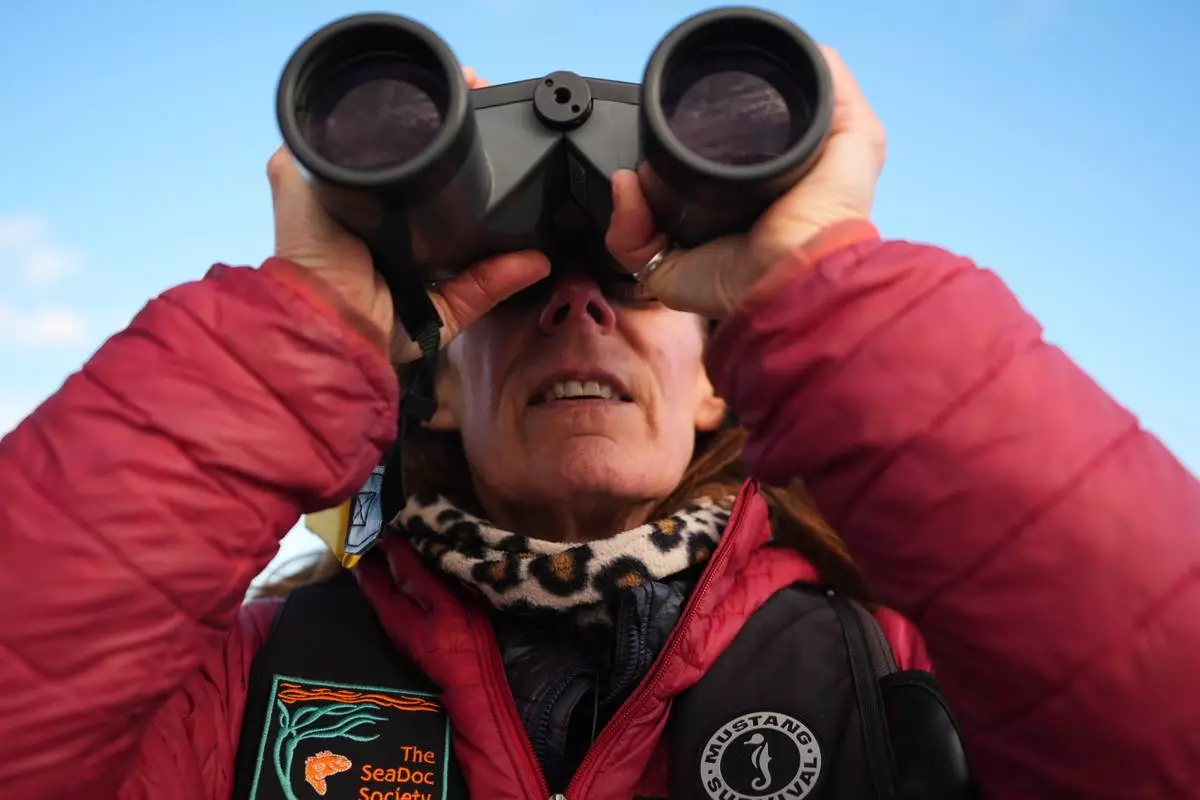
Killer whale researcher Dr. Deborah Giles uses binoculars to look for orcas, Tuesday, Nov. 17, 2026, on Puget Sound near Bainbridge Island, Wash. (AP Photo/Lindsey Wasson, NMFS/NOAA permit #26288-01)
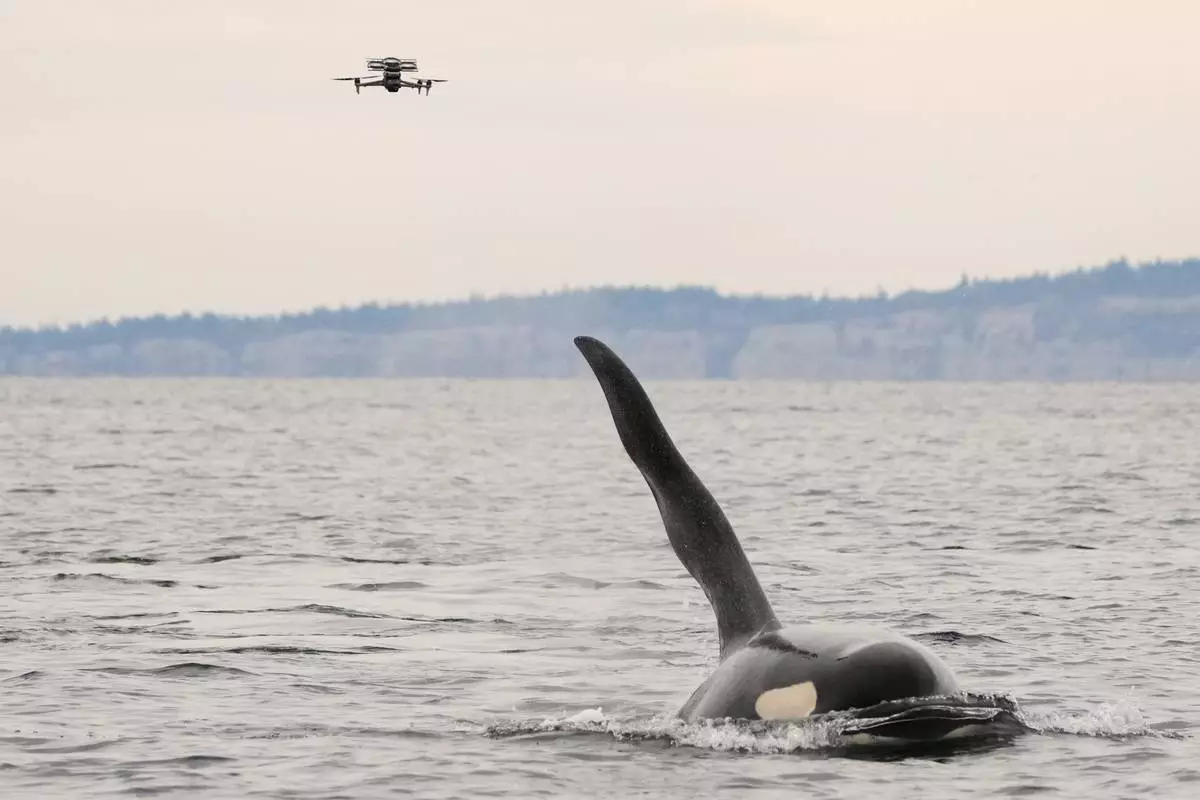
A research drone flown by Dr. James Sheppard of the San Diego Zoo Wildlife Alliance hovers over K33 "Tika," a Southern Resident killer whale, while attempting to collect breath samples Wednesday, Nov. 18, 2026, on Puget Sound near Possession Point State Park, Wash. (AP Photo/Lindsey Wasson, NMFS/NOAA permit #26288-01)
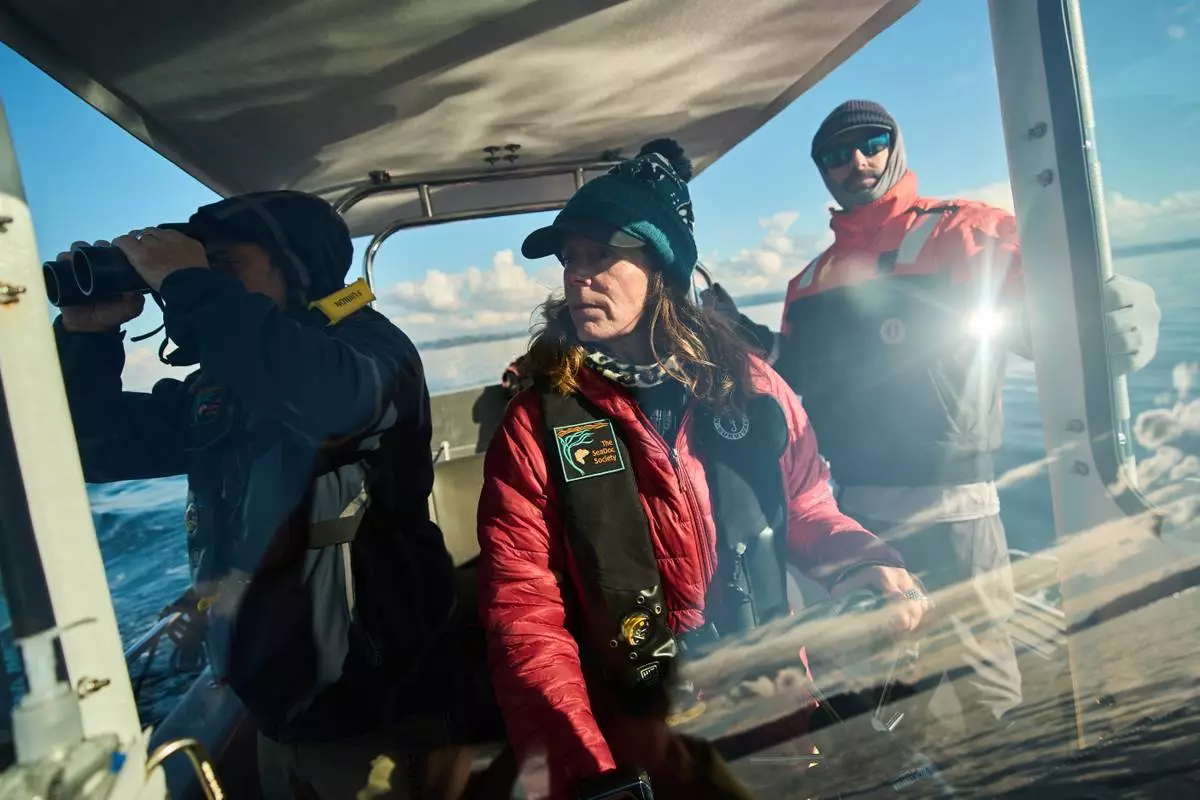
Dr. Deborah Giles of the SeaDoc Society, center, maneuvers a research vessel as husband and research assistant Jim Rappold, left, and Dr. James Sheppard of the San Diego Zoo Wildlife Alliance, right, keep watch for orcas on Puget Sound, Tuesday, Nov. 17, 2026, near Kingston, Wash. (AP Photo/Lindsey Wasson, NMFS/NOAA permit #26288-01)