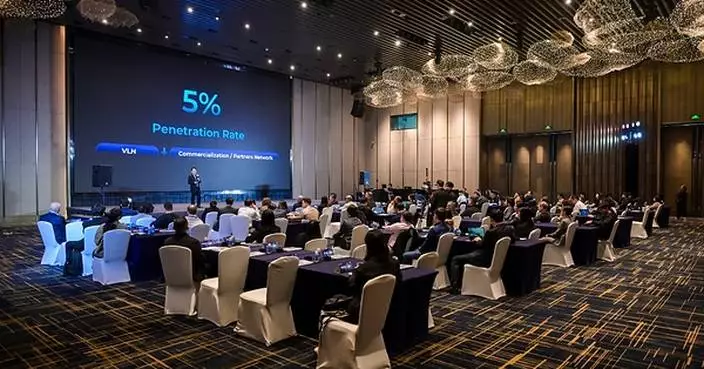
eReferral programme marks the first step in a connected-care journey that will be implemented progressively across KPJ
KUALA LUMPUR, Malaysia, Nov. 27, 2026 /PRNewswire/ -- KPJ Healthcare Berhad ("KPJ Healthcare" or "the Group"), Malaysia's largest private hospital network and the country's first private healthcare provider to establish an Academic Health System, today launched KPJ Care Network, a key part of its transformation under the KPJ Health System ("KPJHS").
KPJ Care Network marks KPJ's move from a network of strong individual hospitals towards one integrated health system, enabling patients to access expertise across the Group regardless of which KPJ facility they first enter.
Under KPJHS, Practice, Education, Research and Innovation come together to strengthen care across the Group. KPJ Care Network translates this into the patient experience by linking clinical expertise, care pathways and information across facilities.
The principle is simple: care close to home where possible, access to deeper expertise when needed, and a return closer to home when appropriate. Success will be measured by whether patients reach the right care at the right time and move seamlessly through the network – creating an excellent clinical and patient journey from one point of care to the next.
The journey begins with KPJ eReferral Platform, the first practical building block of KPJ Care Network. The digital platform enables referrals between KPJ facilities and allows registered general practitioners ("GPs") to refer patients to KPJ specialist services through a structured and traceable process. To date, over 3,600 GPs have registered on the platform. Further care pathways and services will be introduced progressively.
This includes strengthening the Hub and Spoke model, where Hubs bring together specialised expertise and advanced capabilities for complex care, while Spokes provide routine, follow-up and continuing care. Patients can move between Hubs and Spokes according to their clinical needs, providing access to specialist care while supporting continuity closer to home.
Datuk Syed Mohamed Syed Ibrahim, Chairman of the KPJ Health System Strategic Integration Advisory Council ("SIAC"), Chairman of KPJ Healthcare University and President & Chief Executive of Johor Corporation ("JCorp"), said: "If the KPJ Health System defines what we aspire to become as an institution, the KPJ Care Network determines how far that excellence can reach."
He said KPJ Care Network reflects a fundamental shift in how KPJ sees its national footprint – making the collective strength of the Group available to patients beyond the facility where they first seek care.
Datuk Syed added, "A patient's access to the expertise within KPJ should never be determined solely by the facility at which she first seeks care. Through the KPJ Health System and the KPJ Care Network, we intend to make clinical excellence more accessible – and to build an institution that serves generations to come."
KPJ Healthcare has about 1,500 medical consultants and currently operates 29 hospitals, three Ambulatory Care Centres, four healthcare retail stores – HealthShoppe and more than 30 Lablink branches nationwide, its diagnostic laboratory services. Over time, KPJ Care Network will extend across the wider patient journey – Prevent, Detect, Access, Treat, Rehabilitate, Follow and Renew.
Professor Dato' Dr Hanafiah Harunarashid, Officer-in-Charge of KPJ Healthcare, said the Care Network would enable KPJ's doctors and healthcare partners to work more systematically across organisational boundaries. "Good clinical outcomes depend on more than the treatment a patient receives at any one hospital. Timely access to the right expertise, clear communication between doctors and a well-managed handover at every step matter just as much. KPJ Care Network gives our medical consultants and general practitioners a structured way to work together, with patient safety and clinical judgement guiding every decision."
As the KPJ Care Network develops, KPJ Cares – KPJ's integrated digital healthcare platform – will increasingly serve as the digital front door to the wider KPJ ecosystem. Building on existing services such as appointment booking and access to e-pharmacy services through EZpilZ, the platform will be progressively enhanced with more patient-focused features, including relevant health and educational materials, helping patients manage their care and stay connected with KPJ throughout their healthcare journey.
With KPJ Care Network, capabilities across KPJ – from its Centres of Excellence and KPJ Healthcare University to the Future Health Institute and digital enablers – will come together as one connected health system. As the network continues to expand in phases, more care pathways and capabilities will be connected, bringing the strength of the whole of KPJ to every patient and enabling an excellent clinical and patient journey.
About KPJ Healthcare Berhad
KPJ Healthcare is building Malaysia's trusted integrated health system, delivering Care for Life through a connected network of hospitals and care access points. KPJ Healthcare operates 29 hospitals across Malaysia and three Ambulatory Care Centres, serving 3.3 million patients annually with 1,491 medical consultants. Nineteen hospitals are accredited by the Malaysian Society for Quality in Health ("MSQH") and four by Joint Commission International ("JCI"). As Malaysia's first private healthcare provider to establish an Academic Health System, KPJHS integrates practice, education, research and innovation to drive clinical excellence and patient experience. Beyond hospitals, KPJ Healthcare operates Klinik Waqaf An-Nur ("KWAN") clinics, dialysis centres and mobile clinics nationwide, and offers more than 40 academic programmes at KPJ Healthcare University ("KPJU"). KPJ Healthcare has been a constituent of the Bursa Malaysia FTSE4Good Index since 2016.
** This press release is distributed by PR Newswire through automated distribution system, for which the client assumes full responsibility. **

KPJ Healthcare Launches KPJ Care Network as Part of Transformation into One Integrated Health System
- Sales of processed seaweed products reached KRW 200 billion in 2025; Daesang exports gim to around 50 countries worldwide
- Establishes local production operations in Indonesia, Vietnam, and China; continues to grow in key markets including Southeast Asia, North America, and Oceania
SEOUL, South Korea, Nov. 27, 2026 /PRNewswire/ -- South Korean food company Daesang is accelerating its expansion into the global gim (Korean seaweed) market, drawing on its specialized quality-control technology and localization strategy. As global demand for Korean gim continues to rise, the company is growing its international business by leveraging its proprietary R&D capabilities and established production infrastructure. It is also making inroads into the mainstream North American market, recently securing placement for its gimjaban (seasoned seaweed flakes) products in major U.S. retail channels.
Daesang currently exports gim products to around 50 countries, including the United States, China, Vietnam, and Indonesia. In 2025, sales of processed seaweed products, including export sales, reached KRW 200 billion, up approximately 30% year on year and more than three times their 2020 level.
Daesang's quality-control capabilities have been a key driver of this growth. Since establishing its Seaweed Research Center in Mokpo, South Jeolla Province, in 2017, the company has strengthened its competitiveness across the seaweed business, from quality analysis of raw gim and development of new varieties to research on aquaculture and manufacturing processes and new product development. Under its proprietary Gim Quality Grading System, Daesang assesses dried gim against 13 criteria, including protein content, moisture, taste, texture, and color, and classifies it into nine grades. The company then selects raw gim suited to each product's intended use. This enables Daesang to reliably supply high-quality gim products that meet the quality standards and consumer preferences of individual countries.
Daesang continues to expand its overseas production network. With local production facilities established in Indonesia and Vietnam, the company has secured a combined annual gim production capacity of 1,500 metric tons. In Indonesia, Daesang ranks No. 1 in market share, offering a variety of products, including seasoned gim, seaweed snacks, and Gim Bori, under the local food brand MamaSuka. In Vietnam, it continues to rank No. 1 in market share, primarily selling seasoned gim and gimjaban under its global food brand Ofood.
Having established local production operations in China in 2026, Daesang is building a stronger platform for growth by expanding its distribution networks and localizing its products. In China, the company is focusing on authentic, premium Korean-style seasoned gim while broadening its product portfolio with offerings such as low-sodium gim for health-conscious consumers. Across Southeast Asia, Daesang is also broadening its reach among consumers who enjoy gim as a snack by offering seasoned gim in a variety of locally popular flavors, including cheese and BBQ.
In the United States, Daesang is expanding beyond existing Asian food distribution channels and making a broader push into the mainstream market. The company is expanding its local distribution network, having secured placement for Ofood Stick Gimjaban with Publix, a major U.S. retailer, in October 2026. In the United States, gim consumption is increasingly extending beyond snacking to meal pairing, with consumers more frequently using gimjaban and similar products as toppings for salads, noodles, fried rice, and other dishes.
In Oceania, Daesang is also expanding its market share by securing placement for three varieties of Korean-made seasoned gim in major mainstream retail channels. Notably, at New Zealand retailer PAK'nSAVE, which determines the number of stores carrying each product based on its evaluation grade, Daesang's gim products received the highest grade, securing placement across all stores.
Daesang is also strengthening its product and marketing strategies in line with global consumer trends. The company plans to completely redesign the packaging of its Ofood gim products to enhance their visual appeal, while developing products with a crunchier texture—a key attribute of snacks—and a wider variety of formats for greater convenience. Daesang also plans to expand its lineup of versatile products, including gimjaban and furikake, that can be added to rice, noodles, salads, and other dishes, while broadening its business opportunities in the seaweed snack market with products such as gimbukak (crispy seaweed chips).
To build brand awareness across global markets, Daesang is also stepping up its promotional and marketing activities in individual countries. In Indonesia, the company is conducting consumer engagement campaigns tied to local food culture, while in China, it is collaborating with local influencers.
Daesang is also developing land-based aquaculture technology to address instability in the supply of raw gim caused by climate change. In 2025, the company was selected as a joint R&D organization in two areas of the Ministry of Oceans and Fisheries Project for the Development of Sustainable, High-Quality Gim Seed Production and Land-Based Aquaculture Technologies. By 2029, Daesang plans to develop a land-based aquaculture system capable of year-round mass production of gim and establish a foundation for commercialization. Daesang plans to continue expanding its global gim business, supported by a stable raw gim supply chain and distinctive product strengths.
About Daesang Corporation
Founded in 1956, Daesang Corporation is one of the world's largest producers of fermented food products, with decades of expertise in food manufacturing. The company has grown into a premier global enterprise through internationally recognized brands such as Jongga and Ofood, offering a broad product portfolio that includes kimchi, specialty sauces, convenient home meal replacements (HMR), and more. Headquartered in South Korea, Daesang operates manufacturing subsidiaries in the United States, Poland, China, Indonesia, and Vietnam. For more information, visit www.daesang.com/en.
** This press release is distributed by PR Newswire through automated distribution system, for which the client assumes full responsibility. **

Daesang Accelerates Global Gim Expansion Through Technological Expertise and Localization