NEW YORK (AP) — New York state Senate Majority Leader Andrea Stewart-Cousins, the first woman to lead the chamber, died Friday, her office said. She was 76. Her rise opened doors in a state where top decision-makers had long been dubbed “three men in a room.”
A senator since 2006, Stewart-Cousins had just been reelected by her constituents on Nov. 3, and her fellow Democrats chose mid-month to retain her as their leader. Mike Murphy, a spokesperson for the Senate's Democratic majority, announced her death Friday but didn't give the cause or location.
Click to Gallery

FILE - Senate Democratic Conference Leader Andrea Stewart-Cousins, D-Yonkers, speaks during a rally for the Yonkers school district on the Great Western Staircase at the Capitol in Albany, N.Y. , May 19, 2015. (AP Photo/Mike Groll, File)
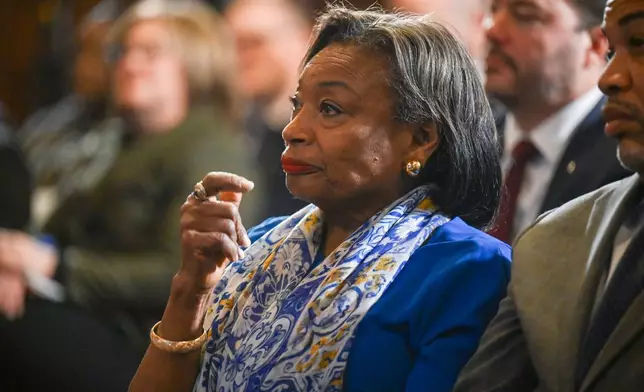
FILE - Senate Majority Leader, Andrea Stewart-Cousins, D-Yonkers, listens to New York Gov. Kathy Hochul present her executive state budget in the Red Room at the state Capitol in Albany, N.Y., Feb. 1, 2023. (AP Photo/Hans Pennink, File)
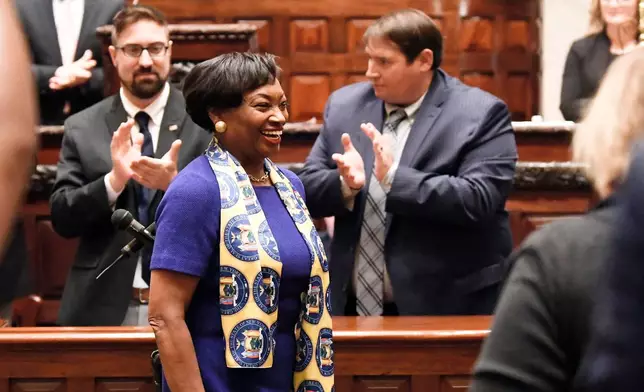
FILE - Newly-elected Senate Majority Leader Andrea Stewart-Cousins, D-Yonkers, receives a standing ovation as she prepares to speak to members of the state Senate during opening day of the 2019 legislative session in the Senate Chamber at the Capitol in Albany, N.Y., Jan. 9, 2019. (AP Photo/Hans Pennink, File)
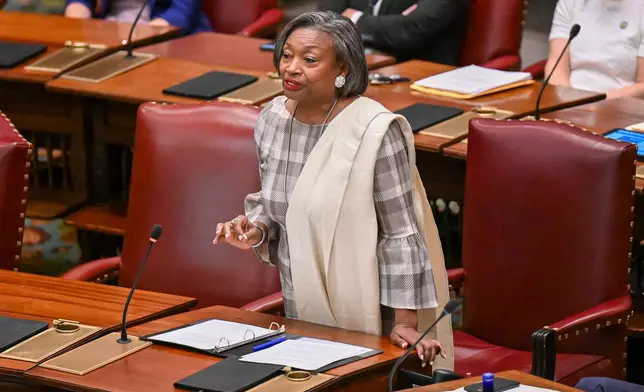
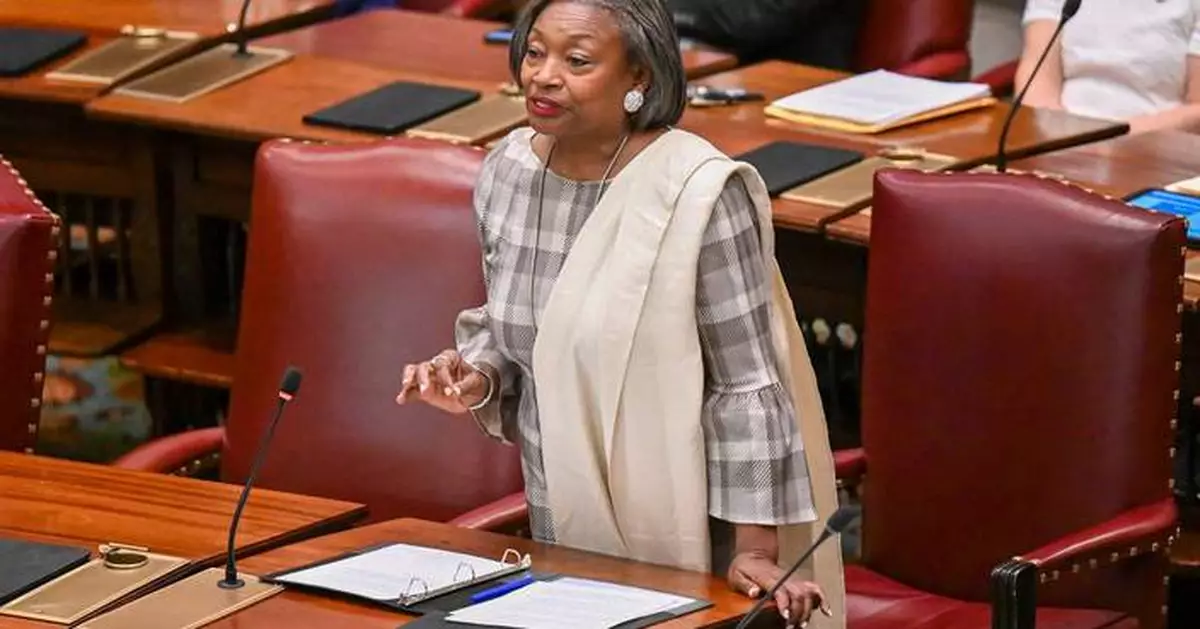
FILE - Senate Majority Leader, Andrea Stewart-Cousins, D-Yonkers, debates legislation to consider new firearms regulations for concealed-carry permits during a special legislative session in the Senate Chamber at the state Capitol in Albany, N.Y., on July 1, 2022. (AP Photo/Hans Pennink, File)
“She was a groundbreaking leader who shattered one of New York's highest glass ceilings,” he said. Gov. Kathy Hochul, a fellow Democrat, said in a statement that she was heartbroken by the death of a legislator she admired “more than she could have ever known.”
“She never forgot where she came from, who she was fighting for or the doors she could open for those coming behind her,” the governor said.
She had led Senate Democrats since 2012. After her party won control of the chamber, she became majority leader in 2019 — the first woman and first Black woman to hold the post — and promised to “give New Yorkers the progressive leadership they have been demanding.” Her ascension also shook up the state's clubby politics, in which the budget and other key bills were routinely hammered out by the so-called “three men in a room” — the governor and the Senate and Assembly leaders.
“I have not been in the room,” Stewart-Cousins told The Associated Press at the time. “So that will be a difference right there.”
Stewart-Cousins used her role to advance some liberal priorities that were going nowhere when Republicans controlled the Senate, such as legalizing marijuana and strengthening gun control laws. She also led an effort to secure voter approval of a state constitutional amendment that supporters billed as protecting abortion rights.
Stewart-Cousins also prioritized passing voting rights laws and a slate of police accountability measures that gained momentum after the 2020 police killing of George Floyd in Minneapolis. She called it “a moment of reckoning" and commended the advocacy of Valerie Bell and Gwen Carr, whose sons — Sean Bell and Eric Garner — were killed by New York City police.
“Andrea used her authority in the state Senate to help turn what those mothers had fought for into law,” the Rev. Al Sharpton recalled in a statement Friday. Stunned by her death, the civil rights activist noted that the senator was a guest on “PoliticsNation,” his show on MS NOW, just last week.
In a notable moment in 2021, she became the first senior New York Democrat to call for three-term Democratic Gov. Andrew Cuomo to resign amid mounting sexual harassment allegations and a separate controversy over his administration's count of COVID-19 deaths among nursing home residents. Cuomo, who denied the allegations, initially insisted he wouldn't and shouldn't step down, but he ultimately did.
Cuomo said Friday that while they “did not agree on everything,” he was proud of legislation they worked together to pass.
“She stood up for her members and fought for what she believed was right, without hesitation and always with dignity, grace and class,” Cuomo said in a statement.
A resident of Yonkers, a city just north of the New York City border, Stewart-Cousins was a teacher, sales and marketing professional, and Yonkers city official and Westchester County legislator before she was elected to the state Senate in 2006.
Her husband, Thomas Cousins, died in 2007. Survivors include their children, Kevin, Steven and Candice, and her brother, Robert Stewart Jr.

FILE - Senate Democratic Conference Leader Andrea Stewart-Cousins, D-Yonkers, speaks during a rally for the Yonkers school district on the Great Western Staircase at the Capitol in Albany, N.Y. , May 19, 2015. (AP Photo/Mike Groll, File)
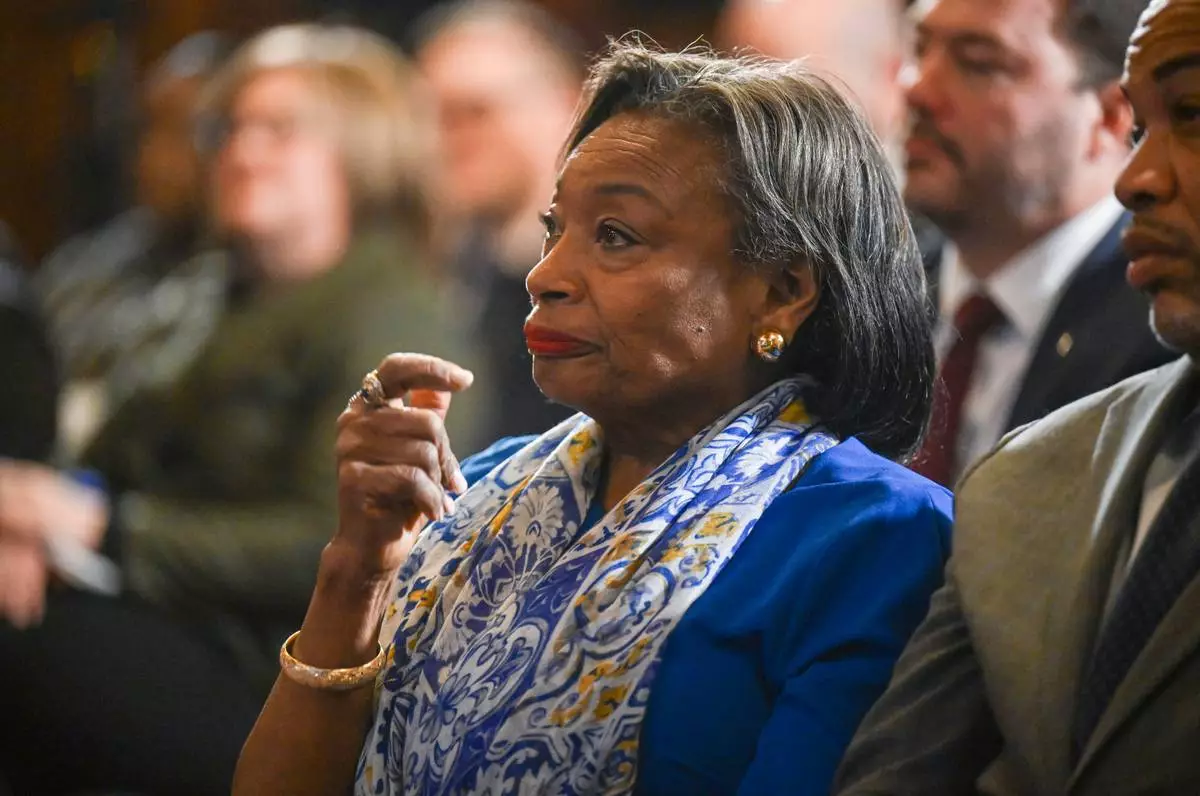
FILE - Senate Majority Leader, Andrea Stewart-Cousins, D-Yonkers, listens to New York Gov. Kathy Hochul present her executive state budget in the Red Room at the state Capitol in Albany, N.Y., Feb. 1, 2023. (AP Photo/Hans Pennink, File)
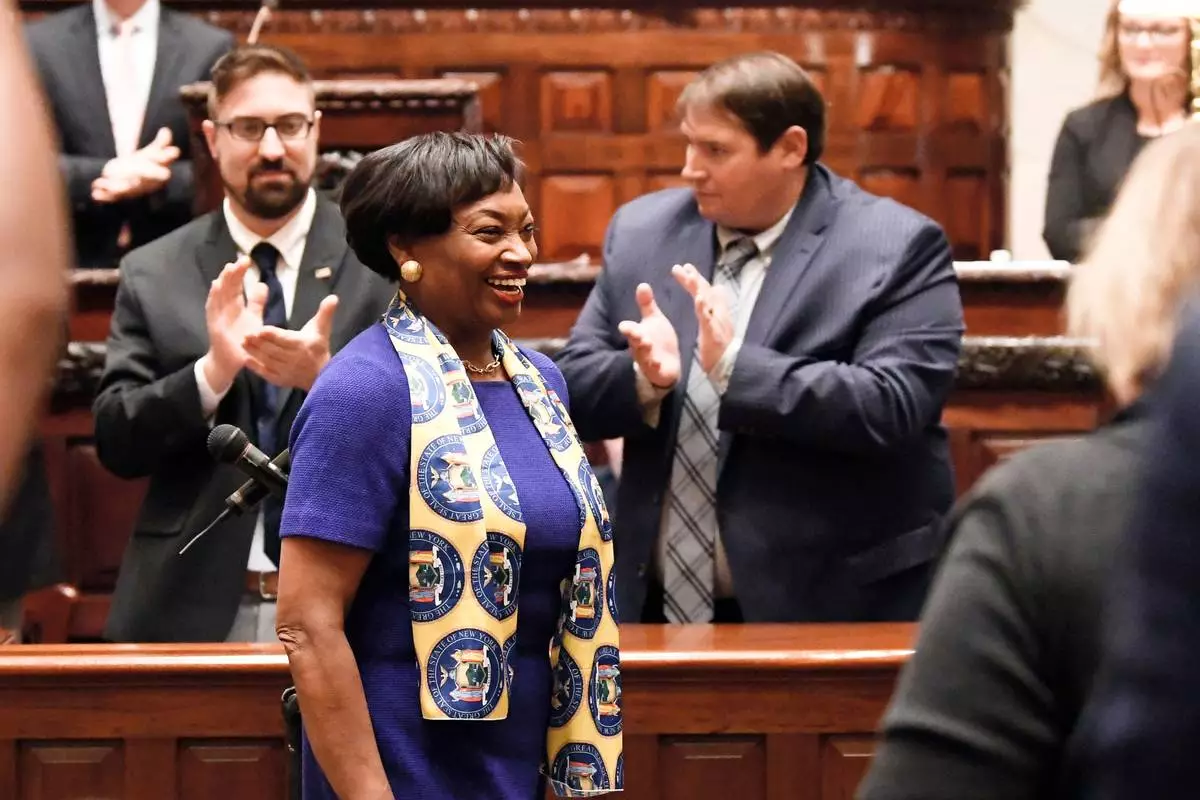
FILE - Newly-elected Senate Majority Leader Andrea Stewart-Cousins, D-Yonkers, receives a standing ovation as she prepares to speak to members of the state Senate during opening day of the 2019 legislative session in the Senate Chamber at the Capitol in Albany, N.Y., Jan. 9, 2019. (AP Photo/Hans Pennink, File)
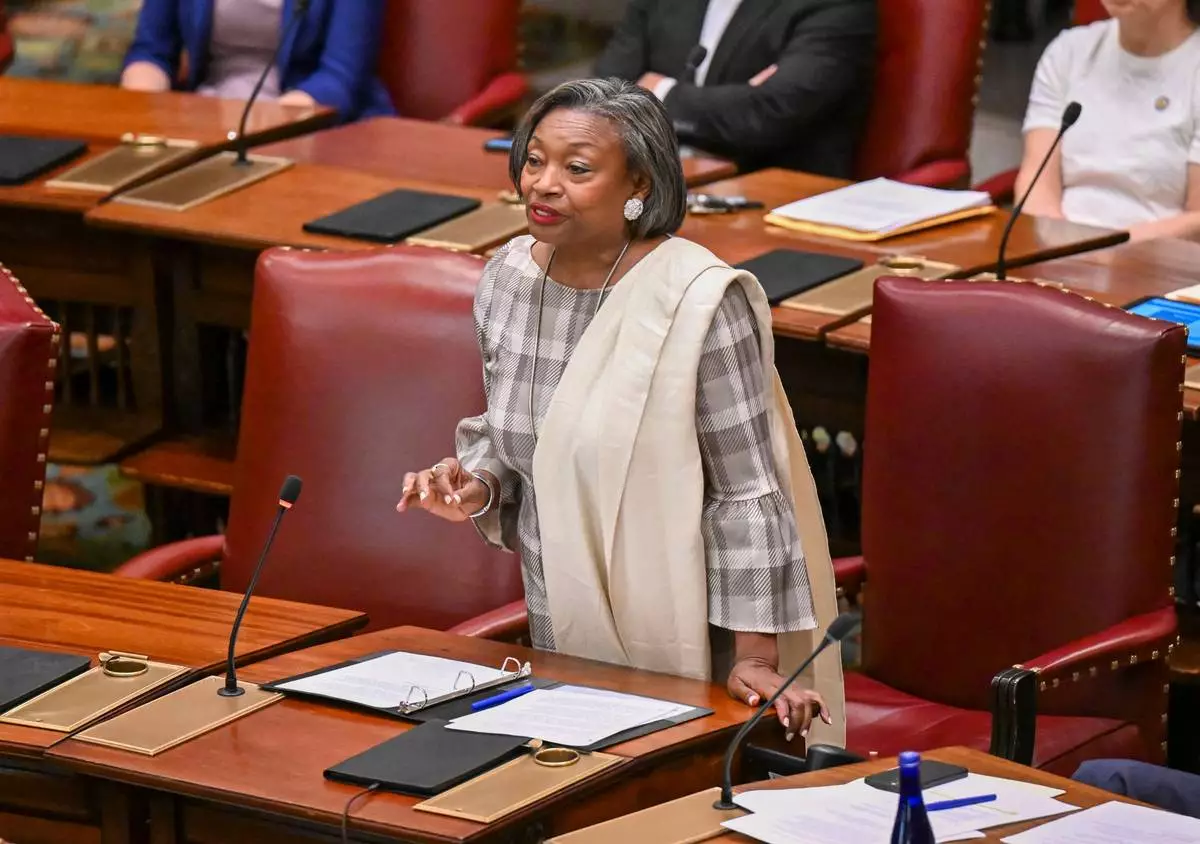
FILE - Senate Majority Leader, Andrea Stewart-Cousins, D-Yonkers, debates legislation to consider new firearms regulations for concealed-carry permits during a special legislative session in the Senate Chamber at the state Capitol in Albany, N.Y., on July 1, 2022. (AP Photo/Hans Pennink, File)