Iran's navy chief said Friday that geographical restrictions on the country's military operations have been lifted, with the ultimate goal of pushing the United States out of West Asia and beyond.
According to reports from Iran's Tasnim news agency, Iranian Navy Commander Rear Admiral Shahram Irani said Iran's Supreme Leader Mojtaba Khamenei has ordered the Iranian armed forces to remove geographical limitations on military operations. The forces have received the relevant orders and will carry out them soon.
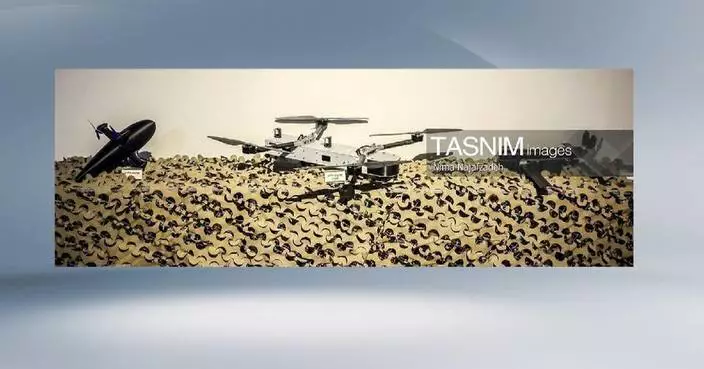
With the lifting of restrictions, Iran could deploy weapons with longer range, Irani said.
He said the Iranian forces aim to drive the U.S. military out of not only West Asia, but also the Indian Ocean.
Khamenei last month ordered that any level and kind of threat from the "enemies" must be met with an "immediate and effective" response without geographical limitations.
On Feb 28, Israel and the United States launched joint attacks on Tehran and other Iranian cities. Iran responded with waves of missile and drone attacks targeting Israel and U.S. bases and assets in the region, and tightened its grip on the Strait of Hormuz.
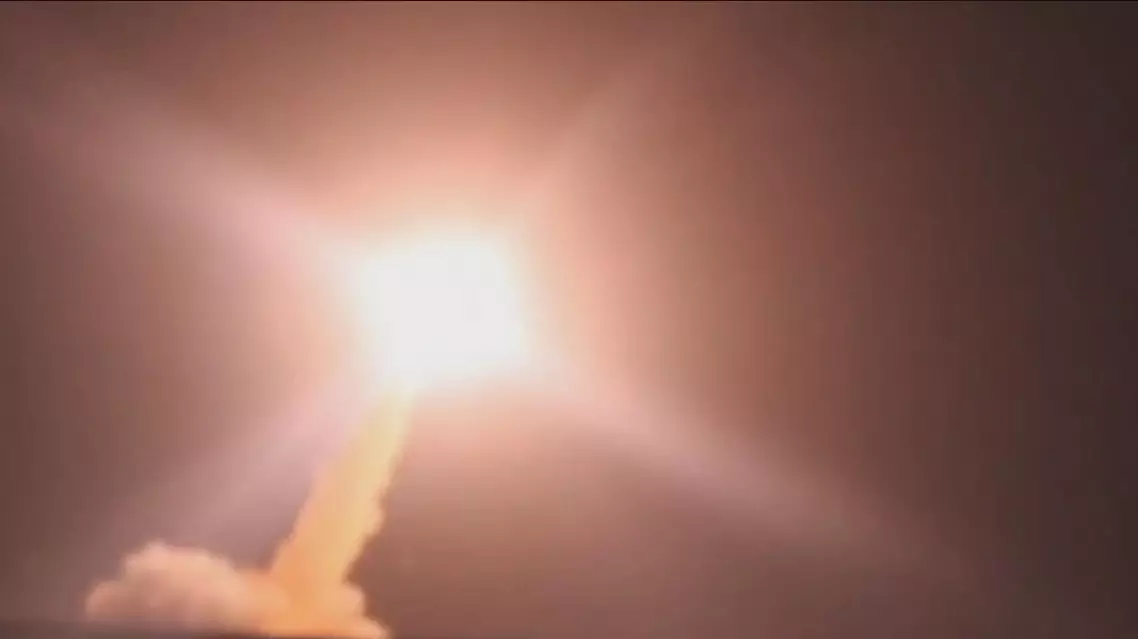
Iran's navy chief vows to push US out of west Asia
China's third peacekeeping quick reaction force in Abyei, a disputed region straddling the border between Sudan and South Sudan in northeastern Africa, recently conducted an emergency air rescue drill alongside a helicopter unit and a Level II hospital under the United Nations Interim Security Force for Abyei (UNISFA).
The drill simulated a helicopter crash outside the camp that left multiple people injured, testing troops on emergency response and air rescue. Upon receiving the order, the peacekeepers quickly assembled and boarded a helicopter to head for the site.
"After arriving at the mission airspace, we quickly landed by helicopter and, through multi-route coordination and grid-style search, rapidly located the incident site and the injured, secured the area, and worked with medical personnel to provide first aid and evacuate the wounded," said Liu Jimin, an officer with the quick reaction force.
The Chinese peacekeepers quickly secured the surrounding terrain, established a perimeter, set up controlled zones and checked for safety hazards to protect the rescue operation.
"Next, we will regularly conduct various combat readiness drills, stay fully prepared, hone our skills, continuously enhance our ability to carry out peacekeeping tasks, and do our utmost to safeguard peace and stability in the mission area," said Xiao Kun, another officer with the quick reaction force. In addition, 120 peacekeepers from the sixth Chinese peacekeeping helicopter contingent in Abyei were awarded UN medals of peace on Friday for their commitment to maintaining stability and peace in the mission area.
A medal parade ceremony was held at the Super Camp of UNISFA. Since deploying to Abyei in January, the helicopter unit has carried out missions including troop transport, aerial patrol, battlefield search and rescue, and cargo delivery.
To date, it has transported more than 11,300 personnel and logged over 160,000 kilometers in flight, earning praise from UNISFA as an "an indispensable key force".
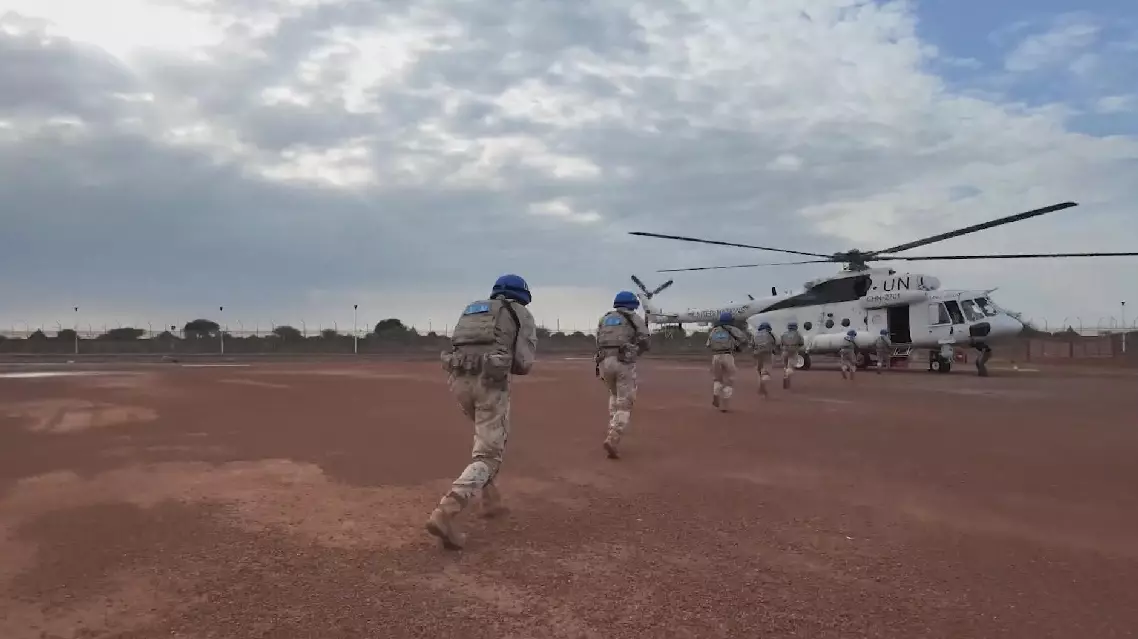
Chinese peacekeepers hold air rescue drill in Abyei