China will develop a supersonic speed HyperFlight transport network with a designed speed of up to 4,000 kilometers per hour, China Aerospace Science and Industry Corporation (CASIC) announced Wednesday at the Third China (International) Commercial Aerospace Forum.
HyperFlight speeds will be ten times that of traditional high-speed trains, and five times that of the passenger airplanes, sources with CASIC said at the forum in Wuhan, capital of central China's Hubei Province.
The maximum speed will be 4,000 km per hour, it said.

The sources said the company would complete the HyperFlight program in three steps. The first step will be building a regional inter-city network with speeds of 1,000 km per hour. The second step is building a national network linking major city clusters with speeds of 2,000 km per hour, and the third step will be an international network with speeds of 4,000 km per hour to link countries along the Belt and Road routes.
HyperFlight will be a new signature product for China in addition to aerospace, high-speed rail and nuclear power, according to the company.
It will feature a transport system reducing air resistance with a low vacuum environment and supersonic shape, and reduce friction resistance via magnetic suspension.
Apart from CASIC, only a few companies, including HTT and Hyperloop One, both in the United States, have claimed to be developing a transport system with speeds of more than 1,000 km per hour.
Mao Kai, technical director of the HyperFlight project, said his company has teamed up with more than 20 research institutions from China and abroad, and boasts 200 patents in related fields.
ST. LOUIS (AP) — Madison Chock and Evan Bates rocked their way through a Lenny Kravitz-inspired rhythm dance on Thursday night to build a big lead over their closest pursuers as they chase a record-setting seventh ice dance title as the U.S. Figure Skating Championships.
The three-time defending world champions, and the favorites to win Olympic gold in Italy, scored a season-best 91.70 points. Emilea Zingas and Vadym Kolesnik were second with 85.98, and Christina Carreira and Anthony Ponomarenko third with 83.29.
“It really felt like we were very present and grounded and able to enjoy the energy of the arena, and the energy between the two of us,” Chock said. “We felt like this was a really good skate and a good stepping-stone toward Milan.”
The men’s short program was later Thursday with 21-year-old Ilia Malinin, the two-time reigning world champ and the overwhelming favorite for the Milan Cortina Games next month, beginning his pursuit of a fourth consecutive national championship.
The first medals of the championships will be handed out Friday night following the pairs and women’s free skates.
Chock and Bates are trying to break a tie with Meryl Davis and Charlie White for the most national ice dance titles this week. But their big goal always has been the Winter Games, where Chock and Bates — who were fourth at the Beijing Olympics but helped the U.S. win team gold — will be trying to join Davis and White as the only American champions in their discipline.
The couple certainly made a statement at the Enterprise Center.
From the opening chords of “American Woman” to the final notes of “Are You Gonna Go My Way,” Chock and Bates had the crowd in rapt attention. Their score topped their own world-leading mark of 88.74, set while winning a third straight Grand Prix Final.
Zingas and Kolesnik made a statement of their own for inclusion on the Olympic team, which will be announced Sunday. Their high-energy performance, set to music by the Boston-based 1990s hip-hop, R&B and soul group Bell Biv DeVoe, not only represented their personal-best by nearly five points but underscored their status as the next big thing in American ice dance.
The International Skating Union decides each year the theme for the rhythm dance, and the world governing body chose mainstream “music, dance styles and feelings of the 1990s,” leaving the dancers plenty of room for their own interpretation.
There was pop music. House music. Rap and hip-hop, grunge and all styles of rock music.
There was an odd moment early in the night, when Raffaella Koncius and Alexey Shchepetov were performing to a medley of Ricky Martin songs. Suddenly, another piece of music began to play, and their coaches immediately yelled, "Stop!"
Koncius and Shchepetov maintained their composure and kept smiling during a long delay, and the rinkside judges ultimately allowed them to pick up where they left off. The audience roared at that point, clapping along to the correct music the rest of the way.
“When you can't hear your music, it's kind of a problem,” Koncius said, still smiling. “It makes for a great story.”
Maia and Alex Shibutani, the 2018 Olympic bronze medalists, had a different sort of music issue: the judges didn't understand it.
Making their comeback from a seven-year retirement, the Shibutanis decided to shelve a hip-hop-inspired program featuring the Wu Tang Clan and a Tribe Called Quest because of shaky feedback they got from judges. Instead, the brother-sister team danced a program to "Canned Heat” by the British funk band Jamiroquai that they had put together in just six weeks.
“If there is a barrier between comprehension and experience and understanding between the judging panel and what you’re doing, then you have to try and find a way to speak to them,” Alex Shibutani said. “It was an opportunity to come up with something equally fun and amazing, and we loved performing this in practice."
AP Olympics: https://apnews.com/hub/milan-cortina-2026-winter-olympics
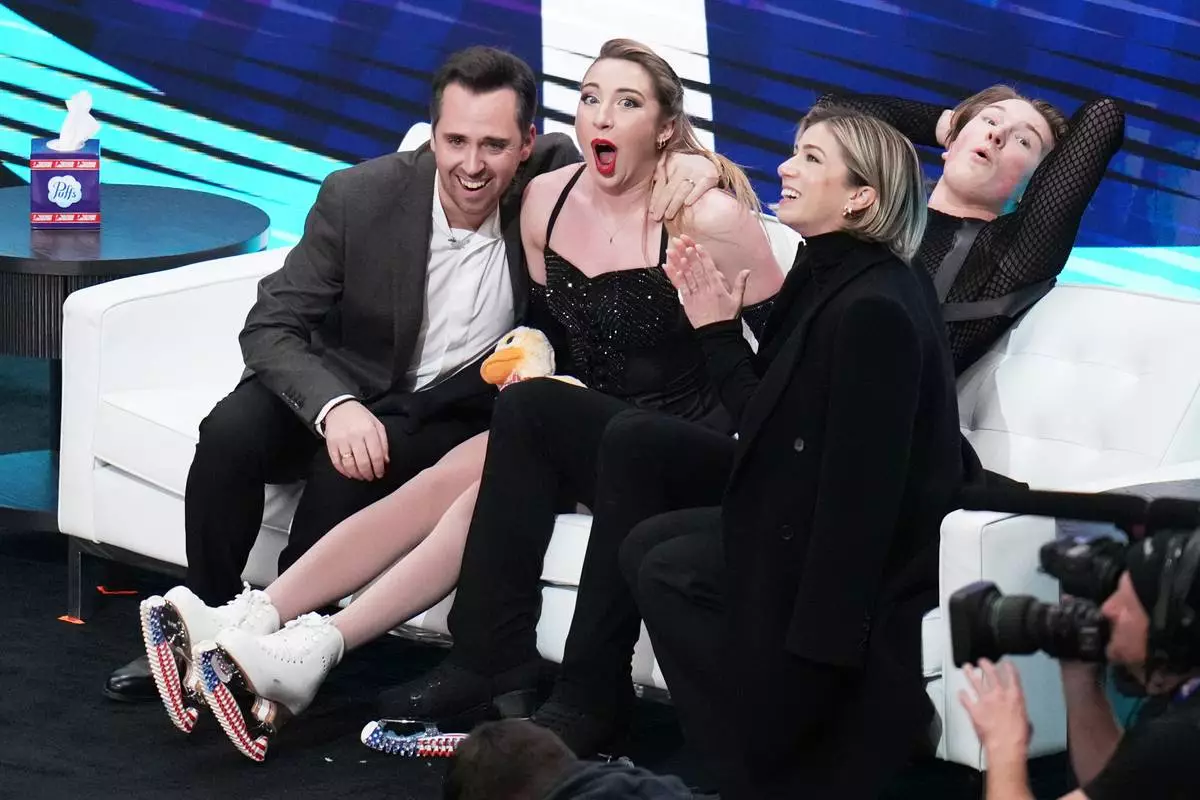
Emily Bratti and Ian Somerville react to scores after competing during the ice dance competition at the U.S. Figure Skating Championships, Thursday, Jan. 8, 2026, in St. Louis. (AP Photo/Jeff Roberson)

Maia Shibutani and Alex Shibutani compete during the ice dance competition at the U.S. Figure Skating Championships, Thursday, Jan. 8, 2026, in St. Louis. (AP Photo/Jeff Roberson)
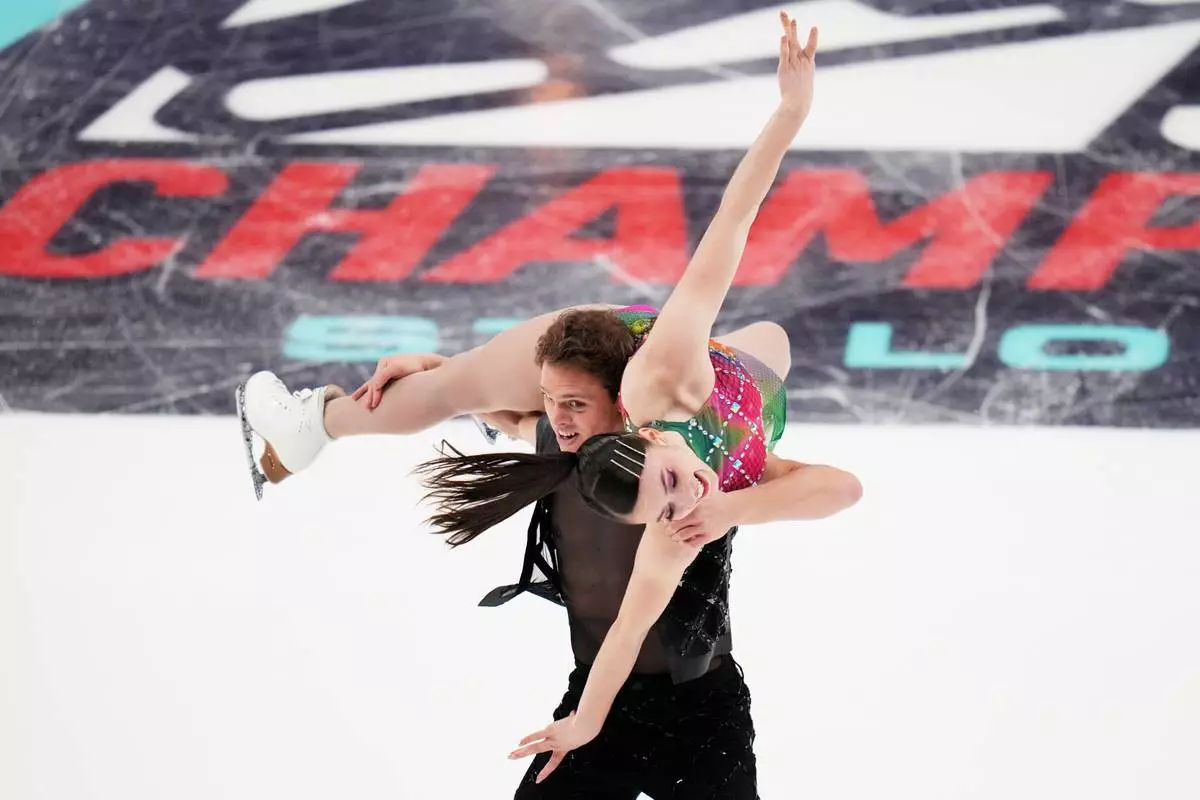
Caroline Green and Michael Parsons compete during the ice dance competition at the U.S. Figure Skating Championships, Thursday, Jan. 8, 2026, in St. Louis. (AP Photo/Jeff Roberson)
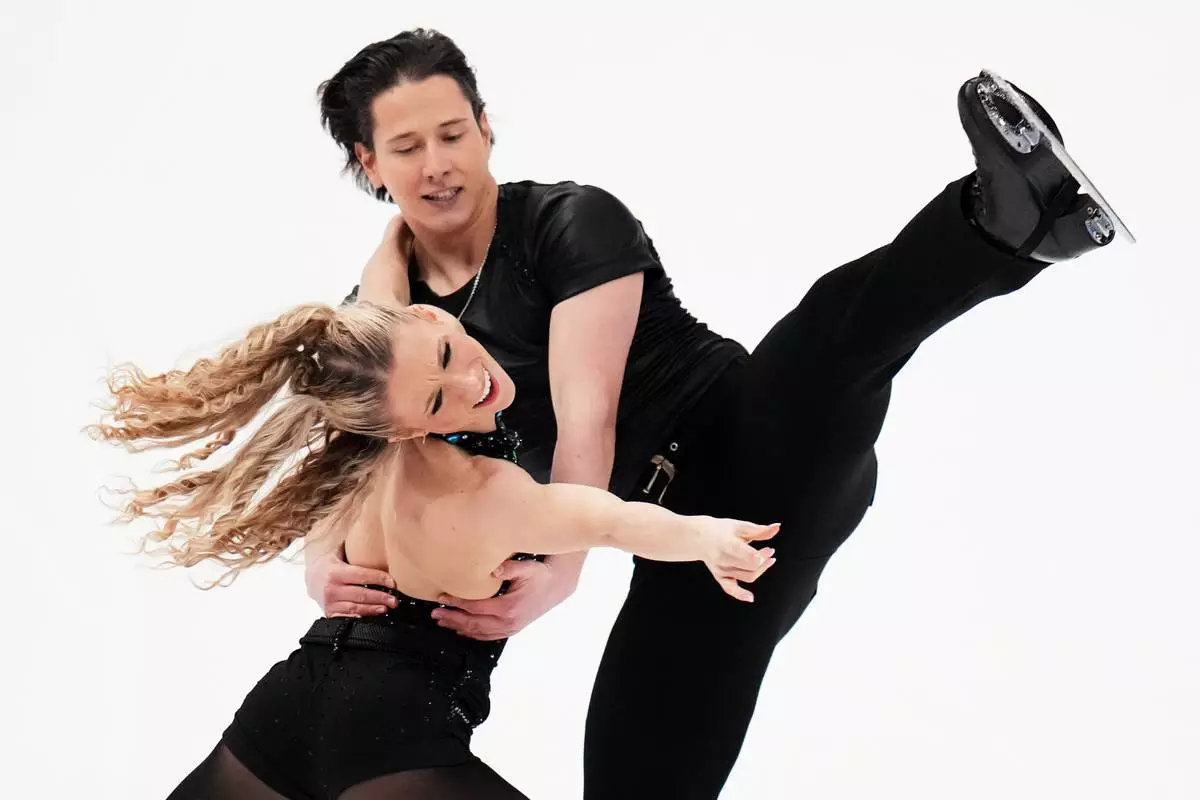
Emilea Zingas and Vadym Kolesnik compete during the ice dance competition at the U.S. Figure Skating Championships, Thursday, Jan. 8, 2026, in St. Louis. (AP Photo/Jeff Roberson)
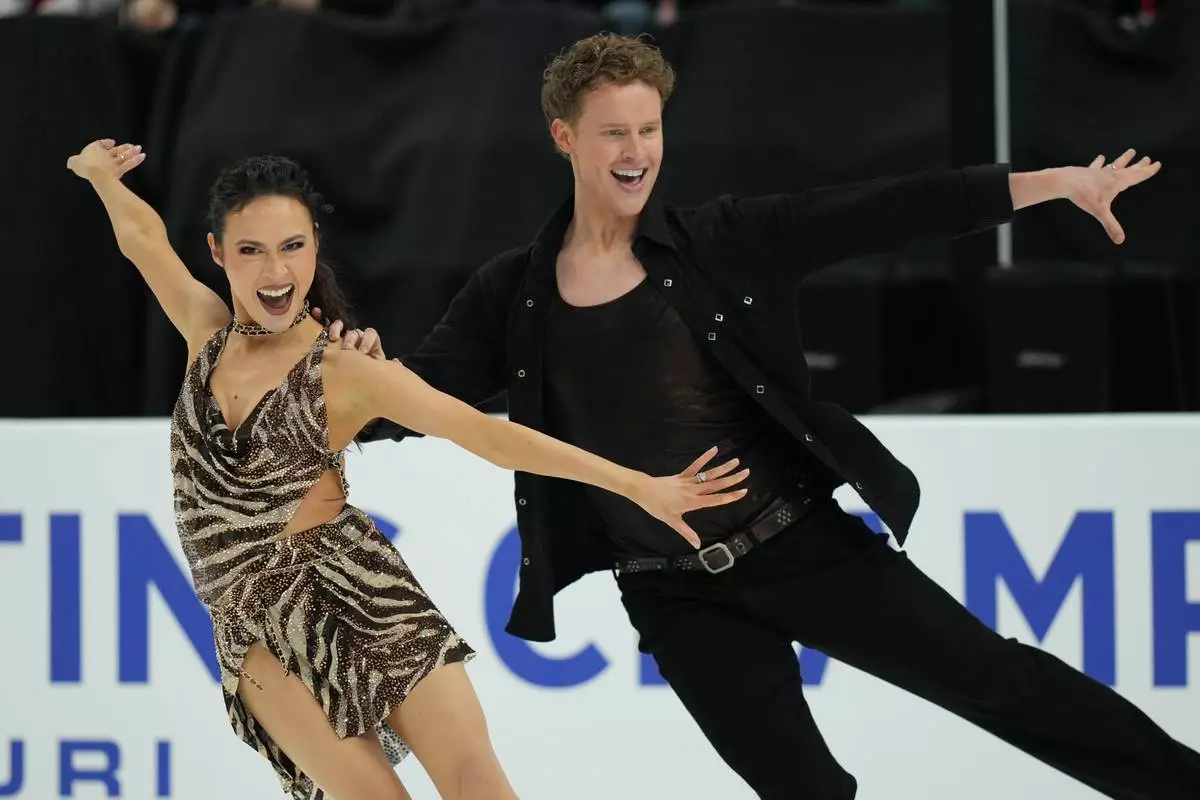
Madison Chock and Evan Bates compete during the ice dance competition at the U.S. Figure Skating Championships, Thursday, Jan. 8, 2026, in St. Louis. (AP Photo/Stephanie Scarbrough)