Uygur faces are finding their way to movie screens, phones, and billboards across China. Members of the ethnic minority group have facial features that Chinese brands have deemed “attractive,” creating opportunities for talented Uygurs to break into the entertainment business as singers, models and TV stars.
One of the most famous Uyghur stars may be Dilraba Dilmurat, an actress who starred in the popular series “Swords of Legends”, and who played the lead role in the drama “The King’s Woman.” Fellow Uyghur actress Gulnezer Bextiyar was recently named a Fendi brand ambassador – the first Chinese ambassador for the luxury brand.
Click to Gallery
Uyghur model Parwena Dulkun has found success with brands in China
According to survey data from McKinsey, the "Generation 2" group of Chinese consumers are the most Westernized to date / source: McKinsey

Dilraba Dilmurat

Gulnezer Bextiyar
Like other Uygurs, both Dilraba and Gulnezer hail from the Xinjiang Uyghur Autonomous Region. Located at the northwest edge of China, the region is home to the largest population of Uygurs. The ethnic group has Turkic roots and speak a language that’s more similar to Turkish than Mandarin. Their script is derived from Arabic and their physical appearances resemble central Asians more than the Han ethnic majority that make up China.

Dilraba Dilmurat

Gulnezer Bextiyar
Demand for men and women who share the same Eurasian characteristics as Gulnezer have been on the rise lately according to Dengyang Liu, founder of Fun Models, an online platform that connects models, actors and photographers to Chinese clients. Though he cautions that Han Chinese still far outnumber the number of Uygur models, many of his Chinese clients are “looking for a face that have some Asian characteristics, but also have some kind of white Europeanness to it.”

Uyghur model Parwena Dulkun has found success with brands in China

Parwena Dulkun
What’s driving this demand? For Dengyang, it’s nothing new. He likens it to patterns he’s seen in other Asian countries, especially as cities become increasingly cosmopolitan. “Hong Kong, Taiwan, S. Korea, even Thailand…basically, faces with mixed Eurasian features were used as a symbol[s] of a changing fusion trend in aesthetic standards,” says Dengyang.

Gulnezer Bextiyar

Gulnezer Bextiyar
The power of the purse
In many ways, the shift in beauty standards correlates to a rise in purchasing power. Increased disposable income is a calling card for international brands looking to take advantage of the new market. The brands bring their own standards for beauty, revealing the Western bias in defining beauty, even in local cultures.
China’s first-tier cities have grown at breakneck speed in the past few decades, creating a new generation of Chinese with disposable income and increasing exposure to international standards of beauty. Consulting firm McKinsey has dubbed this new middle class “Generation 2." Born during China’s period of economic reform and opening up to the world, this generation accounted for nearly 15 percent of urban consumption in 2012. This number is expected to rise to 35 percent in 2022.
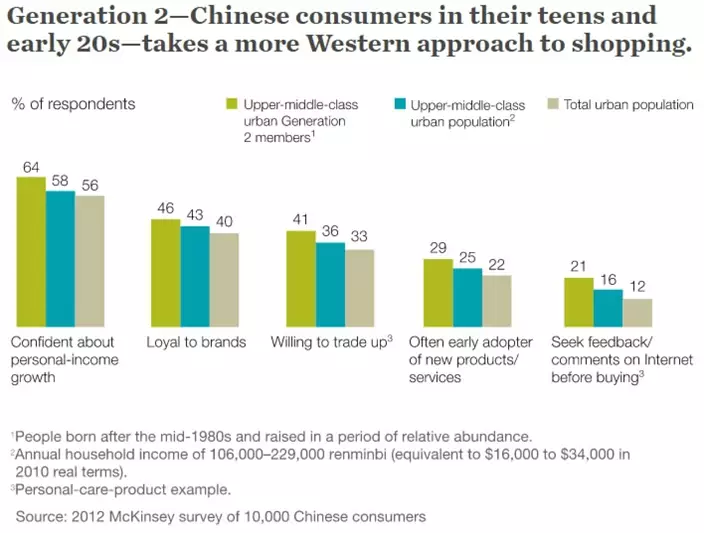
According to survey data from McKinsey, the "Generation 2" group of Chinese consumers are the most Westernized to date / source: McKinsey
A 2012 McKinsey survey of this group found that “this generation of Chinese consumers is the most Westernized to date.” In terms of consumption habits, Generation 2 respondents were more likely to be loyal to brands, view expensive items as “better”, and get satisfaction out items that signify better taste or higher status.
As this generation’s spending habits mirror those found in the West, foreign faces have also become more common in Chinese media. Chinese audiences are accustomed to seeing “more international-themed faces or stories… even the 'zhibo' video stuff that’s been popular in China in the past two years,” says Dengyang.

Dilraba Dilmurat

Dilraba Dilmurat
We don’t have to look far to see other examples of the same experience. In the past four decades, S. Korea has seen explosive growth, joining the trillion-dollar club of world economies in 2004.
The 1990s spawned K-pop, one of the most influential factors in shaping the country’s beauty standards. As Patricia Marx from the New Yorker puts it, the K-pop phenomenon “shapes not only what music you should listen to, but what you should look like while listening to it.”
Many of the K-pop stars share similar characteristics: fair skin, double eyelids and a small face. Koreans go to great lengths to replicate these looks, as the country has one of the highest rates of plastic surgery in the world. Though some argue that these procedures produce beauty results that are universally appealing, these are also the same beauty standards that dominant Western culture.

Dilraba Dilmurat

Dilraba Dilmurat

Dilraba Dilmurat
Dilraba Dilmurat

Gulnezer Bextiyar

Gulnezer Bextiyar

Gulnezer Bextiyar

Parwena Dulkun

Parwena Dulkun

Parwena Dulkun

Parwena Dulkun

Parwena Dulkun
NEW YORK (AP) — The Iran war is making life more difficult for small business owners across the country, who are grappling with shipping complications, higher costs and consumers tightening their grip on their wallets.
A shoe designer is struggling to import its shoes from Vietnam; a pistachio grower has millions of dollars worth of pistachio exports sitting in the water; a home landscaper in Kansas City is stockpiling fertilizer as prices skyrocket; and a Chicago electronics store owner is facing pain at the pump.
Small business owners say the severe supply chain disruptions during the pandemic were worse — but they fear that if the war stretches on for months, it might start to come close.
“The costs are rising, the routes are changing, and capacity is tightening. It’s all happening at the same time, and that’s a perfect storm for small businesses," said Brandon Fried, executive director of the Airforwarders Association, a trade group for U.S companies that move cargo through the supply chain on all modes of transport.
The U.S. is the largest exporter of pistachios, followed by Iran, according to the U.S. Department of Agriculture.
At Nichols Farms, in Hanford, California, a fourth-generation owned pistachio grower and processor, chief operating officer Jared Lorraine said exports make up about 50% of business. They ship to Europe, China and increasingly, the Middle East.
The effective closure of the Strait of Hormuz has made it impossible to deliver pistachios to several clients. When the war started, he estimates about $5 million worth of pistachios left stranded in the water, unable to be delivered to customers in Saudi Arabia, Iran and the United Arab Emirates.
“While much of the public attention has been focused on oil, which is significant, really, the destruction of the food system is I think equally as serious,” he said, adding 70% to 80% of food in the Middle East is imported.
When the U.S. bombed Iran on Feb. 28, Nichols Farms had about $5 million pistachios on ships that got stranded, Lorraine said. They managed to reroute some of the pistachios: one batch was offloaded in Jeddah, in Saudi Arabia, to be trucked to the UAE. Another two loads were able to make it into a port in Oman after being reloaded into a smaller container in India that could make it into that port. But $3.5 million still sits on the water.
"A lot of it has just been in limbo," Lorraine said. "It’s literally been sitting idle for the last three weeks and we’re just saying, OK, what do we do?”
Matthew Tran is the founder of Birchbury, a footwear brand based in Los Angeles that makes minimalist — also known as “barefoot” -- shoes. The company makes the shoes in Vietnam and ships to customers across the U.S., U.K., Australia and Canada.
Typically, Tran pays about $3,500 per container shipped out of Vietnam. But that's doubled since the war started to about $7,000 as shippers deal with rerouting and higher insurance costs. The lead time for shipping has increased by three to four weeks, too.
“It’s kind of like a traffic jam,” he said about the shipping time. “So even though it doesn’t seem like it would directly affect me because I’m going from Vietnam to America, it does affect me when there’s more congestion.”
He said supply chain disruption was worse during COVID, when everything came to a standstill. But he's worried about how long the war will last.
"They always say the wars are going to be short, but they’re never short," he said. He worries about customers having less money for discretionary spending since gas prices have surged.
“Customers don’t understand, but also their gas prices just went up, too, right?,” he said. “People just don’t want to spend money at the end of the day because they’re like, ‘Oh man, gas is up a lot.’ Buying another new pair of shoes is secondary to being able to go places with your car.”
Across the country, Jake Wilson owns Top Class Lawn Care in Kansas City, Missouri, taking care of nearly 400 lawns across the city. The closure of the Strait of Hormuz has upended the fertilizer business, since the Middle East supplies close to 30% of global exports of major fertilizers, according to the International Fertilizer Association.
Wilson started his business in 2011 and he's built strong relationships with his suppliers. A day or two after the Iran war started, two suppliers emailed him and told him to expect a spike in prices soon and suggested he make orders ahead of price increases.
Rising prices are a concern since about 70% of his customers lock in a price for a year of lawn care and prepay at the beginning of the year.
The last thing he wants to do, he said, is go back to customers in the middle of the year and say the price of fertilizer increased so he has to ask for more money.
“It’s kind of on me to try to get out ahead of it, the best I can, so I could still try to be profitable while keeping prices where I quoted at the beginning of the year,” he said.
He usually buys fertilizer four times a year, two or three months ahead of the time when he plans to use it, but he's currently trying to secure fertilizer all the way through the fall season and into the end of the year, effectively doubling his normal order.
“I don’t want to wait till summer and go to my supplier and they either say, well, we don’t have any product available or what we do have is now 60%, 70% more expensive than what it was quoted in early spring, or first of the year,” he said.
Higher gas prices have an electronics store executive considering ending free shipping.
Abt Electronics in Chicago uses on average 25,000 gallons of diesel fuel and 30,000 gallons of gas fuel each month to run more than 650 delivery vans and trucks, according to Jon Abt, co-president of the retailer.
So with gas prices surging, Abt said he’s concerned. Free shipping and free delivery with a minimum order of $35 is a perk that he wants to keep.
“It’s an eye-opening expense, ” Abt said. “It will affect the cost of making deliveries. This will also hit the shipping companies we use for out-of-state deliveries,”
Abt said he hasn’t received the fuel bill for March yet, but for now, he will absorb the cost and see how the market plays out and what competitors do.
He added, “We like delivering things for free, and I think customers expect it."
AP Business Writer Anne D'Innocenzio in New York contributed to this report
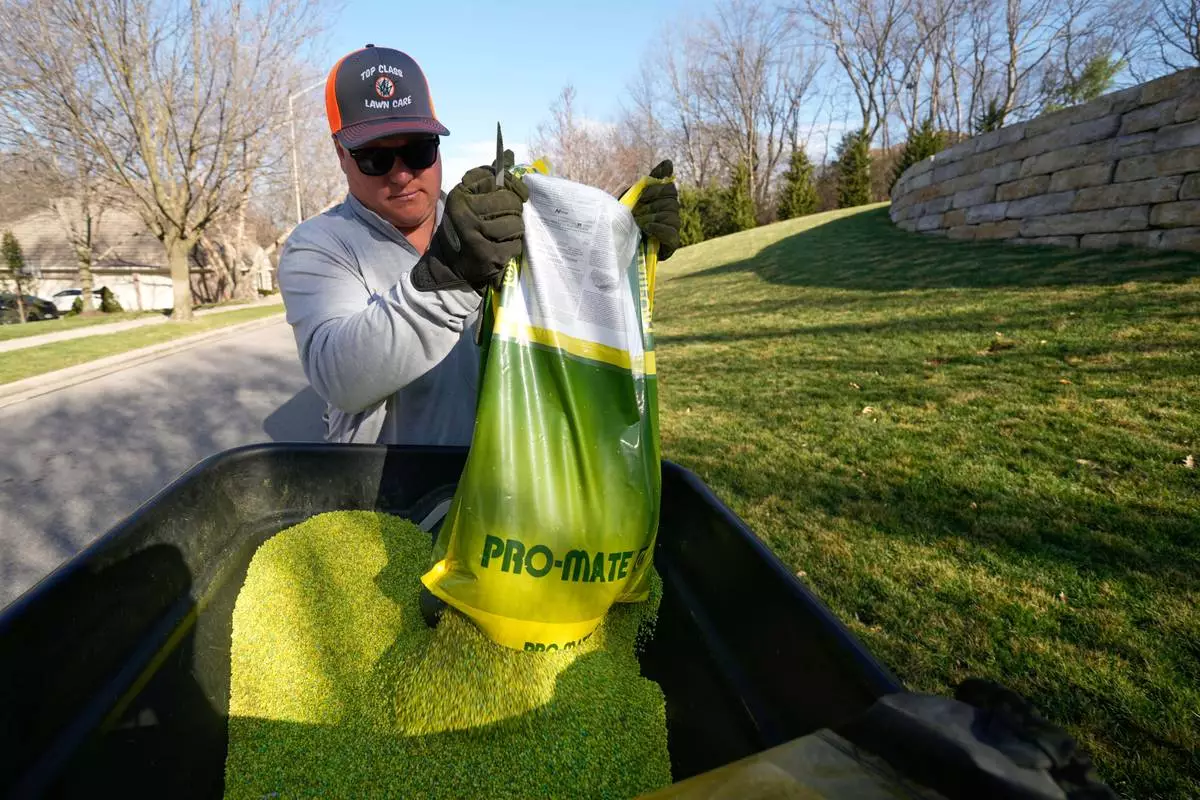
Top Class Lawn Care owner Jake Wilson dumps fertilizer into a hopper before applying it to a lawn Thursday, March 26, 2026, in Kansas City, Mo. (AP Photo/Charlie Riedel)
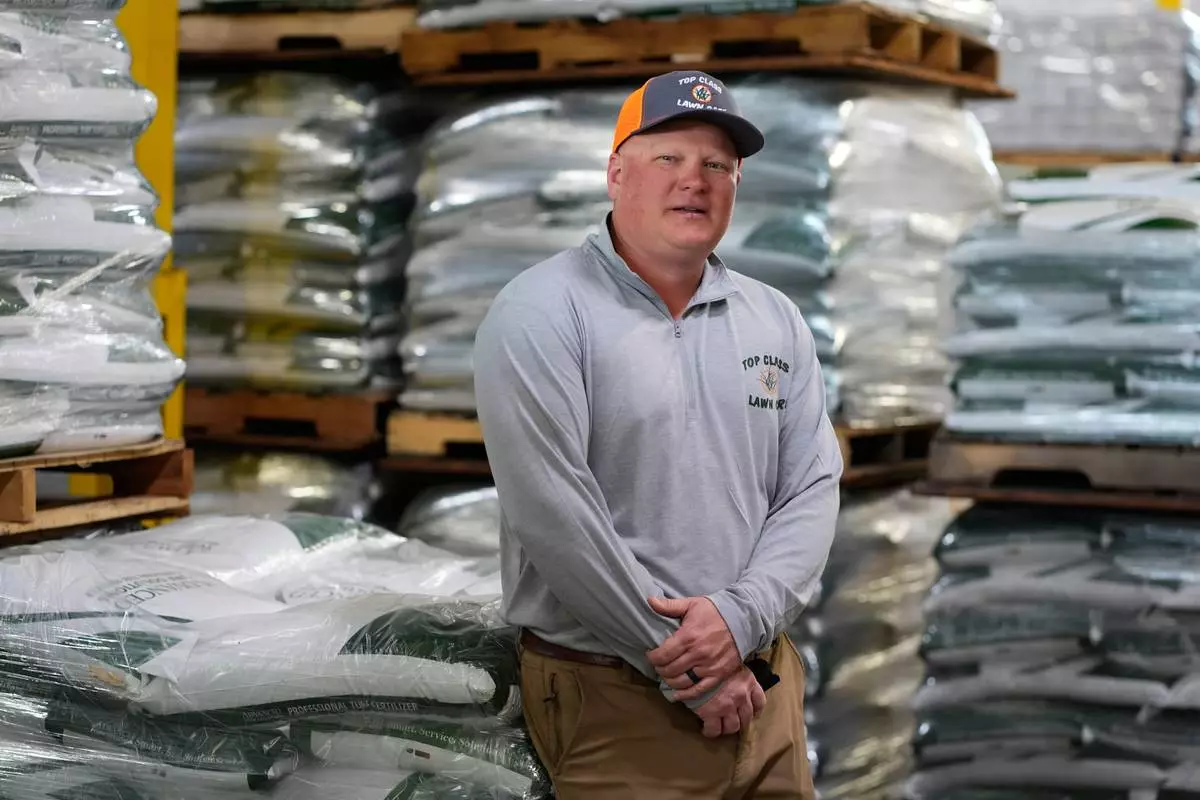
Top Class Lawn Care owner Jake Wilson stands by fertilizer he stockpiled at his supplier's warehouse in anticipation of Iran war related price hikes Thursday, March 26, 2026, in Riverside, Mo. (AP Photo/Charlie Riedel)
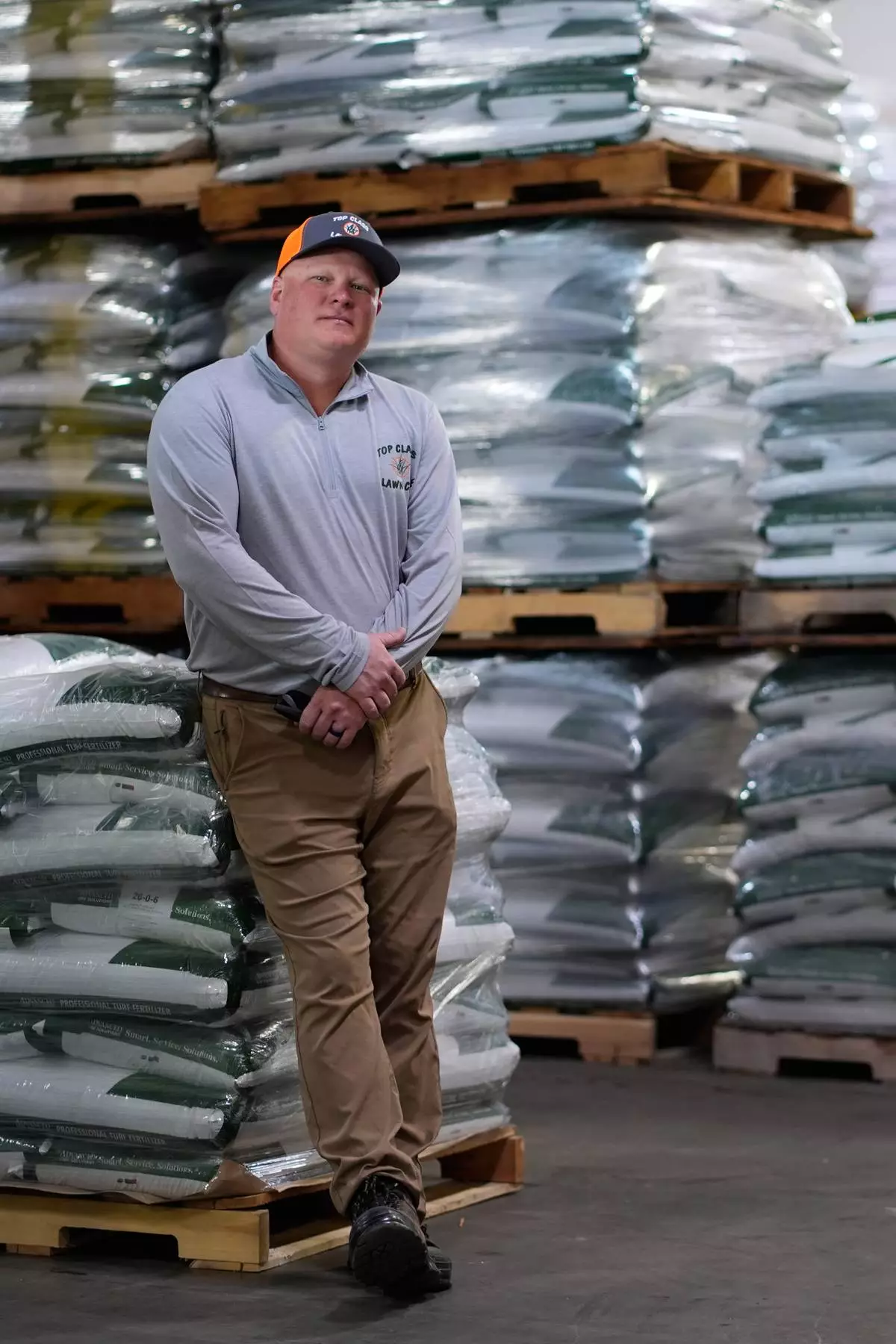
Top Class Lawn Care owner Jake Wilson stands by fertilizer he stockpiled at his supplier's warehouse in anticipation of Iran war related price hikes Thursday, March 26, 2026, in Riverside, Mo. (AP Photo/Charlie Riedel)
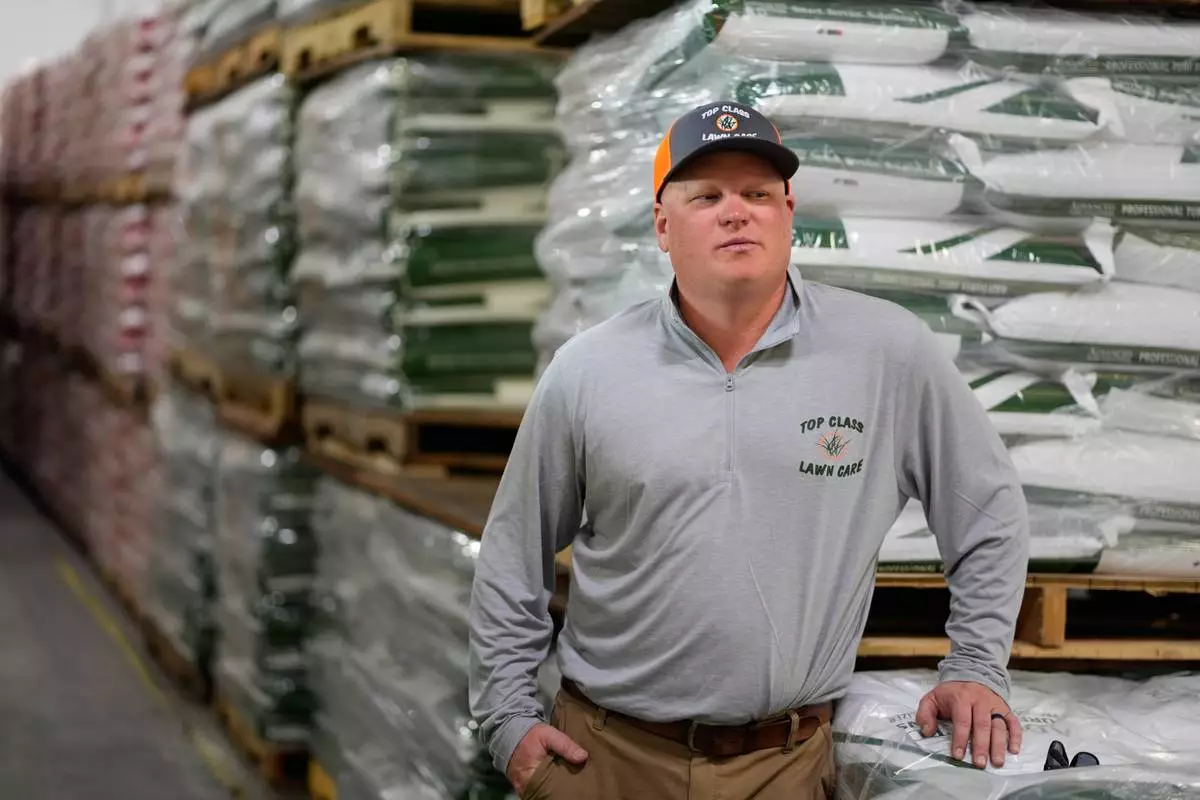
Top Class Lawn Care owner Jake Wilson stands by fertilizer he stockpiled at his supplier's warehouse in anticipation of Iran war related price hikes Thursday, March 26, 2026, in Riverside, Mo. (AP Photo/Charlie Riedel)

Top Class Lawn Care owner Jake Wilson fertilizes a lawn Thursday, March 26, 2026, in Kansas City, Mo. (AP Photo/Charlie Riedel)