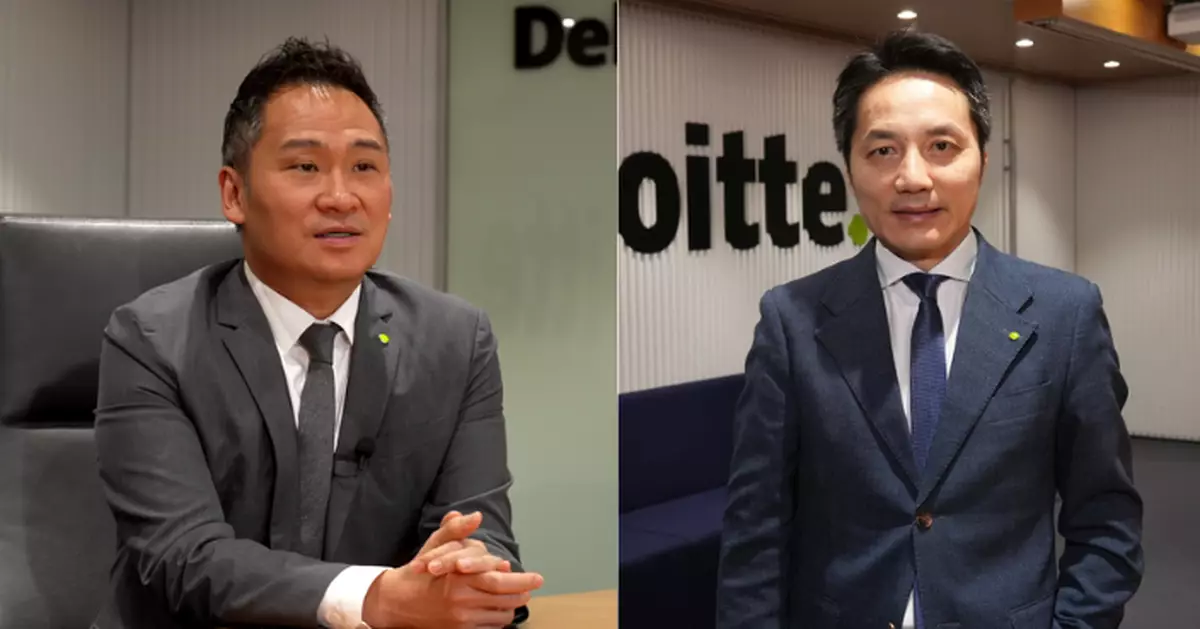
As a member of the GoGlobal Task Force, which assists Mainland enterprises in entering the global market, Deloitte has shared its experience and insights on companies' cross-border market expansion with Bastille Post. Mr. Edward Au, the Deloitte China Southern Region Managing Partner, expressed at the interview that Hong Kong can be regarded as the best testing ground for Mainland enterprises to go global. Through the window of Hong Kong, Mainland enterprises can gain access to international regulations. Over the years, Deloitte China has witnessed many successful examples of Mainland enterprises entering the global market through Hong Kong.
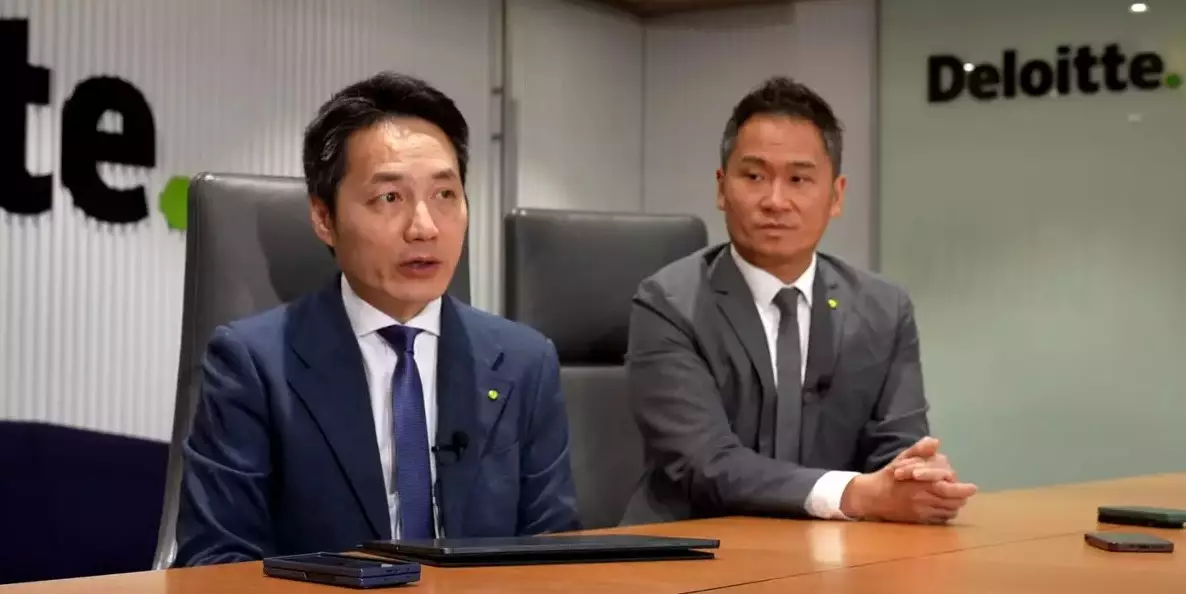
Mr. Edward Au, the Deloitte China Southern Region Managing Partner (left) and Mr. Allen Wong, the Deloitte China Hong Kong Business Managing Partner (right), Photo by Bastille Post
Mr. Au said that the main pain points for Mainland enterprises to go global are, first of all, their unfamiliarity with overseas regulations, such as which countries and regions can offer preferential policies, the feasibility of the market in different countries, etc. Deloitte can assist Mainland enterprises in being acquainted with relevant information and choosing the appropriate market to start business.
Click to Gallery
Mr. Edward Au, the Deloitte China Southern Region Managing Partner (left) and Mr. Allen Wong, the Deloitte China Hong Kong Business Managing Partner (right), Photo by Bastille Post
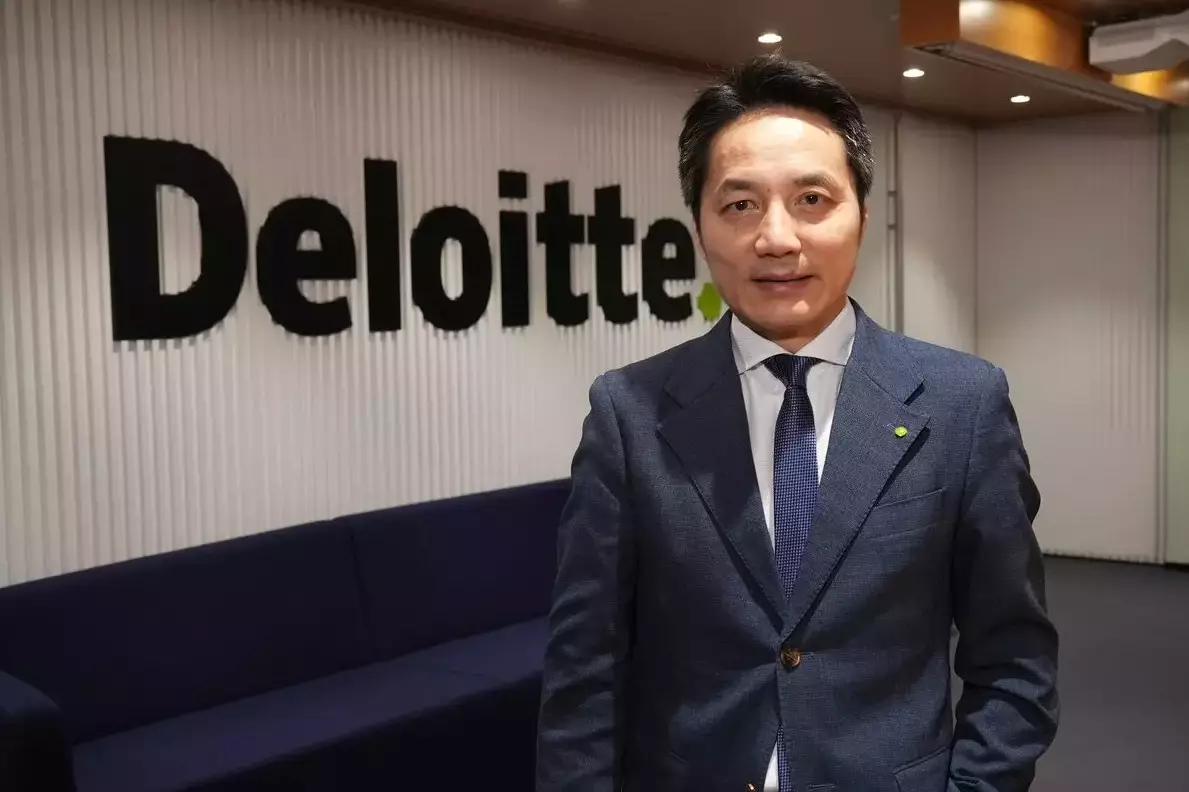
Mr. Edward Au, the Deloitte China Southern Region Managing Partner, Photo by Bastille Post
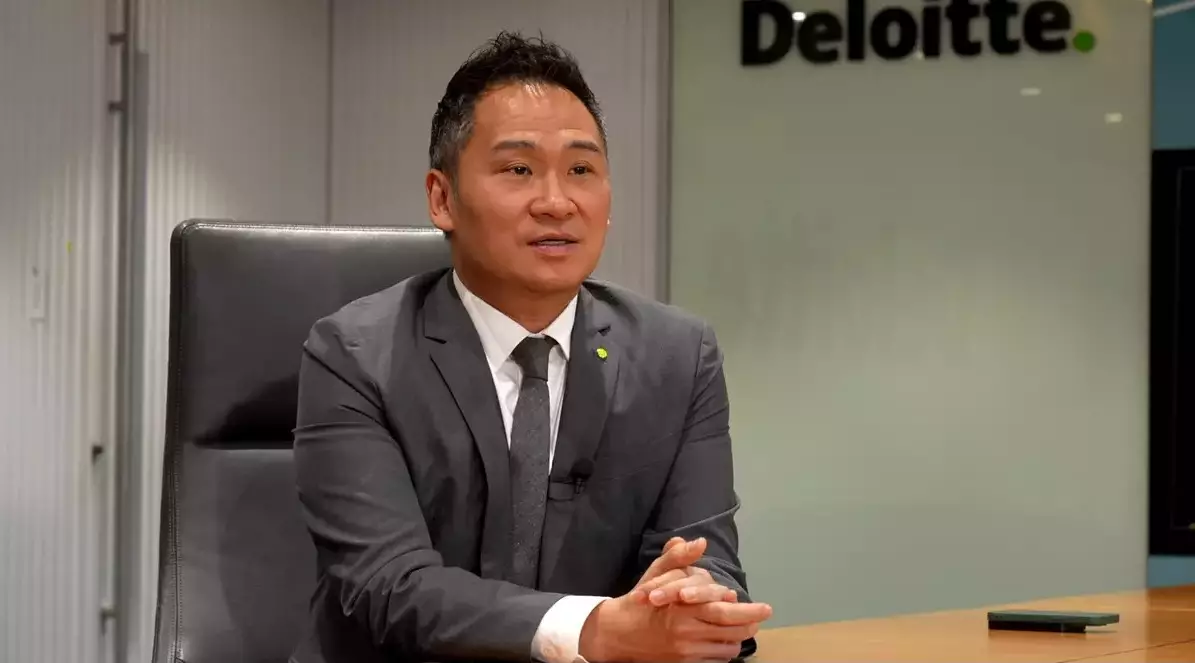
Mr. Allen Wong, the Deloitte China Hong Kong Business Managing Partner, Photo by Bastille Post

Reference image
Second, their adaptation to the compliance with overseas regulations, which encompasses both financial and operational aspects. For instance, European ESG regulations, carbon reduction requirements, etc. Moreover, the issue of handling cultural differences is also crucial. For example, every industry in Europe and America has its own union. Knowing the right path of handling such issues has a significant impact on the enterprise's possibility of entering the global market.
He said that after Mainland enterprises successfully listed on the Hong Kong Stock Exchange, the funds they have raised can be reserved in Hong Kong, bringing about the convenience of the free flow of funds. In addition, since Hong Kong is a platform for contacting international investors as well as a region that practices common law and shares numerous cultural similarities with the Chinese Mainland, it can be an ideal first stop for Mainland enterprises to go global.
Mr. Edward Au, the Deloitte China Southern Region Managing Partner, Photo by Bastille Post
A Battery Manufacturer Successfully Raised Funds in Hong Kong and Built Factories Overseas
Deloitte has cited several examples of enterprises' success in going global. First is a battery manufacturer that has expanded its market in the Middle East and Africa through Hong Kong. As a secondary listed company in Hong Kong in 2025, the enterprise raised funds to build battery factories in emerging markets. In 2024, the enterprise established an investment fund in Hong Kong to invest in global battery projects, demonstrating Hong Kong's role as an international investment platform. Moreover, the enterprise has also utilized Hong Kong's trade finance services to manage the supply chain capital requirements purchased from Africa, and taken advantage of Hong Kong's legal framework to sign cooperation agreements with enterprises from other countries.
A Fintech Company Expanded Business in 50 Countries from Hong Kong
Second, a fintech company has successfully obtained cross-border fintech licenses in Southeast Asia and the Middle East after establishing a collaboration with supervisory authorities in Hong Kong in 2024. In the future, it aims to further expand the market in Europe and Latin America. Besides, the enterprise has build a collaboration with financial institutions in Hong Kong in payment platform to provide multi-currency payment solutions to small and medium-sized enterprises. Through the platform advantage of Hong Kong, the enterprise has expanded its digital payment to 50 countries. Mr. Au said that Hong Kong's regulatory standards and its advantage of being in line with global market have established credibility for the enterprise.
A Tech Tycoon Built Its Data Center in Hong Kong to Expand Overseas Business
Third, a Mainland tech tycoon that plans to develop global cloud service and artificial intelligence, established a regional data center in Hong Kong in 2024 to focus on the management of cross-border data security. The tycoon has not only leveraged the innovation and technology ecosystem in Hong Kong to support its AI and cloud services in expanding into the markets of European, Middle Eastern and Latin America, but also collaborated with universities and research institutions in Hong Kong to utilize Hong Kong's intellectual property framework to apply for patent protection for their technologies in overseas markets in the aspect of AI technology.
An Electric Vehicle Manufacturer Utilized Hong Kong's Geographical Advantage to Enhance Export Efficiency
An electric vehicle manufacturer has made good use of Hong Kong's geographical advantage to simplify the export process of electric vehicles and related battery products to Southeast Asia and the Belt and Road countries, successfully enhancing the supply efficiency of its international market. In addition, the manufacturer has also utilized Hong Kong's role as an international financial center to obtain international capital.
The "HK LEAP" Strategy Aims to Promote the Transformation of Hong Kong's Economy
Deloitte announced the "Hong Kong Leap" strategy earlier in 2025, investing 500 million HKD to promote Hong Kong's economic transformation and planning to hire 1,000 talents in the coming years. One of the strategy's key focusing points is the development of artificial intelligence to assist enterprises in their AI transformation. Besides, Deloitte believes that inter-disciplinary talents with multiple capabilities would be the wealth that Hong Kong needs in the future. The policies of the government will be conducive to attracting various talents to Hong Kong.
Mr. Allen Wong, the Deloitte China Hong Kong Business Managing Partner, said that 2025 policy address proposed the aim of turning Hong Kong into a "super connector" and a "super value-adder" between the Mainland and the rest of the world as well as building the city into an international financial center and an international innovation center, which would be a development opportunity for Deloitte. Taking this into consideration, Deloitte has planned to invest 500 million HKD in related strategic deployments. As for the strategy plan, the 500 million HKD investment and 1,000 positions will mainly be allocated in three aspects: 1. Artificial intelligence, 2. Financial technology, 3. Capital market.
Mr. Allen Wong, the Deloitte China Hong Kong Business Managing Partner, Photo by Bastille Post
Committed to Assisting Clients in Their AI Transformation
In terms of artificial intelligence, Deloitte would mainly focus on assisting clients in their AI transformation. Mr. Wong stated that many enterprises are aware that AI can enhance efficiency and reduce efforts, but they are unsure how to use it efficiently. As for such a condition, Deloitte will assist clients in their AI transformation, including structural transformation. Currently, one of the obstacles for enterprises to use AI is the structural problem: How can AI and humans cooperate with each other? Nowadays, the application of artificial intelligence is still rather superficial, such as asking some questions to the AI. However, what AI can actually do is far more than that. For instance, AI can be utilized to assist enterprises in earning more money and improving their income statements. He believed that Hong Kong could achieve more fruit in the application of AI. Therefore, Deloitte has established an AI institution to study cases of enterprises using AI and provide feasible solutions to clients. Mr. Wong disclosed that Deloitte has provided artificial intelligence service assistance to dozens of clients up to now.
As for fintech. He said, in the aspects of Stablecoins, RWA (Real-World Assets), etc., Deloitte will formulate fintech strategies for different enterprises and institutions, including applying for licenses and due diligence, conducting independent evaluations. In the eyes of Mr. Wong, fintech would be an important factor for promoting future development.
As for the capital market, Deloitte would focus on the aspect of initial public offering (IPO), which is a field where a large number of talents would be needed, according to Mr. Wong.
Reference image
Up to now, Deloitte has accumulated a considerable number of related cases. Mr. Wong said that Deloitte's work in the above three aspects is not starting from scratch, but has a certain foundation instead. What Deloitte aims to conduct in the future is to transform the existing resources into a more systematic layout.
He stated that Deloitte has established partnerships with many institutions all along. Considering the geopolitical challenges Hong Kong is facing nowadays, Deloitte is collaborating with Standard Chartered to study how to rebalance clients' investment portfolios. In terms of family offices, Deloitte is cooperating with Bloomberg to obtain the newest information. As for the cooperation with the government, Deloitte has established a partnership with the Office for Attracting Strategic Enterprises (OASES) to assist in attracting foreign enterprises to Hong Kong and bringing in more partners in different fields.