BRUSSELS (AP) — European auditors said Wednesday that they’re unable to clearly trace the way that billions of euros are being spent out of a massive fund helping European Union countries rebuild their economies from damage caused by the COVID-19 pandemic.
The Recovery and Resilience Facility (RRF) was a system of grants and loans set up in 2020 as authorities in the 27 member countries shut borders, imposed lockdowns and scrambled for vaccines to try to stop the spread of the potentially fatal coronavirus. At the time, the world’s biggest trading bloc was in its deepest-ever recession.
By January this year, funding had reached an estimated 577 billion euros ($679 billion).
But in a new report, the European Court of Auditors said that it’s difficult to trace how countries allocated part of the money. Thousands of recipients of the funds, including many businesses or big consortiums, are not identified.
“Without this information, we cannot assess whether funds are fairly distributed, whether risks of concentration exist, whether EU money delivers value for citizens,” said Ivana Maletić, the court member who led the audit.
“Transparency is not a technical issue. It is a core condition for trust and accountability,” she told reporters.
The European Commission raised the money by borrowing on capital markets and disbursed it for projects that strengthen economies by making them more sustainable, environmentally friendly and digital.
The grants and loans were issued only when certain conditions were met by the recipients. It was a break with the past procedure, under which funds were usually disbursed based on how much a project would cost. Under RRF rules, national governments must also make public the biggest 100 beneficiaries.
The auditors said that of the 10 EU countries they looked at, the top 100 beneficiaries were almost exclusively national ministries, agencies and local or regional governments. Almost no public information is available about private sector recipients.
Maletić said that EU lawmakers looking into the possible misuse of funds regularly request information “about transfers and money going to different companies, big companies, consortia and so on. This is something that we don’t see.”
The auditors notably struggled to get details about recipients in France. The French authorities said that was because “it was too administratively burdensome to obtain information on final recipients and amounts paid, even upon request,” the report stated.
“You can imagine in France we have thousands and thousands of recipients,” Maletić said.
Cases of misuse have already arisen. Two years ago, police in Italy, Austria, Romania and Slovakia arrested 22 people as part of an investigation into the suspected siphoning of 600 million euros ($700 million) in post-pandemic relief funds.
The European Commission, for its part, criticized the auditors’ findings. The EU’s executive branch said that its hands were tied as rules governing the fund’s use were agreed on by 27 member countries.
It defended the use of conditions and the achievement of “milestones” for receiving funds.
The commission said that the fund's system of payment requests, progress reports and its detailed analysis of payment decisions and ongoing “engagement” with the member countries to “address inconsistencies” is all working.
But the auditors also worry that support in Europe for the conditions-based approach to joint funds is building and that it could be used in the EU's next long-term budget to disburse farm subsidies or infrastructure aid, which are significant chunks of the 7-year spending package.
Maletić said the milestones system is “not clear” and essentially boils down to “just a number of people getting different amounts. It’s really a model which cannot be applied to traditional policies.” The budget — which runs from 2028 to 2034 — could total around 2 trillion euros ($2.4 trillion).
The commission brushed off the auditors’ concerns, saying that in any case “the design of future legislative proposals" is up to the 27 member countries and the European Parliament.
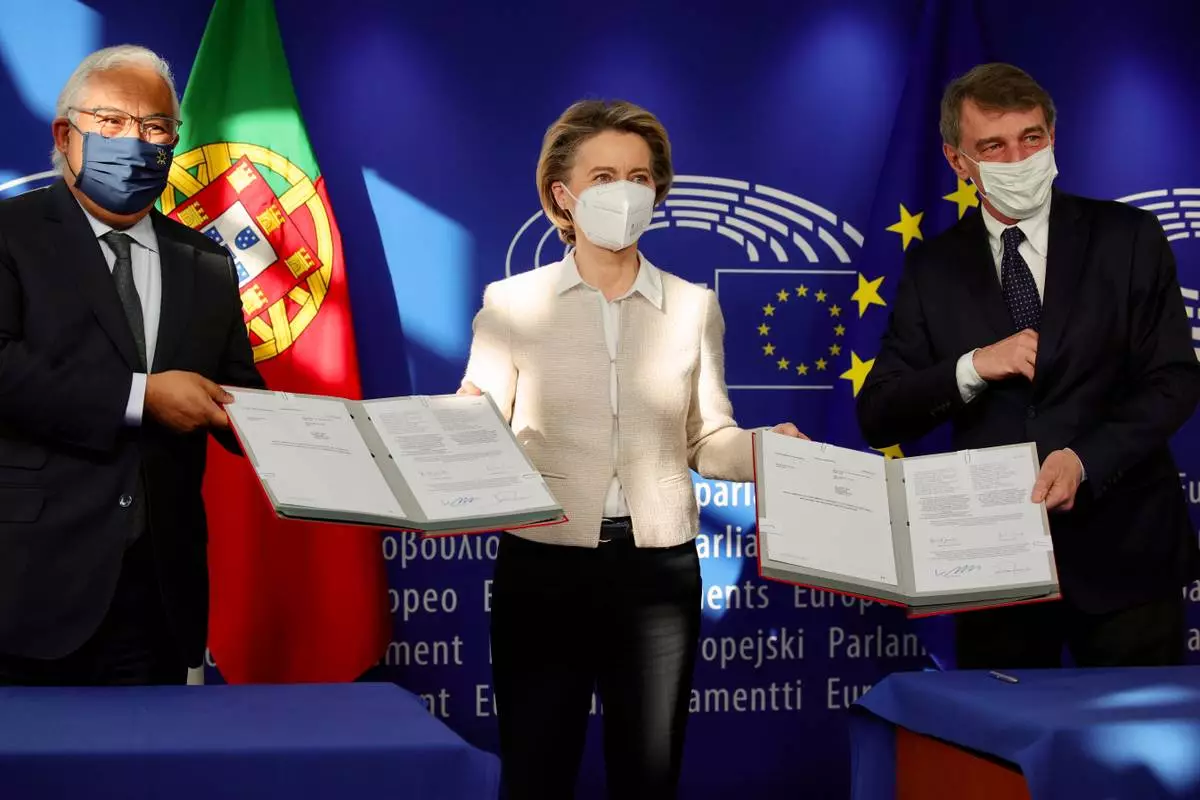
FILE - Portugal's Prime Minister Antonio Costa, left, European Commission President Ursula von der Leyen, center, and European Parliament President David Sassoli pose for photographers after a signing of the EU Recovery and Resilience Facility document, designed to help the bloc with the economic impact of COVID-19, at the European Parliament building in Brussels Friday, Feb. 12, 2021. (AP Photo/Olivier Matthys, File)
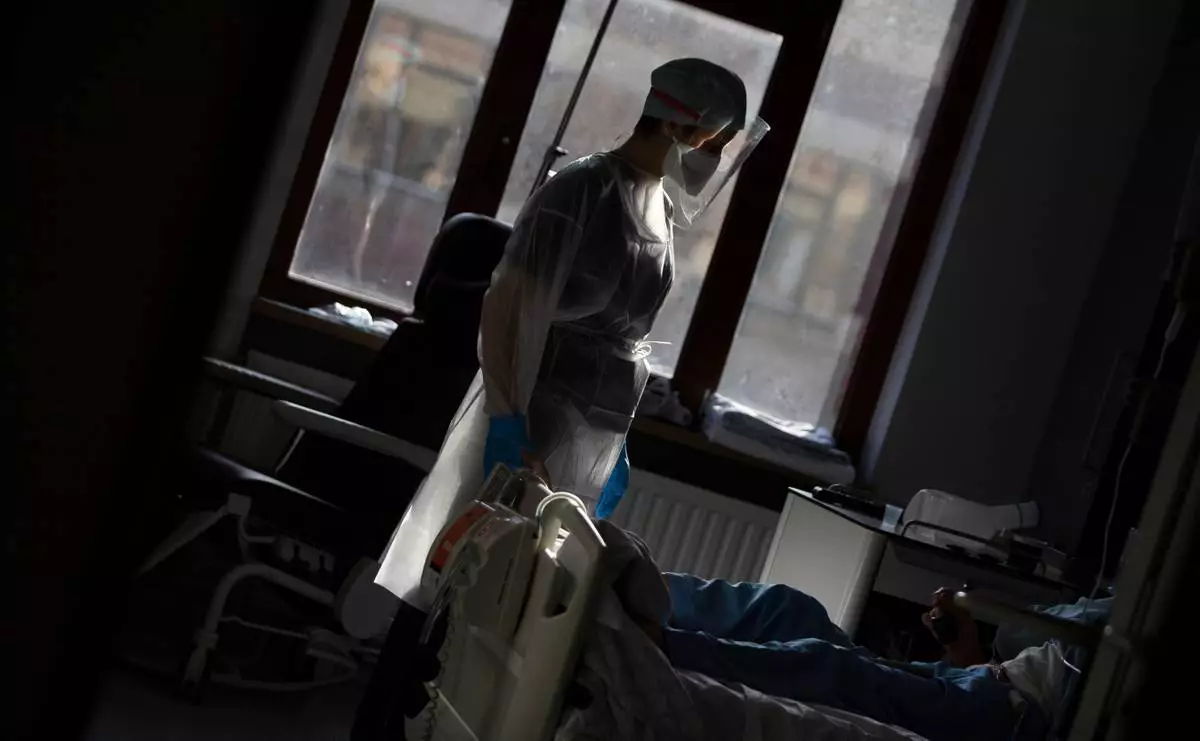
FILE - A medic from the Belgian Army tends to a patient with COVID-19 at the St. Michiel Hospital in Brussels, Tuesday, Nov. 24, 2020. (AP Photo/Virginia Mayo, File)
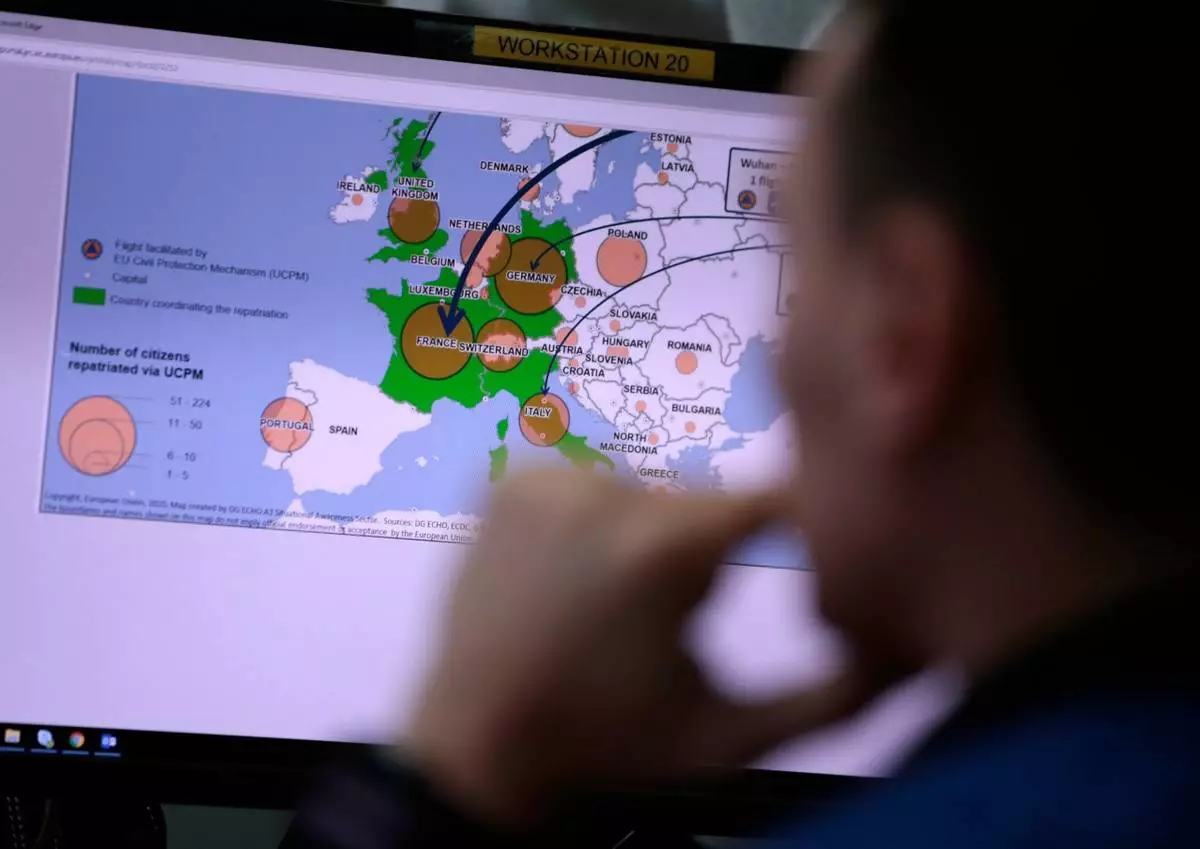
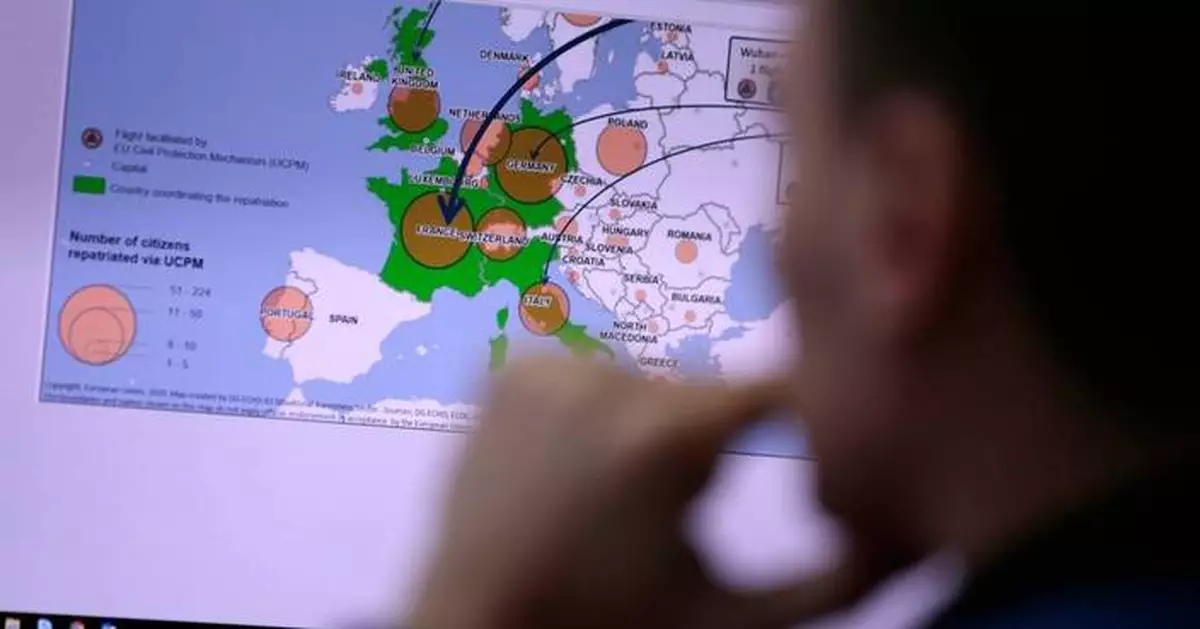
FILE - An employee at the Emergency Response Coordination Center in Brussels views a screen with graphics regarding the spread of the coronavirus, COVID-19, Monday, March 2, 2020. (AP Photo/Virginia Mayo, File)