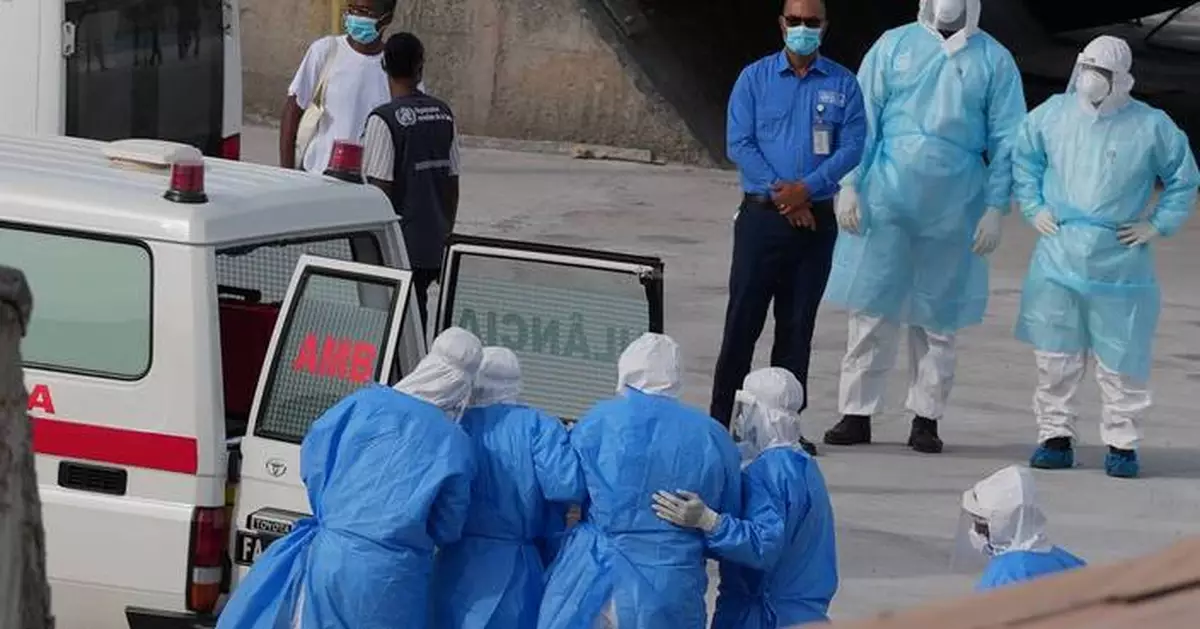
PRAIA, Cape Verde (AP) — Three cruise ship passengers with suspected hantavirus infections were flown to the Netherlands on Wednesday for treatment.
Three people have died and one body is still on the Dutch ship at the center of the outbreak, the MV Hondius, which is now heading for Spain’s Canary Islands. The patients were evacuated via the Cape Verde islands off West Africa.
Click to Gallery
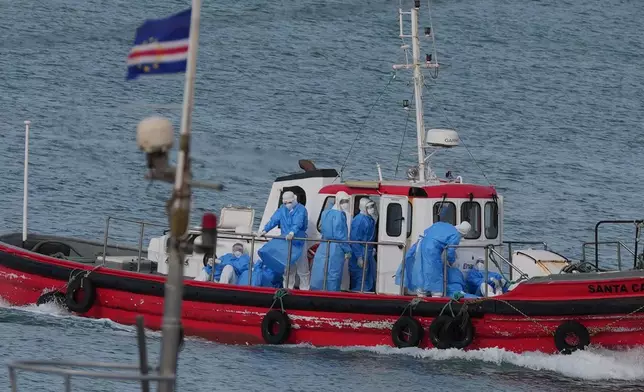
Health workers in protective gear arrive to evacuate patients from the MV Hondius cruise ship at a port in Praia, Cape Verde, Wednesday, May 6, 2026. (AP Photo/Misper Apawu)
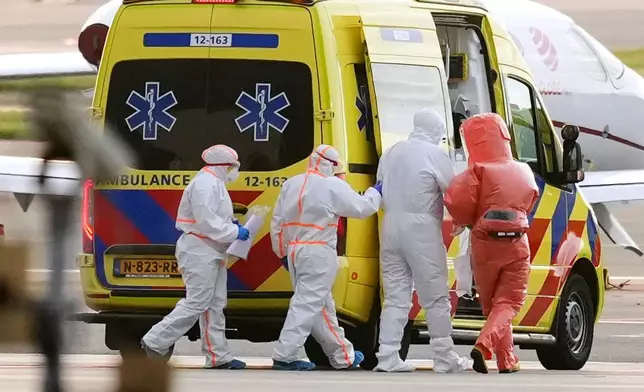
Medics escort a patient, second right, evacuated from the MV Hondius cruise ship with suspected hantavirus infection, to an ambulance after being flown to Schiphol airport, Amsterdam, Netherlands, Wednesday, May 6, 2026. (AP Photo/Peter Dejong)

Medical personnel in hazmat suits wait for patients, evacuated from the MV Hondius cruise ship with suspected hantavirus infection, at Schiphol airport, Amsterdam, Netherlands, Wednesday, May 6, 2026. (AP Photo/Peter Dejong)

An air ambulance takes off with evacuated patients from the MV Hondius cruise ship from the airport in Praia, Cape Verde, Wednesday, May 6, 2026. (AP Photo/Misper Apawu)
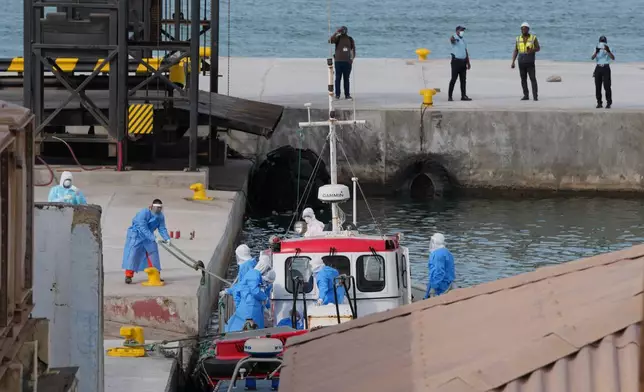
Health workers in protective gear evacuate patients from the MV Hondius cruise ship at a port in Praia, Cape Verde, Wednesday, May 6, 2026. (AP Photo/Misper Apawu)
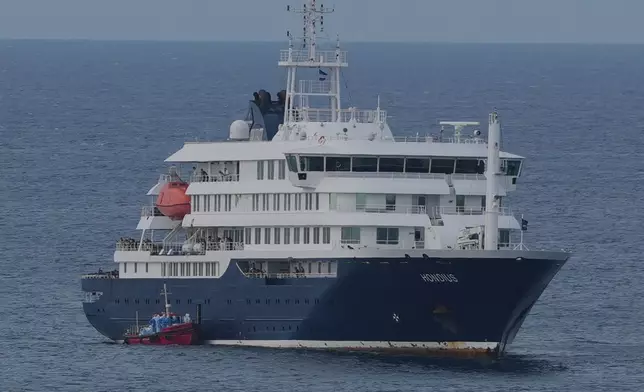
The MV Hondius cruise ship is anchored at a port in Praia, Cape Verde, Wednesday, May 6, 2026. (AP Photo/Misper Apawu)
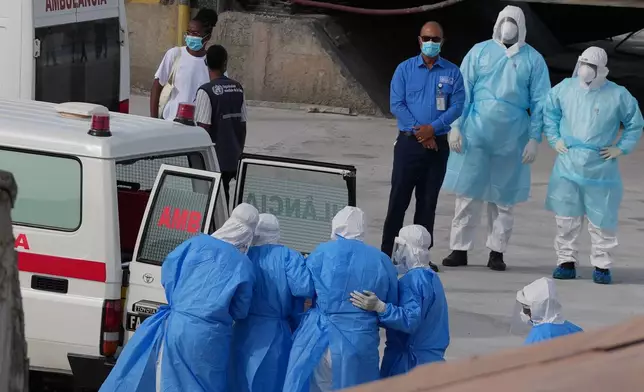
Health workers in protective gear evacuate patients from the MV Hondius cruise ship into an ambulance at a port in Praia, Cape Verde, Wednesday, May 6, 2026. (AP Photo/Misper Apawu)
About 150 passengers are isolating in their cabins, and officials say those on board show no symptoms.
The World Health Organization says the outbreak's global risk is low, with the organization’s top epidemic expert telling The Associated Press, “This is not the next COVID.” There have been eight cases, five of them confirmed by laboratory testing, the WHO says.
Hantavirus is a rare, rodent-borne illness that usually spreads when people inhale contaminated residue of rodent droppings. The Argentine government’s leading hypothesis is that a Dutch couple contracted the virus during a bird-watching tour at a garbage dump before boarding the cruise, according to two officials.
Here’s the latest:
An infection can rapidly progress and become life-threatening. Experts say it can start with symptoms including fever, chills, muscle aches and maybe a headache — much like the flu.
Symptoms of hantavirus pulmonary syndrome usually show between one to six weeks, or more, after contact with an infected rodent. As the infection progresses, patients might experience tightness in the chest as the lungs fill with fluid.
The other syndrome caused by hantavirus — known as hemorrhagic fever with renal syndrome, which can cause bleeding, high fever, and kidney failure — usually develops within a week or two after exposure.
Death rates vary by which hantavirus causes the illness. Hantavirus pulmonary syndrome is fatal in about 35% of people infected, while the death rate for hemorrhagic fever with renal syndrome varies from 1% to 15% of patients, according to the CDC.
The U.K. Health Security Agency says “a small number” of contacts of the two cruise passengers are also self-isolating.
Both the passengers and their contacts aren’t showing any symptoms. People who came into contact with them on their journey back to Britain are being traced.
The hantavirus incubation period can be one to six weeks, or more.
Some 19 British nationals and four British crew members were listed as being on the cruise. They’ll be flown back once the vessel arrives in the Canary Islands, as long as they do not have symptoms, the agency said.
Argentina’s Ministry of Health says it’s working with authorities across the country to retrace the winding path of the Dutch couple that became the first to fall ill with hantavirus on the cruise ship before dying.
The ministry said the couple arrived in Argentina on Nov. 27 last year and traveled 40 days by car before crossing into Chile on Jan. 7. They returned to Argentina on Jan. 31 for a road trip through various provinces, including Neuquén, in north-central Patagonia, and Misiones in the far northeast. On March 13, they visited Uruguay and returned a week later to Argentina’s southernmost town of Ushuaia, from where the stricken Atlantic cruise sailed.
Pursuing a hypothesis that the couple was infected by exposure to rodent droppings during a bird-watching tour at a landfill in Ushuaia, the government said it will send technical teams from the state-funded Malbrán Institute to analyze the possible presence of the virus in Ushuaia and the surrounding Tierra del Fuego Province. Tierra del Fuego has never reported a hantavirus case in its history.
Prof. Dr. Torsten Feldt, head of the tropical medicine department at University Hospital Duesseldorf, said the passenger ″has had contact with an infected individual’’ and ″to the best of our knowledge, is asymptomatic.”
He said the person would undergo an initial medical assessment and virological testing.
Another patient from the ship arrived Wednesday night at the Leiden University Medical Center in the Netherlands, according to Dutch national broadcaster NOS. The hospital did not identify the patient for privacy reasons.
Associated Press journalists saw two patients from the cruise ship arrive Wednesday evening at Amsterdam’s Schiphol Airport. One of them was taken away in a German ambulance, and the other in a Dutch ambulance.
The two patients were covered head-to-toe in white biohazard suits as they walked across the tarmac, flanked by people in similar protective clothing.
The World Health Organization said passengers are isolating in their cabins.
“Our days have been close to normal, just waiting for authorities to find a solution,” passenger Qasem Elhato, 31 — who sent AP the video footage — said via WhatsApp.
“But morale on the ship is high and we’re keeping ourselves busy with reading, watching movies, having hot drinks and that kind of things,” he said.
Dutch Foreign Minister Tom Berendsen said Wednesday that experts are assessing all risks from the passengers aboard the cruise ship, and the Dutch government is working with the WHO and the ship operator to manage the situation.
He spoke Wednesday evening, when two patients disembarked from a medical evacuation flight at Amsterdam’s Schiphol Airport for treatment in Dutch and German hospitals.
“It is important that we ensure we manage this as well as possible,” he said, according to Dutch national broadcaster NOS.
Frannie Twohig, a researcher and doctoral candidate, prepares samples of inactivated material as part of hantavirus research at the Center for Global Health at the University of New Mexico Health Sciences Center in Albuquerque, New Mexico, on Monday, May 4, 2026. (AP Photo/Susan Montoya Bryan)
There is no specific treatment or cure, but early medical attention can increase the chance of survival.
Despite years of research, many questions have yet to be answered, including why it can be mild for some people and severe for others and how antibodies are developed. Some researchers have been following patients over long periods of time in hopes of finding a treatment.
“In the Americas, hantavirus infection is very serious, but it’s also quite rare,” Bradfute said. “And so for a time that probably led to less research into it because of funding priorities, but I know there’s been a lot of interest in funding hantavirus work of late.”
What researchers do know is that rodent exposure is key.
The best way to avoid the germ is to minimize contact with rodents and their droppings. Use protective gloves and a bleach solution for cleaning up rodent droppings. Public health experts caution against sweeping or vacuuming, which can cause virus particles to get into the air.
After the medical evacuation flight landed at Amsterdam airport Wednesday evening, one patient disembarked and was put into a German ambulance and driven away.
Then a second patient got off the plane and was put into a Dutch ambulance and driven away. Other emergency vehicles remained on the tarmac nearby.
The WHO reported that in 2025, eight countries within the Americas had documented 229 cases and 59 deaths. In Argentina, the health ministry said hantavirus led to 28 deaths nationwide last year.
In the U.S., federal health officials began tracking the virus after a 1993 outbreak in the Four Corners region — the area where Arizona, Colorado, New Mexico and Utah meet. It was an astute physician with the Indian Health Service who first noticed a pattern of deaths among young patients.
Most U.S. cases are in Western states. New Mexico and Arizona are hot spots, likely because the odds are greater for mouse-human encounters in rural areas.
The cruise ship operator had said two of the passengers who were evacuated “remain in a serious condition.” The third has no symptoms but was “closely associated” with a passenger who died May 2.
Many local public health researchers attribute the increase to the recently accelerating effects of climate change.
Higher temperatures expand the virus’ range because, in part, as it gets warmer and ecosystems change, rodents that carry the virus can thrive in more places, experts say.
“With the climate changing, the epidemiological picture has completely changed,” said Hugo Pizzi, a prominent Argentine infectious disease specialist. “The ship may be an isolated case. But this virus isn’t going anywhere.”
▶ Read more
The cruise ship has been cleared to continue its voyage and the three patients were evacuated from the country “with maximum safety,” National Director of Health Angela Gomes said in a statement Wednesday.
Cape Verde is a group of islands about 450 miles (725 kilometers) off the west coast of Africa.
A German passenger’s body will be taken to Spain’s Canary Islands, where the cruise ship is set to be received, a World Health Organization official told the AP on Wednesday.
“The Cape Verdean authorities here could not take care of the body to cremate it. So it’s kept in a cold room and it’s going with the boat,” Ann Lindstrand, the WHO representative in Cape Verde, said.
The WHO has not yet verified if that passenger was a confirmed case of hantavirus.
The World Health Organization had previously confirmed three cases and five suspected ones.
Ann Lindstrand, the WHO representative in Cape Verde, said in a phone interview that a sample from the third patient evacuated from the ship is still being checked.
“So far of all the cases related to this boat, the eight cases, we now have five confirmed with laboratory testing for Andes virus,” she said. “So it’s quite a lot.”
Two passengers left the cruise ship at different islands in the South Atlantic and traveled to South Africa. One has died and the other remains hospitalized.
Health officials in that country have identified 62 people — airplane passengers, airport workers, health workers, hospital cleaners, port of entry officials and others — who likely had contact with those two patients.
So far, officials have tracked down 42 of them, and none tested positive for hantavirus. However, some of the 20 people still being traced may have traveled to other countries, the health ministry said in a report.
A plane evacuating two of the patients with suspected hantavirus infections from the cruise ship off Cape Verde is stopping at an airport in the Canary Islands to refuel, the Spanish health ministry said.
A flight tracker showed the small plane circling near the island of Gran Canaria where it is expected to make its short stop before continuing on to the Netherlands.
Samples taken earlier from the patients now evacuated from the ship were examined and also confirmed to be the Andes type, the World Health Organization said at a briefing Wednesday.
The WHO says the Andes virus is found in South America, primarily in Argentina and Chile, and can spread between people, though that’s rare and only through close contact.
The cruise ship will be leaving Cape Verde in around two hours and has gotten medical reinforcement after its doctor became sick and was evacuated, Ann Lindstrand, WHO representative in Cape Verde, said at the briefing.
“One medical doctor from WHO ... will be taking care of patients if there will be more cases on board,” Lindstrand said.
The World Health Organization’s top epidemic expert told the AP that the risk to the public is low, and the Andes type of the hantavirus is known — even if the WHO has never seen a hantavirus outbreak on a ship.
“This is not the next Covid, but it is a serious infectious disease,” Maria Van Kerkhove said. “Most people will never be exposed to this.”
For those on the ship, access to clinical care is important, she said, because infected people can develop severe acute respiratory distress and need oxygen or mechanical ventilation. The hantavirus incubation period can be one to six weeks, or more, she added.
Two Argentine officials investigating the origins of the hantavirus outbreak on the cruise ship that sailed from southern Argentina say the government’s leading hypothesis is that a Dutch couple contracted the virus during a bird-watching outing in the city of Ushuaia before boarding.
They said the couple visited a landfill during the bird-watching tour where they may have been exposed to rodents carrying the infection.
The officials spoke on condition of anonymity because they were not authorized to brief the media, with the investigation ongoing. Previously authorities said that Ushuaia and the surrounding province of Tierra del Fuego had never recorded a case of the hantavirus.
— By Isabel DeBre
Oceanwide Expeditions says they are being taken by specially equipped planes to “locations able to provide specialized care and appropriate medical screening.”
A Dutch hospital has confirmed it will take one of the people, and German authorities say they are preparing to pick up a second from the Netherlands.
The Dutch company says two of the people medically evacuated “remain in a serious condition.” The third has no symptoms but was “closely associated” with a passenger who died May 2.
The company also says that it is “expanding medical care on board with two infectious disease physicians, arriving today by plane from the Netherlands.”
The Leiden University Medical Center says the department where the patient will be seen is well prepared.
In a statement posted on its website, the hospital said, “In addition to isolation rooms for patients, all protective equipment for our staff is available. Treatment takes place in strict isolation, following the applicable protocols. The LUMC has specialized isolation facilities."
It also seeks to reassure other visitors to the hospital, saying patients or visitors “run no risk of infection. You do not need to take any special measures. You can continue to visit as usual.”
In Germany, the Düsseldorf University Clinic said that one of the three passengers who was evacuated from the ship and is being flown to the Netherlands, who was in contact with one of the hantavirus cases on board the ship, would be brought to the hospital for testing later Wednesday.
It said in a statement that the person would be brought to Düsseldorf from an unspecified Dutch airport with the help of specialists from the city’s fire service.
The hospital stressed that the patient is asymptomatic and that the testing is a precaution.
The arrival of the boat “won’t represent any risk for the public,” Spanish Health Minister Mónica García said.
She said that the boat will arrive at a secondary port on the island of Tenerife, which is located 10 minutes from an airport. From there, the roughly 140 passengers will be repatriated to their home countries.
García said that the operation to send the passengers and crew home will be overseen by the European Union’s civil protection program.
The 14 Spaniards who are on board will be flown by military plane to the mainland, where, if necessary, they will be kept in quarantine.
The regional president of Spain’s Canary Islands, Fernando Clavijo, said Wednesday that the Hondius had requested permission for the ship to dock on the island of Tenerife on May 9.
Clavijo, however, expressed his surprise that the passengers were being forced “to travel for three days” instead of flying to their homes from the airport in Praia.
He also complained that central authorities in Madrid had not informed him of the details of the circumstances on board the vessel, a situation that limited local health officials’ ability to prepare for its arrival.
“We still don’t know the status of all the passengers,” he said. “There is no protocol for this.”
Oceanwide Expeditions said Tuesday evening that two specialized aircraft were flying to Cape Verde to evacuate two people who need urgent medical care and one person who was traveling with a German woman who died on board Saturday. They were to be taken to the Netherlands, though exactly when that would happen was not immediately clear.
Once the medical evacuation happens, the ship plans to sail to the Canary Islands, either Gran Canaria or Tenerife, a voyage of some three days, the company said in its statement, adding that “discussions are ongoing with relevant authorities.”
Spanish health officials had said in an earlier statement that they were monitoring and that “the most appropriate port of call will be decided. Until then, the Ministry of Health will not adopt any decision, as we have informed the World Health Organization.”
The World Health Organization has said the ship had an itinerary that included stops across the South Atlantic Ocean, including mainland Antarctica and the remote islands of South Georgia, Nightingale Island, Tristan da Cunha, St. Helena and Ascension.
The cruise company has only announced some details of two stops: at St. Helena, where the body of the Dutch man suspected to be the first hantavirus case on board was taken off the ship. His wife also left the ship at St. Helena and flew to South Africa, where she died.
The company said a British man was later evacuated from the ship at Ascension Island and taken to South Africa, where he is in an intensive care unit.
The company has not said if other people left the cruise ship at those or other locations.
The cruise ship will be welcomed to Spain’s Canary Islands, according to Spanish authorities, as the vessel waited off the coast of West Africa for a third day Wednesday for sick passengers to be evacuated.
The regional president of Spain’s Canary Islands, Fernando Clavijo, said Wednesday that he was worried the arrival of the ship could put the local population at risk and demanded an urgent meeting with Spanish Prime Minister Pedro Sánchez.
“Neither the populace nor the government of the Canary Islands can rest assured because it is clear that the danger to the population is real,” Clavijo told Onda Cero radio.
South African health authorities said they identified the Andes strain of hantavirus in two passengers who were on the ship, and Swiss authorities said they identified the same virus in their affected patient.
The World Health Organization says the Andes virus, a specific species of hantavirus, is found in South America, primarily in Argentina and Chile.
The Andes virus can be spread between people, though this is rare and the spread of the disease is typically contained because it would spread only through close contact, such as by sharing a bed or sharing food, experts say.
The South African Department of Health said its results came from tests performed on the passengers after they were removed from the ship and flown to South Africa.
One of the passengers, a British man, is in intensive care in a South African hospital. Tests were performed on the other passenger posthumously after she died in South Africa.
The cruise ship at the center of a deadly hantavirus outbreak and which is stuck off the coast of Cape Verde with nearly 150 people on board was waiting Wednesday to head to Spain’s Canary Islands. Meanwhile, health authorities in South Africa and Switzerland identified a strain of the virus that can be transmitted between humans in rare cases.
Three passengers have died and several others have been sickened by hantavirus on board the Dutch-flagged MV Hondius cruise ship. Hantavirus usually spreads by inhaling contaminated rodent droppings.
The ship left Argentina on April 1 on an Atlantic cruise and was scheduled to include stops in Antarctica, the Falkland Islands and other locations. However, the itinerary appears to have changed because of the situation on board.
The head of the World Health Organization, Tedros Adhanom Ghebreyesus, said three patients with suspected hantavirus cases have been evacuated from the ship and are on their way to the Netherlands.
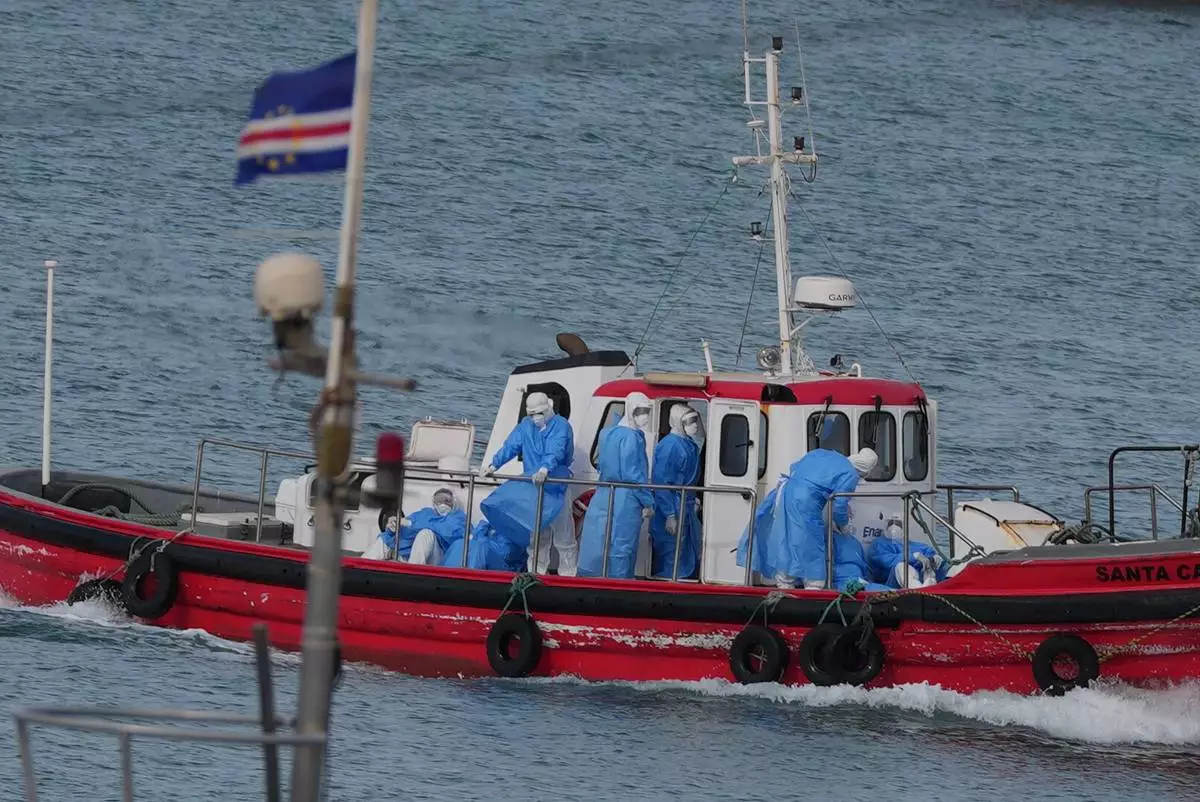
Health workers in protective gear arrive to evacuate patients from the MV Hondius cruise ship at a port in Praia, Cape Verde, Wednesday, May 6, 2026. (AP Photo/Misper Apawu)
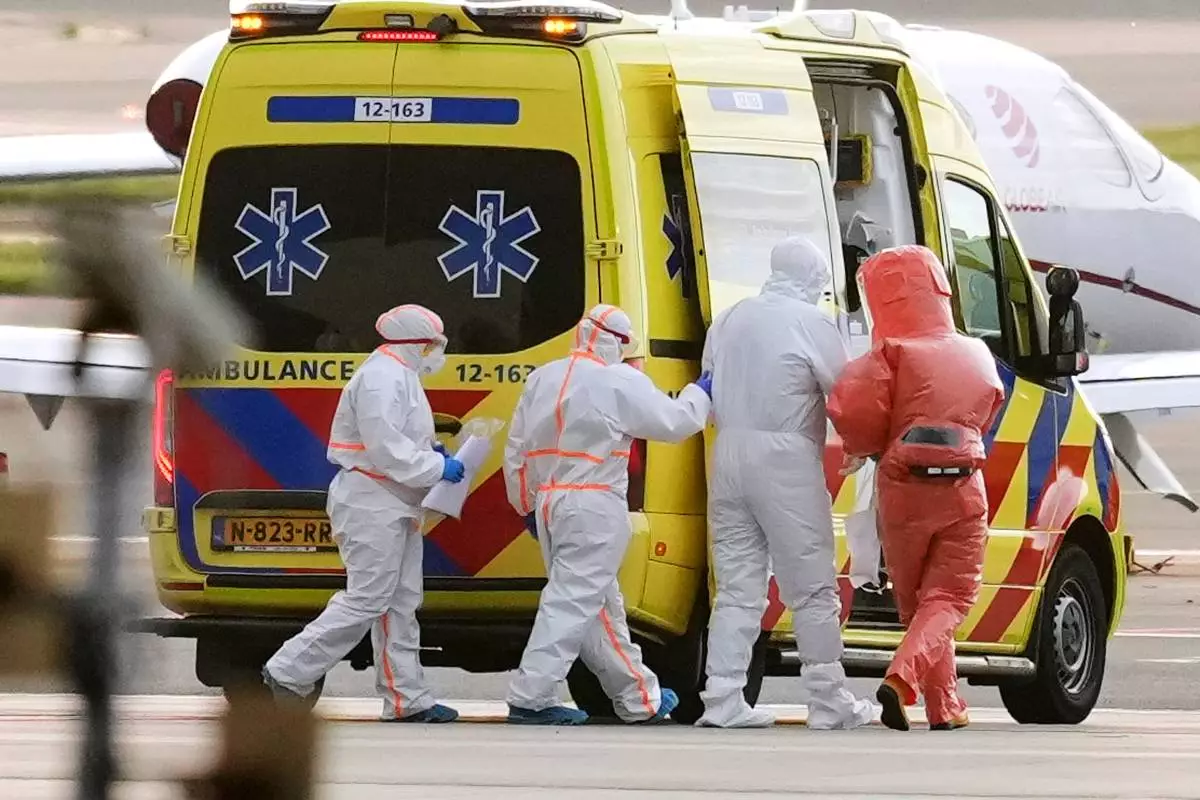
Medics escort a patient, second right, evacuated from the MV Hondius cruise ship with suspected hantavirus infection, to an ambulance after being flown to Schiphol airport, Amsterdam, Netherlands, Wednesday, May 6, 2026. (AP Photo/Peter Dejong)
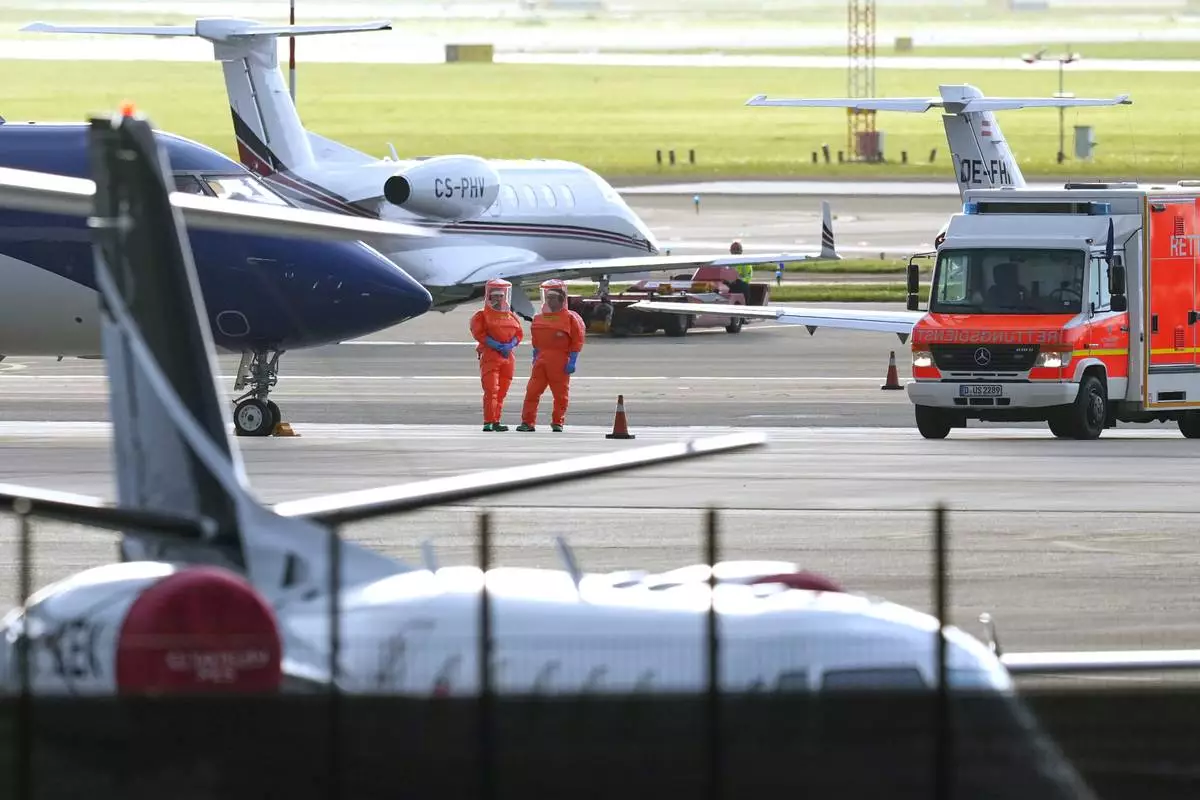
Medical personnel in hazmat suits wait for patients, evacuated from the MV Hondius cruise ship with suspected hantavirus infection, at Schiphol airport, Amsterdam, Netherlands, Wednesday, May 6, 2026. (AP Photo/Peter Dejong)
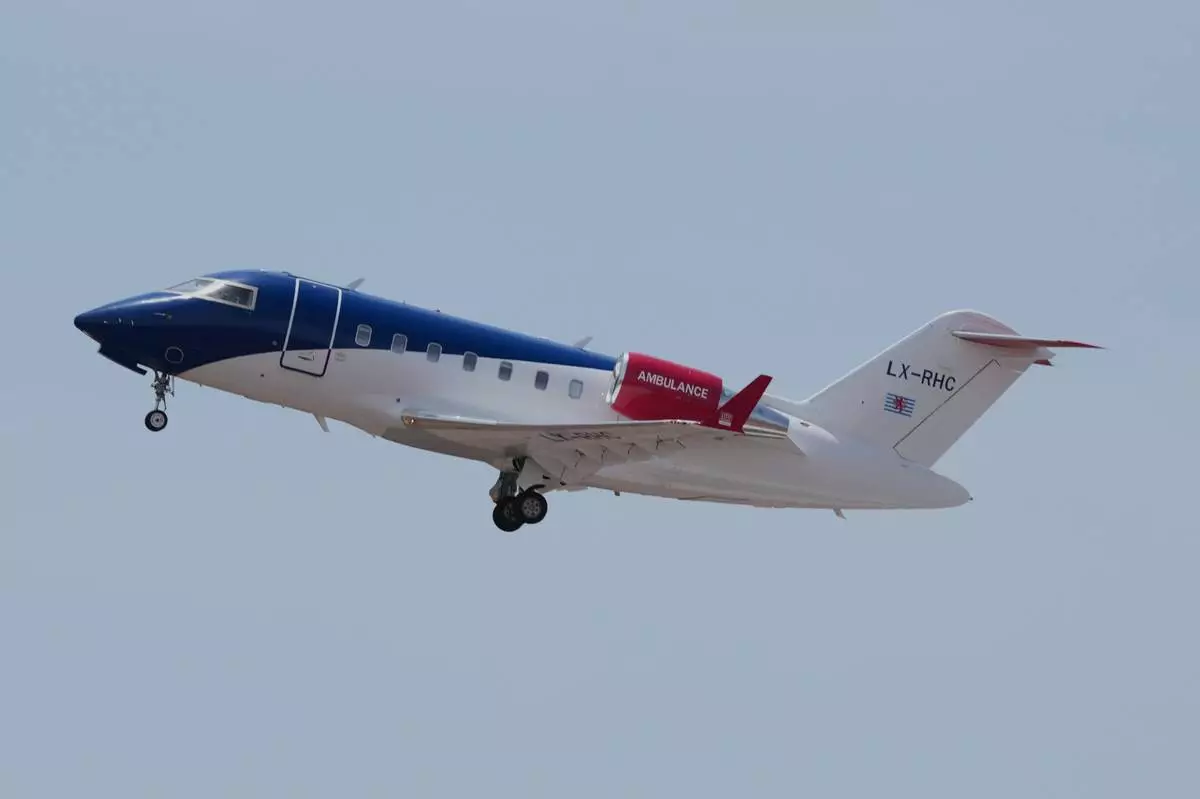
An air ambulance takes off with evacuated patients from the MV Hondius cruise ship from the airport in Praia, Cape Verde, Wednesday, May 6, 2026. (AP Photo/Misper Apawu)
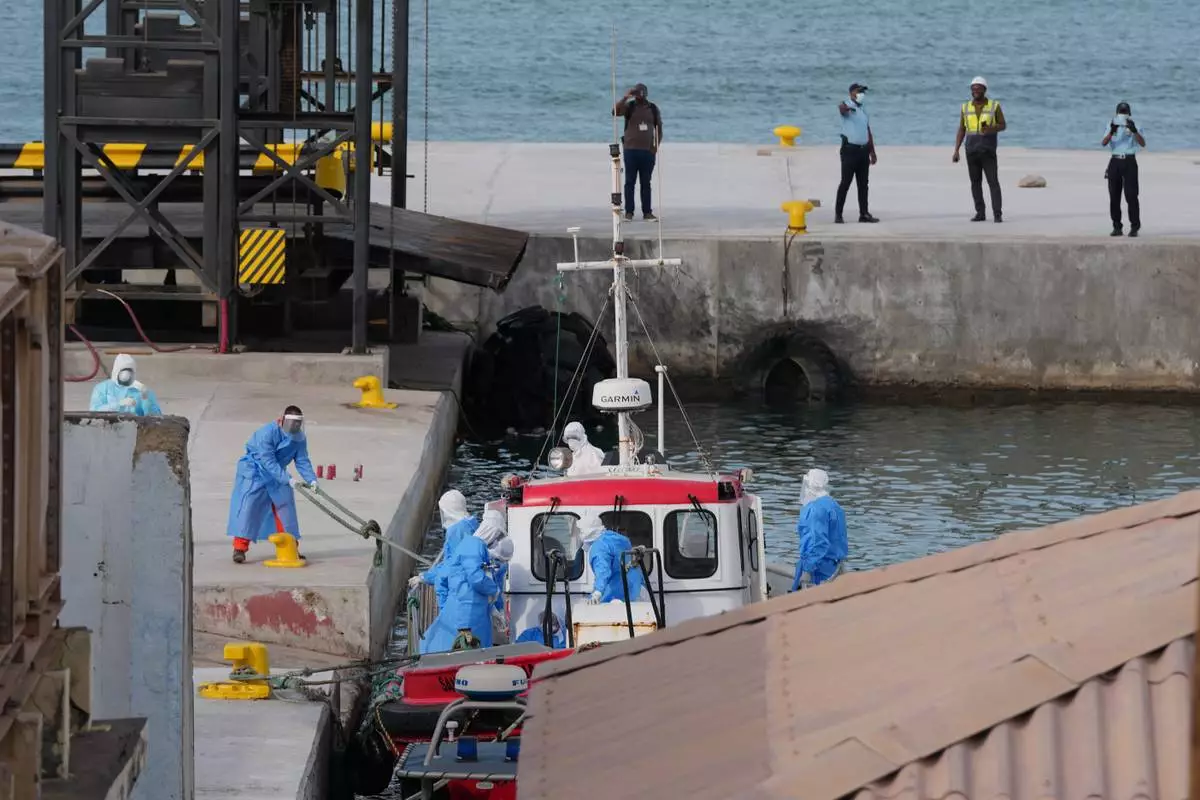
Health workers in protective gear evacuate patients from the MV Hondius cruise ship at a port in Praia, Cape Verde, Wednesday, May 6, 2026. (AP Photo/Misper Apawu)
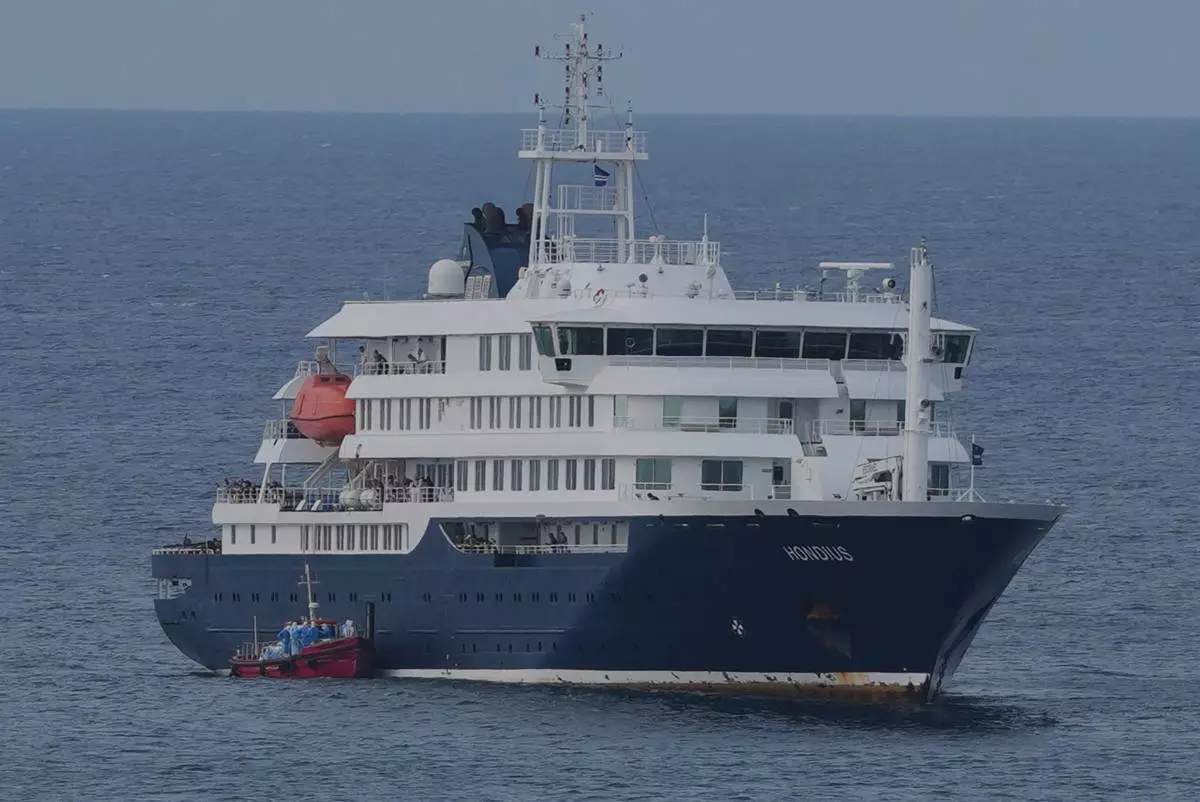
The MV Hondius cruise ship is anchored at a port in Praia, Cape Verde, Wednesday, May 6, 2026. (AP Photo/Misper Apawu)
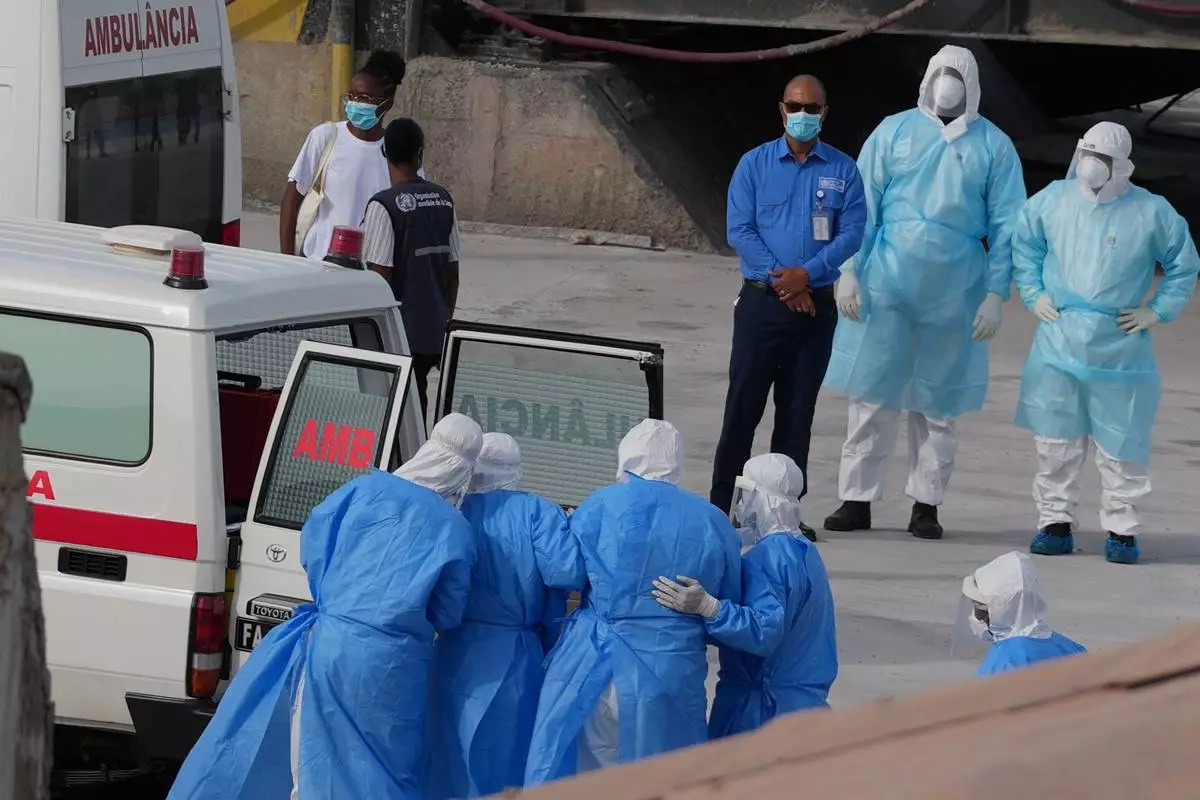
Health workers in protective gear evacuate patients from the MV Hondius cruise ship into an ambulance at a port in Praia, Cape Verde, Wednesday, May 6, 2026. (AP Photo/Misper Apawu)