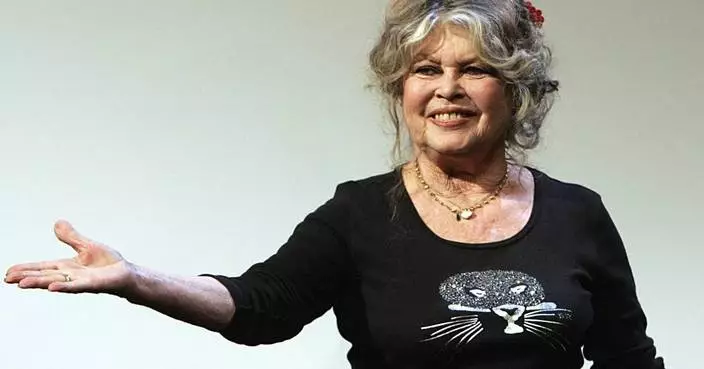
Their mutual friend Gong Hyo Jin even made a fun joke: 'Why it isn't me to marry Gong Yoo?'

A rumor has been widely spread online saying that: 'Gong Yoo is getting married~ He made a reservation at Shilla Hotel yesterday, and someone working there leaked the information. The wedding’s with Jung Yoo Mi.'
Both are famous actor and actress of the movie 'Train To Busan' and 'Silenced'.

As countless fans were heartbroken, their agency Soop Entertainment soon released a statement to clarify: 'The marriage rumors between Gong Yoo and Jung Yoo Mi aren’t true at all. The two aren’t even like siblings; they’re like brothers. Gong Yoo treats Jung Yoo Mi like a younger brother.'

Humourous reply amuses the public. But wait, the drama has not ended. Gong Hyo Jin, who’s also under Soop Entertainment, commented under the post, “It’s driving me crazy. Why isn’t he ever rumored to be [dating] me? I hate that more!”
“We’re just always known as the Gong siblings?!” she further joked.

Authorities in China’s Xinjiang region are threatening detention over downloading, sharing or listening to a wide range of Uyghur-language songs, the AP has found. The policy was revealed in a leaked recording of a public meeting last October in the city of Kashgar in Xinjiang, home to 11 million Uyghurs and other mostly Turkic ethnic minorities.
The leaked recording, shared exclusively with AP by Norway-based nonprofit Uyghur Hjelp, suggests that forms of repression continue in the region. A United Nations report in 2022 said China may have committed crimes against humanity in Xinjiang through its campaign of internment and political indoctrination that unfolded primarily between 2017 and 2019.
Here are the main takeaways from AP’s report:
During a meeting last October, police and other authorities in Kashgar warned residents that those who listened to so-called “problematic” Uyghur songs, stored them on their devices or shared them on social media could face detention.
Authorities played a pre-recorded message that included examples of banned songs, ranging from folk ballades to rap tunes and newer songs developed in the Uyghur diaspora.
The policy has been corroborated by AP interviews with two former Xinjiang residents who said their family members and friends have been detained for playing and sharing Uyghur music, and that police searched their or others’ phones looking for banned songs.
The AP also reviewed the court verdict of Uyghur music producer Yashar Xiaohelaiti, who was sentenced last year to three years in prison for uploading to his cloud account songs deemed sensitive.
There are seven categories of problematic songs that authorities warned residents to keep away from. These included songs with religious references; songs that “twist the Uyghurs’ history” and incite separatism; songs that smear the Chinese Communist Party’s rule of Xinjiang and incite terrorism and extremism; tunes that encourage resentment toward the government; and songs that advocate “filthy and dirty thoughts and behavior.”
In practice, almost any Uyghur-language song could be targeted, experts say. Problematic songs given as examples during the meeting included “Besh pede,” a popular folk song depicting a love story and that includes the word “God;” and “Forefathers,” a decades-old patriotic song by famed Uyghur musician Abdurehim Heyit, who was detained during the crackdown.
Those found listening to or sharing the banned songs could be “heavily prosecuted,” authorities warned. They did not specify punishment — something that usually gives authorities flexibility in enforcement — but gave the example of several people who had served 10 days in detention for being found with banned songs.
For one Uyghur music producer, Yashar Xiaohelaiti, the punishment has been much more severe. Xiaohelaiti was sentenced to three years in prison last year on charges of promoting extremism after uploading 42 “problematic” songs that he had produced to his account on NetEase Cloud Music, a Chinese music streaming service, according to a court verdict seen by AP.
The Chinese government insists that minorities in Xinjiang can freely express their culture and religion. Yet the renewed crackdown in the form of the songs ban suggests forms of repression continue, experts say.
“I think that most of the forms of repression that we saw in 2017-18-19 have either continued or gotten worse,” said Rian Thum, a senior lecturer in East Asian history at the University of Manchester. “The one thing that’s gone down is the number of people in reeducation camps and the visibility of security measures like roadblocks.”
Other, less conspicuous forms of control include the expansion of boarding schools, where middle-schoolers are educated while separated from their families and learn almost exclusively in Mandarin Chinese, he added, and random checks of phones for sensitive material including banned songs.

Rahima Mahmut, Uyghur human rights activist, performs with the London Uyghur Ensemble during an interview with The Associated Press in London, Wednesday, Oct. 8, 2025. (AP Photo/Joanna Chan)