Skip to Content Facebook Feature Image

What do dog-related phrases say about Chinese culture?

China

What do dog-related phrases say about Chinese culture?
China

China

What do dog-related phrases say about Chinese culture?

2018-02-12 12:19 Last Updated At:12:19

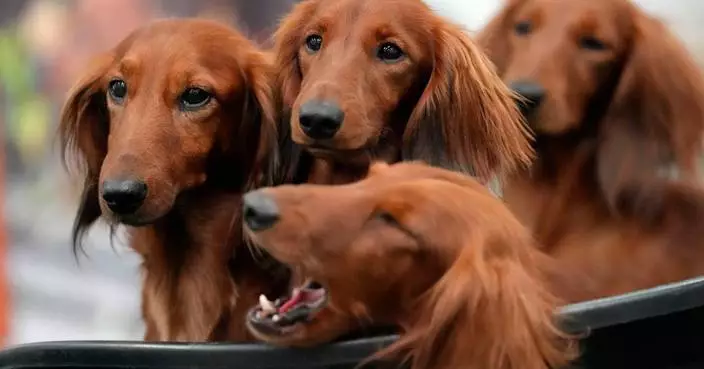
With the Year of the Dog just around the corner, Chinese may find it hard to stick to the routine of sending zodiac sign themed blessings, since dog-related words in Chinese generally have negative connotations. However, things have been changing in the past few recent years.
Self-mockery

More Images

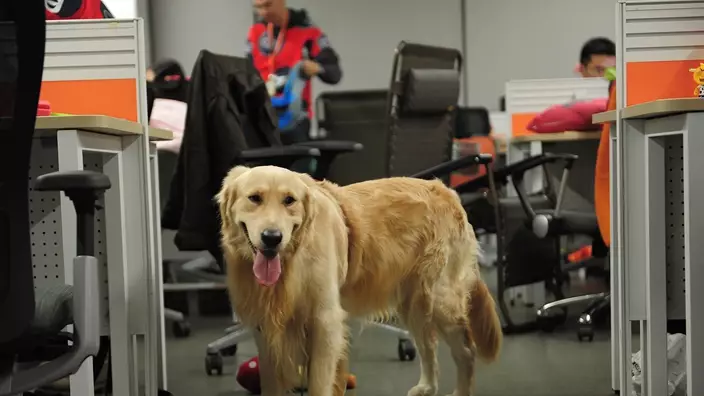
A giant dog balloon with a banner saying “save single dogs” on its neck was seen in southwest China’s Chongqing Municipality in last November. /Chinanews Photo

A giant dog balloon with a banner saying “save single dogs” on its neck was seen in southwest China’s Chongqing Municipality in last November. /Chinanews Photo

After calling himself as “Lin Gou”, Lin Gengxin ask‍ed netizens to share their own nicknames on his Weibo account. /Weibo Photo
After calling himself as “Lin Gou”, Lin Gengxin ask‍ed netizens to share their own nicknames on his Weibo account. /Weibo Photo

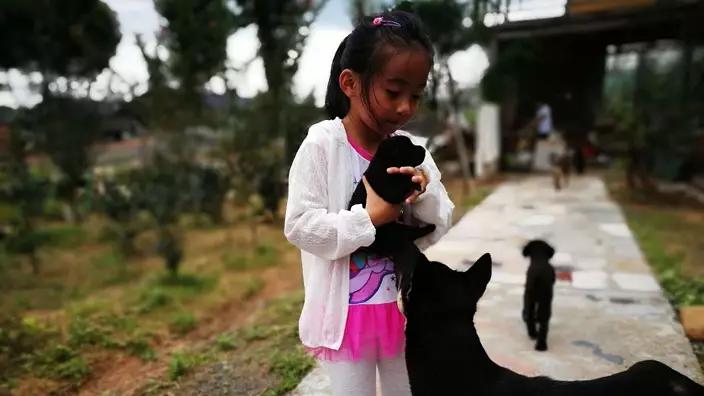
A girl played with her dogs at a village in eastern China’s Zhejiang Province in last July. /VCG Photo

A girl played with her dogs at a village in eastern China’s Zhejiang Province in last July. /VCG Photo

Words and phrases containing dogs (Gou in Chinese) are commonly used by young people when cracking jokes about themselves.

For example, in Mandarin, you can say "Valentine's Day has nothing to do with me since I am a single dog."

"Overtime dog" is another title frequently referred to those who work long hours.

It is believed that words and phrases like these containing humor and self-deprecation ease the stigma attached to dog-related words.

A giant dog balloon with a banner saying “save single dogs” on its neck was seen in southwest China’s Chongqing Municipality in last November. /Chinanews Photo

A giant dog balloon with a banner saying “save single dogs” on its neck was seen in southwest China’s Chongqing Municipality in last November. /Chinanews Photo

Representation of close relationship

Adding "dog" to a friend's name can also be considered as a proof of a close relationship.

One of the most prominent examples in China is that of the actor Lin Gengxin, who is called Lin Gou - Chinese for Lin Dog - by his celebrity friends and beloved fans.

Along with the word dog as a sort of surname, you can also put it after given names and it is occasionally used by young couples.

After calling himself as “Lin Gou”, Lin Gengxin ask‍ed netizens to share their own nicknames on his Weibo account. /Weibo Photo

After calling himself as “Lin Gou”, Lin Gengxin ask‍ed netizens to share their own nicknames on his Weibo account. /Weibo Photo

Easy to raise

Children with amiable names are easy to bring up, according to an ancient Chinese proverb.

Parents in rural areas prefer to give nicknames including Gou Sheng and Gou Dan to their children in the hope that they are as easy to be fostered as dogs.

The Goubuli steamed bun, a famous Tianjin snack, has a nickname "Gou Zi". It is anecdotally said that the brand was named after its founder’s Gao Guiyou's nickname.

A girl played with her dogs at a village in eastern China’s Zhejiang Province in last July. /VCG Photo

A girl played with her dogs at a village in eastern China’s Zhejiang Province in last July. /VCG Photo

Metaphor

Since dogs are considered to be loyal and diligent, the word is included in more than 10 Chinese metaphors.

For instance, "serve like a dog or a horse," is used to describe someone who is ready to render his humble services to the authorities.

"Dogs don't bark to their owners" is an idiom usually adopted to represent the loyalty of ministers to their monarchs.

A love of dogs is not particular to Chinese. In English, people use  the phrase "tired like a dog" to say they are exhausted and say "love me, love my dog" when they hope their partner loves the way they are.

Coincidentally, there are phrases expressing these meanings in Chinese, proving again that we are not that different.

NEW YORK (AP) — Using the oldest dog genes studied so far, scientists are finding more evidence that our furry friends have been our companions for thousands of years.

Scientists think dogs descended from an ancient population of gray wolves somewhere in Europe or Asia. Tens of thousands of years ago, those wolves got used to living with people and became less aggressive. As they became domesticated, their genes shifted along with their behavior, giving rise to the pups we know today.

But exactly when and where this happened remains a mystery. Scientists are studying bits of DNA found in ancient dog and wolf remains to figure out what the earliest dogs may have looked like and where they came from.

In two separate studies published Wednesday in the journal Nature, researchers pushed the timeline back. They established a new way to study ancient canine DNA — which is often contaminated and tough to extract — by isolating just the doggy bits.

They examined ancient genes from the remains of over 200 dogs and wolves. The oldest dated back to about 15,800 years ago, moving the origin of dogs back by at least 5,000 years.

“This unique relationship between people and dogs has existed for such a long time and is continuing on today,” said University of Michigan dog genomics expert Jeffrey Kidd, who was not involved with the new research.

The genes showed that dogs were already spread out across Western Europe and Asia 14,200 years ago, at a time before agriculture and farming. These dogs lived with hunter-gatherer humans who were constantly on the move.

The dawn of agriculture — a major shift in human history — brought new people to Europe from southwest Asia. They mixed and mingled with Europeans, leaving a lasting and varied imprint on their genes.

But the dog genes studied by the scientists, stretching from the United Kingdom all the way to Turkey, stayed more consistent. They were less impacted by the arrival of new humans during the development of agriculture, and more by interactions between different hunter-gatherer groups and their dogs thousands of years before.

That's different from dogs in Asia and the Americas, whose genes more closely reflect the movement patterns of their owners.

Scientists don't know exactly what the first dogs looked like, but they have some ideas.

“We're suspecting they would have resembled smaller wolves,” said study co-author Lachie Scarsbrook with the Ludwig Maximilian University of Munich.

It's also not clear how these ancient dogs lived alongside their humans. They could have stood guard or helped them hunt, but probably also played with young children.

There's still more work to go to pinpoint exactly when dogs emerged — the first few pages of a storied relationship that's still going strong.

“They are humanity's best friend, alongside our societies for the last 16,000 years and will continue to in the future,” Scarsbrook said.

The Associated Press Health and Science Department receives support from the Howard Hughes Medical Institute’s Department of Science Education and the Robert Wood Johnson Foundation. The AP is solely responsible for all content.

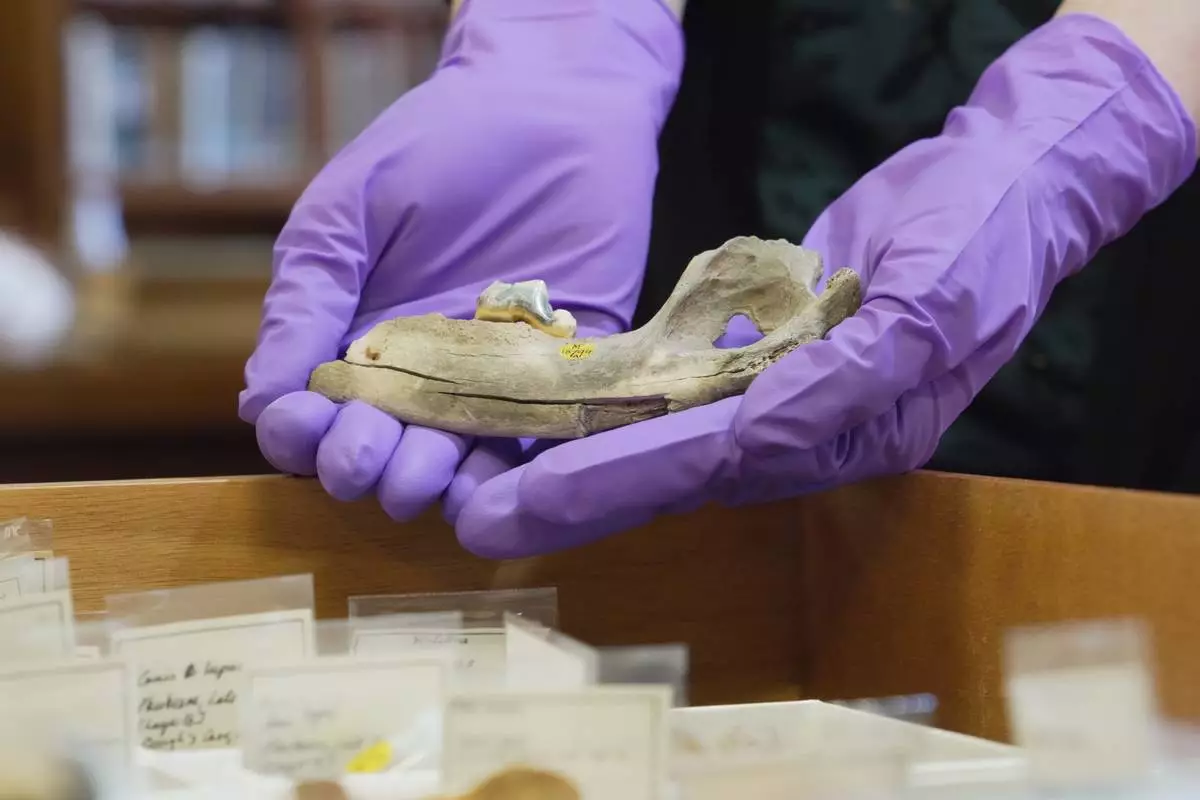
A researcher holds a 14,300 year-old dog jawbone found at Gough's Cave in the United Kingdom, on Tuesday, March 24, 2026, in London. (AP Photo/Mustakim Hasnath)

A researcher holds a 14,300 year-old dog jawbone found at Gough's Cave in the United Kingdom, on Tuesday, March 24, 2026, in London. (AP Photo/Mustakim Hasnath)

Recommended Articles