Skip to Content Facebook Feature Image

Israel's Mossad spy agency shrouded in mystery and mystique

News

Israel's Mossad spy agency shrouded in mystery and mystique
News

News

Israel's Mossad spy agency shrouded in mystery and mystique

2018-05-02 14:16 Last Updated At:16:39

Israel's seizure of Iran's purported nuclear program archive and the dramatic display of the documents taken from a facility in the heart of Tehran marked a rare case of Israel going public about the operations of its top-secret Mossad spy agency.
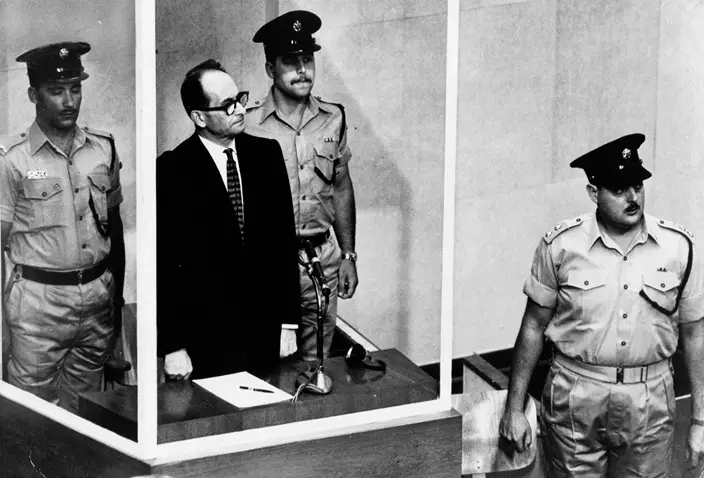
FILE - The 1961 file photo shows Adolf Eichmann standing in his glass cage, flanked by guards, in the Jerusalem courtroom during his trial in 1961 for war crimes committed during World War II. A seven-man Mossad team seized Eichmann in Buenos Aires and brought him to Israel for trial. The Mossad, long shrouded in mystery and mythology, is legendary in international intelligence circles for being behind what are believed to be some of the most daring covert operations of the past century. (AP Photo/File)

FILE - The 1961 file photo shows Adolf Eichmann standing in his glass cage, flanked by guards, in the Jerusalem courtroom during his trial in 1961 for war crimes committed during World War II. A seven-man Mossad team seized Eichmann in Buenos Aires and brought him to Israel for trial. The Mossad, long shrouded in mystery and mythology, is legendary in international intelligence circles for being behind what are believed to be some of the most daring covert operations of the past century. (AP Photo/File)

The Mossad, long shrouded in mystery and mythology, is legendary in international intelligence circles for being behind what are believed to be some of the most daring covert operations of the past century. Only a few have come to light and often only years later. Israel is typically wary of exposing the exploits of the global arm of its vaunted intelligence community out of fear of revealing its well-cultivated sources or undermining its mystique.

On Monday, Prime Minister Benjamin Netanyahu displayed what he said was a trove of Iranian nuclear documents collected by Israeli intelligence. Amos Yadlin, a former chief of Israeli military intelligence, said the seizure was a "very impressive" coup that sent a message that Israeli intelligence can penetrate Tehran's deepest secrets.

"The counterintelligence in Iran will work very hard to close this gap," he said.

More often than not, the Mossad's actions have become known only when something has gone wrong.

A look at some of its successes and failures:

CAPTURING ADOLF EICHMANN

Lifting a half-century veil of secrecy, the Mossad opened its archive in 2012 to reveal the full story behind its most legendary operation — the daring 1960 capture of Nazi mastermind Adolf Eichmann.

On May 11, 1960, a seven-man Mossad team waited near the Buenos Aires bus station where Eichmann arrived each evening from his job at a Mercedes-Benz factory, where he worked under the alias Ricardo Klement.
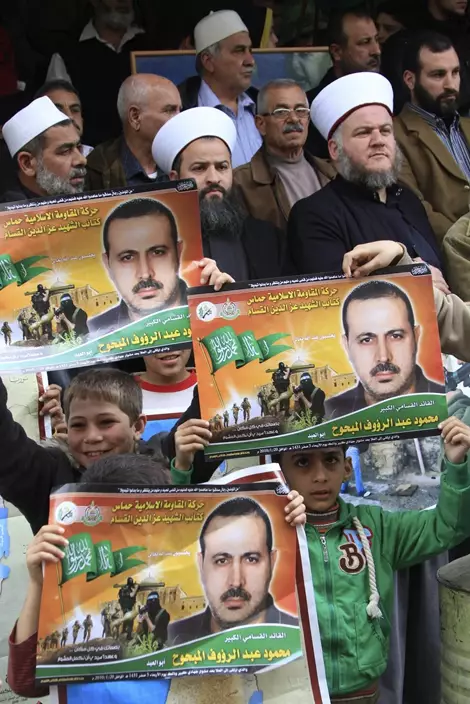
FILE - In this Friday, Feb. 26, 2010, file photo, Palestinians from Hamas and other groups carry pictures of slain Palestinian Mahmoud al-Mabhouh as they call for vengeance for his killing in Dubai, in the Palestinian refugee camp of Ein el-Hilweh near the southern port city of Sidon, Lebanon. (AP Photo/Mohammed Zaatari, File)

FILE - In this Friday, Feb. 26, 2010, file photo, Palestinians from Hamas and other groups carry pictures of slain Palestinian Mahmoud al-Mabhouh as they call for vengeance for his killing in Dubai, in the Palestinian refugee camp of Ein el-Hilweh near the southern port city of Sidon, Lebanon. (AP Photo/Mohammed Zaatari, File)

After he got off the bus, agents jumped him, with one shoving a gloved hand inside Eichmann's mouth in case he had a cyanide pill hidden in a tooth, as some former top Nazis were known to have to foil their capture.

Eichmann was held in a safe house for nine days until the group flew out in an El Al plane. Eichmann was drugged, dressed in an El Al uniform, seated in first class and passed off as a crew member who was ill.

Eichmann's trial in Jerusalem the following year featured gripping testimony of more than 100 Jews who survived torture and deprivation in concentration camps and brought to life the horrors of the Nazi "Final Solution," of which Eichmann was the architect.

He was convicted of war crimes and crimes against humanity and was hanged in 1962, the only time Israel has ever carried out a death sentence.

INFILTRATING SYRIA'S LEADERSHIP

One of the Mossad's first major achievements was placing one of its men inside the top echelon of Syria's leadership. Eli Cohen managed to forge close contacts within the political and military hierarchy of Israel's archenemy in the early 1960s, ultimately rising to become a top adviser to Syria's defense minister. He obtained top-secret intelligence that is widely credited with helping Israel prepare for its swift victory in the 1967 Middle East war.

In 1965, Cohen was caught radioing information to Israel. He was tried and hanged in a Damascus square. His remains have yet to be returned to Israel, where he is regarded as a national hero.

CAPTURING A NUCLEAR WHISTLEBLOWER

After Mordechai Vanunu, a former technician at an Israeli nuclear plant, leaked sensitive details and pictures of Israel's alleged nuclear weapons program to a British newspaper in 1986, the Mossad was given the task of bringing him to justice. A female Mossad agent, masquerading as an American tourist, lured Vanunu to Italy where he was drugged, abducted and secretly transported by boat to Israel.

Vanunu served 18 years in an Israeli prison. Israel neither confirms nor denies its nuclear capability.

THE ASSASSINATIONS

The Mossad is believed to be responsible for the assassinations of a long string of Palestinian militants around the world.

Only in 2012 did Israel finally acknowledge killing Yasser Arafat's deputy in a joint Mossad-military special operations raid in Tunisia in 1988. Khalil al-Wazir, known by his nom de guerre Abu Jihad, was the founder along with Arafat of Fatah, the dominant faction in the Palestinian Liberation Organization. He was blamed for a series of deadly attacks against Israelis. One of the commandos who came after him was disguised as a woman on a romantic vacation, and one of the weapons was hidden in a box of chocolates.
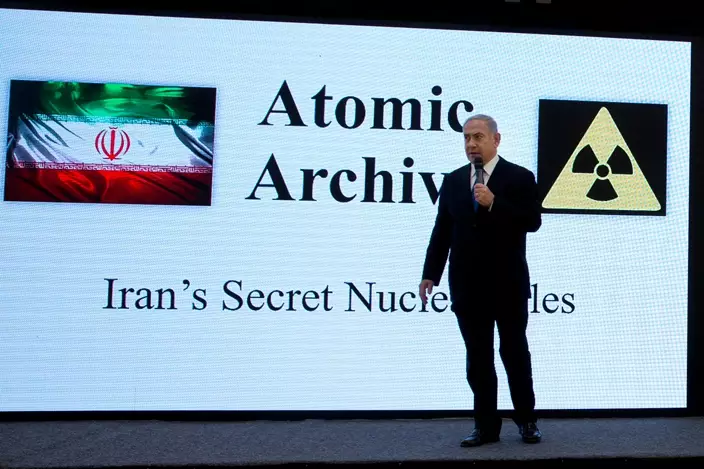
FILE - In this Monday, April 30 2018, file photo, Israeli Prime Minister Benjamin Netanyahu presents material on Iran’s purported nuclear program in Tel Aviv. Netanyahu displayed what he said was a trove of Iranian nuclear documents collected by Israeli intelligence. The Mossad, long shrouded in mystery and mythology, is legendary in international intelligence circles for being behind what are believed to be some of the most daring covert operations. (AP Photo/Sebastian Scheiner, File)

FILE - In this Monday, April 30 2018, file photo, Israeli Prime Minister Benjamin Netanyahu presents material on Iran’s purported nuclear program in Tel Aviv. Netanyahu displayed what he said was a trove of Iranian nuclear documents collected by Israeli intelligence. The Mossad, long shrouded in mystery and mythology, is legendary in international intelligence circles for being behind what are believed to be some of the most daring covert operations. (AP Photo/Sebastian Scheiner, File)

In 1995, the founder of the Islamic Jihad group Fathi Shikaki was gunned down in Malta by a man on a motorcycle in an attack widely attributed to Israel.

The Mossad is also suspected of killing several Iranian scientists working on that country's suspected nuclear weapons program. It is also assumed to have had a hand in the 2008 car bombing in Damascus that killed Imad Mughniyeh, a top commander in the Lebanese militant group Hezbollah.

GOING AFTER BLACK SEPTEMBER

On Sept. 5, 1972, members of the Palestinian "Black September" group attacked Israelis at the Munich Olympics, killing an athlete and a coach and taking nine others hostage.

The hostages died later during a botched German rescue attempt at a military airfield outside Munich. In all, 11 Israelis were killed in the siege that shocked the world and ushered in a new era of global terrorism.

In response, Israeli Prime Minister Golda Meir set up a special Mossad unit with the goal of hunting down all those involved. The reprisals spanned the globe and continued until the agency's first high-profile fiasco: the accidental killing of Moroccan waiter Ahmed Bouchikhi in Lillehammer, Norway. The agents had mistaken him for Black September's chief of operations, Ali Hassan Salameh. Several Mossad men were put on trial in a major blow to the agency's reputation.

THE FIASCOS

In 1997, during Netanyahu's first term, Mossad agents tried to assassinate then-Hamas chief Khaled Mashaal in Amman, Jordan. Two agents entered Jordan using fake Canadian passports and poisoned Mashaal as he left the Hamas offices by placing a device near his ear. They were captured shortly afterward. Outraged by the violation of his sovereignty, Jordan's then-King Hussein threatened to void the still-fresh peace accord if Mashaal died. Israel ultimately dispatched an antidote that saved his life, and the Israeli agents were returned home. Under pressure, Israel agreed to release the spiritual leader of Hamas, Ahmed Yassin, from prison. Mossad chief Danny Yatom resigned following the episode.

In 2004, New Zealand briefly cut ties with Israel after it captured two Israelis suspected of being Mossad agents who were trying to fraudulently acquire a New Zealand passport.

In 2010, Mahmoud al-Mabhouh, a top Hamas operative, was killed in a Dubai hotel room in an operation attributed to Mossad but never acknowledged by Israel. The case drew international attention because many of the supposed assassins were caught on camera and accused of using fake passports. The photographs of 26 suspects and their aliases were subsequently placed on Interpol's most-wanted list.
SIDON, Lebanon (AP) — Two years ago, Dr. Mohammed Ziara watched Israel ravage Gaza's health care system, shelling hospitals, striking ambulances and forcing patients to evacuate.

Now Ziara — along with many other medical workers, human rights groups and civilians — warns that the same scenario is unfolding in Lebanon.

Israel is pushing deep into the southern part of the country in its campaign against the Iran-backed group Hezbollah, a powerful militant force and political party that long has exercised de facto control over much of Lebanon’s Shiite community.

To describe its strategy in this war, the Israeli military has invoked the devastation it wrought in Gaza after the Hamas-led Oct. 7, 2023, attacks. At one point last month, Israeli warplanes even dropped leaflets over Beirut warning that after “great success in Gaza, a new reality is coming to Lebanon, too.”

“I've lived this before,” Ziara, a surgeon from Gaza City who specializes in burns, told The Associated Press on Thursday at the government hospital in the Lebanese port city of Sidon.

"I cannot go back to Gaza now,” Ziara said. “But I can be here, in Lebanon.”

As it did with Hamas in Gaza, Israel accuses Hezbollah of hiding in and operating from civilian areas, and using hospitals and ambulances for military purposes. Israel has increasingly targeted Lebanese first responders and medical centers, forcing several hospitals to evacuate.

“I was besieged in a hospital,” Ziara said of his time at Gaza’s Shifa Hospital, where he worked before evacuating to Egypt with his family. He then joined the U.K.-based nonprofit Interburns, which sent him to Lebanon in 2024 to respond to the outbreak of the previous Israel-Hezbollah war. “I feel what these people feel.”

Since the war between Israel and Hezbollah reignited on March 2, Israeli airstrikes have killed at least 54 health professionals as of Sunday, according to the Lebanese Health Ministry.

Israel has carried out 152 attacks against emergency medical workers and ambulances, and forced the closure of six hospitals and 49 health clinics through attacks or threats, the ministry says.

Ziara and his team from Interburns, which trains medics around the world in burn care, have set up the Lebanese public health system's first specialized burn unit — a critical resource in this crisis-stricken country where the war has killed 1,461 people and wounded 4,430, according to the ministry. Israel claims to have killed hundreds of Hezbollah operatives in the latest bombardment and ground invasion.

The Israeli military argues that Hezbollah’s use of medical facilities makes them legitimate military targets under international law. It does not offer evidence to support its claims.

Hezbollah denies conducting militant activities within civilian sites. Although the group's presence in residential areas is well-documented, there has been no independent verification of its use of hospitals for military purposes.

Based in the first city just north of Israel’s evacuation zone that covers nearly all southern Lebanon, Sidon Government Hospital takes more wounded people every day.

Kamal Fakih, 27, hates when people ask him what happened on March 17.

It’s not that it pains him to recall the Israeli airstrike. It’s that he doesn’t remember anything at all. He regained consciousness a day later at the hospital in Sidon, his body burned and cut by shrapnel.

Once stabilized, Fakih tried to connect with the paramedic who pulled him and his friend Hassan from the burning rubble, hoping to hear his account and thank him for saving their lives. But by the time Fakih got his contact, Muhammad Tafili was already dead, killed with a fellow paramedic in an Israeli airstrike on ambulances in the southeastern village of Kfar Tebnit on March 28, according to Lebanon’s Health Ministry.

That same day, Israeli attacks killed seven other medics across four additional villages, the World Health Organization said. Among the dead was a medic targeted while responding to an Israeli airstrike that killed three journalists working for pro-Hezbollah TV channels. Footage of the incident shows two strikes in quick succession — the first hitting journalists in their car, the second crashing into paramedics as they rushed to the rescue.

Israel's military accused the two medics, and two of the three journalists killed, of being Hezbollah operatives. Its claim alarmed watchdogs that witnessed similar justifications for killing more than 260 journalists and 1,700 health workers in Gaza, according to figures from the United Nations humanitarian agency.

Although Lebanese medical workers and journalists were killed during the 2024 war with Hezbollah, “this time is different,” said Ramzi Kaiss, the Lebanon researcher at Human Rights Watch.

He pointed to a startling promise by Israeli Defense Minister Israel Katz last week that Israel would flatten all the houses in southern Lebanon to protect its border towns from Hezbollah rockets “in accordance with the model used in Rafah and Beit Hanoun in Gaza” — two cities that Israel almost entirely razed in its offensive against Hamas.

“There’s a new kind of brazenness in declaring an intent to commit unlawful attacks,” Kaiss said. “It appears impunity has emboldened the Israeli military.”

Sweeping Israeli evacuation orders in recent weeks have sent over 1 million Lebanese flocking north. As the south came under heavy bombardment, clinics shuttered or suspended operations. Nabih Berri Hospital was swamped by an influx of casualties. To make room, it evacuated dozens of patients.

Such transfers involve coordination with the Lebanese army, Health Ministry and U.N. peacekeeping force — a game of telephone, doctors say, that creates potentially life-threatening delays. Admitting patients isn’t easy either; the Sidon burn unit must discharge a patient to free up a bed.

But the referrals keep coming, straining a health system already crippled by economic collapse.

“The health system is on its knees,” Ziara said, as the hospital was plunged into darkness until backup generators kicked in 10 minutes later, a result of Lebanon’s long-running electricity crisis. “Now front-line hospitals are lacking staff and supplies. They're overwhelmed.”

Lebanese civilians say that Israeli bombs often come without warning and hit indiscriminately, feeding a growing feeling that Palestinians in Gaza know well — that nowhere is safe.

Mohammad Qubaisi, 53, said his neighborhood of Zuqaq al-Blat in central Beirut had not received Israeli evacuation guidance before March 18, when Israeli munitions slammed into his seventh-floor apartment.

Carrying his wife from the smoldering ruins, he shouted for his sons. His eldest, Adam, called to him. But he couldn’t hear Jad.

Qubaisi ran back into the skin-searing steam to search for his 15-year-old. When he woke up at the hospital hours later, his face raw with second-degree burns, he knew his son was gone.

The Israeli military said it was targeting Hezbollah. Qubaisi pushed back.

“These are civilian buildings, not military targets. They hit us and we still don’t know why,” he said from the Sidon hospital. “We were sleeping safely in our home, and look what happened to us.”

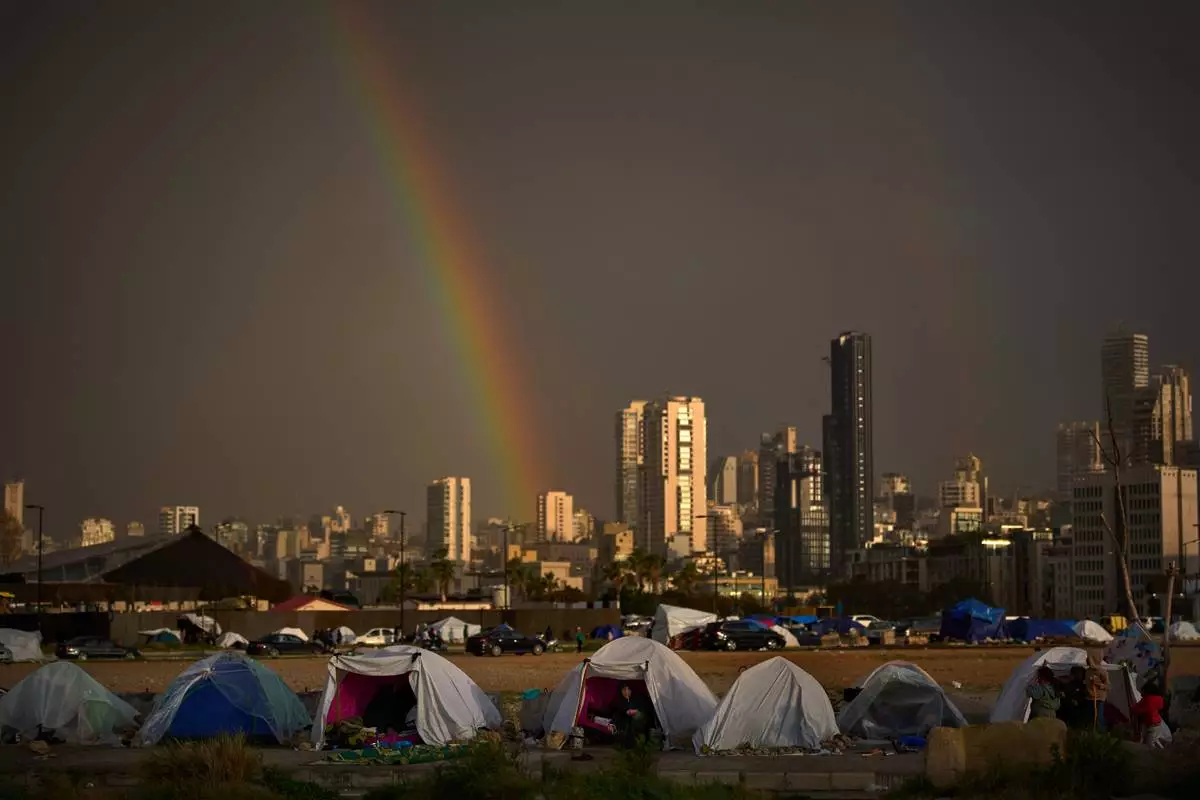
Displaced people who fled Israeli strikes in southern Lebanon sit inside tents used as shelters as a rainbow breaks through the rain in Beirut, Lebanon, Sunday, March 29, 2026. (AP Photo/Emilio Morenatti)

Displaced people who fled Israeli strikes in southern Lebanon sit inside tents used as shelters as a rainbow breaks through the rain in Beirut, Lebanon, Sunday, March 29, 2026. (AP Photo/Emilio Morenatti)

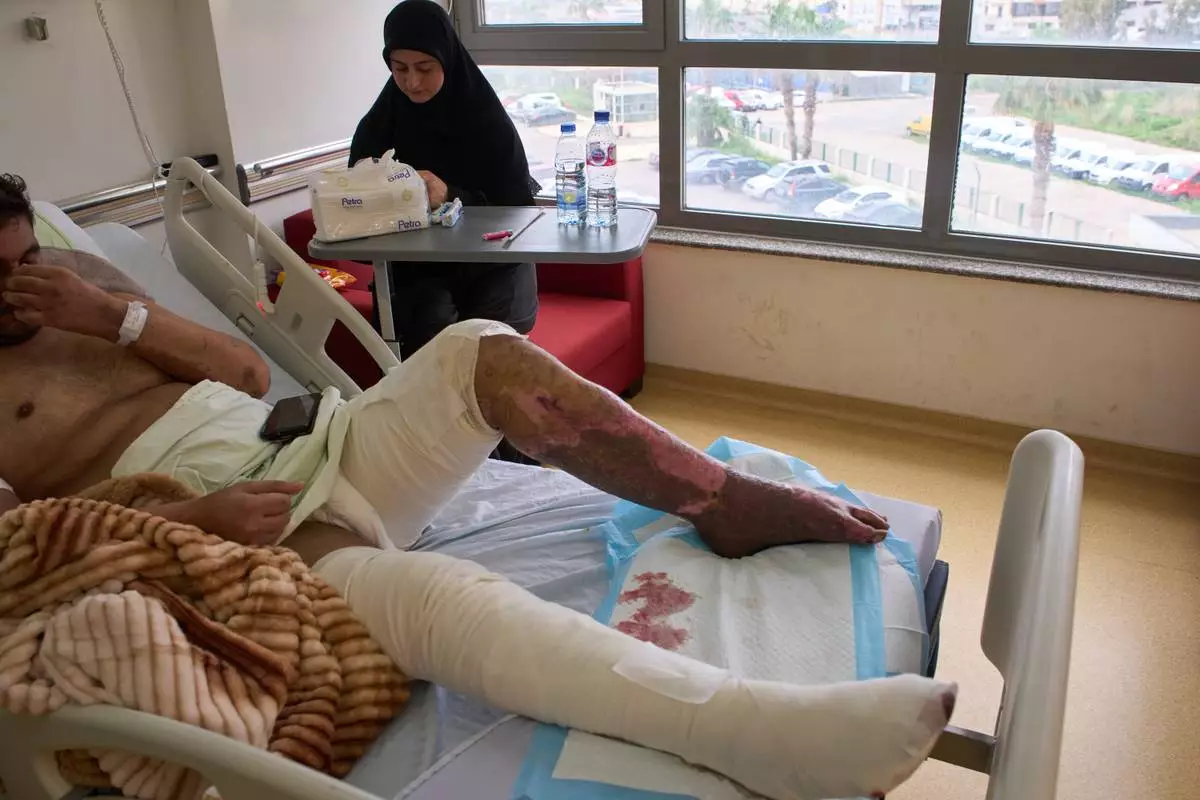
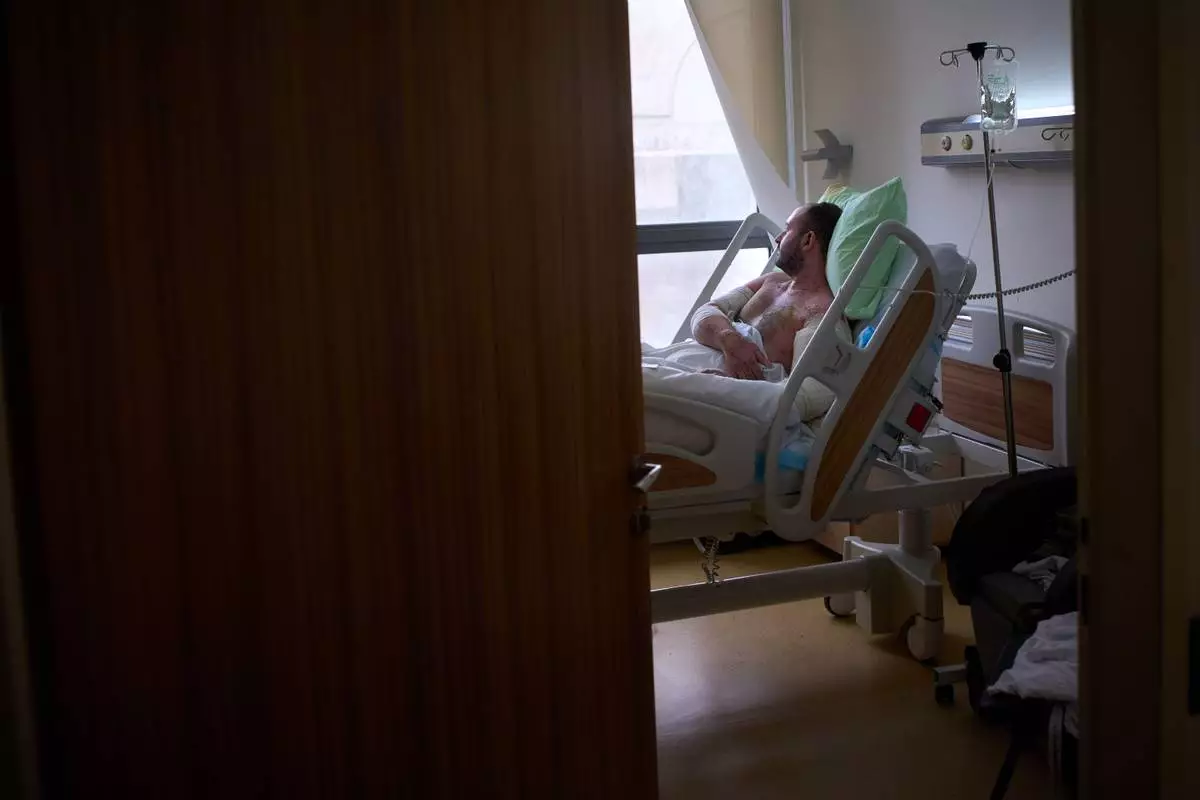
A man with burn wounds from an Israeli airstrike on southern Lebanon lying in bed at the Sidon Government Hospital in Sidon, Lebanon, Thursday, April 2, 2026. (AP Photo/Emilio Morenatti)

A man with burn wounds from an Israeli airstrike on southern Lebanon lying in bed at the Sidon Government Hospital in Sidon, Lebanon, Thursday, April 2, 2026. (AP Photo/Emilio Morenatti)

A man with burn wounds from an Israeli airstrike on southern Lebanon lying in bed at the Sidon Government Hospital in Sidon, Lebanon, Thursday, April 2, 2026. (AP Photo/Emilio Morenatti)

A man with burn wounds from an Israeli airstrike on southern Lebanon lying in bed at the Sidon Government Hospital in Sidon, Lebanon, Thursday, April 2, 2026. (AP Photo/Emilio Morenatti)

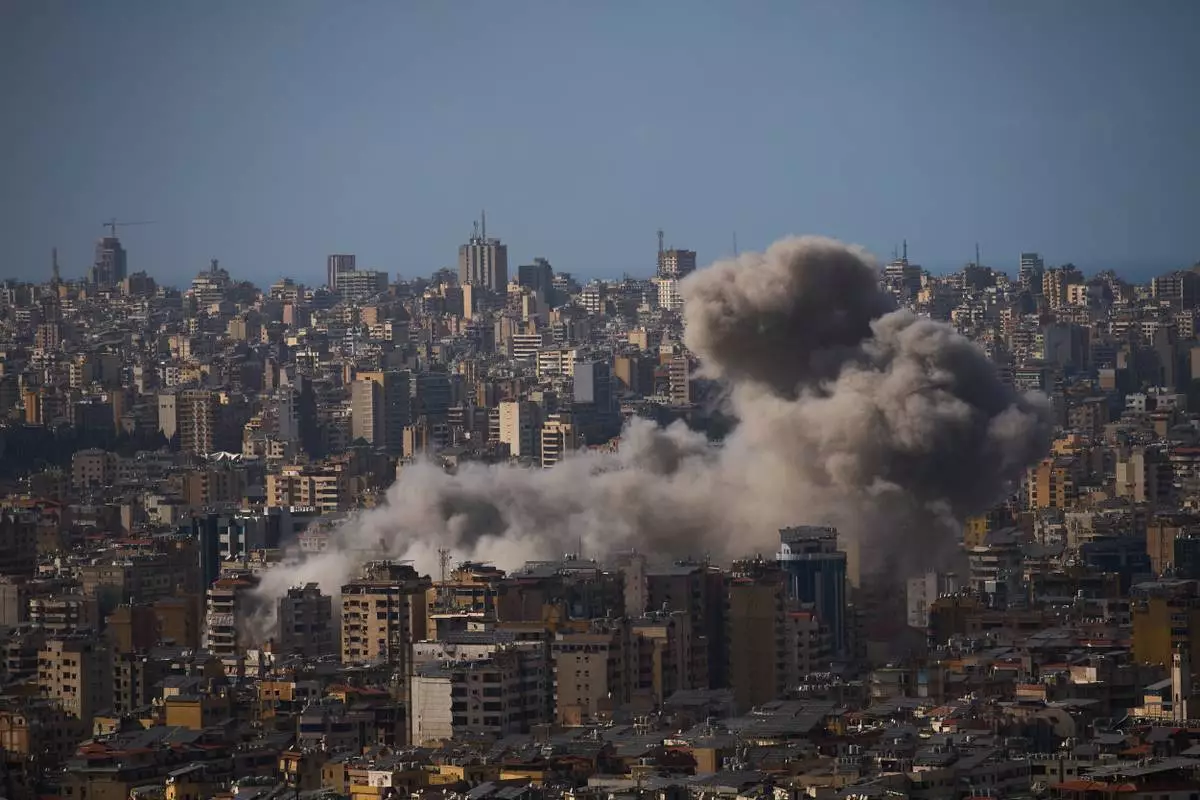
Smoke rises from Israeli airstrikes in Dahiyeh, a southern suburb of Beirut, Lebanon, Sunday, April 5, 2026. (AP Photo/Emilio Morenatti)

Smoke rises from Israeli airstrikes in Dahiyeh, a southern suburb of Beirut, Lebanon, Sunday, April 5, 2026. (AP Photo/Emilio Morenatti)

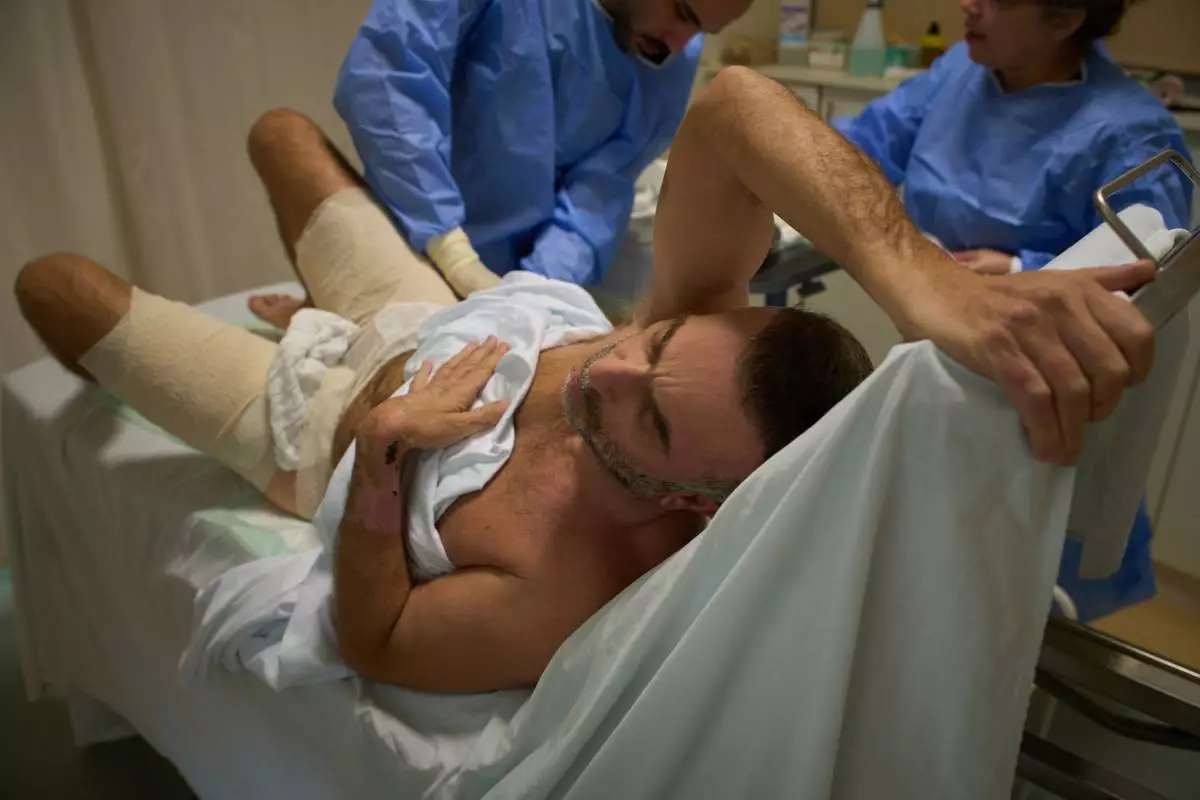
Mohammad Qubaisi, 53, with burn wounds from an Israeli airstrike on southern Lebanon, undergoes surgery by Dr. Mohammed Ziara, left, and his team, at the Sidon Government Hospital, in Sidon, Lebanon, Thursday, April 2, 2026. (AP Photo/Emilio Morenatti)

Mohammad Qubaisi, 53, with burn wounds from an Israeli airstrike on southern Lebanon, undergoes surgery by Dr. Mohammed Ziara, left, and his team, at the Sidon Government Hospital, in Sidon, Lebanon, Thursday, April 2, 2026. (AP Photo/Emilio Morenatti)

Recommended Articles