JDEIDEH, Lebanon (AP) — It was not how the Rev. Maroun Ghafari had envisioned this Holy Week — for years, he had held Easter sermons in his predominantly Christian village of Alma al-Shaab in southern Lebanon, near the border with Israel.
This year, he is preaching from a Beirut suburb, beside a cardboard cutout depicting his church in Alma al-Shaab, now caught in the crossfire between Israeli forces and Hezbollah fighters.
Click to Gallery
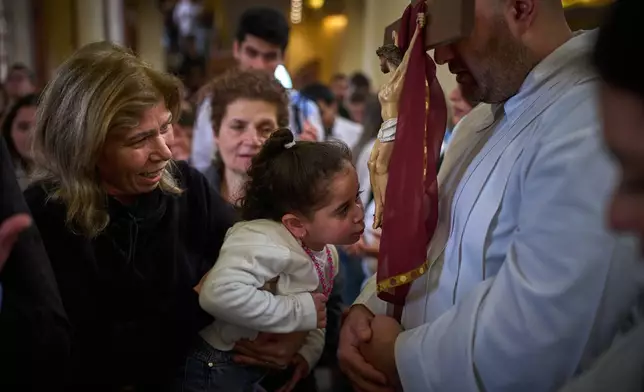
A girl kisses a cross held by a priest during Good Friday Mass at St. Anthony Church, which was devoted to expressing solidarity with Christian villagers in southern Lebanon displaced by the war in Jdeideh, a suburb of Beirut, Lebanon, Friday, April 3, 2026. (AP Photo/Emilio Morenatti)
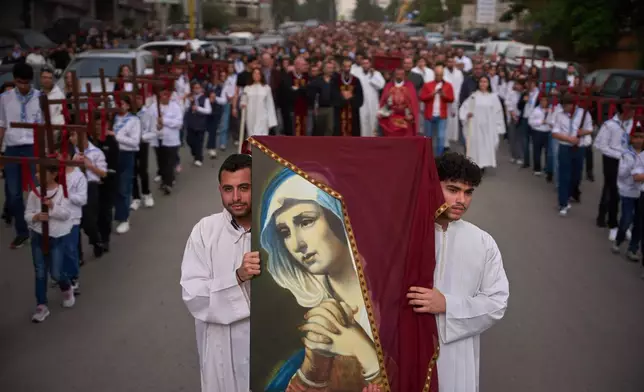
Parishioners walk in a procession after a Good Friday Mass at St. Anthony Church, which was devoted to expressing solidarity with Christian villagers in southern Lebanon displaced by the war in Jdeideh, a suburb of Beirut, Lebanon, Friday, April 3, 2026. (AP Photo/Emilio Morenatti)
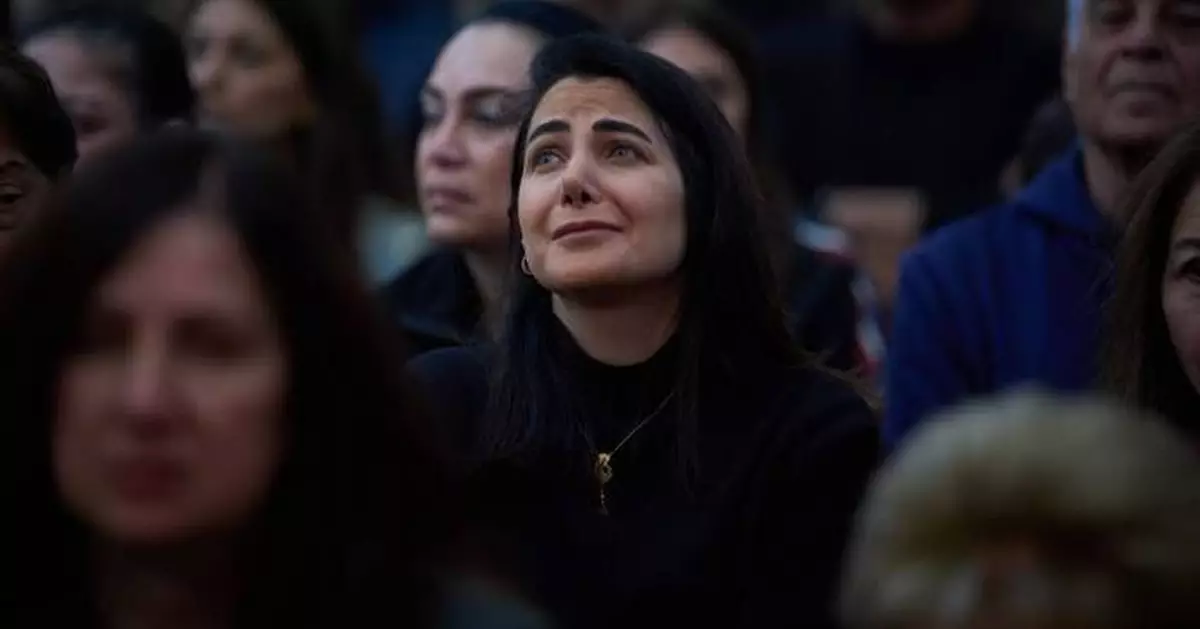
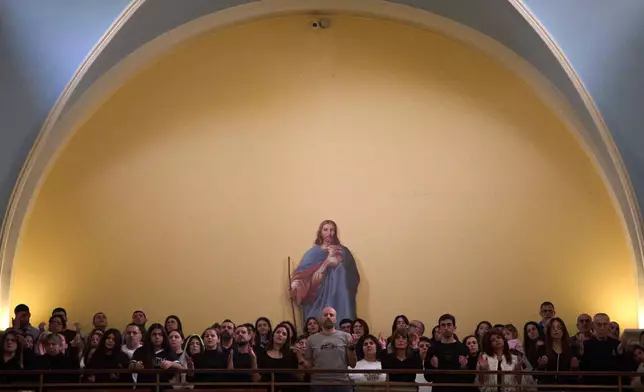
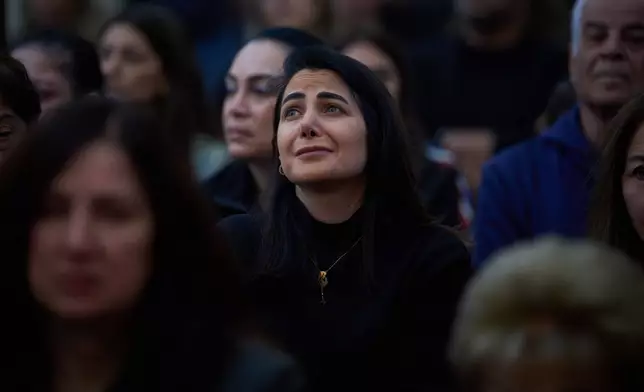
Worshipers pray during Good Friday Mass at St. Anthony Church, which was devoted to expressing solidarity with Christian villagers in southern Lebanon displaced by the war in Jdeideh, a suburb of Beirut, Lebanon, Friday, April 3, 2026. (AP Photo/Emilio Morenatti)
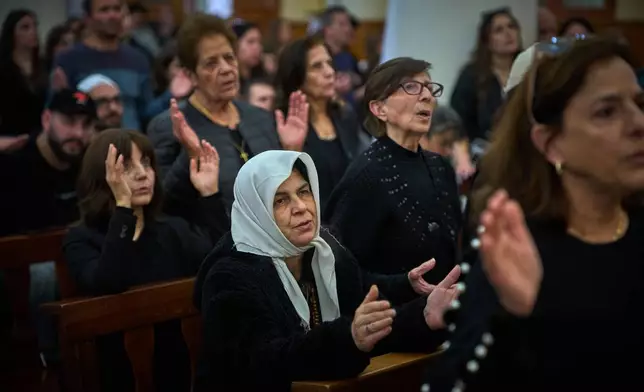
Worshipers pray during Good Friday Mass at St. Anthony Church, which was devoted to expressing solidarity with Christian villagers in southern Lebanon displaced by the war in Jdeideh, a suburb of Beirut, Lebanon, Friday, April 3, 2026. (AP Photo/Emilio Morenatti)
Worshipers pray during Good Friday Mass at St. Anthony Church, which was devoted to expressing solidarity with Christian villagers in southern Lebanon displaced by the war in Jdeideh, a suburb of Beirut, Lebanon, Friday, April 3, 2026. (AP Photo/Emilio Morenatti)
Since hostilities erupted last month between Israel and Lebanon's Iran-backed Hezbollah militant group — in the shadow of the wider, U.S.-Israeli war on Iran — over 1,400 people have been killed in Lebanon, and more than 1 million have been forced to flee their homes.
Among those displaced from the war-torn south are thousands of Christians. They now find themselves far from their ancestral churches in Lebanon, where Christians have maintained a strong presence through centuries of Byzantine, Arab and Ottoman conquest and plenty of modern-day crises.
Christians are estimated to make up around a third of Lebanon's population of roughly 5.5 million people. With 12 Christian sects, the country is home to the largest proportion of Christians of any nation in the Arab world.
Despite being far from the strikes in and around their villages in southern Lebanon, they were reminded of the war by the deep rumbling of Israeli jets and the sounds of deadly airstrikes over Beirut’s southern suburbs.
Christian villagers who stayed behind in southern Lebanon, ignoring Israel’s blanket evacuation warnings for the area, have increasingly hardened into enclaves surrounded by fierce clashes.
And though villagers in Alma al-Shaab had been uprooted before, in the 2024 Israel-Hezbollah war, this time around, they were adamant they wouldn't leave, even as airstrikes came closer and closer.
The villagers huddled in their church for protection as Israeli warplanes pounded large swaths of southern and eastern Lebanon while Israeli troops stepped up a ground invasion and Hezbollah kept firing rockets at Israel.
In his annual Easter homily, Patriarch Beshara al-Rai of Lebanon’s Maronite Church blamed both Hezbollah and Israel for the suffering wrought by the war.
“The country is going through a critical situation due to Iranian interference through Hezbollah and Israeli aggression,” he said. “Our hearts bleed for the victims of the conflict imposed on Lebanon.”
Ghafari’s brother, 70-year-old Sami Ghafari, was among the villagers who sought refuge at the church in Alma al-Shaab.
But he dashed out briefly on March 8 to tend to his garden, and was killed by an Israeli drone strike. His killing prompted the remaining villagers — including his brother — to pack up their belongings.
The U.N. peacekeepers in the area — a force known as UNIFIL that has monitored the region for nearly five decades — evacuated them to the northern suburbs of Beirut.
“We wanted to stay, but it was always possible that one of us could be targeted or killed at any moment,” the Rev. Maroun Ghafari told The Associated Press from St. Anthony Church in the northern Beirut suburb of Jdeideh, where the displaced from Alma al-Shaab came to worship on Saturday.
“Everyone is tired, and we see that war brings nothing but destruction, death and displacement.”
For many Lebanese Christians, it's a tradition on Holy Saturday — the day between Good Friday, which commemorates the crucifixion and death of Jesus, and Easter Sunday, which marks his resurrection according to the Gospels — to visit the graves of their loved ones.
This year, displaced Christians could only reflect from afar.
Nabila Farah, dressed in black for the Saturday service at St. Anthony Church, was among the last to leave Alma al-Shaab. She still feels heartbroken, a month later.
“You miss the smell of home, the lovely traditions and customs, the sounds of the bells of three churches ringing,” she said, reminiscing about her village. “As much as we experience the Easter atmosphere here, it will never be as it is over there.”
Those who remain face other challenges.
Marius Khairallah, a priest in the southern Lebanese city of Tyre, where much of the Christian community has hunkered down, says that he and his congregants are staying put "not out of stubbornness, but out of a sense of mission, to remain alongside their fellow faithful, as witnesses.”
“A significant number of parishioners have been displaced or are absent,” he said. "Yet churches still open their doors. Prayers are still raised — even with fewer voices."
Worries are mounting among Christians in the area as the Lebanese army — which seeks to stay neutral in the Israel-Hezbollah war — pulls out from parts of southern Lebanon, leaving them exposed to Israeli forces pushing deeper into the territory.
On top of that, supply stocks are dwindling, and humanitarian access is extremely difficult. A convoy carrying over 40 tons of aid led by the Vatican was supposed to reach the Christian village of Debel, but was canceled for what Lebanon’s Maronite Church said was “security reasons.”
St. Antony's main priest, the Rev. Dori Fayyad, used his Good Friday sermon to take solemn note of the war’s widening toll on the southern Lebanese Christians, as the faithful recited prayers in Arabic and Syriac, a dialect of the Aramaic language spoken by Jesus.
“Today, you understand what the cross means, not as an idea, not as a concept, but because you are going through it,” he told the fully packed pews, the crowd so thick that dozens had to stand or crouch on the back stairs.
Some wiped away tears as Fayyad named one by one the southern churches, illustrated in the cardboard cutouts next to the pulpit.
“These churches in these villages are not only places of worship,” he said. “They are silent witnesses to suffering and to faith.”
Associated Press video journalist Ali Sharafeddine in Jdeideh, Lebanon, contributed to this report.
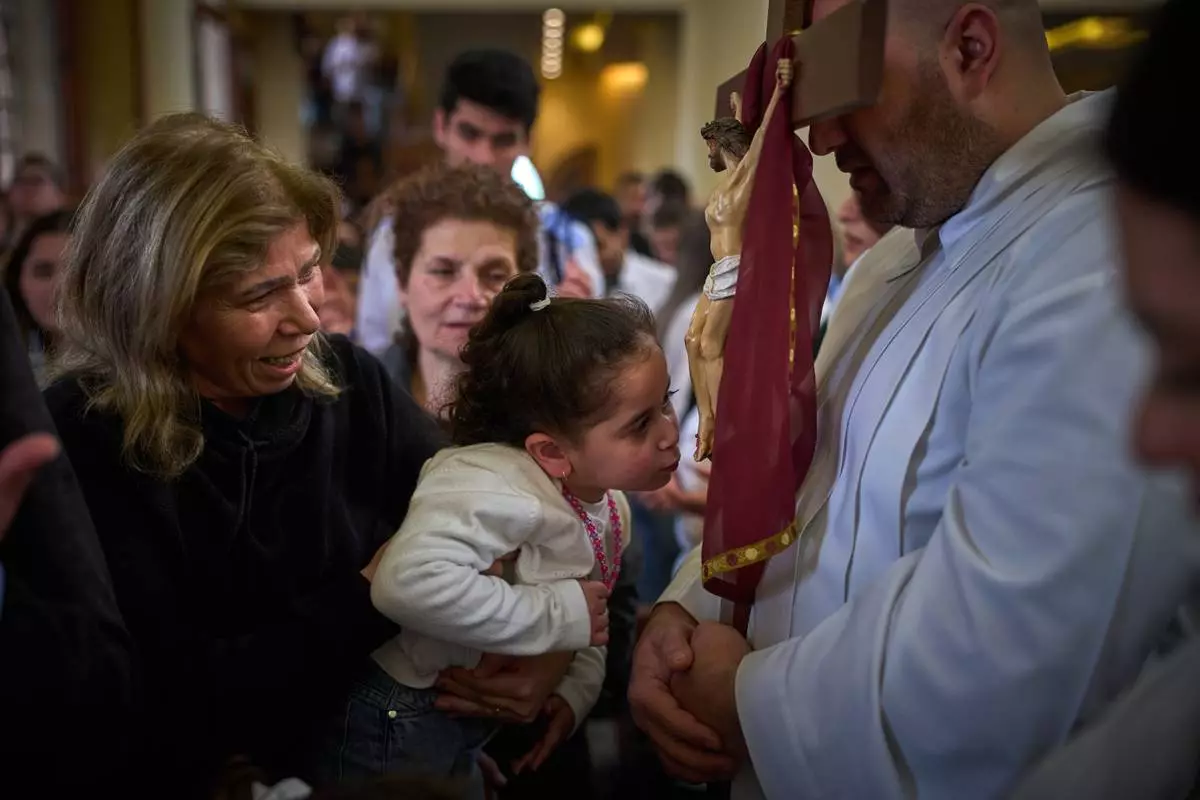
A girl kisses a cross held by a priest during Good Friday Mass at St. Anthony Church, which was devoted to expressing solidarity with Christian villagers in southern Lebanon displaced by the war in Jdeideh, a suburb of Beirut, Lebanon, Friday, April 3, 2026. (AP Photo/Emilio Morenatti)
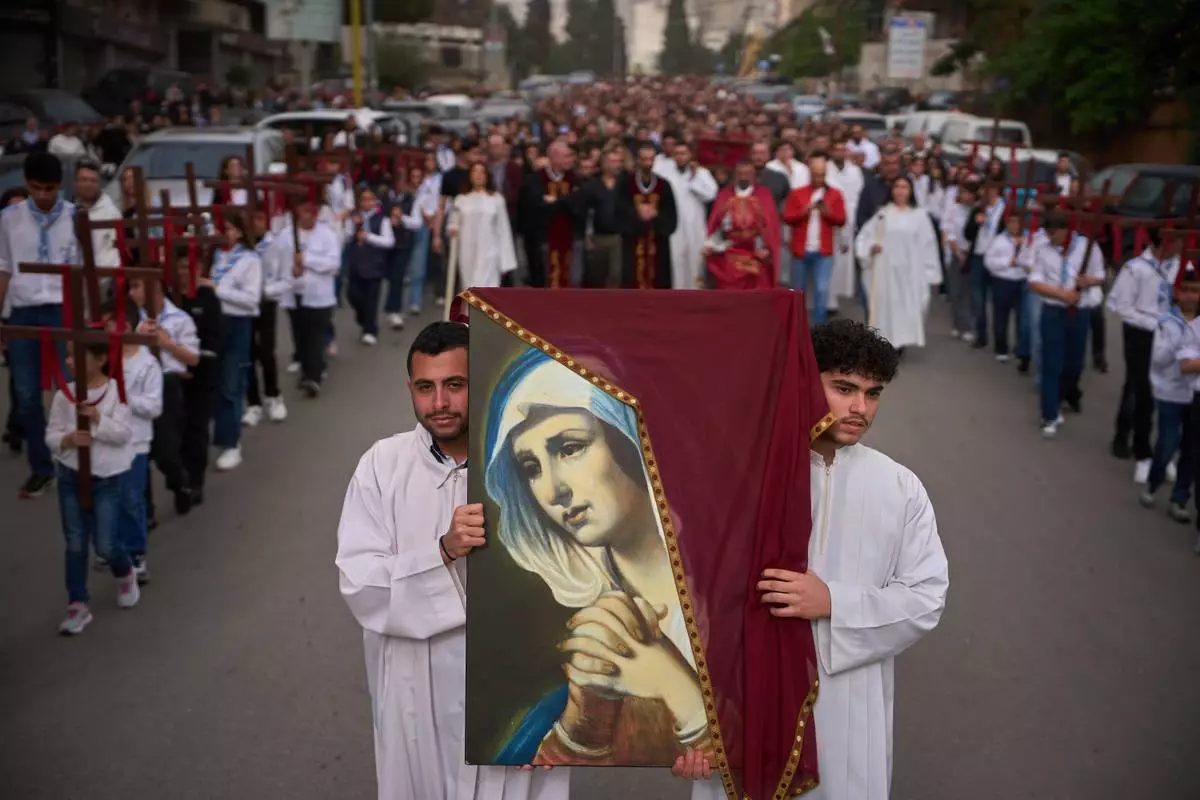
Parishioners walk in a procession after a Good Friday Mass at St. Anthony Church, which was devoted to expressing solidarity with Christian villagers in southern Lebanon displaced by the war in Jdeideh, a suburb of Beirut, Lebanon, Friday, April 3, 2026. (AP Photo/Emilio Morenatti)
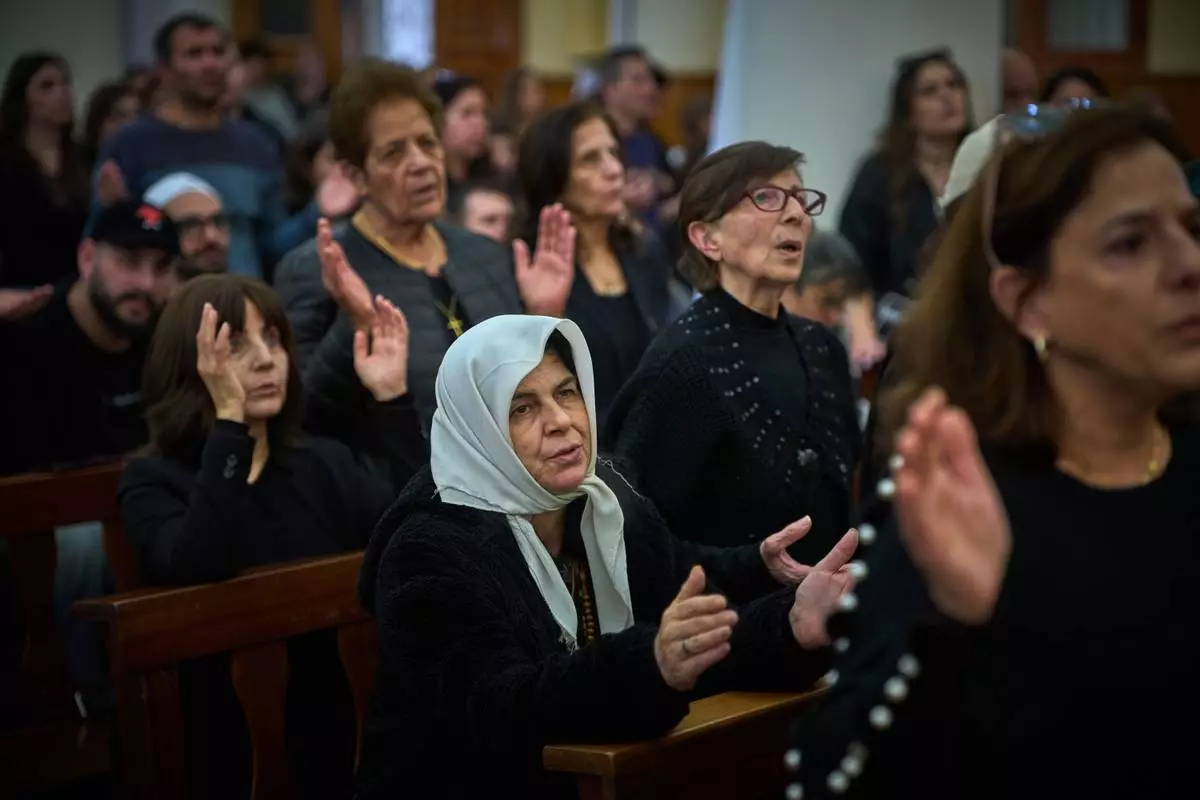
Worshipers pray during Good Friday Mass at St. Anthony Church, which was devoted to expressing solidarity with Christian villagers in southern Lebanon displaced by the war in Jdeideh, a suburb of Beirut, Lebanon, Friday, April 3, 2026. (AP Photo/Emilio Morenatti)
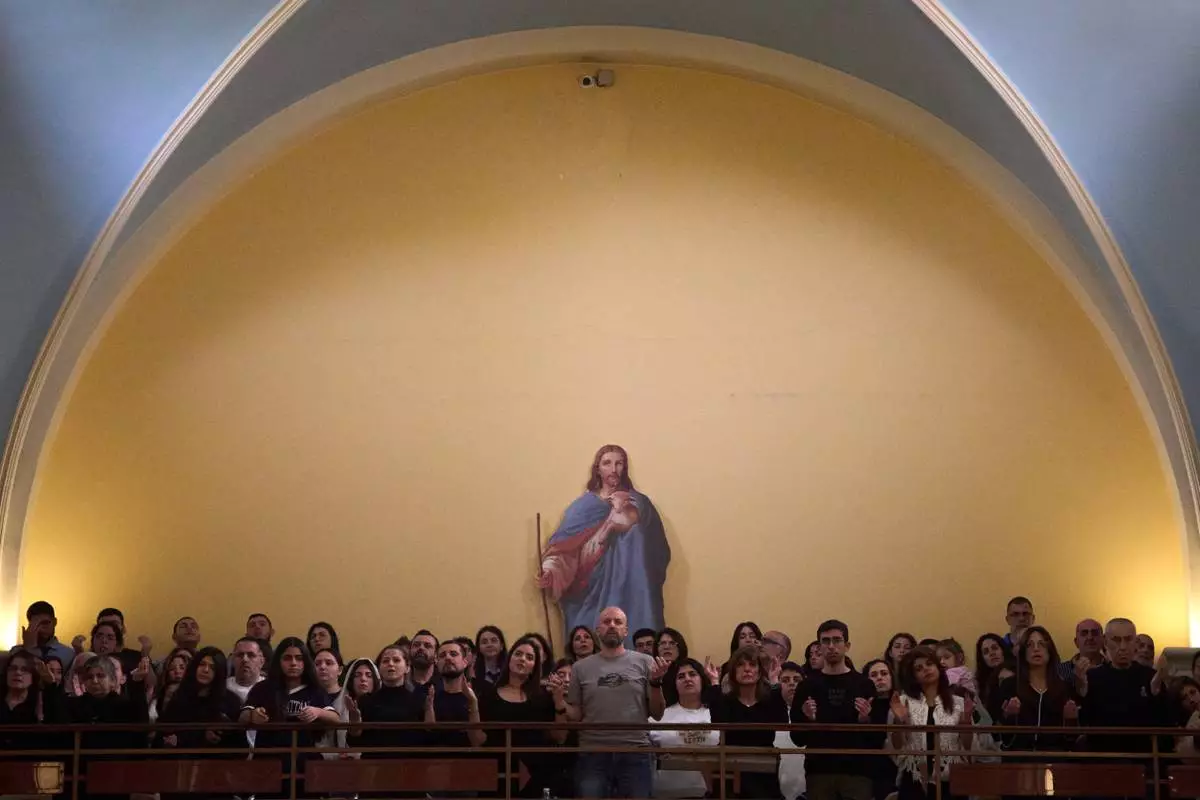
Worshipers pray during Good Friday Mass at St. Anthony Church, which was devoted to expressing solidarity with Christian villagers in southern Lebanon displaced by the war in Jdeideh, a suburb of Beirut, Lebanon, Friday, April 3, 2026. (AP Photo/Emilio Morenatti)
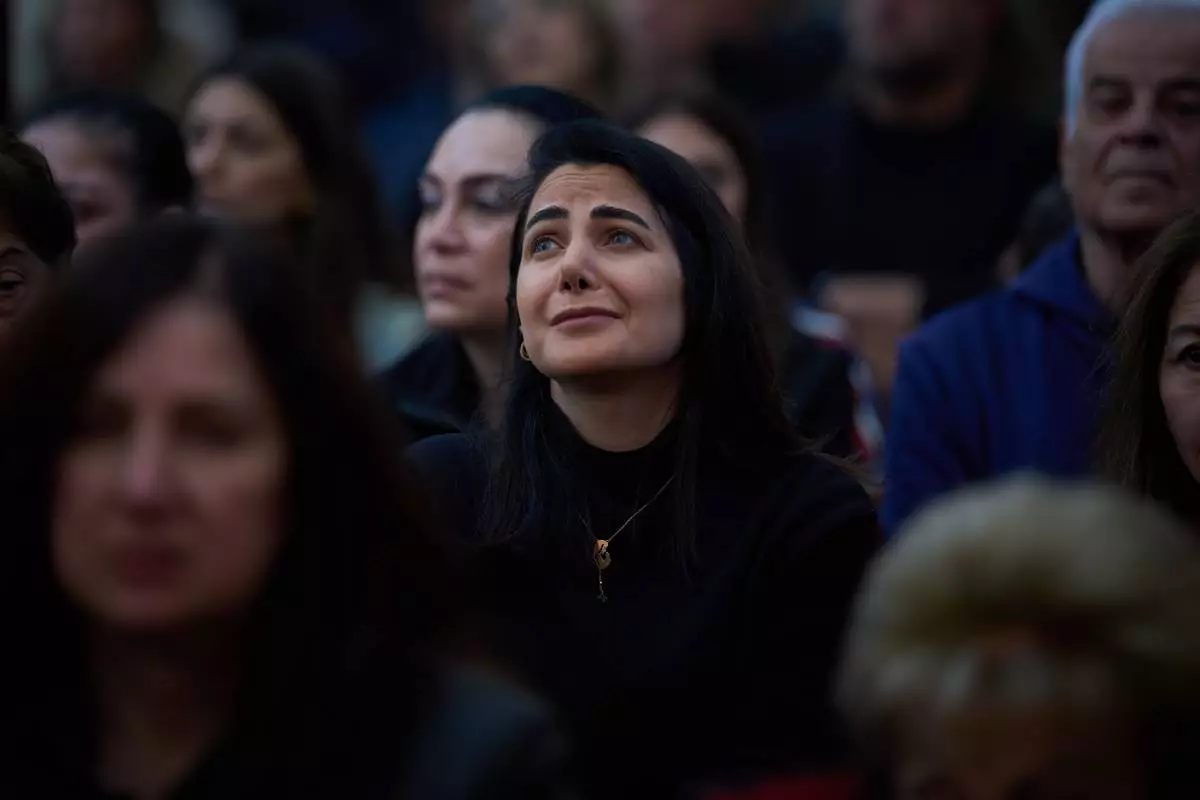
Worshipers pray during Good Friday Mass at St. Anthony Church, which was devoted to expressing solidarity with Christian villagers in southern Lebanon displaced by the war in Jdeideh, a suburb of Beirut, Lebanon, Friday, April 3, 2026. (AP Photo/Emilio Morenatti)
WASHINGTON (AP) — U.S. President Donald Trump on Sunday made new, expletive-laden threats to escalate strikes on Iran and its infrastructure if it doesn't open the Strait of Hormuz by his deadline, after American forces rescued an aviator whose Iran-downed plane fell behind enemy lines.
A defiant Iran showed no sign of backing down, striking infrastructure targets in neighboring Gulf Arab countries and challenging the U.S. account of the rescue.
In a social media post, Trump promised strikes on Iran’s power plants and bridges and said the country would be “living in Hell” if the strait, a crucial waterway for global trade, isn’t opened to marine traffic by Tuesday. He ended with “Praise be to Allah.”
Trump has issued such deadlines before but extended them when mediators have claimed progress toward ending the war, which has killed thousands, shaken global markets, cut off key shipping routes and spiked fuel prices in just over five weeks.
Both sides have threatened and hit civilian targets like oil fields and desalination plants critical for drinking water, bringing warnings of possible war crimes.
"Iranian civilians will be the first to suffer from the destruction of power plants and bridges,” Amnesty International head Agnes Callamard said on social media, calling Trump’s threat “revolting.”
The rescue of the U.S. aviator followed an intense search after Friday's crash of the F-15E Strike Eagle, while Iran promised a reward for anyone who turned in an “enemy pilot.”
Trump said that the service member was “seriously wounded and really brave” and rescued from “deep inside the mountains." He said a second crew member was rescued in “broad daylight” within hours of the crash.
A senior U.S. administration official said that prior to locating the pilot, the CIA spread word inside Iran that U.S. forces had found him and were moving him on the ground for exfiltration, confusing Iranian officials. The official spoke on the condition of anonymity to discuss details not yet made public.
The fighter jet was the first known American aircraft to crash in Iranian territory since the U.S. and Israel launched the war with strikes on Iran on Feb. 28.
Iran also shot down another U.S. military plane, demonstrating both the perils of the bombing campaign and the ability of Iran's degraded military to hit back. Neither the status of the U.S. A-10 attack aircraft's crew nor where it crashed is known.
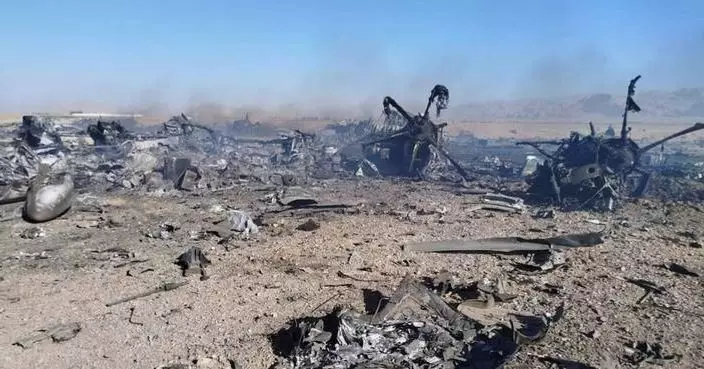
On Sunday, Iran’s state television aired a video showing what it claimed were parts of U.S. aircraft shot down by Iranian forces, along with a photo of thick, black smoke rising. The broadcaster said that Iran had shot down a transport plane and two helicopters that were part of the rescue operation.
However, a regional intelligence official briefed on the mission told The Associated Press that the U.S. military blew up two transport planes because of a technical malfunction and brought in additional aircraft to complete the rescue. The official spoke on condition of anonymity to discuss the covert mission.
Iran’s military joint command, which said that four U.S. aircraft were destroyed during the operation, warned of stepping up retaliatory attacks on regional oil and civilian infrastructure if the U.S. and Israel attack such targets in the Islamic Republic, according to state television.
“We once again repeat: if you commit aggression again and strike civilian facilities, our responses will be more forceful,” a spokesman said in comments published by the IRNA news agency.
The laws of armed conflict allow attacks on civilian infrastructure only if the military advantage outweighs the civilian harm, legal scholars say. It’s considered a high bar to clear, and causing excessive suffering to civilians can constitute a war crime.
Trump's deadline of 9 p.m. EDT Monday (0100 GMT Tuesday), centers on growing alarm over Iran's grip on the Strait of Hormuz, critical for shipments of oil and gas from the Persian Gulf to Europe and Asia. It's also key for delivering humanitarian supplies. Some ships have paid Iran for passage.
Diplomatic efforts continued.
Oman's Foreign Ministry said that deputy foreign ministers and experts from Iran and Oman met to discuss proposals to ensure “smooth transit” through the strait. Oman has often served as a mediator between the U.S. and Iran.
Egypt said that Foreign Minister Badr Abdelatty had spoken by phone with U.S. envoy Steve Witkoff and Iranian Foreign Minister Abbas Araghchi, as well as with Turkish and Pakistani counterparts who are helping to mediate.
Pakistan’s Foreign Ministry said it had conveyed to Araghchi that Islamabad supports “all efforts aimed at de-escalation.” Islamabad has said that it would soon host talks between the U.S. and Iran.
An escalation, however, could see Iranian-backed Houthi rebels in Yemen resuming attacks on vessels in the Bab el-Mandeb strait, a key waterway to and from the Suez Canal.
In Kuwait, Iranian drone attacks caused significant damage to power plants and a petrochemical plant. They also put a water desalination station out of service, according to the Ministry of Electricity.
In Bahrain, a drone attack caused a fire at one of the national oil company’s storage facilities and a state-run petrochemical plant, the kingdom’s official news agency said.
In the United Arab Emirates, authorities responded to fires at a petrochemical plant in Ruwais that they said were caused by intercepted debris, halting operations.
The strikes came a day after Israel struck a major petrochemical plant in Iran that Prime Minister Benjamin Netanyahu said generated revenue used to fund the war.
The petrochemical industry converts oil and gas into products like plastics and fertilizer.
Meanwhile, more than 1,900 people have been killed in Iran since the war began.
In Gulf Arab states and the occupied West Bank, more than two dozen people have died, while 19 have been reported dead in Israel and 13 U.S. service members have been killed. In Lebanon, more than 1,400 people have been killed and more than 1 million people have been displaced. Ten Israeli soldiers have died there.
Sam Metz reported from Jerusalem and Samy Magdy from Cairo. Jon Gambrell in Dubai, United Arab Emirates, and Munir Ahmed in Islamabad, contributed to this report.
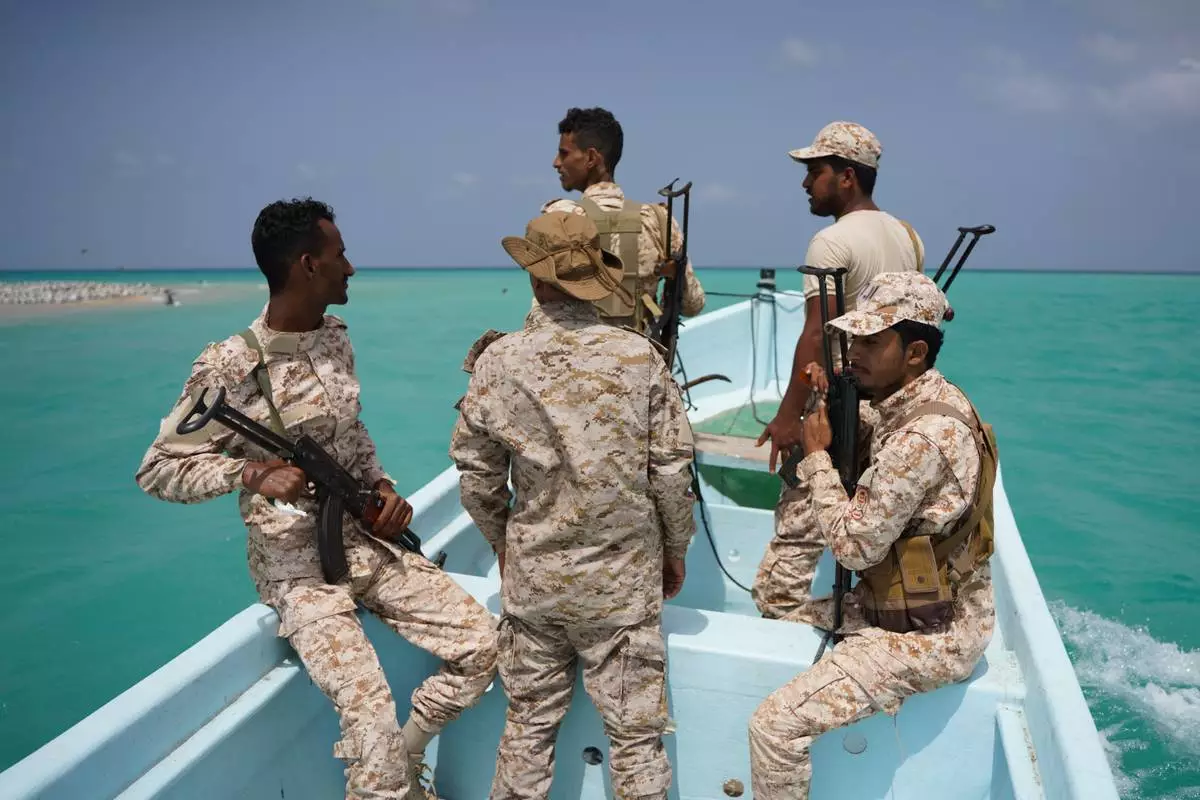
Yemeni soldiers patrol the strategic Bab el-Mandeb Strait, Yemen, Sunday, April 5, 2026. (AP Photo/Abdulnasser Alseddik)
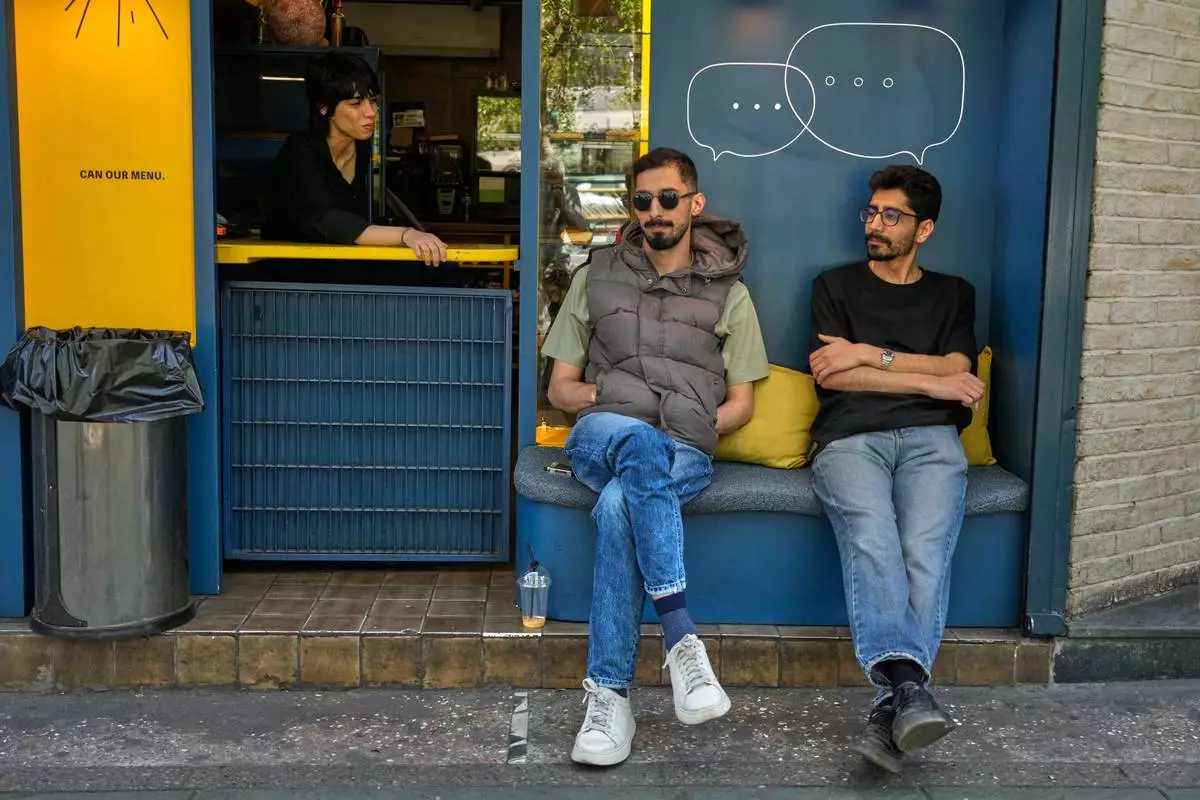
A cafe attendant sits at the counter as two men sit at a cafe in downtown Tehran, Iran, Sunday, April 5, 2026. (AP Photo/Vahid Salemi)
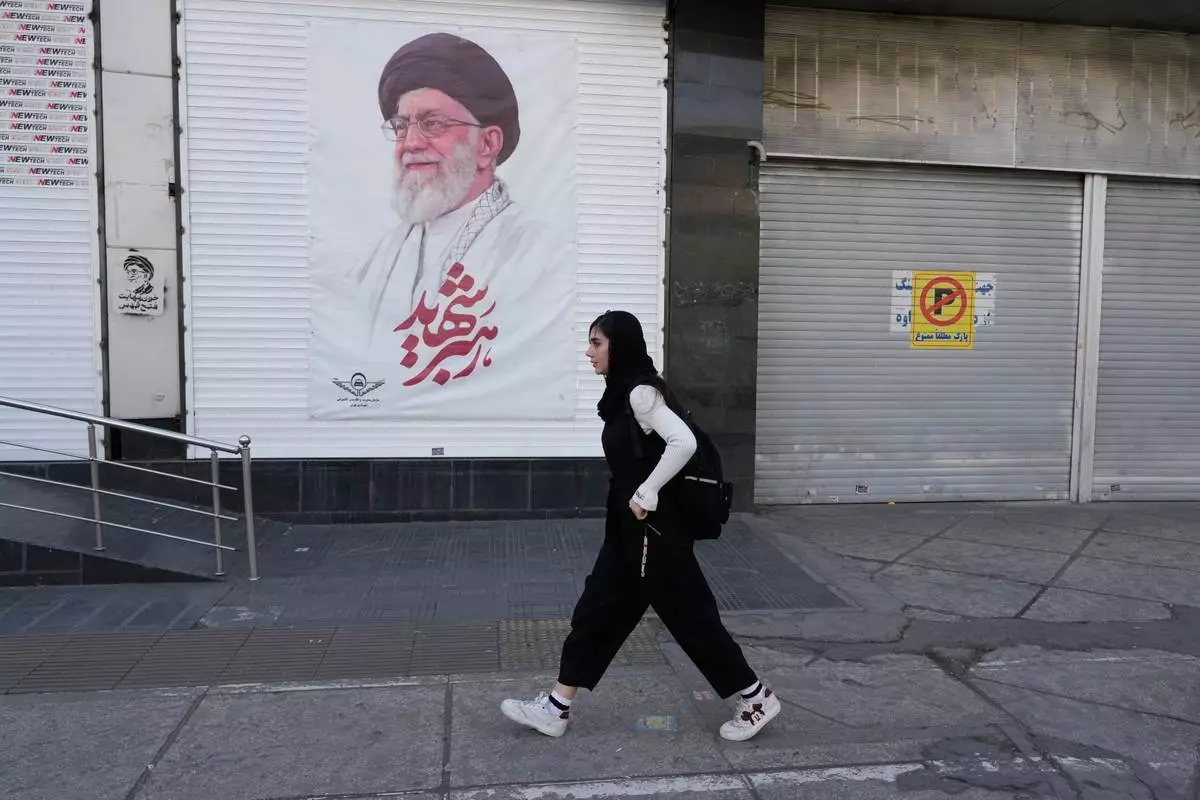
A woman walks past a poster of the late Iranian Supreme Leader Ayatollah Ali Khamenei in downtown Tehran, Iran, Sunday, April 5, 2026. (AP Photo/Vahid Salemi)
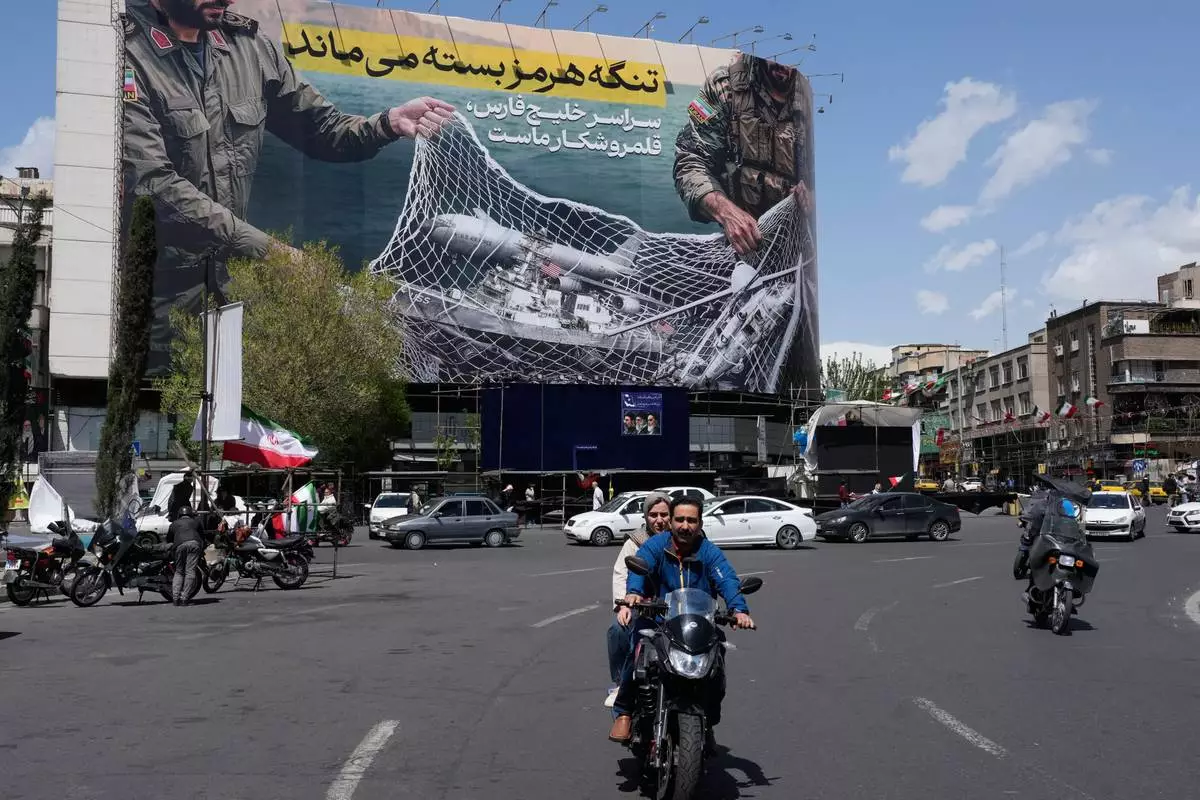
Vehicles and motorcycles move past an anti-U.S. billboard depicting the American aircrafts into the Iranian armed forces fishing net with signs that read in Farsi: "The Strait of Hormuz will remain closed, The entire Persian Gulf is our hunting ground," at the Eqelab-e-Eslami, or Islamic Revolution square in downtown Tehran, Iran, Sunday, April 5, 2026. (AP Photo/Vahid Salemi)
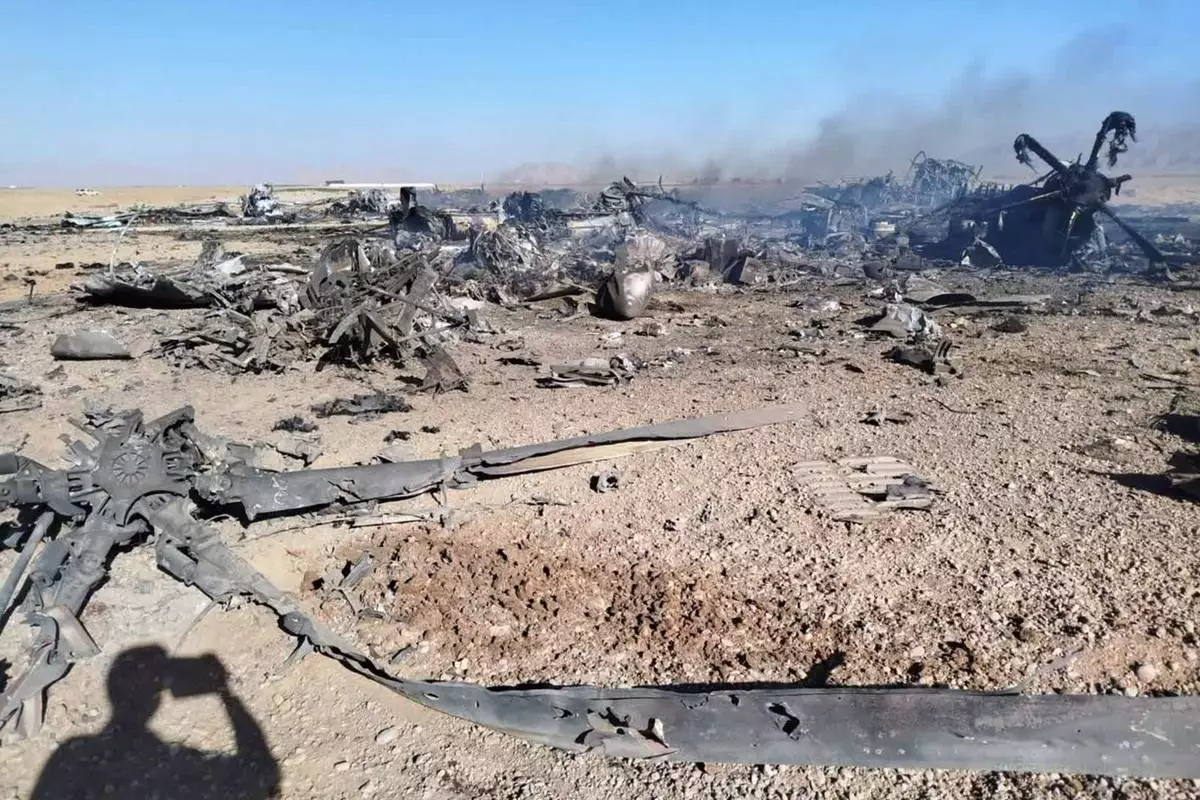
In this image provided by Sepahnews, the Iranian Revolutionary Guard's official website, wreckage is shown at what Iran's state TV claimed was the site of a downed American transport plane and two helicopters involved in a rescue operation, in Isfahan province, Iran, April, 2026. (Sepahnews via AP)
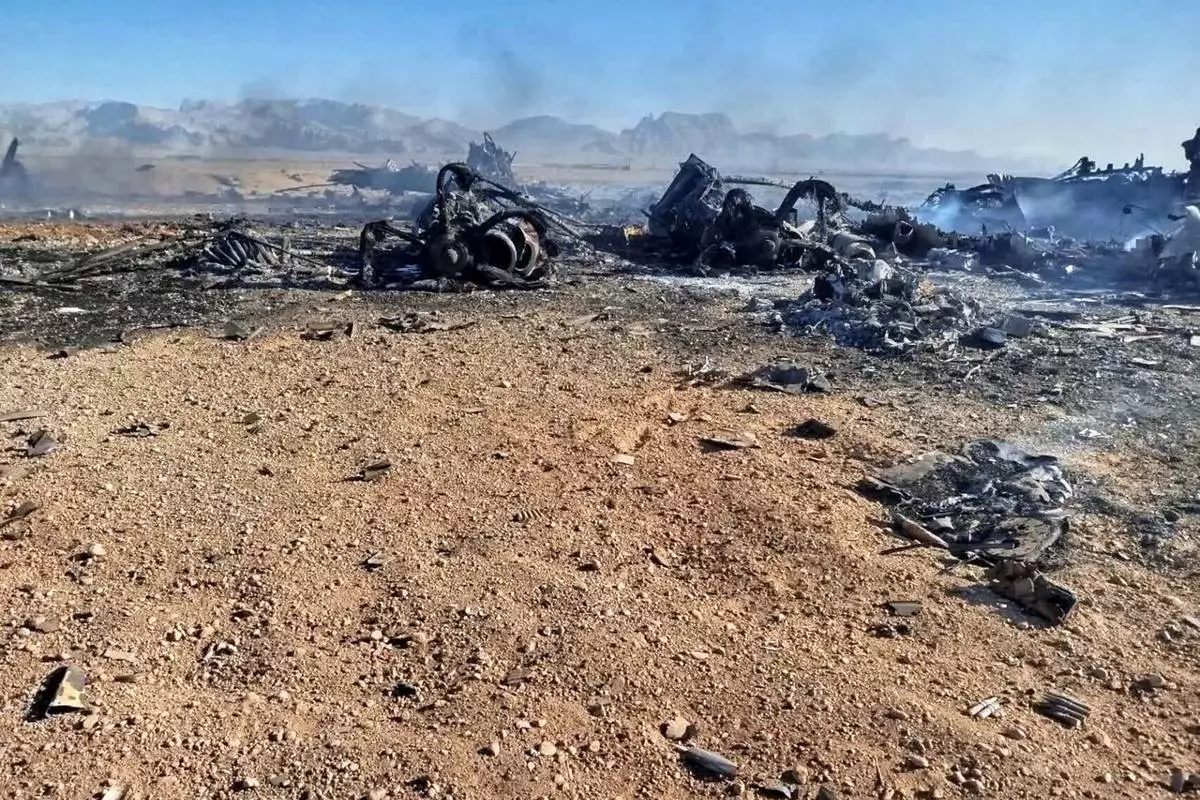
In this image provided by Sepahnews, the Iranian Revolutionary Guard's official website, wreckage is shown at what Iran's state TV claimed was the site of a downed American transport plane and two helicopters involved in a rescue operation, in Isfahan province, Iran, April, 2026. (Sepahnews via AP)
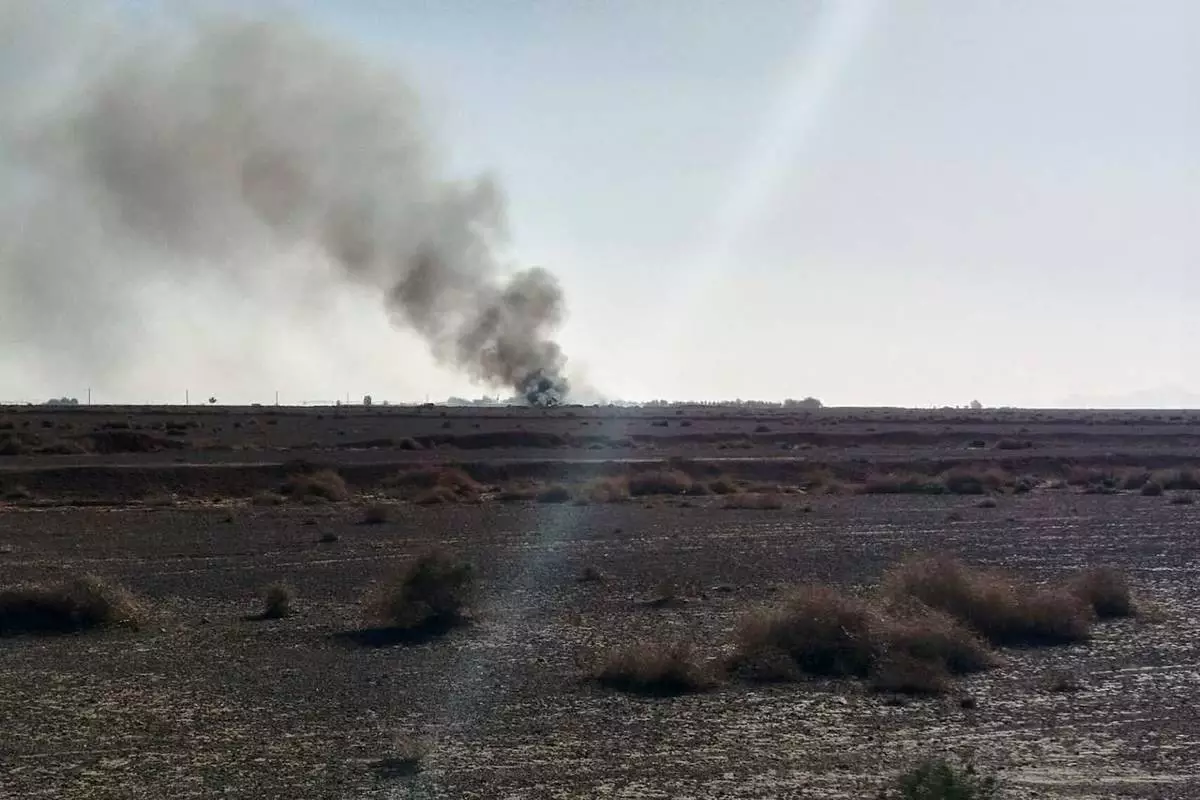
In this image provided by Sepahnews, the Iranian Revolutionary Guard's official website, black smoke rises into the air at what Iran's state TV claimed was the site where an American transport plane and two helicopters involved in a rescue operation were shot down, in Isfahan province, Iran, April, 2026. (Sepahnews via AP)
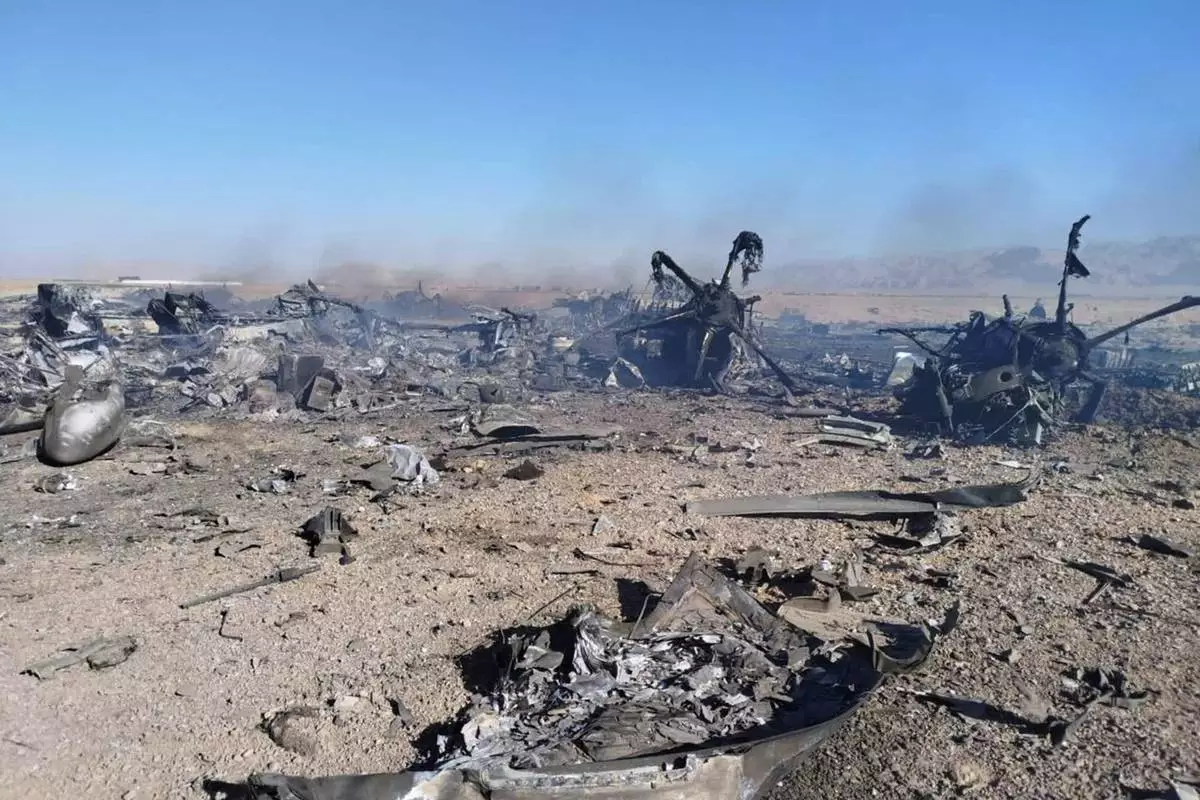
In this image provided by Sepahnews, the Iranian Revolutionary Guard's official website, wreckage is shown at what Iran's state TV claimed was the site of a downed American transport plane and two helicopters involved in a rescue operation, in Isfahan province, Iran, April, 2026. (Sepahnews via AP)
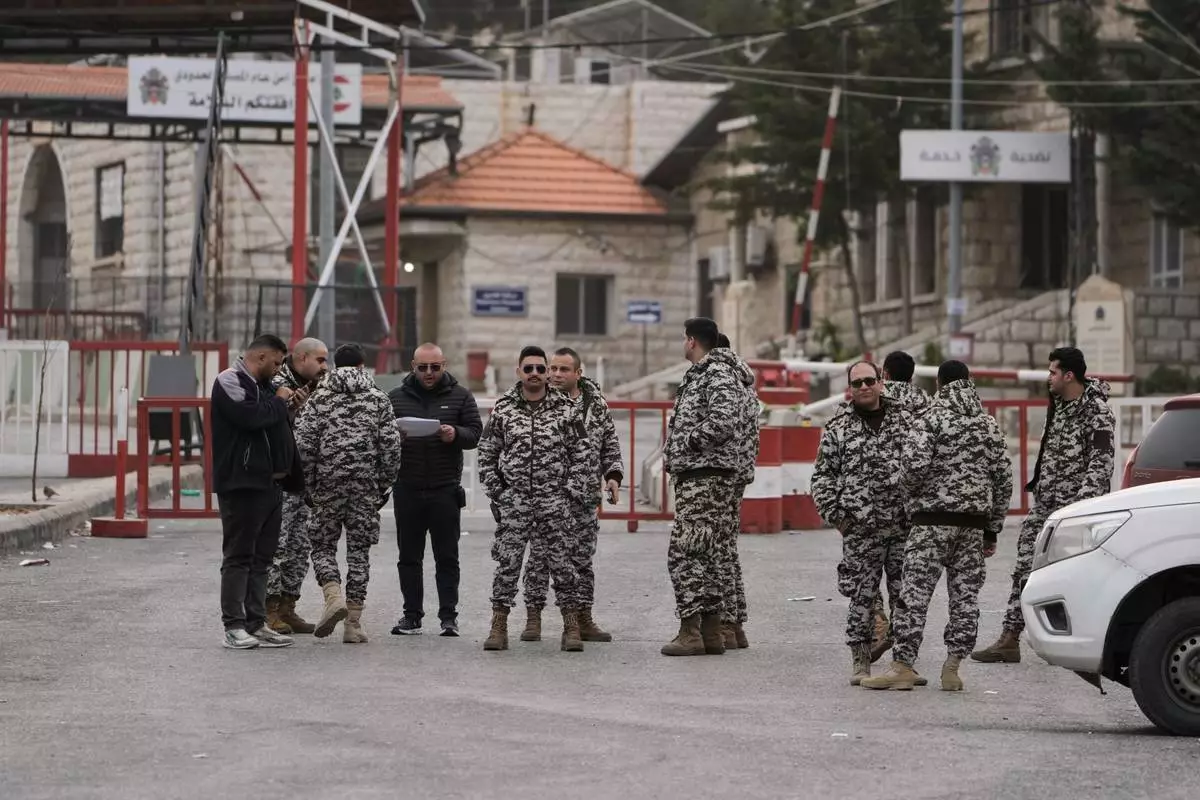
Members of Lebanon's General Security stand at the Masnaa border crossing in the Bekaa valley, eastern Lebanon, Sunday, April 5, 2026. (AP Photo/Bilal Hussein)
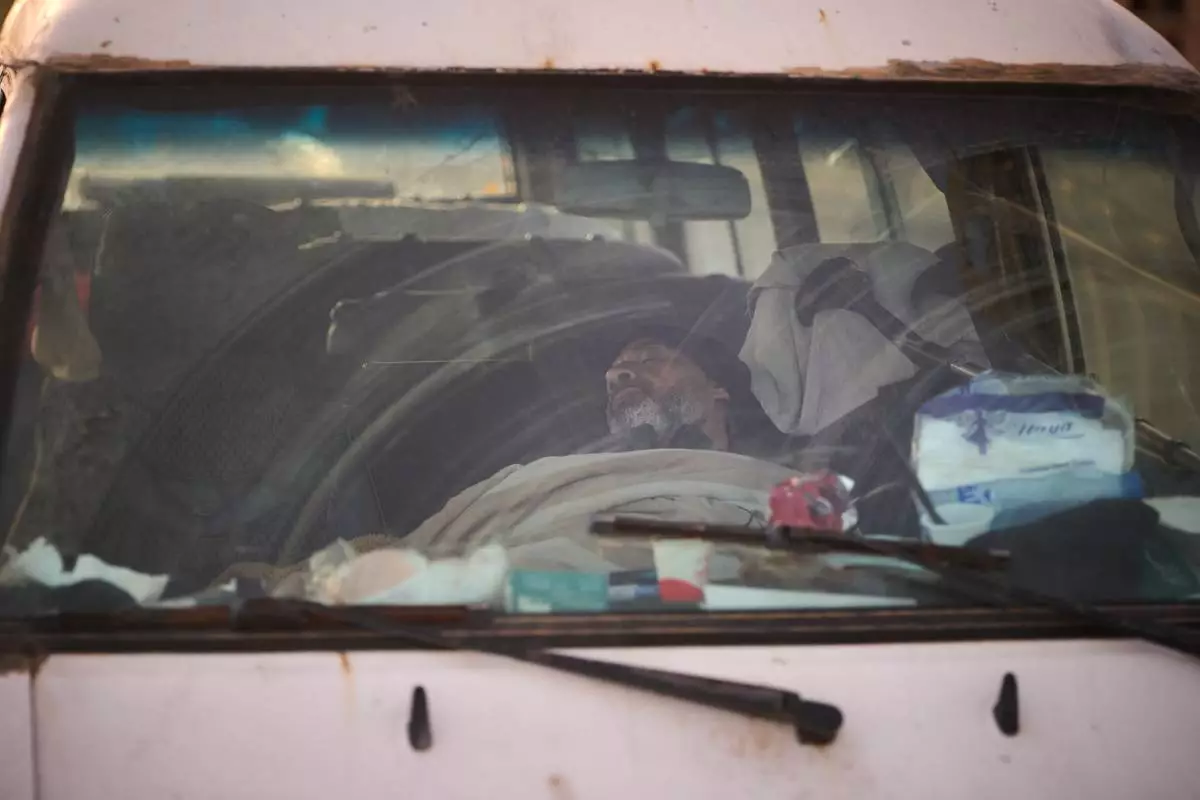
A man, who fled Israeli bombings in southern Lebanon with his family, sleeps in his car used as shelter, along a seaside promenade in downtown Beirut, Lebanon, Sunday, April 5, 2026. (AP Photo/Emilio Morenatti)
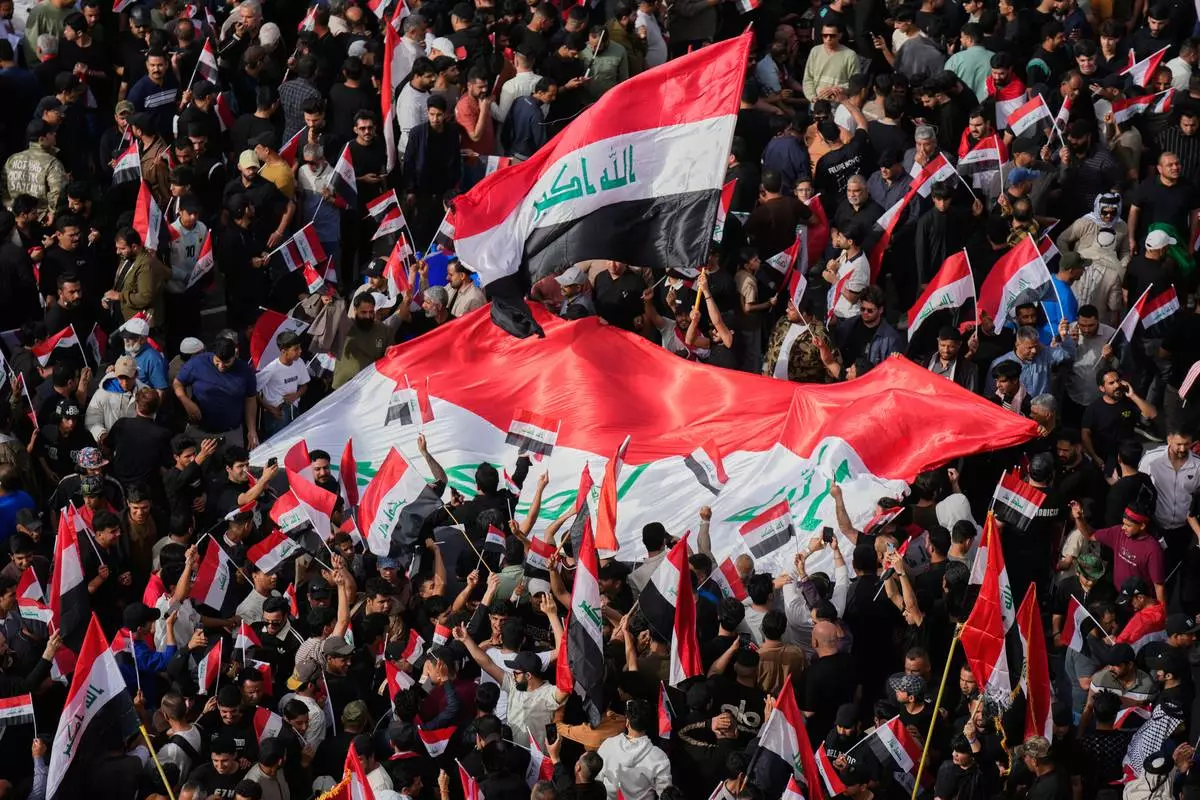
Followers of Iraq's Shiite cleric Muqtada al-Sadr chant slogans as they wave national Iraqi flag during a protest against U.S. and Israeli attacks on multiple cities across Iran, in Tahrir Square, Baghdad, Baghdad, Iraq, Saturday, April 4, 2026. (AP Photo/Hadi Mizban)
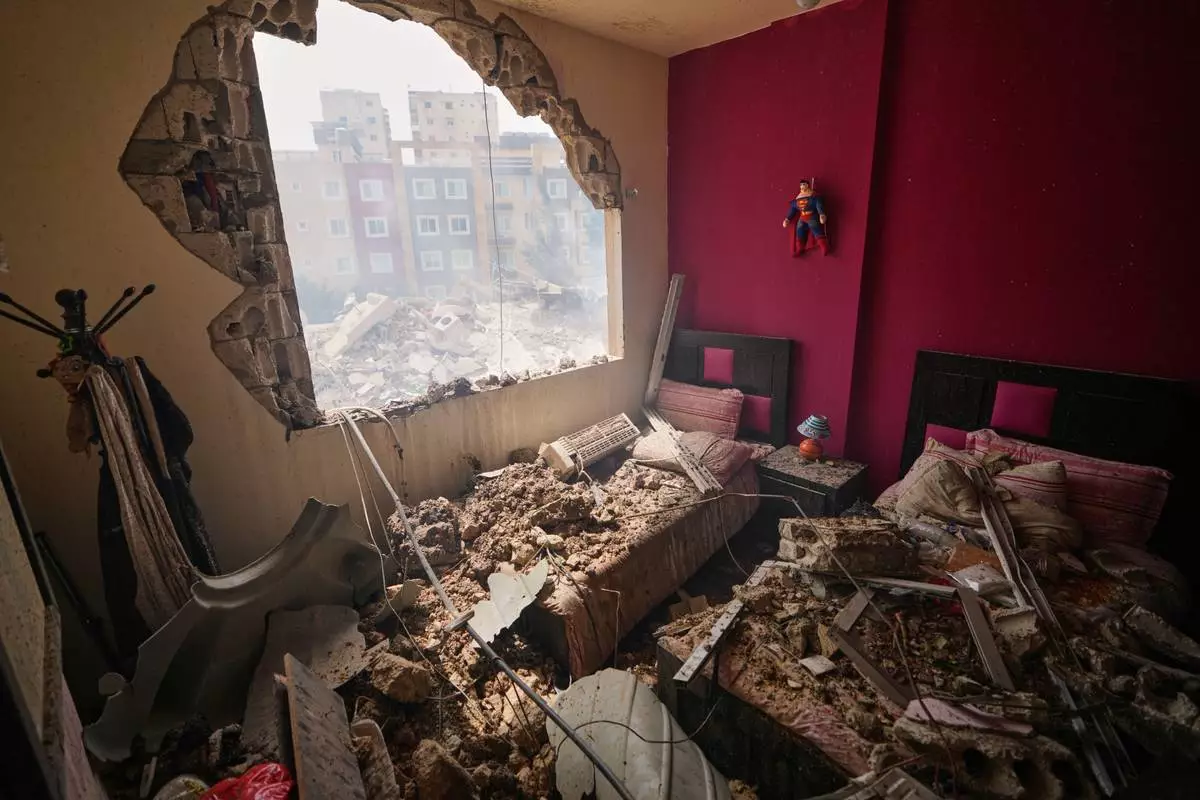
A bedroom is damaged in a building struck in an Israeli airstrike in the southern port city of Tyre, Lebanon, Saturday, April 4, 2026. (AP Photo/Mohammed Zaatari)
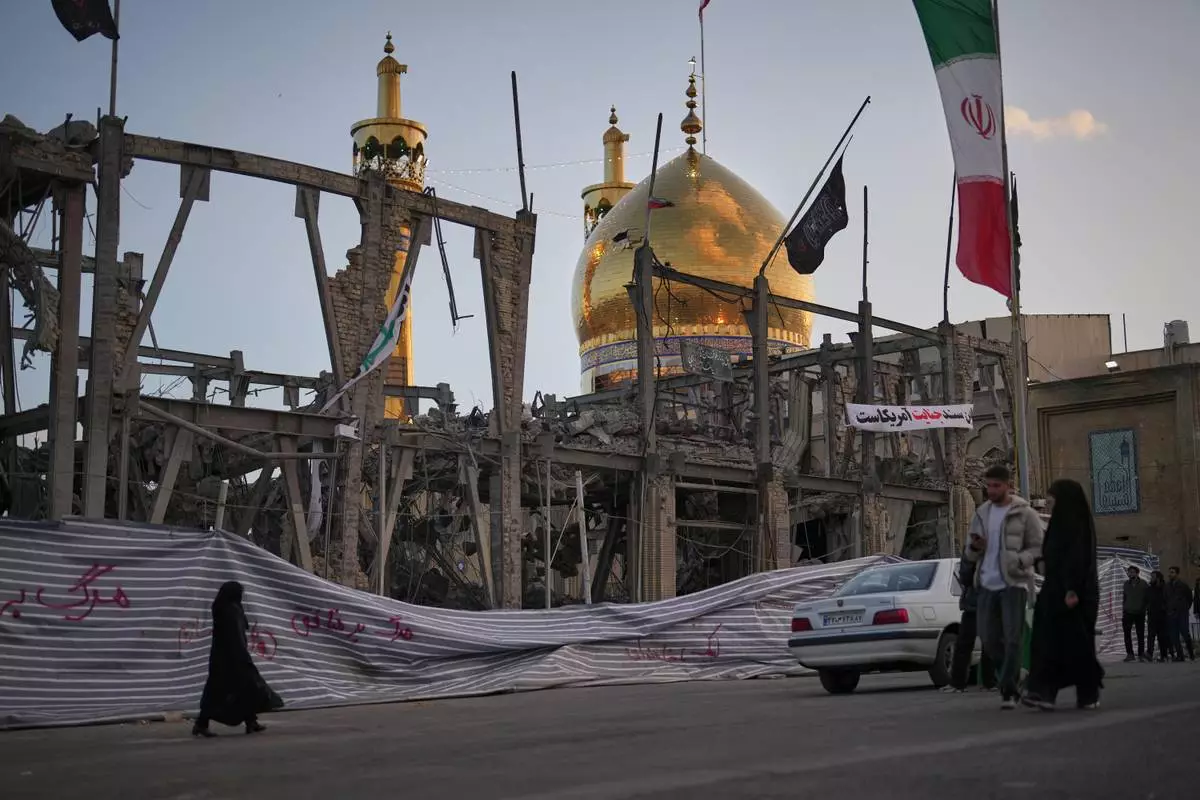
Pedetrians walk by a destroyed building within the Grand Hosseiniyeh, with the mosque visible in the background, which officials at the site say was hit by U.S.-Israeli airstrikes Tuesday, in Zanjan, Iran, Saturday, April 4, 2026. (AP Photo/Francisco Seco)

Police officers and their horses take cover in an underground parking garage as sirens warn of an incoming missile fired from Yemen in Tel Aviv, Israel, Saturday, April 4, 2026. (AP Photo/Maya Levin)
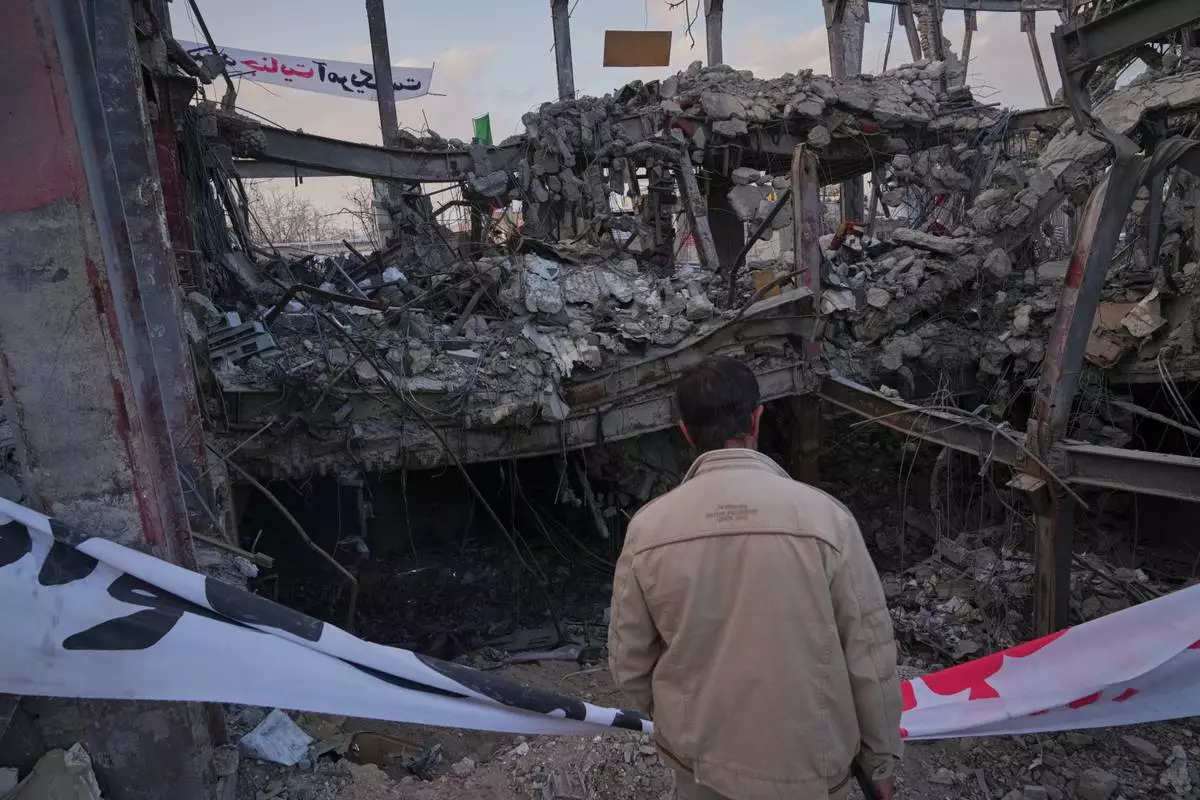
A man looks at a destroyed building within the Grand Hosseiniyeh complex that officials say was hit by U.S.-Israeli airstrikes Tuesday in Zanjan, Iran, Saturday, April 4, 2026. (AP Photo/Francisco Seco)