AUGUSTA, Ga. (AP) — Go back through 89 previous editions of the Masters, every shot on every hole, and no one will ever match what Byron Nelson did on the par-4 seventh hole at Augusta National. Nelson drove the green and two-putted for birdie in 1937 on his way to his first Masters victory.
Share that with any of the 91 players in the field, and some explaining is required.
The hole was 340 yards and had no bunkers, only a gully in front of the green. Alister MacKenzie wanted it be similar to the “Valley of Sin” on the 18th hole at St. Andrews, so the best approach would be to run shots up to the green.
That shot by Nelson changed everything.
Horton Smith, who won two of the first three Masters, suggested the green be elevated and moved some 20 yards back and to the right, with several deep bunkers guarding the front. Augusta National's co-founders, Bobby Jones and Clifford Roberts, agreed. They hired Perry Maxwell, renowned for his work at Southern Hills and Prairie Dunes, to do the work at a cost of $2,500.
Trees were planted on the left side to along along with those on the right, creating a tight drive. And then in a span of five Masters from 2002 to 2006, the tees twice were moved back some 40 yards. That puts it at 450 yards on the scorecard now.
Nelson wouldn't recognize it.
“You have to hit it in the fairway,” two-time Masters champion Scottie Scheffler said. When it was suggested that such strategy would hold true on many holes at Augusta National, he stopped walking to emphasize his point.
“No,” he said. “There's certain holes you don't have to be in the fairway. If you hit a really good tee shot (on No. 7), it's not a difficult hole. But if you miss the fairway, you can't hit it on the green.”
The par-4 seventh is called “Pampas" for the grass bush native to Argentina that grows just left of the members' tee box. No. 7 was never a favorite of Roberts and Jones. Roberts once referred to it as “the only weak hole of the 18."
It was inspired by the 18th on the Old Course, a short hole with a boomerang-shaped green that gave players the option to run the ball through the gully in front. Nelson drove the seventh at Augusta in 1937. Players still drive onto the 18th at St. Andrews, most recently Cameron Young.
With the first change, it became a tight drive that was typically a 2-iron and a wedge. That led Jack Nicklaus to once call the seventh "a beautiful little hole — a little, short par 4. You got to be pretty precise with your tee shot. Then it’s a very demanding little second shot. It’s very difficult to recover from if you get off track.”
Throw in an additional 100 yards, and it's no longer a hole where players can build some scoring momentum. Par is more than acceptable. The all-time scoring average is 4.156, the 10th-toughest hole at Augusta National.
“You're not licking your chops unless you're in the fairway,” Xander Schauffele said. “Even then, you're conceding a 20-foot putt as a really good golf shot. Maybe even before I was on tour, you could think, ‘If I birdie this, I get some momentum.’ Now it's, ‘Oh boy, I need to hit a good drive or I’m going to have to make a tough par.'”
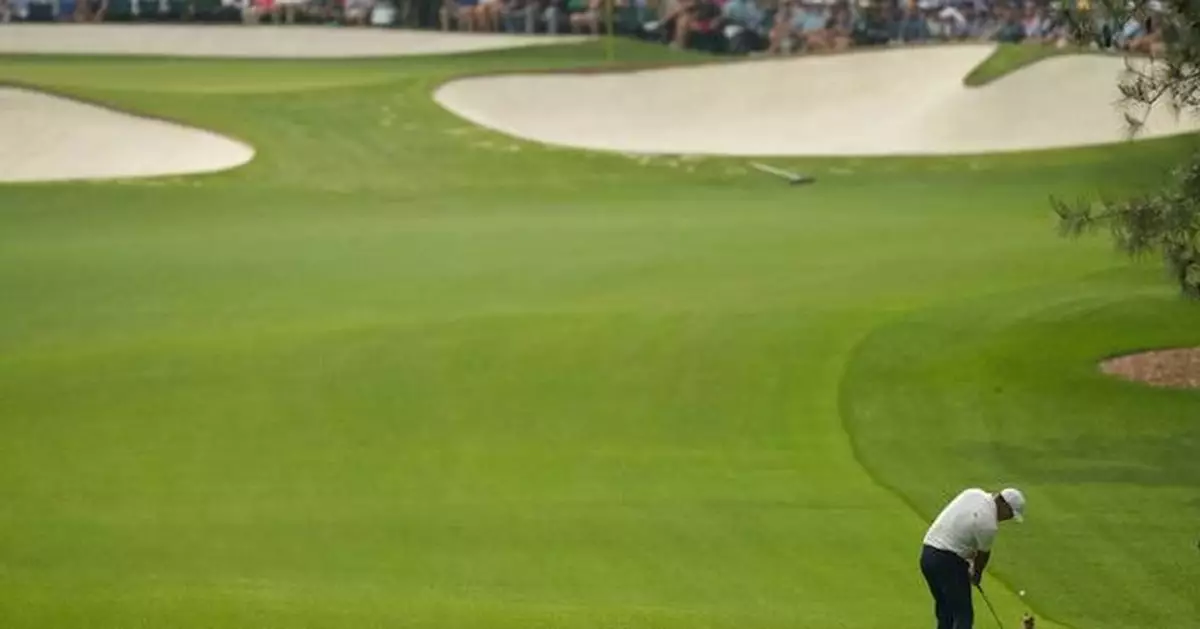
It's not as simple as hitting a straight drive on a straight hole. The fairway cants to the right. And the trees have grown, so a tee shot too far to the right means the approach is blocked by trees.
According to the Elias Sports Bureau, only 20% of players have hit the seventh green after missing the green the last five years. Only No. 5 and No. 11 have a lower percentage. It can be done.
There have been some remarkable recoveries from the trees. Jon Rahm once holed out after chipping out from the trees. Joaquin Niemann once threaded a running shot through two bunkers. Those shots are rare.
“If you get out of position, it's like No. 10 at Riviera — you're trying to put it in a spot to get the next one on the green,” Harris English said. “You can get in some bad spots. But if you hit a good tee shot, it could be a birdie hole.”
Still fresh was Rory McIlroy in the left trees last year, hitting a 9-iron because of a tiny gap he saw.
His caddie, Harry Diamond, wasn't seeing it.
“He wasn't for it at all, but I just kept seeing this gap up in the trees,” McIlroy said, referring to the shot as “achievable.”
“That's when Harry does a great job and says, ‘Look, if you feel like you can see it, go ahead and hit it,’” McIlroy said. “My mindset was this is the final round of the Masters, and I have a chance to win the only tournament that ... I've wanted to win for such a long time. If that isn't the time to take a risk, I don't know when the time is.”
It doesn't decide the tournament being on the front nine. But it's no longer the “beautiful little hole” Nicklaus once described.
“Missing it left is no good. Missing it right is no good,” Brooks Koepka said. “If you get slightly out of position, it becomes a scramble for par. If I hit the fairway, I’m pretty excited about it.”
AP golf: https://apnews.com/hub/golf
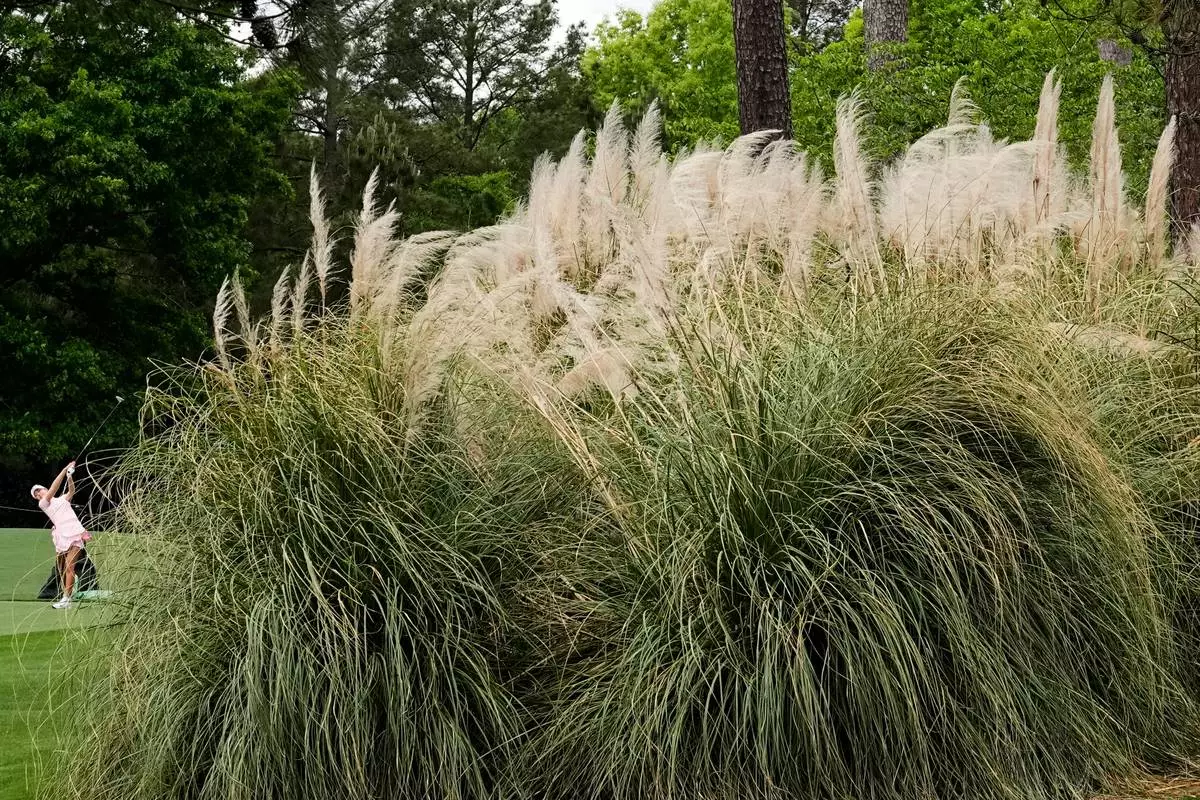
Soomin Oh, of South Korea, hits her tee shot near a patch of pampas grass on the seventh hole during the Augusta National Women's Amateur golf tournament, Saturday, April 4, 2026, in Augusta, Ga. (AP Photo/David J. Phillip)
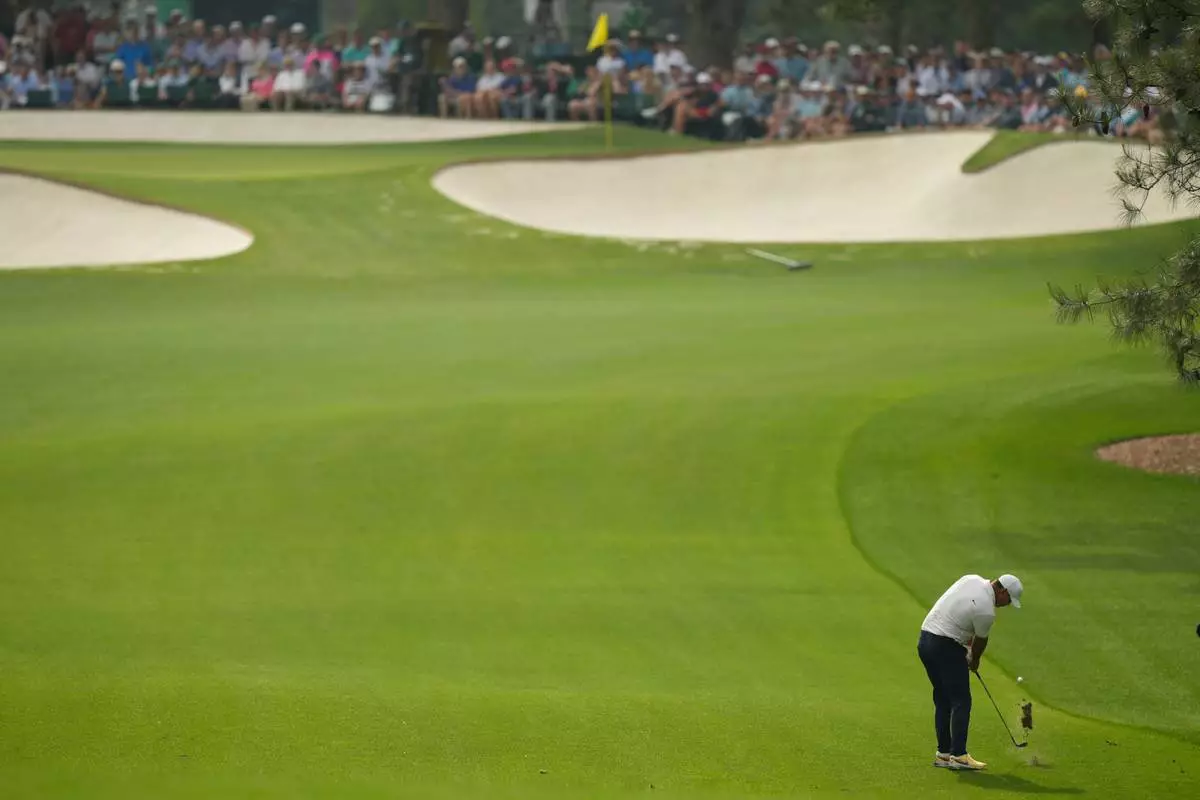
FILE - Brooks Koepka hits from the fairway on the seventh hole during the second round of the Masters golf tournament at Augusta National Golf Club on Friday, April 7, 2023, in Augusta, Ga. (AP Photo/Charlie Riedel, File)
WASHINGTON (AP) — U.S. President Donald Trump on Sunday made new, expletive-laden threats to escalate strikes on Iran and its infrastructure if it doesn't open the Strait of Hormuz by his deadline, after American forces rescued an aviator whose Iran-downed plane had fallen behind enemy lines.
A defiant Iran showed no sign of backing down, striking economic and infrastructure targets in neighboring Gulf Arab countries and challenging the U.S. account of the rescue.
In a social media post, Trump promised strikes on Iran’s power plants and bridges. He vowed the “crazy bastards” would be “living in Hell” if the strait, a crucial waterway for global trade, isn’t opened to marine traffic by Tuesday. He ended with “Praise be to Allah.”
Trump has issued such deadlines before but extended them when mediators have claimed progress toward ending the war, which has killed thousands, shaken global markets, cut off key shipping routes and spiked fuel prices in just over five weeks.
Both sides have threatened and hit civilian targets like oil fields and desalination plants critical for drinking water, bringing warnings of possible war crimes.
The rescue of the U.S. airman followed an intense search after Friday's crash of the F-15E Strike Eagle, while Iran had promised a reward for anyone who turned in an “enemy pilot.”
Trump said that the service member was “seriously wounded and really brave” and rescued from “deep inside the mountains” in Iran.
Trump said a second crew member was rescued in “broad daylight” within hours of the crash. The fighter jet was the first known American aircraft to crash in Iranian territory since the U.S. and Israel launched the war with strikes on Iran on Feb. 28.
Iran also shot down another U.S. military plane, demonstrating both the perils of the bombing campaign and the ability of Iran's degraded military to hit back. The other plane was a U.S. A-10 attack aircraft. Neither the status of the crew nor where it crashed is known.
On Sunday, Iran’s state television aired a video showing what it claimed were parts of U.S. aircraft shot down by Iranian forces, along with a photo of thick, black smoke rising. The broadcaster said that Iran had shot down a transport plane and two helicopters that were part of the rescue operation.
However, a regional intelligence official briefed on the mission told The Associated Press that the U.S. military blew up two transport planes because of a technical malfunction and brought in additional aircraft to complete the rescue. The official spoke on condition of anonymity to discuss the covert mission.
Iran’s military joint command on Sunday said that four U.S. aircraft were destroyed during the operation, and warned of stepping up retaliatory attacks on regional oil and civilian infrastructure if the U.S. and Israel attack such targets in the Islamic Republic, according to state television.
“We once again repeat: if you commit aggression again and strike civilian facilities, our responses will be more forceful,” a spokesman said in comments published by the IRNA news agency.
Trump's deadline of 9 p.m. EDT Monday (0100 GMT Tuesday), centers on growing alarm over Iran's grip on the Strait of Hormuz.
The waterway is a critical choke point for commerical trade, especially oil and gas moving from the Persian Gulf to Europe and Asia, and is key to the delivery of humanitarian supplies. Disruptions have shaken markets and pushed oil and gas-importing countries to seek alternatives.
Gen. Ali Abdollahi Aliabadi with Iran’s joint military command late Saturday responded to Trump’s warnings by threatening all infrastructure used by the U.S. military in the region.
Diplomatic efforts continued, seeking to calm the situation.
Oman's Foreign Ministry said that deputy foreign ministers and experts from Iran and Oman met to discuss “a number of visions and proposals” to ensure “smooth transit” through the strait. Oman has often served as a mediator between the U.S. and Iran in the past.
Egypt said that Foreign Minister Badr Abdelatty had spoken by phone with U.S. envoy Steve Witkoff and Iranian Foreign Minister Abbas Araghchi, as well as with Turkish and Pakistani counterparts who are helping to mediate.
Pakistan’s Foreign Ministry said it had conveyed to Araghchi that Islamabad supports “all efforts aimed at de-escalation.” Last week, Islamabad said that it would soon host talks between the U.S. and Iran.
A proposed compromise includes a cessation of hostilities to allow a diplomatic settlement, according to a regional official involved in the efforts and a Gulf diplomat briefed on the matter. The official spoke earlier on condition of anonymity to discuss closed-door diplomacy.
An escalation, however, could see Iranian-backed Houthi rebels in Yemen resuming attacks on vessels in the Bab el-Mandeb Strait, a key waterway for global traffic to and from the Suez Canal.
In Kuwait, Iranian drone attacks caused significant damage to power plants and a petrochemical plant. They also put a water desalination station out of service, according to the Ministry of Electricity. It said that no injuries were reported.
In Bahrain, a drone attack caused a fire at one of the national oil company’s storage facilities and a state-run petrochemical plant, the kingdom’s official news agency said.
In the United Arab Emirates, authorities responded to fires at a petrochemical plant in Ruwais that they said were caused by intercepted debris, halting operations.
The strikes came a day after Israel struck a major petrochemical plant in Iran that Israeli Prime Minister Benjamin Netanyahu said generated revenue used to fund the war.
The petrochemical industry is a key sector in many Gulf states, converting oil and gas into products like plastics and fertilizer and bringing billions of dollars in export revenue.
Meanwhile, more than 1,900 people have been killed in Iran since the war began.
In Gulf Arab states and the occupied West Bank, more than two dozen people have died, while 19 have been reported dead in Israel and 13 U.S. service members have been killed. In Lebanon, more than 1,400 people have been killed and more than 1 million people have been displaced. Ten Israeli soldiers have died there.
A previous version of this report was corrected to show that Borealis is an Austrian company, not Australian.
Sam Metz reported from Jerusalem and Samy Magdy from Cairo. Jon Gambrell in Dubai, United Arab Emirates, and Munir Ahmed in Islamabad, contributed to this report.
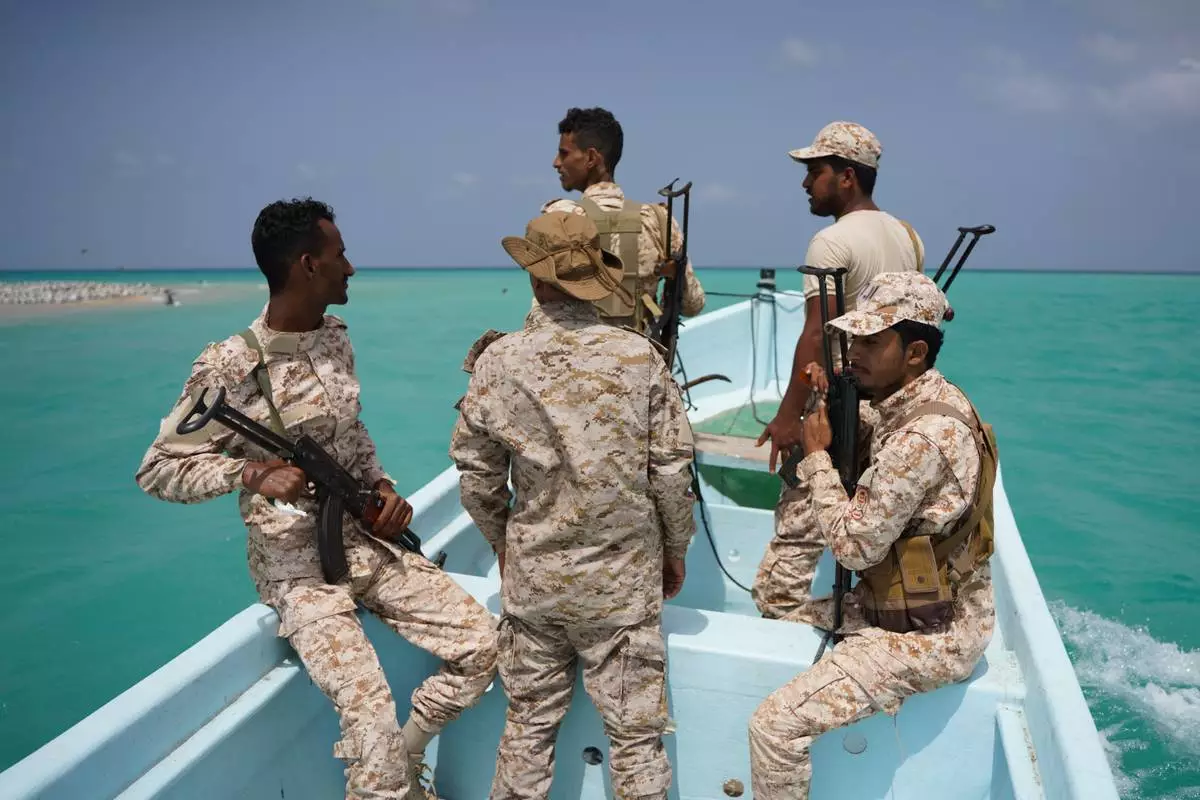
Yemeni soldiers patrol the strategic Bab el-Mandeb Strait, Yemen, Sunday, April 5, 2026. (AP Photo/Abdulnasser Alseddik)
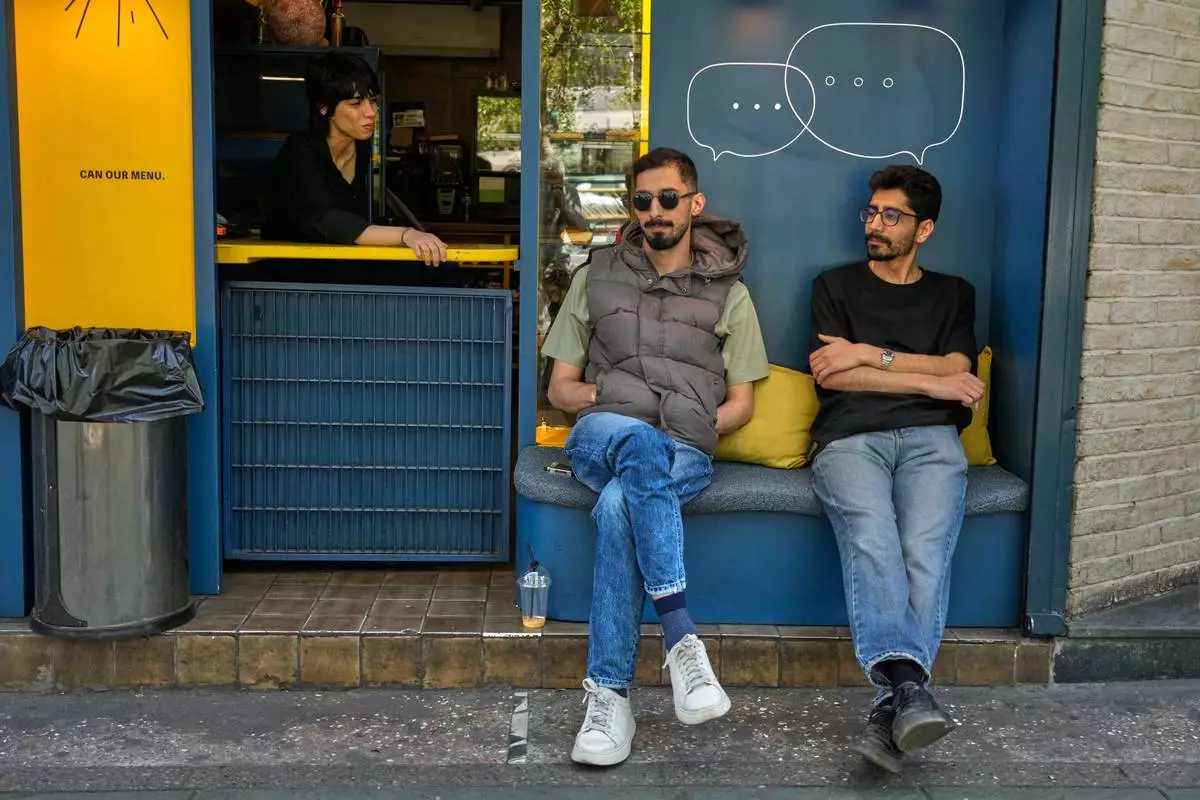
A cafe attendant sits at the counter as two men sit at a cafe in downtown Tehran, Iran, Sunday, April 5, 2026. (AP Photo/Vahid Salemi)
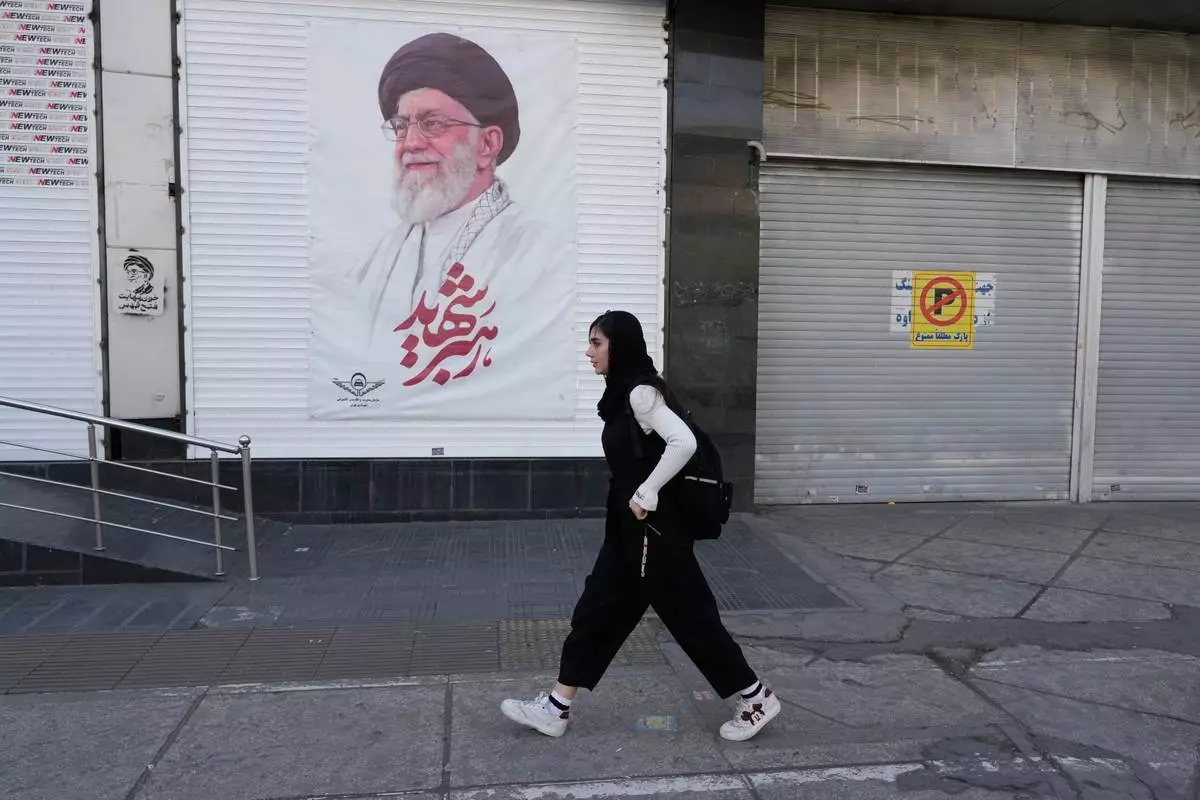
A woman walks past a poster of the late Iranian Supreme Leader Ayatollah Ali Khamenei in downtown Tehran, Iran, Sunday, April 5, 2026. (AP Photo/Vahid Salemi)
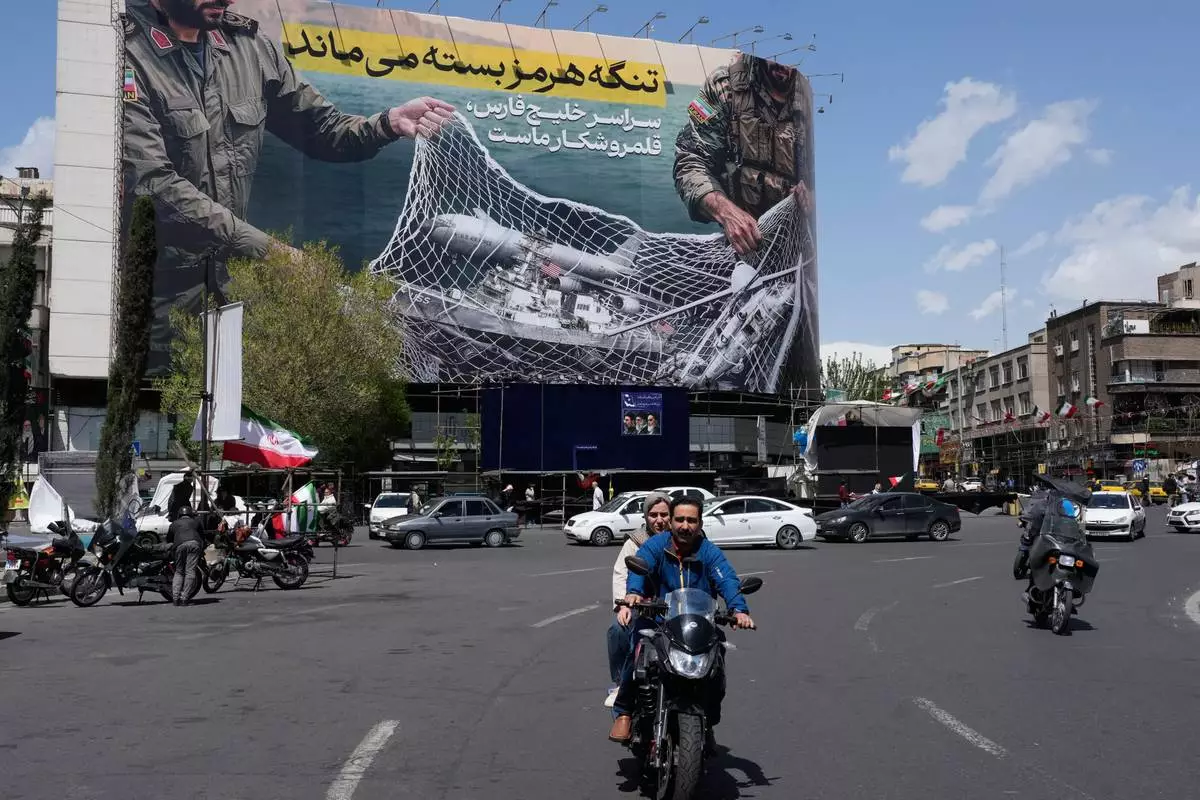
Vehicles and motorcycles move past an anti-U.S. billboard depicting the American aircrafts into the Iranian armed forces fishing net with signs that read in Farsi: "The Strait of Hormuz will remain closed, The entire Persian Gulf is our hunting ground," at the Eqelab-e-Eslami, or Islamic Revolution square in downtown Tehran, Iran, Sunday, April 5, 2026. (AP Photo/Vahid Salemi)
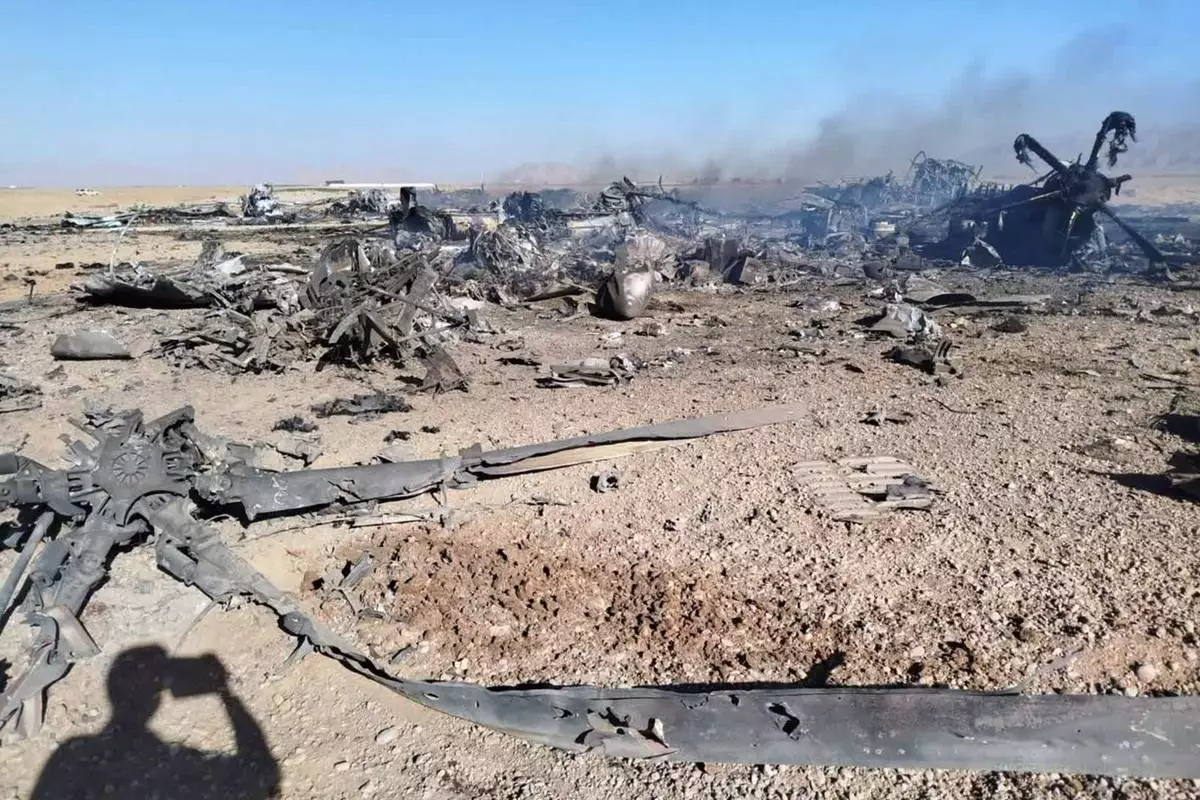
In this image provided by Sepahnews, the Iranian Revolutionary Guard's official website, wreckage is shown at what Iran's state TV claimed was the site of a downed American transport plane and two helicopters involved in a rescue operation, in Isfahan province, Iran, April, 2026. (Sepahnews via AP)
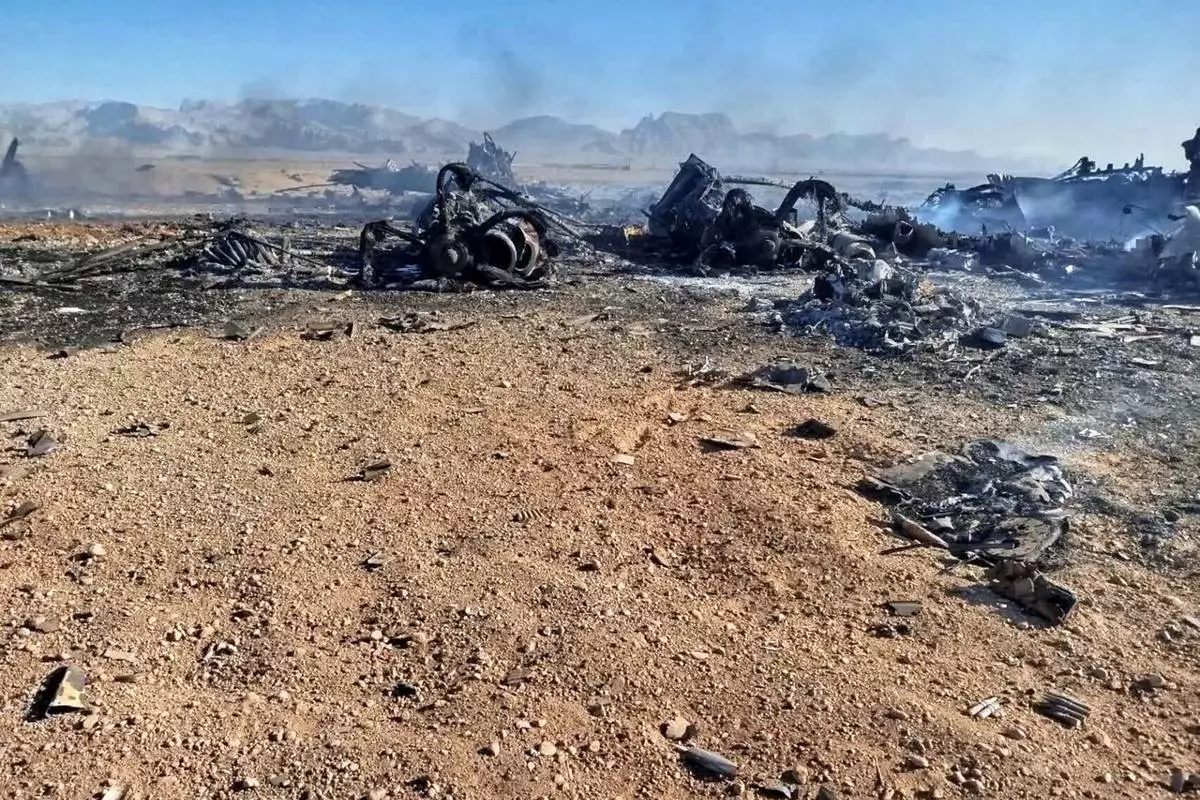
In this image provided by Sepahnews, the Iranian Revolutionary Guard's official website, wreckage is shown at what Iran's state TV claimed was the site of a downed American transport plane and two helicopters involved in a rescue operation, in Isfahan province, Iran, April, 2026. (Sepahnews via AP)
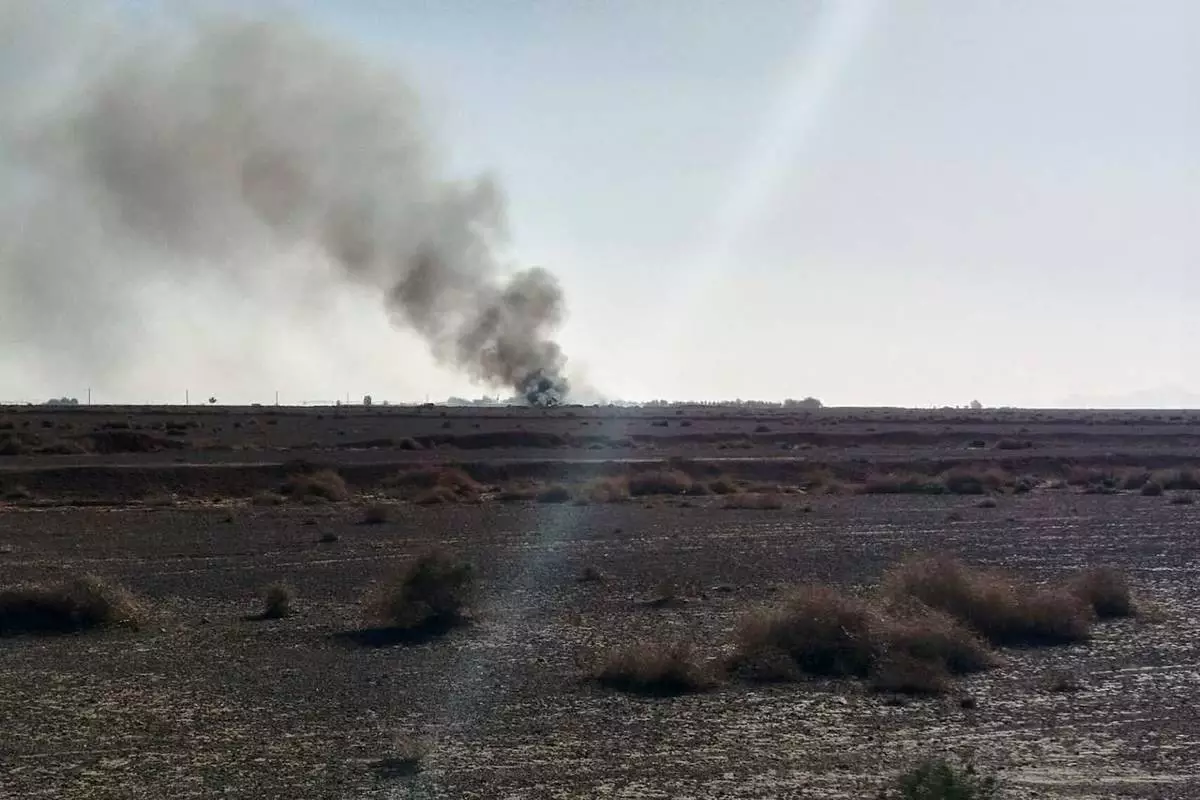
In this image provided by Sepahnews, the Iranian Revolutionary Guard's official website, black smoke rises into the air at what Iran's state TV claimed was the site where an American transport plane and two helicopters involved in a rescue operation were shot down, in Isfahan province, Iran, April, 2026. (Sepahnews via AP)
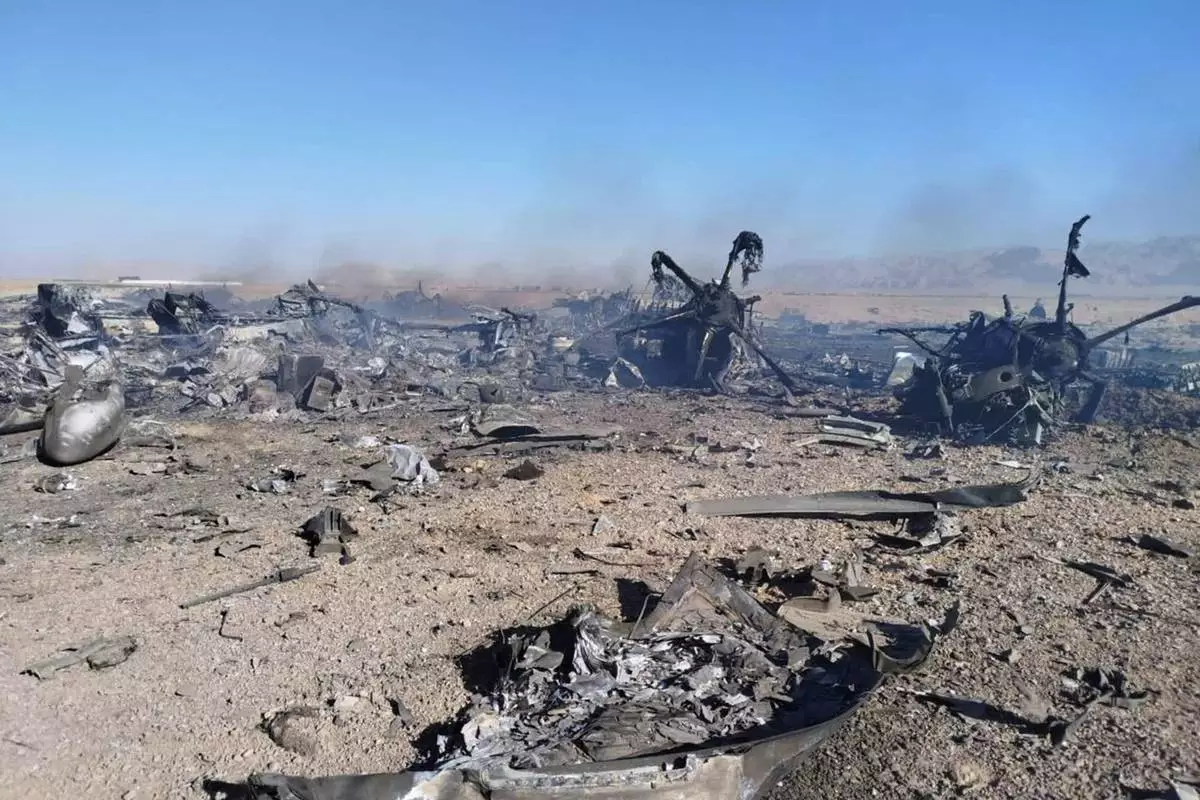
In this image provided by Sepahnews, the Iranian Revolutionary Guard's official website, wreckage is shown at what Iran's state TV claimed was the site of a downed American transport plane and two helicopters involved in a rescue operation, in Isfahan province, Iran, April, 2026. (Sepahnews via AP)
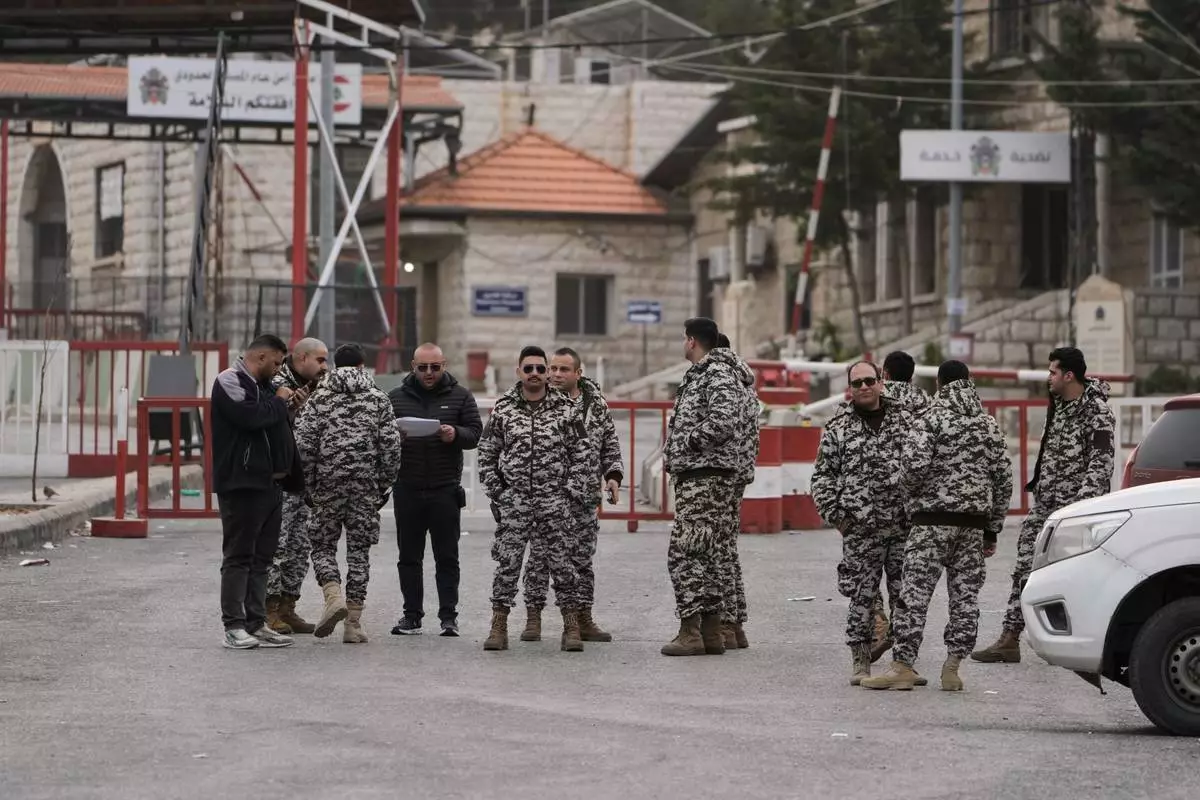
Members of Lebanon's General Security stand at the Masnaa border crossing in the Bekaa valley, eastern Lebanon, Sunday, April 5, 2026. (AP Photo/Bilal Hussein)
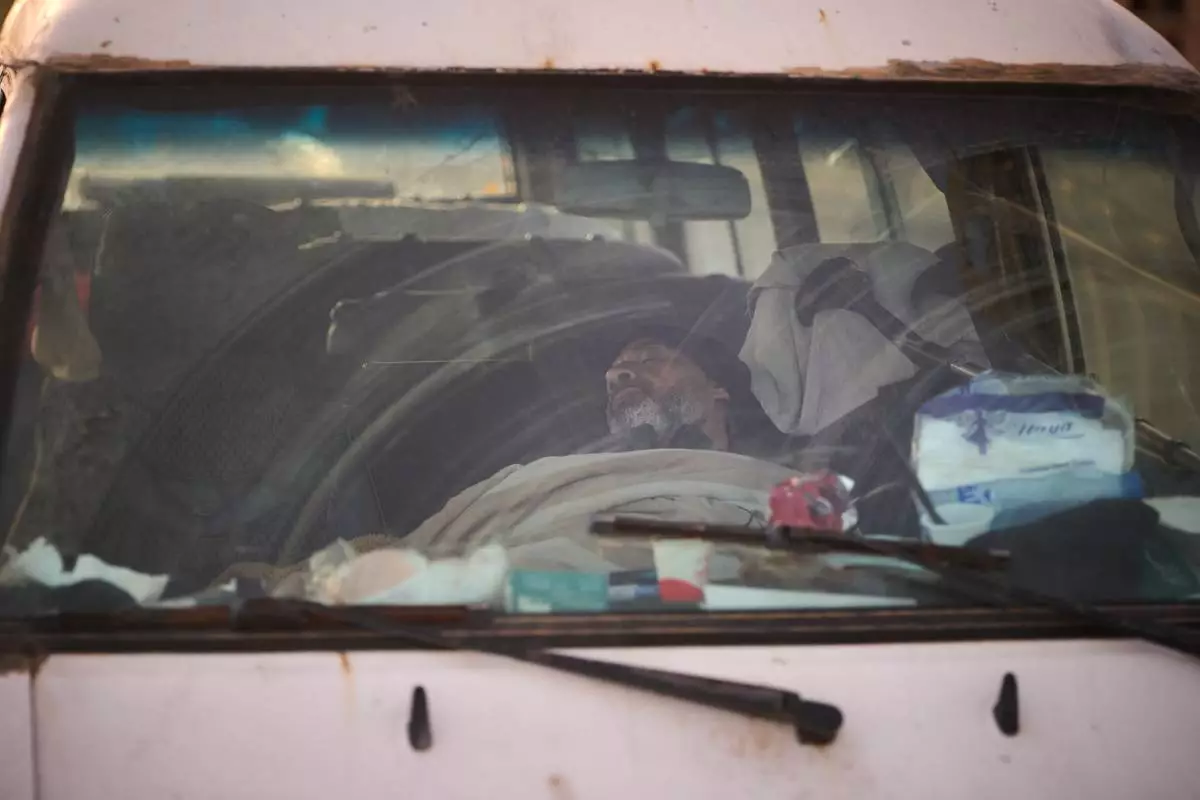
A man, who fled Israeli bombings in southern Lebanon with his family, sleeps in his car used as shelter, along a seaside promenade in downtown Beirut, Lebanon, Sunday, April 5, 2026. (AP Photo/Emilio Morenatti)
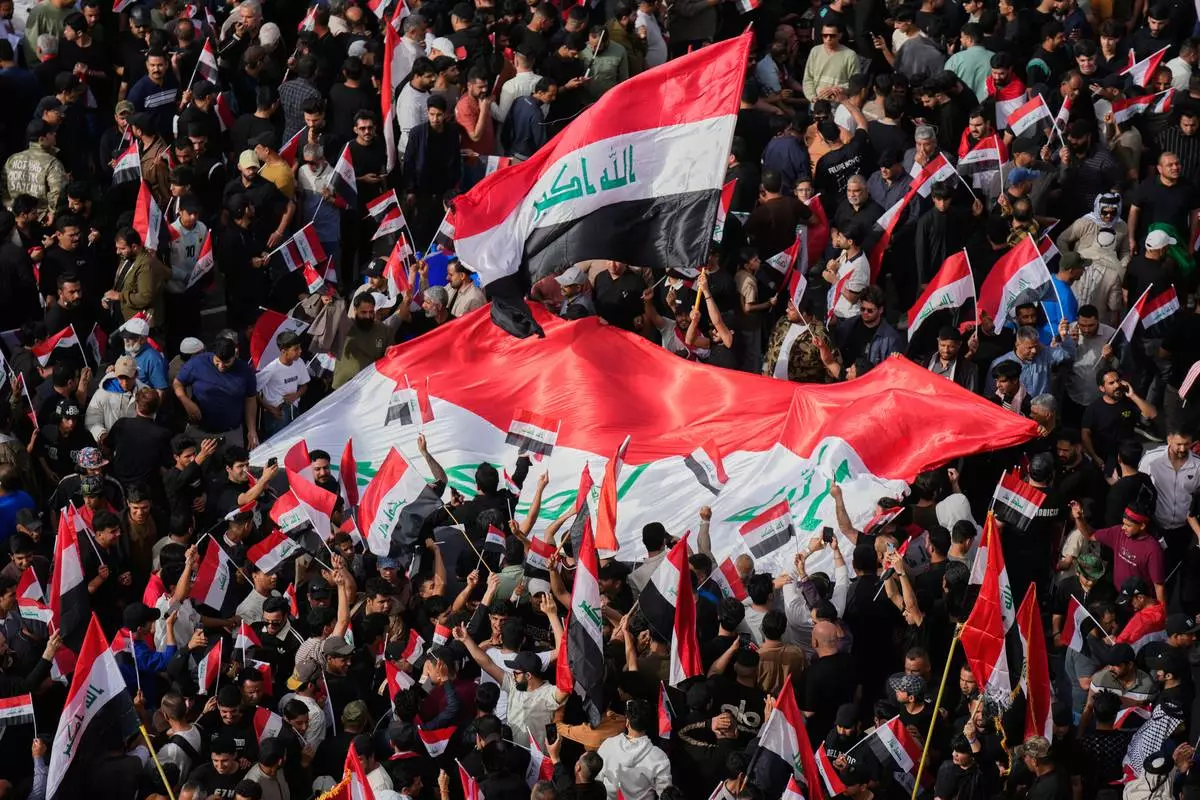
Followers of Iraq's Shiite cleric Muqtada al-Sadr chant slogans as they wave national Iraqi flag during a protest against U.S. and Israeli attacks on multiple cities across Iran, in Tahrir Square, Baghdad, Baghdad, Iraq, Saturday, April 4, 2026. (AP Photo/Hadi Mizban)
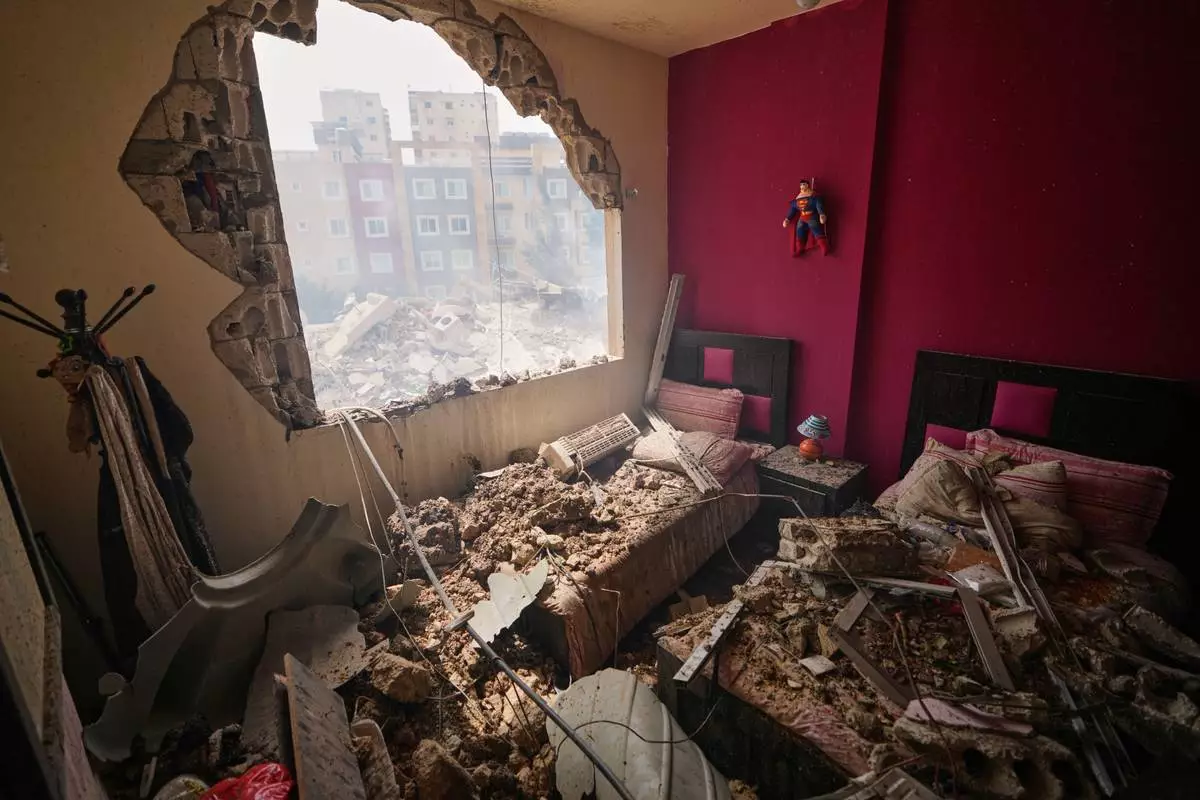
A bedroom is damaged in a building struck in an Israeli airstrike in the southern port city of Tyre, Lebanon, Saturday, April 4, 2026. (AP Photo/Mohammed Zaatari)
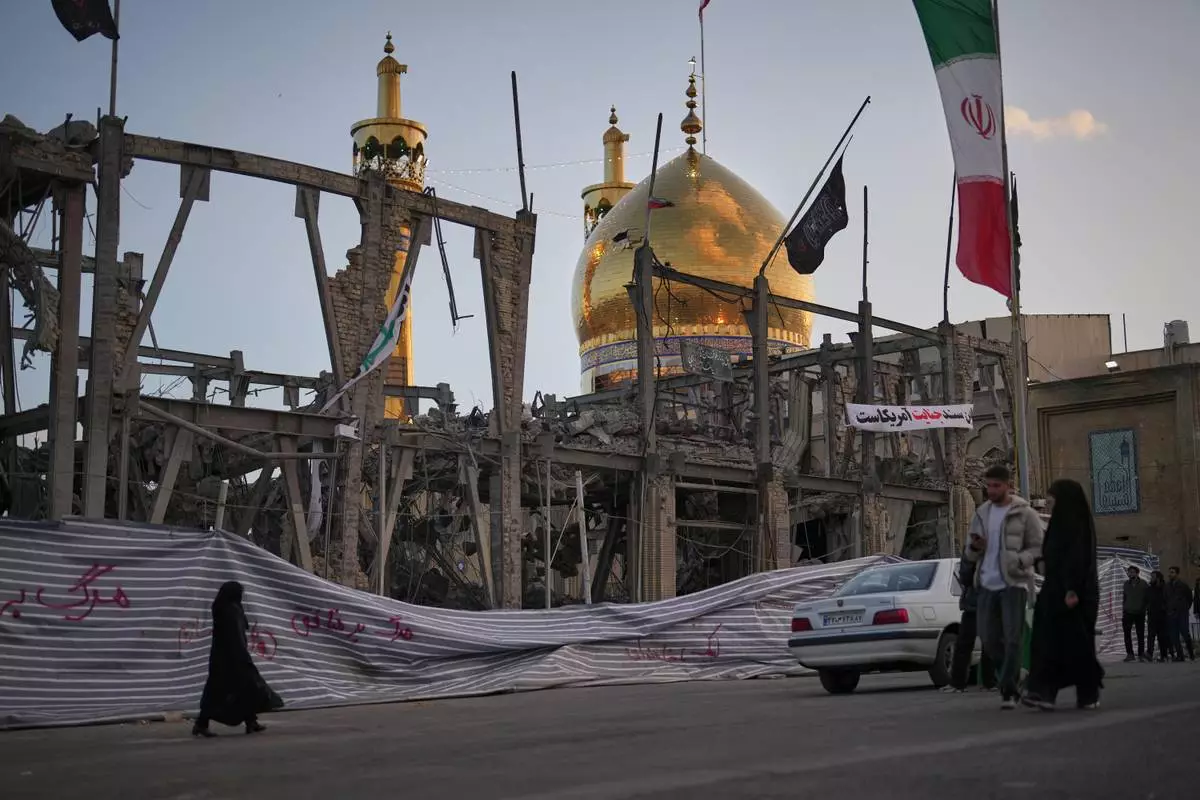
Pedetrians walk by a destroyed building within the Grand Hosseiniyeh, with the mosque visible in the background, which officials at the site say was hit by U.S.-Israeli airstrikes Tuesday, in Zanjan, Iran, Saturday, April 4, 2026. (AP Photo/Francisco Seco)
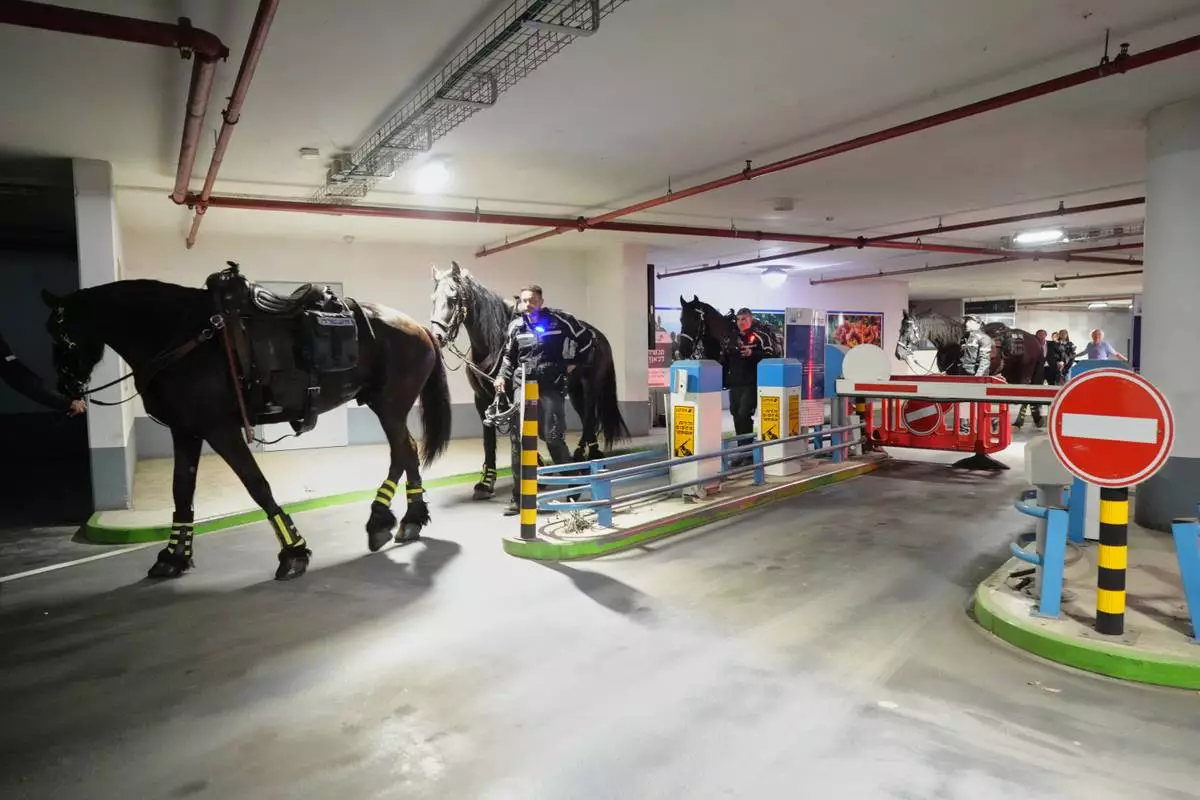
Police officers and their horses take cover in an underground parking garage as sirens warn of an incoming missile fired from Yemen in Tel Aviv, Israel, Saturday, April 4, 2026. (AP Photo/Maya Levin)
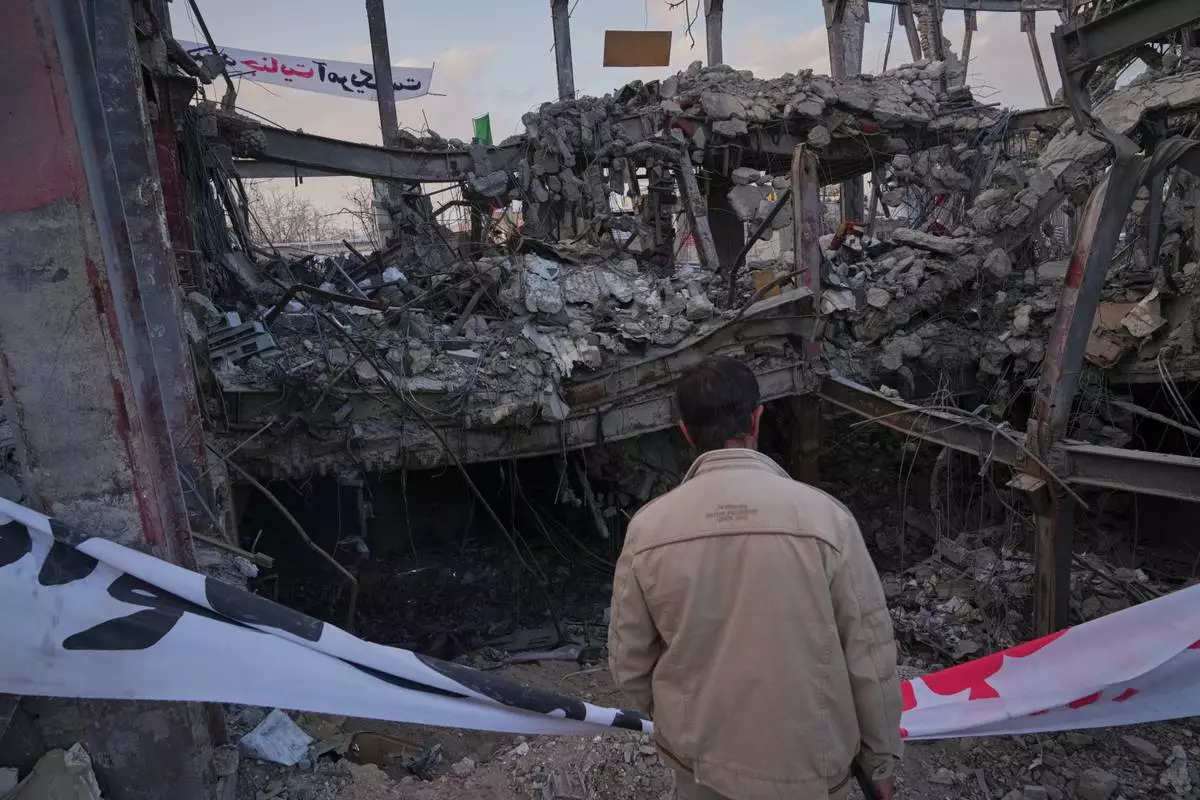
A man looks at a destroyed building within the Grand Hosseiniyeh complex that officials say was hit by U.S.-Israeli airstrikes Tuesday in Zanjan, Iran, Saturday, April 4, 2026. (AP Photo/Francisco Seco)