Skip to Content Facebook Feature Image

Crisis in Myanmar's Kachin means jungle treks to escape war

News

Crisis in Myanmar's Kachin means jungle treks to escape war
News

News

Crisis in Myanmar's Kachin means jungle treks to escape war

2018-05-09 14:42 Last Updated At:16:56

As the Myanmar army's bombs started falling near her home in Kachin state, Nlam Numrang Doi and her neighbors decided they had no choice but to grab what they could and scatter into the jungle.
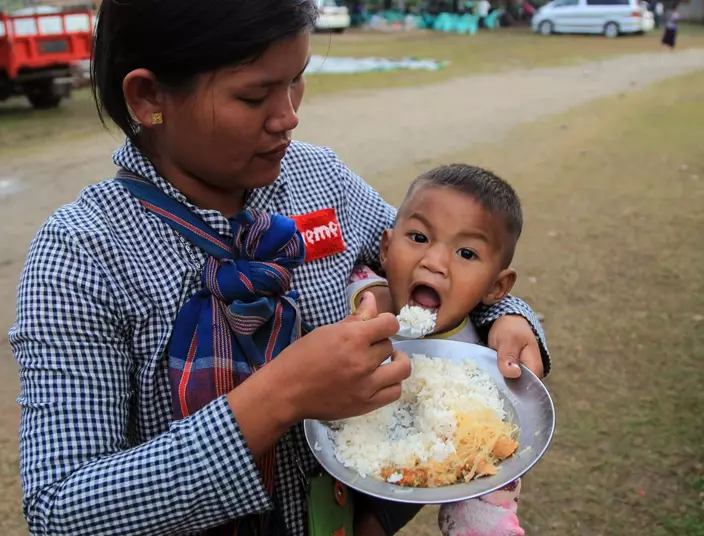
In this May 6, 2018, photo, an ethnic Kachin woman feeds her child in compound of Trinity Baptist Church refugee camp for internally displaced people in Myitkyina, Kachin State, northern Myanmar.  (AP Photo/Min Kyi Thein)

In this May 6, 2018, photo, an ethnic Kachin woman feeds her child in compound of Trinity Baptist Church refugee camp for internally displaced people in Myitkyina, Kachin State, northern Myanmar.  (AP Photo/Min Kyi Thein)

"We were in so much trouble, I couldn't even swallow my food," the 92-year-old recalled. "If we stayed in the village, we didn't know what could happen to us."

More Images
In this May 6, 2018, photo, an ethnic Kachin woman feeds her child in compound of Trinity Baptist Church refugee camp for internally displaced people in Myitkyina, Kachin State, northern Myanmar.  (AP Photo/Min Kyi Thein)

In this May 6, 2018, photo, an ethnic Kachin woman feeds her child in compound of Trinity Baptist Church refugee camp for internally displaced people in Myitkyina, Kachin State, northern Myanmar.  (AP Photo/Min Kyi Thein)

In this May 6, 2018, photo, ethnic Kachin Nlam Numrang Doi, 92, sits along with her husband Hkaraw Yaw, 102, at their hut in compound of Trinity Baptist Church refugee camp for internally displaced people in Myitkyina, Kachin State, northern Myanmar. (AP Photo/Min Kyi Thein)
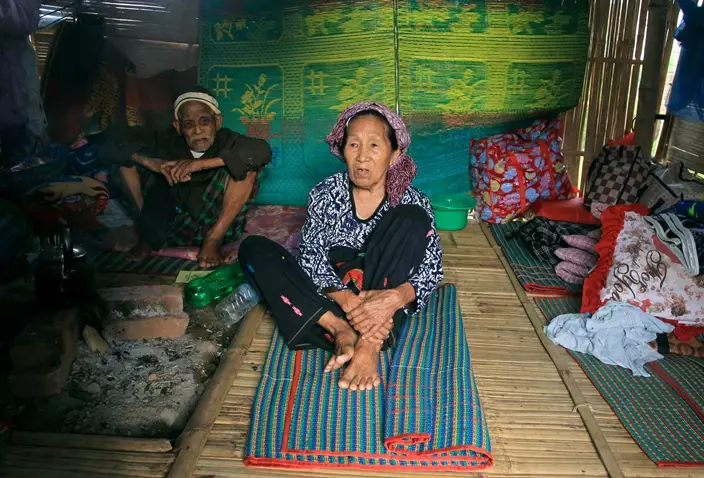
In this May 6, 2018, photo, ethnic Kachin Nlam Numrang Doi, 92, sits along with her husband Hkaraw Yaw, 102, at their hut in compound of Trinity Baptist Church refugee camp for internally displaced people in Myitkyina, Kachin State, northern Myanmar. (AP Photo/Min Kyi Thein)
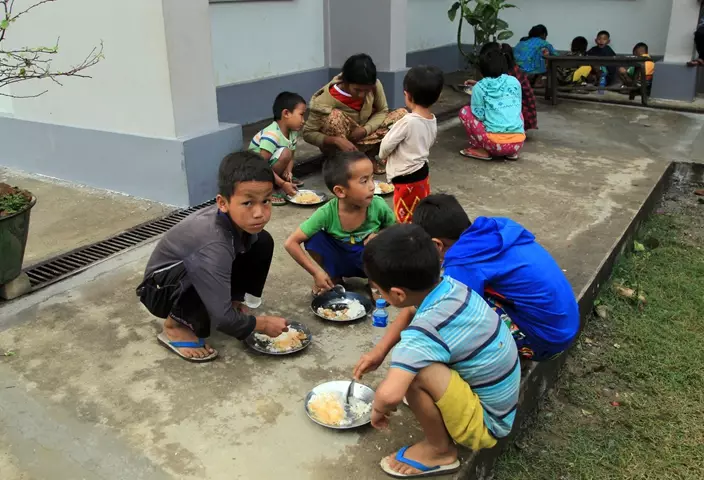
In this May 6, 2018, photo, internally displaced ethnic Kachins have their meals in compound of Trinity Baptist Church refugee camp in Myitkyina, Kachin State, northern Myanmar. (AP Photo/Min Kyi Thein)
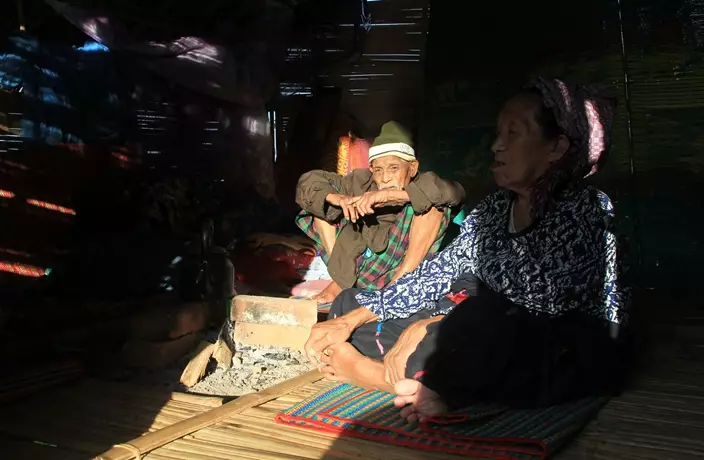
In this May 6, 2018, photo, internally displaced ethnic Kachins have their meals in compound of Trinity Baptist Church refugee camp in Myitkyina, Kachin State, northern Myanmar. (AP Photo/Min Kyi Thein)

In this May 6, 2018, photo, ethnic Kachin Hkaraw Yaw, left, sits along with his wife Nlam Numrang Doi at their hut in compound of Trinity Baptist Church refugee camp in Myitkyina, Kachin State, northern Myanmar. (AP Photo/Min Kyi Thein)reg
In this May 6, 2018, photo, ethnic Kachin Hkaraw Yaw, left, sits along with his wife Nlam Numrang Doi at their hut in compound of Trinity Baptist Church refugee camp in Myitkyina, Kachin State, northern Myanmar. (AP Photo/Min Kyi Thein)reg

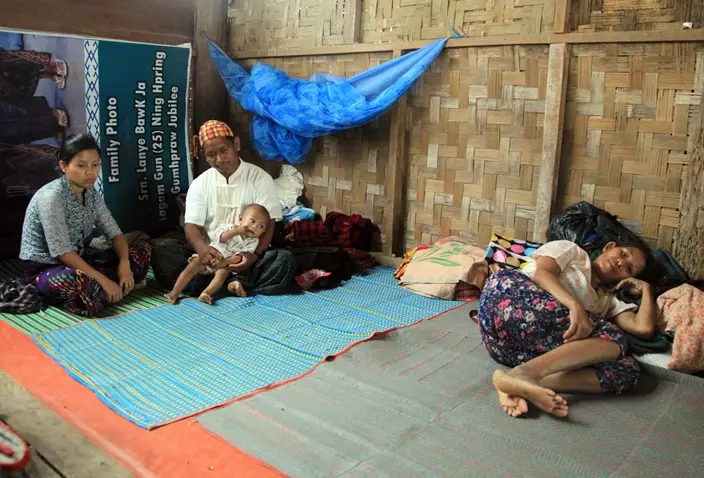
In this May 6, 2018, photo, internally displaced ethnic Kachins rest at their hut in compound of Trinity Baptist Church refugee camp in Myitkyina, Kachin State, northern Myanmar. (AP Photo/Min Kyi Thein)
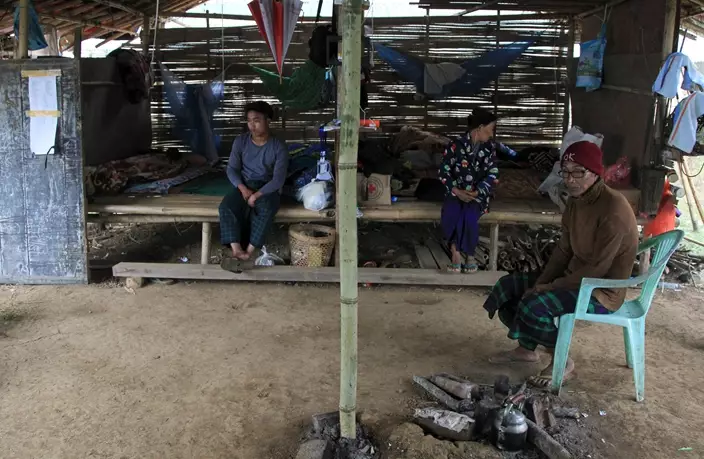
In this May 6, 2018, photo, internally displaced ethnic Kachins rest at their hut in compound of Trinity Baptist Church refugee camp in Myitkyina, Kachin State, northern Myanmar. (AP Photo/Min Kyi Thein)

In this May 6, 2018, photo, internally displaced ethnic Kachins rest at their hut in compound of Trinity Baptist Church refugee camp in Myitkyina, Kachin State, northern Myanmar.(AP Photo/Min Kyi Thein)

In this May 6, 2018, photo, internally displaced ethnic Kachins rest at their hut in compound of Trinity Baptist Church refugee camp in Myitkyina, Kachin State, northern Myanmar.(AP Photo/Min Kyi Thein)

She climbed onto her grandson's back and he carried her to a river where she and nearly 800 other villagers boarded boats to reach the state capital, part of a wave of 6,800 people who have fled their homes in Kachin since a fresh government offensive began in early April.

The onslaught is part of a decades-long government campaign to defeat Kachin rebels fighting for greater autonomy for the largely Christian minority group in Myanmar's far north. The intensified offensive has renewed accusations that the army is creating a similar humanitarian crisis in Kachin to the one spawned by its violence against Rohingya Muslims in the country's west.

In this May 6, 2018, photo, ethnic Kachin Nlam Numrang Doi, 92, sits along with her husband Hkaraw Yaw, 102, at their hut in compound of Trinity Baptist Church refugee camp for internally displaced people in Myitkyina, Kachin State, northern Myanmar. (AP Photo/Min Kyi Thein)

In this May 6, 2018, photo, ethnic Kachin Nlam Numrang Doi, 92, sits along with her husband Hkaraw Yaw, 102, at their hut in compound of Trinity Baptist Church refugee camp for internally displaced people in Myitkyina, Kachin State, northern Myanmar. (AP Photo/Min Kyi Thein)

"What we are seeing in Kachin state over the past few weeks is wholly unacceptable, and must stop immediately," Yanghee Lee, the U.N.'s human rights expert for Myanmar, said last week. "Innocent civilians are being killed and injured, and hundreds of families are now fleeing for their lives."

"All parties must take all necessary measures to ensure their safety and security," she said.

A 17-year cease-fire between the government and Kachin Independence Army was broken in 2011, when the army entered rebel territory and attacked one of their outposts. Since then, sporadic fierce combat has uprooted villagers and left hundreds of civilians dead.

The fresh exodus of villagers is adding to the 100,000 people previously displaced in Kachin and neighboring Shan state, many of whom live in camps where people already have difficulty obtaining food and clean water due to military restrictions on aid.

In this May 6, 2018, photo, internally displaced ethnic Kachins have their meals in compound of Trinity Baptist Church refugee camp in Myitkyina, Kachin State, northern Myanmar. (AP Photo/Min Kyi Thein)

In this May 6, 2018, photo, internally displaced ethnic Kachins have their meals in compound of Trinity Baptist Church refugee camp in Myitkyina, Kachin State, northern Myanmar. (AP Photo/Min Kyi Thein)

Gumsha Awng of the Joint Strategy Team for Humanitarian response, a coalition of humanitarian groups in Kachin, said the army has been blocking international aid shipments to the region, a similar tactic it used with the Rohingya.

The government has denied virtually all access to the area for the United Nations and international humanitarian groups.

Those fleeing their rural villages try to seek the relative safety of the state capital, Myitkyina, which is under government control, or rebel-held cities where they can seek aid from church groups. Some who have fled, however, have found themselves stuck in a jungle no man's land unable to find a safe route out of the war zone.

One group of 2,000 villagers has been trapped in the jungle since mid-April without proper food, water, shelter and medical care, unable to get through army roadblocks to safer refuge.

In this May 6, 2018, photo, ethnic Kachin Hkaraw Yaw, left, sits along with his wife Nlam Numrang Doi at their hut in compound of Trinity Baptist Church refugee camp in Myitkyina, Kachin State, northern Myanmar. (AP Photo/Min Kyi Thein)reg

In this May 6, 2018, photo, ethnic Kachin Hkaraw Yaw, left, sits along with his wife Nlam Numrang Doi at their hut in compound of Trinity Baptist Church refugee camp in Myitkyina, Kachin State, northern Myanmar. (AP Photo/Min Kyi Thein)reg

Lamai Gum Ja of the Peace Talk Creation Group, comprising Kachin notables who attempt to mediate between the community and the army, said the military is intentionally blocking civilians from being rescued because they accuse them of having connections to the rebels.

Government spokesman Zaw Htay said the government has been helping with food, shelter and medical supplies and is working to "rescue any trapped civilians."

"We are hearing that the Kachin rebels have been pretending they're civilians and that's why we have to verify the civilians very carefully," he told The Associated Press on Tuesday.

There were hopes when Aung San Suu Kyi's civilian government took power in 2016 that there might be a greater chance for peace. But Kachin support for Suu Kyi and her party has so far failed to pay any dividends, with the military still flexing its constitutionally ensured powers over security and border affairs.

In this May 6, 2018, photo, internally displaced ethnic Kachins rest at their hut in compound of Trinity Baptist Church refugee camp in Myitkyina, Kachin State, northern Myanmar. (AP Photo/Min Kyi Thein)

In this May 6, 2018, photo, internally displaced ethnic Kachins rest at their hut in compound of Trinity Baptist Church refugee camp in Myitkyina, Kachin State, northern Myanmar. (AP Photo/Min Kyi Thein)

Thousands of Kachins rallied in Myitkyina last week to demand humanitarian relief for those stuck in the jungles, and on Friday the central government-appointed state minister, Hkyet Awng, joined community leaders in a march to attempt to reach one group of trapped civilians. The military stopped them.

"Stopping the minister and Christian leaders from rescuing those civilians shows that the army is more powerful than the civilian government," said Lagang Zegyung, a lawmaker representing Kachin state. "The army controls everything, especially in the ethnic regions, which makes it almost impossible for us to help civilians in the conflict zone."

For those who do eventually reach safety, they often end up in church halls like the one at Trinity Baptist Church just outside Myitkyina. That's where Nlam Numrang Doi and her neighbors ended up after their escape by boat.

"Our small church is hosting nearly 800 people who had fled from their village and now the church is overcrowded with the elderly, children, pregnant women, widows and disabled people," said La Hkawng, a church pastor.

In this May 6, 2018, photo, internally displaced ethnic Kachins rest at their hut in compound of Trinity Baptist Church refugee camp in Myitkyina, Kachin State, northern Myanmar.(AP Photo/Min Kyi Thein)

In this May 6, 2018, photo, internally displaced ethnic Kachins rest at their hut in compound of Trinity Baptist Church refugee camp in Myitkyina, Kachin State, northern Myanmar.(AP Photo/Min Kyi Thein)

He said they are providing food and shelter and what medical care they can. But some of the wounds are unseen.

Heavily pregnant Htu Hkam Ndu said her two young children are traumatized by the fighting.

"My children are even scared of planes flying around, any kind of planes," she said. "My children keep telling me to flee every time they heard the sound of a plane flying. That's why when these children grow up, they will always remember what happened."
DUBAI, United Arab Emirates (AP) — U.S. President Donald Trump said Iran wants to negotiate with Washington after his threat to strike the Islamic Republic over its bloody crackdown on protesters, a move coming as activists said Monday the death toll in the nationwide demonstrations rose to at least 544.

Iran had no direct reaction to Trump's comments, which came after the foreign minister of Oman — long an interlocutor between Washington and Tehran — traveled to Iran this weekend. It also remains unclear just what Iran could promise, particularly as Trump has set strict demands over its nuclear program and its ballistic missile arsenal, which Tehran insists is crucial for its national defense.

Iranian Foreign Minister Abbas Araghchi, speaking to foreign diplomats in Tehran, insisted “the situation has come under total control” in fiery remarks that blamed Israel and the U.S. for the violence, without offering evidence.

“That’s why the demonstrations turned violent and bloody to give an excuse to the American president to intervene,” Araghchi said, in comments carried by the Qatar-funded Al Jazeera satellite news network. Al Jazeera has been allowed to report from inside the country live despite the internet being shut off.

However, Araghchi said Iran was “open to diplomacy.” Iranian Foreign Ministry spokesman Esmail Baghaei said a channel to the U.S. remained open, but talks needed to be “based on the acceptance of mutual interests and concerns, not a negotiation that is one-sided, unilateral and based on dictation.”

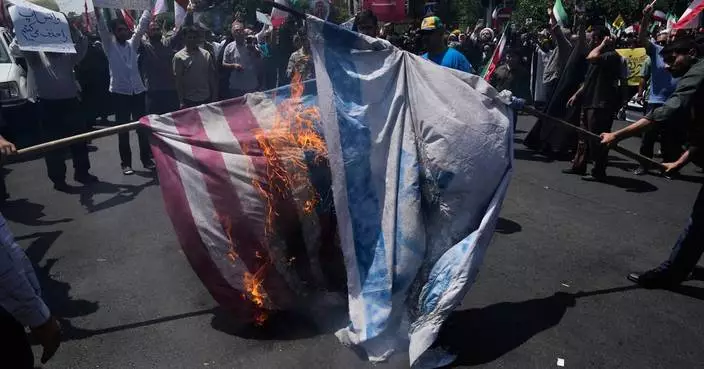
Meanwhile Monday, Iran drew tens of thousands of pro-government demonstrators to head to the streets in support of the theocracy, a show of force after days of protests directly challenging the rule of 86-year-old Supreme Leader Ayatollah Ali Khamenei. Iranian state television aired chants from the crowd, which appeared to number in the tens of thousands, who shouted “Death to America!” and “Death to Israel!”

Others cried out: “Death to the enemies of God!” Iran's attorney general has said prosecutors will levy such charges against protesters, which carry the death penalty.

Trump and his national security team have been weighing a range of potential responses against Iran, including cyberattacks and direct strikes by the U.S. or Israel, according to two people familiar with internal White House discussions who were not authorized to comment publicly and spoke on condition of anonymity.

“The military is looking at it, and we’re looking at some very strong options,” Trump told reporters on Air Force One on Sunday night. Asked about Iran’s threats of retaliation, he said: “If they do that, we will hit them at levels that they’ve never been hit before.”

Trump said that his administration was in talks to set up a meeting with Tehran, but cautioned that he may have to act first as reports of the death toll in Iran mount and the government continues to arrest protesters.

“I think they’re tired of being beat up by the United States,” Trump said. “Iran wants to negotiate.”

He added: “The meeting is being set up, but we may have to act because of what’s happening before the meeting. But a meeting is being set up. Iran called, they want to negotiate.”

Iran, through the country's parliamentary speaker, warned Sunday that the U.S. military and Israel would be “legitimate targets” if America uses force to protect demonstrators.

More than 10,600 people also have been detained over the two weeks of protests, said the U.S.-based Human Rights Activists News Agency, which has been accurate in previous unrest in recent years and gave the death toll. It relies on supporters in Iran crosschecking information. It said 496 of the dead were protesters and 48 were with security forces.

With the internet down in Iran and phone lines cut off, gauging the demonstrations from abroad has grown more difficult. The Associated Press has been unable to independently assess the toll. Iran’s government has not offered overall casualty figures.

Those abroad fear the information blackout is emboldening hard-liners within Iran’s security services to launch a bloody crackdown. Protesters flooded the streets in the country’s capital and its second-largest city on Saturday night into Sunday morning. Online videos purported to show more demonstrations Sunday night into Monday, with a Tehran official acknowledging them in state media.

At 2 p.m. Monday, Iranian state TV showed images of demonstrators thronging Tehran toward Enghelab Square, or “Islamic Revolution” Square in the capital. It had been airing statements all morning from Iranian government, security and religious leaders to attend the demonstration.

It called the rally an “Iranian uprising against American-Zionist terrorism,” without addressing the underlying anger in the country over the nation’s ailing economy. State TV aired images of such demonstrations around the country, trying to signal it had overcome the protests.

In Tehran, a witness told the AP that the streets of the capital empty at the sunset call to prayers each night. By the Isha, or nighttime prayer, the streets are deserted.

Part of that stems from the fear of getting caught in the crackdown. Police sent the public a text message that warned: “Given the presence of terrorist groups and armed individuals in some gatherings last night and their plans to cause death, and the firm decision to not tolerate any appeasement and to deal decisively with the rioters, families are strongly advised to take care of their youth and teenagers.”

Another text, which claimed to come from the intelligence arm of the paramilitary Revolutionary Guard, also directly warned people not to take part in demonstrations.

“Dear parents, in view of the enemy’s plan to increase the level of naked violence and the decision to kill people, ... refrain from being on the streets and gathering in places involved in violence, and inform your children about the consequences of cooperating with terrorist mercenaries, which is an example of treason against the country,” the text warned.

The witness spoke to the AP on condition of anonymity due to the ongoing crackdown.

The demonstrations began Dec. 28 over the collapse of the Iranian rial currency, which trades at over 1.4 million to $1, as the country’s economy is squeezed by international sanctions in part levied over its nuclear program. The protests intensified and grew into calls directly challenging Iran’s theocracy.

Nikhinson reported from aboard Air Force One.

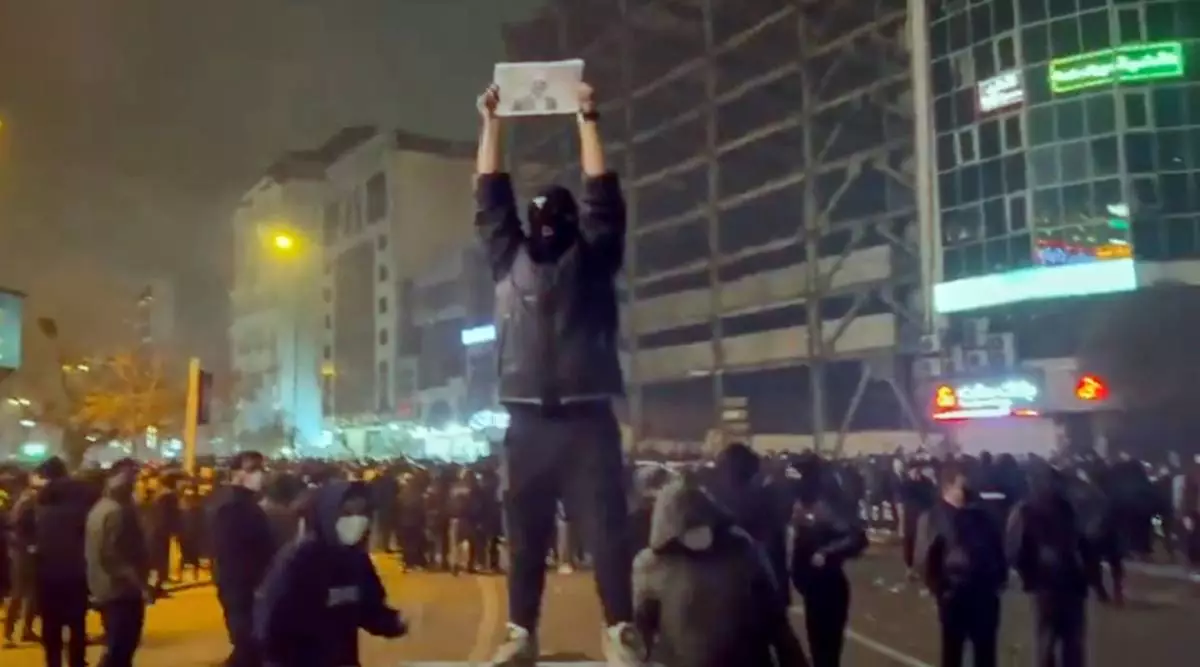
In this frame grab from video obtained by the AP outside Iran, a masked demonstrator holds a picture of Iran's Crown Prince Reza Pahlavi during a protest in Tehran, Iran, Friday, January. 9, 2026. (UGC via AP)

In this frame grab from video obtained by the AP outside Iran, a masked demonstrator holds a picture of Iran's Crown Prince Reza Pahlavi during a protest in Tehran, Iran, Friday, January. 9, 2026. (UGC via AP)

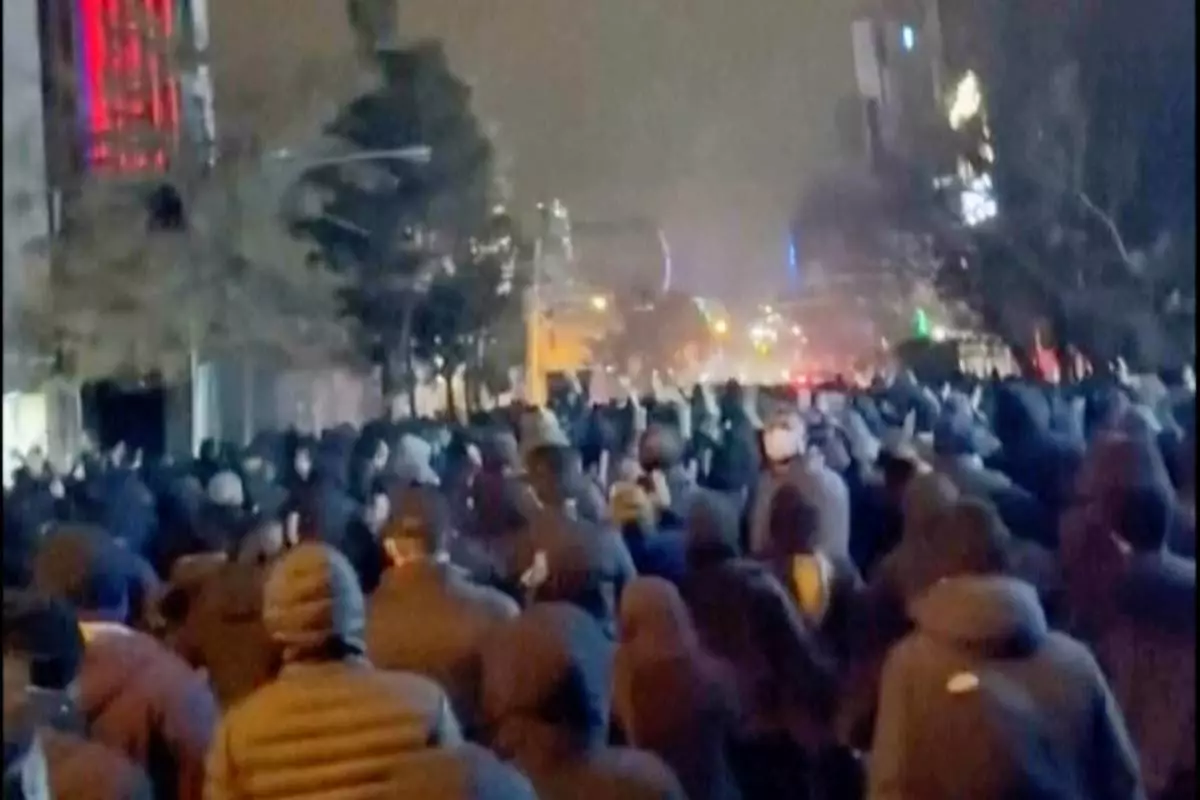
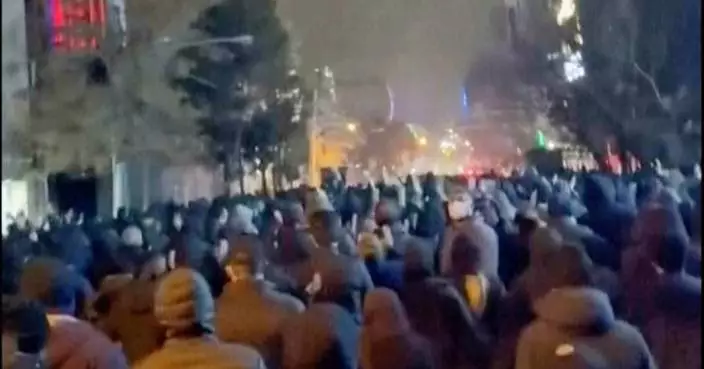
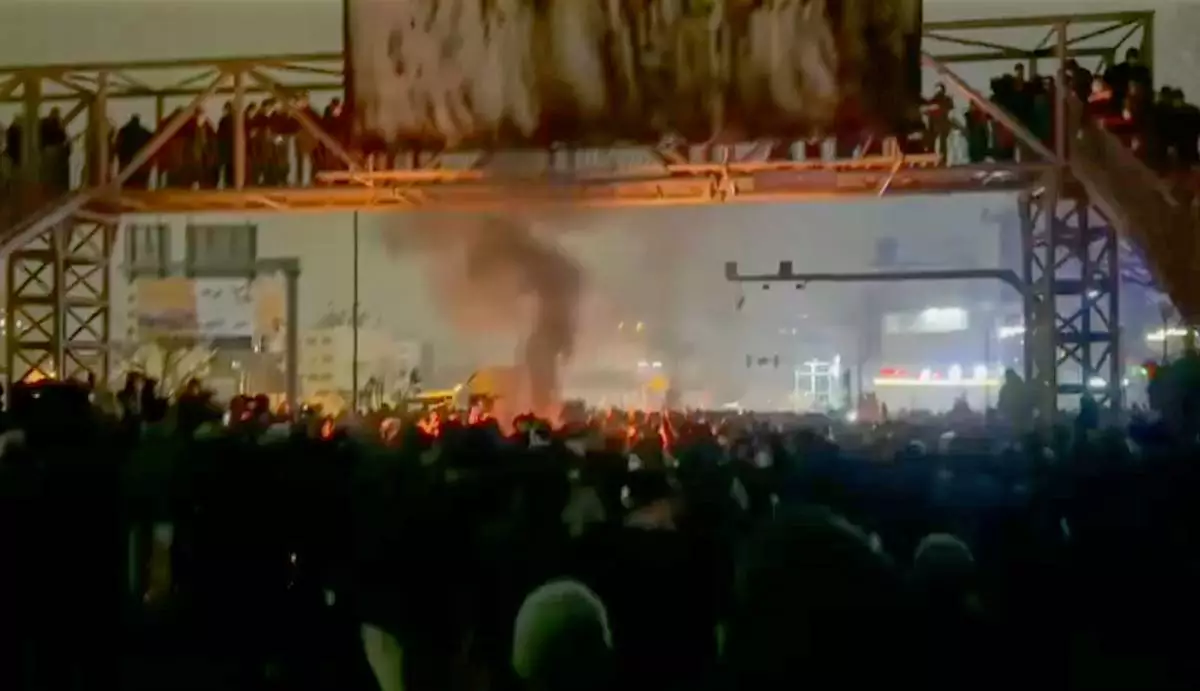
In this frame grab from footage circulating on social media from Iran shows protesters taking to the streets despite an intensifying crackdown as the Islamic Republic remains cut off from the rest of the world in Tehran, Iran, Friday, Jan. 9, 2026.(UGC via AP)

In this frame grab from footage circulating on social media from Iran shows protesters taking to the streets despite an intensifying crackdown as the Islamic Republic remains cut off from the rest of the world in Tehran, Iran, Friday, Jan. 9, 2026.(UGC via AP)

In this frame grab from footage circulating on social media from Iran showed protesters once again taking to the streets of Tehran despite an intensifying crackdown as the Islamic Republic remains cut off from the rest of the world in Tehran, Iran, Saturday Jan. 10, 2026. (UGC via AP)

In this frame grab from footage circulating on social media from Iran showed protesters once again taking to the streets of Tehran despite an intensifying crackdown as the Islamic Republic remains cut off from the rest of the world in Tehran, Iran, Saturday Jan. 10, 2026. (UGC via AP)

Recommended Articles