TEL AVIV, Israel (AP) — Israel is “closely monitoring” the fallout from widespread Iranian protests, Prime Minister Benjamin Netanyahu said Sunday, as U.S. President Donald Trump’s threats to attack Iran could escalate the protests within the borders of the Islamic Republic into a regional war.
“The people of Israel, the entire world, are in awe of the tremendous heroism of the citizens of Iran,” Netanyahu said at the start of the weekly cabinet meeting. He condemned the killing of civilians and said he hoped to rebuild relations between Israel and Iran once the country was “freed from the yoke of tyranny.”
Netanyahu and U.S. Secretary of State Marco Rubio spoke overnight Saturday about a number of issues, including Iran, according to an Israeli official who spoke on the condition of anonymity because they were not authorized to speak to the media.
But Israel’s military said there are no new guidelines for civilians to stay close to bomb shelters due to concerns about an attack of Iranian missiles, as there have been in the past when there were concrete threats.
The Israeli military said the protests in Iran are an “internal Iranian matter,” but that the military “will be equipped to respond with power if need be.”
A former Israeli intelligence official said Israel is unlikely to instigate an attack against Iran, even though Israel could have an easy target as Iranian leadership is weakened and distracted by the protests roiling the country.
“From an Iranian standpoint, the last thing Iran wants to see is diverting their attention towards Israel,” said Danny Citrinowicz, who once headed research on Iran in one of the Israeli military's intelligence branches and is now a senior researcher with the Israeli defense think tank the Institute for National Security Studies.
“Their priority, first and foremost, is to retrieve the calmness and stability in Iran."
The current situation in Iran is so uncertain that Israel is likely to wait and see what will happen next, Citrinowicz said. He added that “neither side has an appetite” to start a new round of the 12-day war this past summer.
The war began with Israel targeting Iranian nuclear and military sites, saying it could not allow Tehran to develop atomic weapons and that it feared the Islamic Republic was close. Iran has long maintained that its program is peaceful.
Israeli strikes on Iran killed 1,190 people and wounded another 4,475, according to the U.S.-based Human Rights Activists News Agency. Iran’s missile barrages killed almost 30 people in Israel and wounded 1,000.
On Sunday, Iran’s parliament speaker warned the U.S. military and Israel would be “legitimate targets” if America strikes the Islamic Republic. Mohammad Bagher Qalibaf made the threat as lawmakers rushed the dais in the Iranian parliament, shouting: “Death to America!”
Trump, who has posted a number of times on social media about Iran over the weekend, has a history of following through on threats to attack. “Do not play games with President Trump. When he says he’ll do something, he means it,” the State Department warned on Saturday.
Citrinowicz said that an attack, either American or Israeli, could have the opposite impact on the protests, possibly even weakening the protests by fostering a sense of patriotism and uniting against a common enemy.
The U.S. both brokered the ceasefire and assisted Israel during the Israel-Iran war this past summer, by dropping bunker-buster bombs on multiple Iranian nuclear sites — a move that was crucial for Netanyahu to declare to the Israeli public that Israel had achieved its objectives against Iran’s nuclear program and accept Trump's truce.
“What Israel is really concerned with is ballistic missiles, and stuff like that, not what kind of regime is going to be in Iran,” said Menahem Merhavy, an expert on Iran from the Hebrew University of Jerusalem.
“Unless there’s something really dramatic happening with missiles, I don’t see Israel stepping into this."
And an Iranian attack against Israel would be “a suicide note for the regime,” Merhavy said, because there will be little outcry if Israel responds strongly against the Iranian leadership given the outcry over their hardhanded response to the protests. “There are few tears that will be shed if, say, Israel kills the minister of foreign affairs,” Merhavy said.
He noted that Israel could help on the margins, like enabling internet access to certain individuals or leaders, but said even that is doubtful.
“Israel doesn’t want to meddle with this. It’s internally an Iranian matter,” Merhavy said.
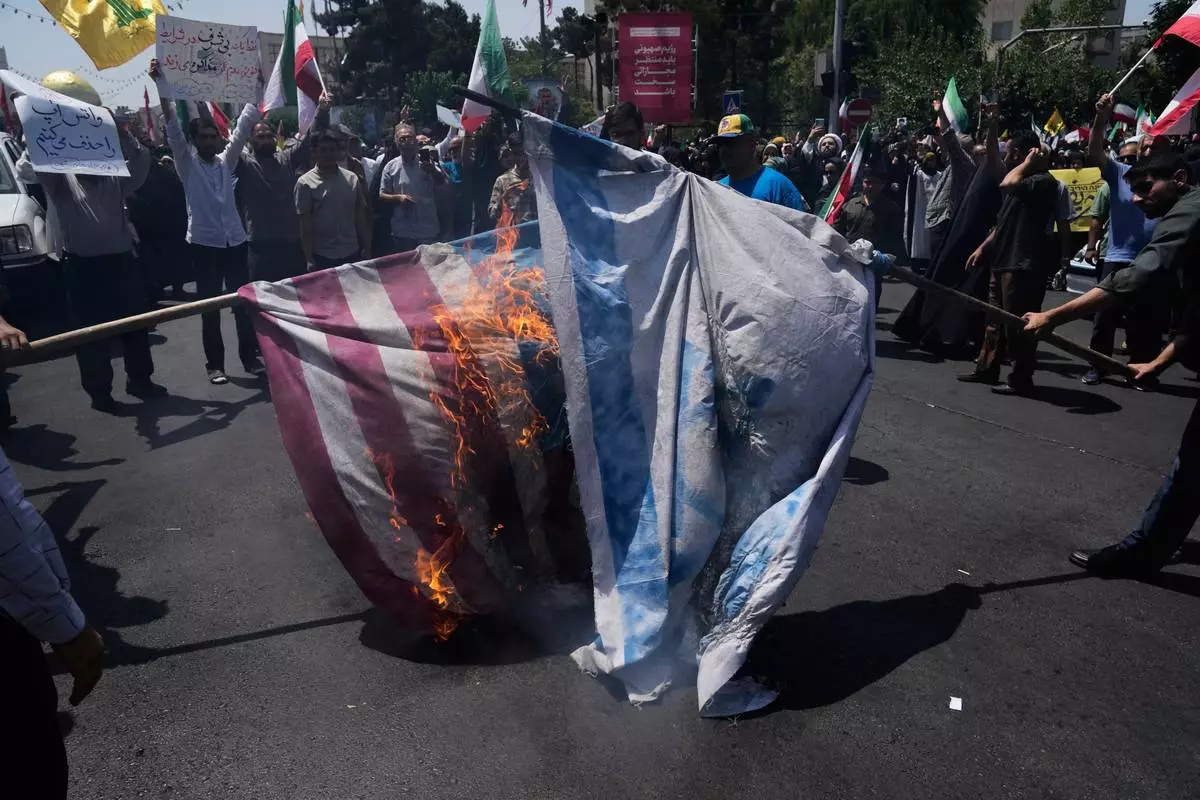
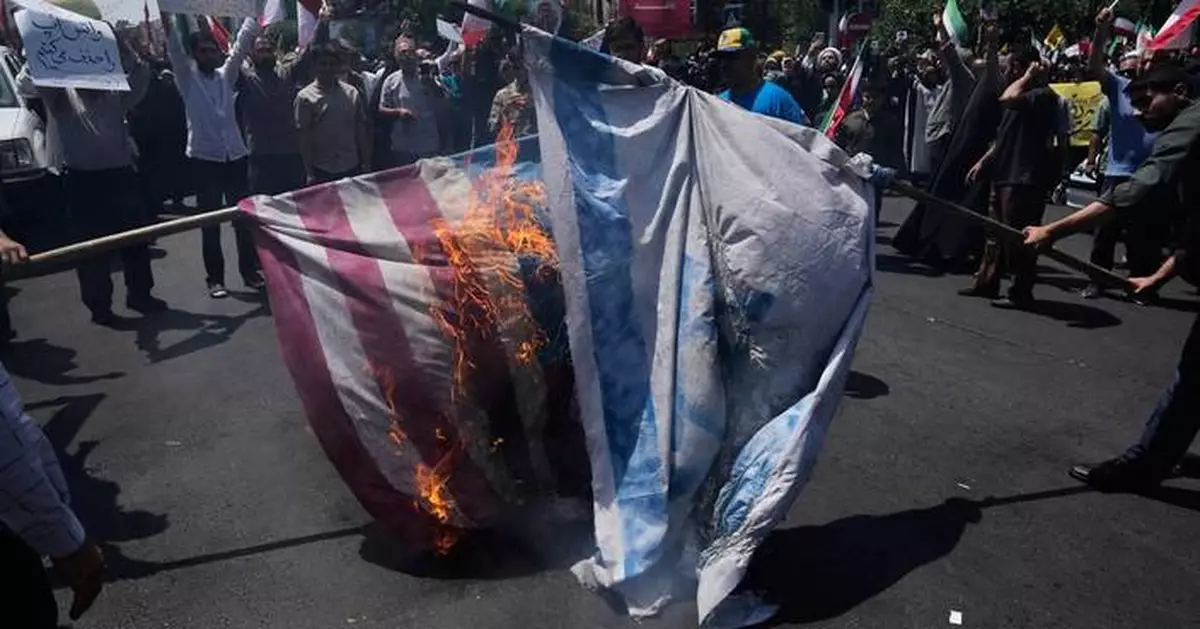
FILE - Iranian protestors burn representations of the Israeli and U.S. flags during a protest to condemn Israeli attacks on multiple cities across Iran, after the Friday prayers ceremony in Tehran, Iran, Friday, June 20, 2025. (AP Photo/Vahid Salemi), File)
Prediction markets let people wager on anything from a basketball game to the outcome of a presidential election — and recently, the downfall of former Venezuelan President Nicolás Maduro.
The latter is drawing renewed scrutiny into this murky world of speculative, 24/7 transactions. Last week, an anonymous trader pocketed more than $400,000 after betting that Maduro would soon be out of office.
The bulk of the trader’s bids on the platform Polymarket were made mere hours before President Donald Trump announced the surprise nighttime raid that led to Maduro’s capture, fueling online suspicions of potential insider trading because of the timing of the wagers and the trader’s narrow activity on the platform. Others argued that the risk of getting caught was too big, and that previous speculation about Maduro’s future could have led to such transactions.
Polymarket did not respond to requests for comment.
The commercial use of prediction markets has skyrocketed in recent years, opening the door for people to wage their money on the likelihood of a growing list of future events. But despite some eye-catching windfalls, traders still lose money everyday. And in terms of government oversight in the U.S., the trades are categorized differently than traditional forms of gambling — raising questions about transparency and risk.
Here's what we know:
The scope of topics involved in prediction markets can range immensely — from escalation in geopolitical conflicts, to pop culture moments and even the fate of conspiracy theories. Recently, there’s been a surge of wages on elections and sports games. But some users have also bet millions on things like a rumored — and ultimately unrealized — “secret finale” for the Netflix’s “Stranger Things,” whether the U.S. government will confirm the existence of extraterrestrial life and how much billionaire Elon Musk might post on social media this month.
In industry-speak, what someone buys or sells in a prediction market is called an “event contract.” They're typically advertised as “yes” or “no” wagers. And the price of one fluctuates between $0 and $1, reflecting what traders are collectively willing to pay based on a 0% to 100% chance of whether they think an event will occur.
The more likely traders think an event will occur, the more expensive that contract will become. And as those odds change over time, users can cash out early to make incremental profits, or try to avoid higher losses on what they’ve already invested.
Proponents of prediction markets argue putting money on the line leads to better forecasts. Experts like Koleman Strumpf, an economics professor at Wake Forest University, think there’s value in monitoring these platforms for potential news — pointing to prediction markets’ past success with some election outcomes, including the 2024 presidential race.
Still, it's never a “crystal ball,” he noted, and prediction markets can be wrong, too.
Who is behind all of the trading is also pretty murky. While the companies running the platforms collect personal information of their users in order to verify identities and payments, most people can trade under anonymous pseudonyms online — making it difficult for the public to know who is profiting off many event contracts. In theory, people investing their money may be closely following certain events, but others could just be randomly guessing.
Critics stress that the ease and speed of joining these 24/7 wagers leads to financial losses everyday, particularly harming users who may already struggle with gambling. The space also broadens possibilities for potential insider trading.
Polymarket is considered to be the largest prediction market in the world, where its users can fund event contracts through cryptocurrency, debit or credit cards and bank transfers. Its top competitor, Kalshi, operates similarly — and has laid the groundwork for event contracts on elections and sports nationwide after winning court approval just weeks before the 2024 election to let Americans put money on upcoming political races. Kalshi began to host sports trading about a year ago.
Restrictions vary by country but in the U.S., the reach of these markets has expanded rapidly over the last couple years, coinciding with shifting policies out of Washington. Former President Joe Biden was aggressive in cracking down on prediction markets. Following a 2022 settlement with the Commodity Futures Trading Commission, Polymarket was barred from operating in the country.
That changed under Trump late last year, when Polymarket announced it would be returning to the U.S. after receiving clearance from the commission. American-based users can now join a platform “waitlist.”
The space is now crowded with other big names. Sports betting giants DraftKings and FanDuel both launched prediction platforms last month. Online broker Robinhood is widening its own offerings. Trump’s social media site Truth Social has also promised to offer an in-platform prediction market through a partnership with Crypto.com — and one of the president’s sons, Donald Trump Jr., holds advisory roles at both Polymarket and Kalshi.
“The train has left the station on these event contracts, they’re not going away,” said Melinda Roth, a visiting associate professor at Washington and Lee University’s School of Law.
Because they’re positioned as selling event contracts, prediction markets are regulated by the CFTC. That means they can avoid state-level restrictions or bans in place for traditional gambling and sports betting today.
“It’s a huge loophole,” said Karl Lockhart, an assistant professor of law at DePaul University who has studied this space. “You just have to comply with one set of regulations, rather than (rules from) each state around the country.”
Sports betting is taking center stage. There are a handful of big states — like California and Texas, for example — where sports betting is still illegal, but people can now wager on games, athlete trades and more through event contracts.
A growing number of states and tribes are suing to stop this. And lawyers expect litigation to eventually reach the U.S. Supreme Court, as added regulations from the Trump administration seem unlikely.
Federal law bars event contracts related to gaming as well as war, terrorism and assassinations, Roth said, which could put some prediction market trades on shaky ground, at least in the U.S. But users might still find ways to buy certain contracts while traveling abroad or connecting to different VPNs.
Whether the CFTC will take any of that on has yet to be seen. But the agency, which did not respond to request for comment, has already taken steps away from enforcement.
Despite overseeing trillions of dollars for the overall U.S. derivatives market, the CFTC is also much smaller than the Securities and Exchange Commission. And at the same time event contracts are growing rapidly on prediction market platforms, there have been additional cuts to the CFTC's workforce and a wave of leadership departures under Trump's second term. Only one of five commissioner slots operating the agency is currently filled.
Still, other lawmakers calling for a stronger crack down on potential insider trading in prediction markets — particularly following suspicion around last week’s Maduro trade on Polymarket. On Friday, Democratic Rep. Ritchie Torres introduced a bill aimed at curbing government employees involvement in politically-related event contracts.
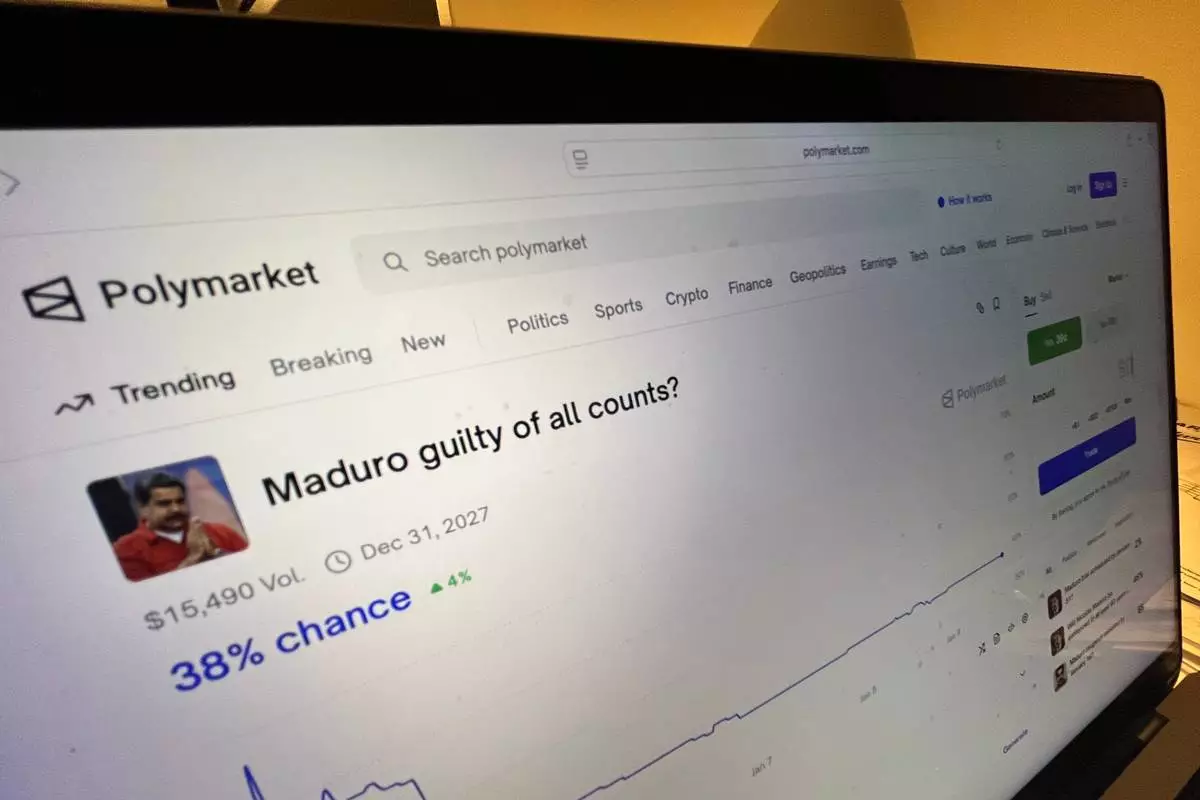
Polymarket prediction market website is displayed on a computer screen Friday, Jan. 9, 2026, in Philadelphia. (AP Photo/Wally Santana)
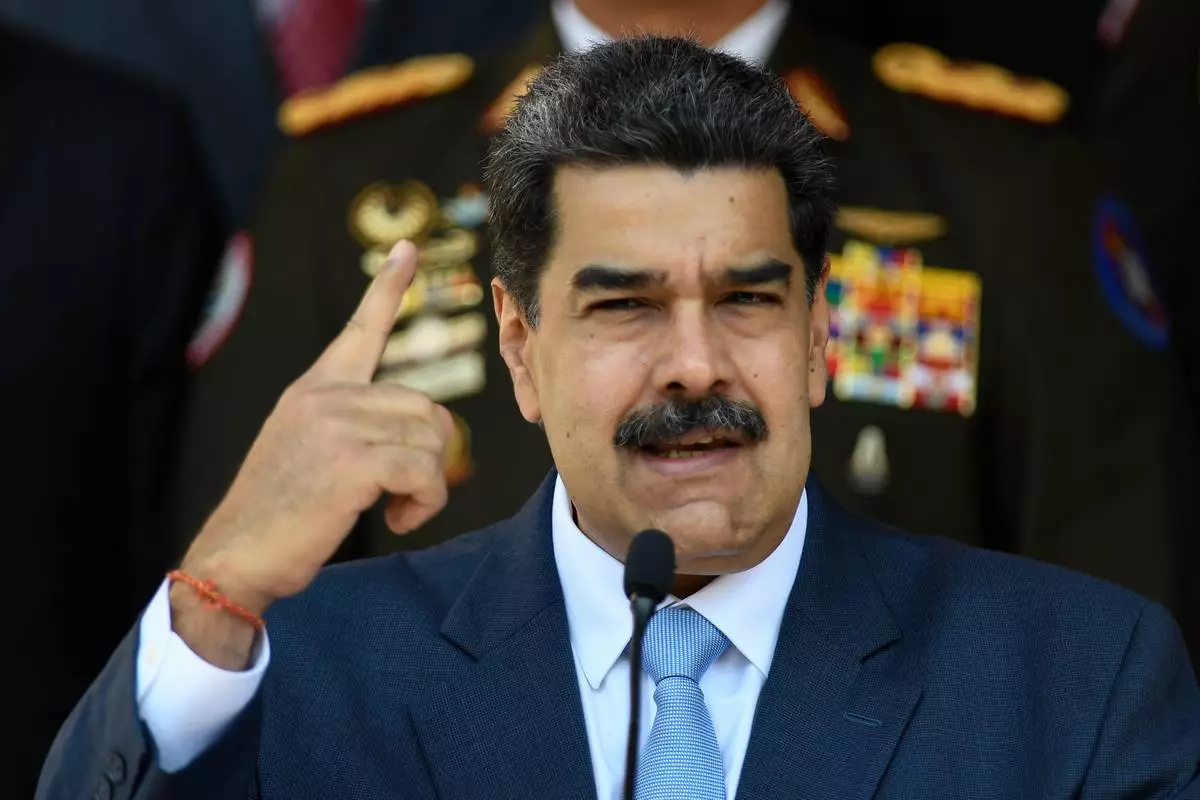
FILE - In this March 12, 2020, file photo, Venezuelan President Nicolas Maduro gives a press conference at the Miraflores presidential palace in Caracas, Venezuela. (AP Photo/Matias Delacroix, File)