Skip to Content Facebook Feature Image

How Bill Gates influences education policy

News

How Bill Gates influences education policy
News

News

How Bill Gates influences education policy

2018-05-17 13:40 Last Updated At:17:41

Billionaire philanthropist Bill Gates saw an opportunity with a new federal education law that has widespread repercussions for American classrooms.

His nonprofit Bill and Melinda Gates Foundation has given about $44 million to outside groups over the past two years to help shape new state education plans required under the 2015 law, according to an Associated Press analysis of its grants. The spending paid for research aligned with Gates' interests, led to friendly media coverage and had a role in helping write one state's new education system framework.

More Images
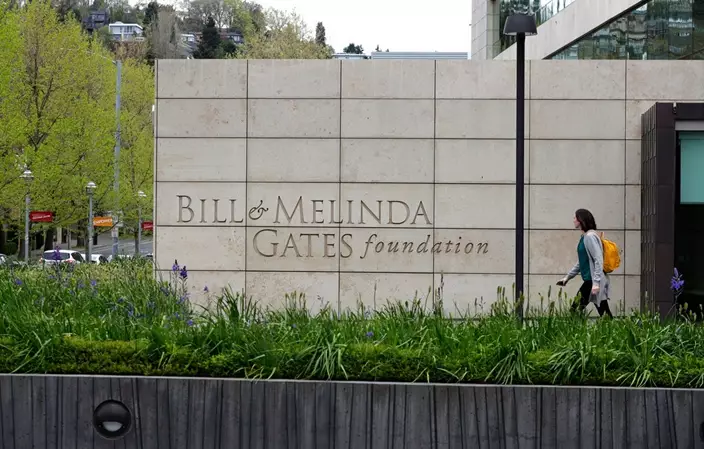
This Friday, April 27, 2018 photo shows the headquarters of the Bill and Melinda Gates Foundation in Seattle. The non-profit foundation has given about $44 million to outside groups over the past two years to help shape new state education plans required under the 2015 law, according to an Associated Press 2018 analysis of its grant database. (AP Photo/Ted S. Warren)
This Friday, April 27, 2018 photo shows the headquarters of the Bill and Melinda Gates Foundation in Seattle. The non-profit foundation has given about $44 million to outside groups over the past two years to help shape new state education plans required under the 2015 law, according to an Associated Press 2018 analysis of its grant database. (AP Photo/Ted S. Warren)

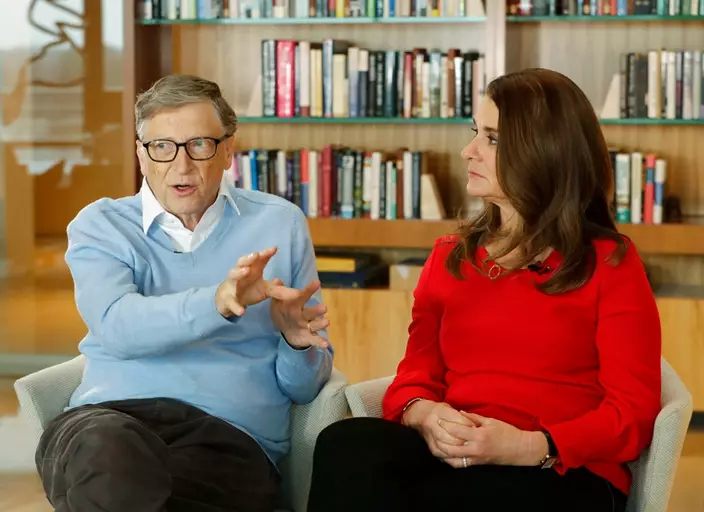
FILE - In this Feb. 1, 2018 file photo, Microsoft co-founder Bill Gates and his wife Melinda take part in an AP interview in Kirkland, Wash. Gates' non-profit Bill and Melinda Gates Foundation has given about $44 million to outside groups over the past two years to help shape new state education plans required under the 2015 law, according to an Associated Press 2018 analysis of its grants. (AP Photo/Ted S. Warren, file)

FILE - In this Feb. 1, 2018 file photo, Microsoft co-founder Bill Gates and his wife Melinda take part in an AP interview in Kirkland, Wash. Gates' non-profit Bill and Melinda Gates Foundation has given about $44 million to outside groups over the past two years to help shape new state education plans required under the 2015 law, according to an Associated Press 2018 analysis of its grants. (AP Photo/Ted S. Warren, file)

This Friday, April 27, 2018 photo shows the headquarters of the Bill and Melinda Gates Foundation in Seattle. The non-profit foundation has given about $44 million to outside groups over the past two years to help shape new state education plans required under the 2015 law, according to an Associated Press 2018 analysis of its grants. (AP Photo/Ted S. Warren)
This Friday, April 27, 2018 photo shows the headquarters of the Bill and Melinda Gates Foundation in Seattle. The non-profit foundation has given about $44 million to outside groups over the past two years to help shape new state education plans required under the 2015 law, according to an Associated Press 2018 analysis of its grants. (AP Photo/Ted S. Warren)

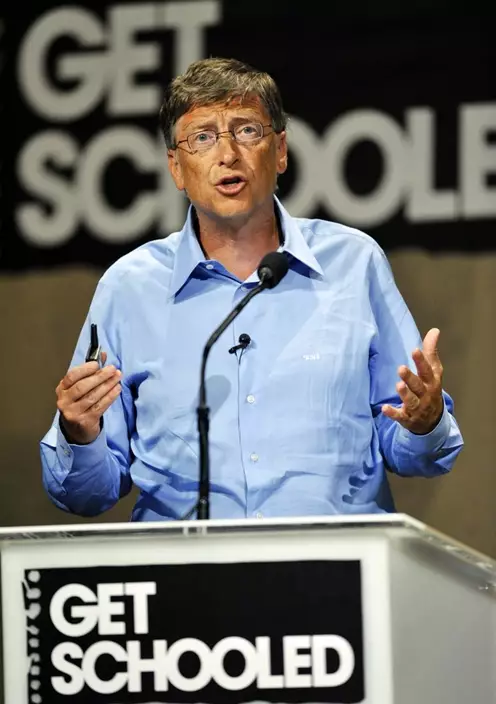
FILE - In this Sept. 8, 2009, file photo Microsoft co-founder Bill Gates speaks at the "Get Schooled" conference hosted by the Bill and Melinda Gates Foundation and Viacom in Los Angeles. (AP Photo/Jae C. Hong, File)
FILE - In this Sept. 8, 2009, file photo Microsoft co-founder Bill Gates speaks at the "Get Schooled" conference hosted by the Bill and Melinda Gates Foundation and Viacom in Los Angeles. (AP Photo/Jae C. Hong, File)

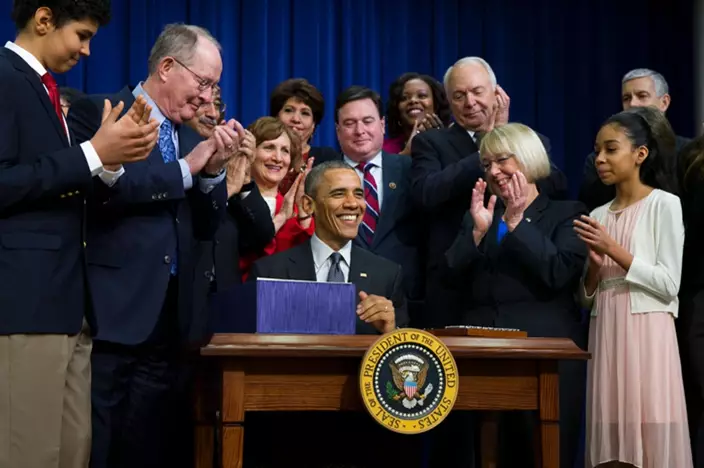
FILE - In this Dec. 10, 2015 file photo, President Barack Obama speaks before signing the "Every Student Succeeds Act," in Washington. In the two years prior to May 1, 2018, the Bill and Melinda Gates Foundation has spent about $44 million on grants related to the Every Student Succeeds Act, or ESSA, according to an Associated Press review of the foundation's grants database. (AP Photo/Evan Vucci, File)

FILE - In this Dec. 10, 2015 file photo, President Barack Obama speaks before signing the "Every Student Succeeds Act," in Washington. In the two years prior to May 1, 2018, the Bill and Melinda Gates Foundation has spent about $44 million on grants related to the Every Student Succeeds Act, or ESSA, according to an Associated Press review of the foundation's grants database. (AP Photo/Evan Vucci, File)

This Friday, April 27, 2018 photo shows the headquarters of the Bill and Melinda Gates Foundation in Seattle. The non-profit foundation has given about $44 million to outside groups over the past two years to help shape new state education plans required under the 2015 law, according to an Associated Press 2018 analysis of its grant database. (AP Photo/Ted S. Warren)

This Friday, April 27, 2018 photo shows the headquarters of the Bill and Melinda Gates Foundation in Seattle. The non-profit foundation has given about $44 million to outside groups over the past two years to help shape new state education plans required under the 2015 law, according to an Associated Press 2018 analysis of its grant database. (AP Photo/Ted S. Warren)

The grants illustrate how strategic and immersive the Microsoft founder can be in pursuit of his education reform agenda, quietly wielding national influence over how schools operate. Gates' carefully curated web of influence is often invisible but allows his foundation to drive the conversation in support of its vision on how to reshape America's struggling school systems.

Critics call it meddling by a foundation with vast wealth and resources. The Gates Foundation says it's simply helping states navigate a "tectonic" shift in responsibility for education — from the federal government to more local control.

"For 50 states with varying sets of capacities and capabilities and readiness, it was both an opportunity and also a concern that states and partners in those states needed support," said Allan Golston, president of the Gates Foundation's U.S. work.

FILE - In this Feb. 1, 2018 file photo, Microsoft co-founder Bill Gates and his wife Melinda take part in an AP interview in Kirkland, Wash. Gates' non-profit Bill and Melinda Gates Foundation has given about $44 million to outside groups over the past two years to help shape new state education plans required under the 2015 law, according to an Associated Press 2018 analysis of its grants. (AP Photo/Ted S. Warren, file)

FILE - In this Feb. 1, 2018 file photo, Microsoft co-founder Bill Gates and his wife Melinda take part in an AP interview in Kirkland, Wash. Gates' non-profit Bill and Melinda Gates Foundation has given about $44 million to outside groups over the past two years to help shape new state education plans required under the 2015 law, according to an Associated Press 2018 analysis of its grants. (AP Photo/Ted S. Warren, file)

The Gates Foundation spent about $44 million focused on the 2015 federal education law called the Every Student Succeeds Act. The law gives states flexibility to create their own education system framework defining what a "good school" is — and in turn states get federal dollars for complying with their own rules.

The law requires academic standards, which means that the backbone for most state education systems is Common Core — a symbol for many critics during the Obama years of federal overreach in schools. Gates was influential in supporting the Common Core academic standards, and now is doing the same as states sort out the best ways to implement their education policies under the 2015 law.

And that is how the world's largest philanthropy works: funding everything from policy work on the ground to broader research and analysis, as well as national advocacy groups, community leaders and media coverage both mainstream and niche.

This Friday, April 27, 2018 photo shows the headquarters of the Bill and Melinda Gates Foundation in Seattle. The non-profit foundation has given about $44 million to outside groups over the past two years to help shape new state education plans required under the 2015 law, according to an Associated Press 2018 analysis of its grants. (AP Photo/Ted S. Warren)

This Friday, April 27, 2018 photo shows the headquarters of the Bill and Melinda Gates Foundation in Seattle. The non-profit foundation has given about $44 million to outside groups over the past two years to help shape new state education plans required under the 2015 law, according to an Associated Press 2018 analysis of its grants. (AP Photo/Ted S. Warren)

In Tennessee, a Gates-funded advocacy group had a say in the state's new education plan, with its leader sitting on an important advising committee. A media outlet given money by Gates to cover the new law then published a story about research funded by Gates. And many Gates-funded groups have become the de facto experts who lead the conversation in local communities. Gates also dedicated millions of dollars to protect Common Core as the new law unfolded.

Some Common Core and Gates critics said they weren't aware of the foundation's interest in the education law or the millions of dollars it has continued to pour into supporting the standards. "They're doing it in a quiet way because they don't want the general public to know they're still meddling in education policy," said Carol Burris of the Network for Public Education.

And long before thousands of fed-up teachers walked off the job in four unprecedented statewide strikes this year over pay and school conditions, education union officials had sounded alarm about Gates' influence. The American Federation of Teachers in 2014 broke ties with Gates over Common Core after initially supporting the standards.

FILE - In this Sept. 8, 2009, file photo Microsoft co-founder Bill Gates speaks at the "Get Schooled" conference hosted by the Bill and Melinda Gates Foundation and Viacom in Los Angeles. (AP Photo/Jae C. Hong, File)

FILE - In this Sept. 8, 2009, file photo Microsoft co-founder Bill Gates speaks at the "Get Schooled" conference hosted by the Bill and Melinda Gates Foundation and Viacom in Los Angeles. (AP Photo/Jae C. Hong, File)

To be sure, the Seattle-based foundation's education spending is just a small fraction of its philanthropy, which is primarily focused on global health and development. Still, in terms of dollars, it is the top funder of school reform in the United States. The foundation since 2001 has contributed more than $6 billion toward reshaping American schools, including nearly $300 million on Common Core by some estimates.

The groups receiving the recent education grants said the money from Gates and other like-minded philanthropies — such as the Carnegie Corporation of New York and William and Flora Hewlett foundations — was used to develop expertise in the education law so that they could be a resource to states. Most of those same groups have been funded by Gates in other initiatives, including prominent Washington-based policy players who developed Common Core in 2009.

Achieve, Inc., collaborated with local leaders to compile information about new state education plans. Mike Cohen, Achieve's president who helped write Common Core, also had more notable roles in states such as Tennessee and New York.

"Our focus has always been about standards, about helping states set the right expectations for students in terms of what they need to know so that they're prepared for success after high school," said Cohen, who was a member of a local stakeholders group in Tennessee focused on standards and assessments. He also gave a presentation to New York's Board of Regents urging the state to adopt high standards as part of its new education plan.

FILE - In this Dec. 10, 2015 file photo, President Barack Obama speaks before signing the "Every Student Succeeds Act," in Washington. In the two years prior to May 1, 2018, the Bill and Melinda Gates Foundation has spent about $44 million on grants related to the Every Student Succeeds Act, or ESSA, according to an Associated Press review of the foundation's grants database. (AP Photo/Evan Vucci, File)

FILE - In this Dec. 10, 2015 file photo, President Barack Obama speaks before signing the "Every Student Succeeds Act," in Washington. In the two years prior to May 1, 2018, the Bill and Melinda Gates Foundation has spent about $44 million on grants related to the Every Student Succeeds Act, or ESSA, according to an Associated Press review of the foundation's grants database. (AP Photo/Evan Vucci, File)

Tennessee said Cohen had a seat at the table because it sought national experts in addition to state officials, community advocacy groups and traditional and charter schools. Eve Carney, who led the plan's development for the Tennessee Department of Education, said it was impossible to quantify the specific impact of each of the 67 stakeholders across six working groups.

"It's important to have diversity in voice and different points of view, however, the influence of one over the other is not there," Carney said.

Another example of Gates' reach can be found in The 74 Media, Inc., which last year published an exclusive story featuring the analysis of state plans done by the Collaborative for Student Success and quoting an expert voice from the Council of Chief State School Officers. Gates gave all three groups money to work on Every Student Succeeds Act.

The publication said Gates doesn't influence the direction of its coverage and that the money funded its broader operation. After the AP's inquiry, the education news outlet acknowledged an oversight by updating the nearly year-old story to add a Gates funding disclosure.

Golston said it's necessary to take a multidimensional approach to play at the system-wide level.

"We're thoughtful about the programmatic dimensions and advocacy and communications dimensions. That's just the nature of being in education and we've learned over time that you have to be thoughtful," Golston said.


DUBAI, United Arab Emirates (AP) — Saudi Arabia bombed Yemen's port city of Mukalla on Tuesday after a weapons shipment from the United Arab Emirates arrived for separatist forces in the war-torn country, and warned that it viewed Emirati actions as “extremely dangerous.”

The bombing followed tensions over the advance of Emirates-backed separatist forces known as the Southern Transitional Council. The council and its allies issued a statement supporting the UAE's presence, even as others allied with Saudi Arabia demanded that Emirati forces withdraw from Yemen in 24 hours' time.

The UAE called for “restraint and wisdom” and disputed Riyadh’s allegations. But shortly after that, it said it would withdraw its remaining troops in Yemen. It remained unclear whether the separatists it backs will give up the territory they recently took.

The confrontation threatened to open a new front in Yemen's decade-long war, with forces allied against the Iranian-backed Houthi rebels possibly turning their sights on each other in the Arab world's poorest nation.

It also further strained ties between Saudi Arabia and the UAE, neighbors on the Arabian Peninsula that increasingly have competed over economic issues and regional politics, particularly in the Red Sea area. Tuesday’s airstrikes and ultimatum appeared to be their most serious confrontation in decades.

“I expect a calibrated escalation from both sides. The UAE-backed Southern Transitional Council is likely to respond by consolidating control,” said Mohammed al-Basha, a Yemen expert and founder of the Basha Report, a risk advisory firm.

“At the same time, the flow of weapons from the UAE to the STC is set to be curtailed following the port attack, particularly as Saudi Arabia controls the airspace.”

A military statement carried by the state-run Saudi Press Agency announced the strikes on Mukalla, which it said came after ships arrived there from Fujairah in the UAE.

“The ships’ crew had disabled tracking devices aboard the vessels, and unloaded a large amount of weapons and combat vehicles in support of the Southern Transitional Council’s forces,” the statement said.

“Considering that the aforementioned weapons constitute an imminent threat, and an escalation that threatens peace and stability, the Coalition Air Force has conducted this morning a limited airstrike that targeted weapons and military vehicles offloaded from the two vessels in Mukalla,” it added.

It wasn't clear if there were any casualties.

The Emirati Foreign Ministry hours later denied it shipped weapons but acknowledged it sent the vehicles “for use by the UAE forces operating in Yemen.” It also claimed Saudi Arabia knew about the shipment ahead of time.

The ministry called for “the highest levels of coordination, restraint and wisdom, taking into account the existing security challenges and threats.”

The Emirati Defense Ministry later said it would withdraw its remaining troops from Yemen over “recent developments and their potential repercussions on the safety and effectiveness of counter-terrorism operations.” It gave no timeline for the withdrawal. The UAE broadly withdrew its forces from Yemen years earlier.

Yemen’s anti-Houthi forces not aligned with the separatists declared a state of emergency Tuesday and ended their cooperation with the UAE. They issued a 72-hour ban on border crossings in territory they hold, as well as entries to airports and seaports, except those allowed by Saudi Arabia. It remained unclear whether that coalition, governed under the umbrella of Yemen's Presidential Leadership Council, would remain intact.

The Southern Transitional Council’s AIC satellite news channel aired footage of the strike's aftermath but avoided showing damage to the armored vehicles.

“This unjustified escalation against ports and civilian infrastructure will only strengthen popular demands for decisive action and the declaration of a South Arabian state,” the channel said.

The attack likely targeted a ship identified as the Greenland, a vessel flagged out of St. Kitts. Tracking data analyzed by the AP showed the vessel had been in Fujairah on Dec. 22 and arrived in Mukalla on Sunday. The second vessel could not be immediately identified.

Jens Laerke, a spokesperson for the U.N. humanitarian office, urged combatants to protect civilians and civilian infrastructure, like the port, saying any disruption to its operations “risks affecting the already dire humanitarian situation and humanitarian supply chains.”

Mukalla is in Yemen's Hadramout governorate, which the council seized in recent days. The port city is some 480 kilometers (300 miles) northeast of Aden, which has been the seat of power for anti-Houthi forces after the rebels seized the capital, Sanaa, in 2014.

Yemen, on the southern edge of the Arabian Peninsula off East Africa, borders the Red Sea and the Gulf of Aden. The war there has killed more than 150,000 people, including fighters and civilians, and created one of the world's worst humanitarian disasters.

The Houthis, meanwhile, have launched attacks on hundreds of ships in the Red Sea corridor over the Israel-Hamas war in the Gaza Strip, disrupting regional shipping. The U.S., which earlier praised Saudi-Emirati efforts to end the crisis over the separatists, has launched airstrikes against the rebels under both Presidents Joe Biden and Donald Trump.

Tuesday's strike in Mukalla comes after Saudi Arabia targeted the council in airstrikes Friday that analysts described as a warning for the separatists to halt their advance and leave the governorates of Hadramout and Mahra.

The council had pushed out forces there affiliated with the Saudi-backed National Shield Forces, another group in the anti-Houthi coalition.

Those aligned with the council have increasingly flown the flag of South Yemen, which was a separate country from 1967-1990. Demonstrators have been rallying to support political forces calling for South Yemen to secede again.

A statement Tuesday from Saudi Arabia's Foreign Ministry directly linked the council's advance to the Emiratis for the first time.

“The kingdom notes that the steps taken by the sisterly United Arab Emirates are extremely dangerous,” it said.

Allies of the council later issued a statement in which they showed no sign of backing down.

Associated Press writer Jamey Keaten in Geneva contributed to this report.

This frame grab from video broadcast by Saudi state television on Tuesday, Dec. 30, 2025, shows what the kingdom describes as a shipment of weapons and armored vehicles coming from the United Arab Emirates, at Mukalla, Yemen. (Saudi state television via AP)

This frame grab from video broadcast by Saudi state television on Tuesday, Dec. 30, 2025, shows what the kingdom describes as a shipment of weapons and armored vehicles coming from the United Arab Emirates, at Mukalla, Yemen. (Saudi state television via AP)

Recommended Articles