
Skip to Content Facebook Feature Image

Report describes Dubai real estate as money-laundering haven

News

Report describes Dubai real estate as money-laundering haven
News

News

Report describes Dubai real estate as money-laundering haven

2018-06-13 11:29 Last Updated At:11:29

War profiteers, terror financiers and drug traffickers sanctioned by the U.S. in recent years have used Dubai's real-estate market as a haven for their assets, a new report released Tuesday alleges.
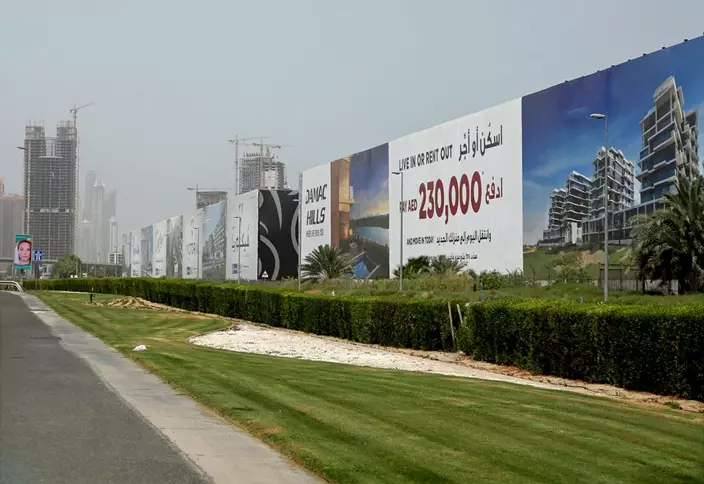
In this Wednesday, June 6, 2018 photo, billboards advertise luxury villas and apartments in Dubai, United Arab Emirates. A new report released Tuesday, June 12, 2018, by the Washington-based Center for Advanced Defense Studies, relying on leaked property data from the city-state, described Dubai’s real-estate market as a haven for money launderers, terror financiers and drug traffickers sanctioned by the U.S. in recent years. (AP Photo/Kamran Jebreili)
In this Wednesday, June 6, 2018 photo, billboards advertise luxury villas and apartments in Dubai, United Arab Emirates. A new report released Tuesday, June 12, 2018, by the Washington-based Center for Advanced Defense Studies, relying on leaked property data from the city-state, described Dubai’s real-estate market as a haven for money launderers, terror financiers and drug traffickers sanctioned by the U.S. in recent years. (AP Photo/Kamran Jebreili)

The report by the Washington-based Center for Advanced Defense Studies, relying on leaked property data from the city-state, offers evidence to support the long-whispered rumors about Dubai's real-estate boom. It identifies some $100 million in suspicious purchases of apartments and villas across the city of skyscrapers in the United Arab Emirates, where foreign ownership fuels construction that now outpaces local demand.

More Images
In this Wednesday, June 6, 2018 photo, billboards advertise luxury villas and apartments in Dubai, United Arab Emirates. A new report released Tuesday, June 12, 2018, by the Washington-based Center for Advanced Defense Studies, relying on leaked property data from the city-state, described Dubai’s real-estate market as a haven for money launderers, terror financiers and drug traffickers sanctioned by the U.S. in recent years. (AP Photo/Kamran Jebreili)

In this Wednesday, June 6, 2018 photo, billboards advertise luxury villas and apartments in Dubai, United Arab Emirates. A new report released Tuesday, June 12, 2018, by the Washington-based Center for Advanced Defense Studies, relying on leaked property data from the city-state, described Dubai’s real-estate market as a haven for money launderers, terror financiers and drug traffickers sanctioned by the U.S. in recent years. (AP Photo/Kamran Jebreili)

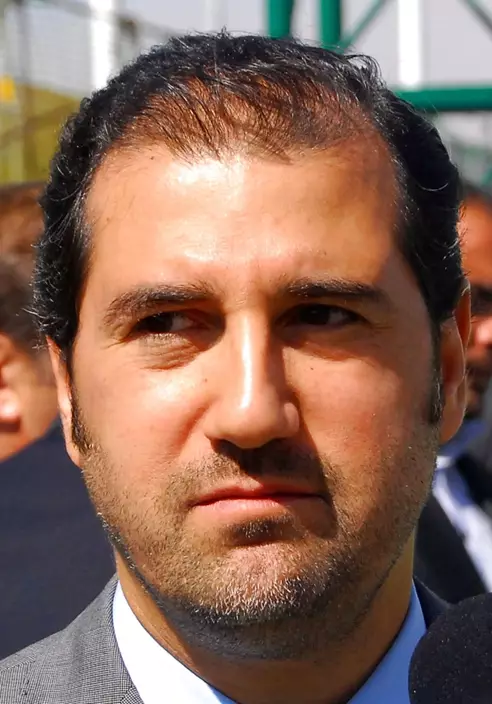
FILE - In this April 24, 2010 file photo, Rami Makhlouf, a cousin of Syrian President Bashar Assad and one of that country’s wealthiest businessmen, attends an event to inaugurate a hotel project, in Damascus, Syria. A new report released Tuesday, June 12, 2018. (AP Photo, File)
FILE - In this April 24, 2010 file photo, Rami Makhlouf, a cousin of Syrian President Bashar Assad and one of that country’s wealthiest businessmen, attends an event to inaugurate a hotel project, in Damascus, Syria. A new report released Tuesday, June 12, 2018. (AP Photo, File)

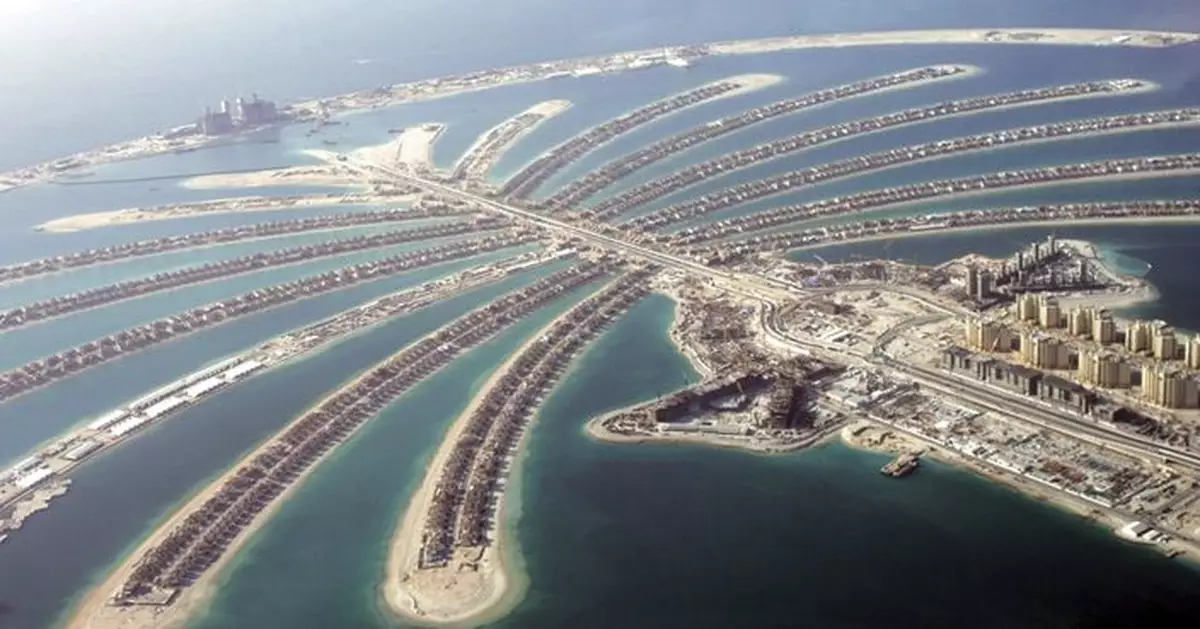
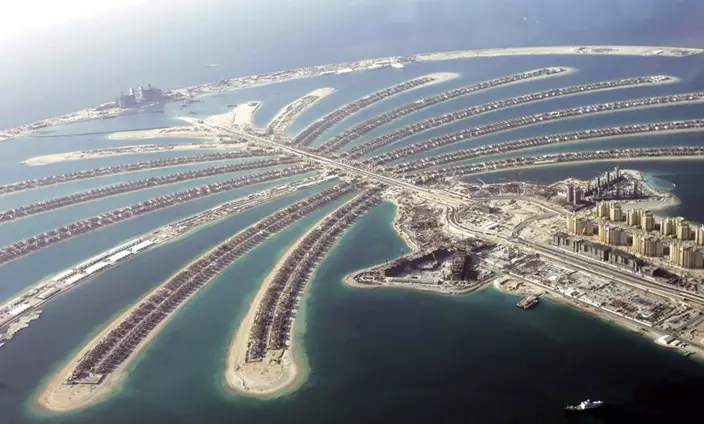
FILE - In this May 3, 2007 file photo, Jumeira Palm Island is seen from a helicopter. A new report released Tuesday, June 12, 2018, by the Washington-based Center for Advanced Defense Studies, described Dubai’s real-estate market as a haven for money launderers, terror financiers and drug traffickers sanctioned by the U.S. in recent years. (AP Photo/Kamran Jebreili, File)
FILE - In this May 3, 2007 file photo, Jumeira Palm Island is seen from a helicopter. A new report released Tuesday, June 12, 2018, by the Washington-based Center for Advanced Defense Studies, described Dubai’s real-estate market as a haven for money launderers, terror financiers and drug traffickers sanctioned by the U.S. in recent years. (AP Photo/Kamran Jebreili, File)

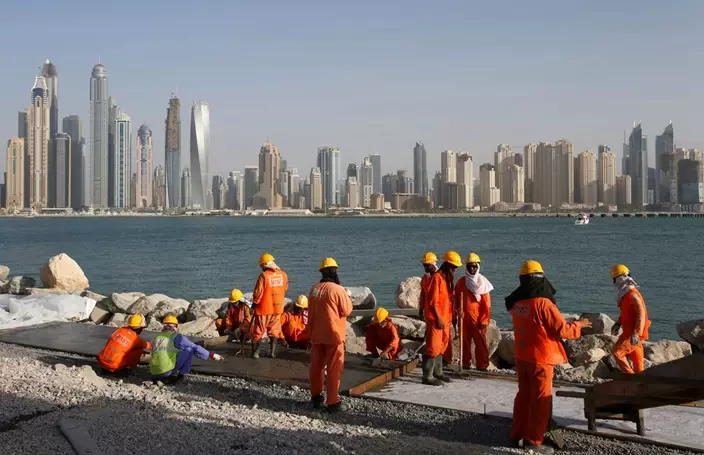
FILE - In this Sept. 22, 2015 file photo, laborers work at a construction site at the Palm Jumeirah, in Dubai, United Arab Emirates. A new report released Tuesday, June 12, 2018, by the Washington-based Center for Advanced Defense Studies, relying on leaked property data from the city-state, described Dubai’s real-estate market as a haven for money launderers, terror financiers and drug traffickers sanctioned by the U.S. in recent years. Officials in Dubai said they could not comment on the report. (AP Photo/Kamran Jebreili, File)

FILE - In this Sept. 22, 2015 file photo, laborers work at a construction site at the Palm Jumeirah, in Dubai, United Arab Emirates. A new report released Tuesday, June 12, 2018, by the Washington-based Center for Advanced Defense Studies, relying on leaked property data from the city-state, described Dubai’s real-estate market as a haven for money launderers, terror financiers and drug traffickers sanctioned by the U.S. in recent years. Officials in Dubai said they could not comment on the report. (AP Photo/Kamran Jebreili, File)

The government-run Dubai Media Office said it could not comment on the report.

FILE - In this April 24, 2010 file photo, Rami Makhlouf, a cousin of Syrian President Bashar Assad and one of that country’s wealthiest businessmen, attends an event to inaugurate a hotel project, in Damascus, Syria. A new report released Tuesday, June 12, 2018. (AP Photo, File)

FILE - In this April 24, 2010 file photo, Rami Makhlouf, a cousin of Syrian President Bashar Assad and one of that country’s wealthiest businessmen, attends an event to inaugurate a hotel project, in Damascus, Syria. A new report released Tuesday, June 12, 2018. (AP Photo, File)

For its part, the center known by the acronym C4ADS said Dubai has a "high-end luxury real estate market and lax regulatory environment prizing secrecy and anonymity above all else." That comes as the U.S. already warns that Dubai's economic free zones and trade in gold and diamonds poses a risk.

"The permissive nature of this environment has global security implications far beyond the sands of the UAE," the center said in its report. "In an interconnected global economy with low barriers impeding the movement of funds, a single point of weakness in the regulatory system can empower and enable a range of global illicit actors."

The properties in question include million-dollar villas on the fronds of the man-made Palm Jumeirah archipelago to an apartment in the Burj Khalifa, the world's tallest building. Others appear to be one-bedroom apartments in more-affordable neighborhoods in Dubai, the UAE's biggest city.

Among the highest-profile individuals named in the report is Rami Makhlouf, a cousin of embattled Syrian President Bashar Assad and one of that country's wealthiest businessmen. The U.S. has sanctioned Makhlouf, who owns the largest mobile phone carrier Syriatel, for using "intimidation and his close ties to the Assad regime to obtain improper financial advantages at the expense of ordinary Syrians."

FILE - In this May 3, 2007 file photo, Jumeira Palm Island is seen from a helicopter. A new report released Tuesday, June 12, 2018, by the Washington-based Center for Advanced Defense Studies, described Dubai’s real-estate market as a haven for money launderers, terror financiers and drug traffickers sanctioned by the U.S. in recent years. (AP Photo/Kamran Jebreili, File)

FILE - In this May 3, 2007 file photo, Jumeira Palm Island is seen from a helicopter. A new report released Tuesday, June 12, 2018, by the Washington-based Center for Advanced Defense Studies, described Dubai’s real-estate market as a haven for money launderers, terror financiers and drug traffickers sanctioned by the U.S. in recent years. (AP Photo/Kamran Jebreili, File)

Makhlouf and his brother, also sanctioned by the U.S., own real estate on the Palm Jumeirah, according to the report. They also have ties to two UAE-based free-zone companies. The UAE, a federation of seven sheikhdoms led from oil-rich Abu Dhabi, has opposed Assad in his country's yearslong war.

The UAE also opposes Hezbollah, the Lebanese political party and militia group backed by Iran. However, C4ADS' report identified at least one property directly linked to Lebanese businessmen Kamel and Issam Amhaz, who the U.S. sanctioned in 2014 for helping Hezbollah "covertly purchase sophisticated electronics" for military drones. The report identified another nearly $70 million in Dubai properties owned by two other shareholders in Amhaz's sanctioned firms.

Separately, the report identified some $21 million in real estate still held by individuals associated with the Altaf Khanani money laundering organization, a Pakistani ring that aided drug traffickers and Islamic extremists like al-Qaida through its currency exchange houses.

The report identified Dubai properties owned by Hassein Eduardo Figueroa Gomez, a Mexican national indicted in the U.S. for importing mass quantities of chemicals needed to make methamphetamine. It also identified properties owned by two Iranians previously sanctioned for their work on Iran's missile program.

Dubai, an Arabian Peninsula entrepot, long has been a favorite port of call for those skirting the law. Gold smuggling into India served as one of the emirate's most lucrative trades for the decades after the pearling industry collapsed. Guns, drugs and other illicit cargo also moved through the city-state.

FILE - In this Sept. 22, 2015 file photo, laborers work at a construction site at the Palm Jumeirah, in Dubai, United Arab Emirates. A new report released Tuesday, June 12, 2018, by the Washington-based Center for Advanced Defense Studies, relying on leaked property data from the city-state, described Dubai’s real-estate market as a haven for money launderers, terror financiers and drug traffickers sanctioned by the U.S. in recent years. Officials in Dubai said they could not comment on the report. (AP Photo/Kamran Jebreili, File)

FILE - In this Sept. 22, 2015 file photo, laborers work at a construction site at the Palm Jumeirah, in Dubai, United Arab Emirates. A new report released Tuesday, June 12, 2018, by the Washington-based Center for Advanced Defense Studies, relying on leaked property data from the city-state, described Dubai’s real-estate market as a haven for money launderers, terror financiers and drug traffickers sanctioned by the U.S. in recent years. Officials in Dubai said they could not comment on the report. (AP Photo/Kamran Jebreili, File)

Over time, however, Dubai itself became a haven. The emirate's decision in 2002 to allow foreign ownership of so-called "freehold" properties drew a rapid construction boom that attracted developers from across the world, including President Donald Trump, whose name is on two golf course projects and villas.

Dubai's easily flipped luxury properties offered an opportunity for those wanting to park money they otherwise couldn't spend. The Federation of American Scientists warned based on news reports in 2002 that "money-laundering activity in the UAE may total $1 billion annually."

Money quickly flowed in from all corners, especially those now involved in the U.S. wars in Afghanistan and Iraq, likely topping that.

From Kabul, the Afghan capital, over $190 million in physical cash left for Dubai in three months in 2009 on commercial flights, according to an October 2009 U.S. diplomatic cable published by WikiLeaks. In 2008, some $600 million, as well as 100 million euros and 80 million British pounds, made the trip, according to the cable.

A banking scandal in Afghanistan in 2010 saw regulators demand that a banker turn over 18 Palm Jumeirah villas and two business properties. The brother of former Afghan President Hamad Karzai also profited from the sale of a Palm Jumeirah villa at the time.

In Pakistan, authorities believe citizens invested $8 billion in Dubai's property market over four years, possibly to evade taxes, officials said in 2017. Alleged Australian drug kingpins arrested in Dubai last year also owned real estate in the city, while the governments of Nigeria and South Africa also have launched investigations into alleged money laundering involving Dubai.

Unlike in the U.S., where property records are public, Dubai does not offer an accessible database of all its transactions, instead requiring specific details only individual buyers and sellers would have. C4ADS said it relied in part on "private UAE data compiled by real estate and property professionals" offered by a confidential source for its reporting.

The U.S. State Department as recently as this year issued a warning about money laundering in the UAE in its annual International Narcotics Control Strategy Report, noting the country's money-exchange shops can allow for "bulk cash smuggling." The UAE's economic free zones, real estate sector and its trade in gold and diamonds also pose risks.

"The UAE has demonstrated both a willingness and capability to take action against illicit financial actors if those actors pose a direct national security threat or present a reputational risk to the UAE's role as the leading regional financial hub," the State Department said. "However, the UAE needs to continue increasing the resources devoted to investigating, prosecuting and disrupting money laundering."

JERUSALEM (AP) — The White House says it is moving into the second phase of President Donald Trump’s Gaza ceasefire plan – breathing new life into a proposal that aims to rebuild the war-ravaged area and reshape the wider Middle East.

Trump’s Mideast envoy, Steve Witkoff, broke the news Wednesday in a post on X, saying the new phase will include the establishment of a transitional Palestinian governing committee and begin the complicated tasks of disarming Hamas and reconstruction.

But the announcement included few details about the new Palestinian committee or other key aspects of the plan, signaling just how much work lies ahead.

Trump's 20-point plan — which was approved by the U.N. Security Council — lays out an ambitious vision for ending Hamas’ rule in Gaza. If successful, it would see the rebuilding of a demilitarized Gaza under international supervision, the normalization of relations between Israel and the Arab world, and the creation of a possible pathway to Palestinian independence.

But if the deal stalls, Gaza could be trapped in an unstable limbo for years to come, with Hamas remaining in control of parts of the territory, Israel’s army enforcing an open-ended occupation, and its residents stuck homeless, unemployed, unable to travel abroad and dependent on international aid to stay alive.

“We’re going to do our best to try and see if we can work with the Palestinian people to try something new,” said a U.S. official, speaking on condition of anonymity to discuss the evolving plan. “It will be hard to do,” he acknowledged.

Here is a closer look at the next stages of the ceasefire and the potential pitfalls.

The ceasefire took effect on Oct. 10, halting two years of fighting between Israel and Hamas. It also included the release of all remaining hostages held in Gaza in exchange for hundreds of Palestinians held by Israel.

The ceasefire has largely held, though both sides accuse each other of ongoing violations. Israeli fire has killed more than 400 Palestinians, according to Gaza health officials. Israel says it has targeted militants or responded to violations of the ceasefire, but the Palestinians say scores of civilians have been shot.

Palestinian militants, meanwhile, continue to hold the remains of the last hostage — an Israeli police officer killed in the Hamas-led Oct. 7, 2023, attack that triggered the war. Israeli Prime Minister Benjamin Netanyahu has made clear he is in no rush to move forward until the remains are returned.

Netanyahu appeared to play down Witkoff’s announcement as symbolic, calling the creation of a new Palestinian committee a “ declarative move.”

The new committee will consist of independent Palestinian experts who are to run Gaza’s daily affairs under American supervision.

Wednesday’s announcement didn't say who will serve on the committee. But the other mediators of the ceasefire — Egypt, Turkey and Qatar — said it would be led by Ali Shaath, an engineer and former deputy minister in the Palestinian Authority in the West Bank.

The U.S. official who spoke on the condition of anonymity said other names are expected in the next two days, and the committee will focus on attracting investment and improving the quality of life.

“This really will be a technocratic committee,” he said. “They seem to be a group that wants to have peace.”

The committee will report to the Board of Peace, a group of world leaders supervising the ceasefire and led by Trump. If the Palestinian committee is seen as just a façade, it risks not gaining public support.

Also, its exact powers remain unclear. Hamas has said it will dissolve its government once the committee takes office, but it has shown no signs that it will dismantle its military wing or security forces.

The board will oversee the ceasefire, reconstruction and an open-ended reform process by the Palestinian Authority, with the goal of one day allowing the internationally recognized authority to return to Gaza to govern.

The U.S. official said invitations for the board have been extended, but he declined to name any of the people expected to join. “It’s going to be a great list,” he said.

The key challenge will be forming a board that can work with Israel, Hamas, the mediators and international aid agencies.

One key appointment appears to have been made. Nickolay Mladenov, a former Bulgarian politician and U.N. Mideast envoy, is expected to serve as the board’s on-the-ground representative. He already has met with Netanyahu and Palestinian leaders in the occupied West Bank.

Trump's plan calls for the formation of an International Stabilization Force to maintain security and train Palestinian police to one day to take over. That force hasn't been formed yet, and a deployment date hasn't been announced.

The U.S. official insisted there is “great excitement” over the force and said there would be important announcements in the coming weeks.

But the force’s command structure and authorities remain unknown.

Hamas said it will oppose any attempts by the force to disarm it, and contributing nations may not to want to risk clashes with the militant group. Israel, meanwhile, is hesitant to trust an international body with its security needs.

Trump’s plan calls for an economic development outline to “rebuild and energize Gaza,” which suffered widespread destruction during the war and where most of the territory’s 2 million people are displaced and unemployed.

Still, no such plan has been announced, and it remains unclear who will pay for a process the U.N. estimates will cost $70 billion.

The ceasefire deal calls for Hamas to surrender its weapons under the supervision of international monitors. Militants who disarm will be granted amnesty and the option to leave Gaza.

However, Hamas, whose ideology is based on armed resistance against Israel, has said it won't disarm until Israel ends its occupation of Palestinian territories.

Bassem Naim, a senior Hamas official, told The Associated Press last month that the group is open to “ freezing or storing” its weapons while a political process takes place, perhaps over many years. It is unclear whether that would be sufficient for Israel.

Failure to disarm Hamas could lead to renewed fighting with Israel and clashes with international troops, and could block progress on the rest of the peace plan.

Under the ceasefire, Israel is to withdraw from all of Gaza, with the exception of a small buffer zone along the border. At the moment, Israel retains control of just over half of Gaza.

The plan says further withdrawals will be based upon “standards, milestones and timeframes linked to demilitarization” to be negotiated by Israel, the U.S., the international force and other “guarantors.”

There are no firm timelines for further withdrawals, and Israel may refuse to pull back further.

The plan calls for an overhaul of the Palestinian Authority, which runs the West Bank, and the creation of conditions for a “credible pathway” to Palestinian statehood.

Palestinian officials say they have begun making reforms in key areas such as corruption, the education system and payments to families of prisoners convicted in attacks on Israelis.

Israel rejects the creation of a Palestinian state and opposes any role for the authority in postwar Gaza. Without a pathway to statehood, any Palestinian support for the new system could crumble. The plan also offers no clear benchmarks or timelines for the reform process.

US Special Envoy Steve Witkoff delivers a speech upon the signing of the declaration on deploying post-ceasefire force in Ukraine during the 'Coalition of the Willing' summit on security guarantees for Ukraine, at the Elysee Palace in Paris Tuesday, Jan 6, 2026. (Ludovic Marin, Pool photo via AP)

US Special Envoy Steve Witkoff delivers a speech upon the signing of the declaration on deploying post-ceasefire force in Ukraine during the 'Coalition of the Willing' summit on security guarantees for Ukraine, at the Elysee Palace in Paris Tuesday, Jan 6, 2026. (Ludovic Marin, Pool photo via AP)

Palestinians walk amid buildings destroyed by Israeli air and ground operations in Gaza City Thursday, Jan. 15, 2026. (AP Photo/Jehad Alshrafi)

Palestinians walk amid buildings destroyed by Israeli air and ground operations in Gaza City Thursday, Jan. 15, 2026. (AP Photo/Jehad Alshrafi)

Makeshift tents shelter displaced Palestinians stand among buildings destroyed by Israeli air and ground operations in Gaza City Thursday, Jan. 15, 2026. (AP Photo/Jehad Alshrafi)

Makeshift tents shelter displaced Palestinians stand among buildings destroyed by Israeli air and ground operations in Gaza City Thursday, Jan. 15, 2026. (AP Photo/Jehad Alshrafi)

Recommended Articles