
Student Hermione has ultra-rare Kleine–Levin syndrome (KLS) – and alcohol can be one of her biggest triggers.
A real life Sleeping Beauty has revealed how alcohol can trigger a rare condition that sees her snooze for a week at a time – not even waking to eat or use the toilet.
Click to Gallery

Hermione, middle, and friends Seren, left, and Laura, right (PA Real Life/Collect)
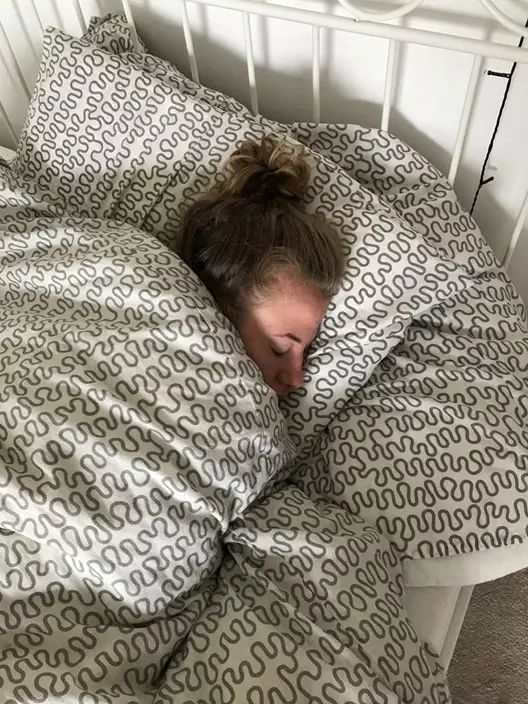
Hermione asleep (PA Real Life/Collect)
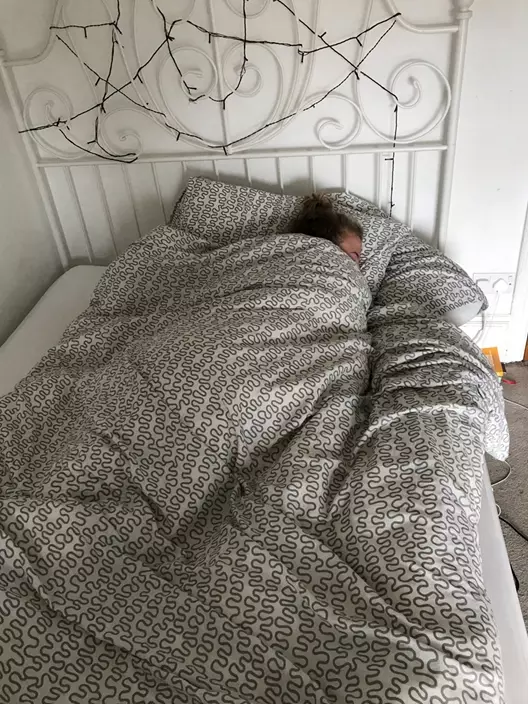
Hermione can plunge into a deep sleep for days (PA Real Life/Collect)
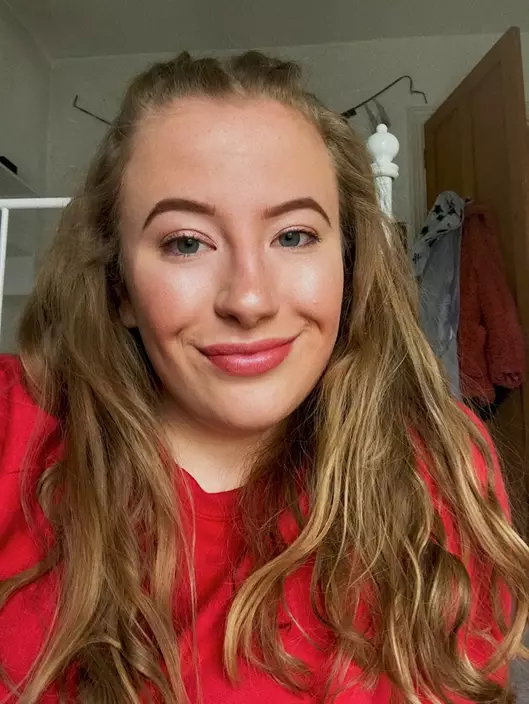
Hermione started to develop sudden bouts of exhaustion (PA Real Life/Collect)
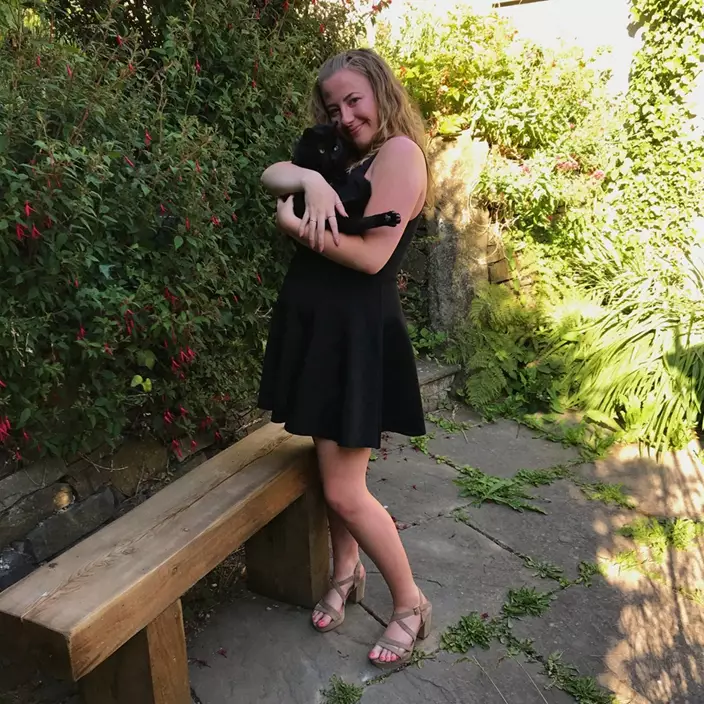
Hermione (PA Real Life/Collect)
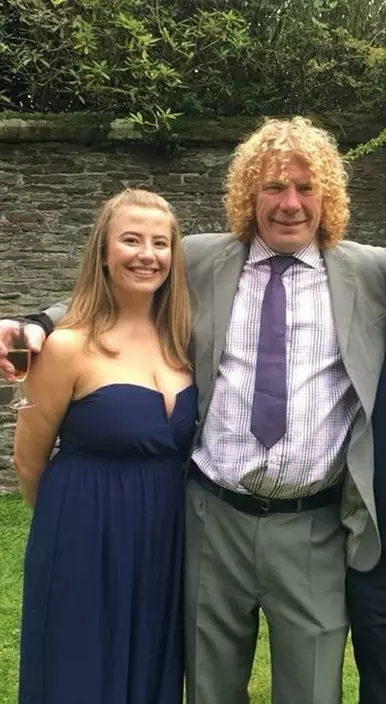
Hermione and dad Liam (PA Real Life/Collect)
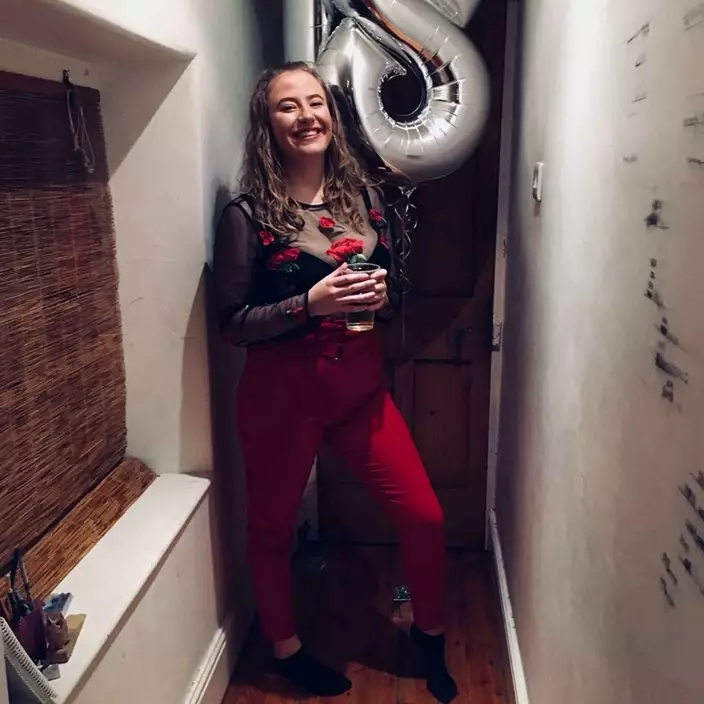
Hermione has a condition known as Sleeping Beauty syndrome (PA Real Life/Collect)
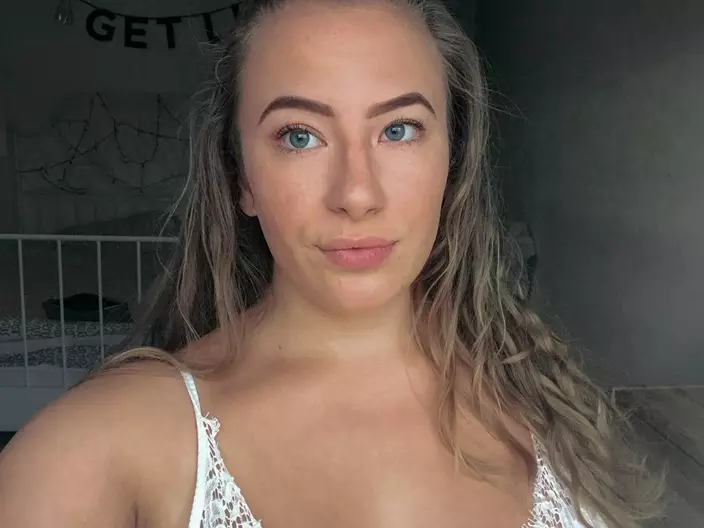
Hermione has dubbed herself the “real life Sleeping Beauty” (PA Real Life/Collect)
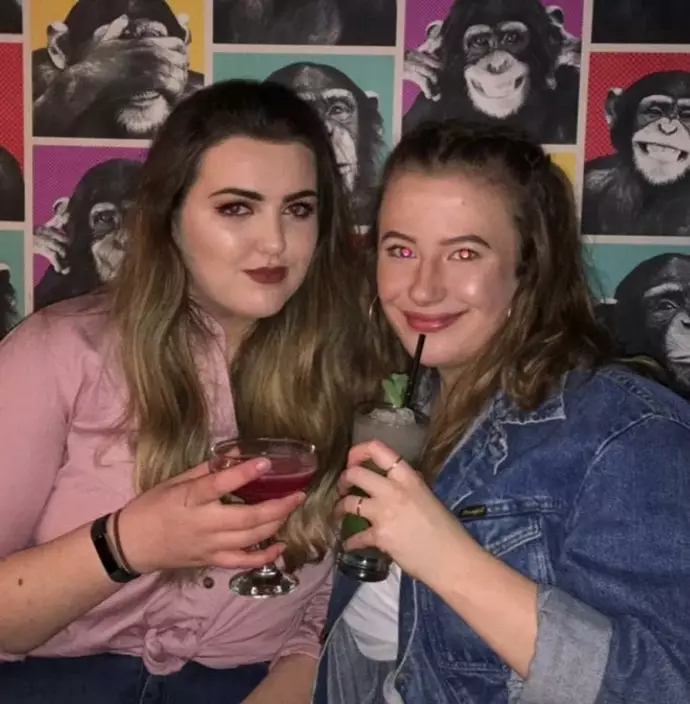
Hermione, right, and friend Ffion (PA Real Life/Collect)
Hermione, middle, and friends Seren, left, and Laura, right (PA Real Life/Collect)
Hermione Cox-Denning, 18, of Aberystwyth, Wales, started to develop sudden bouts of exhaustion so severe she would spend entire days asleep around three years ago.
At first, she was absolutely baffled, wondering if the extreme fatigue was down to a winter bug.
Hermione asleep (PA Real Life/Collect)
Hermione can plunge into a deep sleep for days (PA Real Life/Collect)
Hermione started to develop sudden bouts of exhaustion (PA Real Life/Collect)
But, after extensive tests, she was finally diagnosed with Kleine–Levin syndrome (KLS) – also known as Sleeping Beauty syndrome – in November 2017.
Explaining how she's since discovered that alcohol is one of her biggest triggers, Hermione, who is trying to juggle managing the condition with completing work placements and applying to university, said: "It took me a long time to see what was triggering this for me. I knew it wasn't stress and I couldn't see a particular food pattern."
"I realised that when I drank alcohol, I would often have an episode the next day. I've learnt that I can have one or two drinks but much more than that causes me to plunge into a deep sleep for days afterwards."
Hermione (PA Real Life/Collect)
Hermione and dad Liam (PA Real Life/Collect)
Previously fit and healthy, Hermione was suddenly hit by a wave of exhaustion around three years ago.
She continued, explaining: "It was very surreal. It was like nothing I’d never felt before."
"My memory of my first episode is hazy. I just remember waking up for a few minutes throughout the hours and hours of sleep, dreary and confused. My mind was so confused – I couldn’t speak, I didn’t eat or drink and I didn't go the toilet. It was like my body shut down."
She added: "I was always on my phone before, but I didn’t speak to anyone for a whole week because I kept sleeping. I think a lot of my friends were worried because I just disappeared."
When she started to rally as the days went on, Hermione’s parents Clare, 54, and Liam, 50, thought she'd simply been struck by a bad case of the flu.
Within a week, she was more or less back to normal.
But, just a few months later, she had another worrying episode, where she fell asleep for another few days.
She said: "I just put it down to being sick again. It did seem odd, but I thought I was just picking up bugs and things."
By January 2016, Hermione had endured yet another episode, prompting her parents to take her to the doctor.
Hermione has a condition known as Sleeping Beauty syndrome (PA Real Life/Collect)
She continued: "By then, I was getting really concerned. I was missing out on lots of school. I was predicted really high grades and I didn‘’t want those to drop."
"I went to see a doctor and they said that it was possibly depression and mental health issues – which I was never diagnosed with. My dad was saying that this wasn’t normal – I wasn't just napping, I was sleeping for full days."
"I am really social and outgoing and I wanted to be out with my friends so it was really unexpected. I felt this was something physical."
Over the next few months, Hermione's episodes increased in frequency, to the point where they were happening every eight weeks.
Eventually, in September 2017, she sought a second opinion from a different doctor, who referred her to a neurologist.
She told: "By then, I had been researching sleep disorders on the internet. The first thing that had come up was sleeping beauty syndrome. It all matched up, but my family and friends had told me, 'Don't rush in to anything.'"
Following a Skype consultation with Bronglais Hospital, Aberystwyth, as the nearest specialist neurologist was in West Wales General Hospital, medics agreed with Hermione that she likely had KLS.
From there, she was referred for a string of tests and scans.
"There is no way to officially diagnose KLS, but they have to rule out everything else," she added.
Hermione has dubbed herself the “real life Sleeping Beauty” (PA Real Life/Collect)
Finally, in March 2018, when all her other tests had come back clear, Hermione was told once and for all that she had KLS.
Though "relieved" to finally have a diagnosis, she was concerned to learn that there are very few treatment options available.
She said. "My episodes weren't triggered by stress or anything like that. It was completely random and sporadic. It was good to be able to have something to explain it."
Since then, Hermione has been working hard to figure out what her main triggers are, reasoning that, if she knows when her episodes are coming, she can manage her condition better.
Following a particularly bad episode after her 18th birthday party, she now believes that alcohol has a major effect.
As a result, she is trying to limit the amount she drinks.
Now having finished her A Levels, Hermione has decided to take a gap year before going to university to try to get her KLS under control.
"I do worry about it affecting my future," she candidly admitted. "I'm on a gap year at the minute and I wanted to volunteer overseas, but I couldn't because of my illness. It really upsets me that I miss out of opportunities like that. I'm hoping it will ease and I’ll still be able to go to university."
Hermione, right, and friend Ffion (PA Real Life/Collect)
"Eventually I would like to study veterinary medicine. My plan is to stay close to home though. I'm still having my episodes regularly. I will sleep pretty much continuously for three days. On the fourth day, it will start to ease, and I'll get up, go to the toilet and have something to eat. It takes about four days after that to get back to normal."
Hermione's neurologist has advised that many KLS patients see the frequency of their episodes decrease as she grows older – and she is desperately hoping that will be the case for her too.
In a bid to raise awareness of the condition, she has started blogging about her experiences on her YouTube channel.
She explained: "I know that people can be ignorant about this and think I am just being lazy. I want to speak out to raise awareness and to encourage more research into the condition. I'm lucky as I have an amazing support system, but people with KLS can be misunderstood."