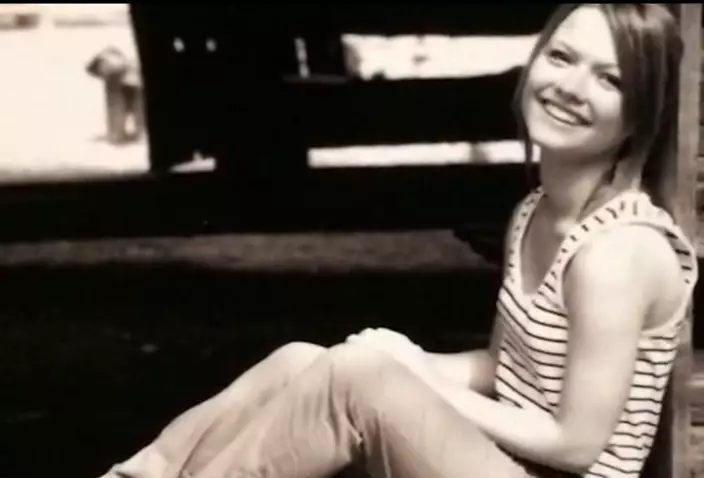
WARNING - POTENTIALLY DISTURBING CONTENT After attempting suicide three years ago, 21-year-old Katie Stubblefield became the youngest person in the US to receive a face transplant.
Video screencap
The then-18-year-old Katie faced a number of emotion hurdles, having just found out her boyfriend had been texting another girl and recently having her appendix and gallbladder removed in surgery for gastrointestinal problems, she tried to commit suicide by shooting herself with a .308-caliber hunting rifle in a bathroom of her Mississippi home in March 2014.
Click to Gallery
Andrea Schneider (Video screencap)
Video screencap
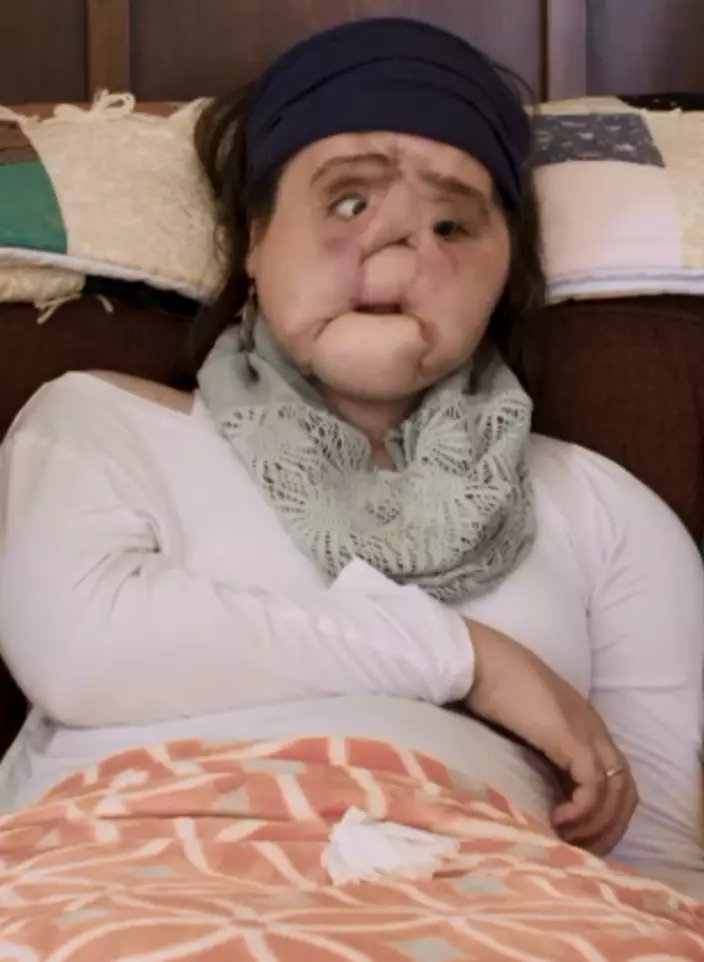
Katie's older brother, Robert, heard the gunfire found her covered in blood, and recalled, "her face was gone".
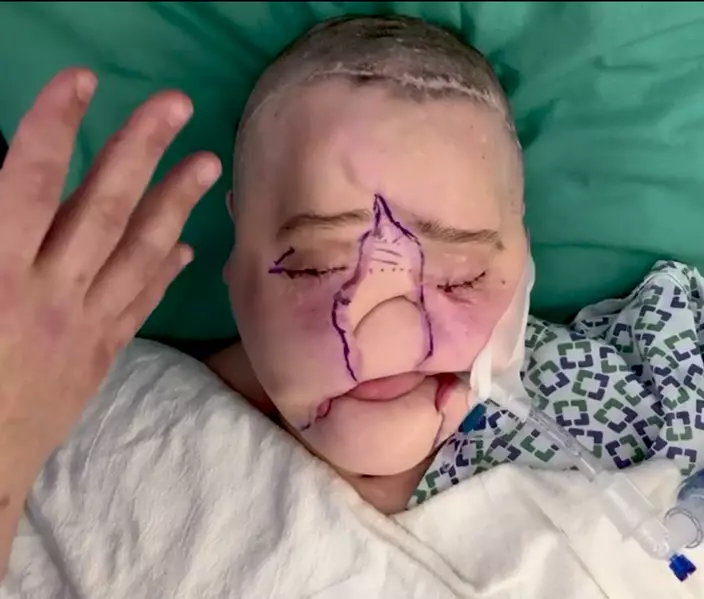
Having been left heavily disfigured in the failed suicide attempt, having lost her forehead, nose, sinuses, mouth except for the corners of her lips and much of the bones that make up the jaws and front of her face. Her eyes remained, but they were askew and badly damaged.
Video screencap
“I had never thought of doing that before,” Ms Stubblefield said of her attempt to kill herself. “I felt so guilty that I had put my family through such pain. I felt horrible.”
"There was an older trauma surgeon who basically told us, 'It's the worst wound that I've ever seen of its kind,' and he said, 'The only thing I can think of that would really give her functional life again is a face transplant,' " Robb Stubblefield, Katie's father, said.
Video screencap
"I was standing there thinking, 'What do you mean, a face transfer? What do you do?' "
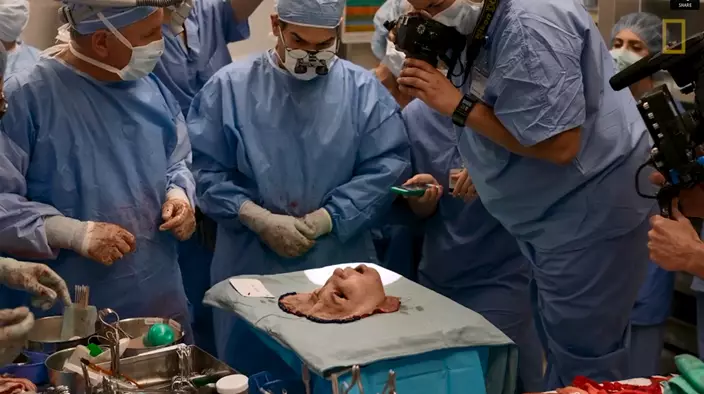
Up to that point, none of the family had heard of this medical procedure, which involved transplanting all or parts of the facial tissue, including skin, bone, nerves and blood vessels from a donor cadaver onto the recipient.
Video screencap
"I had no clue what a face transplant was," Katie said. "When my parents helped explain everything to me, I was very excited to get a face again and to have function again."
Video screencap
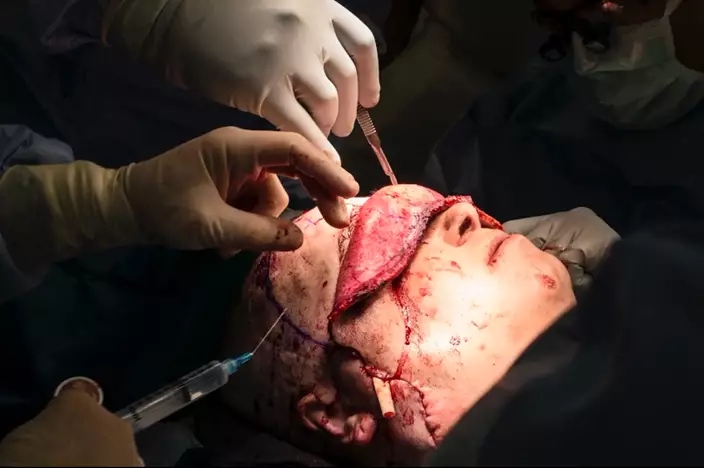
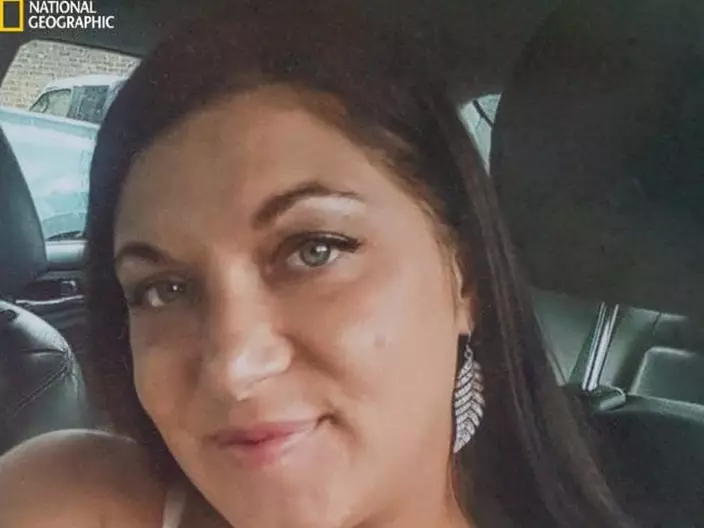
Katie waited for a suitable donor for over a year before Andrea Schneider, a 31-year-old organ donor who had recently passed away, was found as a match. Ms Schneider's grandmother, Sandra Bennington, made the decision to donate Andrea's face.
Andrea Schneider (Video screencap)
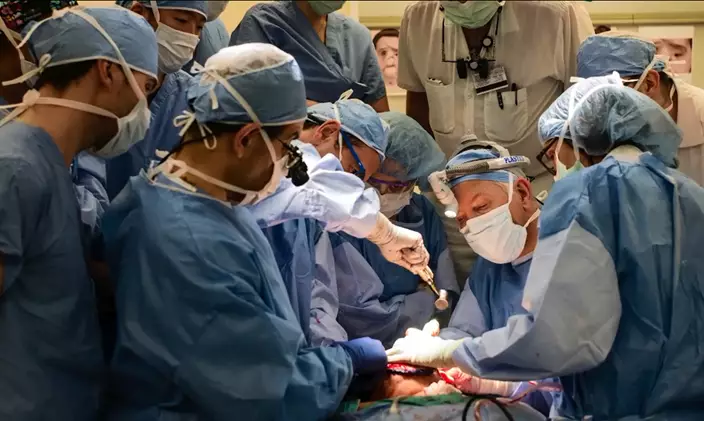
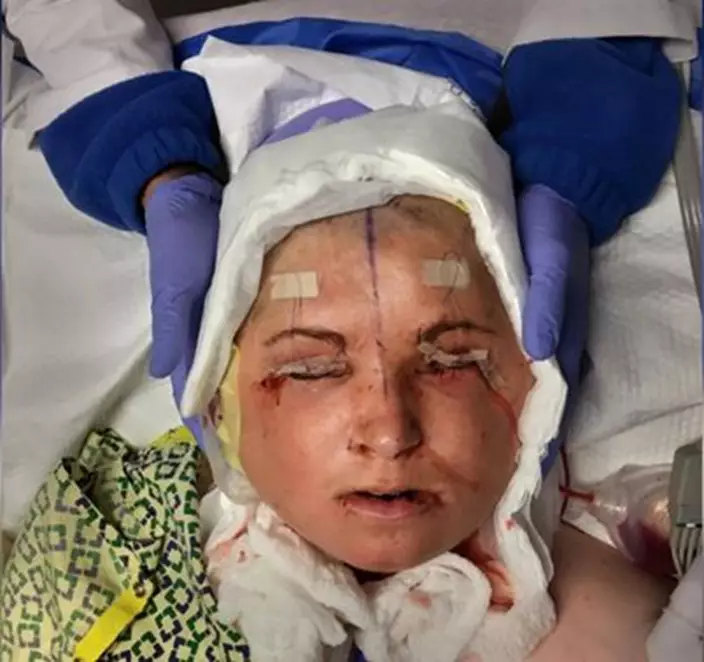
The transplant, which was performed by 11 surgeons in the span of a 31-hour surgery began May 4, 2017, and aimed to restore Stubblefield’s face and functions such as chewing, breathing and swallowing.
Video screencap
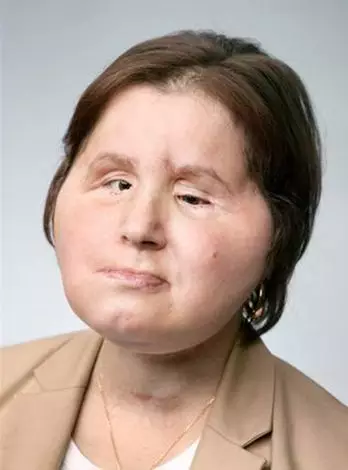
"I am able to touch my face now, and it feels amazing," said Katie. Her father, Robb, helps to decipher some of her thoughts, as Katie still has some trouble speaking clearly: "You take it for granted, the different components of our faces -- the bone, the tissue, the muscle, everything -- but when it's gone, you recognize the big need. Then when you receive a transplant, you're so thankful."
Video screencap
DWEIL'A, Syria (AP) — At a church in Syria where a suicide attack killed 25 people in June, hundreds of worshippers gathered before Christmas to remember those they lost and reaffirm their faith.
With a small detail of security forces standing guard outside, members of Mar Elias Church held Mass on Tuesday evening and lit an image of Christmas tree made of neon lights on the wall of the courtyard outside. The tree was hung with pictures of those who were killed in the attack.
They include three men the congregation hails as heroes for tackling the bomber, potentially averting a much higher death toll in the June 22 attack.
A man opened fire then detonated an explosive vest inside the Greek Orthodox church in Dweil’a on the outskirts of Damascus as it was filled with people praying on a Sunday.
Before he detonated the vest, brothers Boutros and Gergis Bechara and another congregant, Milad Haddad, tackled the shooter and pushed him out of the center of the church, congregants said.
“If it weren’t for the three of them, maybe not one person would remain out of 400 people,” said Imad Haddad, the brother of Milad Haddad, who attended Tuesday's Christmas tree lighting.
He hasn't decorated for Christmas or put up a tree at home, but gathering at the church was “is a message of peace and love” and a message that “we are believers and we are strong and we are steadfast in spite of everything," he said.
Thana al-Masoud, the widow of Boutros Bechara, recalled searching frantically for her husband after the explosion but she never found him, alive or dead. His body had been ripped apart by the blast.
“There’s no holiday, neither this year nor next year nor the one after it," she said.
She takes comfort in the belief that her husband and the two other men who confronted the attacker are martyrs for their faith.
“Our Lord chose them to be saints and to spread His word to all the world,” she said. “But the separation is difficult."
The attack on the church was the first of its kind in Syria in years and came as a new Sunni Islamist- dominated government in Damascus sought to win the confidence of religious minorities following the ouster of former President Bashar Assad.
Interim President Ahmad al-Sharaa has struggled to exert authority across the country, even in the ranks of allied groups. There have been several deadly outbreaks of sectarian violence in the country in the past year.
While the new government has condemned attacks on minorities, many accuse it of failing to act to control the armed factions it is trying to absorb into the new state army and security forces.
The June attack was blamed on an Islamic State cell, which authorities said had also planned to target a Shiite shrine. IS did not claim responsibility for the attack, while a little-known group called Saraya Ansar al-Sunna said one of its members had carried out the attack. The government said the group was a cover for IS.
Christians made up about 10% of Syria’s population of 23 million before mass anti-government protests in 2011 were met by a brutal government crackdown and spiraled into a brutal 14-year civil war that saw the rise of IS and other extremist groups.
Hundreds of thousands of Christians fled during the war, during which there were sectarian attacks on Christians including the kidnapping of nuns and priests and destruction of churches. Now many are once again seeking to leave.
Since losing her husband in the church attack, Juliette Alkashi feels numb.
The couple had been sweethearts before she left Syria with her mother and brother to emigrate to Venezuela. In 2018, when Emile Bechara asked her to marry him, Alkashi moved back to Syria even though it was still in the midst of a civil war.
“Whatever is going to happen will happen, and I’ve surrendered to it," she said. "If one goes to pray and dies in the church — whatever God has written is what will be.”
The only thing that matters now, Alkashi said, is that she and her 3-year-old son remain together.
Some congregants said the attack only strengthened their faith.
“I saw a column of smoke rising from the ground to the ceiling, and I heard a voice saying, ‘I will not forsake you and I will not leave you,’” said Hadi Kindarji, who described an intense spiritual experience in the moment of the explosion.
He believes today that even the seemingly senseless violence was part of God's plan.
“Our God is present, and He was present in the church,” he said.
Yohanna Shehadeh, the priest of Mar Elias church, acknowledged many in the congregation are afraid of more deadly violence.
“Fear is a natural state. I’m not going to tell you there is no fear, and I’m not only talking about the Christians but about all the Syrian people, from all sects,” Shehadeh said.
As Christmas approaches, he said, they are praying for peace.
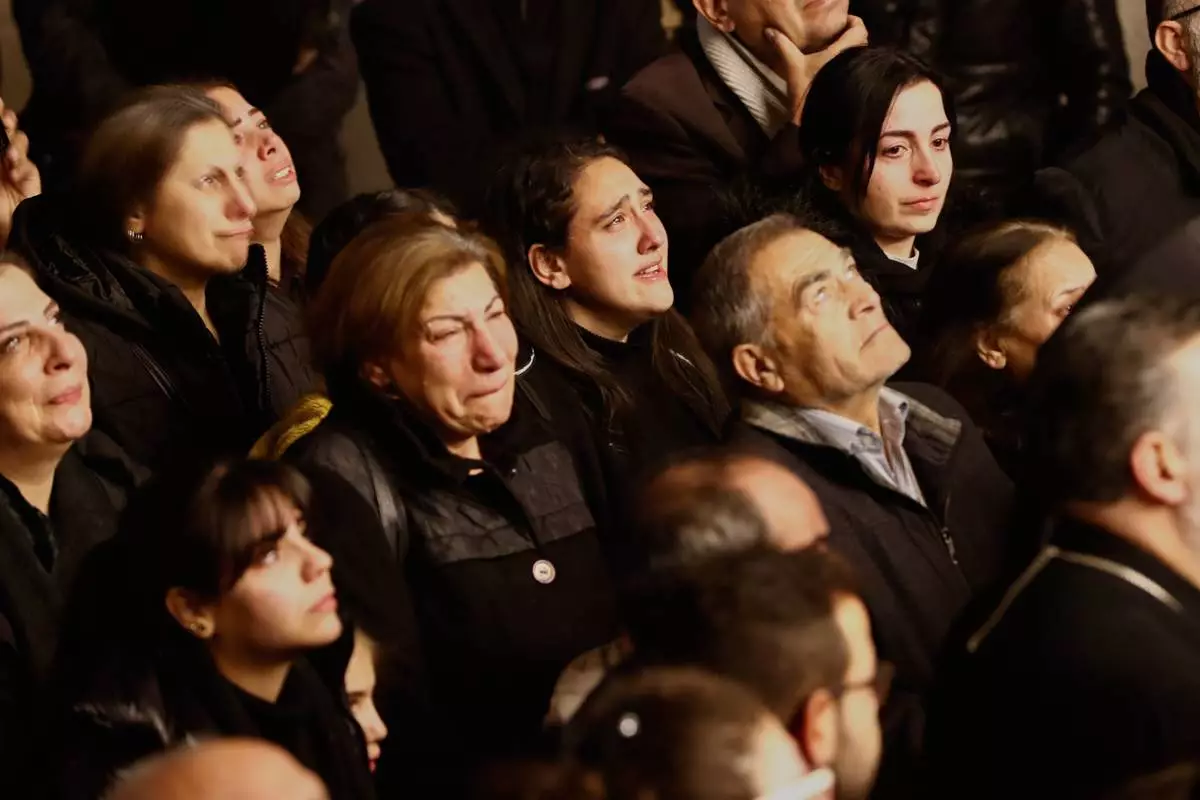
People react as they attend the lighting of a Christmas tree at the Greek Orthodox Mar Elias Church, months after the church was the site of a deadly suicide bombing, in the Dweila neighborhood of Damascus, Syria, Tuesday, Dec. 23, 2025.(AP Photo/Omar Sanadiki)
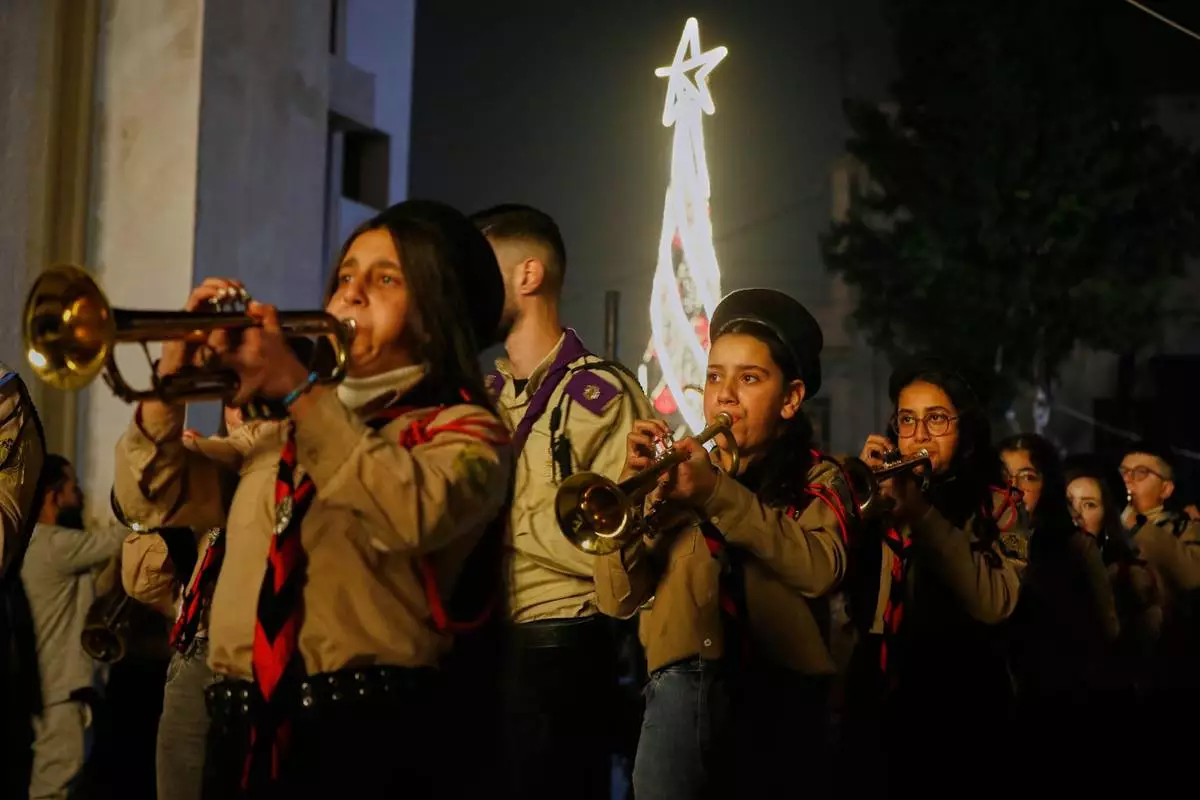
A Scout band plays during the lighting ceremony of a Christmas tree at the Greek Orthodox Mar Elias Church, months after the church was the site of a deadly suicide bombing, in the Dweila neighborhood of Damascus, Syria, Tuesday, Dec. 23, 2025. (AP Photo/Omar Sanadiki)
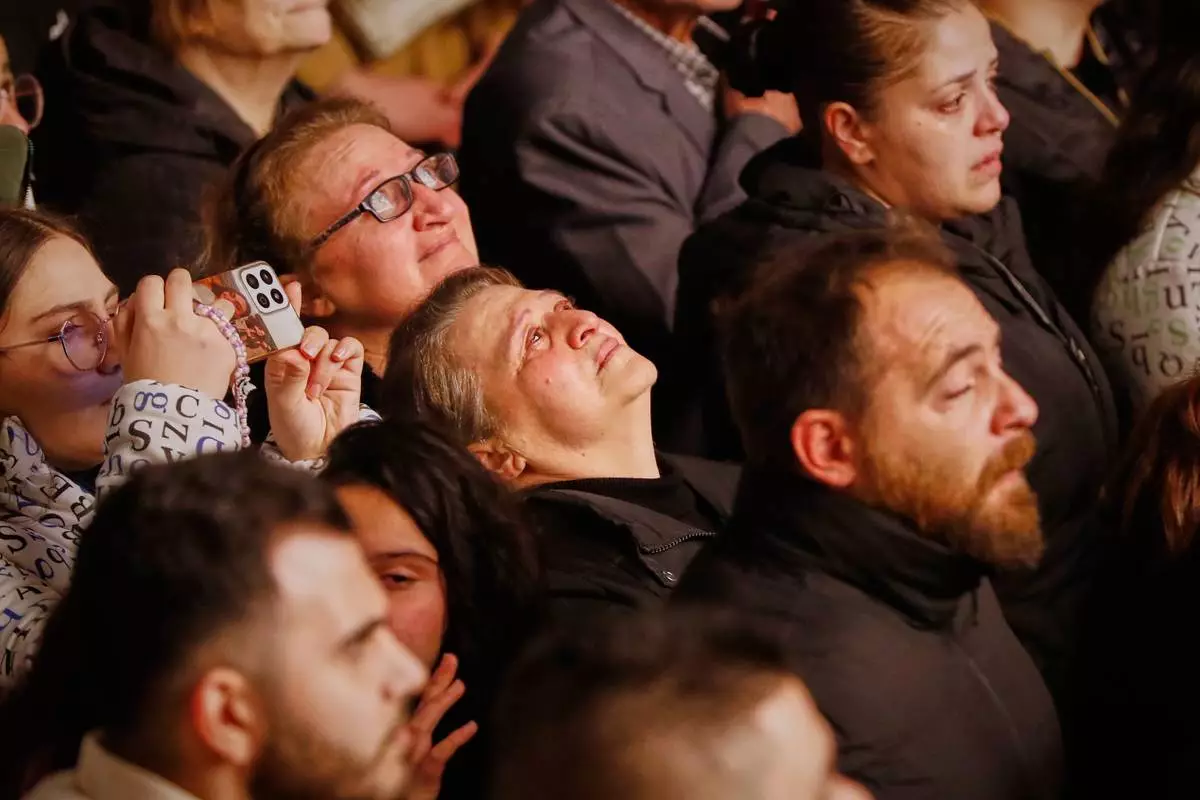
People attend the lighting of a Christmas tree at the Greek Orthodox Mar Elias Church, months after the church was the site of a deadly suicide bombing, in the Dweila neighborhood of Damascus, Syria, Tuesday, Dec. 23, 2025.(AP Photo/Omar Sanadiki)
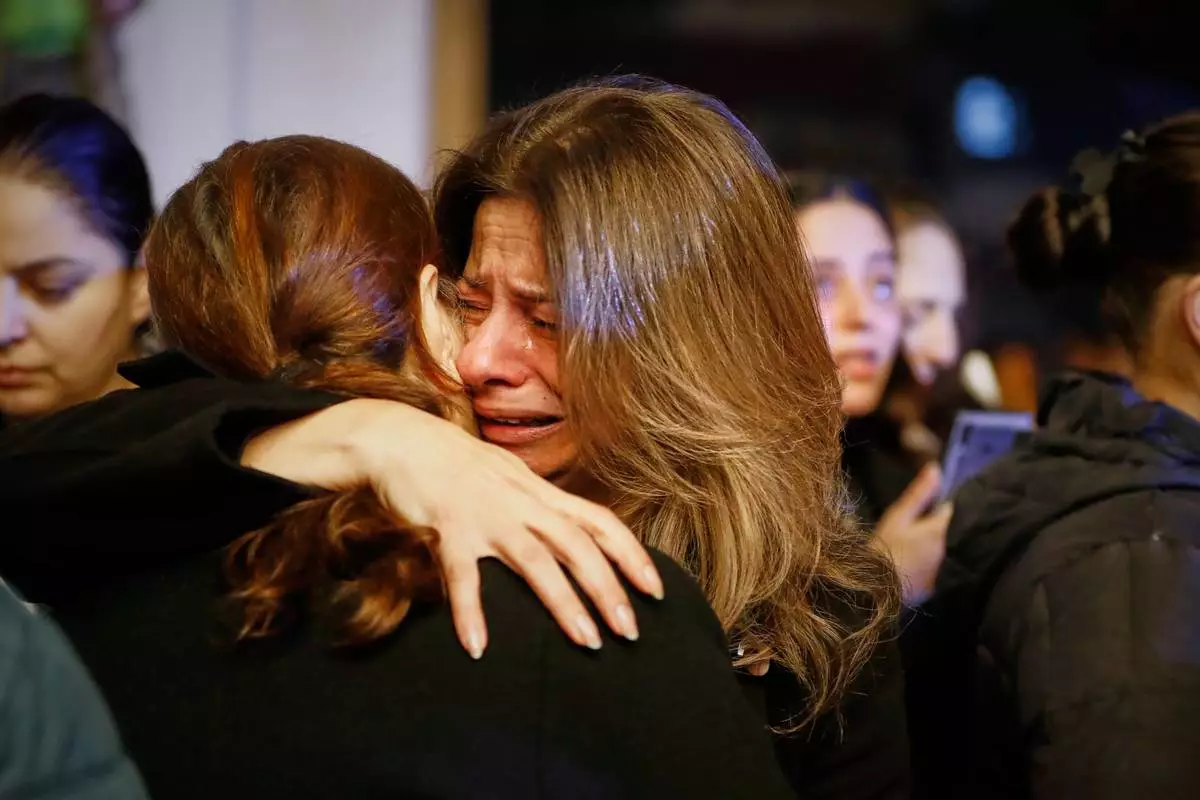
Two women hug each other as they attend the lighting of a Christmas tree at the Greek Orthodox Mar Elias Church, months after the church was the site of a deadly suicide bombing, in the Dweila neighborhood of Damascus, Syria, Tuesday, Dec. 23, 2025.(AP Photo/Omar Sanadiki)
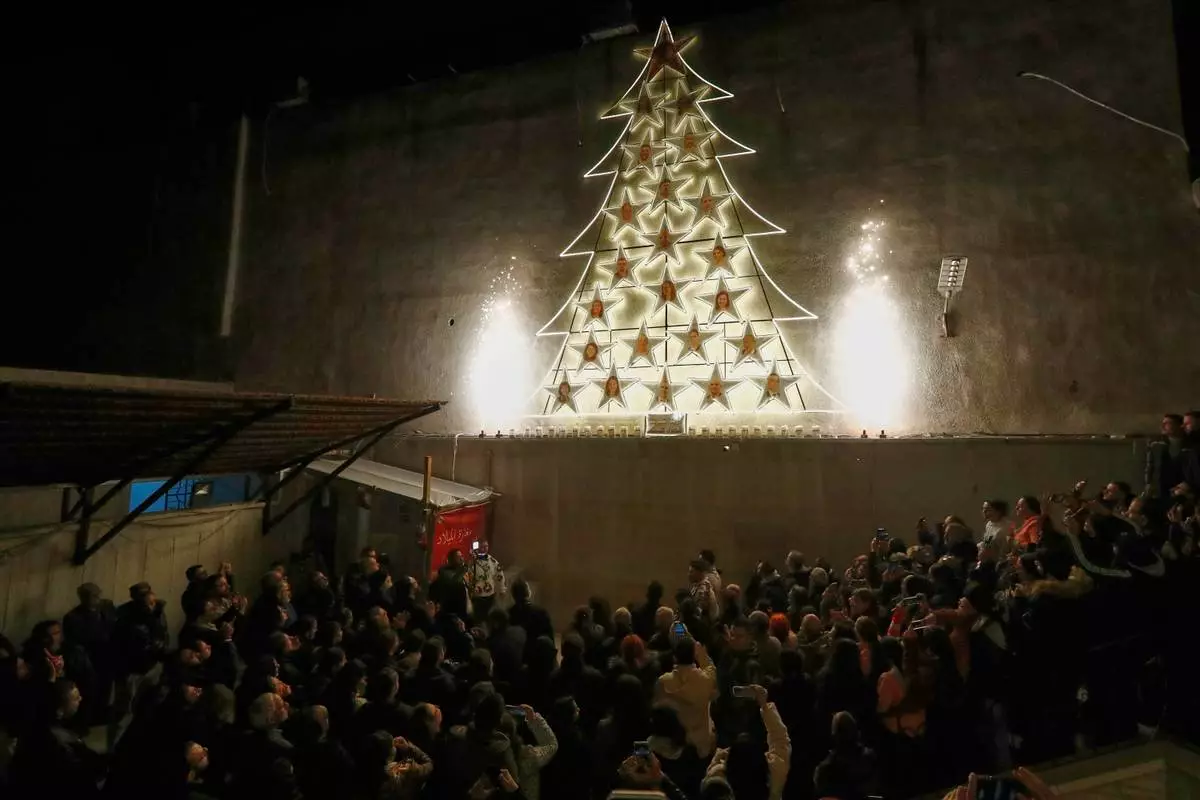
People attend the lighting of a Christmas tree at the Greek Orthodox Mar Elias Church, months after the church was the site of a deadly suicide bombing, in the Dweila neighborhood of Damascus, Syria, Tuesday, Dec. 23, 2025.(AP Photo/Omar Sanadiki)