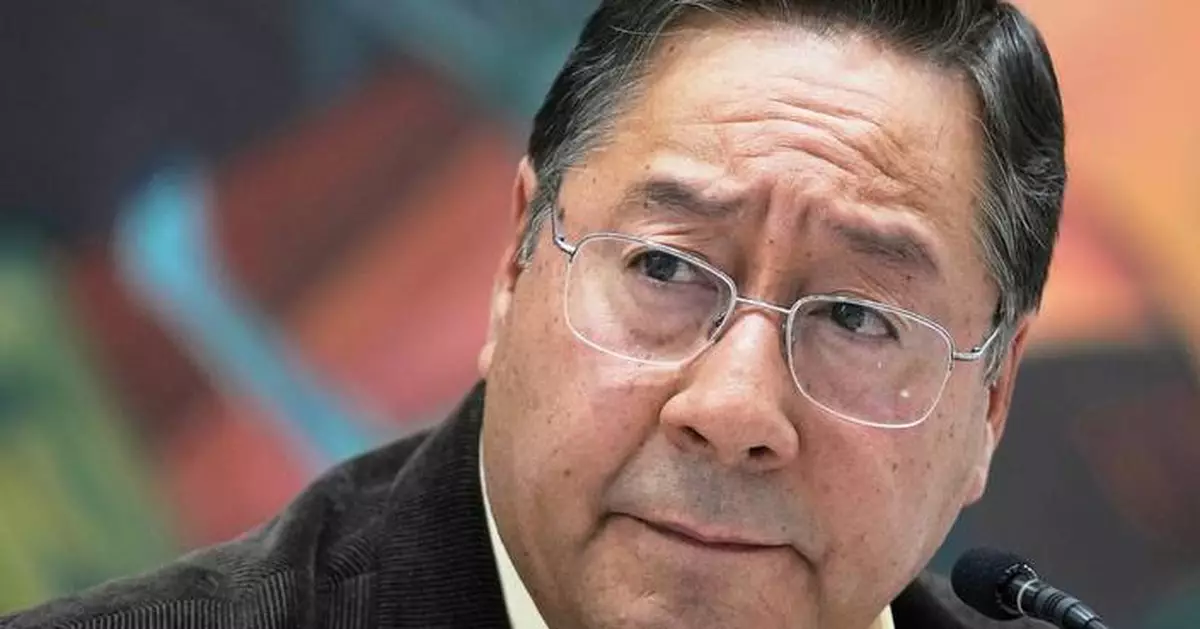
LA PAZ, Bolivia (AP) — Bolivian law enforcement officials on Wednesday arrested former President Luis Arce as part of a corruption investigation, opening an uncertain chapter in the country's politics a month after the inauguration of conservative President Rodrigo Paz ended 20 years of socialist rule.
A senior official in Paz's government, Marco Antonio Oviedo, told reporters that Ar ce had been arrested on charges of breach of duty and financial misconduct related to the alleged embezzlement of public funds during his stint as economy minister in the government of his erstwhile ally and predecessor, former leader Evo Morales.
A special police force dedicated to fighting corruption confirmed to The Associated Press that Arce was in custody at the unit's headquarters in Bolivia's capital of La Paz.
Oviedo described Arce's arrest as proof of the new government's commitment to fighting graft at the highest levels in fulfillment of its flagship campaign promise. Underlining the country's polarization, Arce's allies said his arrest was unjustified and smacked of political persecution.
“It is the decision of this government to fight corruption, and we will arrest all those responsible for this massive embezzlement,” Oviedo said, accusing Arce and other officials of diverting an estimated $700 million from a state-run fund dedicated to supporting the Indigenous people and peasant farmers who formed the backbone of Morales' Movement Toward Socialism, or MAS, party.
“Arce was identified as the main person responsible for this massive economic damage,” he added.
Bolivia's attorney general, Roger Mariaca Montenegro, told local media that Arce had invoked his right to remain silent during police questioning. He said Arce would remain in police custody overnight before being brought before a judge to determine whether he will remain detained pending trial. The charges against Arce carry a maximum sentence of 4-6 years in prison.
Arce's key ally and former government minister, Maria Nela Prada, insisted on the ex-president's innocence and denounced the corruption scandal as a case of political persecution. Although Oviedo spoke of an arrest warrant, she said Arce was not notified of the case before he was bundled into a minivan with tinted windows in an upscale La Paz neighborhood on Wednesday and brought in for interrogation.
“This is a total abuse of power,” Prada said, banging furiously on the doors of the police headquarters where Arce was being held.
Oviedo denied that politics played a role, portraying the case against Arce as the result an anti-corruption drive central to the Paz government's agenda.
Paz swept to victory on a wave of popular outrage over Bolivia’s worst economic crisis in four decades that voters widely blamed on economic mismanagement under MAS party rule. Paz's straight-talking vice president, Edman Lara, promoted his past as a police captain fired from the force after denouncing corruption on social media to mobilize a massive following.
Observers long have noted that Bolivia's courts, far from being a neutral arbiter, have become a prize to control for both the left and the right. Judicial decisions in the past several years have reflected the country's volatile and deeply polarized politics.
Morales, who became the first Indigenous president in 2006 and guided Bolivia through an era of economic growth and shrinking inequality before his 2019 ouster, was accused of stacking the constitutional court and bending the laws to stay in power.
When he resigned in the wake of mass protests over his disputed reelection to a fourth term, the right-wing interim government that took over swiftly issued arrest warrants for Morales and his officials, accusing Morales of terrorism and Arce of corruption, among other charges.
Then Arce won the 2020 elections and went on to pursue his own political rivals.
Former interim president Jeanine Añez was sentenced to 10 years in prison on charges of sedition and other right-wing opposition figures landed in jail. Judges even went after Morales, Arce's mentor-turned-rival, who remains hunkered down in Bolivia’s remote tropics evading an arrest warrant related to statutory rape.
With the pendulum now swinging back to the right, Añez and her allies have been released from prison pending further trial.
Celebrating Arce's arrest on social media, Lara warned in a video that Arce was just the first to fall victim to the Paz government's campaign against former officials that he accused of plundering the country.
“Those who have stolen from this country will return every last cent,” Lara said, ending his message by wishing “death to the corrupt.”
DeBre reported from Santiago, Chile
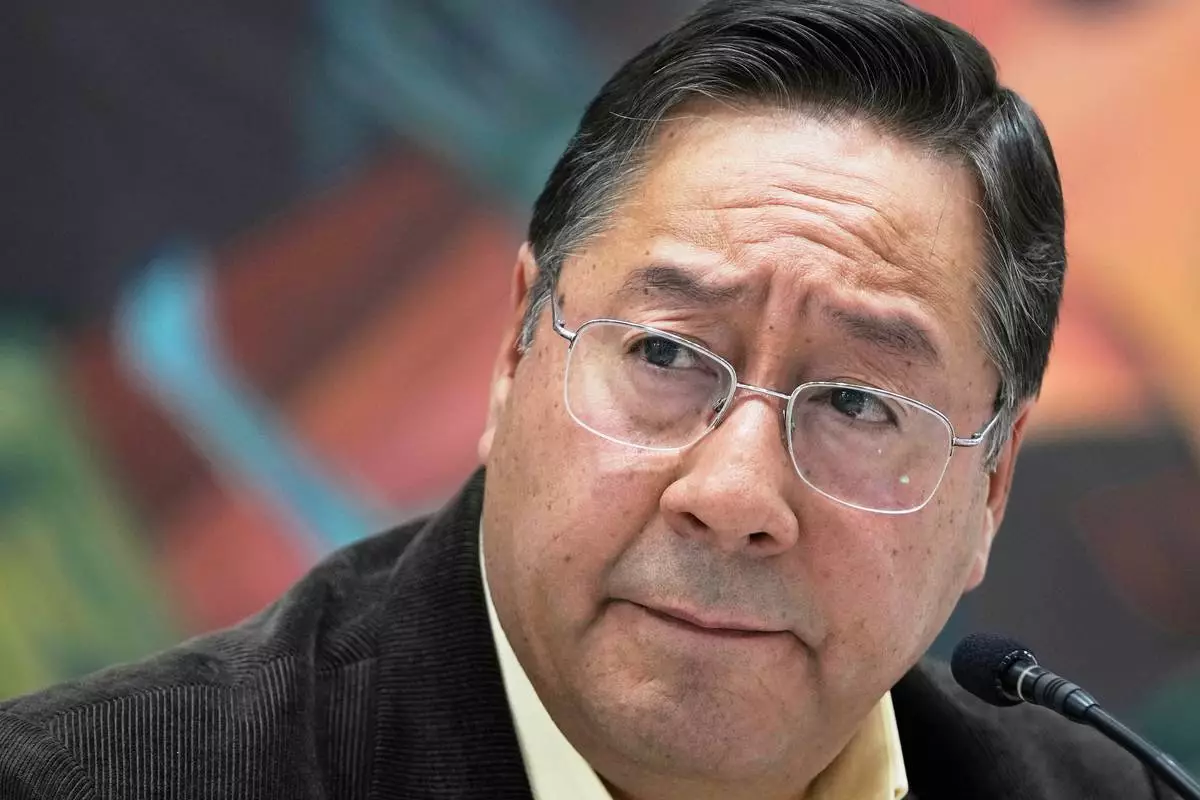
FILE - Bolivia's President Luis Arce listens to questions during a press conference at the presidential palace in La Paz, Bolivia, Aug. 21, 2025. (AP Photo/Juan Karita, File)
BRUSSELS (AP) — As sympathy for immigrants erodes around the world, European nations agreed Wednesday to consider changes that rights advocates say would weaken migrant protections that have underpinned European law since World War II.
The consensus coalesced as mainstream political parties across Europe have adopted tougher migration policies as a way to blunt the momentum of far-right politicians exploiting discontent over immigration, even though illegal border crossings are actually falling.
Members of the 46 countries that make up the Council of Europe acknowledged "challenges" posed by migration while reaffirming their respect for the European Convention on Human Rights and the European Court of Human Rights, the council's secretary general, Alain Berset, told journalists after discussions in Strasbourg, France.
Berset described the 75-year-old convention as a “living instrument." While nations reaffirmed their commitment to the rights and freedoms of the convention, they also recognized countries’ responsibility to “safeguard national vital interests such as security.”
The convention and the court, which handles complaints against the council, have been increasingly criticized by some member states, including Italy, Denmark and the United Kingdom. They argue that they are too limited in how far they can go to tackle illegal migration and deport migrants who commit crimes.
Ministers of the 46 countries will now begin debating a political declaration on migration to be adopted in May and a new recommendation to deter human smuggling, Berset added.
The council, which is not an European Union institution, was set up in the wake of World War II to promote peace and democracy.
Discussions over the need to reform or reinterpret the convention as it relates to migrants began last year after nine nations signed a letter attempting to curtail the power of the court, the council's independent legal arm.
The group of nations argued that the court’s interpretation of rights and obligations prevented them from expelling migrants who commit crimes and keeping their countries safe. Berset defended the court's independence at the time, but support for a tougher stance has only grown.
While Berset sought to downplay the division, 27 nations signed a separate statement Wednesday calling for a less restrictive interpretation of the law, echoing the arguments made last year.
"A right balance has to be found between the migrants’ individual rights and interests and the weighty public interests of defending freedom and security in our societies,” it read.
Andrew Forde, co-founder of the AGORA group of academics, researchers and lawyers, said Wednesday's conclusions and the statement signed by two-thirds of the members showed clearly that the majority of governments supported a more conservative understanding of the convention based on political interest.
“For the first time in the history of the Council of Europe, member states have pinpointed a specific group of people that they want to afford fewer rights protection to,” said Forde who previously worked for the council.
Meanwhile, the prime ministers of Denmark and the U.K. published an op-ed Tuesday in the Guardian newspaper calling for tighter migration controls to deny entry to those seeking better economic opportunities as opposed to fleeing conflict.
“The best way of fighting against the forces of hate and division is to show that mainstream, progressive politics can fix this problem,” wrote Mette Frederiksen and Keir Starmer.
Separately, in Brussels, European Commission President Ursula von der Leyen spoke to ministers from the 27 nations of the EU and pledged to dismantle smuggling networks that bring people into the bloc illegally.
“Our goal is simple. We want to bankrupt their businesses through all means available,” von der Leyen said at an event marking the second anniversary of the EU-led Global Alliance to Counter Migrant Smuggling.
While migration is high on the political agenda, irregular border crossings into the EU were down 22% from January to October this year compared with the same period last year, according to Frontex, the EU’s border and coast guard agency. The agency recorded 152,000 unauthorized border crossings in the first 10 months of the year.
Most migration to Europe is legal, with many migrants entering on visas that they then overstay.
The EU has spent billions of euros (dollars) to deter illegal migration, paying countries in Africa and the Middle East to intercept migrants trying to cross the Mediterranean and the Atlantic.
At the same time, European nations facing aging populations and labor shortages have been investing in programs to attract and train foreign workers.
Brito reported from Barcelona.
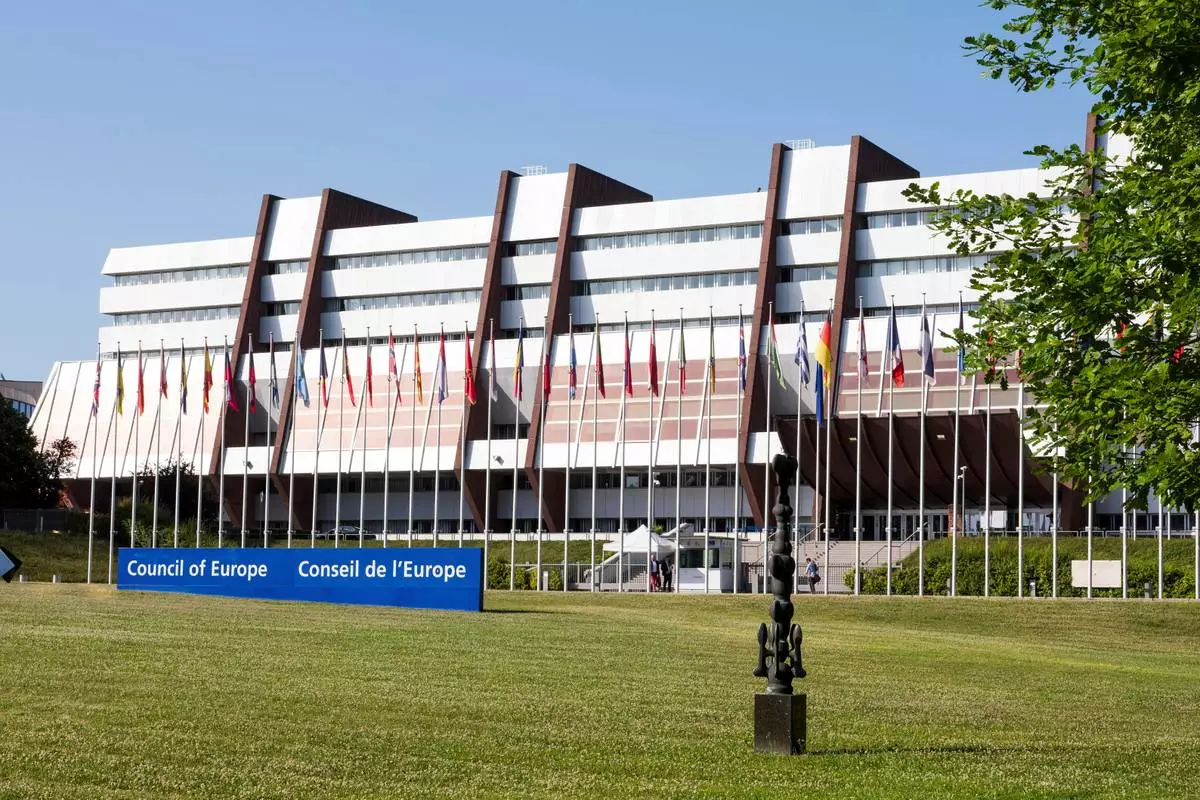
FILE - View of the Council of Europe, Wednesday, June 25, 2025 in Strasbourg, eastern France. (AP Photo/Pascal Bastien, File)
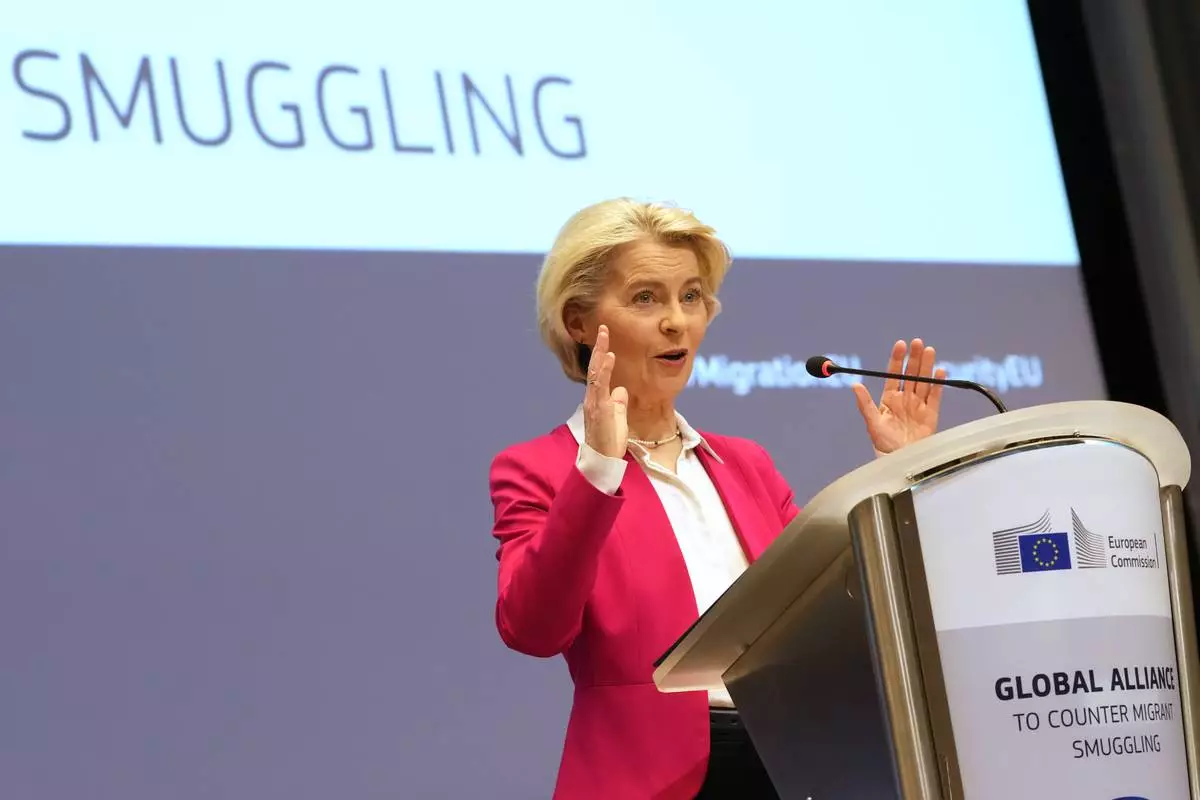
European Commission President Ursula von der Leyen addresses a Conference of the Global Alliance to Counter Migrant Smuggling at the EU Charlemagne building in Brussels, Wednesday, Dec. 10, 2025. (AP Photo/Virginia Mayo)
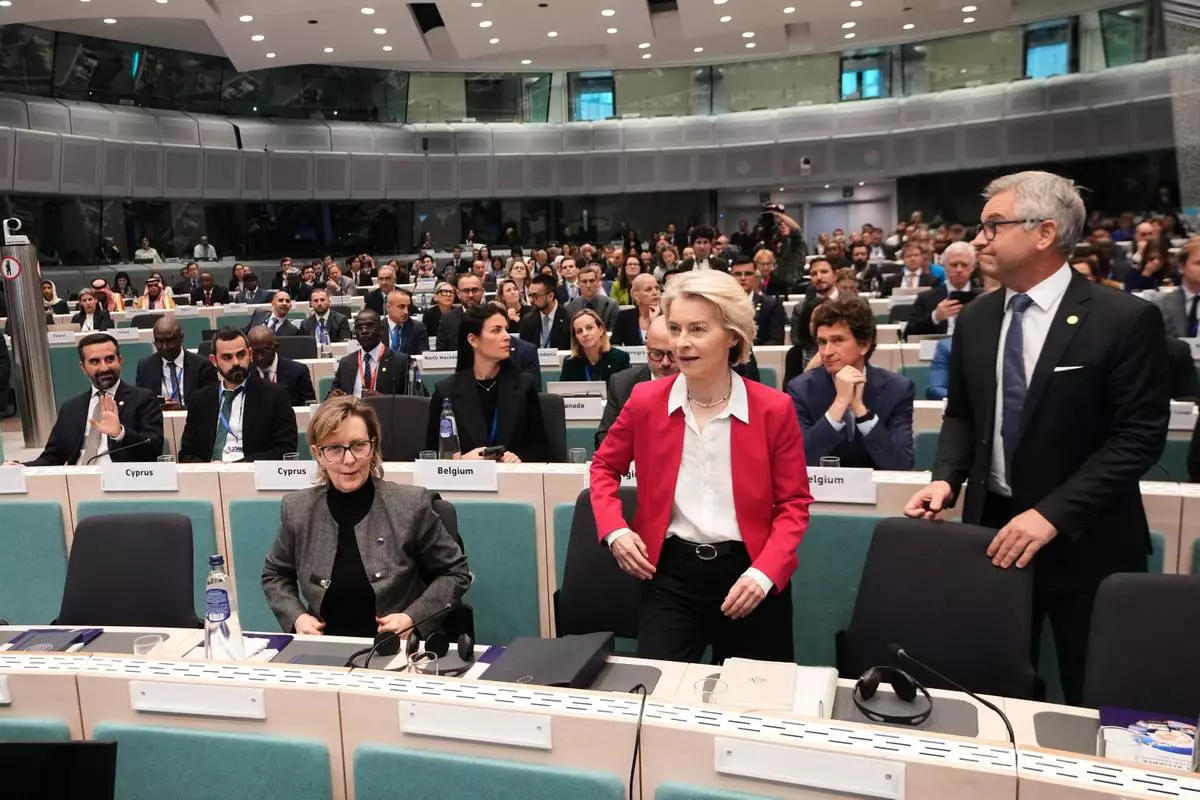
From left, European Commissioner for Financial Services Maria Luis De Albuquerque, European Commission President Ursula von der Leyen and European Commissioner for Internal Affairs and Migration Magnus Brunner arrive for a Conference of the Global Alliance to Counter Migrant Smuggling at the EU Charlemagne building in Brussels, Wednesday, Dec. 10, 2025. (AP Photo/Virginia Mayo)
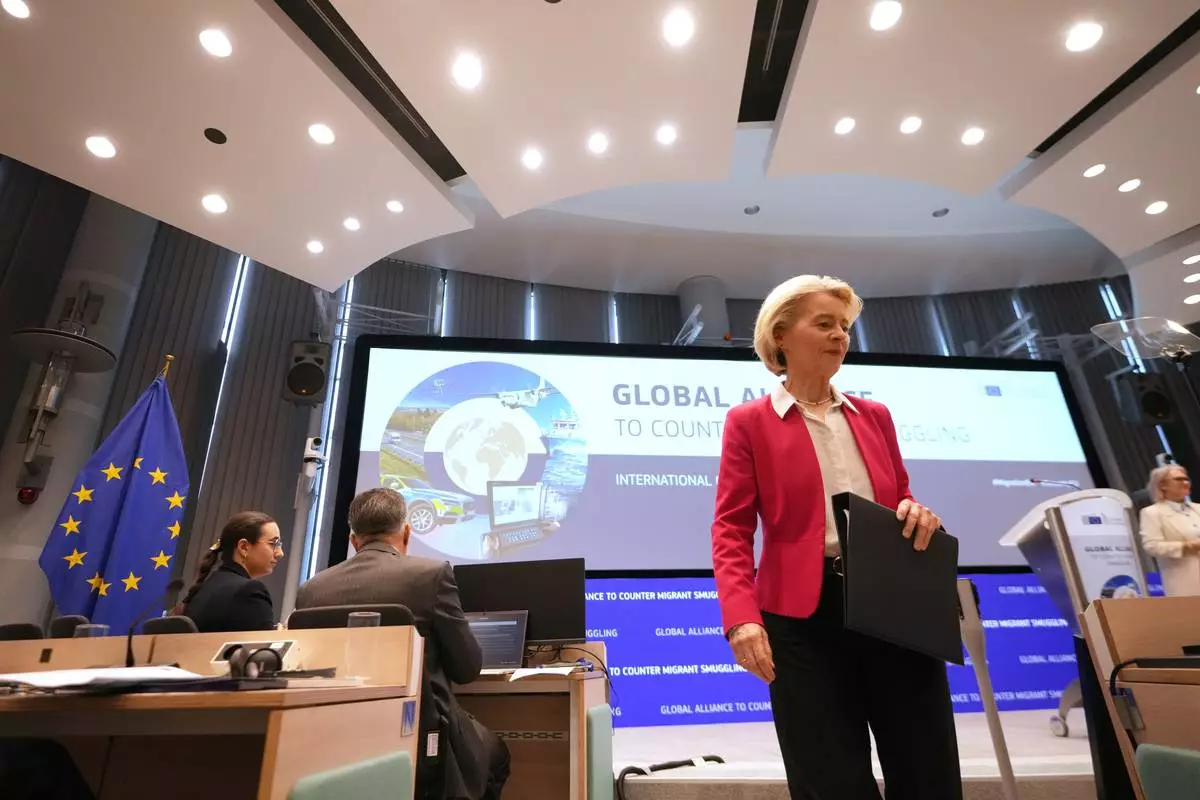
European Commission President Ursula von der Leyen steps off the podium after addressing a Conference of the Global Alliance to Counter Migrant Smuggling at the EU Charlemagne building in Brussels, Wednesday, Dec. 10, 2025. (AP Photo/Virginia Mayo)
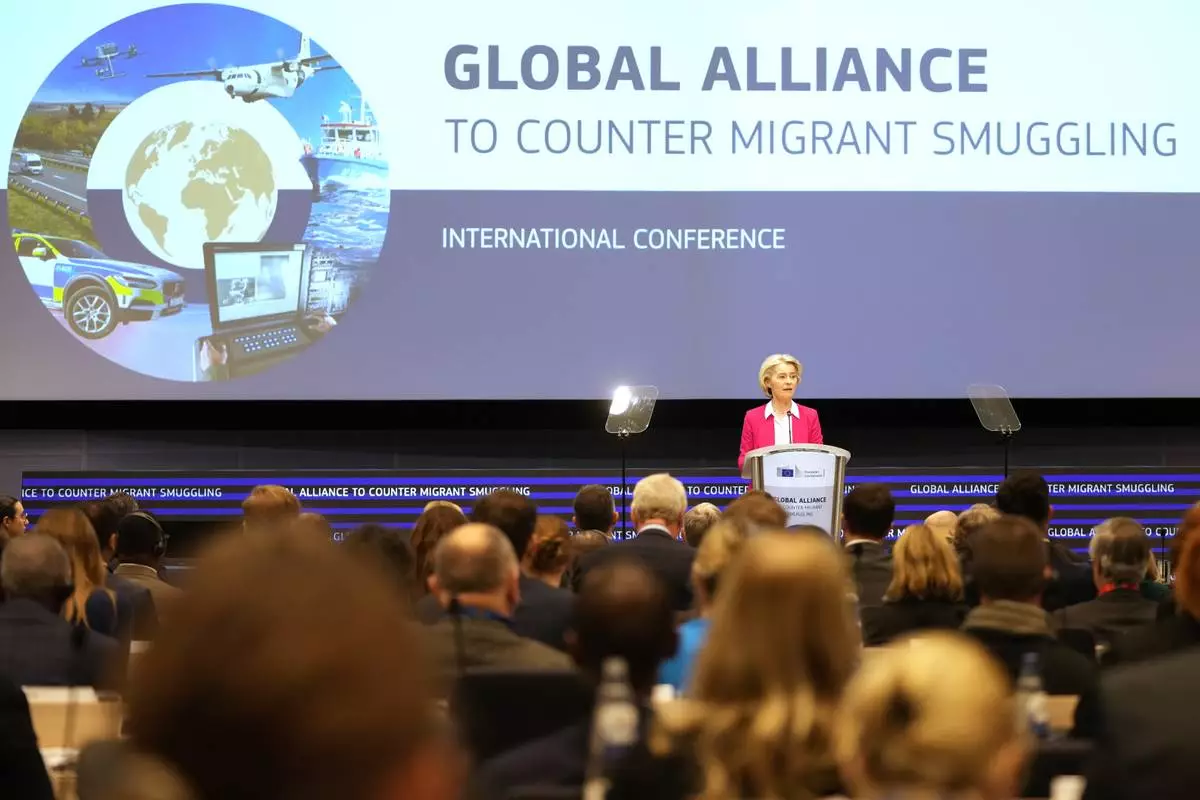
European Commission President Ursula von der Leyen addresses a Conference of the Global Alliance to Counter Migrant Smuggling at the EU Charlemagne building in Brussels, Wednesday, Dec 10, 2025. (AP Photo/Virginia Mayo)