WASHINGTON (AP) — Oil companies offered $300 million for drilling rights in the Gulf of Mexico on Wednesday in the first of 30 sales planned for the region under Republican efforts to ramp up U.S. fossil fuel production.
The sale came after President Donald Trump's administration recently announced plans to allow new drilling off Florida and California for the first time in decades. That's drawn pushback, including from Republicans worried about impacts to tourism.
Wednesday's sale was mandated by the sweeping tax-and-spending bill approved by Republicans over the summer. Under that legislation, companies will pay a 12.5% royalty on oil produced from the leases. That’s the lowest royalty level for deep-water drilling since 2007.
Thirty companies — including industry giants BP, Chevron and Shell — submitted bids on parcels covering 1,600 square miles (4,142 square kilometers). Total high bids were down from $382 million offered in the most recent lease sale in the Gulf of Mexico under former Democratic President Joe Biden in December 2023.
“This sale reflects a significant step in the federal government’s efforts to restore U.S. energy dominance and advance responsible offshore energy development,” said Laura Robbins, acting director of the Gulf region for the Bureau of Ocean Energy Management, which is part of the Interior Department.
The agency initially reported receiving $279 million in high bids, but post-sale statistics show the figure was just over $300 million. Officials confirmed the higher number was correct but could not immediately explain the discrepancy.
The administration’s promotion of fossil fuels contrasts sharply with its hostility to renewable energy, particularly offshore wind. A judge on Monday struck down an executive order from Trump blocking wind energy projects, saying it violated U.S. law.
Environmentalists said the fossil fuel sales would put wildlife in the Gulf at an higher risk of dying in oil spills. Spills occur regularly in the region and have included the 2010 Deepwater Horizon tragedy that killed 11 workers in an oil rig explosion and unleashed a massive spill.
Most parcels that received bids were in water depths greater than 800 meters (2,625 feet).
“The Gulf is already overwhelmed with thousands of oil rigs and pipelines, and oil companies are doing a terrible job of cleaning up after themselves,” said Rachel Matthews with the Center for Biological Diversity.
Erik Milito, president of the National Ocean Industries Association, an industry group, said the takeaway from Wednesday's sale was that the Gulf “is open.”
While results of individual lease sales may fluctuate, Milito added, “the real success is the resumption of a regular leasing cadence."
The industry and Republican lawmakers had complained that the Biden administration conducted only a handful of lease sales in the Gulf — the largest source of U.S. offshore oil production — as it moved away from fossil fuels to address climate change.
"Knowing that (another lease sale) is coming in March 2026 allows companies to plan, study, and refine their bids, rather than being forced to respond to the uncertainty of a politically-driven multi-year pause" in leasing, Milito said.
At least two lease sales annually are mandated through 2039 and one in 2040. Administration officials cited the new, more predictable schedule as a reason for the lower bidding by oil companies.
“They are not pressed to come in all at once,” Robbins told reporters at an online news conference.
The Gulf lease sale supports an executive order by Trump that directs federal agencies to accelerate offshore oil and gas development.
Earthjustice attorney George Torgun said the Trump administration conducted the sale without analyzing how it would expose the Gulf region to spills and could devastate vulnerable marine life such as the endangered Rice’s whale, which numbers only in the dozens and lives in the Gulf of Mexico.
The environmental group has asked a federal judge to ensure that the lease sale and future oil sales better protect Gulf communities.
Only a small portion of parcels offered for sale typically receive bids, in areas where companies want to expand their existing drilling activities or where they foresee future development potential. It can be years before drilling occurs.
The drilling leases sold in December 2023 and during another sale in March 2023 are held up by litigation, according to Robbins. A federal court ruled this spring that Interior officials did not adequately account for impacts to planet-warming greenhouse gas emissions and the Rice's whale.
Brown reported from Billings, Montana.
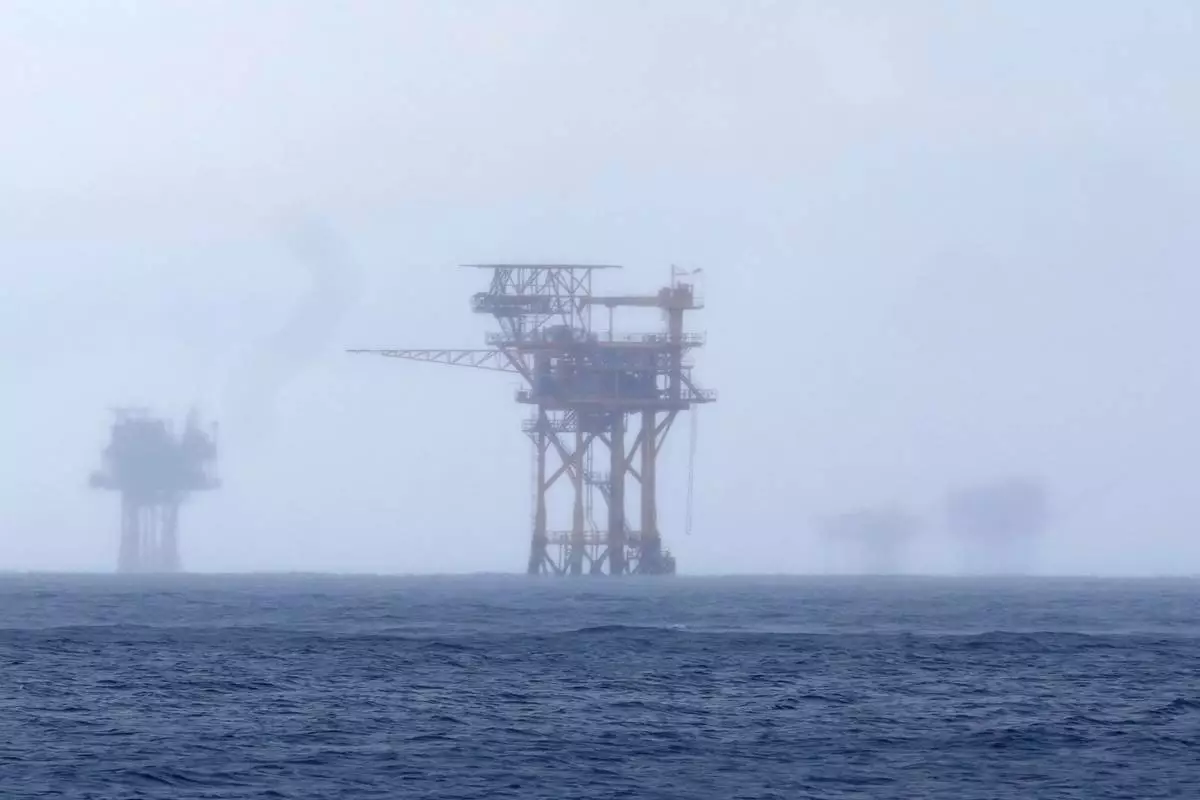
FILE - Oil platforms are visible through the haze near the Flower Garden Banks National Marine Sanctuary in the Gulf of Mexico, off the coast of Galveston, Texas, Saturday, Sept. 16, 2023. (AP Photo/LM Otero, File)
GOMA, Congo (AP) — In a maternity ward in eastern Congo, Irene Nabudeba rested her hands on her bulging midsection, worried about giving birth in a city under rebel control.
The conflict that flared this year has left many medical supplies stranded beyond the front line. Infrastructure like running water has collapsed, along with the economy in Goma, the region's humanitarian and commercial hub.
And now the one glimmer of hope for mothers — a free maternity care program offered by Congo's government — has ended after it was not renewed in June. It was not clear why, and Congolese and M23 officials did not respond to questions.
Nabudeba has five children and wonders whether the sixth will survive.
“At the hospital, they ask us for money that we don’t have. I’m pushing myself to come to the consultations, but for the delivery ... I don’t know where I’ll find the money,” she said at the Afia Himbi health center.
Several women told The Associated Press they cannot afford maternal care after Congo's program that was aimed at reducing some of the world's highest maternal and neonatal death rates ended earlier this year. The program launched in 2023 offered free consultations and treatment for illnesses and at-risk pregnancies at selected health facilities across the country.
Congo ranked second in maternal deaths globally with 19,000 in 2023, behind Nigeria's 75,000 deaths, according to U.N. statistics.
Health workers said more women in Goma are now giving birth at home without skilled help, sometimes in unsanitary conditions, leaving them vulnerable to hemorrhage, infection or death.
Clinics and hospitals were already struggling after the M23 rebels, backed by neighboring Rwanda, seized Goma in an escalation of fighting in January.
Although clashes have subsided amid U.S.- and Qatar-led peace efforts, fighting continues and the conflict has collapsed public institutions, disrupted essential services and displaced more than 700,000 people, according to the U.N. humanitarian office.
In Goma, the armed rebels are seen everywhere, making a pregnant woman's walk to clinics another source of anxiety.
Freddy Kaniki, deputy coordinator of M23, asserted to the AP that the free maternal care “was not renewed because it was a failure.” Congolese officials did not respond to questions.
Rwanda denies supporting the M23 despite U.N. experts saying they have evidence of it. Rwanda prides itself on health care and recently signed a five-year deal with the U.S. for investment of up to $158 million in its own healthcare sector.
The collapse of essential services in rebel-held areas, combined with mass displacement and insecurity, has left civilians struggling to access even basic care.
An International Committee of the Red Cross assessment in September found that at least 85% of health facilities were experiencing medicine shortages, and nearly 40% have seen an exodus of staff after the conflict surged in the provinces of North Kivu and South Kivu.
The ICRC in October said 200 health facilities in eastern Congo had run out of medicines because of looting and supply disruptions. Doctors Without Borders, or MSF, has reported hospitals attacked, ambulances blocked and medical staff threatened or killed.
Childbirth at a clinic in Goma now costs $5 to $10, out of reach for many families in a region where over 70% of the population lives on less than $2.15 a day, according to the World Bank.
Franck Ndachetere Kandonyi, chief nurse at the Afia Himbi health center, said the number of births there under the free program had jumped from around five a month to more than 20. But the program ended in June.
Facing a table of statistics in his office, Kandonyi said the number of births per month is now down to nine.
“When a parent cannot even pay 10,000 Congolese francs ($4.50) for their wife’s or child’s care, it’s a real problem,” the nurse said.
Meanwhile, banks have closed in Goma, prices have soared and the dollar has depreciated.
Nabudeba's husband, a driver, has been unemployed since January. She said her family is barely surviving.
“When the war broke out, we lost all our resources,” she said. “Lately, the situation has not been favorable, and we are suffering greatly.”
Across town at the Rehema Health Center, Ernestine Baleke waited for help with her ninth pregnancy, with concern on her face. She said she doesn't know where she will get money for the delivery.
Her husband lost a factory job when the place was looted earlier in the conflict, she said. Then their house burned.
“I don’t even have 100 francs (45 cents) in my pocket,” Baleke said.
She walks more than half a mile to the hospital because she cannot afford transportation. Three months remain before her delivery.
“The authorities must restore free healthcare," Baleke said. “We risk dying in our homes while giving birth.”
For more on Africa and development: https://apnews.com/hub/africa-pulse
The Associated Press receives financial support for global health and development coverage in Africa from the Gates Foundation. The AP is solely responsible for all content. Find AP’s standards for working with philanthropies, a list of supporters and funded coverage areas at AP.org.

Ernestine Baleke walks to the Rehema Health Center to receive pre-natal care that used to be free at the Rehema Health Center in Goma, Democratic Republic of Congo, Nov. 14, 2025. (AP Photo/Moses Sawasawa)
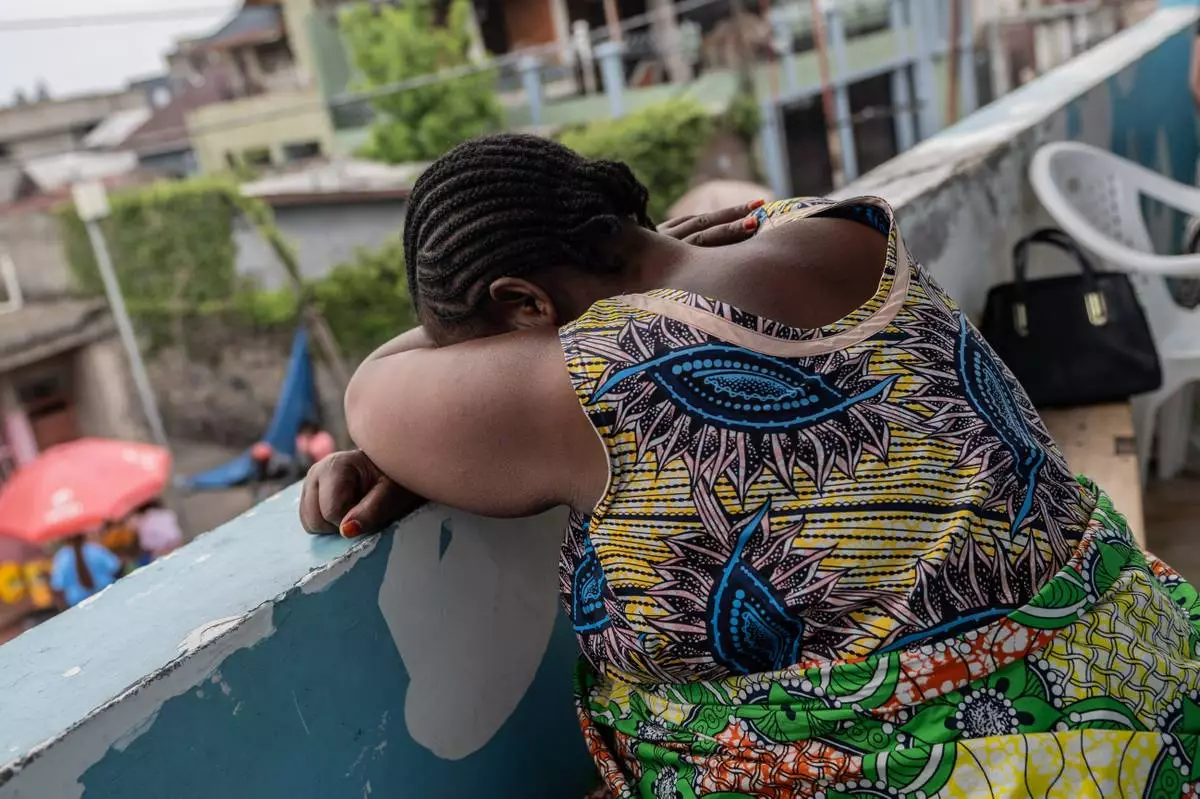
Ernestine Baleke rests on a wall after receiving pre-natal care that used to be free at the Rehema Health Center in Goma, Democratic Republic of Congo, Nov. 14, 2025. (AP Photo/Moses Sawasawa)
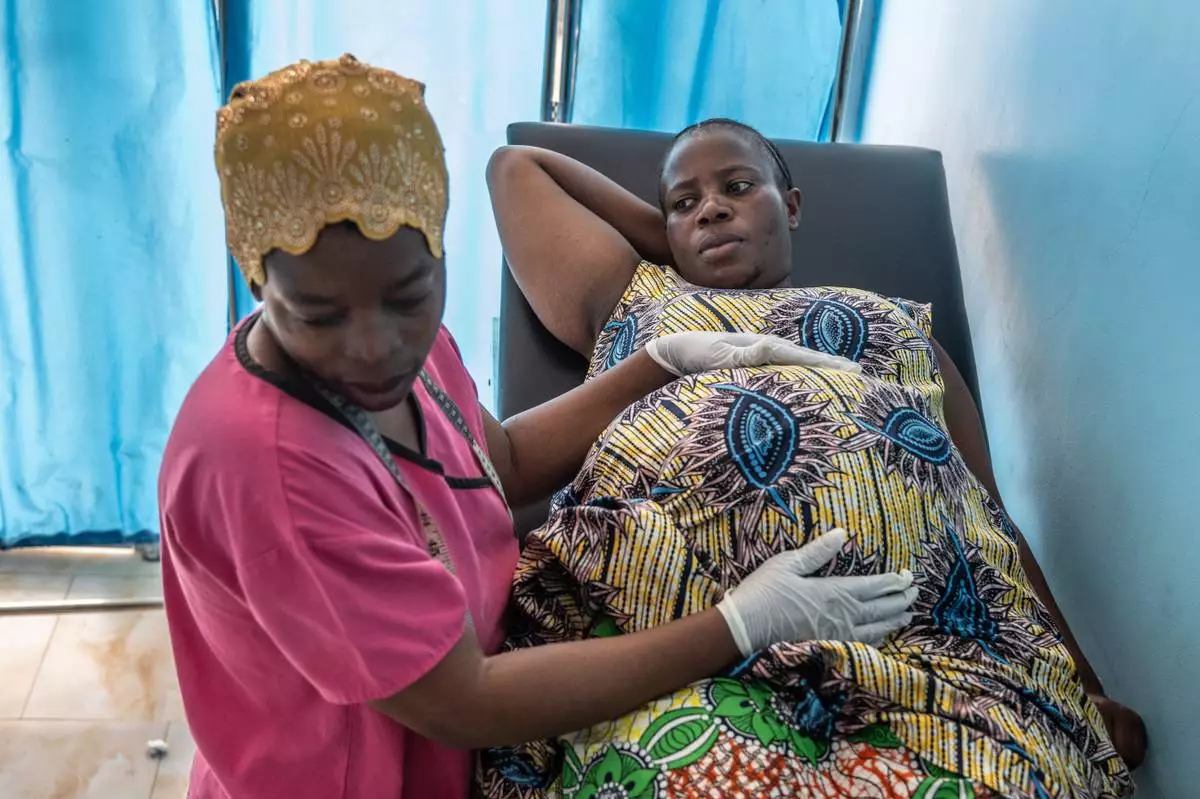
Ernestine Baleke receives pre-natal care that used to be free at the Rehema Health Center in Goma, Democratic Republic of Congo, Nov. 14, 2025. (AP Photo/Moses Sawasawa)
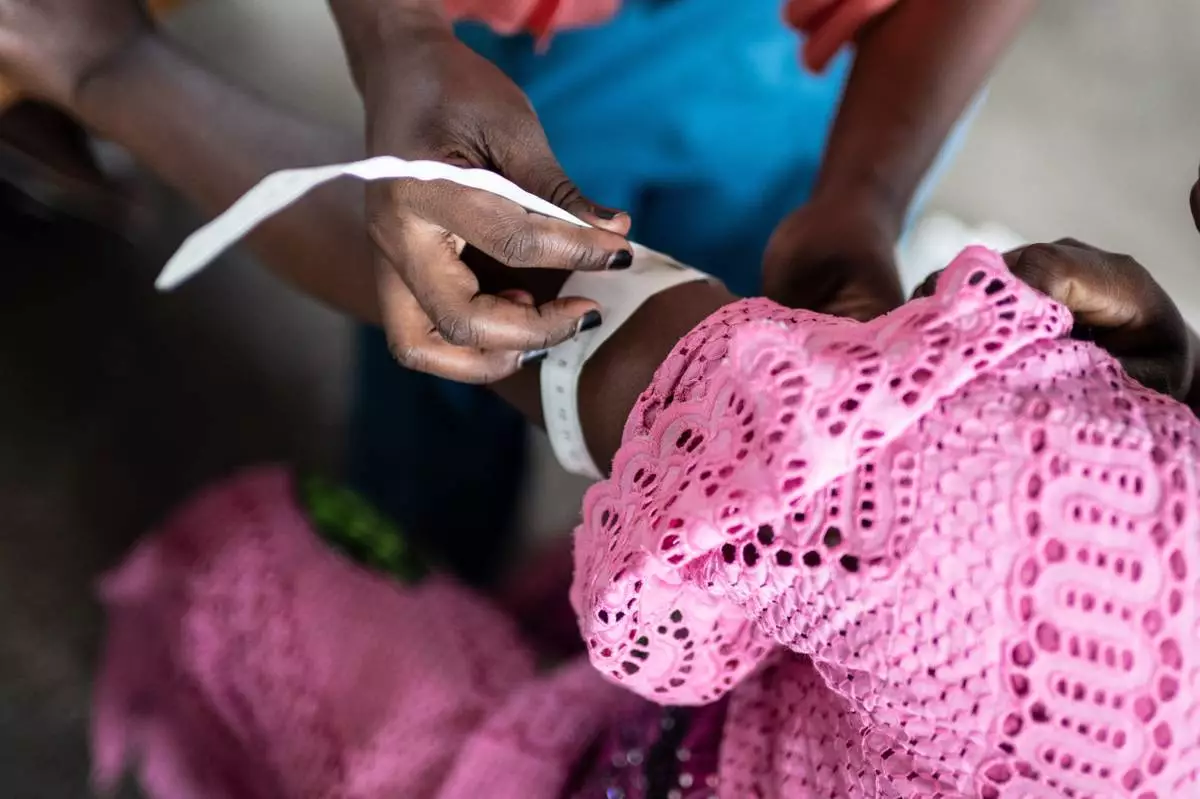
Irene Nabudeba, pregnant, mother of 5, waits for a consultation that used to be free at the Afia Himbi Hospital in Goma, Democratic Republic of Congo, Nov. 11, 2025. (AP Photo/Moses Sawasawa)
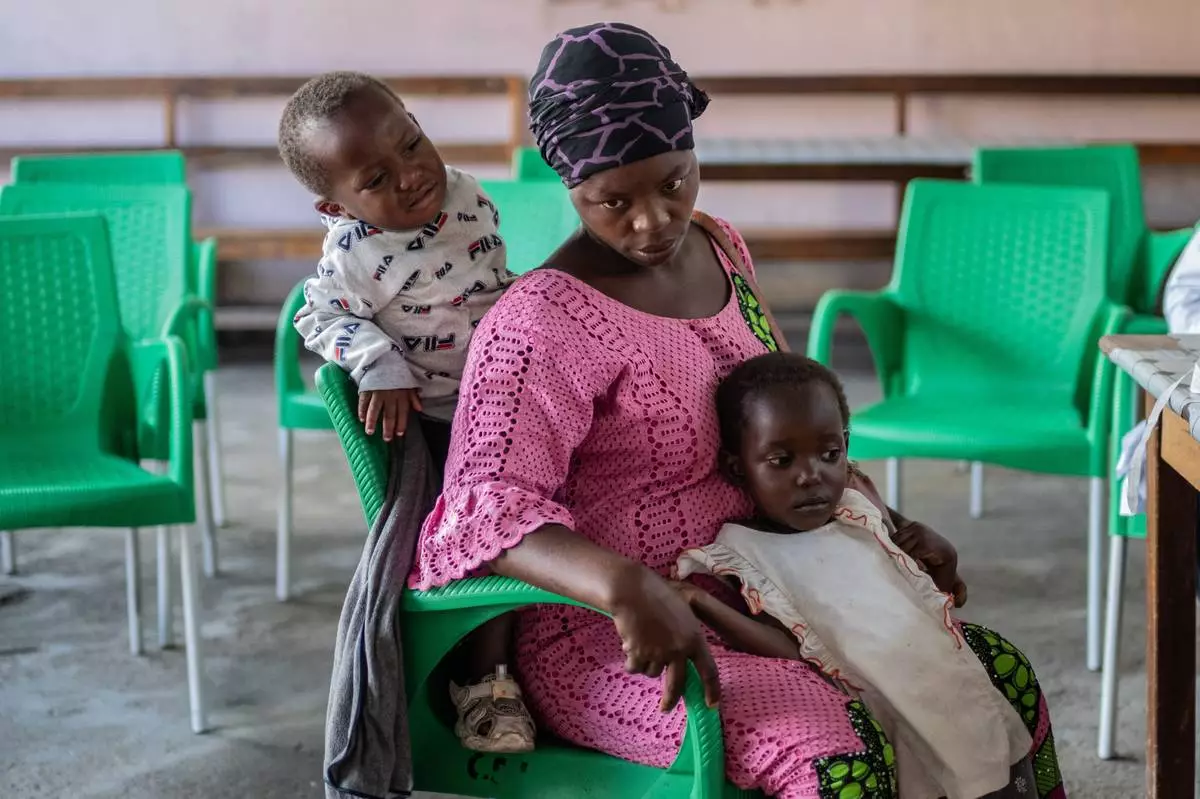
Irene Nabudeba, pregnant, mother of 5, waits for a consultation that used to be free at the Afia Himbi Hospital in Goma, Democratic Republic of Congo, Nov. 11, 2025. (AP Photo/Moses Sawasawa)