WASHINGTON (AP) — The Senate is poised on Thursday to reject legislation to extend Affordable Care Act tax credits for millions of Americans, a potentially unceremonious end to a monthslong Democratic effort to prevent the COVID-era subsidies from expiring on Jan. 1.
Despite a bipartisan desire to continue the credits, Republicans and Democrats have never engaged in meaningful or high-level negotiations on a solution. Instead, the Senate is expected to vote on two partisan bills and defeat them both — essentially guaranteeing that many who buy their health insurance on the ACA marketplaces see a steep rise in costs at the beginning of the year.
“It’s too complicated and too difficult to get done in the limited time that we have left,” said Sen. Thom Tillis of North Carolina, who has unsuccessfully pushed his Republican colleagues to extend the tax credits for a short time so they can find agreement on the issue next year.
Neither side has seemed interested in compromise.
Democrats who forced a government shutdown for 43 days on the issue have so far not wavered from their proposal to extend the subsidies for three years with none of the new limits that Republicans have suggested. Republicans are offering their own bill that would let the subsidies expire, even as some in the GOP conference, like Tillis, have said they would support an extension. The GOP proposal would create new health savings accounts to replace the tax credits, an idea that Democrats called “dead on arrival.”
The dueling Senate votes are the latest political messaging exercise in a Congress that has operated almost entirely on partisan terms, as Republicans pushed through a massive tax and spending cuts bill this summer using budget maneuvers that eliminated the need for Democratic votes. They also tweaked Senate rules to push past a Democratic blockade of all of President Donald Trump’s nominees.
A small group of moderate Democratic senators crossed the aisle and made a deal with Republicans to end the shutdown last month, raising some hopes for a health care compromise that quickly faded with a lack of real bipartisan talks.
The votes were also the latest salvo in the debate over the Affordable Care Act, former President Barack Obama’s signature law that Democrats passed along party lines in 2010 to expand access to insurance coverage.
Republicans have tried unsuccessfully since then to repeal or overhaul the law, arguing that health care is still too expensive. But they have struggled to find an alternative. In the meantime Democrats have made the policy a central political issue in several elections, betting that the millions of people who buy health care on the government marketplaces want to keep their coverage.
“When people’s monthly payments spike next year, they’ll know it was Republicans that made it happen,” Senate Democratic leader Chuck Schumer said in November.
Schumer has also been clear that Democrats will not seek compromise.
Thursday’s vote is “the last train out of the station," he said. “What we need to do is prevent premiums from skyrocketing, and only our bill does it,” he said.
Even if they view it as a political win, the failed votes would be a loss for Democrats who demanded an extension of the benefits as they forced a government shutdown for six weeks in October and November — and for the millions of people facing premium increases on Jan. 1.
While most Democratic senators pushed to keep the shutdown going as Republicans refused to negotiate, a small group of centrist Democrats struck a deal with Majority Leader John Thune for a future health care vote, with no guarantee of success, in exchange for their votes to reopen the government.
Maine Sen. Angus King, an Independent who caucuses with Democrats, said the group tried to negotiate with Republicans after the shutdown ended. But he said the talks became unproductive when Republicans demanded language adding new limits for abortion coverage that were a “red line” for Democrats.
“They’re going to own these increases,” King said of Republicans.
Republicans have used the looming expiration of the subsidies to renew their longstanding criticisms of Obamacare and to try, once more, to agree on what should be done. The GOP plan that the Senate will vote on Thursday would replace the tax credits with health savings accounts, an overhaul of the law that they say would put the money in the hands of consumers, not insurance companies that currently receive the current subsidies directly.
Thune announced Tuesday that the GOP conference had decided to vote on the bill led by Louisiana Sen. Bill Cassidy, the chairman of the Senate Health, Labor, Education and Pensions Committee, and Idaho Sen. Mike Crapo, the chairman of the Senate Finance Committee, even as several Republican senators proposed alternate ideas.
In the House, Speaker Mike Johnson, R-La., has promised a vote next week. Republicans weighed different options in a conference meeting on Wednesday, with no apparent consensus.
Moderates in the party who could have competitive reelection bids next year are pushing Johnson to find a way to extend the subsidies. But more conservative members want to see the law overhauled.
Rep. Kevin Kiley, R-Calif., has pushed for a temporary extension, which he said could be an opening to take further steps on health care.
If they fail to act and health care costs go up, the approval rating for Congress “will get even lower,” Kiley said.
Associated Press writers Kevin Freking and Joey Cappelletti contributed to this report.

Sen. Bill Cassidy, R-La., chairman of the Senate Health, Education, Labor and Pensions (HELP) Committee, strives for a closed-door meeting with fellow Republicans at the Capitol in Washington, Tuesday, Dec. 9, 2025. (AP Photo/J. Scott Applewhite)

Senate Minority Leader Chuck Schumer, of N.Y., right, speaks as Sen. Chris Murphy, D-Ct., left, listens during a news conference on health insurance premiums on Capitol Hill, Wednesday, Dec. 10, 2025, in Washington. (AP Photo/Mariam Zuhaib)
GOMA, Congo (AP) — In a maternity ward in eastern Congo, Irene Nabudeba rested her hands on her bulging midsection, worried about giving birth in a city under rebel control.
The conflict that flared this year has left many medical supplies stranded beyond the front line. Infrastructure like running water has collapsed, along with the economy in Goma, the region's humanitarian and commercial hub.
And now the one glimmer of hope for mothers — a free maternity care program offered by Congo's government — has ended after it was not renewed in June. It was not clear why, and Congolese and M23 officials did not respond to questions.
Nabudeba has five children and wonders whether the sixth will survive.
“At the hospital, they ask us for money that we don’t have. I’m pushing myself to come to the consultations, but for the delivery ... I don’t know where I’ll find the money,” she said at the Afia Himbi health center.
Several women told The Associated Press they cannot afford maternal care after Congo's program that was aimed at reducing some of the world's highest maternal and neonatal death rates ended earlier this year. The program launched in 2023 offered free consultations and treatment for illnesses and at-risk pregnancies at selected health facilities across the country.
Congo ranked second in maternal deaths globally with 19,000 in 2023, behind Nigeria's 75,000 deaths, according to U.N. statistics.
Health workers said more women in Goma are now giving birth at home without skilled help, sometimes in unsanitary conditions, leaving them vulnerable to hemorrhage, infection or death.
Clinics and hospitals were already struggling after the M23 rebels, backed by neighboring Rwanda, seized Goma in an escalation of fighting in January.
Although clashes have subsided amid U.S.- and Qatar-led peace efforts, fighting continues and the conflict has collapsed public institutions, disrupted essential services and displaced more than 700,000 people, according to the U.N. humanitarian office.
In Goma, the armed rebels are seen everywhere, making a pregnant woman's walk to clinics another source of anxiety.
Freddy Kaniki, deputy coordinator of M23, asserted to the AP that the free maternal care “was not renewed because it was a failure.” Congolese officials did not respond to questions.
Rwanda denies supporting the M23 despite U.N. experts saying they have evidence of it. Rwanda prides itself on health care and recently signed a five-year deal with the U.S. for investment of up to $158 million in its own healthcare sector.
The collapse of essential services in rebel-held areas, combined with mass displacement and insecurity, has left civilians struggling to access even basic care.
An International Committee of the Red Cross assessment in September found that at least 85% of health facilities were experiencing medicine shortages, and nearly 40% have seen an exodus of staff after the conflict surged in the provinces of North Kivu and South Kivu.
The ICRC in October said 200 health facilities in eastern Congo had run out of medicines because of looting and supply disruptions. Doctors Without Borders, or MSF, has reported hospitals attacked, ambulances blocked and medical staff threatened or killed.
Childbirth at a clinic in Goma now costs $5 to $10, out of reach for many families in a region where over 70% of the population lives on less than $2.15 a day, according to the World Bank.
Franck Ndachetere Kandonyi, chief nurse at the Afia Himbi health center, said the number of births there under the free program had jumped from around five a month to more than 20. But the program ended in June.
Facing a table of statistics in his office, Kandonyi said the number of births per month is now down to nine.
“When a parent cannot even pay 10,000 Congolese francs ($4.50) for their wife’s or child’s care, it’s a real problem,” the nurse said.
Meanwhile, banks have closed in Goma, prices have soared and the dollar has depreciated.
Nabudeba's husband, a driver, has been unemployed since January. She said her family is barely surviving.
“When the war broke out, we lost all our resources,” she said. “Lately, the situation has not been favorable, and we are suffering greatly.”
Across town at the Rehema Health Center, Ernestine Baleke waited for help with her ninth pregnancy, with concern on her face. She said she doesn't know where she will get money for the delivery.
Her husband lost a factory job when the place was looted earlier in the conflict, she said. Then their house burned.
“I don’t even have 100 francs (45 cents) in my pocket,” Baleke said.
She walks more than half a mile to the hospital because she cannot afford transportation. Three months remain before her delivery.
“The authorities must restore free healthcare," Baleke said. “We risk dying in our homes while giving birth.”
For more on Africa and development: https://apnews.com/hub/africa-pulse
The Associated Press receives financial support for global health and development coverage in Africa from the Gates Foundation. The AP is solely responsible for all content. Find AP’s standards for working with philanthropies, a list of supporters and funded coverage areas at AP.org.

Ernestine Baleke walks to the Rehema Health Center to receive pre-natal care that used to be free at the Rehema Health Center in Goma, Democratic Republic of Congo, Nov. 14, 2025. (AP Photo/Moses Sawasawa)

Ernestine Baleke rests on a wall after receiving pre-natal care that used to be free at the Rehema Health Center in Goma, Democratic Republic of Congo, Nov. 14, 2025. (AP Photo/Moses Sawasawa)
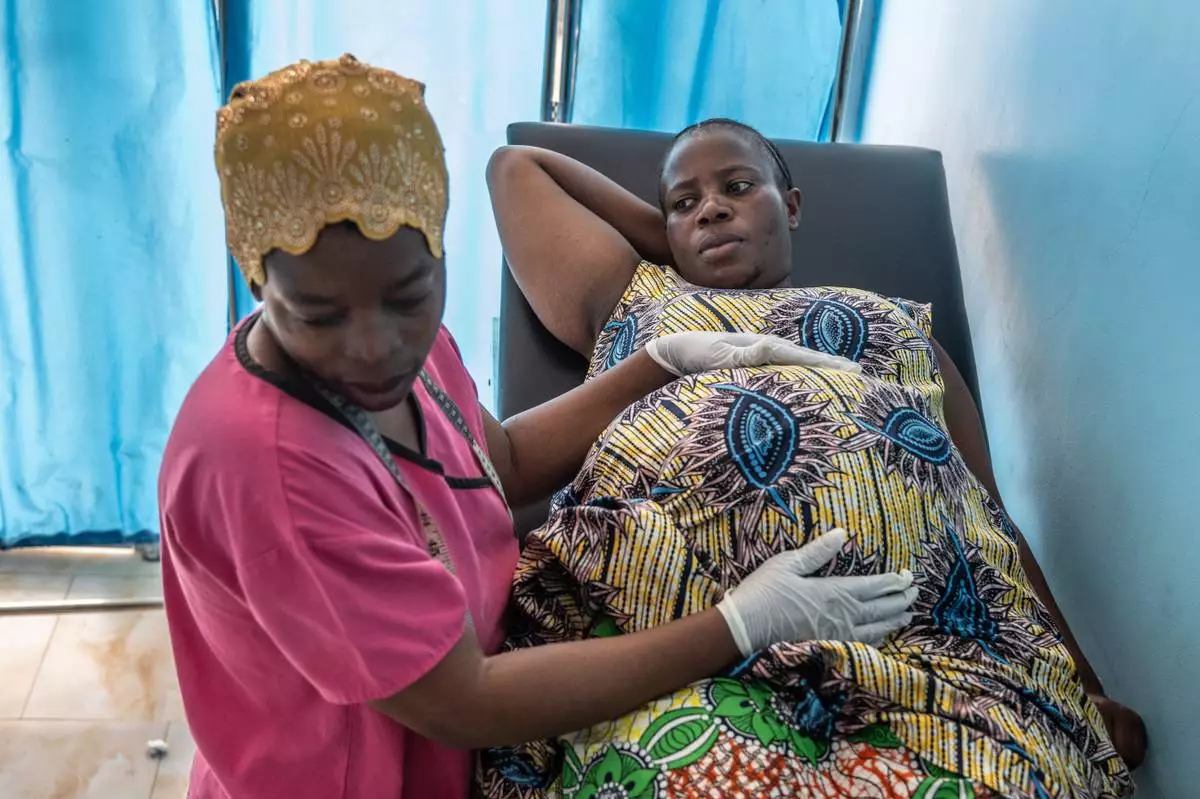
Ernestine Baleke receives pre-natal care that used to be free at the Rehema Health Center in Goma, Democratic Republic of Congo, Nov. 14, 2025. (AP Photo/Moses Sawasawa)
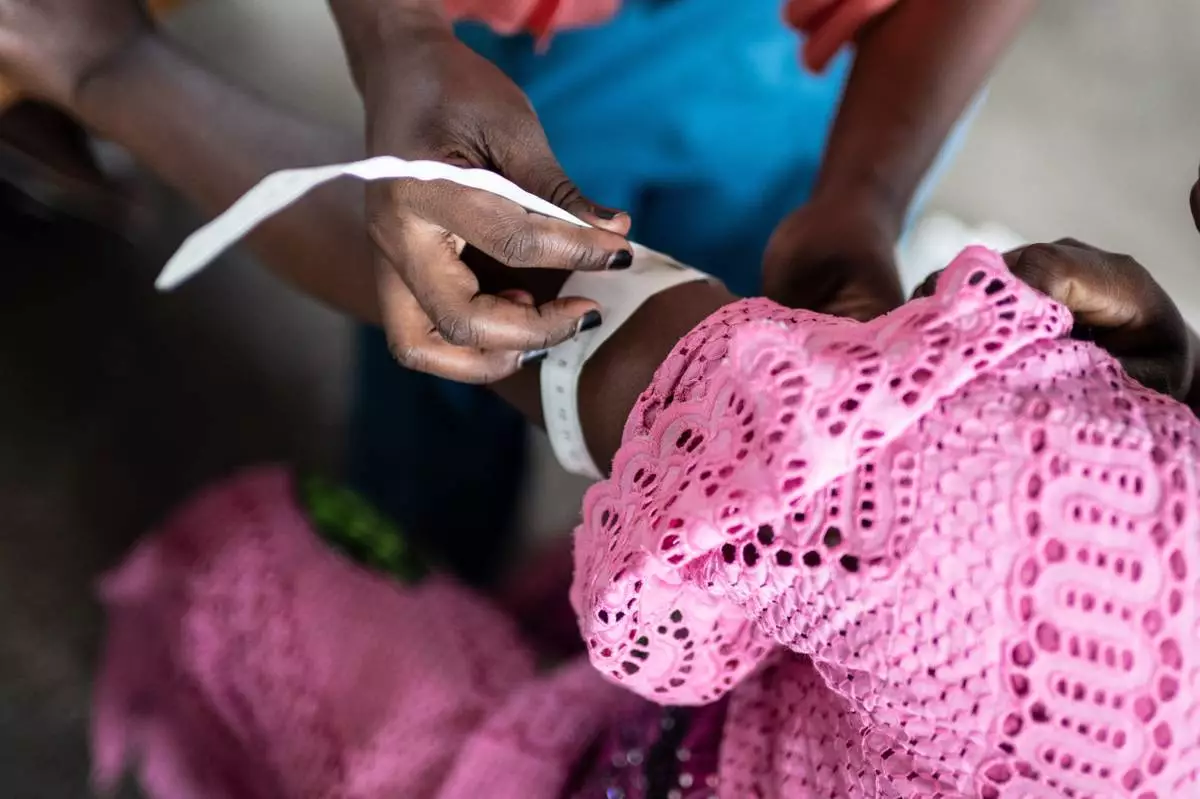
Irene Nabudeba, pregnant, mother of 5, waits for a consultation that used to be free at the Afia Himbi Hospital in Goma, Democratic Republic of Congo, Nov. 11, 2025. (AP Photo/Moses Sawasawa)
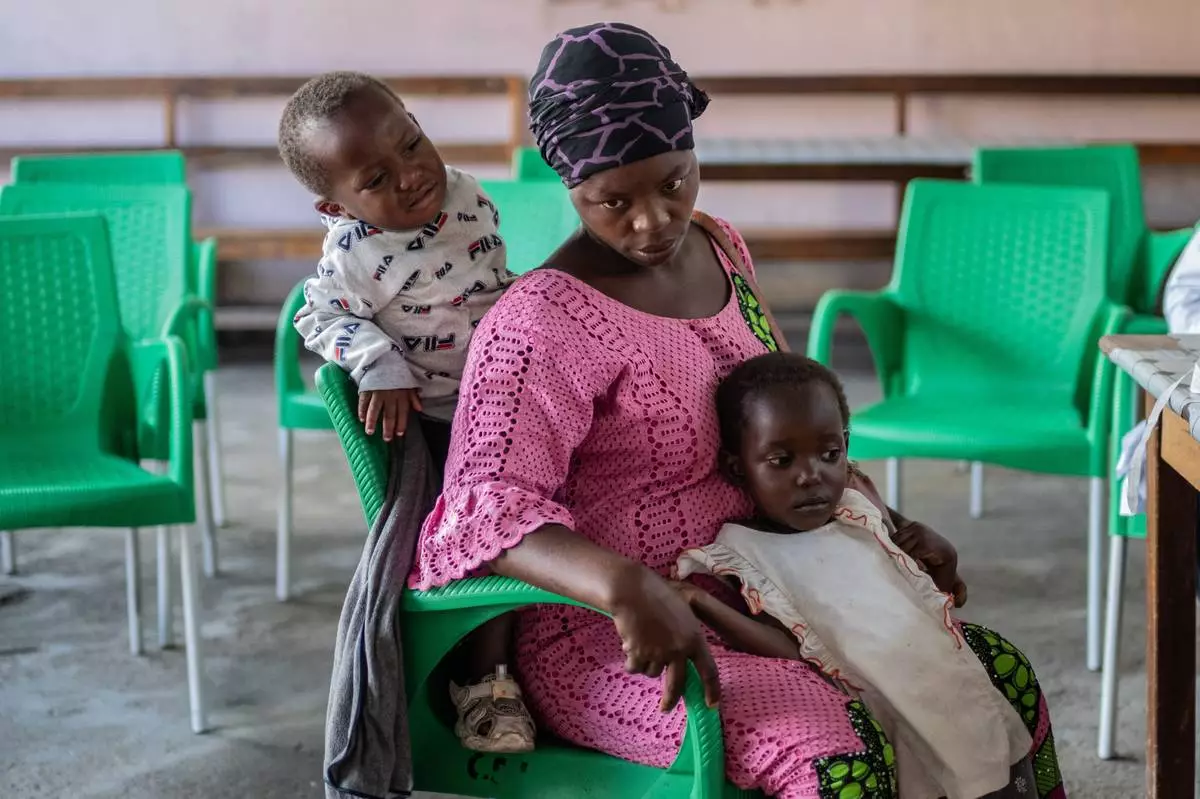
Irene Nabudeba, pregnant, mother of 5, waits for a consultation that used to be free at the Afia Himbi Hospital in Goma, Democratic Republic of Congo, Nov. 11, 2025. (AP Photo/Moses Sawasawa)