MELBOURNE, Australia (AP) — Australian authorities on Thursday demanded some of the world’s biggest social media platforms report how many accounts they have deactivated since a ban on accounts for children younger than 16 became law.
Facebook, Instagram, Kick, Reddit, Snapchat, Threads, TikTok, X, YouTube and Twitch all said they would abide by Australia’s world-first law that took effect on Wednesday, Communications Minister Anika Wells said.
But the tech companies’ responses to eSafety Commissioner Julie Inman Grant’s first demand for data will likely indicate their commitment to ridding their platforms of young children.
“Today the eSafety Commissioner will write to all 10 platforms who are considered age-restricted social media platforms and she will ask them … what were your numbers of under 16 accounts on Dec. 9; what are your numbers today on Dec. 11?” Wells said.
The commissioner would reveal the platforms’ responses within two weeks. The platforms would be required to provide monthly updates for six months.
The companies face fines of up to 49.5 million Australian dollars ($32.9 million) from Wednesday if they fail to take reasonable steps to remove the accounts of Australian children younger than 16.
Wells said the European Commission, France, Denmark, Greece, Romania, Indonesia, Malaysia and New Zealand were considering following Australia’s lead in restricting children’s access to social media.
“There’s been a huge amount of global interest and we welcome it, and we welcome all of the allies who are joining Australia to take action in this space to draw a line to say enough’s enough,” Wells said.
Sydney-based rights group Digital Freedom Project plans to challenge the law on constitutional grounds in the Australian High Court early next year.
Inman Grant said some platforms had consulted lawyers and might be waiting to receive their first so-called compulsory information notice Thursday or their first fine for noncompliance before mounting a legal challenge.
Inman Grant said her staff were ready for the possibility that platforms would deliberately fail to exclude young children through age verification and age estimation technologies.
“That could be a strategy that they have in and of themselves: we’ll say we’re complying but then we’ll do a crappy job using these technologies and we’ll let people get through and have people claim it’s a failure,” Inman Grant told Australian Broadcasting Corp.
Inman Grant said her research had found that 84% of children in Australia aged 8-12 had accessed a social media account. Of those with social media access, 90% did so with the help of parents.
Inman Grant said the main reason parents helped was because “they didn’t want their children to be excluded.”
“What this legislation does … is it takes away that fear of exclusion,” Inman Grant said.
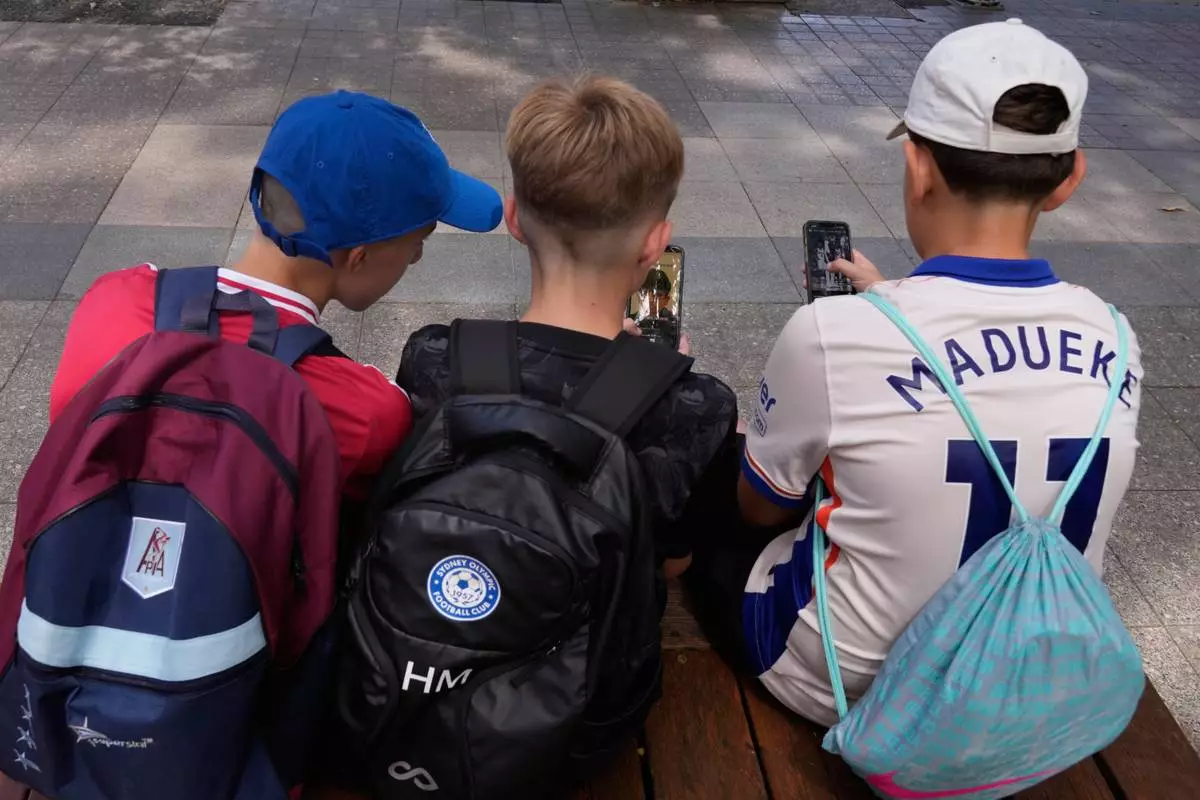
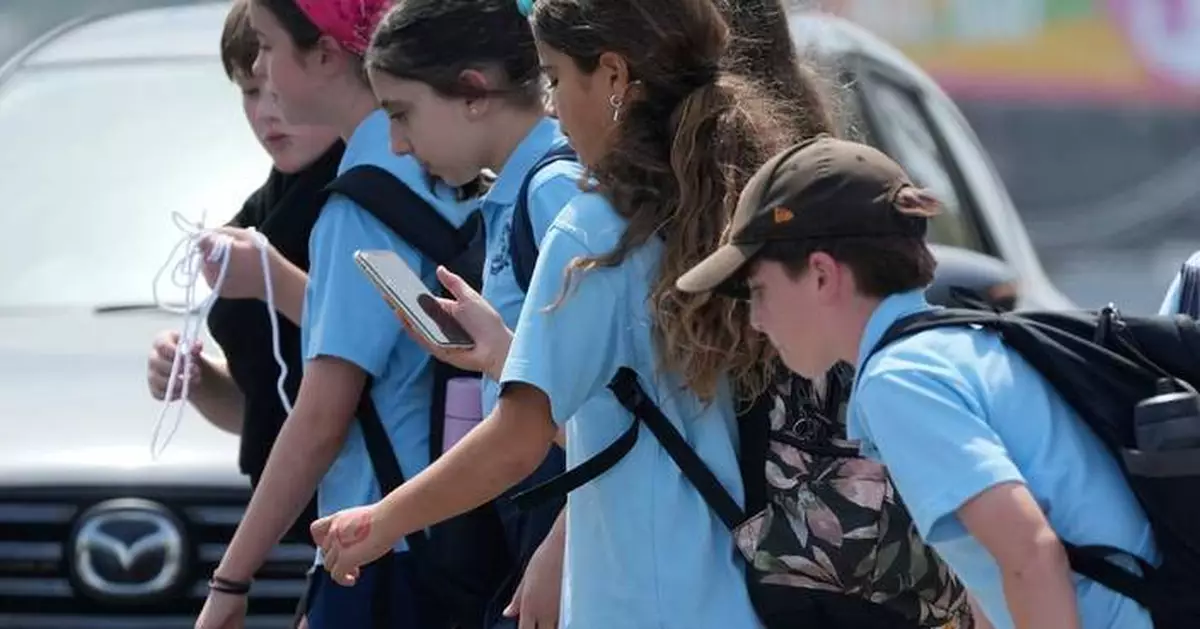
Hugo Winwood-Smith, right, Hardy Macpherson and Edan Abou, left, all 11-years-old, use their phones while sitting outside a school in Sydney, Monday, Dec. 8, 2025. (AP Photo/Rick Rycroft)
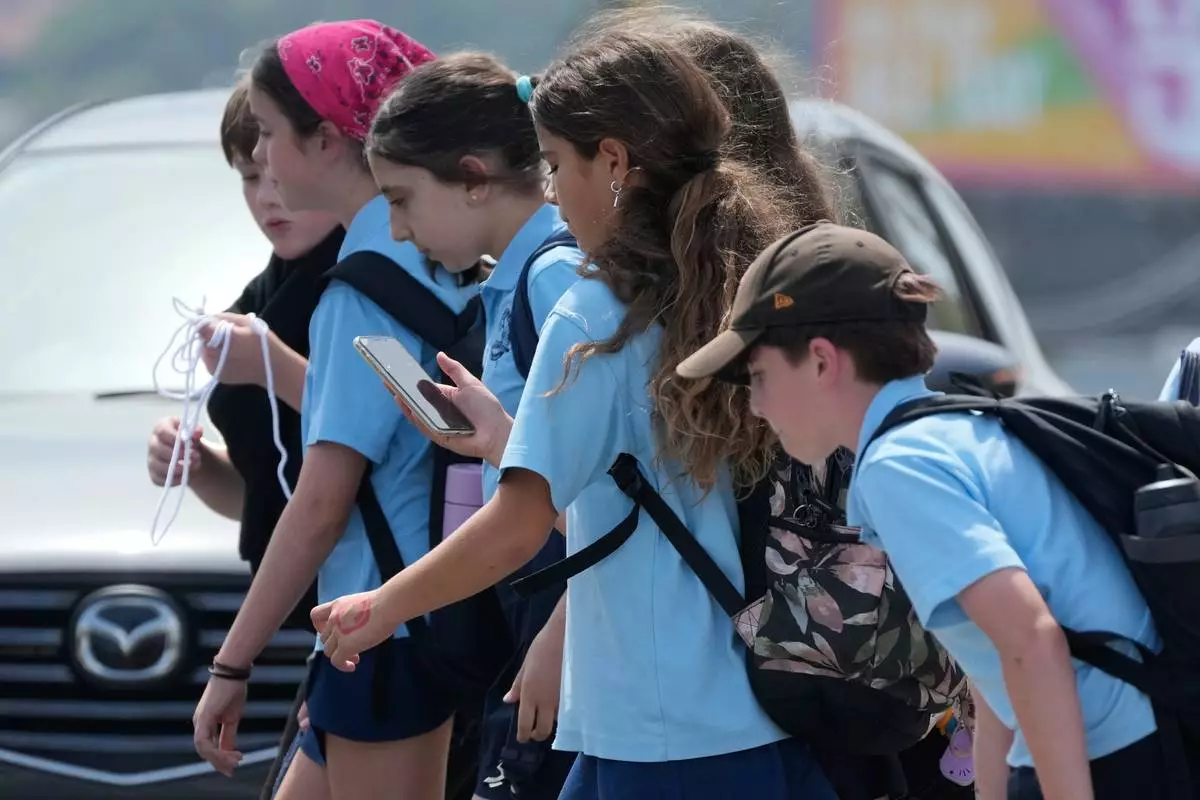
A school girl uses her phone as she walks with a group of kids in Sydney, Monday, Dec. 8, 2025. (AP Photo/Rick Rycroft)
WASHINGTON (AP) — Members of Congress clashed Thursday over President Donald Trump’s use of the National Guard in American cities, with Republicans saying the deployments were needed to fight lawlessness while Democrats called his move an extraordinary abuse of military power that violated states’ rights.
Top military officials faced questioning over the deployments for the first time at the hearing before the Senate Armed Services Committee. They were pressed by Democrats over the legality of sending in troops, which in some places were done over the objections of mayors and governors, while Trump's Republican allies offered a robust defense of the policy.
It was the highest level of scrutiny, outside a courtroom, of Trump's use of the National Guard in U.S. cities since the deployments began and came a day after the president faced another legal setback over efforts to send troops to support federal law enforcement, protect federal facilities and combat crime.
“In recent years, violent crime, rioting, drug trafficking and heinous gang activity have steadily escalated,” said Mississippi Sen. Roger Wicker, the committee chairman. The deployments, he said, are “not only appropriate, but essential.”
Democrats argued they are illegal and contrary to historic prohibitions about the use of military force on U.S. soil.
Sen. Tammy Duckworth, D-Ill., had pushed for the hearing, saying domestic deployments traditionally have involved responding to major floods and tornadoes, not assisting immigration agents who are detaining people in aggressive raids.
“Trump is forcing our military men and women to make a horrible choice: uphold their loyalty to the Constitution and protect peaceful protesters, or execute questionable orders from the president,” said Duckworth, a combat veteran who served in the Illinois National Guard.
During questioning, military leaders highlighted the duties that National Guard units have carried out. Troops are trained in community policing, they said, and are prohibited from using force unless in self-defense.
Since the deployments began, only one civilian — in California — has been detained by National Guard personnel, according to Air Force Gen. Gregory M. Guillot, commander of U.S. troops in North America. Guillot said the troops are trained to de-escalate tense interactions with people, but do not receive any specific training on mental health episodes.
“They can very quickly be trained to conduct any mission that we task of them,” Guillot said.
In one exchange, Sen. Mazie Hirono, D-Hawaii, noted how former Defense Secretary Mark Esper alleged that Trump inquired about shooting protesters during the George Floyd demonstrations. She asked whether a presidential order to shoot protesters would be lawful.
Charles L. Young III, principal deputy general counsel at the Defense Department, said he was unaware of Trump’s previous comments and that “orders to that effect would depend on the circumstances.”
“We have a president who doesn’t think the rule of law applies to him,” Hirono said in response.
Republicans countered that Trump was within his rights — and his duty — to send in the troops.
Republican Sen. Tim Sheehy of Montana, a former Navy SEAL officer, argued during the hearing that transnational crimes present enough of a risk to national security to justify military action, including on U.S. soil.
Sheehy claimed there are foreign powers “actively attacking this country, using illegal immigration, using transnational crime, using drugs to do so.”
Senators also offered their sympathies after two West Virginia National Guard members deployed to Washington were shot just blocks from the White House in what the city's mayor described as a targeted attack. Spc. Sarah Beckstrom died a day after the Nov. 26 shooting, and her funeral took place Tuesday. Staff Sgt. Andrew Wolfe is hospitalized in Washington.
A federal judge in California on Wednesday ruled that the administration must stop deploying the California National Guard in Los Angeles and return control of the troops to the state.
U.S. District Judge Charles Breyer granted a preliminary injunction sought by California officials, but also put the decision on hold until Monday. The White House said it plans to appeal.
Trump called up more than 4,000 California National Guard troops in June without Democratic Gov. Gavin Newsom’s approval to further the administration’s immigration enforcement efforts.
The move was the first time in decades that a state’s National Guard was activated without a request from its governor and marked a significant escalation in the administration’s efforts to carry out its mass deportation policy. The troops were stationed outside a federal detention center in downtown Los Angeles where protesters gathered and were later sent on the streets to protect immigration officers as they made arrests.
Trump also had announced National Guard members would be sent to Illinois, Oregon, Louisiana and Tennessee. Other judges have blocked or limited the deployment of troops to Portland, Oregon, and Chicago, while Guard members have not yet been sent to New Orleans.
Associated Press writer Konstantin Toropin contributed to this report.
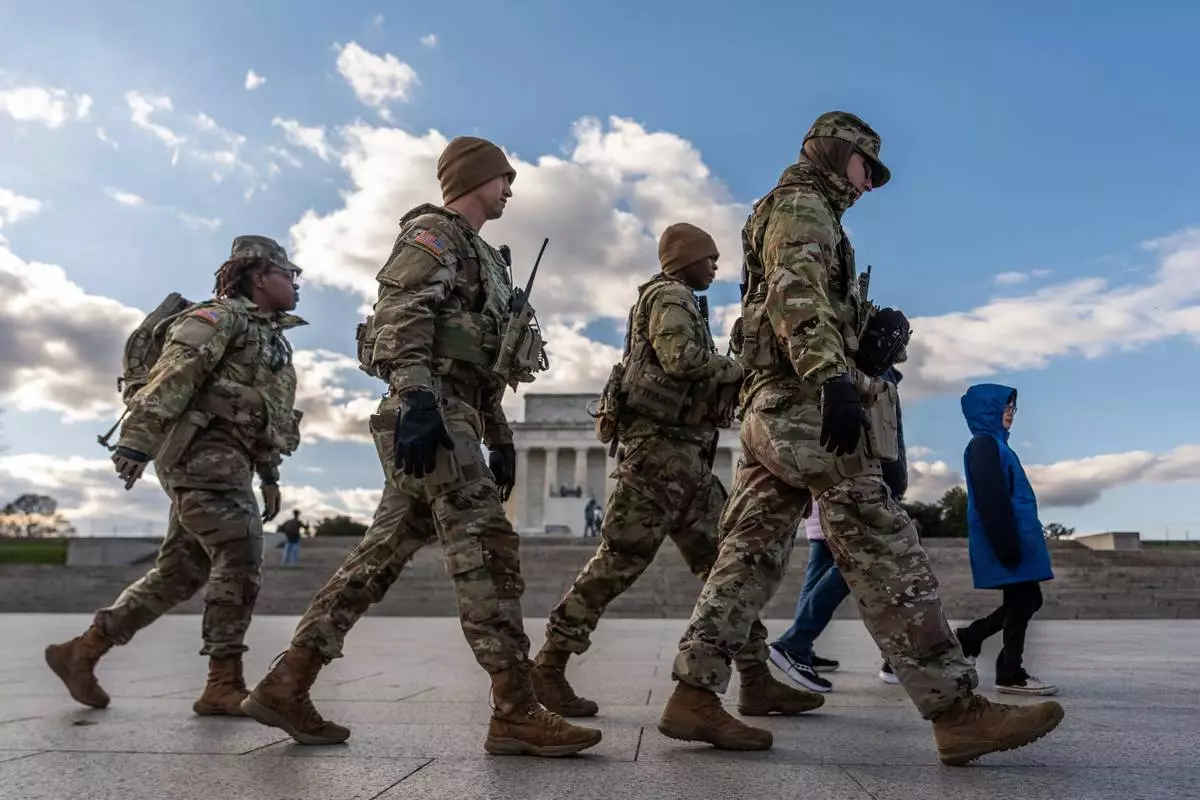
Members of the National Guard patrol in front of the Lincoln Memorial on the National Mall, Friday, Nov. 28, 2025, in Washington. (AP Photo/Julia Demaree Nikhinson)