WASHINGTON (AP) — Members of Congress clashed Thursday over President Donald Trump’s use of the National Guard in American cities, with Republicans saying the deployments were needed to fight lawlessness while Democrats called them an extraordinary abuse of military power that violated states’ rights.
Top military officials faced questioning over the deployments for the first time at the hearing before the Senate Armed Services Committee. They were pressed by Democrats over the legality of sending in troops, which in some places were done over the objections of mayors and governors, while Trump's Republican allies offered a robust defense of the policy.
It was the highest level of scrutiny, outside a courtroom, of Trump's use of the National Guard in U.S. cities since the deployments began and came a day after the president faced another legal setback over efforts to send troops to support federal law enforcement, protect federal facilities and combat crime.
“In recent years, violent crime, rioting, drug trafficking and heinous gang activity have steadily escalated,” said Mississippi Sen. Roger Wicker, the committee chairman. The deployments, he said, are “not only appropriate, but essential.”
Democrats argued they are illegal and contrary to historic prohibitions about military force on U.S. soil.
Sen. Tammy Duckworth, D-Ill., said domestic deployments traditionally have involved responding to major floods and tornadoes, not assisting immigration agents who are detaining people in aggressive raids.
“Trump is forcing our military men and women to make a horrible choice: uphold their loyalty to the Constitution and protect peaceful protesters, or execute questionable orders from the president,” said Duckworth, a combat veteran who served in the Illinois National Guard.
Democrats asked military leaders about Trump’s comments about “the enemy within” America and whether service members could be asked to follow orders that violate their oath.
Sen. Elissa Slotkin, D-Mich., said Trump’s comments about rigged elections and his rhetoric about political opponents have created a “trust deficit” and fueled suspicions about the domestic use of the military.
She asked Charles L. Young III, principal deputy general counsel at the Pentagon, whether Trump could place troops at polling places during next year’s election and whether such an order would be legal.
The idea “sends a shiver down the spine of every American, and should whether you’re a Democrat or a Republican,” Slotkin said.
Young said he could not answer such a question without details, calling it “a hypothetical situation.” He said the Supreme Court has ruled that the president has exclusive authority to decide whether an emergency exists that could require a National Guard response.
Slotkin was one of six Democratic lawmakers who recorded a video calling on troops to uphold the Constitution and defy “illegal orders.” In response, Trump accused the lawmakers, all military or intelligence veterans, of sedition “punishable by DEATH.”
Sen. Elizabeth Warren, D-Mass., pressed Young on news reports that the administration had dismissed advice from military lawyers on deploying Guard and bombing alleged drug boats in Latin America.
“If an attorney raises concerns about the legality of military operations, do you think the appropriate response is to tell them to shut up and get out of the way?” Warren asked Young.
Young denied those reports, saying leadership is “very attentive” to the concerns of military lawyers.
When asked about Trump’s statements about an “invasion within” or an “enemy within,” Air Force Gen. Gregory M. Guillot, commander of U.S. troops in North America, said, “I do not have any indications of an enemy within.”
In one exchange, Sen. Mazie Hirono, D-Hawaii, noted how former Defense Secretary Mark Esper alleged that Trump inquired about shooting protesters during the George Floyd demonstrations. She asked whether a presidential order to shoot protesters would be lawful.
Young said he was unaware of Trump’s previous comments and that “orders to that effect would depend on the circumstances.”
Republicans countered that Trump was within his rights — and his duty — to send in troops.
Republican Sen. Tim Sheehy of Montana, a former Navy SEAL officer, argued during the hearing that transnational crimes present enough of a risk to national security to justify military action, including on U.S. soil.
Sheehy claimed there are foreign powers “actively attacking this country, using illegal immigration, using transnational crime, using drugs to do so.”
During questioning, military leaders highlighted the duties that National Guard units have carried out. Troops are trained for their specific missions, they said, and are prohibited from using force unless in self-defense.
Since the deployments began, only one civilian — in California — has been detained by National Guard personnel, Guillot said. He says the troops are trained to de-escalate tense interactions with people, but do not receive any specific training on mental health episodes.
“They can very quickly be trained to conduct any mission that we task of them,” Guillot said.
During the hearing, senators also offered their sympathies after two West Virginia National Guard members deployed to Washington were shot just blocks from the White House in what the city’s mayor described as a targeted attack. Spc. Sarah Beckstrom died a day after the Nov. 26 shooting, and her funeral took place Tuesday. Staff Sgt. Andrew Wolfe is hospitalized in Washington.
A federal judge in California on Wednesday ruled that the administration must stop deploying the California National Guard in Los Angeles and return control of the troops to the state. The judge put the decision on hold until Monday, and the White House said it plans to appeal.
Trump called up more than 4,000 California National Guard troops in June following protests over immigration raids. It marked the first time in decades that a state’s National Guard was activated without a governor's request and marked a significant escalation in the administration’s efforts to carry out its mass deportation policy.
Trump also had announced National Guard members would be sent to Illinois, Oregon, Louisiana and Tennessee. Other judges have blocked or limited the deployment of troops to Portland, Oregon, and Chicago, while Guard members have not yet been sent to New Orleans.
Associated Press writer Konstantin Toropin contributed to this report.
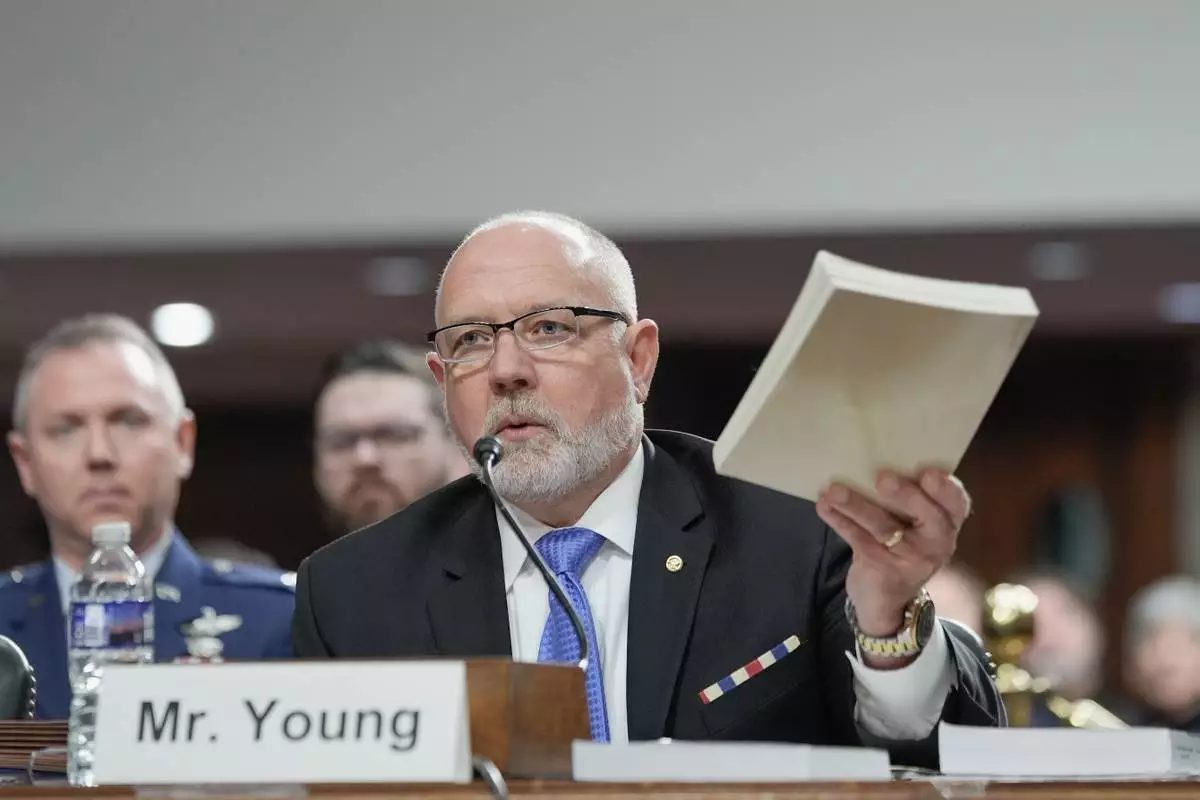
Charles Young III, principal deputy general counsel for the Defense Department, testifies during a Senate Armed Services Committee hearing on homeland security, Thursday, Dec. 11, 2025, in Washington. (AP Photo/Mariam Zuhaib)
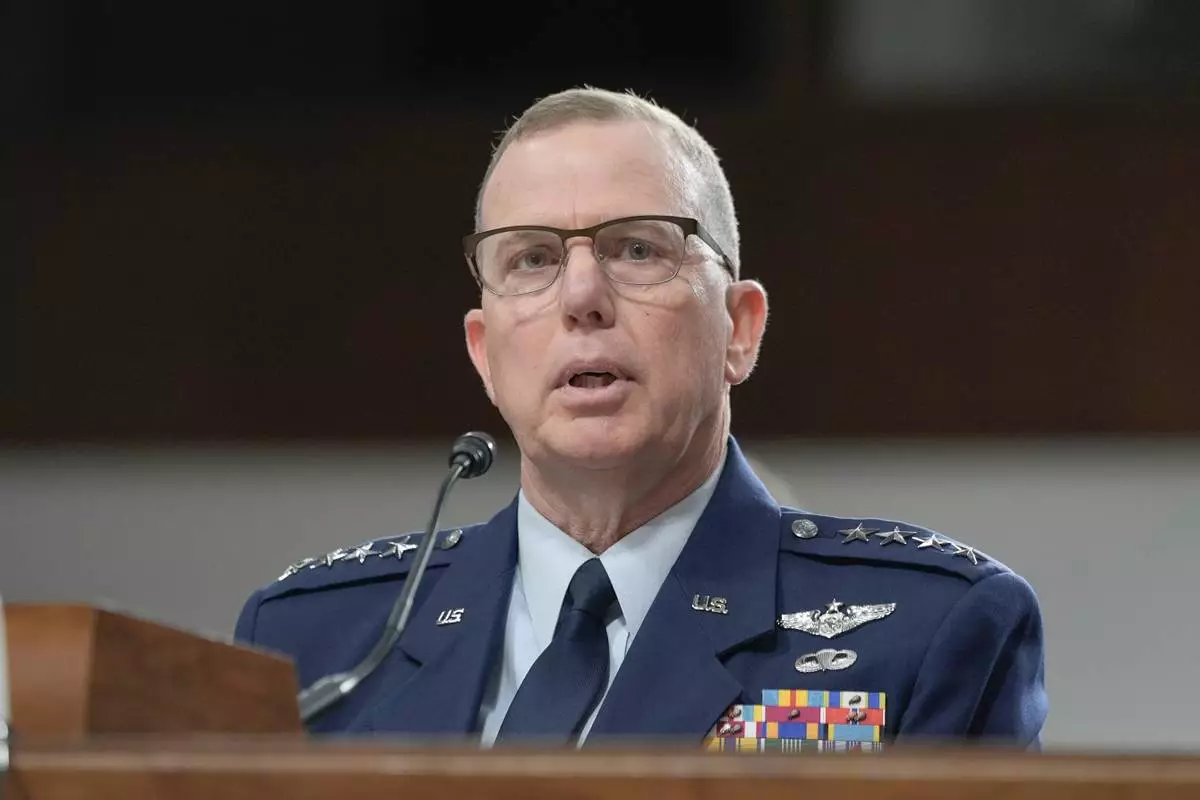
Gen. Gregory M. Guillot, commander of the United States Northern Command, testifies during a Senate Armed Services Committee hearing on homeland security, Thursday, Dec. 11, 2025, in Washington. (AP Photo/Mariam Zuhaib)
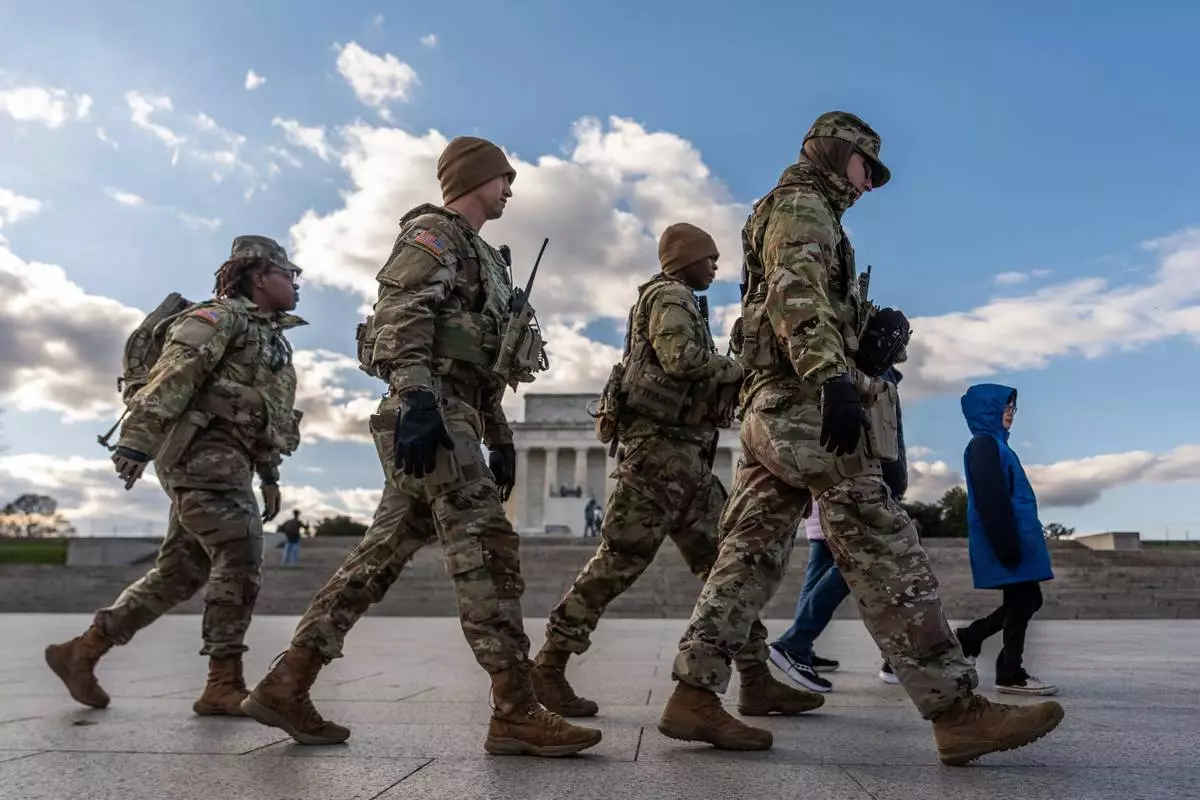
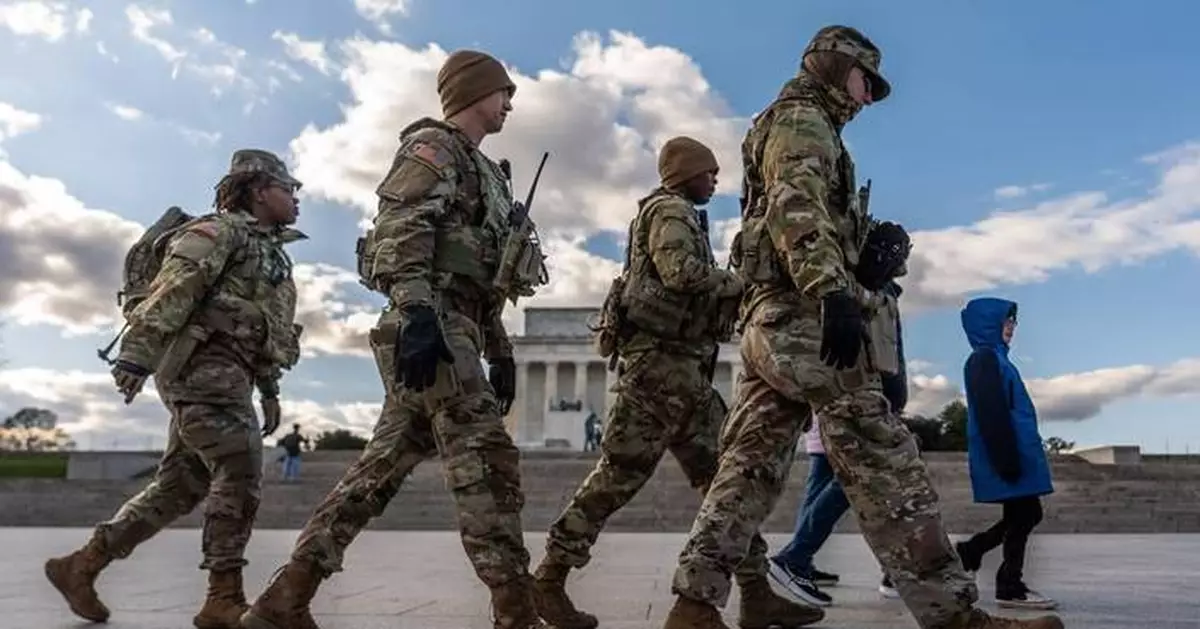
Members of the National Guard patrol in front of the Lincoln Memorial on the National Mall, Friday, Nov. 28, 2025, in Washington. (AP Photo/Julia Demaree Nikhinson)