Senators from both parties pushed Thursday for changes to a massive defense bill after crash investigators and victims' families warned the legislation would undo key safety reforms stemming from a collision between an airliner and Army helicopter over Washington, D.C., that killed 67 people.
The head of the National Transportation Safety Board investigating the crash, a group of the victims' family members and senators on the Commerce Committee all said the bill the House advanced Wednesday would make America's skies less safe. It would allow the military to operate essentially the same way as it did before the January crash, which was the deadliest in more than two decades, they said.
Democratic Sen. Maria Cantwell and Republican Committee Chairman Sen. Ted Cruz filed two amendments Thursday to strip out the worrisome helicopter safety provisions and replace them with a bill they introduced last summer to strengthen requirements, but it’s not clear if Republican leadership will allow the National Defense Authorization Act to be changed at this stage because that would delay its passage.
“We owe it to the families to put into law actual safety improvements, not give the Department of Defense bigger loopholes to exploit,” the senators said.
Right now, the bill includes exceptions that would allow military helicopters to fly through the crowded airspace around the nation's capital without using a key system called ADS-B to broadcast their locations just like they did before the January collision. The Federal Aviation Administration began requiring that in March. NTSB Chairwoman Jennifer Homendy called the bill a “significant safety setback” that is inviting a repeat of that disaster.
“It represents an unacceptable risk to the flying public, to commercial and military aircraft, crews and to the residents in the region,” Homendy said. “It’s also an unthinkable dismissal of our investigation and of 67 families ... who lost loved ones in a tragedy that was entirely preventable. This is shameful.”
The biggest unions representing pilots, flight attendants and other transportation workers joined the chorus criticizing the bill on Thursday. Sara Nelson, who is president of the Association of Flight Attendants, questioned why this was proposed. She said these provisions are “not only reckless and indefensible, but also a direct undermining of the NTSB’s safety guidance.”
Senate Majority Leader John Thune said he is looking into the concerns but thinks they can be addressed by quickly passing the aviation safety bill that Cruz and Cantwell proposed last summer that would require all aircraft operators to use both forms of ADS-B, or Automatic Dependent Surveillance Broadcast, the technology to broadcast aircraft location data to other planes and air traffic controllers. Most aircraft today are equipped with ADS-B Out equipment but the airlines would have to add the more comprehensive ADS-B In technology to their planes.
That legislation would also revoke an exemption on ADS-B transmission requests for Department of Defense aircraft.
“I think that would resolve the concerns that people have about that provision, and hoping — we’ll see if we can find a pathway forward to get that bill done,” said Thune, a South Dakota Republican.
The military used national security waivers before the crash to skirt FAA safety requirements on the grounds that they worried about the security risks of disclosing their helicopters’ locations. Tim and Sheri Lilley, whose son Sam was the first officer on the American Airlines jet, said this bill only adds “a window dressing fix that would continue to allow for the setting aside of requirements with nothing more than a cursory risk assessment.”
Military helicopters like the Black Hawk involved in the crash did send some location data to controllers through a transponder, but the FAA has said that ADS-B data is more precise and the NTSB has been recommending for decades that all aircraft be equipped with such systems. The Army was concerned about using those systems because anyone — including a plane enthusiast on the ground — can use them to know precisely where a helicopter or airplane is located.
Homendy said it would be ridiculous to entrust the military with assessing the safety risks when they aren't the experts, and neither the Army nor the FAA noticed 85 close calls around Ronald Reagan National Airport in the years before the crash. She said the military doesn't know how to do that kind of risk assessment, adding that no one writing the bill bothered to consult the experts at the NTSB who do know.
The NTSB's final report on the cause of the D.C. crash won't be released until next year, but investigators have already identified a number of factors that contributed, including that the helicopter was flying too high on a route that only provided scant separation between helicopters and planes landing on Reagan's secondary runway.
Homendy said part of the investigation focuses on the limitations of the various systems that are designed to alert other pilots and air traffic controllers about the location of an aircraft. The pilots of the American jet that was flying into D.C. from Wichita, Kansas, did get a warning about traffic nearby 20 seconds before the collision. But at the low altitude the plane was traveling as it prepared to land, the basic collision avoidance system recommended by this bill was partly inhibited to prevent false alarms and because there is little room to manuever.
The White House and military didn't immediately respond Thursday to questions about these safety concerns in the bill. But earlier this week Trump made it clear that he wants to sign the National Defense Authorization Act because it advances a number of his priorities and provides a 3.8% pay raise for many military members.
The Senate is expected to take up the bill next week, and it appears unlikely that any final changes will be made. But Congress is leaving for a holiday break at the end of the week, and the defense bill is considered something that must pass by the end of the year.
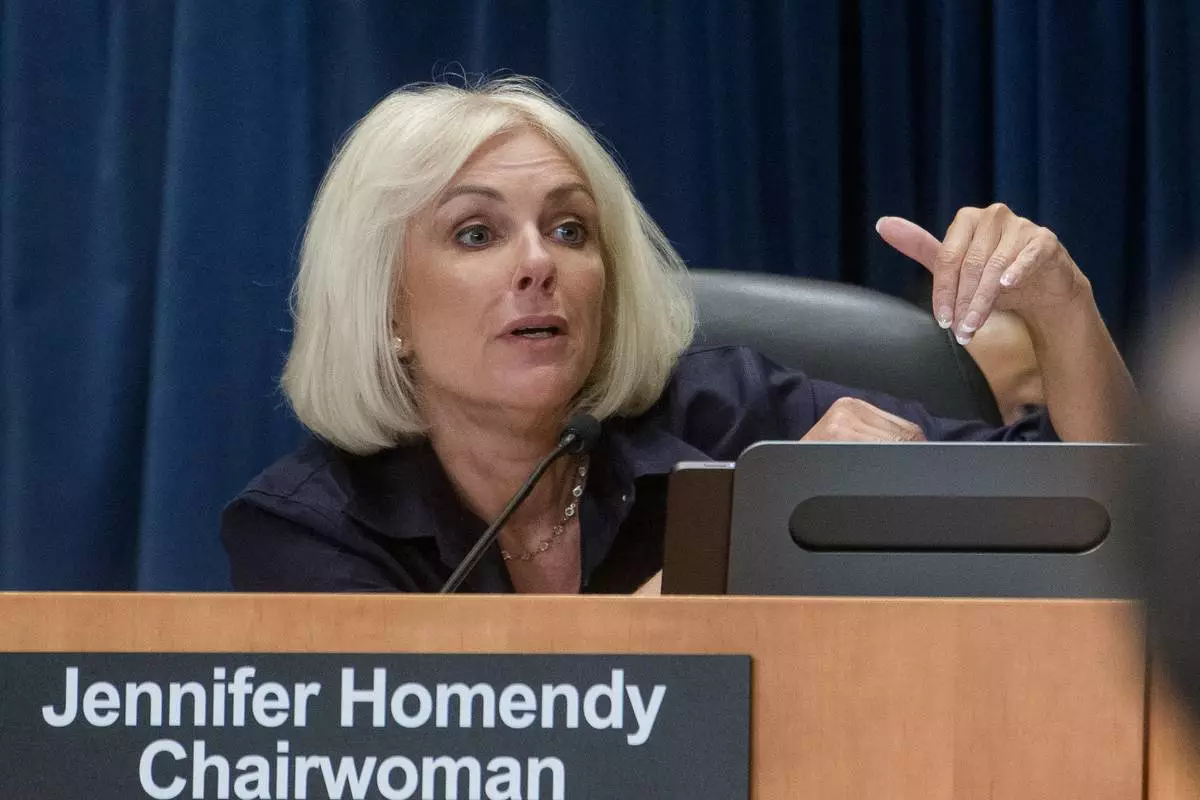
FILE - National Transportation Safety Board Chairwoman Jennifer Homendy presides over the NTSB fact-finding hearing on the DCA midair collision accident, at the National Transportation and Safety Board boardroom, July 30, 2025, in Washington. (AP Photo/Rod Lamkey, Jr., File)
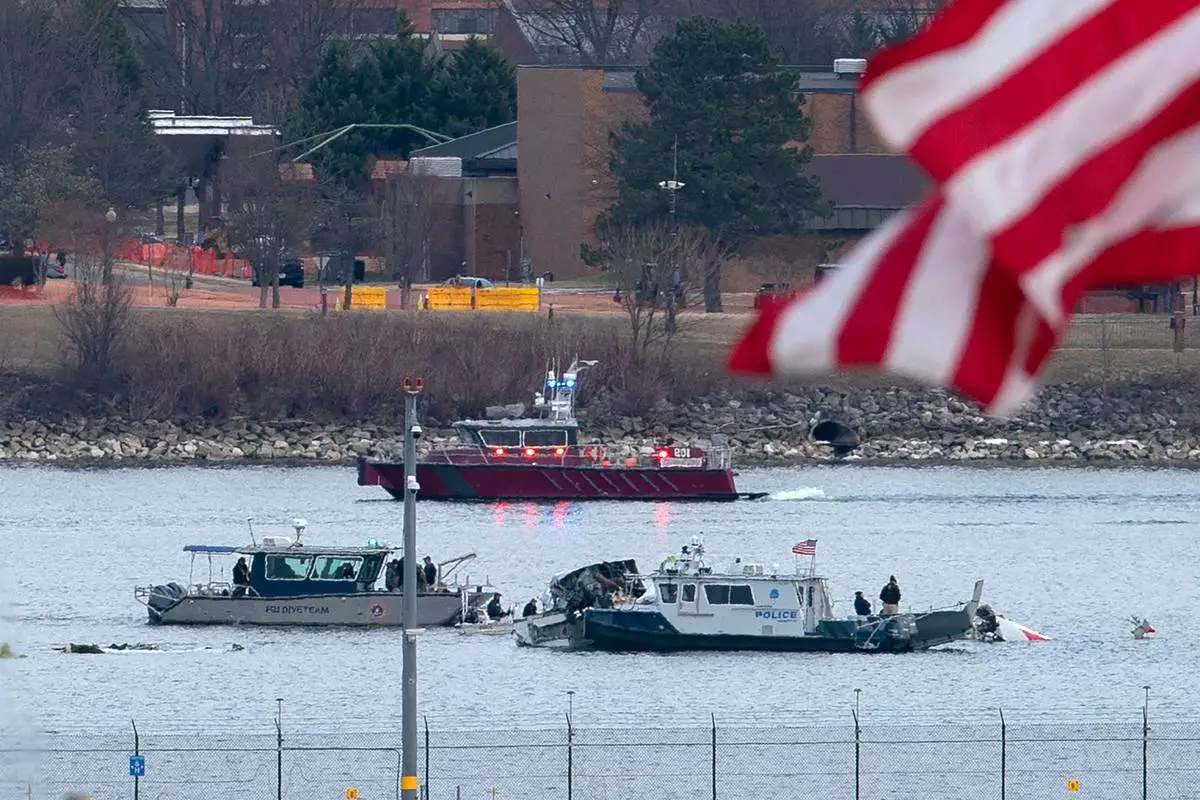
FILE - A diving team and police boat is seen near a wreckage site in the Potomac River, from Ronald Reagan Washington National Airport, Jan. 30, 2025, in Arlington, Va. (AP Photo/Jose Luis Magana, File)
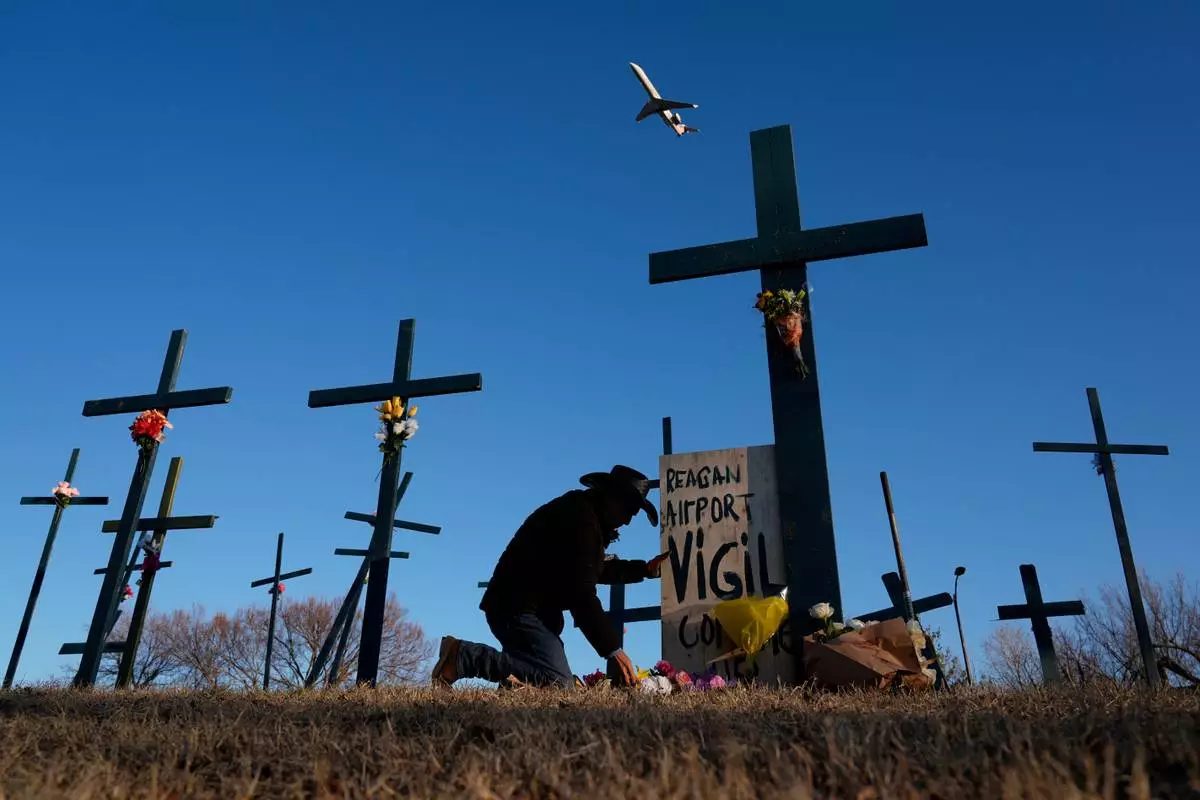
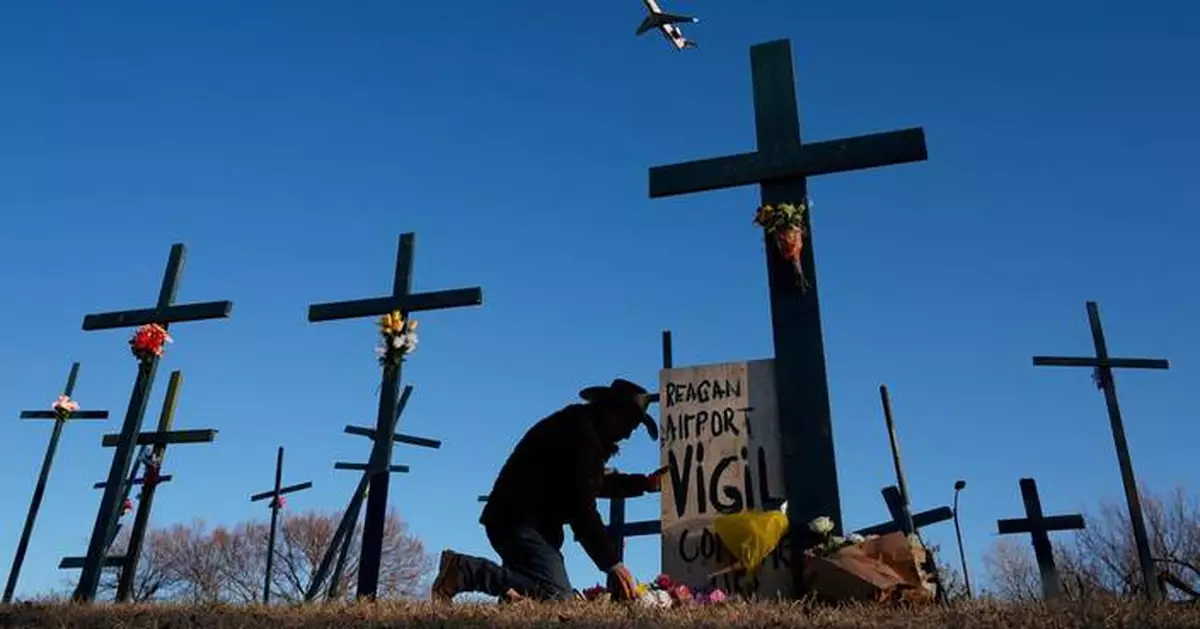
A plane takes off from Ronald Reagan Washington National Airport as Roberto Marquez of Dallas places flowers at a memorial of crosses he erected for the 67 victims of a midair collision between an Army helicopter and an American Airlines jet, Feb. 1, 2025, in Arlington, Va. (AP Photo/Carolyn Kaster, File)

CHARLOTTE, N.C. (AP) — Michael Jordan and NASCAR chairman Jim France stood side-by-side on the steps of a federal courthouse as if they were old friends following a stunning settlement Thursday of a bruising antitrust case in which the Basketball Hall of Famer was the lead plaintiff in a lawsuit accusing the top racing series in the United States of being a monopolistic bully.
The duo was flanked by three-time Daytona 500 Denny Hamlin and Curtis Polk, who co-own 23XI Racing with Jordan, Front Row Motorsports owner Bob Jenkins and over a dozen lawyers as they celebrated the end to an eight-day trial that ultimately led NASCAR to cave and grant all its teams the permanent charters they wanted.
“Like two competitors, obviously we tried to get as much done in each other’s favor,” Jordan said, towering over the 81-year-old France. “I’ve said this from Day 1: the only way this sport is going to grow is we have to find some synergy between the two entities. I think we’ve gotten to that point, unfortunately it took 16 months to get here, but I think level heads have gotten us to this point where we can actually work together and grow this sport. I am very proud about that and I think Jim feels the same.”
France concurred.
“I do feel the same and we can get back to focusing on what we really love, and that’s racing, and we spent a lot of time not really focused on that so much as we needed to be,” France said. “I feel like we made a very good decision here together and we have a big opportunity to continue growing the sport.”
A charter is the equivalent of the franchise model used in other sports and in NASCAR it guarantees 36 teams a spot in every top-level Cup Series race and a fixed portion of the revenue stream. The system was implemented in 2016 and teams have argued for over two years that the charters needed to be made permanent — they had been revokable by NASCAR — and the revenue sharing had to change.
NASCAR, founded and privately owned by the Florida-based France family, never considered making the charters permanent. Instead, after two-plus years of bitter negotiations, NASCAR in September 2024 presented a “take-it-or leave-it” final offer that gave teams until end of that day to sign the 112-page document.
23XI and Front Row refused and sued, while 13 other organizations signed but testimony in court revealed many did so “with a gun to our head” because the threat of losing the charters would have put them out of business.
Jordan testified early in the trial that as a new team owner to NASCAR — 23XI launched in 2021 — he felt he had the strength to challenge NASCAR. Eight days of testimony went badly for NASCAR, which when it began to present its case seemed focused more on mitigating damages than it did on proving it did not violate antitrust laws.
Although terms of the settlement were not released — NASCAR was in the process of scheduling a Thursday afternoon call with all teams to discuss the revenue-sharing model moving forward — both Jordan and NASCAR said that charters will now be permanent for all teams. 23XI and Front Row will receive their combined six charters back for 2026.
An economist has previously testified that NASCAR owes 23XI and Front Row $364.7 million in damages, and that NASCAR shorted 36 chartered teams $1.06 billion from 2021-24.
“Today’s a good day,” Jordan said from the front-row seat he's occupied since the trial began Dec. 1 as he waited for the settlement announcement.
U.S. District Judge Kenneth Bell, who had presided over two days of failed settlement talks before the trial began, echoed the sentiment. Bell told the jury that sometimes parties at trial have to see how the evidence unfolds to come to the wisdom of a settlement.
“I wish we could’ve done this a few months ago,” Bell said in court. “I believe this is great for NASCAR. Great for the future of NASCAR. Great for the entity of NASCAR. Great for the teams and ultimately great for the fans.”
The settlement came after two days of France testimony and the Wednesday night public release of a letter from Bass Pro Shops founder Johnny Morris calling for NASCAR Commissioner Steve Phelps to be removed.
The discovery process revealed internal NASCAR communications in which Phelps called Hall of Fame team owner Richard Childress a “redneck” and other derogatory names; Bass Pro sponsors Childress' teams, as well as some others, and Morris is an ardent NASCAR supporter.
Childress gave fiery testimony earlier this week over his reluctance to sign the charter agreement because it was so unfair to the teams, which have been bleeding money and begged NASCAR for concessions. Letters from Hall of Fame team owners Joe Gibbs, Rick Hendrick, Jack Roush and Roger Penske were introduced in which they pleaded with France for charters to become permanent; France testified he was not moved by the men he considers good friends.
Hendrick and Penske, who were both scheduled to testify Friday, expressed gratitude that a settlement had been reached. Penske called it “tremendous news” and cleared the way to continue growing the series.
“Millions of loyal NASCAR fans and thousands of hardworking people rely on our industry, and today’s resolution allows all of us to focus on what truly matters – the future of our sport," Hendrick said. "This moment presents an important opportunity to strengthen our relationships and recommit ourselves to building a collaborative and prosperous future for all stakeholders. I’m incredibly optimistic about what’s ahead.”
The settlement came abruptly on the ninth day of the trial. Bell opened expecting to hear motions but both sides asked for a private conference in chambers. When they emerged, Bell ordered an hour-long break for the two sides to confer. That turned into two hours, all parties returned to the courtroom and Kessler announced an agreement had been reached.
“What all parties have always agreed on is a deep love for the sport and a desire to see it fulfill its full potential,” NASCAR and the plaintiffs said in a joint statement. “This is a landmark moment, one that ensures NASCAR’s foundation is stronger, its future is brighter and its possibilities are greater.”
AP auto racing: https://apnews.com/hub/auto-racing
In this image taken from video, Michael Jordan, center, speaks, Thursday, Dec. 11, 2025, outside the federal courthouse in Charlotte, N.C., after NASCAR settled an antitrust lawsuit with two auto racing teams, including one co-owned by Jordan (AP Photo/Jenna Fryer)
Michael Jordan, left, shakes hands with NASCAR attorney Lawrence Buterman as NASCAR chairman Jim France, center, looks away, Thursday, Dec. 11, 2025, outside the federal courthouse in Charlotte, N.C. (AP Photo/Jenna Fryer)
FILE - Denny Hamlin is introduced before a NASCAR Cup Series auto race Sunday, Nov. 2, 2025, in Avondale, Ariz. (AP Photo/Rick Scuteri, File)
FILE - Michael Jordan, co-owner of 23XI Racing, sits in his pit box during a NASCAR Cup Series auto race at Talladega Superspeedway, Sunday, Oct. 6, 2024, in Talladega, Ala. (AP Photo/ Butch Dill, File)
FILE - CEO and Chairman of NASCAR Jim France, right, along with the Executive Vice President of NASCAR Lesa Kennedy announce the Landmark Award to Edsel Ford II the Hall of Fame induction ceremony in Charlotte, N.C. Jan. 31, 2020. (AP Photo/Mike McCarn, File)