MILAN (AP) — The Winter Olympics are a land of snow and frozen water — no “ice,” though, at least not at the hospitality house being hosted by U.S. sports teams in Milan for the Games.
The Ice House has been officially renamed the Winter House, in a nod to the tension surrounding the U.S. Immigration and Customs Enforcement agency, commonly known as ICE.
“Our hospitality concept was designed to be a private space free of distractions where athletes, their families, and friends can come together to celebrate the unique experience of the Winter Games," said a release from the house sponsors, USA Hockey, US Speedskating and US Figure Skating.
Protests against ICE have broken out in Minnesota and across America after immigration officers killed two people.
The issue also sparked demonstrations in Italy when news broke that ICE was sending a handful of agents to assist with some Olympic-related security measures. The ICE agents will be working on computers inside, not in the streets, and are not part of the same unit that is cracking down in the U.S.
The Winter House is the closest thing these Games will have to a USA House — the usual hangout for athletes and their families typically hosted by the U.S. Olympic and Paralympic Committee. The USOPC didn't open a USA House because of the spread-out nature of these Olympics and inability to bring all athletes to one location.
“I think it’s wise,” U.S. figure skater Amber Glenn said when asked about the name change. “It’s unfortunate that the term ICE isn’t something we can embrace because of what’s happening and the implications of what some individuals are doing."
Asked about the name change, moguls skier Tess Johnson, who is in Milan this week before she competes hours away in Livigno, said she has thought a lot “about what it means to represent the States in this Games.”
“I personally don’t stand for any hate or violence,” she said. "I am a huge proponent of what the Olympic and Paralympic movement stands for, which is connection, respect, unity, love, compassion. I think actions and conversations around those words are very meaningful to me.”
AP Winter Olympics: https://apnews.com/hub/milan-cortina-2026-winter-olympics
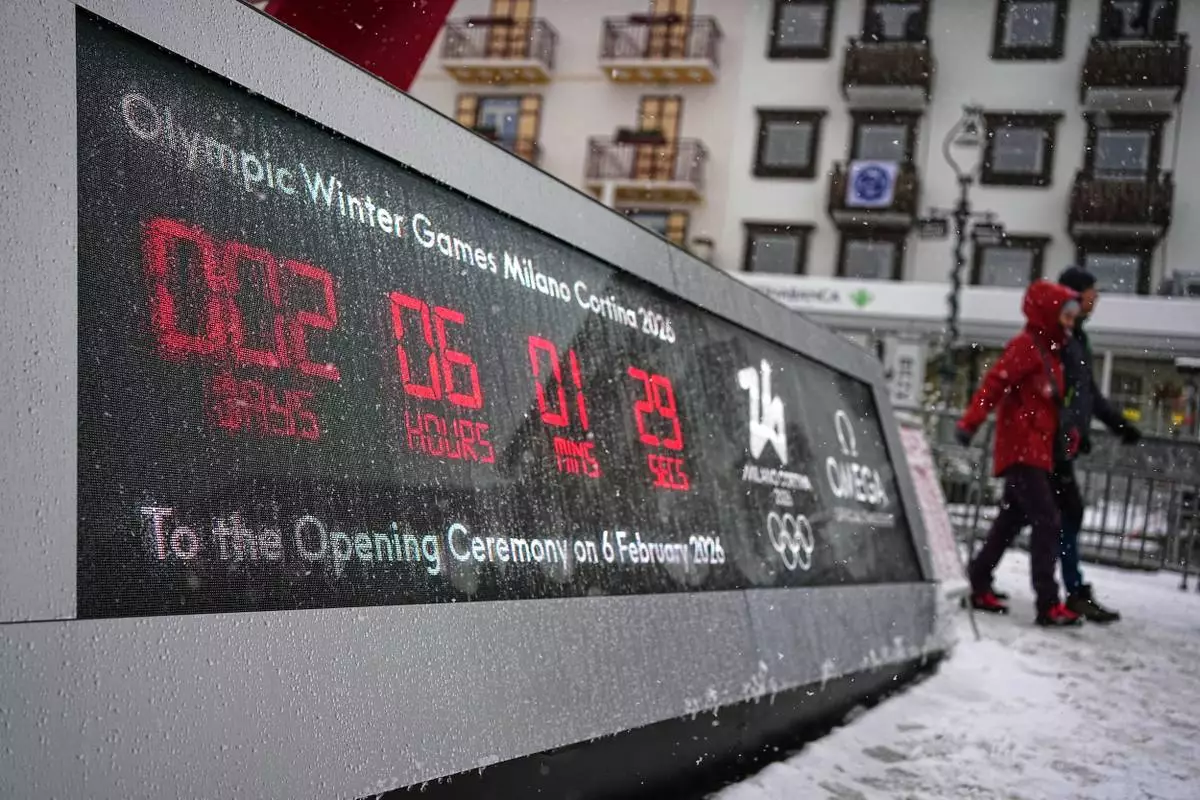
People walk past a clock displaying a countdown to the Opening Ceremony of the 2026 Winter Olympics, in Cortina d'Ampezzo, Italy, Wednesday, Feb. 4, 2026. (AP Photo/Fatima Shbair)
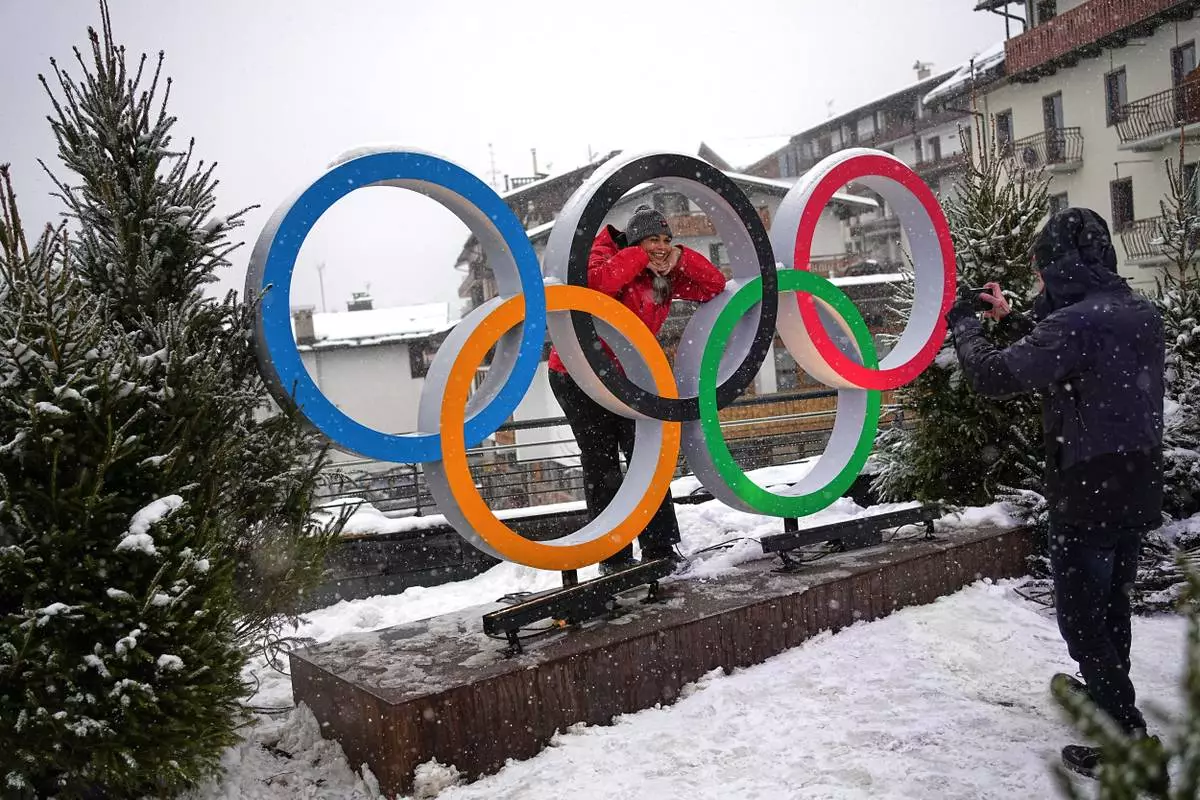
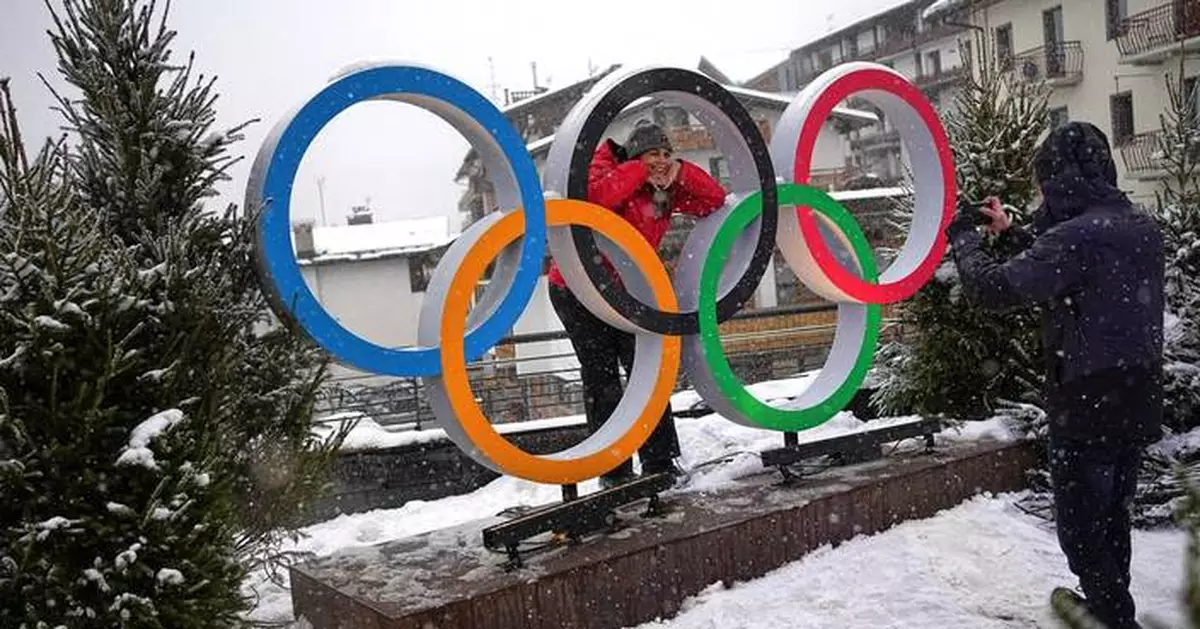
A woman poses for a photo with the Olympic rings ahead of the Olympic Winter Games Milano Cortina 2026, in Cortina d'Ampezzo, Italy, Wednesday, Feb. 4, 2026. (AP Photo/Fatima Shbair)
The last remaining nuclear arms pact between Russia and the United States is set to expire Thursday, removing any caps on the two largest atomic arsenals for the first time in more than a half-century.
The termination of the New START Treaty would set the stage for what many fear could be an unconstrained nuclear arms race.
Russian President Vladimir Putin declared readiness to stick to the treaty’s limits for another year if Washington follows suit, but President Donald Trump has been noncommittal about extending it.
Trump has repeatedly indicated he would like to keep limits on nuclear weapons and involve China in arms control talks, a White House official who was not authorized to talk publicly and spoke on condition of anonymity said Monday. Trump will make a decision on nuclear arms control “on his own timeline,” the official said.
Beijing has balked at any restrictions on its smaller but growing nuclear arsenal.
Putin discussed the pact’s expiration with Chinese leader Xi Jinping, Kremlin adviser Yuri Ushakov said, noting Washington hasn’t responded to his proposed extension.
Russia "will act in a balanced and responsible manner based on thorough analysis of the security situation,” Ushakov said.
Arms control advocates long have voiced concern about the expiration, warning it could lead to a new arms race, foment global instability and increase the risk of nuclear conflict.
Pope Leo XIV on Wednesday called for the treaty “not to be abandoned without seeking to ensure its concrete and effective continuation.”
Failure to agree on keeping the pact’s limits will likely encourage a bigger deployment, said Daryl Kimball, executive director of the Arms Control Association in Washington.
“We’re at the point now where the two sides could, with the expiration of this treaty, for the first time in about 35 years, increase the number of nuclear weapons that are deployed on each side,” Kimball told The Associated Press. “And this would open up the possibility of an unconstrained, dangerous three-way arms race, not just between the U.S. and Russia, but also involving China, which is also increasing its smaller but still deadly nuclear arsenal.”
Kingston Reif of the RAND Corporation, a former U.S. deputy assistant secretary of defense, also warned during an online discussion that “in the absence of the predictability of the treaty, each side could be incentivized to plan for the worst or to increase their deployed arsenals to show toughness and resolve, or to search for negotiating leverage.”
Putin repeatedly has brandished Russia’s nuclear might since sending troops into Ukraine in 2022, warning Moscow was prepared to use “all means” to protect its security interests. He signed a revised nuclear doctrine in 2024, lowering the threshold for nuclear weapons use.
New START, signed in 2010 by President Barack Obama and his Russian counterpart, Dmitry Medvedev, restricted each side to no more than 1,550 nuclear warheads on no more than 700 missiles and bombers — deployed and ready for use. It was originally supposed to expire in 2021 but was extended for five more years.
The pact envisioned sweeping on-site inspections to verify compliance, although they stopped in 2020 because of the COVID-19 pandemic and never resumed.
In February 2023, Putin suspended Moscow’s participation, saying Russia couldn’t allow U.S. inspections of its nuclear sites at a time when Washington and its NATO allies have openly declared Moscow’s defeat in Ukraine as their goal. At the same time, the Kremlin emphasized it wasn’t withdrawing from the pact altogether, pledging to respect its caps on nuclear weapons.
In offering in September to abide by New START’s limits for a year to buy time for both sides to negotiate a successor agreement, Putin said the pact's expiration would be destabilizing and could fuel nuclear proliferation.
Rose Gottemoeller, chief U.S. negotiator for pact and a former NATO deputy secretary-general, said extending it would have served U.S. interests. “A one-year extension of New START limits would not prejudice any of the vital steps that the United States is taking to respond to the Chinese nuclear buildup,” she told an online discussion last month.
New START followed a long succession of U.S.-Russian nuclear arms reduction pacts, starting with SALT I in 1972 signed by U.S. President Richard Nixon and Soviet leader Leonid Brezhnev — the first attempt to limit their arsenals.
The 1972 Anti-Ballistic Missile Treaty restricted the countries’ missile defense systems until President George W. Bush took the U.S. out of the pact in 2001 despite Moscow’s warnings. The Kremlin has described Washington’s efforts to build a missile shield as a major threat, arguing it would erode Russia’s nuclear deterrent by giving the U.S. the capability to shoot down its intercontinental ballistic missiles.
In response, Putin ordered the development of the Burevestnik nuclear-tipped and nuclear-powered cruise missile and the Poseidon nuclear-armed and nuclear-powered underwater drone. Russia said last year it successfully tested the Poseidon and the Burevestnik and preparing their deployment.
Also terminated in 2019 was the Intermediate-range Nuclear Forces Treaty, which was signed in 1987 and banned land-based missiles with a range between 500-5,500 kilometers (310-3,400 miles). Those missiles were seen as particularly destabilizing because of their short flight time to their targets, leaving only minutes to decide on a retaliatory strike and increasing the threat of a nuclear war on a false warning.
In November 2024 and again last month, Russia attacked Ukraine with a conventional version of its new Oreshnik intermediate-range ballistic missile. Moscow says it has a range of up to 5,000 kilometers (3,100 miles), capable of reaching any European target, with either nuclear or conventional warheads.
Without agreements limiting nuclear arsenals, Russia “will promptly and firmly fend off any new threats to our security,” said Medvedev, who had signed the New START treaty and is now deputy head of Putin's Security Council.
“If we are not heard, we act proportionately seeking to restore parity,” he said in recent remarks.
Medvedev specifically mentioned Trump's proposed Golden Dome missile defense system among potentially destabilizing moves, emphasizing a close link between offensive and defensive strategic weapons.
Trump’s plan has worried Russia and China, Kimball said.
“They’re likely going to respond to Golden Dome by building up the number of offensive weapons they have to overwhelm the system and make sure that they have the potential to retaliate with nuclear weapons,” he said, adding that offensive capabilities can be built faster and cheaper than defensive ones.
Trump’s October statement about U.S. intentions to resume nuclear tests for the first time since 1992 also troubled the Kremlin, which last conducted a test in 1990 when the USSR still existed. Putin said Russia will respond in kind if the U.S. resumes tests, which are banned by a global treaty that Moscow and Washington signed.
U.S. Energy Secretary Chris Wright said in November that such tests would not include nuclear explosions.
Kimball said a U.S. resumption of tests “would blow a massive hole in the global system to reduce nuclear risk,” prompting Russia to respond in kind and tempting others, including China and India, to follow suit.
The world was heading toward accelerated strategic competition, he said, with more spending and increasingly unstable relations involving the U.S., Russia, and China on nuclear matters.
“This marks a potential turning point into a much more dangerous period of global nuclear competition, the likes of which we’ve not seen in our lifetimes,” Kimball added.
__
Associated Press writer Michelle L. Price in Washington contributed.
—-
The Associated Press receives support for nuclear security coverage from the Carnegie Corporation of New York and Outrider Foundation. The AP is solely responsible for all content.
Additional AP coverage: https://apnews.com/projects/the-new-nuclear-landscape/
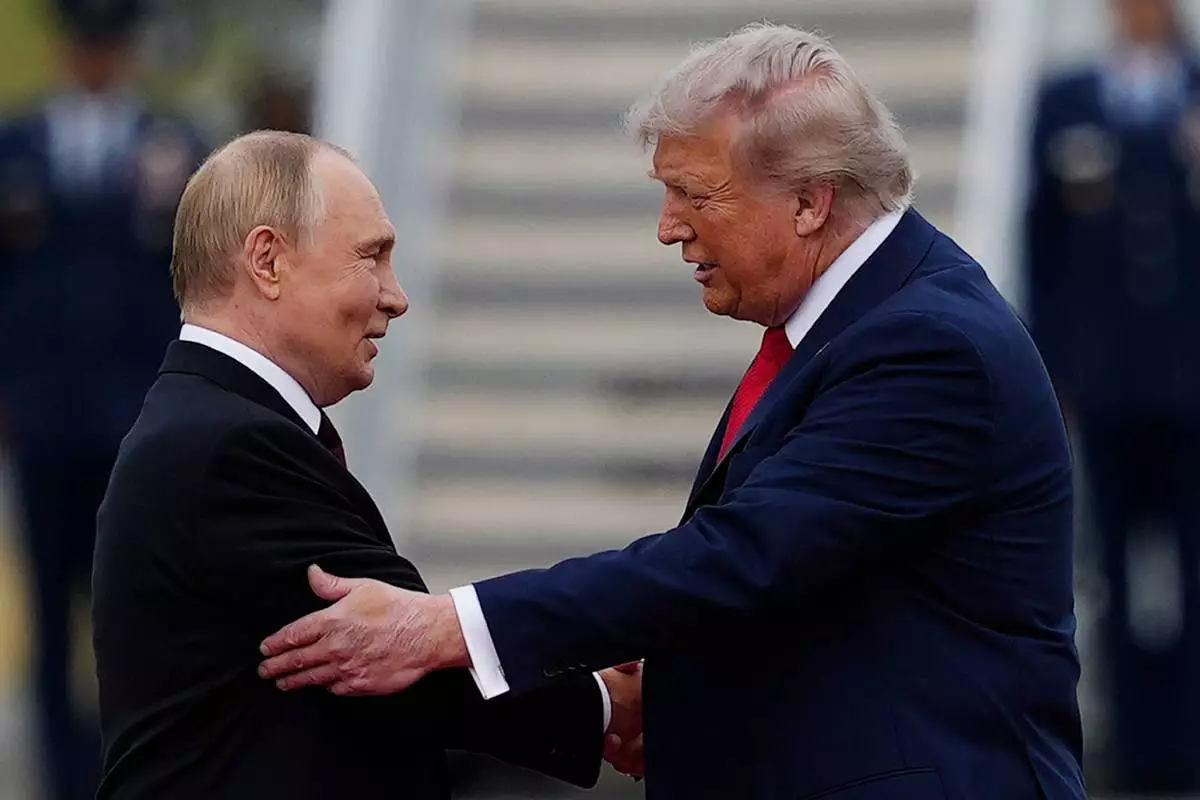
FILE - U.S. President Donald Trump greets Russian President Vladimir Putin, Aug. 15, 2025, at Joint Base Elmendorf-Richardson, Alaska. (AP Photo/Julia Demaree Nikhinson, File)
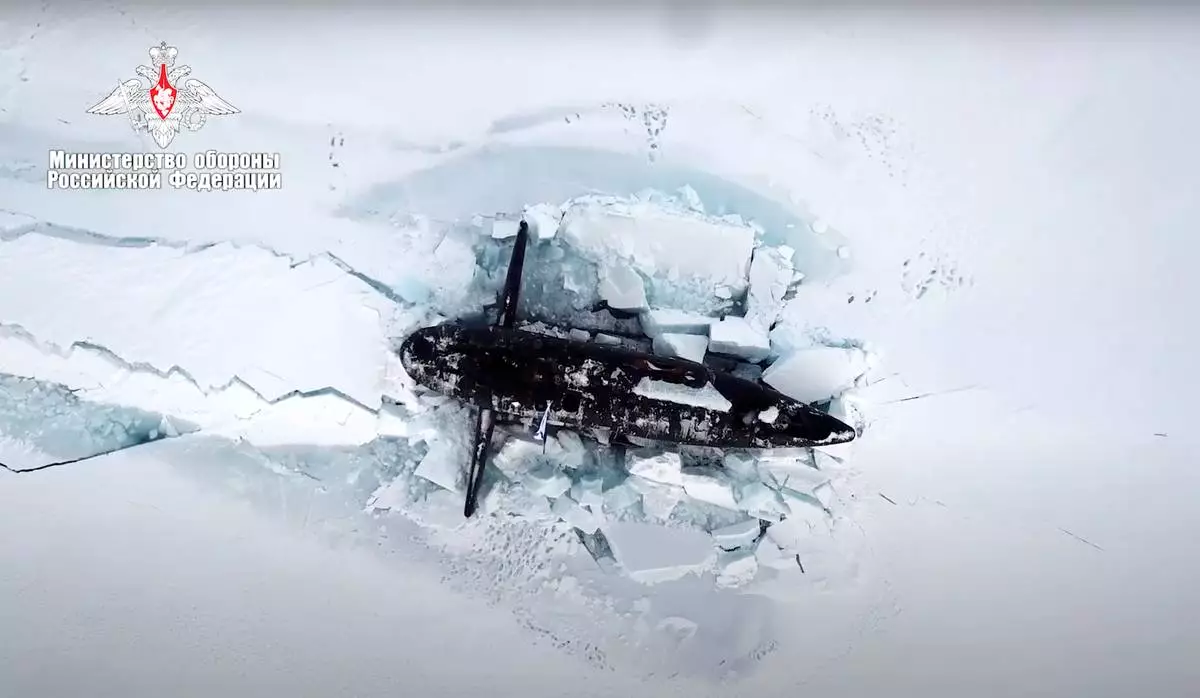
FILE - This photo taken from video released on March 26, 2021 by the Russian Defense Ministry press service shows a Russian nuclear submarine breaking through the Arctic ice during military drills at an unspecified location. (Russian Defense Ministry Press Service via AP, File)
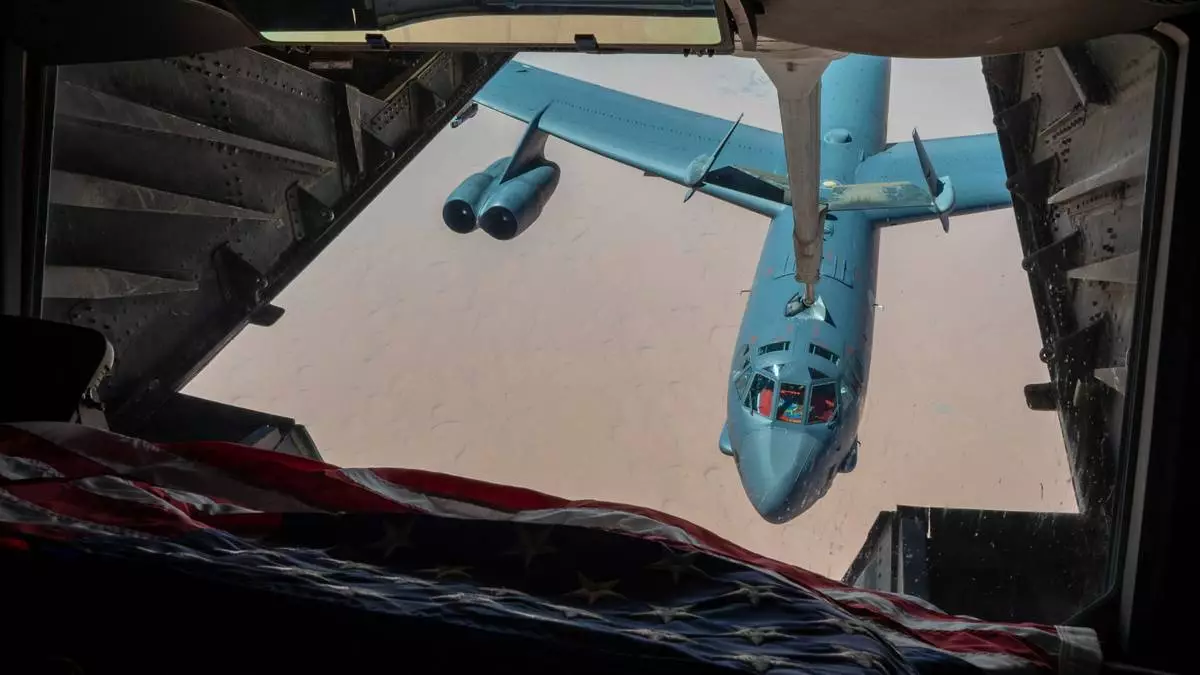
FILE - This photo released by the U.S. Air Force shows a B-52H Stratofortress approaching a KC-10 Extender for refueling over the Middle East, Sept. 4, 2022. (U.S. Air Force/Staff Sgt. Shannon Bowman, via AP, File)
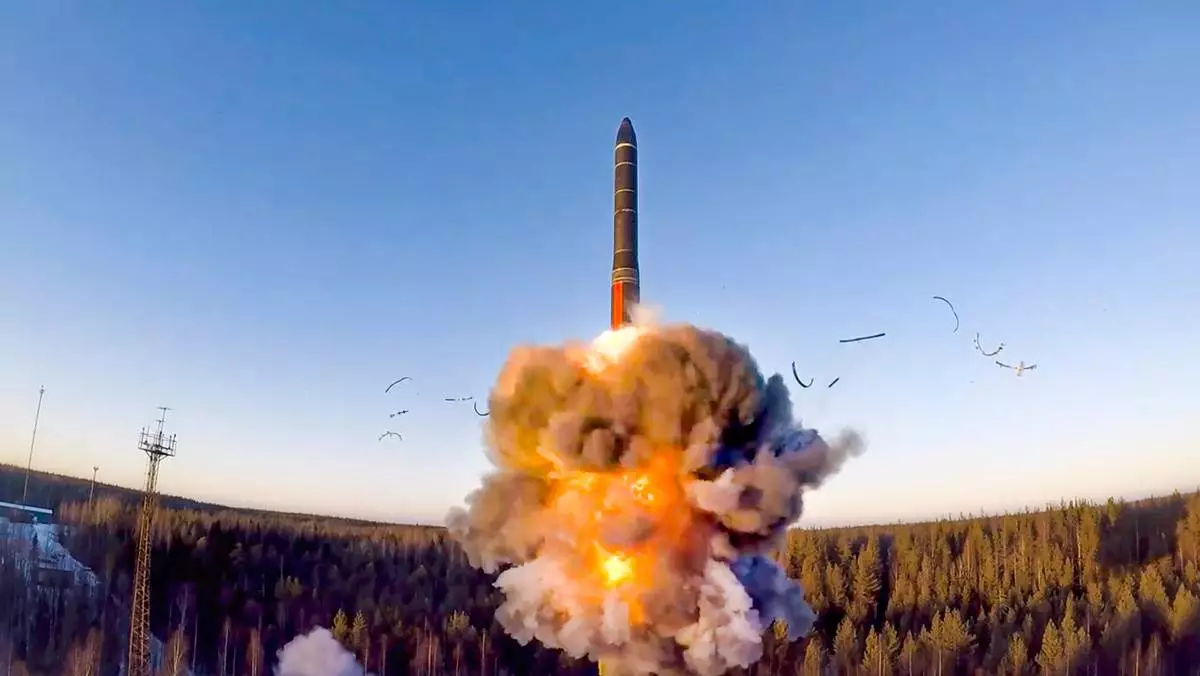
FILE - This photo taken from a video distributed on Dec. 9, 2020 by the Russian Defense Ministry Press Service, shows a rocket launch as part of a ground-based intercontinental ballistic missile test at the Plesetsk facility in northwestern Russia. (Russian Defense Ministry Press Service via AP, File)
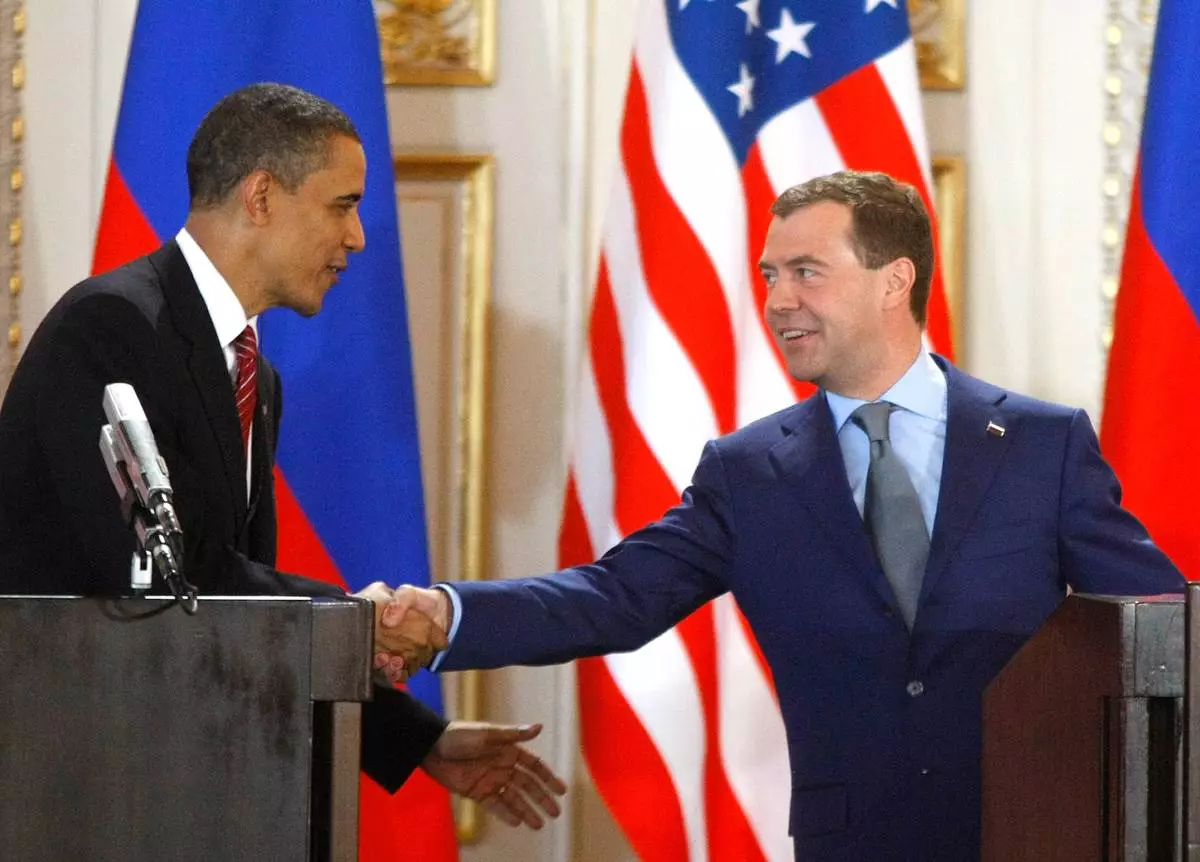
FILE - U.S. President Barack Obama, left, and his Russian counterpart Dmitry Medvedev, right, shake hands at a news conference at the Prague Castle in Prague, Czech Republic,, April 8, 2010, after signing the New START treaty reducing long-range nuclear weapons. (AP Photo/Mikhail Metzel, File)