RANDOLPH, Minn. (AP) — When Donald Trump promised new tariffs while running for president, Gene Stehly worried that trade disputes would jeopardize his international sales of corn, soybeans and wheat.
A little more than a year later, Stehly said his fears have become a reality, and Trump's latest promise of federal assistance is insufficient to cover farmers' losses.
“Maybe this will all come out to be better at the end, but I can tell you right now, it certainly isn’t the case at the moment," Stehly said.
Trump announced Monday that his administration would distribute $12 billion in one-time payments to farmers, who have suffered from persistently low commodity prices, rising costs and declining sales after China cut off all agricultural purchases from America during the trade war.
While rural areas remain conservative bastions, farmers' patience with Washington is wearing thin. Several of them described the government bailout, an echo of similar policies during Trump's first term, as a welcome stopgap but one that won't solve the agricultural industry's problems.
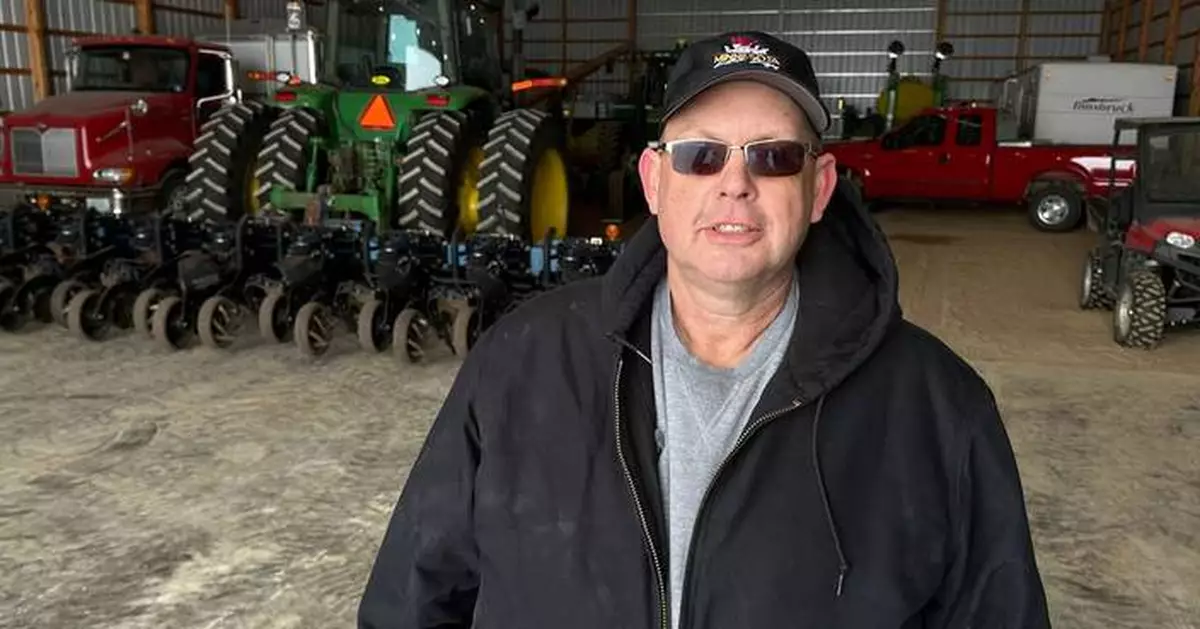
"It’s a bridge. It’s not the ultimate solution we’re looking for," said Charlie Radman, a fourth-generation farmer who grows corn and soybeans on the land his family has owned near Randolph, Minnesota, since 1899. “What we really want to have is a little more certainty and not have to rely on these ad hoc payments.”
American soybean and sorghum farmers typically export at least half of their crops. They were hit the hardest by Trump’s trade dispute with China, the world's largest buyer of soybeans that has increasingly relied on harvests from Brazil and other South American nations.
Trump and his Cabinet have boasted about the deal he struck with Chinese President Xi Jinping in October. But Liu Pengyu, the spokesperson for the Chinese embassy, said this week that “agriculture trade cooperation between China and the United States is proceeding in an orderly manner” without giving specifics.
So far, China has bought only about a quarter of the 12 million metric tons of soybeans that U.S. officials said would be purchased before the end of February, raising doubts on whether Beijing would follow through on that pledge or commitments to buy 25 million metric tons annually in the next three years. China hasn't confirmed those numbers.
“In general, I don’t trust their motives and integrity of their promises," said Bryant Kagay, who farms in northwest Missouri.
Even if China does buy the agreed amount of American soybeans, that would only bring U.S. farmers near to the amount they were selling every year before Trump took office.
That’s a big part of why Minnesota farmer Glen Groth said he’d “like to see the administration focus more on opening up markets outside of China.” In addition to finding other international buyers, agriculture groups are pushing to expand domestic uses like biodiesel, ethanol, aviation fuel and animal feed.
Dan Keitzer, a soybean and corn farmer in southeast Iowa, said recent bumper crops and technological advancements that produce bigger harvests means that the industry needs more customers.
“I think most farmers would tell you that they don’t want to go to the mailbox and get a check from the government. That’s not why we farm,” he said. “We need more demand for our product.”
Trump has placated farmers with money before. During his first term, he provided $22 billion in 2019 to help cushion them from trade disputes with China. There was $46 billion in 2020, an expanded number that reflected financial challenges from the COVID-19 pandemic.
The $12 billion that he announced this week won't quell farmers' fears about the future. They're already ordering supplies for next year’s crops and meeting with their bankers to discuss the loans they will need. But they’re trying to stay optimistic that crop prices will improve if they find more buyers.
The aid payments will be capped at $155,000 per farmer or entity, and only farms that make less than $900,000 in adjusted gross income will be eligible. But during the first Trump administration a number of large farms found ways around the payment limits and collected millions.
Farmers would like to see Trump aggressively tackle concerns about higher costs that are eating into their bottom line.
Trump signed an executive order over the weekend directing the Justice Department and Federal Trade Commission to investigate anti-competitive practices anywhere in the food supply chain, starting with the fertilizer, seed and equipment that farmers rely on and continuing to deal with meat packing companies and grocers who help determine what price consumers pay.
Tregg Cronin, who farms and ranches with his family in central South Dakota, said he’s grateful for the president’s acknowledgment that farmers are “caught in the middle” of the trade war.
But he said that any checks that farmers receive from the government will likely “get turned around and sent right out the door.”
Funk reported from Omaha, Nebraska. Associated Press writers Hannah Fingerhut in Des Moines, Iowa, Sarah Raza in Sioux Falls, South Dakota, and Didi Tang in Washington contributed to this report.

This screenshot taken from video shows Charlie Radman, a corn and soybean farmer, standing on the land his family has owned since 1899, near Randolph, Minn., Wednesday, Dec. 10, 2025. (AP Photo/Mark Vancleave)

Charlie Radman, a corn and soybean farmer, stands for a photo on the land his family has owned since 1899, near Randolph, Minn., Wednesday, Dec. 10, 2025. (AP Photo/Mark Vancleave)