Skip to Content Facebook Feature Image

11-year-old boy’s eyelashes grow surprisingly up to 4.3 cm when he was born 

11-year-old boy’s eyelashes grow surprisingly up to 4.3 cm when he was born 

11-year-old boy’s eyelashes grow surprisingly up to 4.3 cm when he was born 

2018-09-22 17:19 Last Updated At:17:19

Who wants long eyelashes?

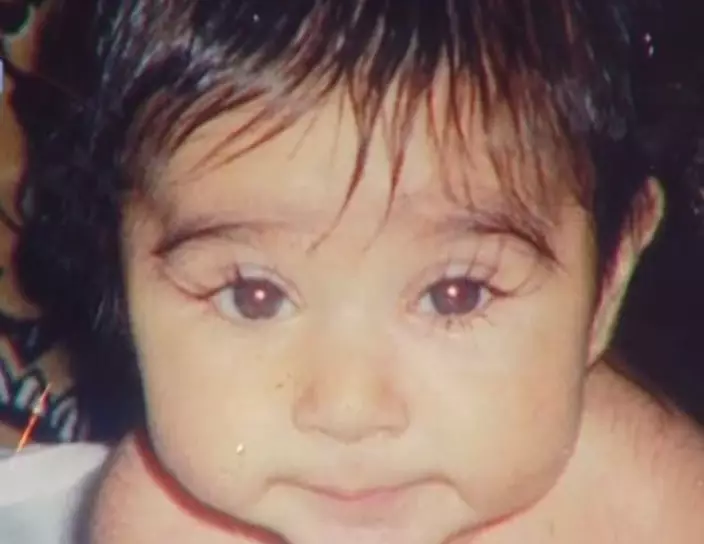
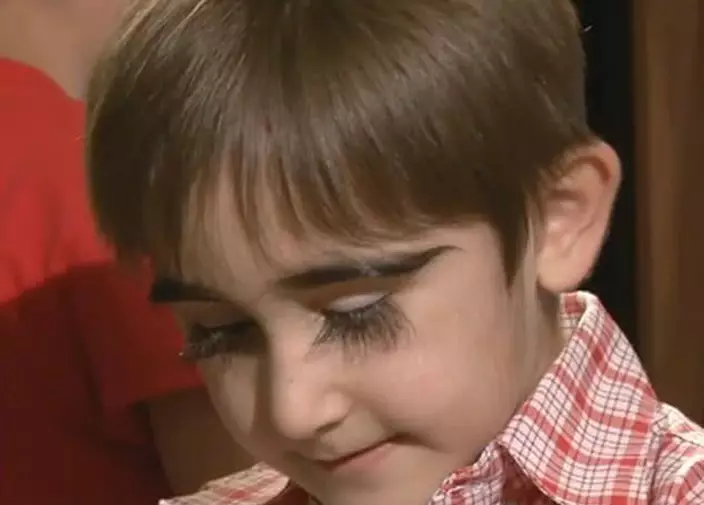
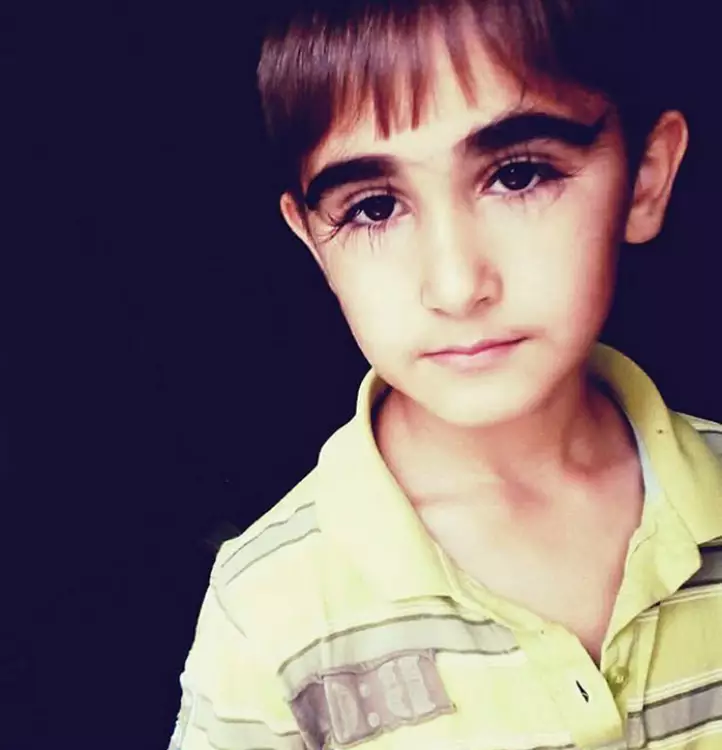
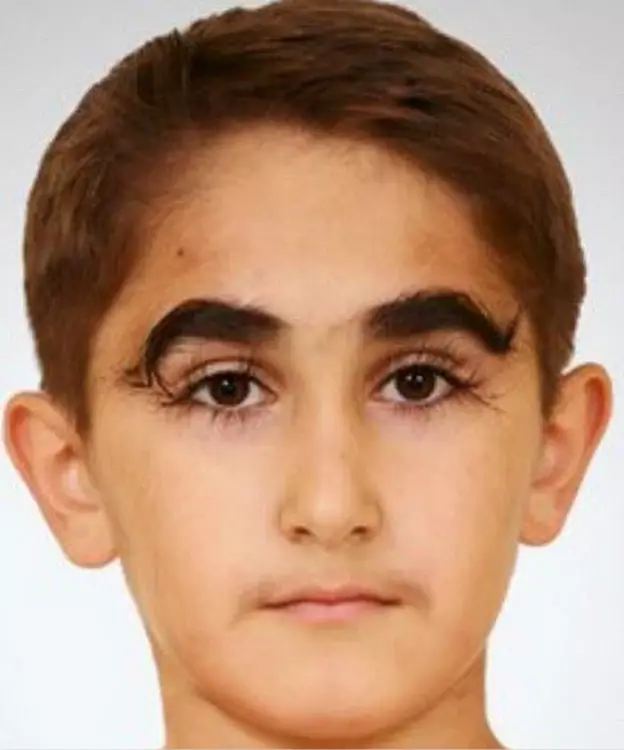
Many girls desire for long and thick eyelashes which make their eyes look more beautiful. However, this is no the case for Muin Bachonaev, an 11-year-old Russian boy whose eyelashes had reached 4.3 cm when he was born. 

More Images
Video screencap

Video screencap

Online photo

Online photo

Online photo

Online photo

Online photo

Online photo

Online photo

Online photo

Online photo

Online photo

Muin who now lives in Moscow was born in Tajik. His eyelashes have been so "distinct" from the average person. They were 4.3 cm long when they were born. The length was long enough to touch his lips.
Video screencap

Video screencap

His family thought his eyelashes were too exaggerated and they were worried his son was sick, while doctors said he was very healthy and explained to them the long eyelashes may be due to the medication taken by the mother during pregnancy.
Online photo

Online photo

But this little problem does not make Muin feel inferior and uneasy. Although some may be feared his eyelashes, he felt that he is living like a normal person, and he hasn't encountered difficulties. He didn't have special care or treatment to them. 
Online photo
Online photo

Online photo

Online photo

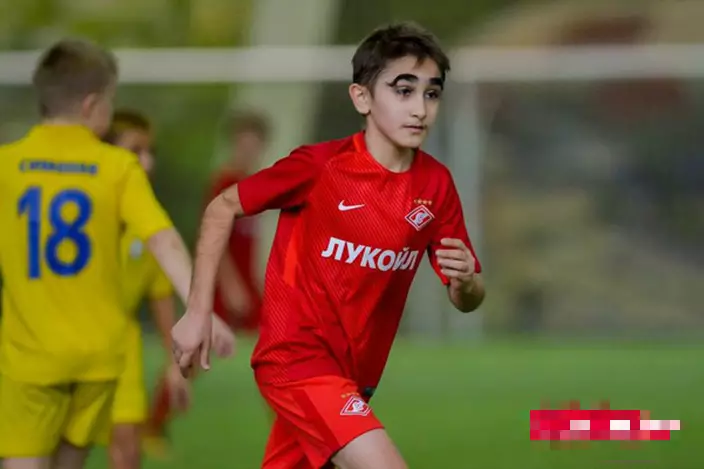
Muin breaks the record of Russia's longest eyelashes. He has a dream, that is, he hopes to become a football player in the future, and his father is proud of such a son.
Online photo

Online photo

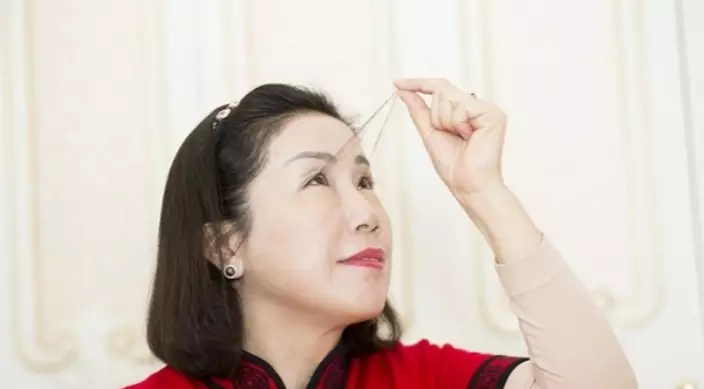
At present, the longest record holder for eyelashes in the world is a Chinese woman with a total length of 14 cm.
Online photo

Online photo

Russia on Saturday condemned the U.S.-Israeli strikes on Iran as “a preplanned and unprovoked act of armed aggression against a sovereign and independent U.N. member state,” demanding an immediate halt to the military campaign and a return to diplomacy.

In a statement posted to Telegram, the Foreign Ministry accused Washington and Tel Aviv of “hiding behind” concerns about Iran’s nuclear program while actually pursuing regime change.

It warned the attacks risked triggering a “humanitarian, economic and possibly radiological catastrophe” in the region and accused the U.S. and Israel of “plunging the Middle East into an abyss of uncontrolled escalation.”

Russia has emerged as a key trade partner and supplier of weapons and technologies for Iran, which has faced bruising international sanctions. Though Russia’s Foreign Ministry was quick to condemn the U.S.-Israeli attacks, the Kremlin will likely carefully assess its response following a recent warming of ties between Moscow and Washington.

Russian President Vladimir Putin has praised U.S. President Donald Trump’s efforts to mediate an end to the conflict in Ukraine, and Moscow and Washington have discussed ways to revive their economic ties.

Russian Foreign Minister Sergey Lavrov spoke by phone with Iranian Foreign Minister Abbas Araghchi, Russia's Foreign Ministry said. Araghchi briefed Lavrov on Iran’s attempts to repel the attacks and said Iran would seek to convene an urgent U.N. Security Council session, it said. Lavrov reiterated Russia’s condemnation of the U.S.-Israeli strikes and Moscow’s readiness to help broker peace.

Kremlin spokesman Dmitry Peskov said Putin discussed the situation in Iran with Russia's Security Council via videoconference, but did not give details.

In the Foreign Ministry statement, Moscow called the bombing of nuclear facilities under International Atomic Energy Agency safeguards “unacceptable” and said it stood ready to help broker a peaceful resolution, while placing full responsibility for the escalation on the United States and Israel.

"Responsibility for the negative consequences of this manmade crisis, including an unpredictable chain reaction and spiraling violence, lies entirely with them," the statement said.

Russia's Foreign Ministry also condemned what it called “the serial nature of destabilizing attacks carried out by the U.S. administration," accusing the U.S. of attacking "the international legal pillars of the world order."

Russia has maintained a delicate balancing act in the Middle East for decades, trying to navigate its warm relations with Israel even as it has developed strong economic and military ties with Iran.

Iranian forces and Russian sailors conducted annual drills in the Gulf of Oman and the Indian Ocean last week aimed at “upgrading operational coordination as well as exchange of military experiences,” Iran’s state-run IRNA news agency reported.

Putin and his Iranian counterpart, Masoud Pezeshkian, signed a broad cooperation pact in January last year as their countries deepened their partnership in the face of stinging Western sanctions.

The West alleges that in 2022, Russia and Iran signed a $1.7 billion deal for Shahed drones after Putin sent troops into Ukraine, and the U.S. also believes Iran has transferred short-range ballistic missiles, but neither Moscow nor Tehran ever acknowledged the actions.

Ukrainian President Volodymyr Zelenskyy voiced support for the strikes on Iran, calling it "an accomplice of Putin” for supplying Moscow with Shahed drones and the technology to produce them and other weapons during its four-year war against Ukraine.

Russia and Iran also pooled their efforts to shore up Bashar Assad’s government during Syria’s civil war, but failed to prevent his downfall after a lightning offensive by the opposition. Assad and his family fled to Russia.

Some observers in Moscow argue that the focus on the confrontation between Israel and Iran could distract global attention from the war in Ukraine and play into Russia’s hands by potentially weakening Western support for Kyiv.

FILE -The main building of Russia's Foreign Ministry dominates the skyline in downtown Moscow, Aug. 16, 2006, with a Soviet Union state emblem on the facade. (AP Photo/Mikhail Metzel, File)

FILE -The main building of Russia's Foreign Ministry dominates the skyline in downtown Moscow, Aug. 16, 2006, with a Soviet Union state emblem on the facade. (AP Photo/Mikhail Metzel, File)

Recommended Articles