Skip to Content Facebook Feature Image

Convicted killer of Kim Wall on last day of sentence appeals

News

Convicted killer of Kim Wall on last day of sentence appeals
News

News

Convicted killer of Kim Wall on last day of sentence appeals

2018-09-26 16:44 Last Updated At:16:50

Danish submarine inventor Peter Madsen, convicted of torturing and murdering Swedish reporter Kim Wall last year, appeared in court Wednesday on the last day of his appeal against a life sentence.

Closing remarks had been adjourned Sept. 14 after a juror collapsed. The hearing resumed Wednesday.

Madsen, in a dark blazer, black T-shirt and gray pants, listened quietly at the Eastern High Court where the prosecutor demanded life, saying the motive was sexual and the crime was planned.
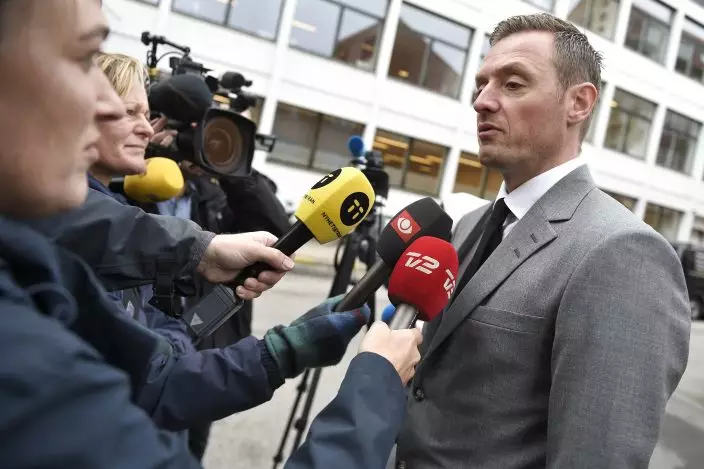
Prosecutor Kristian Kirk talks to the media as he arrives at the Eastern High Court in Copenhagen, Denmark, Wednesday Sep. 26, 2018. Danish inventor Peter Madsen, convicted of torturing and murdering Swedish reporter Kim Wall last year, appeared in court on the last day of his appeal against a life sentence. (Liselotte SabroeRitzau Scanpix via AP)

Prosecutor Kristian Kirk talks to the media as he arrives at the Eastern High Court in Copenhagen, Denmark, Wednesday Sep. 26, 2018. Danish inventor Peter Madsen, convicted of torturing and murdering Swedish reporter Kim Wall last year, appeared in court on the last day of his appeal against a life sentence. (Liselotte SabroeRitzau Scanpix via AP)

In Denmark, a life sentence is on average 16 years, but can be extended if necessary. Madsen, 47, wants a time-limited sentence, not an open-ended prison term.

It is unclear when the verdict will be announced.

Madsen denies murdering Wall, saying she died accidentally inside the submarine, but has confessed to throwing her body parts into the Baltic Sea.
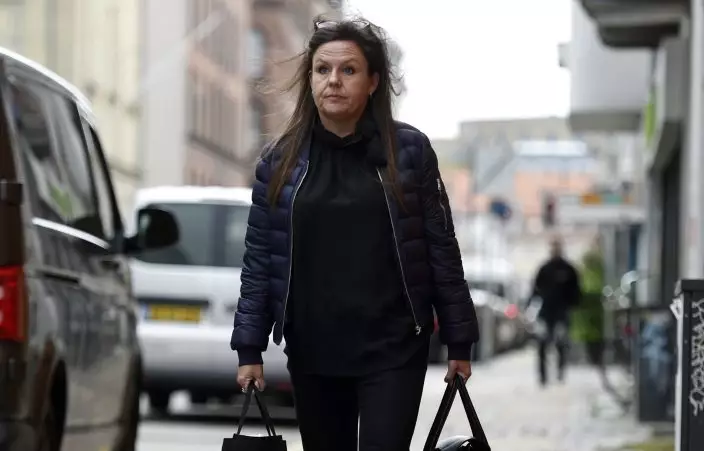
Defence attorney Betina Hald Engmark arrives at the Eastern High Court in Copenhagen, Denmark, Wednesday Sept. 26, 2018. Danish inventor Peter Madsen, convicted of torturing and murdering Swedish reporter Kim Wall last year, appeared in court on the last day of his appeal against a life sentence. (Liselotte SabroeRitzau Scanpix via AP)

Defence attorney Betina Hald Engmark arrives at the Eastern High Court in Copenhagen, Denmark, Wednesday Sept. 26, 2018. Danish inventor Peter Madsen, convicted of torturing and murdering Swedish reporter Kim Wall last year, appeared in court on the last day of his appeal against a life sentence. (Liselotte SabroeRitzau Scanpix via AP)

On April 25, Madsen was found guilty by the Copenhagen City Court of murder, sexual assault and the dismembering of Wall. The court ruled unanimously that Madsen had lured Wall, 30, onto his home-made submarine with the promise of an interview.

Prosecutor Kristian Kirk said Wall could not escape and "likely had begged for her life" while Madsen carried out "a sadistic, yes inhuman, sexual fantasy," and Madsen had been planning the murder and "just waited for a victim."

"I hope we never will see such a case again," Kirk told court.

Madsen had a sadistic interest in so-called snuff videos where women are tortured and killed, and he likely filmed the killing, Kirk said.

No video of Wall's murder has been found. Kirk said snuff videos which Madsen had not produced himself had been found on his personal computer.

"Kim Wall walked directly into a death trap," Kirk said before looking up at Madsen who listened with his hands folded on the table: "I cannot see any other sentence than life."

The cause of death has never been established.

Ingrid and Joachim Wall, the reporter's parents, were present in court.
WASHINGTON (AP) — President Donald Trump is meeting with oil executives at the White House on Friday in hopes of securing $100 billion in investments to revive Venezuela’s ability to fully tap into its expansive reserves of petroleum — a plan that rides on their comfort in making commitments in a country plagued by instability, inflation and uncertainty.

Since the U.S. military raid to capture former Venezuelan leader Nicolás Maduro on Saturday, Trump has quickly pivoted to portraying the move as a newfound economic opportunity for the U.S., seizing tankers carrying Venezuelan oil, saying the U.S. is taking over the sales of 30 million to 50 million barrels of previously sanctioned Venezuelan oil and will be controlling sales worldwide indefinitely.

On Friday, U.S. forces seized their fifth tanker over the past month that has been linked to Venezuelan oil. The action reflected the determination of the U.S. to fully control the exporting, refining and production of Venezuelan petroleum, a sign of the Trump administration's plans for ongoing involvement in the sector as it seeks commitments from private companies.

It's all part of a broader push by Trump to keep gasoline prices low. At a time when many Americans are concerned about affordability, the incursion in Venezuela melds Trump’s assertive use of presidential powers with an optical spectacle meant to convince Americans that he can bring down energy prices.

The meeting, set for 2:30 p.m. EST, will be open to the news media, according to an update to the president's daily schedule. “At least 100 Billion Dollars will be invested by BIG OIL, all of whom I will be meeting with today at The White House,” Trump said Friday in a pre-dawn social media post.

Trump is set to meet with executives from 17 oil companies, according to the White House. Among the companies attending are Chevron, which still operates in Venezuela, and ExxonMobil and ConocoPhillips, which both had oil projects in the country that were lost as part of a 2007 nationalization of private businesses under Maduro’s predecessor, Hugo Chávez.

The president is meeting with a wide swath of domestic and international companies with interests ranging from construction to the commodity markets. Other companies slated to be at the meeting include Halliburton, Valero, Marathon, Shell, Singapore-based Trafigura, Italy-based Eni and Spain-based Repsol.

Large U.S. oil companies have so far largely refrained from affirming investments in Venezuela as contracts and guarantees need to be in place. Trump has suggested on social media that America would help to backstop any investments.

Venezuela’s oil production has slumped below one million barrels a day. Part of Trump's challenge to turn that around will be to convince oil companies that his administration has a stable relationship with Venezuela’s interim President Delcy Rodríguez, as well as protections for companies entering the market.

Secretary of State Marco Rubio, Energy Secretary Chris Wright and Interior Secretary Doug Burgum are slated to attend the oil executives meeting, according to the White House.

Meanwhile, the United States and Venezuelan governments said Friday they were exploring the possibility of r estoring diplomatic relations between the two countries, and that a delegation from the Trump administration arrived to the South American nation on Friday.

The small team of U.S. diplomats and diplomatic security officials traveled to Venezuela to make a preliminary assessment about the potential re-opening of the U.S. Embassy in Caracas, the State Department said in a statement.

Trump also announced on Friday he’d meet with President Gustavo Petro in early February, but called on the Colombian leader to make quick progress on stemming flow of cocaine into the U.S.

Trump, following the ouster of Maduro, had made vague threats to take similar action against Petro. Trump abruptly changed his tone Wednesday about his Colombian counterpart after a friendly phone call in which he invited Petro to visit the White House.

President Donald Trump waves as he walks off stage after speaking to House Republican lawmakers during their annual policy retreat, Tuesday, Jan. 6, 2026, in Washington. (AP Photo/Evan Vucci)

President Donald Trump waves as he walks off stage after speaking to House Republican lawmakers during their annual policy retreat, Tuesday, Jan. 6, 2026, in Washington. (AP Photo/Evan Vucci)

Recommended Articles