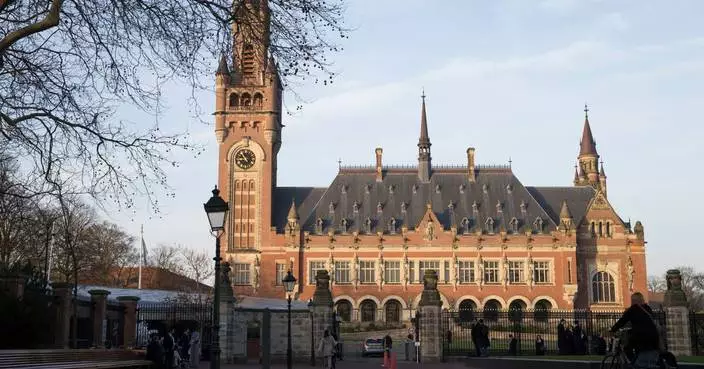
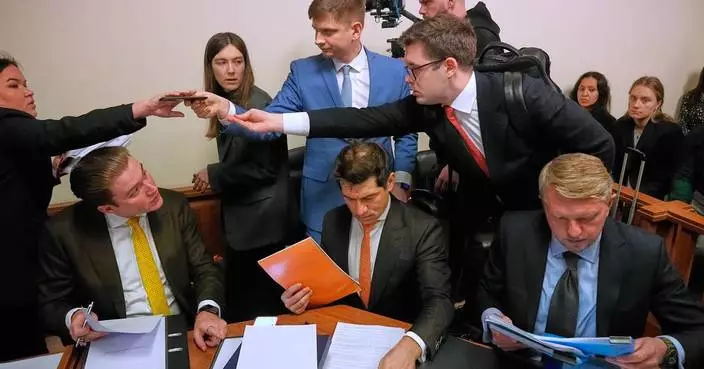
Tension flared in a familiar section of the Balkans as thousands of people marched Saturday in Kosovo's capital against a possible territory swap with former war foe Serbia, while the Serbian government put its troops on alert after special police were deployed to Kosovo's Serb-dominated north.
Serbia reacted after Kosovo's special police moved into an area around the Kosovo side of the strategic Gazivode Lake, Marko Djuric, director of Serbia's Office for Kosovo and Metohija, said.
Kosovar President Hashim Thaci visited the area near Serbia's border Saturday, a move that temporarily redirected attention away from the large opposition protest in Pristina. A security unit was dispatched to the area for the president's stop, Kosovo police said.
Serbia's Djuric said special troops must not be deployed unannounced to northern Kosovo, where the country's ethnic Serbian minority population is concentrated. Serbian media said Belgrade has complained to NATO Secretary General Jens Stoltenberg.
Serbia does not recognize Kosovo's 2008 declaration of independence, but their governments have been in European Union-mediated negotiations for seven years. The two sides have been told they must normalize relations as a precondition to EU membership.
Thaci has said a "border correction" could be part of the discussions. Some Serbian officials have suggested an exchange of territories could help end the dispute.
One idea that has been floated by politicians in both countries involves exchanging predominantly ethnic Albanian Presevo Valley in southern Serbia with Kosovo's Serb-populated north.
However, the idea has faced opposition from Germany and other EU nations, which have said they fear a Kosovo-Serbia trade could trigger demands for territory revisions in other parts of the volatile Balkans.
Thousands of supporters of Kosovo's opposition Self-Determination Party marched peacefully through the capital of Pristina on Saturday to protest any potential change of borders. The protesters held national Albanian flags.
Opposition leader Albin Kurti said he considered Thaci a collaborator with Serbia and called for fresh elections.
"Such a grandiose protest is our response to the deals from Thaci and Vucic," Kurti said.
Thaci has rejected both border revisions based on ethnicity and a possible land trade.
But he has not clarified how Serbia could be persuaded to give away the Presevo Valley without something in exchange.
Three weeks ago, Serbian leader Vucic visited the lake in northern Kosovo that Thaci traveled to Saturday.
NATO-led peacekeepers in Kosovo, a force known as KFOR, called for calm and restraint. They said they would continue monitoring the situation along the Serbia-Kosovo border with ground patrols and helicopters.
Thaci's office issued a statement acknowledging his visit to a border crossing and the lake.
"During the weekends the head of state usually goes to Kosovo's beauties," the statement said.
The governments in both Pristina and Belgrade have said they hope the EU-mediated talks will result in a legally binding agreement.
"Talks (with Serbia) that continue will be on peace and stability," Thaci said Saturday.
This story has been corrected to show that Serbia's president was in northern Kosovo three weeks ago, not two.
Follow Llazar Semini on twitter: https://twitter.com/lsemini
MOSCOW (AP) — Members of a Russia-led economic alliance on Friday warned member Armenia that it could face suspension over its aspirations to join the European Union as tensions continued to simmer between the Kremlin and the Armenian leadership.
Russian President Vladimir Putin and leaders of Belarus, Kazakhstan and Kyrgyzstan, who attended a summit of the Eurasian Economic Union in Kazakhstan's capital of Astana, noted that Armenia's bid for the EU membership creates “significant risks” for their economic security. They ordered their officials to prepare a report in December on “possible consequences of suspending” Armenia's membership in the grouping.
The four leaders also urged Armenia to hold a referendum to offer voters a choice between seeking a membership in the EU or staying in the Eurasian Economic Union, a single market created in 2015 to allow the free movement of goods, capitals and labor. Armenia's Prime Ministe r Nikol Pashinyan has previously rejected the idea of holding the vote.
The warning comes just over a week before Armenia's parliamentary elections on June 7, in which Pashinyan, in power since 2018, seeks to retain his job.
Armenia, which signed a U.S.-brokered agreement last year ending decades of hostilities with Azerbaijan, has increasingly sought to forge closer ties with the U.S. and the EU. Pashinyan has declared an intention to join the EU and his government has suspended the country’s participation in a Moscow-dominated security pact, the Collective Security Treaty Organization.
Armenia's westward shift has angered the Kremlin. Putin has warned Pashinyan that his country would suffer massive economic damage if it pursues its EU aspirations. In recent days, Moscow warned Armenia that it could stop supplies of cheap natural gas and banned imports of Armenian brandy, fruit and vegetables, part of the Kremlin's efforts to sway the outcome of Armenia's election.
Putin has said Armenia can't be a member of both the EU and the Eurasian Economic Union. He warned Friday that Armenia could lose up to 14% of its Gross Domestic Product if it opts out of the Moscow-dominated bloc.
Pashinyan has countered Putin's warnings by arguing that for now Armenia can combine its membership in the Eurasian Economic Union with developing cooperation with the EU.
Speaking Friday, Putin also compared the current arguments with Armenia to the developments in Ukraine, whose bid to sign an association deal with the EU led to the ouster of its Moscow-friendly president, Russia's annexation of Ukraine's Crimean Peninsula in 2014 and Moscow's support for a separatist insurgency in eastern Ukraine that erupted the same year. In February 2022, Putin sent troops into Ukraine, staring the largest military conflict in Europe since World War II.
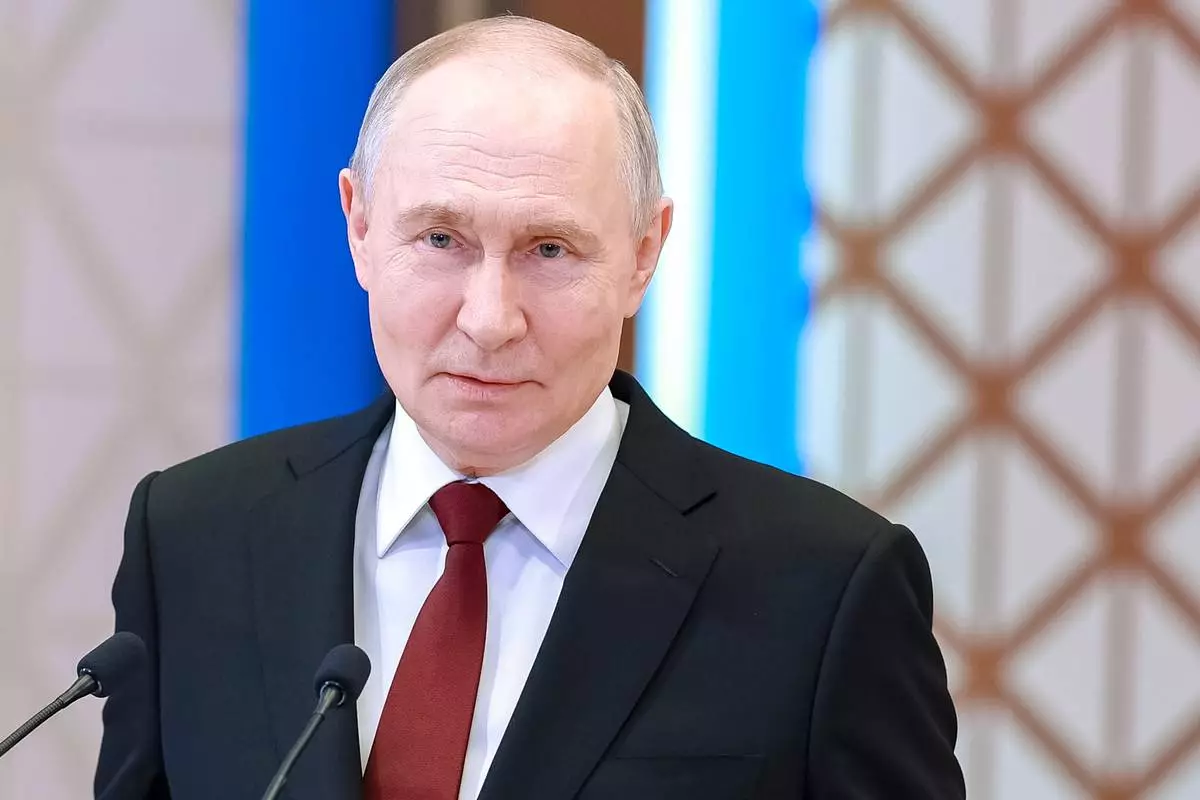
Russian President Vladimir Putin holds a news conference after the Supreme Eurasian Economic Union summit in Astana, Kazakhstan, Friday, May 29, 2026. (Alexander Shcherbak/Sputnik, Kremlin Pool Photo via AP)
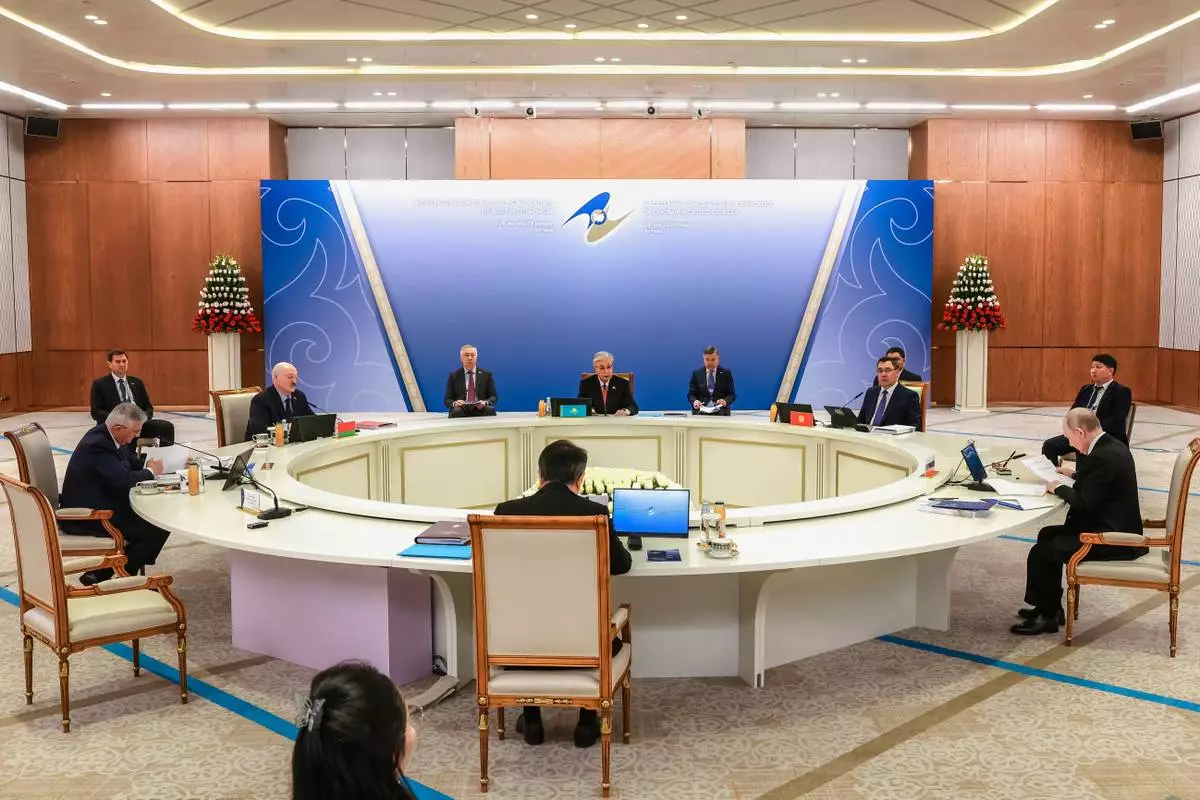
A view of the session of the Supreme Eurasian Economic Council summit at the Independence Palace in Astana, Kazakhstan, Friday, May 29, 2026. (Alexander Kazakov, Sputnik, Kremlin Pool Photo via AP)
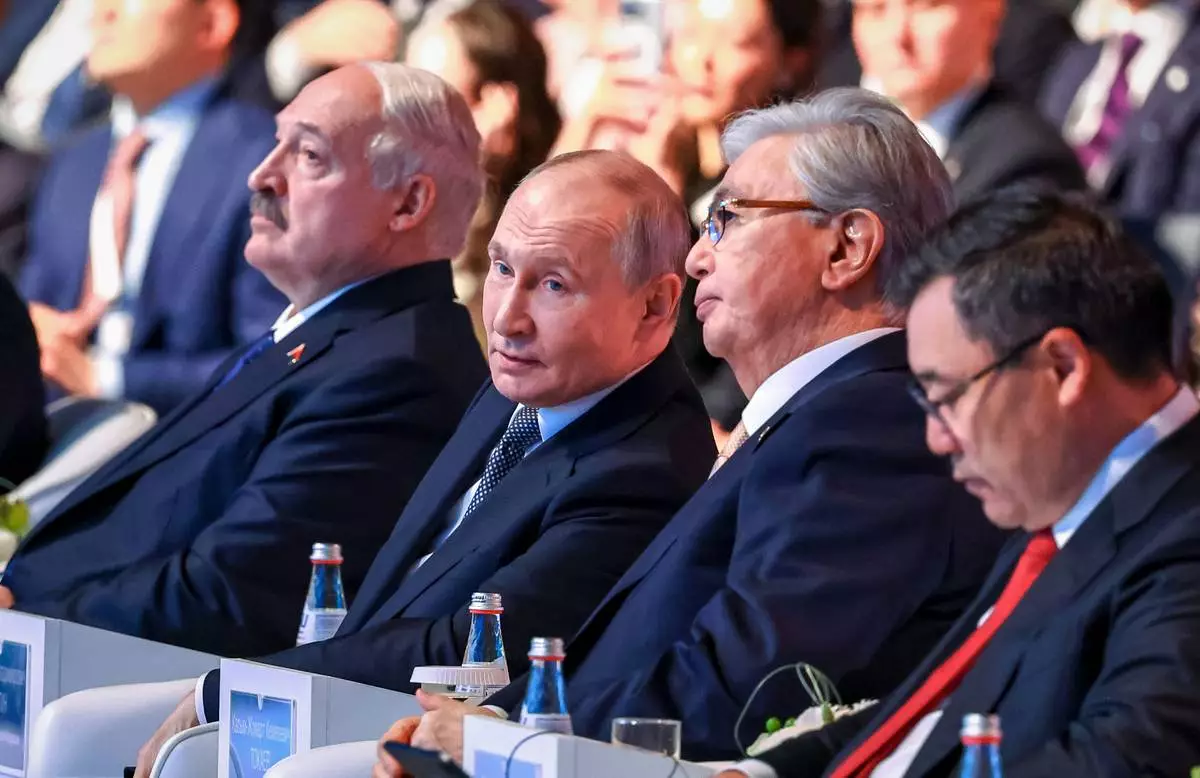
Front from left: Belarusian President Alexander Lukashenko, Russian President Vladimir Putin, Kazakhstan's President Kassym-Jomart Tokayev, and Kyrgyztan's President Sadyr Zhaparov attend a plenary session of the Eurasian Economic Forum in Astana, Kazakhstan, Thursday, May 28, 2026. (Alexander Kazakov/Sputnik, Kremlin Pool Photo via AP)