BRUSSELS (AP) — The European Union will unlock 16.4 billion euros (around $19 billion) in funds for Hungary, officials said Friday, after new Prime Minister Péter Magyar enacted rapid reforms to roll back the democratic backsliding that occurred under his predecessor.
The release of the funds was a signal of Brussels’ embrace of the new government in Budapest after the 16-year tenure of Viktor Orbán, who was allied with Russia and antagonized the EU.
Click to Gallery
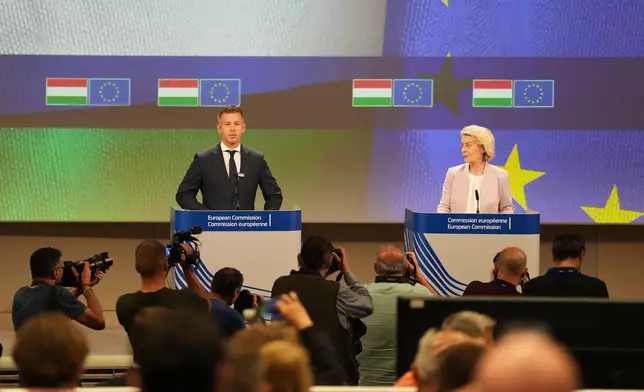
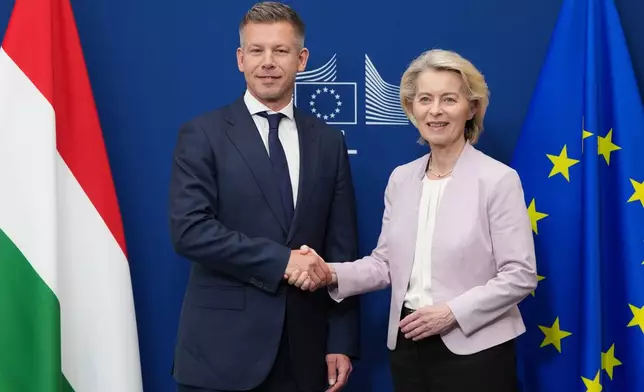
European Commission President Ursula von der Leyen, right, and Hungary's Prime Minister Peter Magyar address the media at EU headquarters in Brussels, Friday, May 29, 2026. (AP Photo/Virginia Mayo)
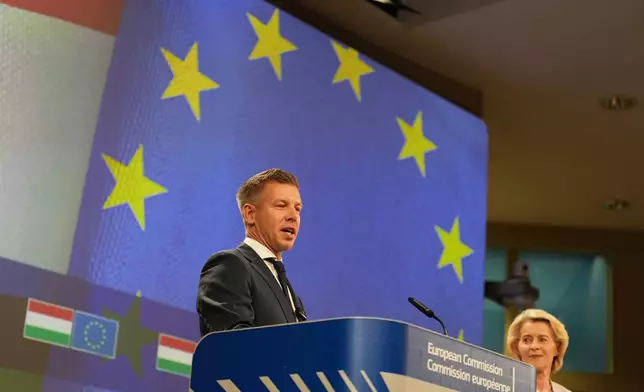
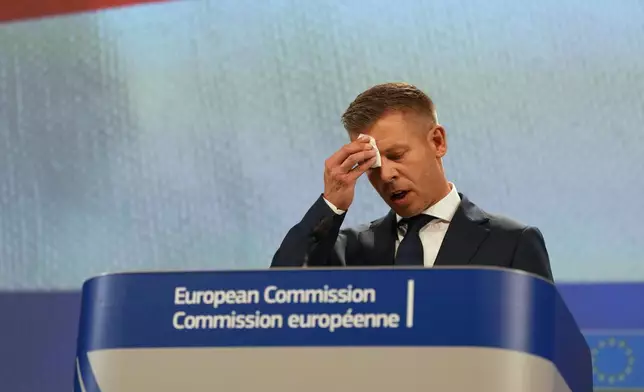
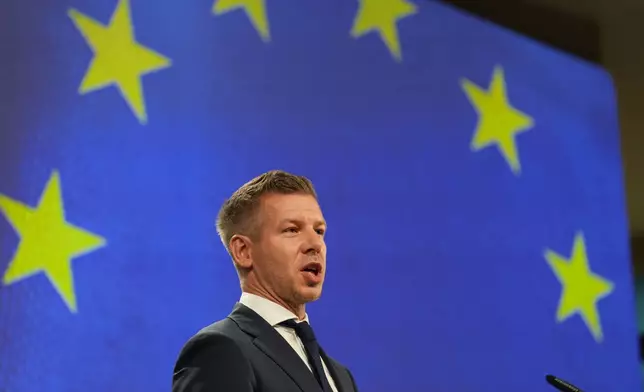
Hungary's Prime Minister Peter Magyar addresses the media at EU headquarters in Brussels, Friday, May 29, 2026. (AP Photo/Virginia Mayo)
European Commission President Ursula von der Leyen, right, and Hungary's Prime Minister Peter Magyar address the media at EU headquarters in Brussels, Friday, May 29, 2026. (AP Photo/Virginia Mayo)
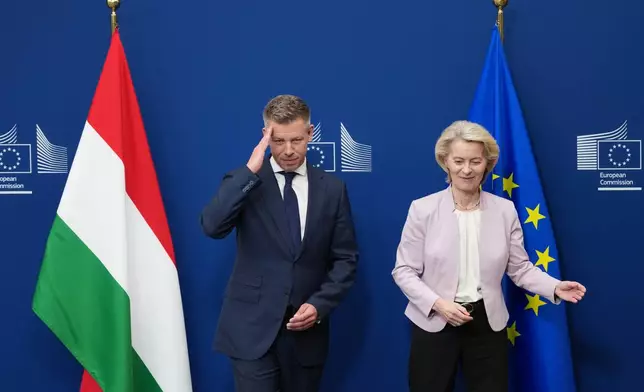
European Commission President Ursula von der Leyen, right, greets Hungary's Prime Minister Peter Magyar prior to a meeting at EU headquarters in Brussels, Friday, May 29, 2026. (AP Photo/Virginia Mayo)
Hungary's Prime Minister Peter Magyar addresses the media at EU headquarters in Brussels, Friday, May 29, 2026. (AP Photo/Virginia Mayo)
European Commission President Ursula von der Leyen, right, greets Hungary's Prime Minister Peter Magyar prior to a meeting at EU headquarters in Brussels, Friday, May 29, 2026. (AP Photo/Virginia Mayo)
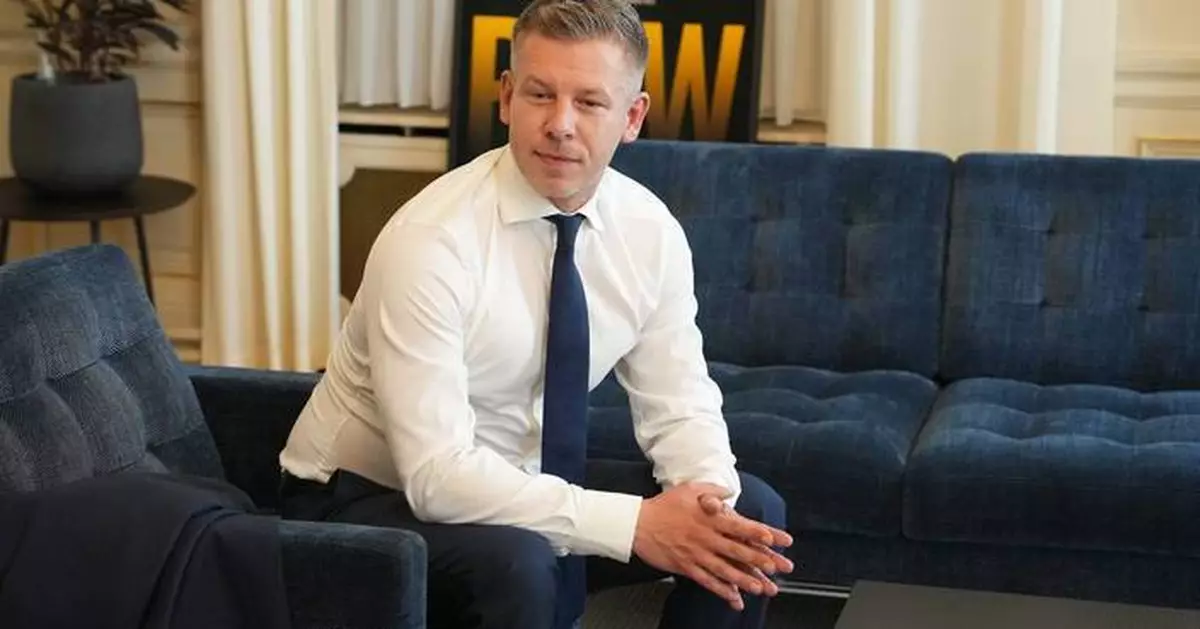
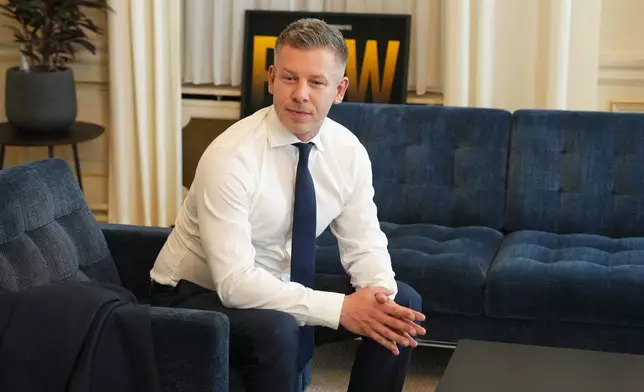
Hungary's Prime Minister Peter Magyar poses as he meets with Belgium's Prime Minister Bart De Wever in Brussels, Thursday, May 28, 2026. (AP Photo/Marius Burgelman)
The agreement, announced during a media briefing in Brussels on Friday by European Commission President Ursula von der Leyen, capped off weeks of negotiations between Magyar’s government and the EU to release the crucial funding that is badly needed by Hungary’s slumping economy.
Magyar called the deal “a historic breakthrough” for the nation, and said that his government was "very grateful, and we are ready to continuing cooperating together in the interest of the Hungarian people and all the European citizens.”
Partly by campaigning on forging stronger ties with the EU, Magyar's earthquake success in the April election ended the long tenure of Orbán, who had vilified von der Leyen and other powerbrokers in the 27-nation bloc as he hollowed out institutional checks and balances in Hungary.
Those actions, and concerns over corruption and the erosion of judicial independence, prompted the EU to freeze the billions in funding to Budapest in 2022. A year later, the commission found that the government had carried out sufficient reforms to have around 10.2 billion euros ($12.1 billion) released.
On Friday, von der Leyen said that only a few weeks since Magyar's new government took office, "we can already feel a strong wind of change across Hungary.”
“A great deal of work has already been achieved in very short time, and markets are already taking notice. Investors confidence is returning. Trust is being rebuilt,” she said.
After Magyar's party Tisza won a super-majority in parliament, which enabled deep and quick reforms, leaders in Brussels and Budapest prioritized releasing the funds as soon as possible to help Hungary's economy, which has stagnated for years.
The funds are split between 10 billion euros ($11.6 billion) of COVID-19 recovery funds and more than 6.3 billion euros ($7.3 billion) in the cohesion funds designed to lift up struggling economies within the EU.
Magyar's government has undertaken crucial changes like restoring judicial independence, academic and media freedom, and launching broad anti-corruption efforts in order to get access to the money.
On Friday, Magyar formally submitted Hungary's request to sign on to the European Public Prosecutor's Office, the EU’s corruption watchdog based in Luxembourg that Orbán's government had long refused to join.
He told reporters that Orbán's government — which frequently portrayed the EU as an oppressive force bent on punishing Hungary for its anti-immigration and anti-LGBTQ+ policies — had “lied to the Hungarian people constantly" about why the funds had been frozen.
“The real reason the European institutions and the European Union were not in a position to release (the funds) was corruption,” he said. “There was a degree of corruption that for a long time was unthinkable in the European Union, and in Hungary as well.”
Von der Leyen also announced deeper integration of Hungary into EU institutions. For example, Hungarian students will once again be able to join the Erasmus scholarship program that allows students to attend schools across the EU, an opportunity that had been suspended under Orbán.
Justin Spike reported from Budapest, Hungary.

European Commission President Ursula von der Leyen, right, and Hungary's Prime Minister Peter Magyar address the media at EU headquarters in Brussels, Friday, May 29, 2026. (AP Photo/Virginia Mayo)

Hungary's Prime Minister Peter Magyar addresses the media at EU headquarters in Brussels, Friday, May 29, 2026. (AP Photo/Virginia Mayo)

European Commission President Ursula von der Leyen, right, and Hungary's Prime Minister Peter Magyar address the media at EU headquarters in Brussels, Friday, May 29, 2026. (AP Photo/Virginia Mayo)
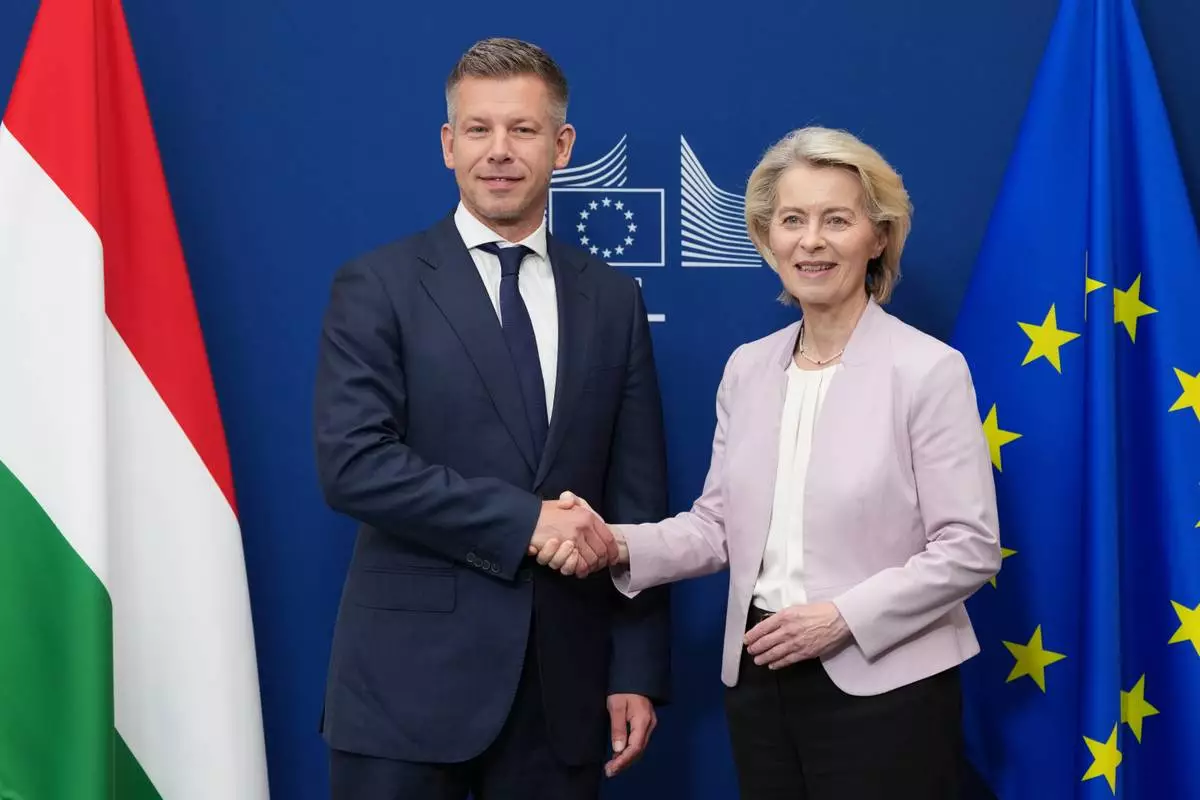
European Commission President Ursula von der Leyen, right, greets Hungary's Prime Minister Peter Magyar prior to a meeting at EU headquarters in Brussels, Friday, May 29, 2026. (AP Photo/Virginia Mayo)
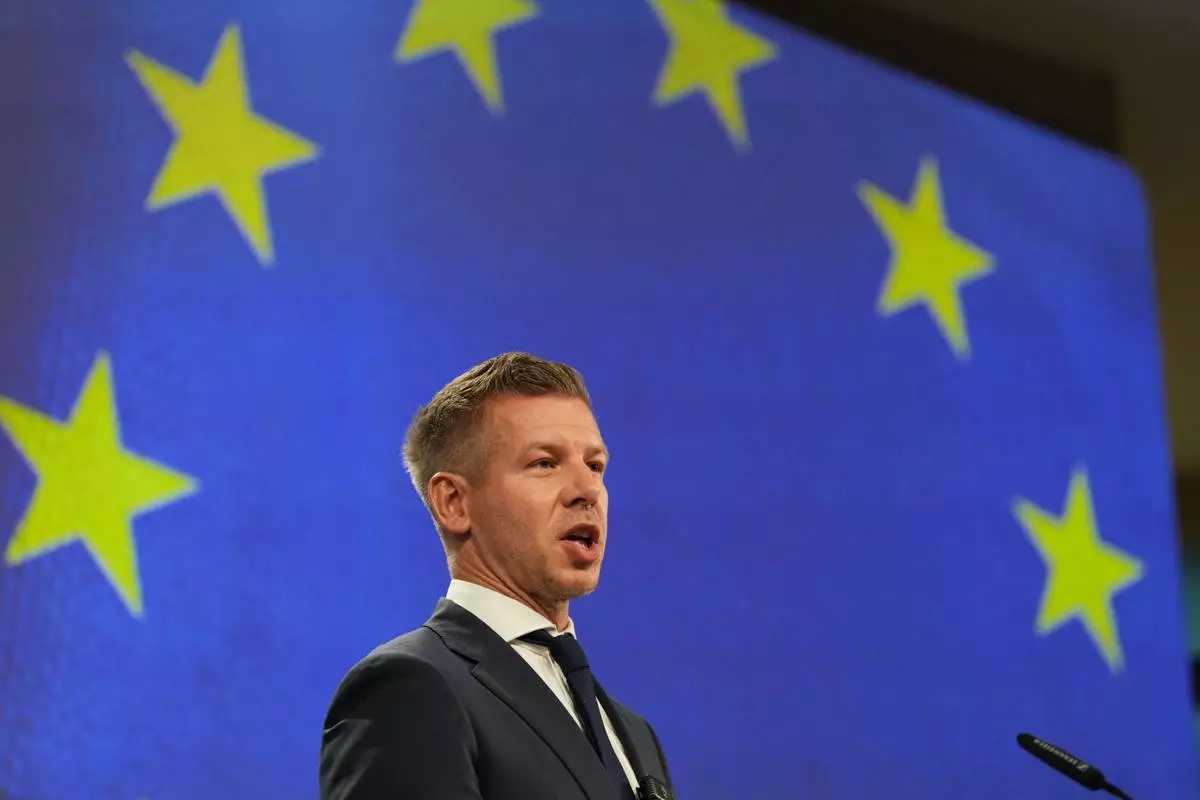
Hungary's Prime Minister Peter Magyar addresses the media at EU headquarters in Brussels, Friday, May 29, 2026. (AP Photo/Virginia Mayo)

European Commission President Ursula von der Leyen, right, greets Hungary's Prime Minister Peter Magyar prior to a meeting at EU headquarters in Brussels, Friday, May 29, 2026. (AP Photo/Virginia Mayo)
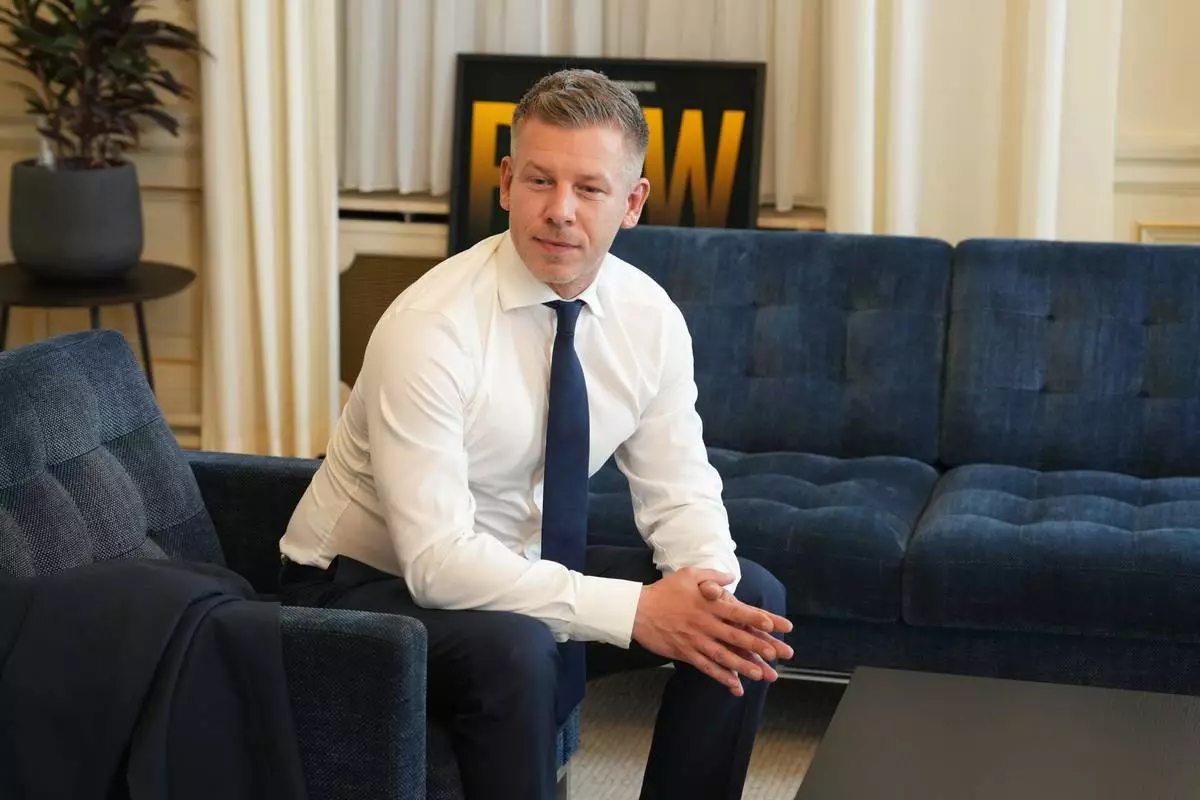
Hungary's Prime Minister Peter Magyar poses as he meets with Belgium's Prime Minister Bart De Wever in Brussels, Thursday, May 28, 2026. (AP Photo/Marius Burgelman)
WASHINGTON (AP) — Former Attorney General Pam Bondi is testifying before House lawmakers investigating Jeffrey Epstein's sexual abuse cases, a long-awaited appearance that brings fresh scrutiny of the Trump administration's botched release of the Epstein case files.
Bondi, who arrived Friday morning on Capitol Hill for her interview, was defiant in previous public testimony when she was confronted by lawmakers about the Epstein investigation. It's unclear whether she'll bring the same approach Friday, now that she is no longer in charge of the Justice Department. The session will be held behind closed doors.
The transcribed Bondi interview will give lawmakers a chance to dig for information on the Trump administration's handling of the Epstein files and other related matters, including the prison sentence of Epstein's former girlfriend and confidant, Ghislaine Maxwell.
“I think she absolutely could clear up many missing pieces if she wanted to,” said Rep. Yassamin Ansari, an Arizona Democrat on the House Oversight Committee. “Now it’s a question of whether or not she is willing to be transparent.”
Epstein killed himself in a New York City jail cell in 2019 while awaiting trial. Maxwell, a British socialite, was convicted in 2021 of luring teenage girls to be sexually abused by Epstein but has insisted she’s innocent, arguing she never should have been prosecuted. The Justice Department moved Maxwell from a federal prison in Florida to a prison camp in Texas last August.
Lawmakers are trying to find out what decisions prosecutors have made about investigating Epstein associates, how the Justice Department handled the congressional mandate to release the Epstein case files and whether President Donald Trump was involved in the process.
Several survivors of Epstein's abuse also gathered outside the Capitol office where the interview was taking place. They tried to make their presence known to Bondi as she entered the room, but several said they were shoved aside by police officers.
The survivors also implored lawmakers to hold Bondi accountable for the handling of the Epstein case files' release, which included the personal information of potential victims.
They confronted the committee chair, Republican Rep. James Comer of Kentucky, and he told them that he would press for the complete release of case files mandated by law.
“We want justice for the survivors, we do,” Comer added.
Bondi, who revealed this week that she is being treated for thyroid cancer, has stayed within the Republican president's orbit even after being ousted from her job in early April.
Trump appointed Bondi to a White House panel on artificial intelligence this week, and she will be accompanied Friday by Justice Department officials, including Harmeet Dhillon, who heads the department's Civil Rights Division, acting as her counsel.
Democrats say that arrangement is a conflict of interest.
A spokesperson for the Justice Department said the officials were there to help lawmakers understand the department's process for releasing the case files.
Bondi has been central to the political firestorm over Epstein, initially raising expectations for the full release of what's known as the Epstein files, only to later backtrack. That reversal prompted Congress to step in and pass a law requiring the release.
Bondi faced even more backlash when the Justice Department's release of the files was delayed and then included personal information and nude photos of several potential victims. She has insisted in congressional hearings that she was trying to follow the law.
The House Oversight Committee, meanwhile, has been conducting a wide-ranging investigation into Epstein that spans multiple presidential administrations.
Bondi was subpoenaed by the committee in March in a bipartisan vote, but she tried to head off that demand by holding a closed-door meeting with lawmakers that month. The maneuver only added to the enmity between Bondi and Democrats on the committee.
Bondi's departure from the Justice Department also raised doubts about the enforcement of the congressional subpoena. After the committee's Democrats maneuvered to press for a civil contempt of Congress resolution against Bondi, she agreed to sit for a transcribed interview rather than a sworn deposition.
Democrats on the Oversight panel have criticized that arrangement, saying that it allows Bondi to decline to answer questions. They also objected to Comer's decision not to video the interview.
“We continue to be incredibly disappointed of the decision to not have this interview videotaped and then released to the American public,” said Rep. Robert Garcia, the top Democrat on the panel.
Comer has said he is allowing Bondi to sit for a transcribed interview rather than a deposition as an incentive to cooperate. Previously, he had enforced a subpoena on former President Bill Clinton and former Secretary of State Hillary Clinton after they resisted the demand. Both of their depositions were video-recorded.
Still, Comer said Bondi could face prosecution if she lies to Congress. He said the committee would also release a transcript of the interview.
Follow the AP's coverage of the Jeffrey Epstein case at https://apnews.com/hub/jeffrey-epstein.
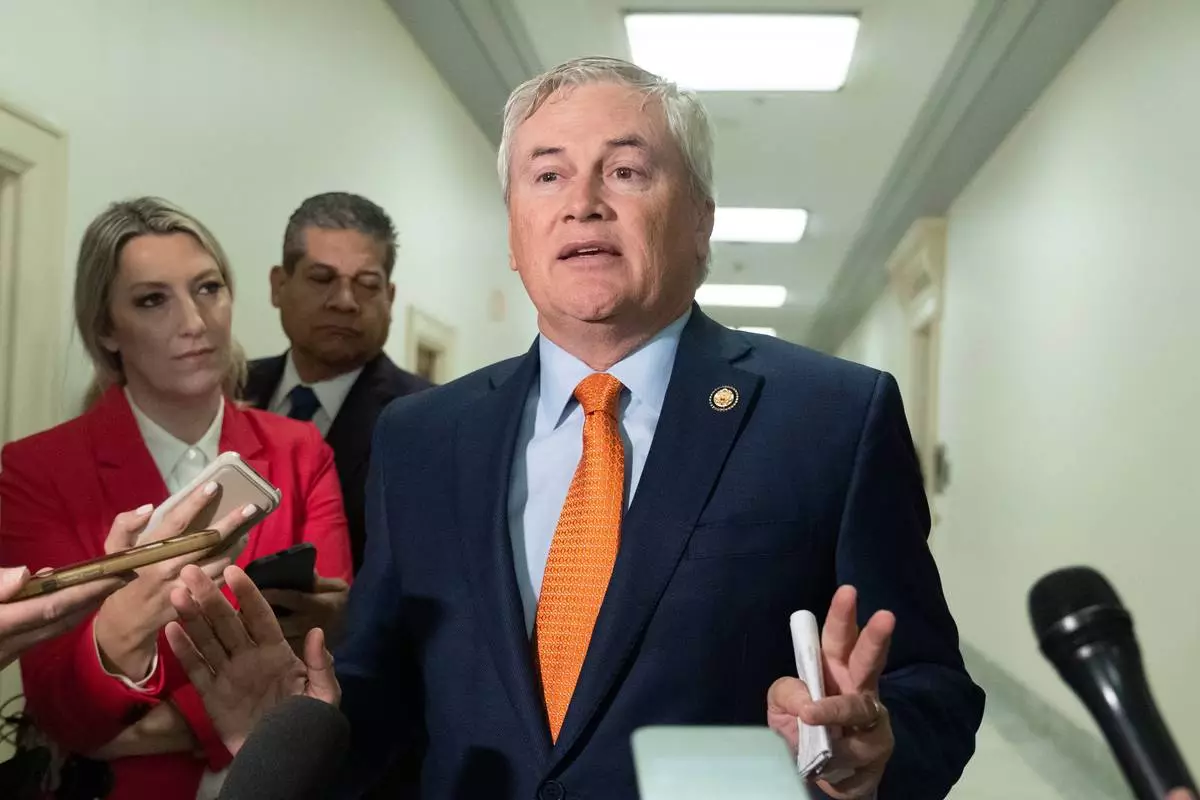
James Comer, R-Ky., House Oversight and Government Reform Committee Chairman, speaks to reporters before the start of the deposition of former Attorney General Pam Bondi at the Rayburn House Office Building on Capitol Hill, Friday, May 29, 2026, in Washington. (AP Photo/Manuel Ceneta)

Victims of Jeffrey Epstein's abuse, from left, Liz Stein, Dani Bensky, Sharlene Rochard, Marina Lacerda and Andrea Sterling, are seen before former Attorney General Pam Bondi arrives for her deposition at the Rayburn House Office Building on Capitol Hill, Friday, May 29, 2026, in Washington. (AP Photo/Manuel Ceneta)
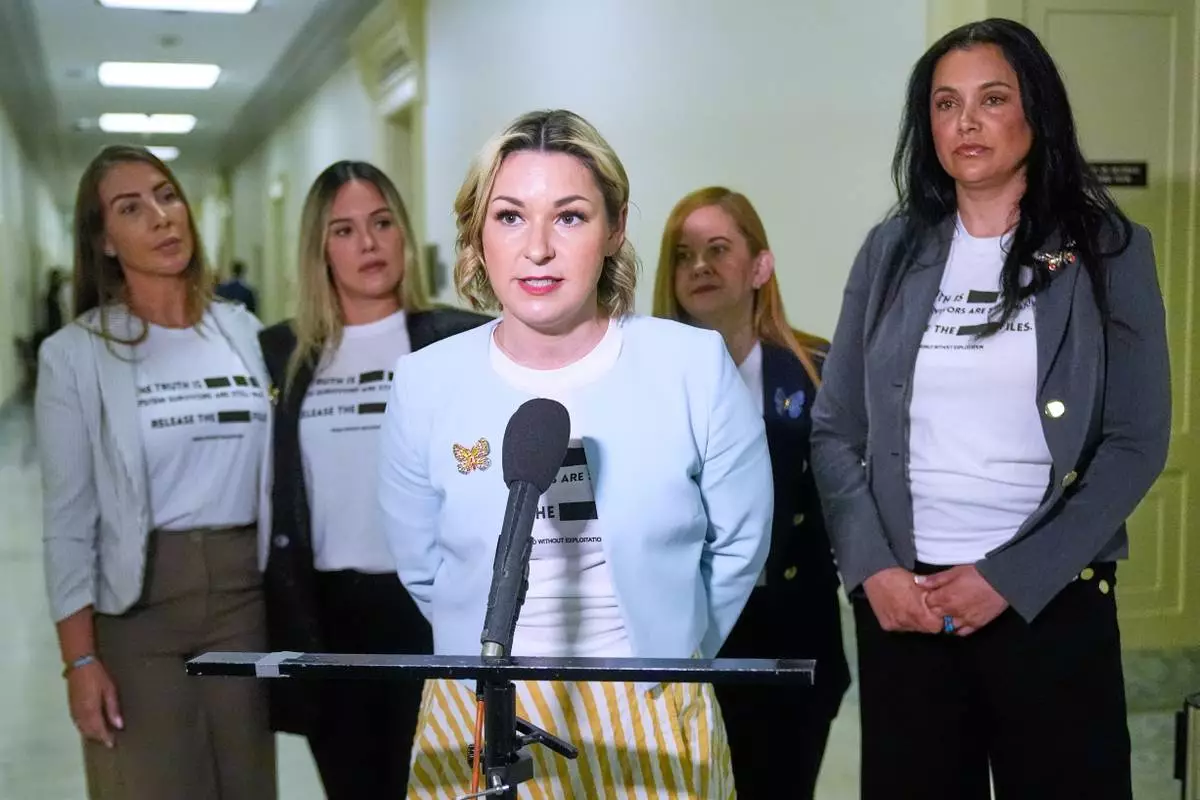
Victims of Jeffrey Epstein's abuse, from left, Marina Lacerda, Andrea Sterling, Dani Bensky, speaking, Liz Stein and Sharlene Rochard, before former Attorney General Pam Bondi arrives for her deposition at the Rayburn House Office Building on Capitol Hill, Friday, May 29, 2026, in Washington. (AP Photo/Manuel Ceneta)

Former Attorney General Pam Bondi, center, arrives for her deposition at the Rayburn House Office Building on Capitol Hill, Friday, May 29, 2026, in Washington. (AP Photo/Rod Lamkey, Jr.)

Former Attorney General Pam Bondi arrives for her deposition at the Rayburn House Office Building on Capitol Hill, Friday, May 29, 2026, in Washington. (AP Photo/Manuel Ceneta)
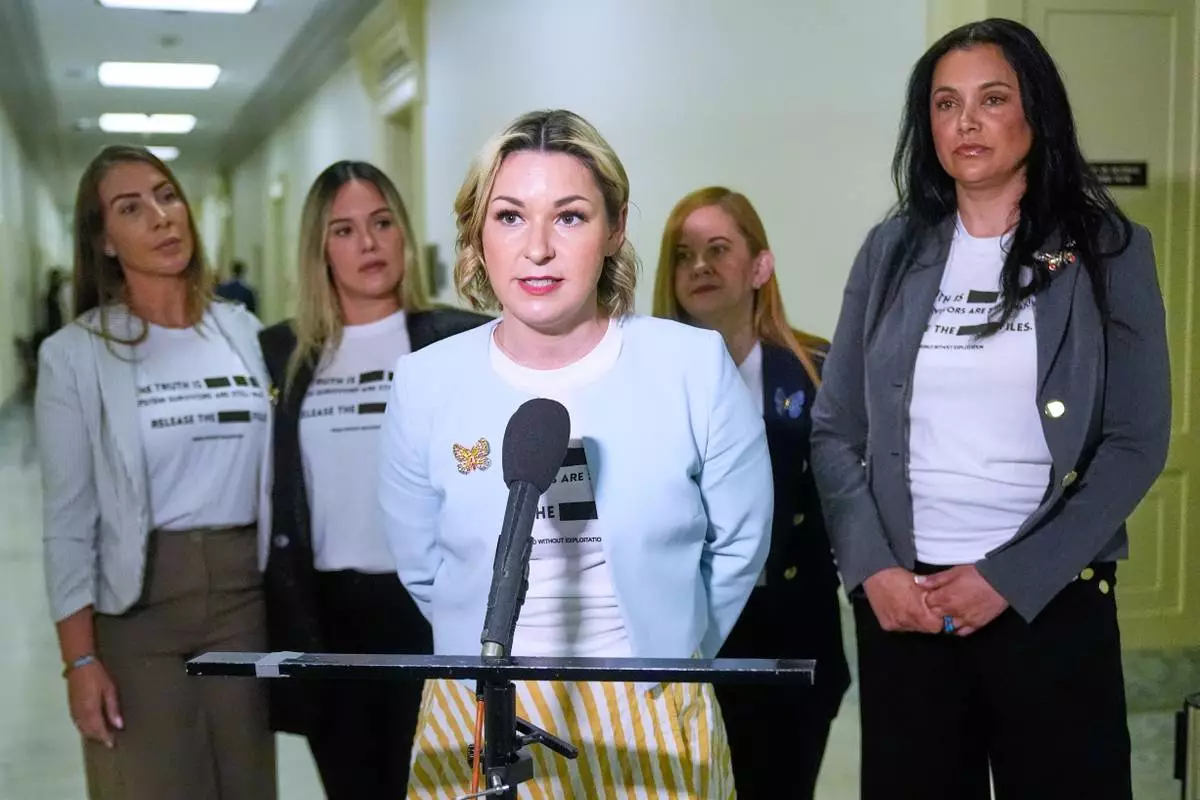
Victims of Jeffrey Epstein's abuse, from left, Marina Lacerda, Andrea Sterling, Dani Bensky, speaking, Liz Stein and Sharlene Rochard, before former Attorney General Pam Bondi arrives for her deposition at the Rayburn House Office Building on Capitol Hill, Friday, May 29, 2026, in Washington. (AP Photo/Manuel Ceneta)

Former Attorney General Pam Bondi, center, arrives for her deposition at the Rayburn House Office Building on Capitol Hill, Friday, May 29, 2026, in Washington. (AP Photo/Rod Lamkey, Jr.)

Former Attorney General Pam Bondi arrives for her deposition at the Rayburn House Office Building on Capitol Hill, Friday, May 29, 2026, in Washington. (AP Photo/Manuel Ceneta)
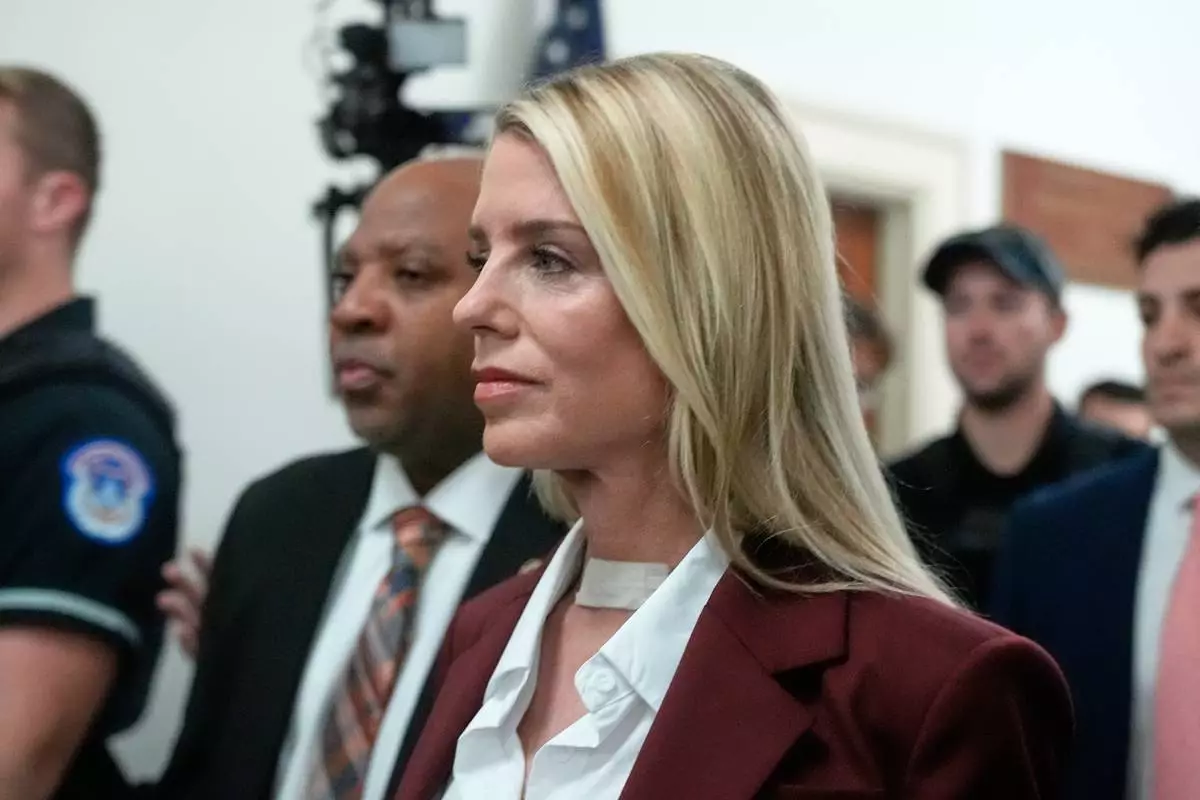
Former Attorney General Pam Bondi arrives for her deposition at the Rayburn House Office Building on Capitol Hill, Friday, May 29, 2026, in Washington. (AP Photo/Manuel Ceneta)

FILE - Attorney General Pam Bondi testifies before a House Judiciary Committee oversight hearing on Capitol Hill in Washington, Feb. 11, 2026, in front of survivors of convicted sex offended Jeffrey Epstein. (AP Photo/Tom Brenner, File)
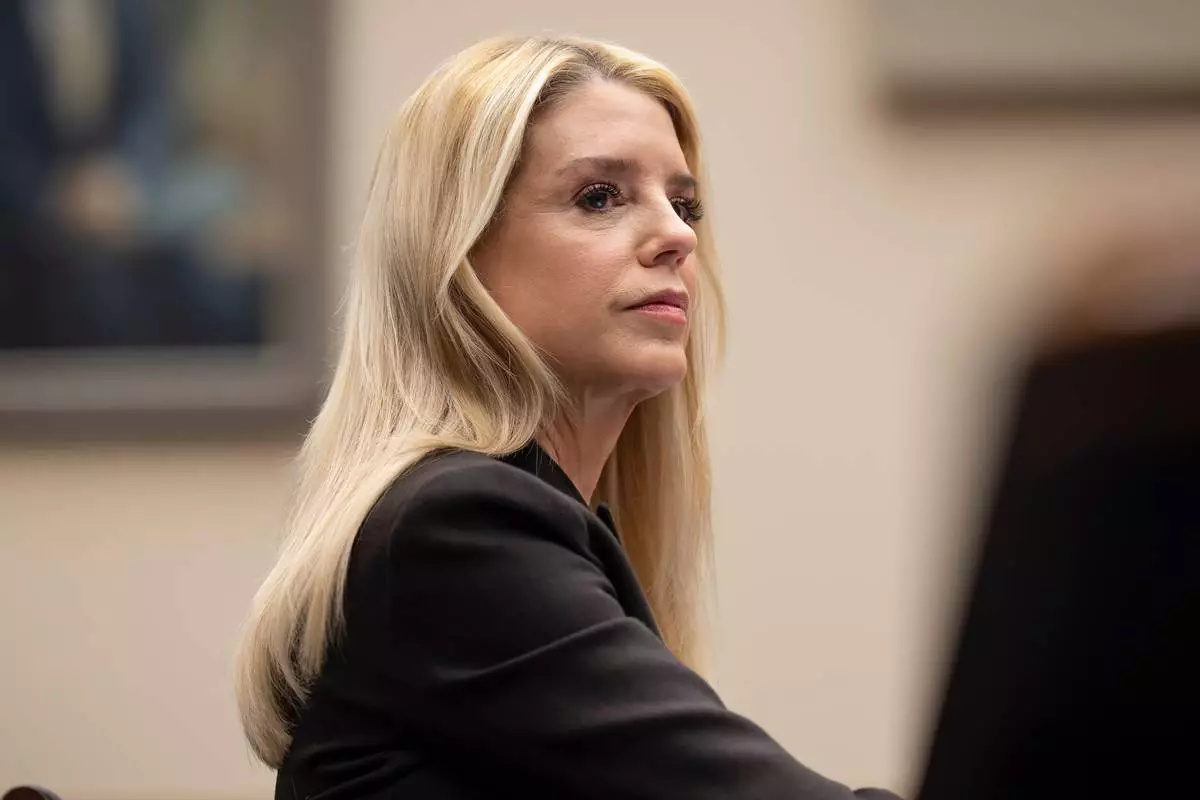
FILE - Attorney General Pam Bondi faces questions in the House Judiciary Committee over the Justice Department's handling of files related to convicted sex offender Jeffrey Epstein, at the Capitol in Washington, Feb. 11, 2026. (AP Photo/J. Scott Applewhite, File)