Lukas Graham, "3 (The Purple Album)" (Warner Bros.)
The new Lukas Graham album opens with the band attending funerals of their friends and the lead singer offering this hope for survivors: "I pray you won't reach for that rope." Things don't get much happier from there for the Danish band.
Frontman Lukas Forchhammer, whose optimistic "7 Years" was a huge hit in 2016, has crafted an album of regret and moodiness with the 10-track "3 (The Purple Album)," a record also largely shorn of the upbeat tempos and hip-hop elements that made his last album so successful. This is a truly melancholy Dane.
Many of the tracks are simple piano-driven sentimental ballads that employ religious imagery and extend his love for leaning on gospel. They might be well-constructed but none are overly exciting. It turns out that fun songs like "Mama Said" from the last album masked a sensitive balladeer.
Much has changed in Forchhammer's life in the past few years — his father's death, the birth of a daughter and Grammy nominations — and all that is baked into the album. He's looking back a lot — and not always happily. One song is even titled "Unhappy." It's one of the most upbeat, seriously.
On "Everything That Isn't Me" — a swelling, orchestral-backed ballad that's designed to get us to wave our lighters in the air — Forchhammer, in his trademark rap-like cadence, apologizes for not being a better brother, son and lover. "I could apologize forever," he sings. Elsewhere, Forchhammer often laments being away on the lonely road — "Is it worth it when daddy can't dry your tears?" he sings in "Lullaby."
When he looks up, Forchhammer doesn't see humanity doing much better, with the band suggesting that "If life's another game of chess/We lost a couple pieces" on "You're Not the Only One (Redemption Song)," which mourns Bob Marley and John Lennon.
Even the album's name and purple-painted cover — a nude woman surrounded by open bottles — seems to indicate a cool, glum bent from the band this time. Forchhammer is clearly working out a lot of personal stuff on "3," but it's an album that largely leaves the listener, well, bummed out.
Mark Kennedy is at http://twitter.com/KennedyTwits
DUBAI, United Arab Emirates (AP) — Iran closed its airspace to commercial flights for hours without explanation early Thursday as tensions remained high with the United States over Tehran’s bloody crackdown on nationwide protests.
The closure ran for over four hours, according to pilot guidance issued by Iran, which lies on a key East-West flight route. International carriers diverted north and south around Iran, but after one extension, the closure appeared to have expired and several domestic flights were in the air just after 7 a.m.
Around midday, Iranian state television carried a statement from the country's Civil Aviation Authority saying that the nation's “skies are hosting incoming and outgoing flights, and airports are providing services to passengers.” It did not acknowledge the closure.
Iran previously shut its airspace during the 12-day war against Israel in June and when it exchanged fire with Israel during the Israel-Hamas war. However, there were no signs of current hostilities though the closure immediately rippled through global aviation.
“Several airlines have already reduced or suspended services, and most carriers are avoiding Iranian airspace,” said the website SafeAirspace, which provides information on conflict areas and air travel. “The situation may signal further security or military activity, including the risk of missile launches or heightened air defense, increasing the risk of misidentification of civil traffic.”
Iran in the past has misidentified a commercial aircraft as a hostile target. In 2020, Iranian air defense shot down Ukraine International Airlines Flight PS752 with two surface-to-air missiles, killing all 176 people on board. Iran for days adamantly dismissed allegations of downing the plane as Western propaganda before finally acknowledging it.
The airspace closure came as some personnel at a key U.S. military base in Qatar were advised to evacuate. The U.S. Embassy in Kuwait also ordered its personnel to “temporary halt” going to the multiple military bases in the small Gulf Arab country.
The U.N. Security Council scheduled an emergency meeting on Iran at the request of the United States on Thursday afternoon.
U.S. President Donald Trump made a series of vague statements Wednesday that left unclear what American action, if any, would take place against Iran.
In comments to reporters, Trump said he had been told that plans for executions in Iran have stopped, without providing many details. The shift comes a day after Trump told protesters in Iran that “help is on the way” and that his administration would “act accordingly” to respond to the Islamic Republic’s deadly crackdown.
Iranian Foreign Minister Abbas Araghchi also sought to tone down the rhetoric, urging the U.S. to find a solution through negotiation.
Asked by Fox News what he would say to Trump, Araghchi said: “My message is: Between war and diplomacy, diplomacy is a better way, although we don’t have any positive experience from the United States. But still diplomacy is much better than war.”
The change in tone by the U.S. and Iran came hours after the chief of the Iranian judiciary said the government must act quickly to punish the thousands who have been detained.
Activists warned that hangings of detainees could come soon. The security forces’ crackdown on the demonstrations has killed at least 2,615, the U.S.-based Human Rights Activists News Agency reported. The death toll exceeds that of any other round of protest or unrest in Iran in decades and recalls the chaos surrounding the country’s 1979 Islamic Revolution.
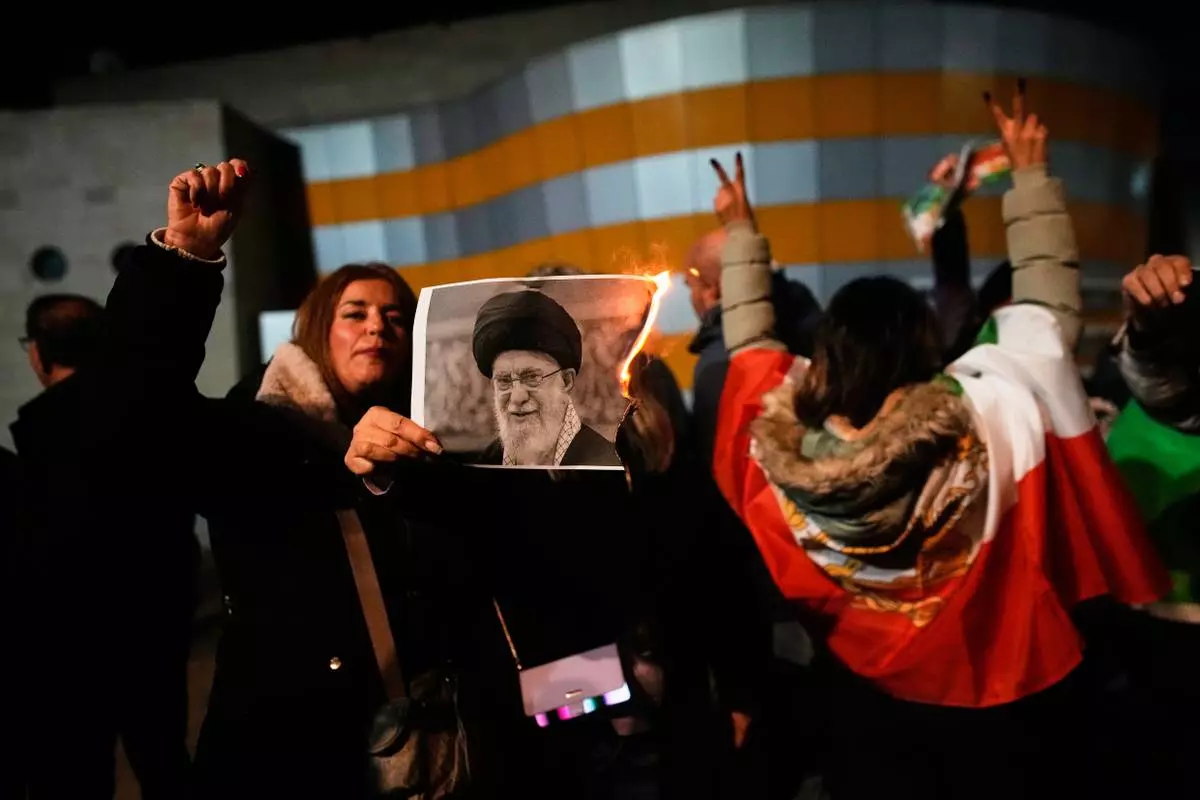
Demonstrators burn a poster depicting Iran's Supreme Leader Ayatollah Ali Khamenei during a rally in support of anti-government protests in Iran, in Holon, Israel Wednesday, Jan. 14, 2026. (AP Photo/Ohad Zwigenberg)
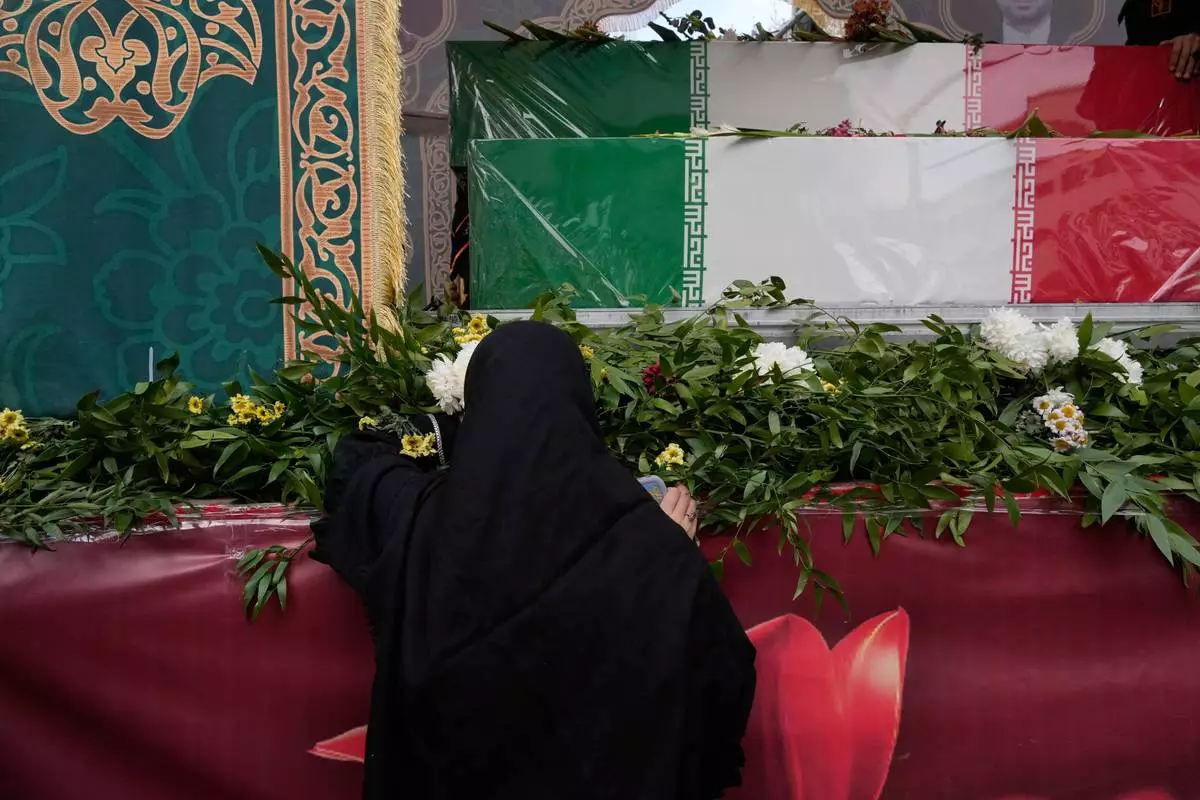
A woman mourns next to the flag-draped coffins of a group of security forces, who were killed during anti-government protests, during their funeral ceremony, in Tehran, Iran, Wednesday, Jan. 14, 2026. (AP Photo/Vahid Salemi)
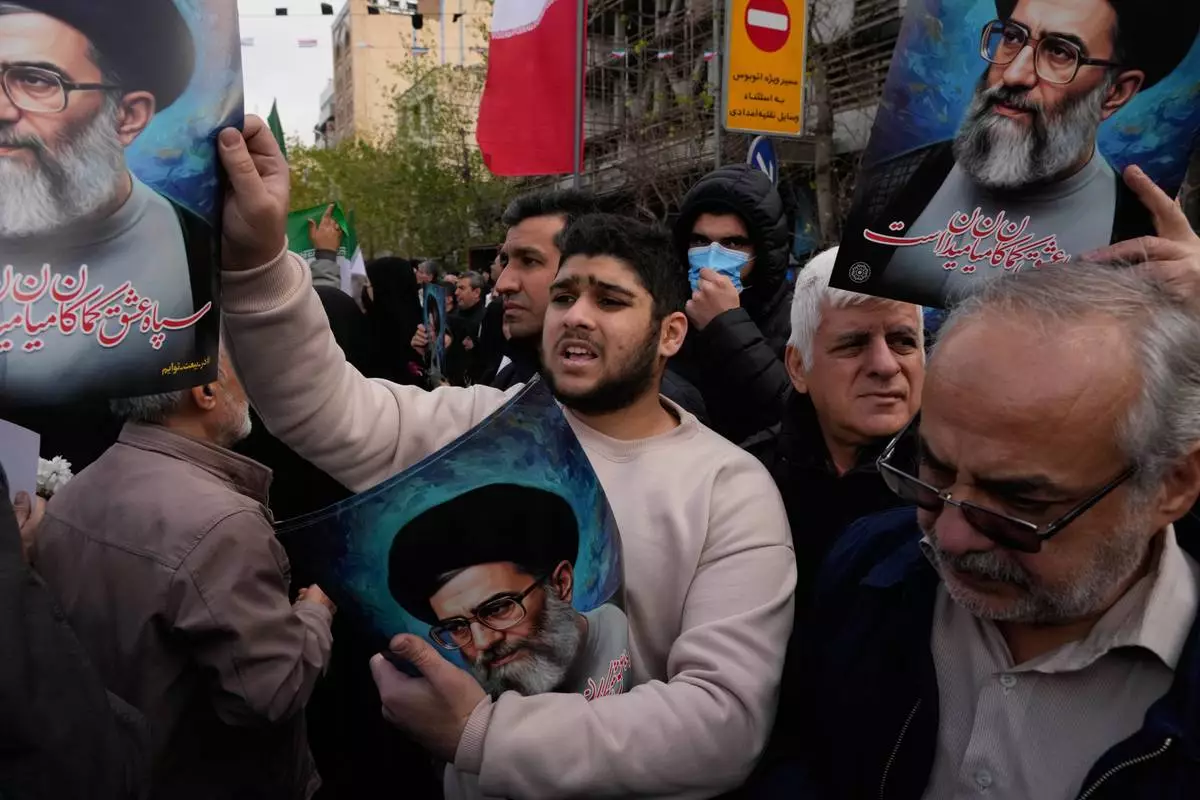
A man hands out posters of the Iranian Supreme Leader Ayatollah Ali Khamenei during a funeral ceremony for a group of security forces, who were killed during anti-government protests, in Tehran, Iran, Wednesday, Jan. 14, 2026. (AP Photo/Vahid Salemi)
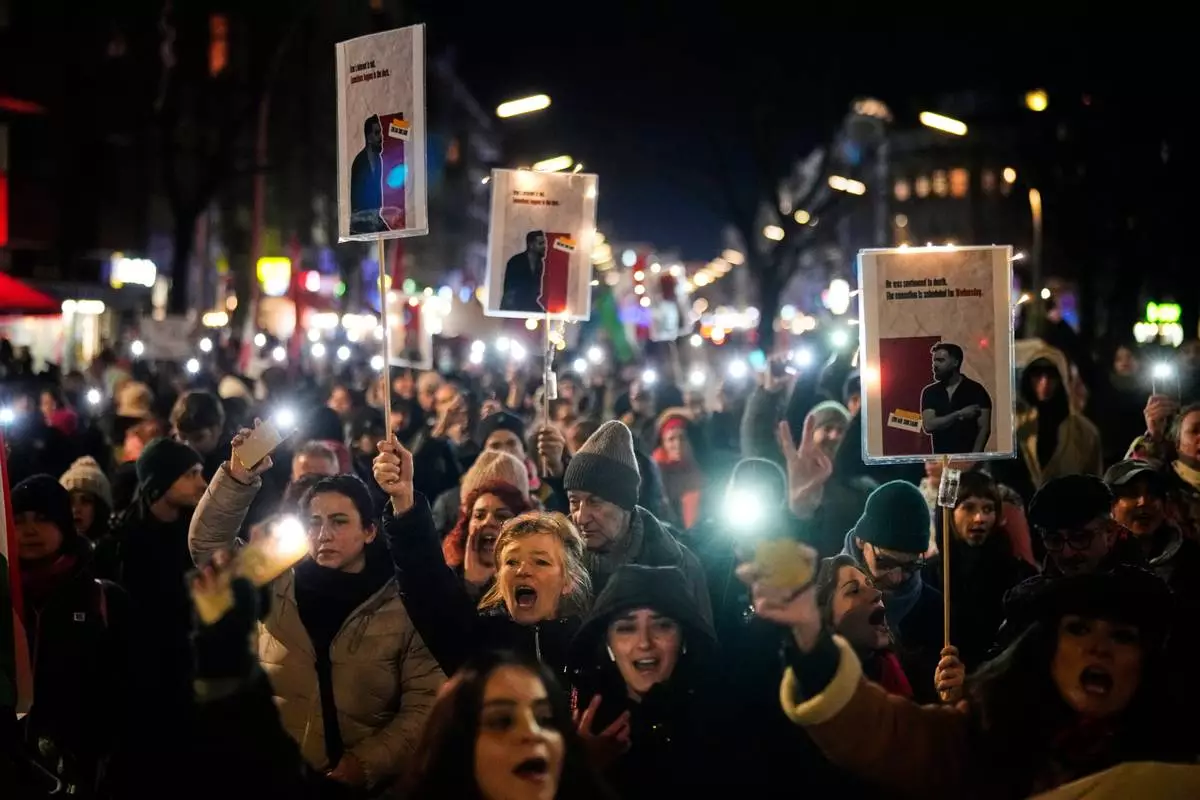
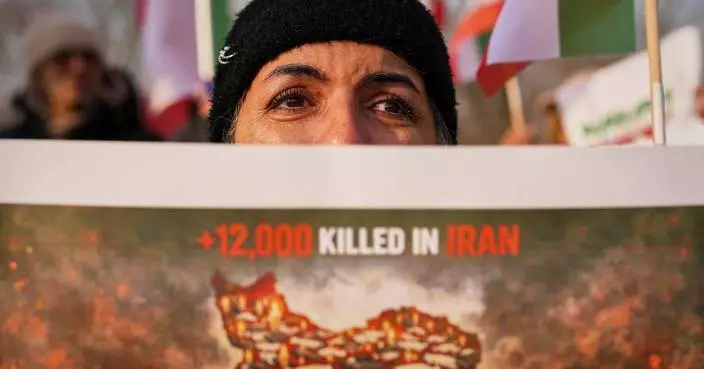
People take part in a rally in support of anti-government protests in Iran, Berlin Germany, Wednesday, June 14, 2026. (AP Photo/Ebrahim Noroozi)
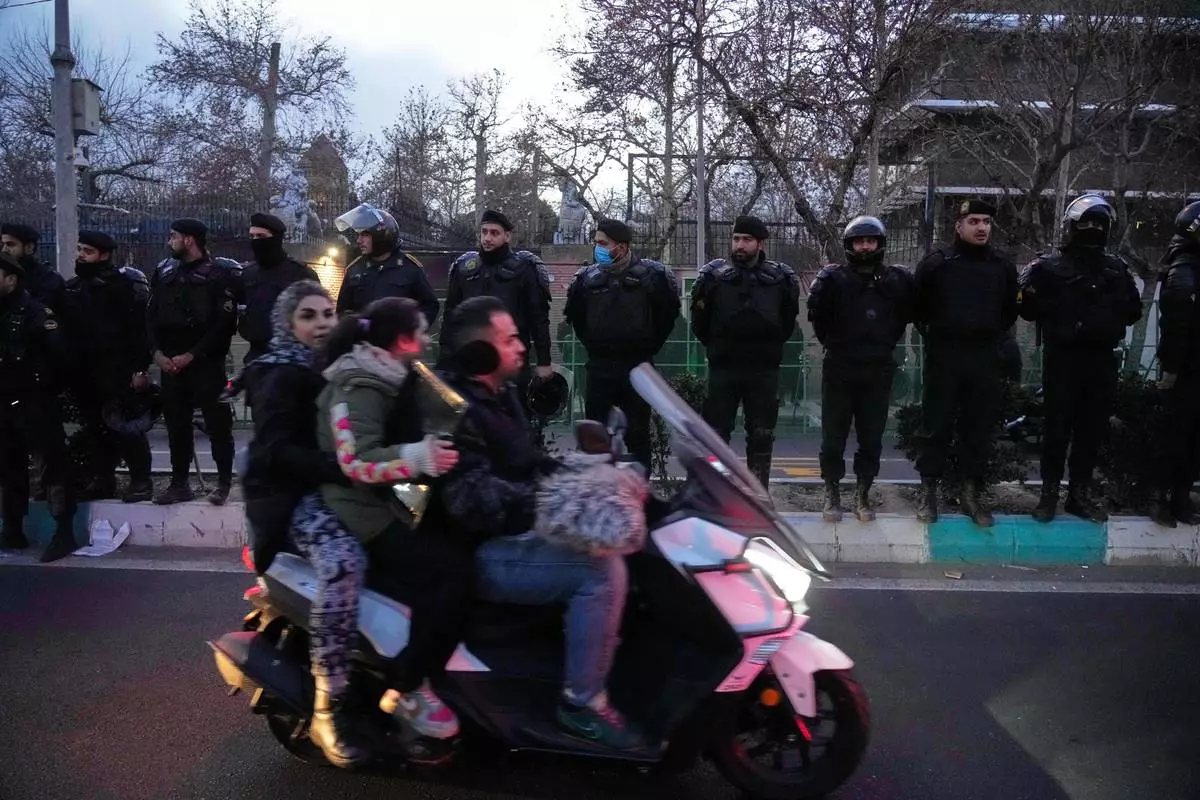
Policemen protect the British Embassy during a protest by hardline supporters of the Iranian government, as people ride on their motorbike in Tehran, Iran, Wednesday, Jan. 14, 2026. (AP Photo/Vahid Salemi)