DUBAI, United Arab Emirates (AP) — Iran closed its airspace to commercial flights for hours without explanation early Thursday as tensions remained high with the United States over Tehran’s bloody crackdown on nationwide protests.
The closure ran for over four hours, according to pilot guidance issued by Iran, which lies on a key East-West flight route. International carriers diverted north and south around Iran, but after one extension, the closure appeared to have expired and several domestic flights were in the air just after 7 a.m.
Click to Gallery

A man looks at books which are placed for sale on a sidewalk in downtown Tehran, Iran, Thursday, Jan. 15, 2026. (AP Photo/Vahid Salemi)

People walk on a sidewalk in downtown Tehran, Iran, Thursday, Jan. 15, 2026. (AP Photo/Vahid Salemi)

People cross an intersection in downtown Tehran, Iran, Thursday, Jan. 15, 2026. (AP Photo/Vahid Salemi)

A man walks on a sidewalk in downtown Tehran, Iran, Thursday, Jan. 15, 2026. (AP Photo/Vahid Salemi)

Women cross an intersection in downtown Tehran, Iran, Thursday, Jan. 15, 2026. (AP Photo/Vahid Salemi)
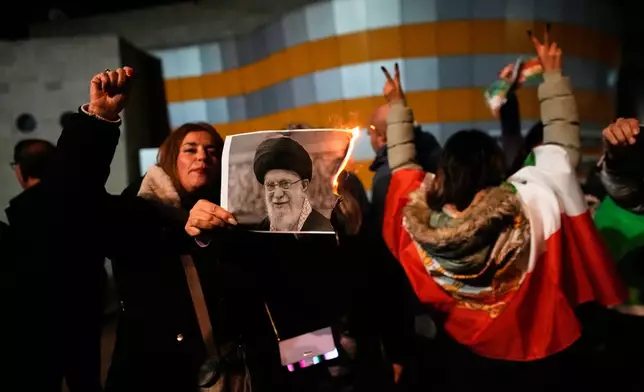
Demonstrators burn a poster depicting Iran's Supreme Leader Ayatollah Ali Khamenei during a rally in support of anti-government protests in Iran, in Holon, Israel Wednesday, Jan. 14, 2026. (AP Photo/Ohad Zwigenberg)

A woman mourns next to the flag-draped coffins of a group of security forces, who were killed during anti-government protests, during their funeral ceremony, in Tehran, Iran, Wednesday, Jan. 14, 2026. (AP Photo/Vahid Salemi)
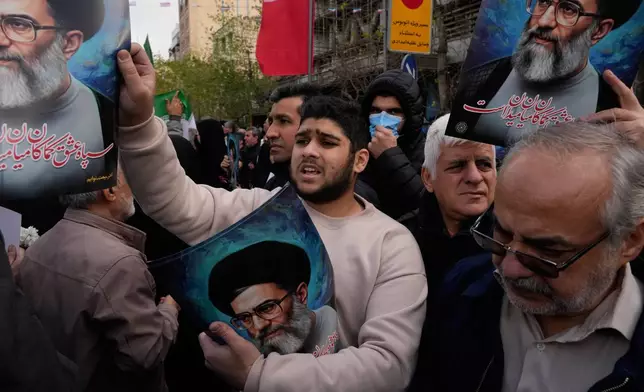
A man hands out posters of the Iranian Supreme Leader Ayatollah Ali Khamenei during a funeral ceremony for a group of security forces, who were killed during anti-government protests, in Tehran, Iran, Wednesday, Jan. 14, 2026. (AP Photo/Vahid Salemi)

People take part in a rally in support of anti-government protests in Iran, Berlin Germany, Wednesday, June 14, 2026. (AP Photo/Ebrahim Noroozi)

Policemen protect the British Embassy during a protest by hardline supporters of the Iranian government, as people ride on their motorbike in Tehran, Iran, Wednesday, Jan. 14, 2026. (AP Photo/Vahid Salemi)
Around midday, Iranian state television carried a statement from the country's Civil Aviation Authority saying that the nation's “skies are hosting incoming and outgoing flights, and airports are providing services to passengers.” It did not acknowledge the closure.
Iran previously shut its airspace during the 12-day war against Israel in June and when it exchanged fire with Israel during the Israel-Hamas war. However, there were no signs of current hostilities though the closure immediately rippled through global aviation.
“Several airlines have already reduced or suspended services, and most carriers are avoiding Iranian airspace,” said the website SafeAirspace, which provides information on conflict areas and air travel. “The situation may signal further security or military activity, including the risk of missile launches or heightened air defense, increasing the risk of misidentification of civil traffic.”
Iran in the past has misidentified a commercial aircraft as a hostile target. In 2020, Iranian air defense shot down Ukraine International Airlines Flight PS752 with two surface-to-air missiles, killing all 176 people on board. Iran for days adamantly dismissed allegations of downing the plane as Western propaganda before finally acknowledging it.
The airspace closure came as some personnel at a key U.S. military base in Qatar were advised to evacuate. The U.S. Embassy in Kuwait also ordered its personnel to “temporary halt” going to the multiple military bases in the small Gulf Arab country.
The U.N. Security Council scheduled an emergency meeting on Iran at the request of the United States on Thursday afternoon.
U.S. President Donald Trump made a series of vague statements Wednesday that left unclear what American action, if any, would take place against Iran.
In comments to reporters, Trump said he had been told that plans for executions in Iran have stopped, without providing many details. The shift comes a day after Trump told protesters in Iran that “help is on the way” and that his administration would “act accordingly” to respond to the Islamic Republic’s deadly crackdown.
Iranian Foreign Minister Abbas Araghchi also sought to tone down the rhetoric, urging the U.S. to find a solution through negotiation.
Asked by Fox News what he would say to Trump, Araghchi said: “My message is: Between war and diplomacy, diplomacy is a better way, although we don’t have any positive experience from the United States. But still diplomacy is much better than war.”
The change in tone by the U.S. and Iran came hours after the chief of the Iranian judiciary said the government must act quickly to punish the thousands who have been detained.
Activists warned that hangings of detainees could come soon. The security forces’ crackdown on the demonstrations has killed at least 2,615, the U.S.-based Human Rights Activists News Agency reported. The death toll exceeds that of any other round of protest or unrest in Iran in decades and recalls the chaos surrounding the country’s 1979 Islamic Revolution.

A man looks at books which are placed for sale on a sidewalk in downtown Tehran, Iran, Thursday, Jan. 15, 2026. (AP Photo/Vahid Salemi)

People walk on a sidewalk in downtown Tehran, Iran, Thursday, Jan. 15, 2026. (AP Photo/Vahid Salemi)

People cross an intersection in downtown Tehran, Iran, Thursday, Jan. 15, 2026. (AP Photo/Vahid Salemi)

A man walks on a sidewalk in downtown Tehran, Iran, Thursday, Jan. 15, 2026. (AP Photo/Vahid Salemi)

Women cross an intersection in downtown Tehran, Iran, Thursday, Jan. 15, 2026. (AP Photo/Vahid Salemi)

Demonstrators burn a poster depicting Iran's Supreme Leader Ayatollah Ali Khamenei during a rally in support of anti-government protests in Iran, in Holon, Israel Wednesday, Jan. 14, 2026. (AP Photo/Ohad Zwigenberg)

A woman mourns next to the flag-draped coffins of a group of security forces, who were killed during anti-government protests, during their funeral ceremony, in Tehran, Iran, Wednesday, Jan. 14, 2026. (AP Photo/Vahid Salemi)
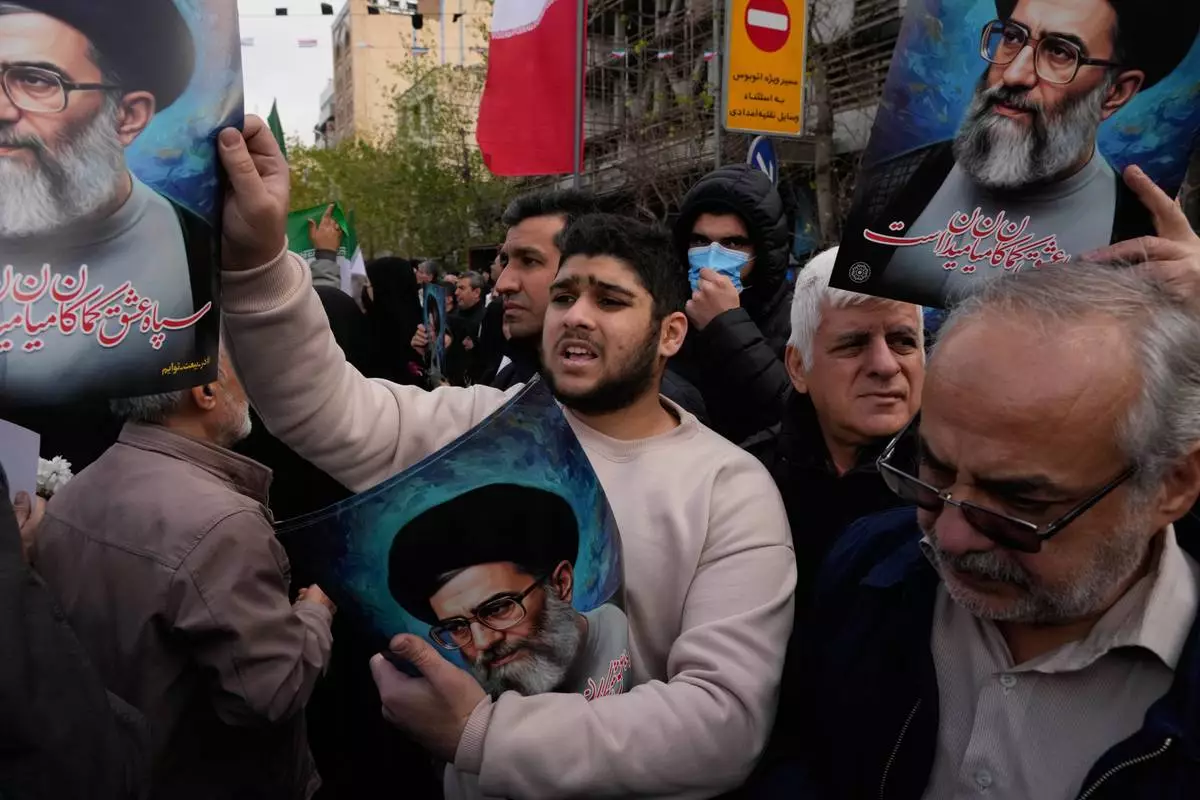
A man hands out posters of the Iranian Supreme Leader Ayatollah Ali Khamenei during a funeral ceremony for a group of security forces, who were killed during anti-government protests, in Tehran, Iran, Wednesday, Jan. 14, 2026. (AP Photo/Vahid Salemi)

People take part in a rally in support of anti-government protests in Iran, Berlin Germany, Wednesday, June 14, 2026. (AP Photo/Ebrahim Noroozi)

Policemen protect the British Embassy during a protest by hardline supporters of the Iranian government, as people ride on their motorbike in Tehran, Iran, Wednesday, Jan. 14, 2026. (AP Photo/Vahid Salemi)
CAPE CANAVERAL, Fla. (AP) — NASA’s Artemis II astronauts fired their engines and blazed toward the moon Thursday night, breaking free of the chains that have trapped humanity in shallow laps around Earth in the decades since Apollo.
The so-called translunar ignition came 25 hours after liftoff, putting the three Americans and a Canadian on course for a lunar fly-around early next week. Their Orion capsule bolted out of orbit around Earth right on cue and chased after the moon nearly 250,000 miles (400,000 kilometers) away.
“Ladies and gentlemen, I am so, so excited to be able to tell you that for the first time since 1972 during Apollo 17, human beings have left Earth orbit,” NASA’s Lori Glaze announced at a news conference.
The engine firing was flawless, she noted.
Canadian astronaut Jeremy Hansen said he and his crewmates were glued to the capsule's windows as they left Earth in the rearview mirror, taking in the “phenomenal” views. Their faces were pressed so tightly against the windows that they had to wipe them clean.
“Humanity has once again shown what we are capable of, and it’s your hopes for the future that carry us now on this journey around the moon,” Hansen said.
NASA had the Artemis II crew stick close to home for a day to test their capsule’s life-support systems before clearing them for lunar departure.
Now committed to the moon, the Artemis II test flight is the opening act for NASA’s grand plans for a moon base and sustained lunar living.
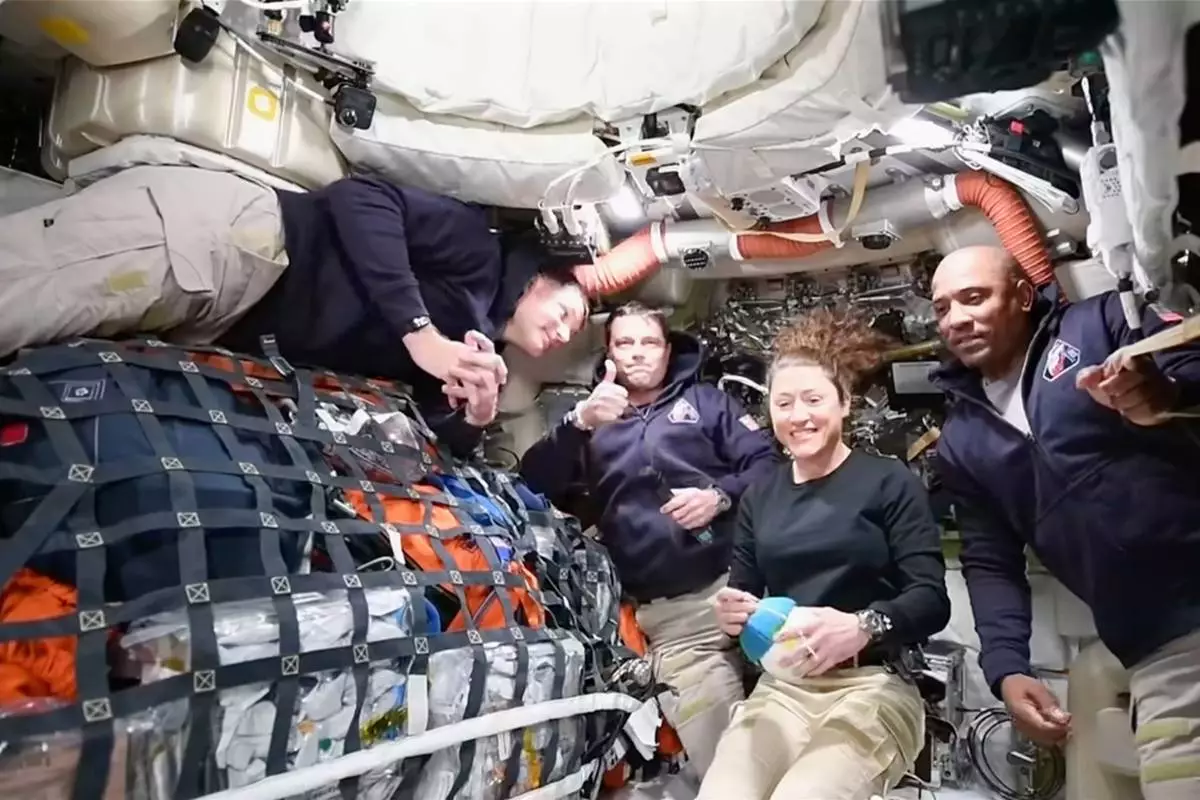
Commander Reid Wiseman, pilot Victor Glover, Christina Koch and Hansen will dash past the moon then hang a U-turn and zip straight home without stopping on land. In the process, they will go the farthest humans have ever traveled from Earth, breaking the Apollo 13 distance record set in 1970. They also may become the fastest during their reentry at flight’s end on April 10.
Glover, Koch and Hansen already have made history as the first Black person, the first woman and the first non-U.S. citizen to launch to the moon. Apollo’s 24 lunar travelers were all white men.
“Trust us, you look amazing. You look beautiful," Glover said in a TV interview after beholding the globe from pole to pole. "And from up here you also look like one thing: homo sapiens as all of us no matter where you’re from or what you look like, we’re all one people.”
To set the mood for the day’s main event, Mission Control woke up the crew with John Legend’s “Green Light” featuring Andre 3000 and a medley of NASA teams cheering them.
“We are ready to go,” Glover said.
Mission Control gave the final go-ahead minutes before the critical engine firing, telling the astronauts that they were embarking on “humanity’s lunar homecoming arc” to bring them back to Earth. The capsule is relying on the gravity of Earth and the moon — termed a free-return lunar trajectory — to complete the round-trip figure-eight loop. The engine accelerated their capsule to more than 24,000 mph (38,000 kph) to shove them out of Earth's orbit.
“I’ve got to tell you, there is nothing normal about this," Wiseman said. "Sending four humans 250,000 miles away is a herculean effort, and we are now just realizing the gravity of that.”
Flight director Judd Frieling said he and his team were all business while on duty but will likely reflect on the momentousness of it all once they go home.
“I suspect everybody understands that this is a once-in-a-lifetime moment," he told reporters.
The next major milestone will be Monday’s lunar flyby.
Orion will zoom 4,000 miles (6,400 kilometers) beyond the moon before turning back, providing unprecedented and illuminated views of the lunar far side, at least for human eyes. The cosmos will even treat the Artemis II astronauts to a total solar eclipse as the moon temporarily blocks the sun from their perspective.
While awaiting their orbital departure earlier Thursday, the astronauts savored the views of Earth from tens of thousands of miles high. Koch told Mission Control that they can make out the entire coastlines of continents and even the South Pole, her old stomping ground.
NASA is counting on the test flight to kickstart the entire Artemis program and lead to a moon landing by two astronauts in 2028.
The so-called lunar loo may need some design tweaks, however.
Orion's toilet malfunctioned as soon as the Artemis crew reached orbit Wednesday evening. Mission Control guided astronaut Koch through some plumbing tricks and she finally got it going, but not before having to resort to using contingency urine storage bags.
The urine pouches are serving double duty. Mission Control ordered the crew to fill a bunch of the empty bags with water from the capsule’s dispenser on Thursday. A valve issue arose with the dispenser following liftoff, and NASA wanted plenty of drinking water on hand for the crew in case the problem recurred. The astronauts used straws and syringes to fill the pouches with more than 2 gallons (7 liters) worth before pivoting to the moon.
The Associated Press Health and Science Department receives support from the Howard Hughes Medical Institute’s Department of Science Education and the Robert Wood Johnson Foundation. The AP is solely responsible for all content.
This image taken from video provided by NASA shows the Artemis II crew, from left, Canadien astronaut and mission specialist Jeremy Hansen, Commander Reid Wiseman, mission specialist Christina Koch and pilot Victor Glover as they speak with NASA Mission Control via video conference from the moon's orbit Thursday, April 2, 2026. (NASA via AP)
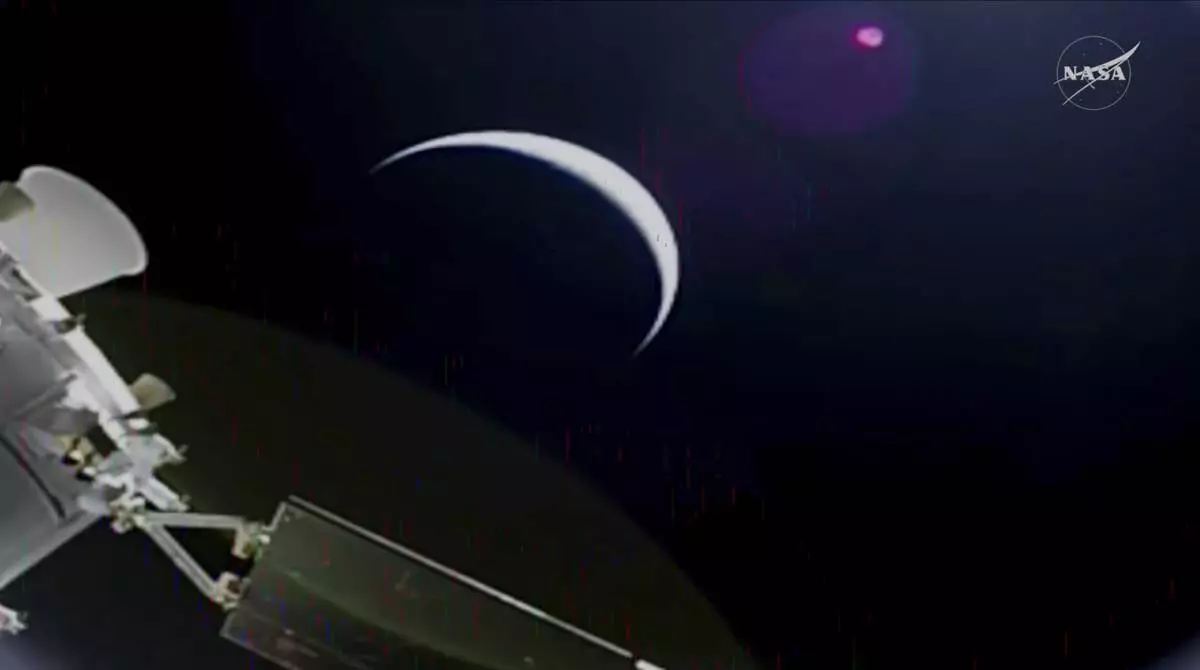
This image released by NASA on Thursday, April 2, 2026, shows NASA’s Orion spacecraft with Earth in the background. (NASA via AP)
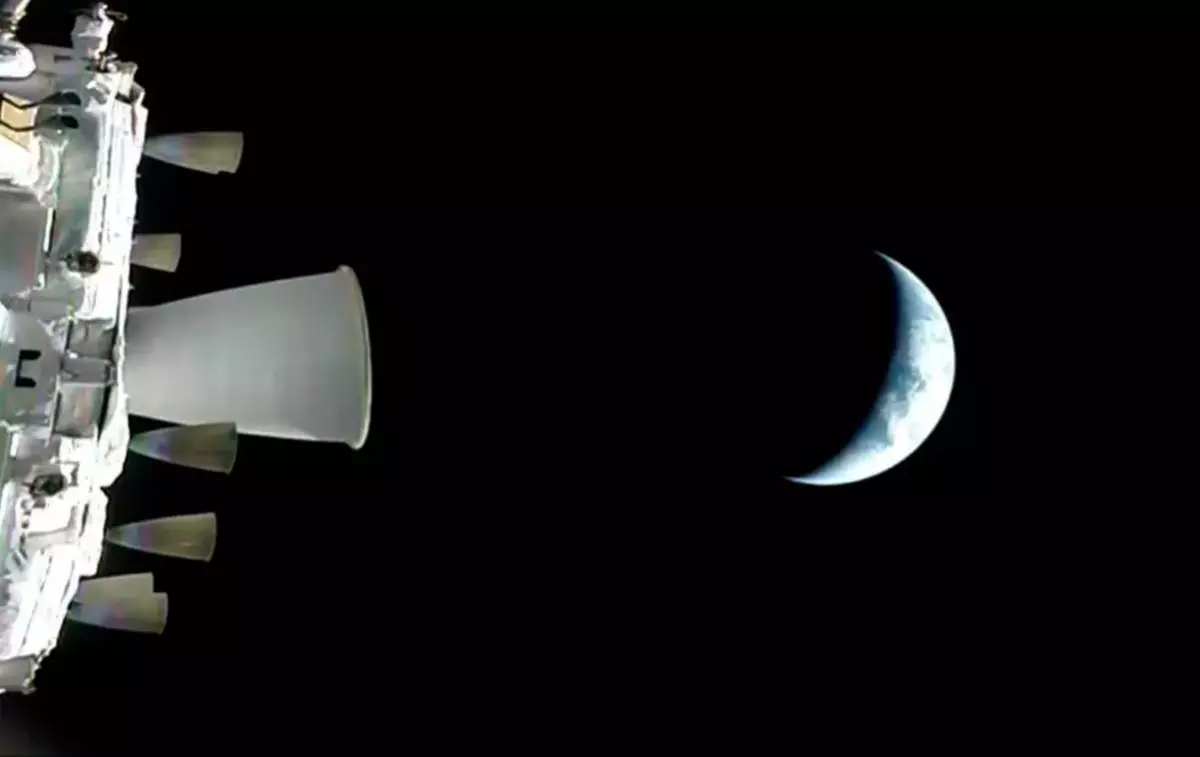
This image taken from video provided by NASA shows the Earth, left, from NASA's Orion spacecraft as it fired its engines heading toward the moon Thursday, April 2, 2026. (NASA via AP)
In this photo provided by NASA, a view of the Earth from NASA's Orion spacecraft as it orbits above the planet during the Artemis II test flight, on Thursday, April 2, 2026. (NASA via AP)
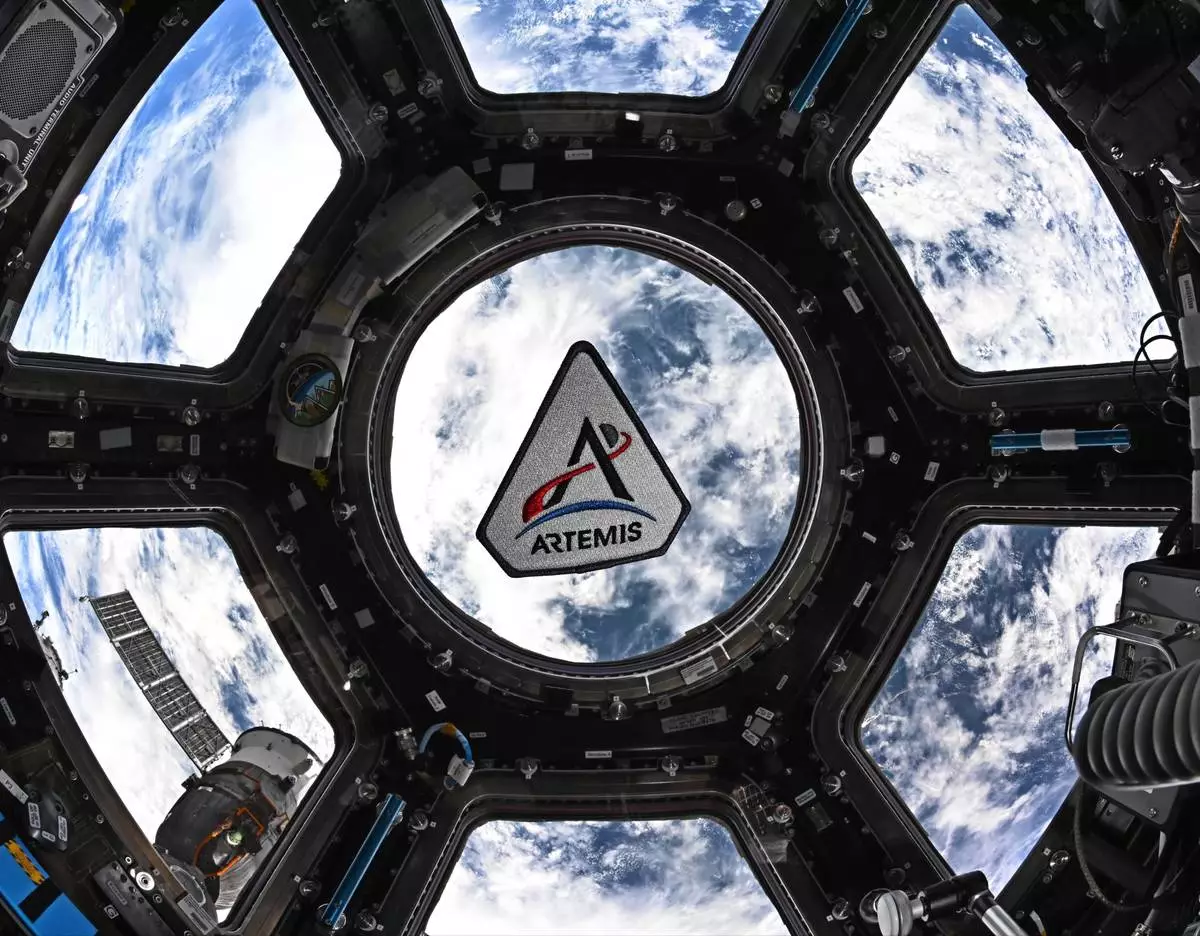
In this photo provided by NASA, an Artemis program patch floating in the International Space Station's cupola, on March 30, 2026. (Jessica Meir/NASA via AP)
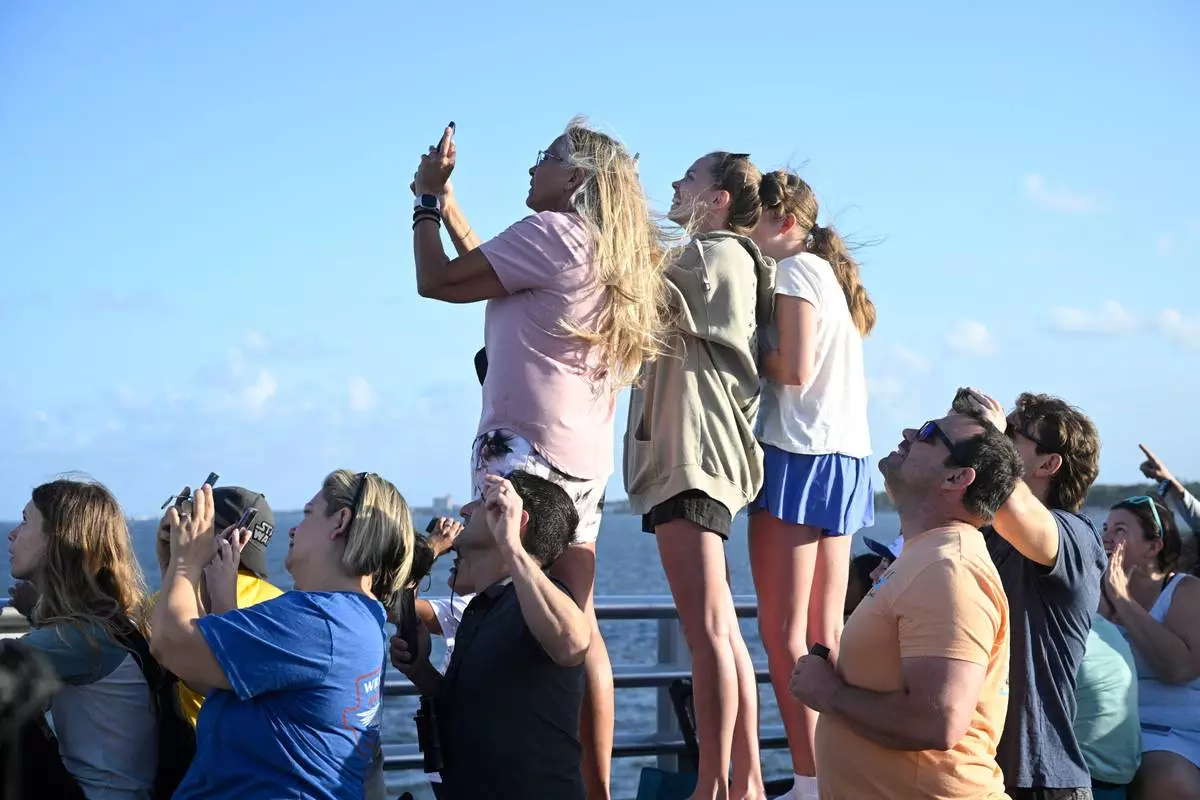
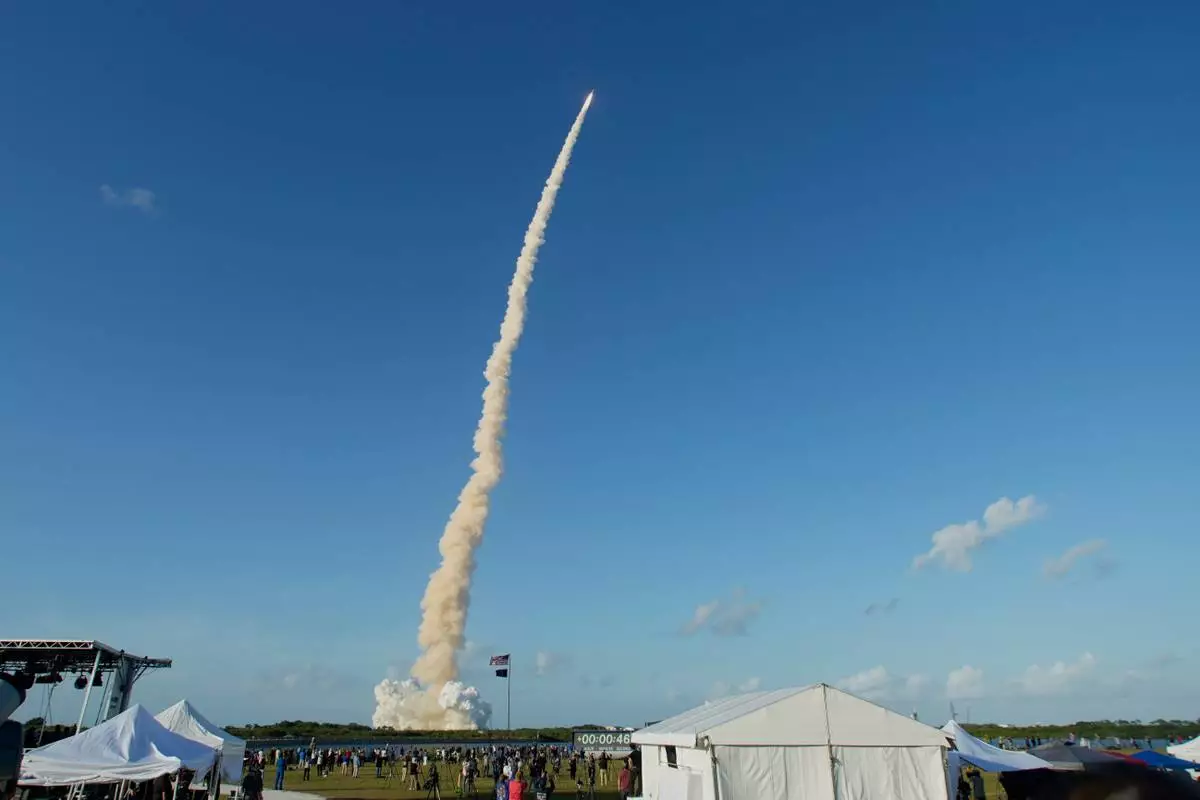
Spectators view NASA's Artemis II moon rocket launch from the A. Max Brewer Bridge, Wednesday, April 1, 2026, in Titusville, Fla. (AP Photo/Phelan M. Ebenhack)
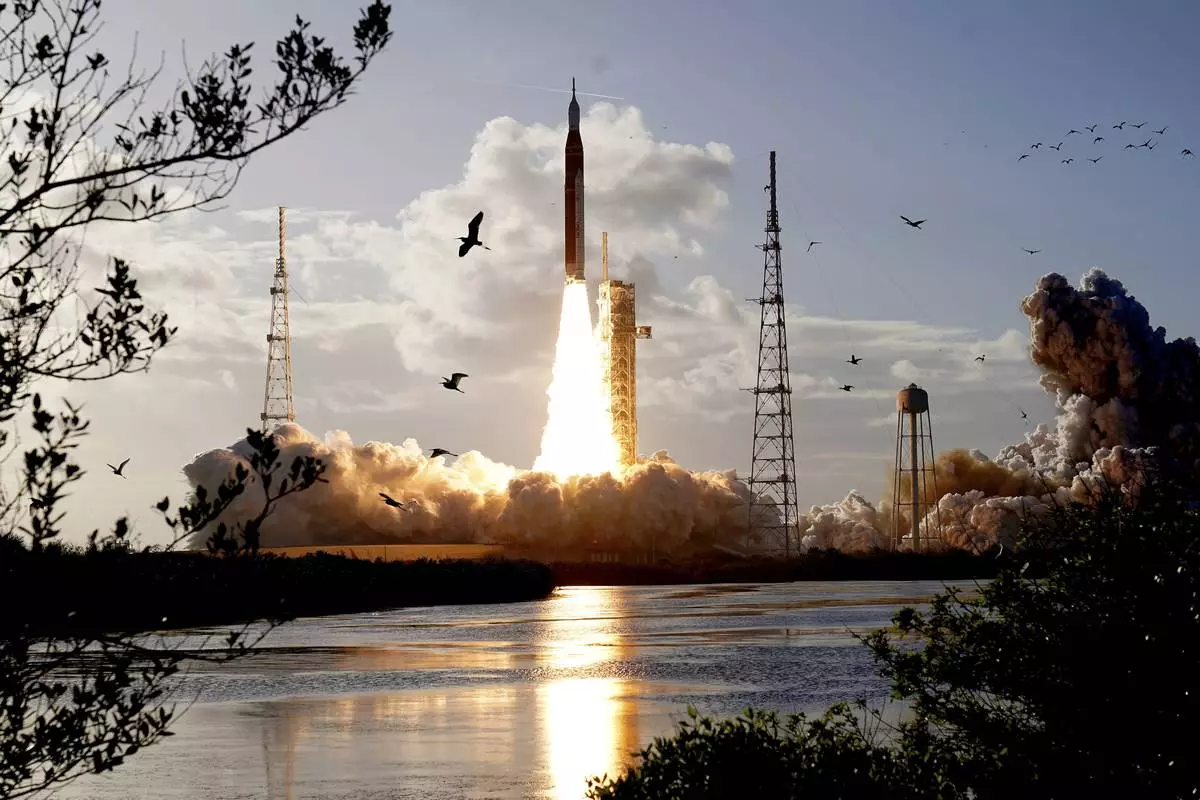
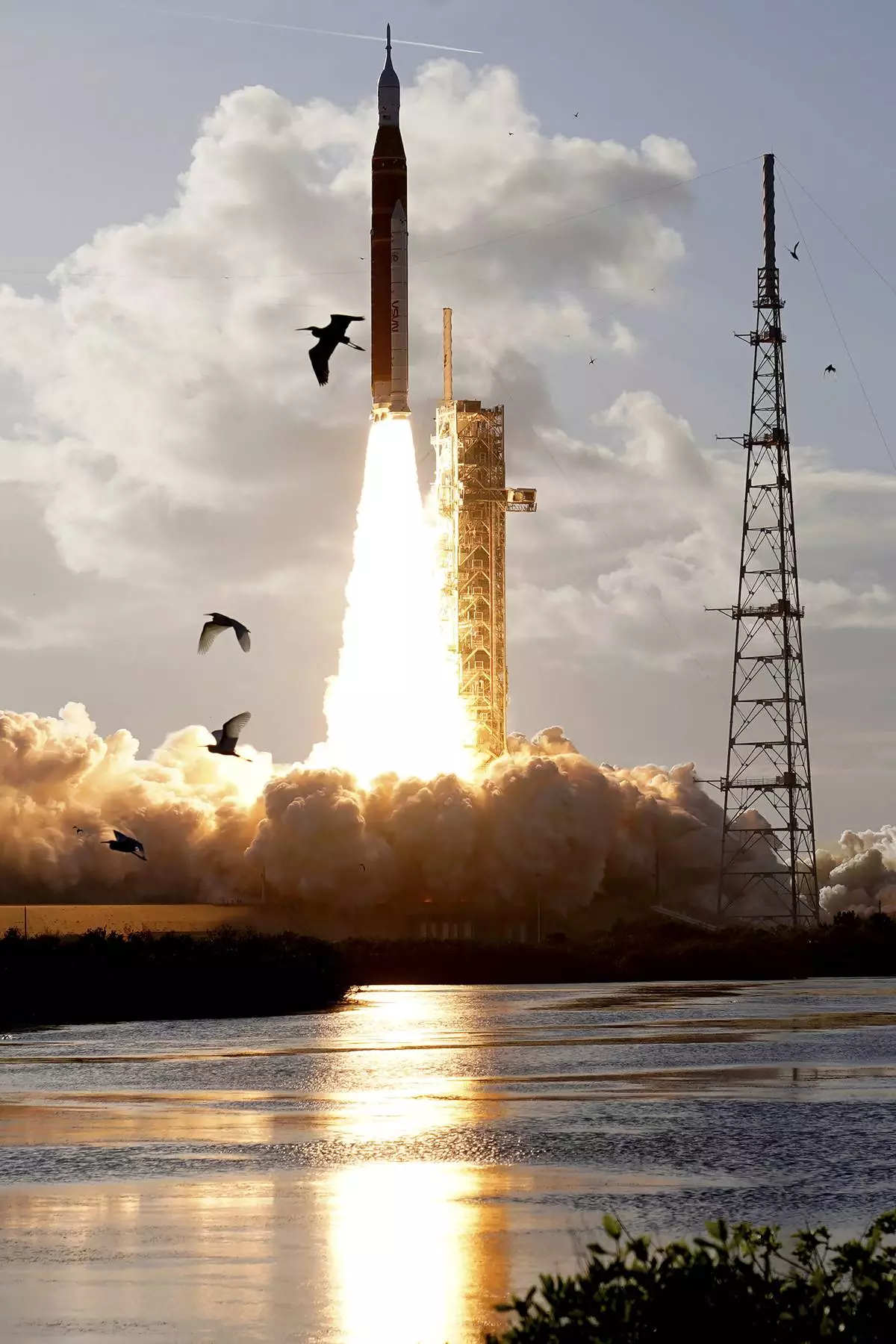
NASA's Artemis II moon rocket lifts off from the Kennedy Space Center's Launch Pad 39-B Wednesday, April 1, 2026, in Cape Canaveral, Fla. (AP Photo/Chris O'Meara)
NASA's Artemis II moon rocket lifts off from the Kennedy Space Center's Launch Pad 39-B Wednesday, April 1, 2026, in Cape Canaveral, Fla. (AP Photo/John Raoux)