Romania's Orthodox Church has called for unity among Orthodox churches after a meeting to discuss a rupture between the Russian Orthodox Church and the Ecumenical Patriarchate of Constantinople.
On Oct. 15, the Russian Orthodox Church announced it was severing links to the Constantinople patriarchy after the Istanbul-based patriarch Bartholomew I, considered the "first among equals" of Orthodox church leaders, said he was removing its condemnation of leaders of schismatic Orthodox churches in Ukraine.
Click to Gallery
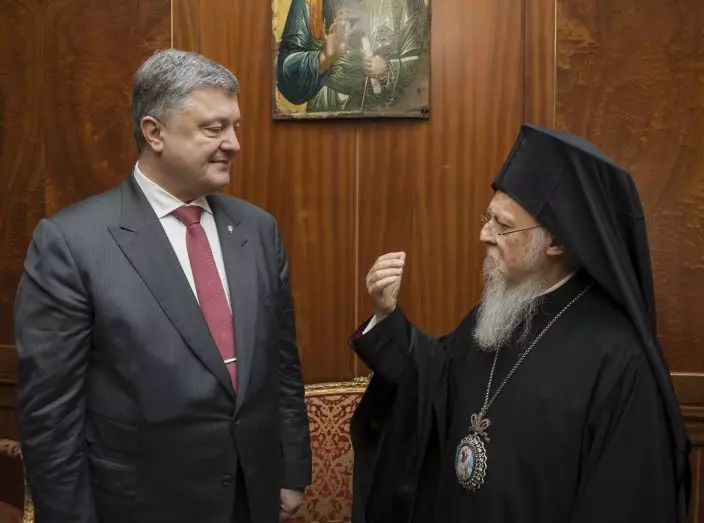
FILE - In this April 9, 2018 file photo, Ecumenical Orthodox Patriarch Bartholomew I, right, speaks with Ukrainian President Petro Poroshenko in Istanbul, Turkey. Ukraine's president says establishing a local Orthodox church won't prevent Russia-affiliated parishes from being able to operate, but tensions over the imminent formation of a Ukrainian Orthodox church independent of Moscow are raising fears that nationalists will try to seize Russian church properties. (Mikhail PalinchakPresidential Press Service Pool Photo via AP, File)
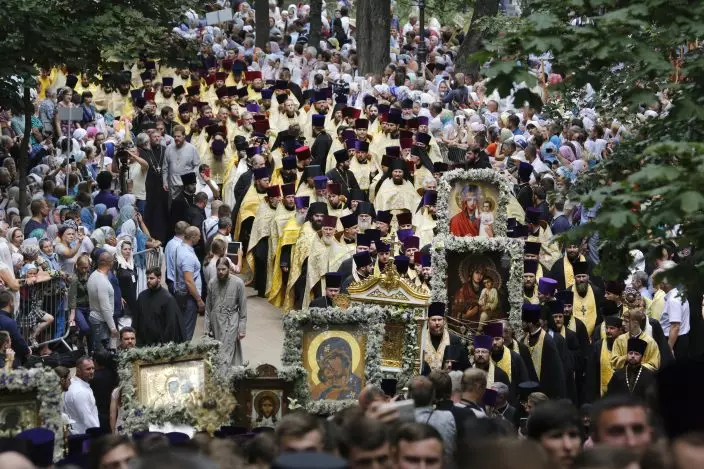
FILE - In this July 27, 2017 file photo, orthodox believers and clergymen march to prayer in Kiev, Ukraine, Thursday, July 27, 2017, in observance of the holiday marking the adoption of Christianity by what is now Russia and Ukraine in the 10th century. Tensions over the imminent formation of a Ukrainian Orthodox church independent of Moscow are raising fears that nationalists may try to seize Russian church properties. (AP PhotoEfrem Lukatsky)
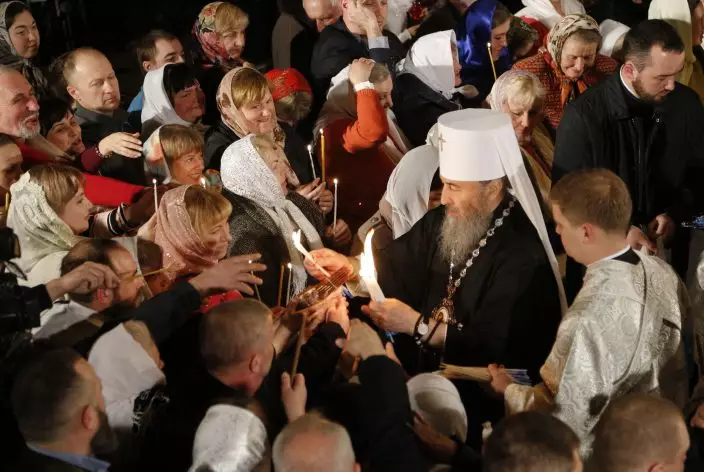
FILE - In this photo taken Saturday, April 7, 2018 head of the Ukrainian Orthodox Church under the Moscow Patriarchate, Metropolitan Onuphrius, lights believers' candles with fire which was delivered to the Ukrainian capital from the Church of the Holy Sepulcher in Jerusalem's Old City, traditionally believed to be the burial place of Jesus Christ, after the ceremony of the Holy Fire, during the Easter service in the Monastery of Caves in Kiev, Ukraine. Tensions over the imminent formation of a Ukrainian Orthodox church independent of Moscow are raising fears that nationalists will try to seize Russian church properties. (AP PhotoEfrem Lukatsky, FILE)
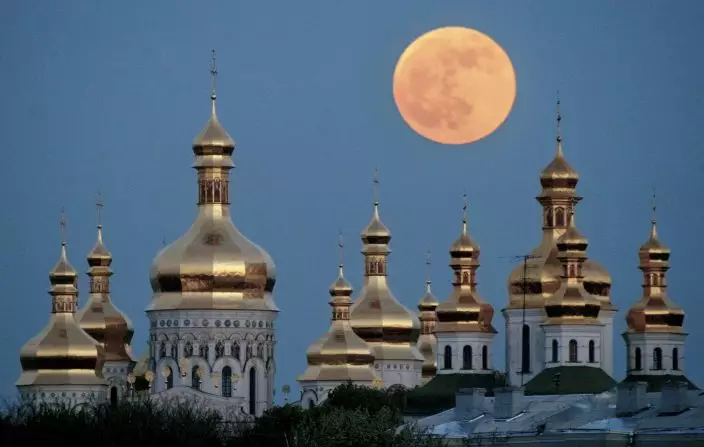
FILE - In this May 4, 2004 file photo, a full moon rises above the golden domes of the Orthodox Monastery of the Caves in Kiev, Ukraine. Tensions over the imminent formation of a Ukrainian Orthodox church independent of Moscow are raising fears that nationalists will try to seize Russian church properties.(AP PhotoEfrem Lukatsky, File)
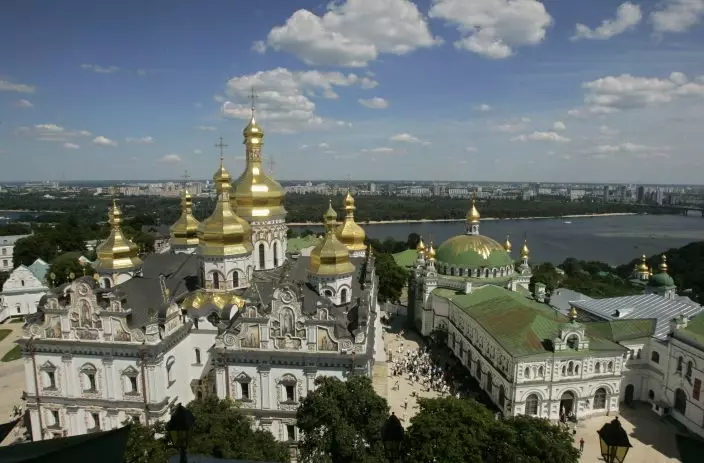
FILE - In this Sunday, July 27, 2008 file photo, The thousand-year-old Monastery of Caves, the holiest site of Eastern Orthodox Christians, against the background of the Dnipro River, in Kiev, Ukraine. Tensions over the imminent formation of a Ukrainian Orthodox church independent of Moscow are raising fears that nationalists may try to seize Russian church properties. (AP PhotoEfrem Lukatsky, FILE)
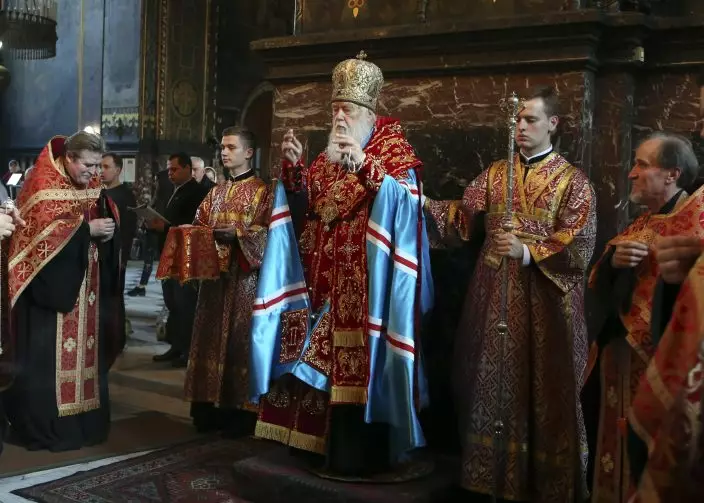
FILE - In this Thursday Oct. 11, 2018 file photo, Patriarch Filaret, head of the Ukrainian Orthodox Church of the Kiev Patriarchate, conducts a service at the Volodymysky Cathedral in Kiev, Ukraine. Tensions over the imminent formation of a Ukrainian Orthodox church independent of Moscow are raising fears that nationalists may try to seize Russian church properties. (AP PhotoEfrem Lukatsky, FILE)
That was considered a major step toward granting full recognition to a Ukrainian Orthodox Church, which has been formally under the Russian Orthodox Church since the 1600s.
FILE - In this April 9, 2018 file photo, Ecumenical Orthodox Patriarch Bartholomew I, right, speaks with Ukrainian President Petro Poroshenko in Istanbul, Turkey. Ukraine's president says establishing a local Orthodox church won't prevent Russia-affiliated parishes from being able to operate, but tensions over the imminent formation of a Ukrainian Orthodox church independent of Moscow are raising fears that nationalists will try to seize Russian church properties. (Mikhail PalinchakPresidential Press Service Pool Photo via AP, File)
In a statement Friday, Romania's Orthodox Church urged the Patriarchies of Moscow and Constantinople to promote "a unity of faith" that would also allow churches pastoral and administrative freedom.
FILE - In this July 27, 2017 file photo, orthodox believers and clergymen march to prayer in Kiev, Ukraine, Thursday, July 27, 2017, in observance of the holiday marking the adoption of Christianity by what is now Russia and Ukraine in the 10th century. Tensions over the imminent formation of a Ukrainian Orthodox church independent of Moscow are raising fears that nationalists may try to seize Russian church properties. (AP PhotoEfrem Lukatsky)
FILE - In this photo taken Saturday, April 7, 2018 head of the Ukrainian Orthodox Church under the Moscow Patriarchate, Metropolitan Onuphrius, lights believers' candles with fire which was delivered to the Ukrainian capital from the Church of the Holy Sepulcher in Jerusalem's Old City, traditionally believed to be the burial place of Jesus Christ, after the ceremony of the Holy Fire, during the Easter service in the Monastery of Caves in Kiev, Ukraine. Tensions over the imminent formation of a Ukrainian Orthodox church independent of Moscow are raising fears that nationalists will try to seize Russian church properties. (AP PhotoEfrem Lukatsky, FILE)
FILE - In this May 4, 2004 file photo, a full moon rises above the golden domes of the Orthodox Monastery of the Caves in Kiev, Ukraine. Tensions over the imminent formation of a Ukrainian Orthodox church independent of Moscow are raising fears that nationalists will try to seize Russian church properties.(AP PhotoEfrem Lukatsky, File)
FILE - In this Sunday, July 27, 2008 file photo, The thousand-year-old Monastery of Caves, the holiest site of Eastern Orthodox Christians, against the background of the Dnipro River, in Kiev, Ukraine. Tensions over the imminent formation of a Ukrainian Orthodox church independent of Moscow are raising fears that nationalists may try to seize Russian church properties. (AP PhotoEfrem Lukatsky, FILE)
FILE - In this Thursday Oct. 11, 2018 file photo, Patriarch Filaret, head of the Ukrainian Orthodox Church of the Kiev Patriarchate, conducts a service at the Volodymysky Cathedral in Kiev, Ukraine. Tensions over the imminent formation of a Ukrainian Orthodox church independent of Moscow are raising fears that nationalists may try to seize Russian church properties. (AP PhotoEfrem Lukatsky, FILE)