On New Year's Day, Bulgaria will achieve its decades-old goal of joining the euro currency union and deepening ties with the more prosperous countries of Western Europe.
Membership is expected to promote cross-border trade and investment, and the Bulgarian government pressed for years to get in. Yet polls show the changeover is taking place against a background of widespread skepticism among ordinary people.
Click to Gallery
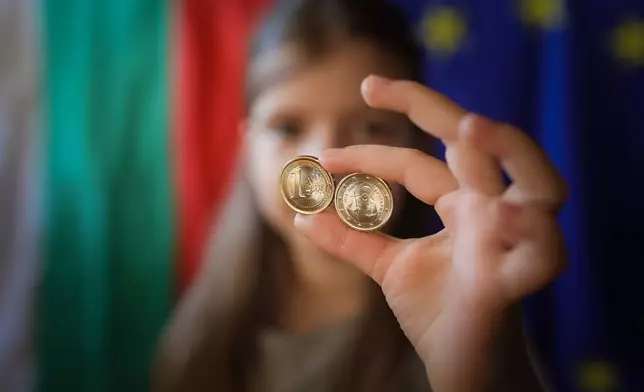
A girl poses as she holds new euro coins with Bulgarian symbols in Sofia, Tuesday Dec. 30, 2025. (AP Photo/Valentina Petrova)
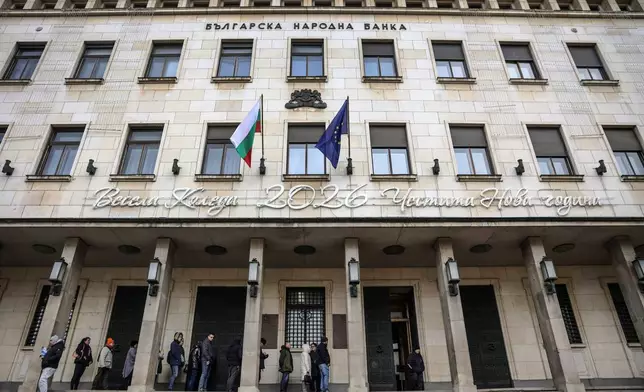
People wait in line to buy packages of new Euro coins with Bulgarian symbols at the doorstep of Bulgarian National Bank, in Sofia, Saturday Dec. 27, 2025. (AP Photo/Valentina Petrova)
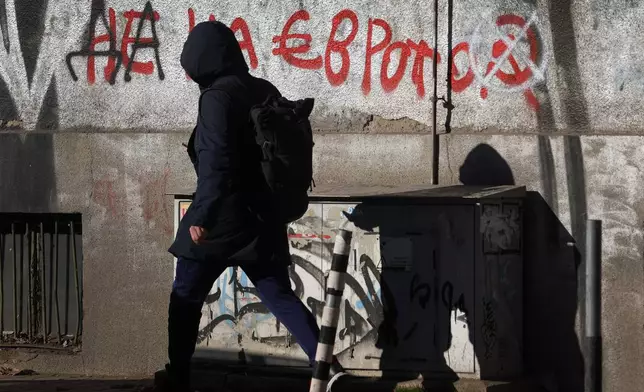
A woman passes by a graffiti reading "No to the euro" altered to "Yes to the euro" in Sofia, Monday, Dec. 29, 2025. (AP Photo/Valentina Petrova)
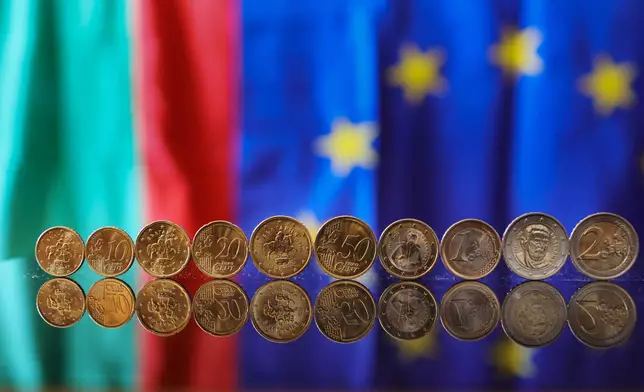
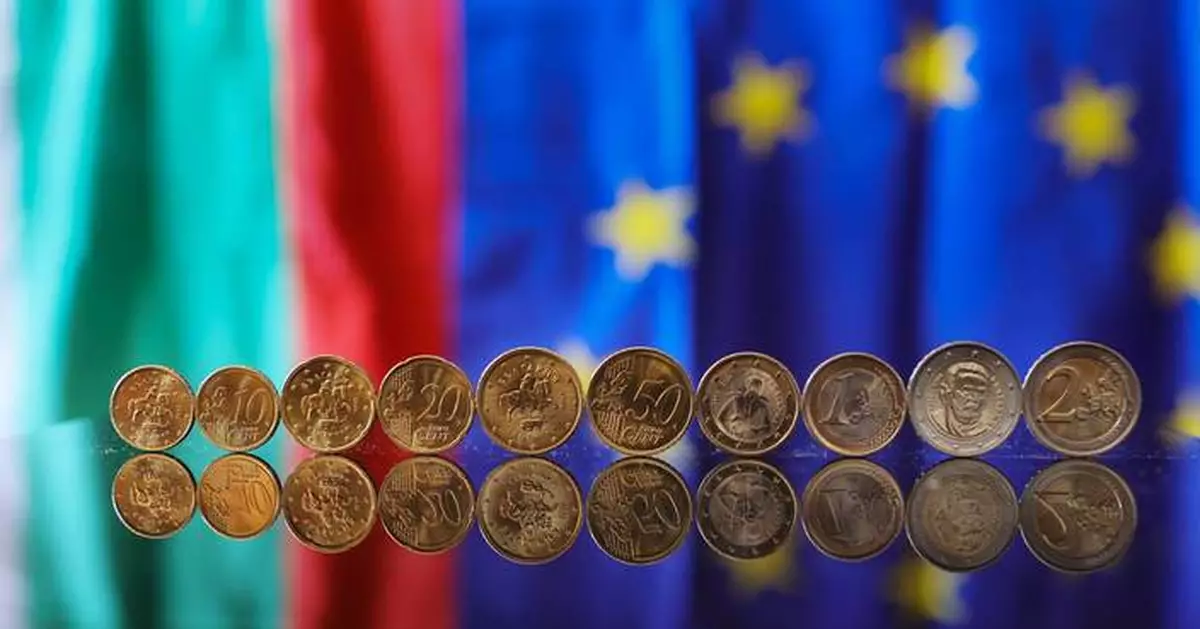
New Euro coins with Bulgarian symbols reflected in a table seen backdropped by Bulgarian and EU flag, Sofia, Tuesday Dec. 30, 2025. (AP Photo/Valentina Petrova)
Here are things to know as Bulgaria and its 6.4 million people become the 21st member of the European Union's shared currency:
In the run-up to the big switch, price tags and bank accounts have had to show both currencies, at the fixed rate of 51 euro cents to the outgoing currency, the lev.
Bank accounts will automatically be converted.
People will still be able to pay in levs for about a month, but they will start getting their change in euros. Old notes and coins are expected to be out of the economy in a matter of weeks.
Until June 30, old money can be exchanged for no fee at banks, post offices and the Bulgarian Central Bank, and indefinitely at the central bank.
Membership means Bulgaria is part of a much larger economic entity — the eurozone, with its internationally used currency and central bank that sets interest rates across the currency union.
A single currency means that, for example, Bulgarians can vacation in neighboring EU and eurozone member Greece and not have to exchange money or come back with leftover bills and coins they can't spend at home. The euro also makes it easier for people to compare prices when shopping online across borders or planning travel.
Companies that trade with the rest of the eurozone will no longer have to bear the costs of currency exchange, savings worth an estimated 1 billion levs per year, according to the Bulgarian National Bank.
Bulgaria also gets a seat on the European Central Bank's governing council — and a voice in decisions on interest rates and monetary policy.
Countries that join give up some economic policy tools, in that interest rates are set by the ECB in Frankfurt, and they can no longer devalue their currency to gain competitiveness or trade advantage.
However, Bulgaria gave that aspect of economic sovereignty up long ago because it fixed the lev's exchange rate to the euro.
Bulgaria officially committed to joining the euro and swapping out its national currency, the lev, when it joined the EU in 2007.
That’s typically the case, though two countries — Britain, which has since left the EU, and Denmark — got opt outs. A third, Sweden, shelved the issue after voters said no in a referendum. The Czech Republic, Hungary, Poland and Romania have not taken the steps needed to join the eurozone.
To adopt the euro, countries must first exhibit a stable exchange rate with the euro and keep inflation, debt and deficits within the limits of an EU rulebook. EU leaders make the final decision on admitting a country to the eurozone after review by the executive Commission and the European Central Bank.
A protracted debt crisis in 2010-2015 saw speculation about Greece leaving the euro and Greece, Ireland, Portugal, Spain and Cyprus needing bailouts from other eurozone members.
Since then, the EU and the European Central Bank have taken steps to prevent a repeat, including moving banking regulation to the ECB and setting up a rescue fund. The ECB has also expanded its ability to backstop countries afflicted by market turmoil by intervening in the bond market if needed.
The EU’s Eurobarometer poll from March showed that 53% of 1,017 people surveyed opposed joining the eurozone, while 45% were in favor. A separate Eurobarometer poll, taken between Oct. 9 and Nov. 3, on a similar sample, similarly showed that about half of Bulgarians opposed the single currency while 42% were in favor. The margin of error was about plus or minus 3.1 percentage points for the March poll.
Much of that resistance appears to come from fears that inflation will increase as merchants round prices up during the changeover. Some also fear the loss of the currency as a symbol of national sovereignty.
Those fears are not so much about the euro but about general economic worries and skepticism about officialdom, said Dimitar Keranov, program coordinator for engaging Central Europe at the German Marshall Fund in Berlin.
They are “more about economic anxiety and low institutional trust overall, not ideological concerns against the euro or the European integration of Bulgaria,” Keranov said.
Bulgaria ranks as the second most corrupt country in the EU after Hungary, according to Transparency International. It also ranks near the bottom in income levels, with average wages of 1,300 euros ($1,530) per month.
Disinformation spread on social media and attributed to Russian efforts to sow dissension among EU countries has also played a role, Keranov said.
Experience shows that there is a slight, transient bump in inflation after joining.
European Central Bank President Christine Lagarde said that in earlier euro changeovers, the impact was 0.2% to 0.4% percentage point and quickly faded.
“Before adoption, uncertainty is natural,” she said. "But once households and firms begin using the new currency in their daily lives — and see that a credible central bank is safeguarding price stability — confidence grows."
After adoption, public opinion shifts in favor of the euro by an average 11 percentage points, ECB economists Ferdinand Dreher and Nils Hernborg wrote in a blog post.
Some price hikes can be more apparent than real. Economists say restaurants and hairdressers may hold off revising their menus and price lists ahead of the switch, meaning price increases already in the works are simply showing up with a delay.
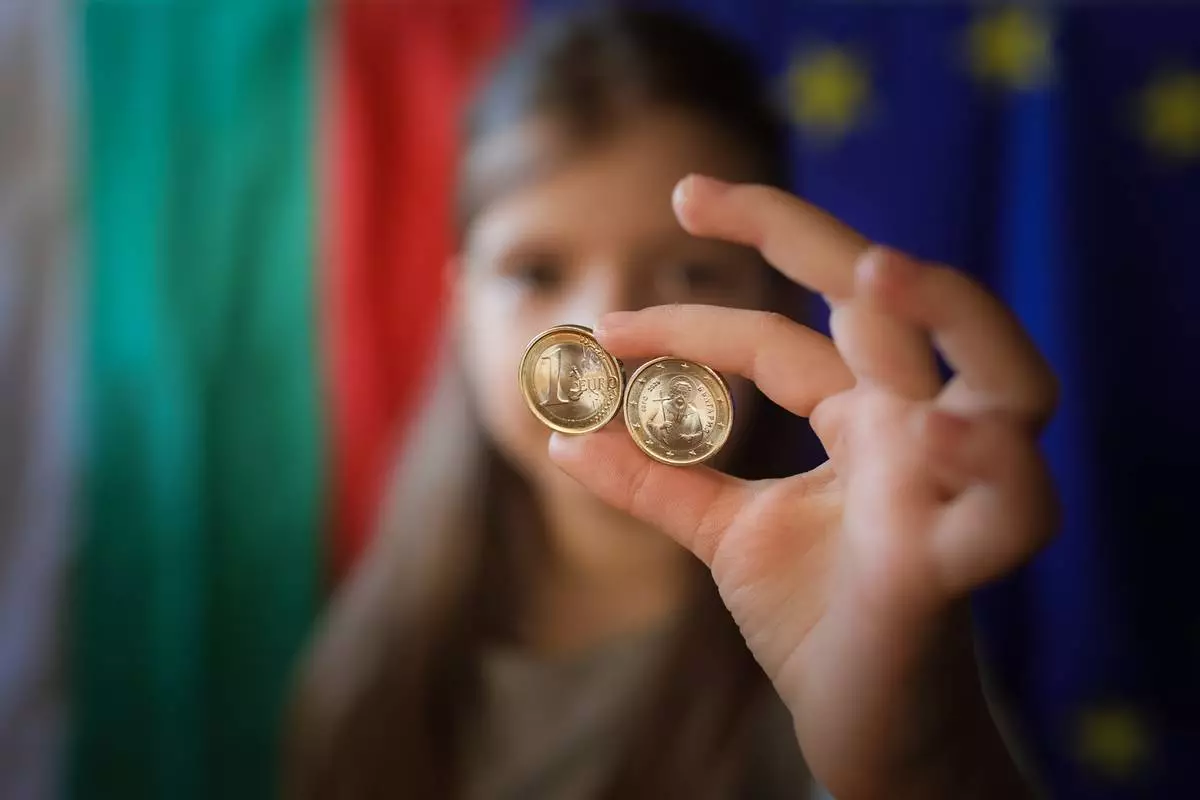
A girl poses as she holds new euro coins with Bulgarian symbols in Sofia, Tuesday Dec. 30, 2025. (AP Photo/Valentina Petrova)
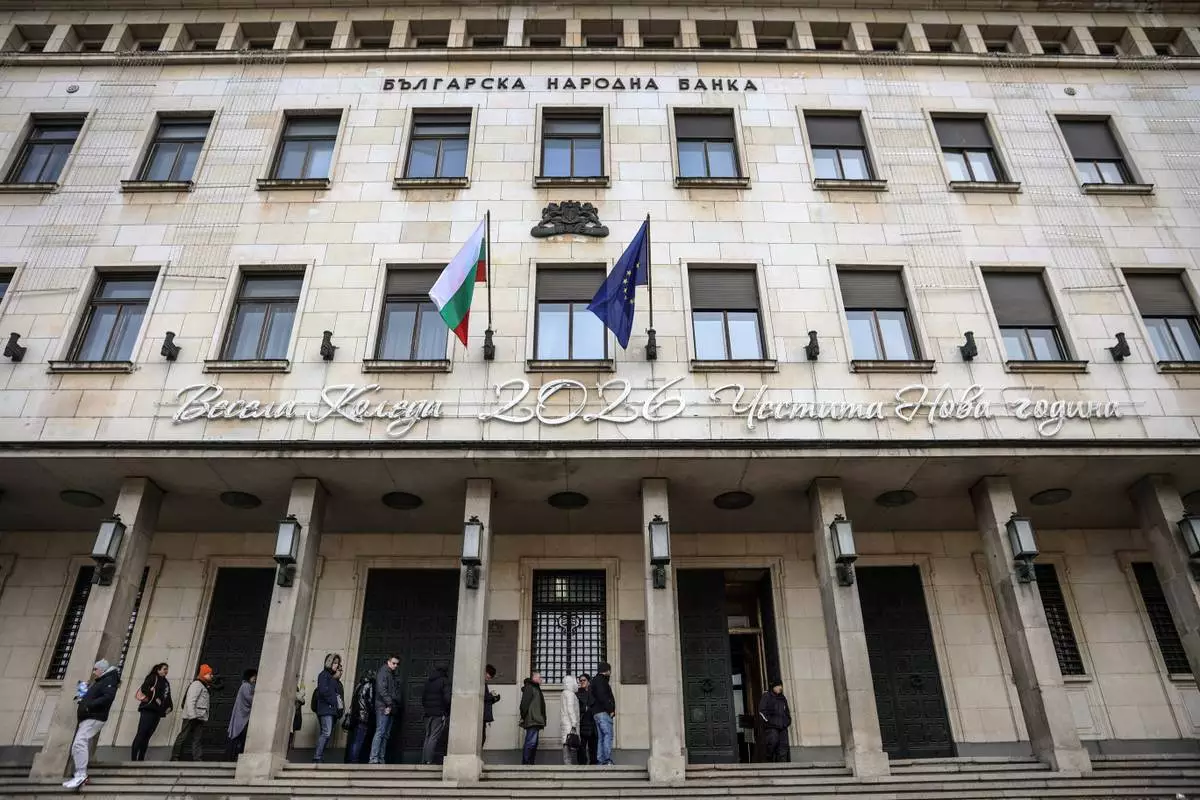
People wait in line to buy packages of new Euro coins with Bulgarian symbols at the doorstep of Bulgarian National Bank, in Sofia, Saturday Dec. 27, 2025. (AP Photo/Valentina Petrova)
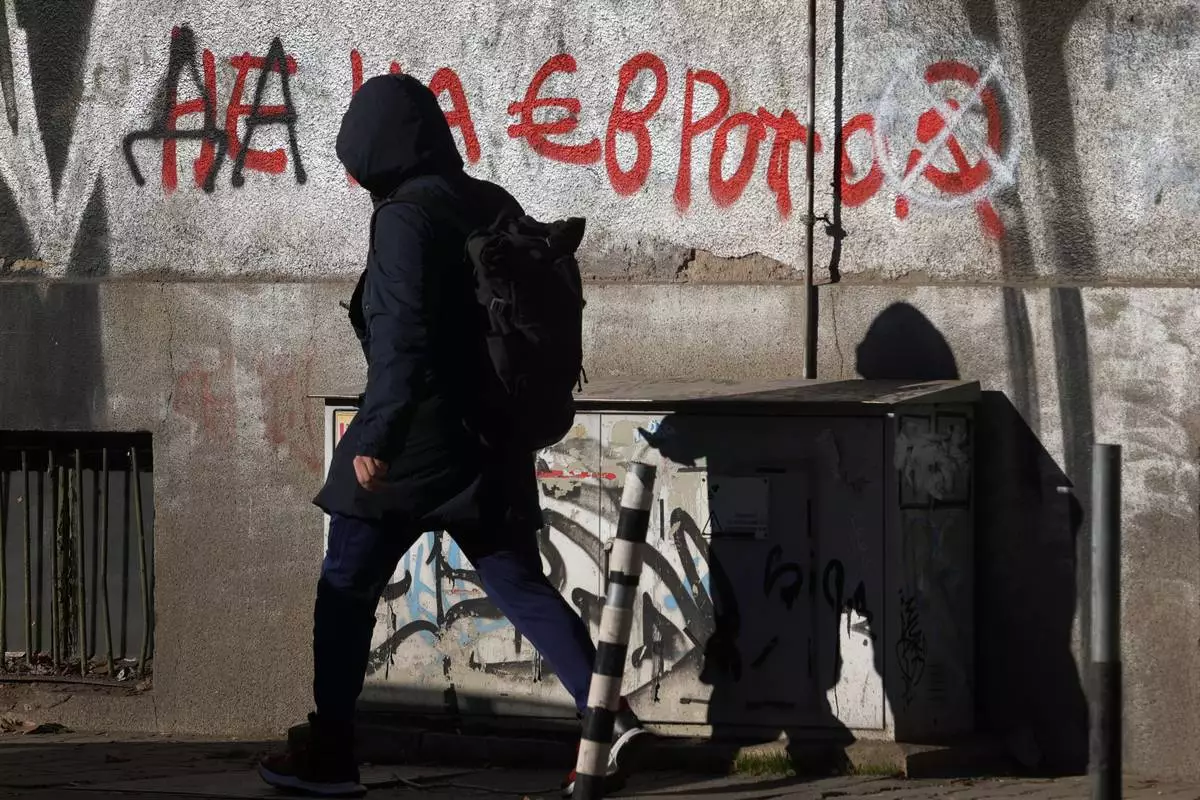
A woman passes by a graffiti reading "No to the euro" altered to "Yes to the euro" in Sofia, Monday, Dec. 29, 2025. (AP Photo/Valentina Petrova)
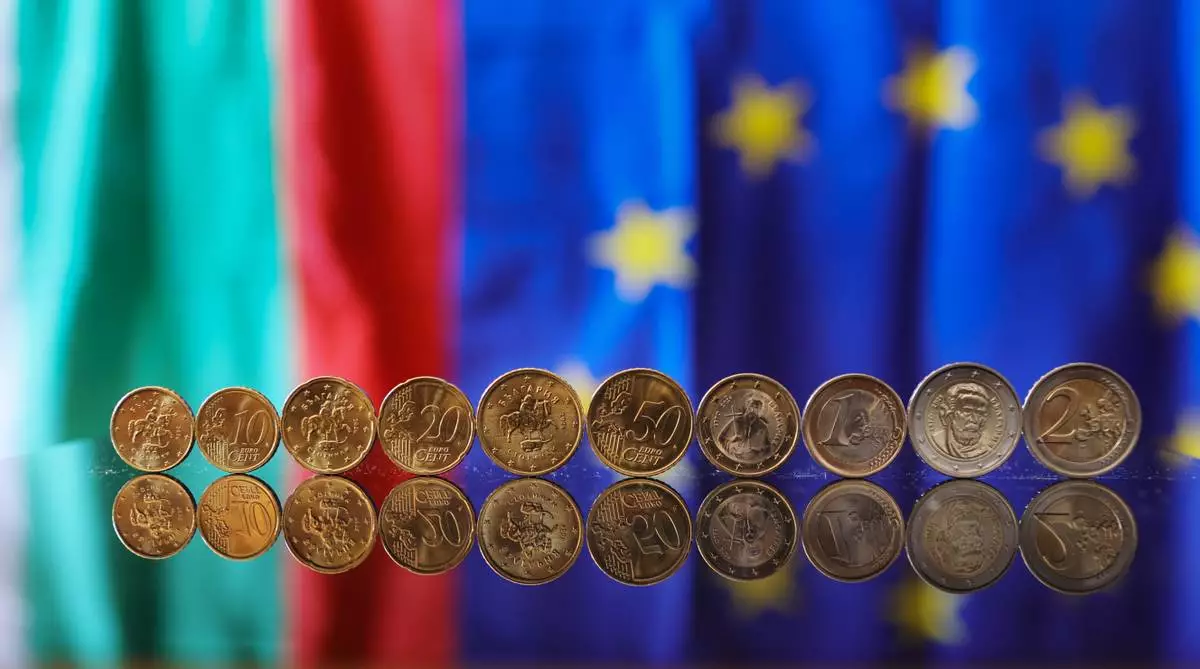
New Euro coins with Bulgarian symbols reflected in a table seen backdropped by Bulgarian and EU flag, Sofia, Tuesday Dec. 30, 2025. (AP Photo/Valentina Petrova)