One of the 158 new digital images released with iOS 12.1 on October 30 has had people speculating what it could mean.
With more than 2,800 emoji available to smartphone users, it’s not surprising a few – like the infamous eggplant – have caused a stir over the years.
One of the 158 new digital images released with iOS 12.1 on October 30 has had mixed reactions from users, who aren’t quite sure what the facial expression means.
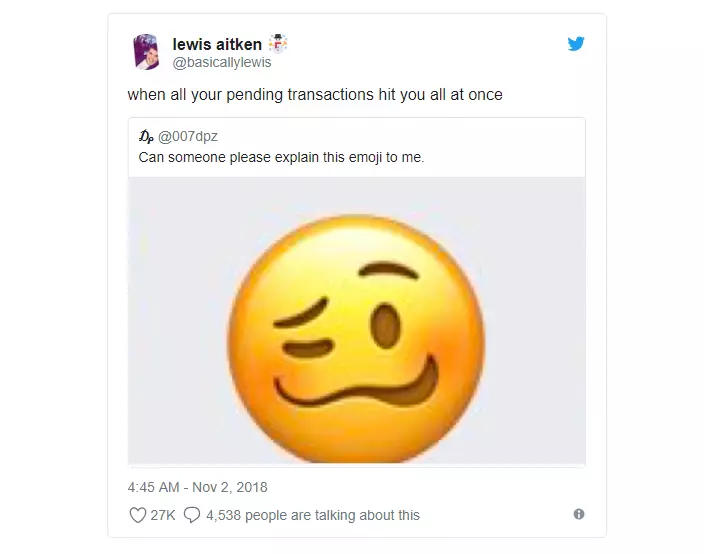
The “woozy” face emoji was part of the new release and has created a discussion on Twitter about what it is trying to convey.
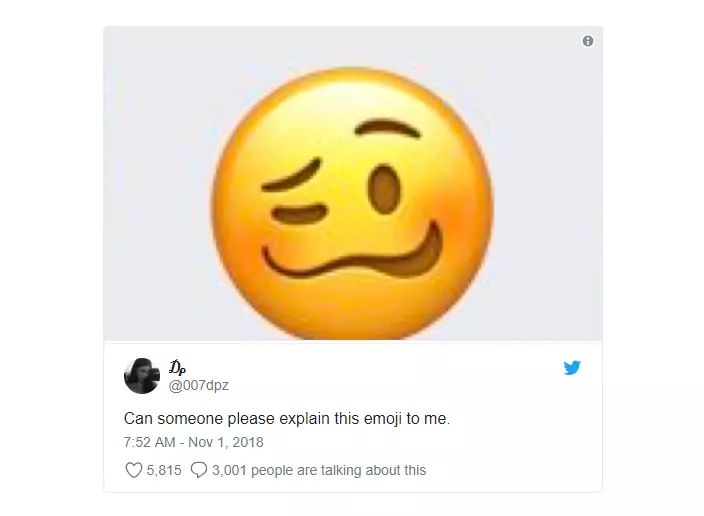
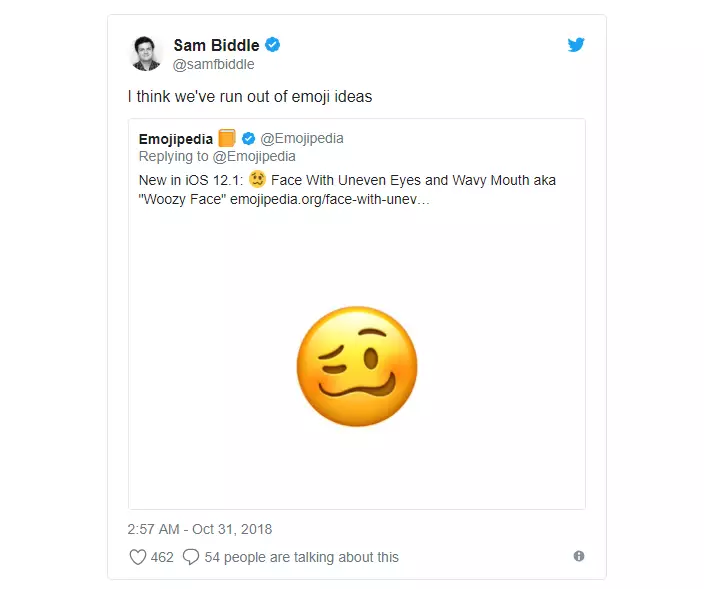
The emoji, looking almost between a grimace and a blush, is described officially as “woozy”.
Emojipedia explains it is a “face which may be showing signs of being tired and emotional, i.e. drunk”. Others are interpreting it as anything from a stroke to biting your tongue accidentally.
Twitter users tried to guess what the face could mean …
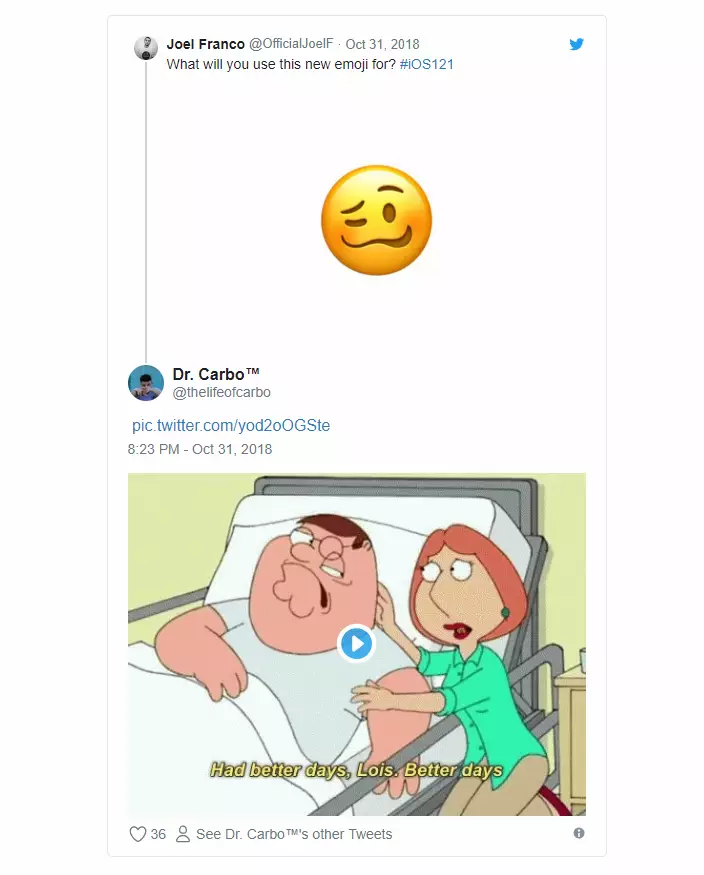
While others have already put the emoji to good use.
And others simply feel Apple have run out of good emoji ideas.
Along with the update, users now have access to new graphics including redheads, people with curly hair, a softball, skateboard, mango, bagel and kangaroo emoji.
The flag representing the United Nations was also added. The emoji had been previously approved but hadn’t been available on iOS until this update.
HONG KONG (AP) — A Hong Kong court heard sentencing arguments Tuesday for former publisher Jimmy Lai's co-defendants as it moved closer to sentencing the prominent democracy advocate whose conviction under a national security law could land him in prison for life. The jail term's potential length remained unclear.
Former executives of the now-defunct, pro-democracy newspaper founded by Lai finished pleading for lighter sentences Tuesday afternoon in the landmark case widely seen as a barometer of media freedom in a city once hailed as a bastion of free press in Asia.
The former journalists pleaded guilty in 2022 to conspiracy to collude with foreign forces to endanger national security. They admitted to the prosecution's charge that said they conspired with their ex-boss and onetime media mogul Lai to request foreign sanctions, blockades or engage in other hostile activities against Hong Kong or China.
Lai, who pleaded not guilty in the case, was convicted in December. The verdict raised concerns about the city's declining press freedom and drew criticism from foreign governments.
But the government insists the case has nothing to do with media freedom, saying the defendants used news reporting as a pretext for years to commit acts that harmed China and Hong Kong.
Following the conclusion of arguments, Esther Toh, one of the three government-vetted judges, said they would need to analyze the lawyers' arguments, saying they will inform them “as soon as we can" on the sentencing date. They did not give a date.
After the judges left, some people in the public gallery waved goodbye to the defendants. Lai pressed his palms together in an apparent expression of gratitude before leaving the courtroom.
Six Apple Daily executives were convicted in Lai's case: publisher Cheung Kim-hung; associate publisher Chan Pui-man; editor-in-chief Ryan Law; executive editor-in-chief Lam Man-chung; executive editor-in-chief responsible for English news Fung Wai-kong; and editorial writer Yeung Ching-kee. Some of them served as prosecution witnesses during the 156-day trial.
A conviction on the collusion charge carries a sentence ranging from three years to life in prison. But a guilty plea can result in a sentence reduction. Under the security law, a reduced penalty may be granted to those who report on offenses committed by others.
Chan's lawyer, Marco Li, said if the judges decided to place his client in the upper sentencing band, he suggested the starting point should be 10 years, given her limited role. Citing factors including her timely plea and assistance to the prosecution, he asked for her sentence to be halved.
Li said Chan, who started working at Apple Daily in 1996 and has an emotional attachment to journalism, regretted not resisting even more firmly when matters arose that made her uncomfortable. But according to her mitigation letter, Chan couldn't leave her beloved job casually at that time because she was suffering serious health issues and was under financial burden, he said.
Lawyer Erik Shum, who represented Lam, argued the acts of individual defendants and their roles should be taken into account when deciding which tier of the sentencing bands one falls into.
“He was dragged into this deep, muddy water as an employee,” Shum said.
Chung Pui-kuen, Chan's husband and a former top editor of the now-shuttered Stand News, was among those in the public gallery. He was sentenced to 21 months in jail in a separate sedition case.
Lai founded Apple Daily in 1995, two years before Hong Kong, a former British colony, returned to Chinese rule. It attracted a strong following with its sometimes sensational reports, investigative scoops and eventual short animated video reports. Being openly critical of the Hong Kong and Chinese governments, the newspaper was well-received among pro-democracy readers.
During Hong Kong's massive anti-government protests in 2019, Apple Daily ran articles sympathetic to protesters and supportive of the pro-democracy movement that saw hundreds of thousands of people take to the streets.
After Beijing imposed the security law to quell the protests, Lai was one of the first prominent figures to be arrested. Within a year, Apple Daily's former executives also were arrested. The prosecutions, asset freeze and police raids forced the newspaper's closure in June 2021. Its final edition sold a million copies.
In their December verdict, the judges said Lai had used Apple Daily as a platform for spreading his political ideas and implementing his political agenda before and after the introduction of the security law.
The judges on Monday heard arguments about the sentencing of Lai, Cheung and two other non-Apple Daily activists involved in the former publisher’s case.
When Lai entered the courtroom Tuesday, he smiled at people sitting in the public gallery as a supporter formed a heart shape with her hands.
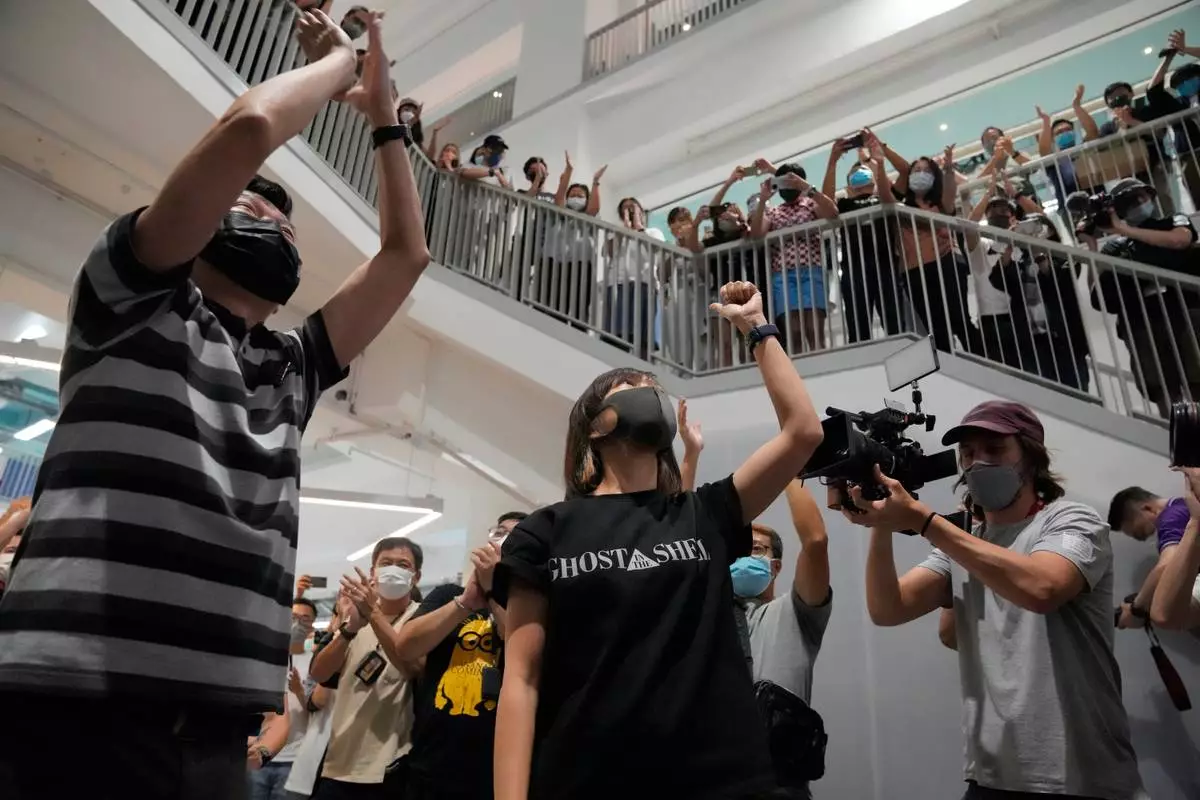
FILE - In this June 23, 2021, file photo, Lam Man-chung, left, executive editor-in-Chief of Apple Daily and Chan Pui-man, center, associate publisher of Apple Daily gesture at the headquarters before the newspaper stop publishing in Hong Kong. (AP Photo/Kin Cheung, File)
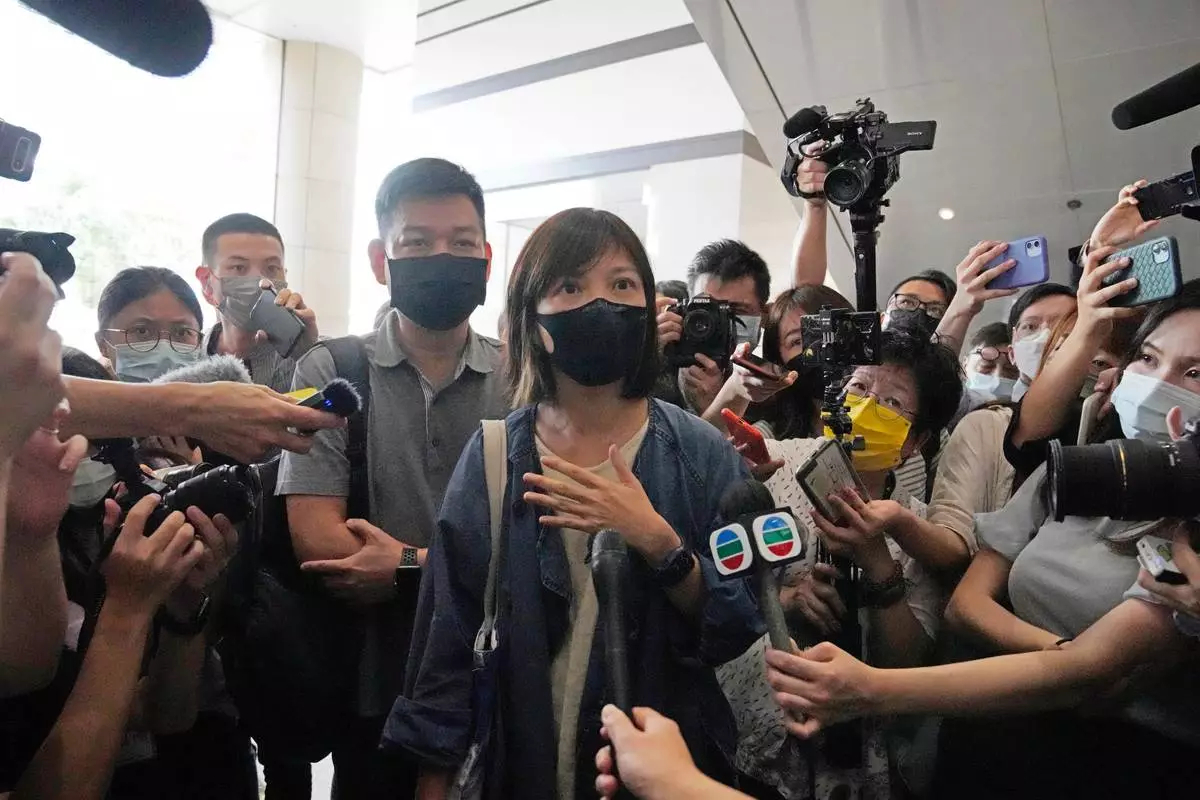
FILE - Chan Pui-man, associate publisher of Apple Daily newspaper walks out from a court in Hong Kong, June 19, 2021. (AP Photo/Kin Cheung), File)