WARNING: GRAPHIC CONTENT – Michael Rogers was at risk of losing his leg because of complications related to his diabetes.
A former council worker has praised maggots for performing a “medical miracle” – by feasting on a gaping mass of infected tissue and bone marrow and saving his ulcerated foot from amputation.
Click to Gallery
The maggots eat away the dead flesh and disinfect the wound with their cleansing saliva (Collect/PA Real Life)
The maggots are specially farmed for medical purpose (Collect/PA Real Life)
Michael at home in Swansea (Collect/PA Real Life)
GRAPHIC WARNING Michael's infected foot before the maggots had been applied (Collect/PA Real Life)
Michael's heel with the maggots in situ beneath a gauze (Collect/PA Real Life)
Michael has used a wheelchair since the infection in his foot started last year (Collect/PA Real Life)
The maggots are kept in place on the wound using gauze material (Collect/PA Real Life)
GRAPHIC WARNING Michael's foot after two bouts of maggot therapy (Collect/PA Real Life)
GRAPHIC WARNING Michael in Morriston hospital receiving treatment (Collect/PA Real Life)
Michael Rogers, 64, who lost his right leg in 2015, as a result of diabetic complications, was then forced to have 80 per cent of his left heel cut away last year, after blood flow and nerve problems, common to the condition, meant his tissue turned black and died.
Left with a 14cm by 10cm wound on the sole of his foot and fearing he would lose the rest of it, single Michael, of Swansea, West Glamorgan, South Wales, said his saviour came in April 2018 – in the form of hundreds of specially farmed green-bottle maggots.
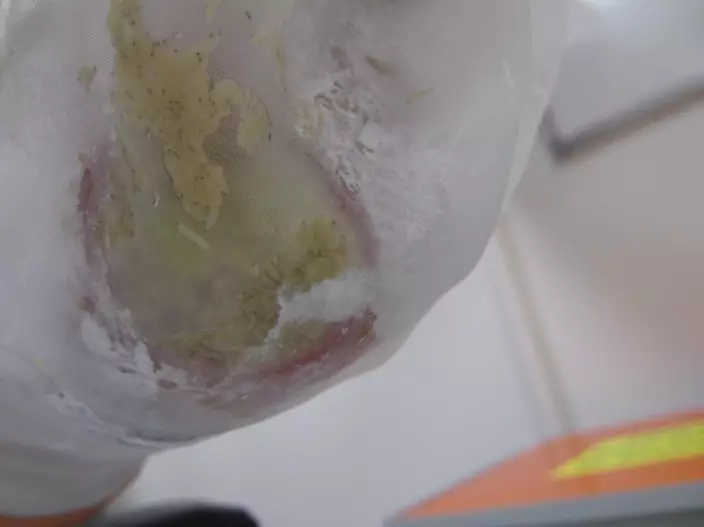
The maggots eat away the dead flesh and disinfect the wound with their cleansing saliva (Collect/PA Real Life)
After having the creepy crawlies attached to his wound for two week-long stints, as part of a radical treatment programme, Michael said: “I owe those little fellas a lot!
“I was adamant that I wasn’t going to lose another leg and was willing to do anything to keep it.
“The doctors tried various things that hadn’t worked, trying to get rid of the dead and infected tissue in my foot.”
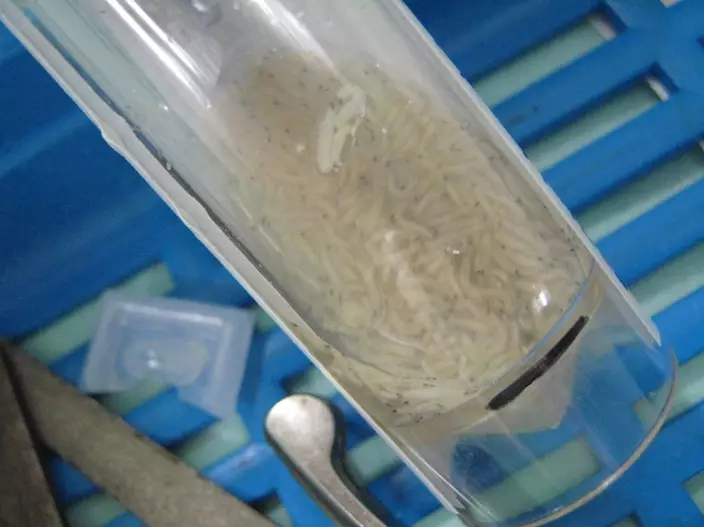
The maggots are specially farmed for medical purpose (Collect/PA Real Life)
He added: “So, when they suggested to me the maggots, without hesitation I said, ‘Bring it on!'”
Diagnosed with type 2 diabetes 12 years ago, meaning the body either does not produce enough insulin, or its cells do not react to insulin, Michael first began having serious complications as a result of the condition that affects blood flow and blood sugar levels, in 2015.
He was diagnosed with osteomyelitis – a serious infection of the bone, known to be a common complication of diabetic foot ulcers – in his right foot, leading to a below knee amputation.

Michael at home in Swansea (Collect/PA Real Life)
Then, just two years later, he was devastated to be told that osteomyelitis had now developed in his left foot.
“I thought to myself, ‘Here we go again,'” said Michael, who recalled experiencing pain and seeing his skin blacken within a few days.
“I knew what it was, but this time I really did not want to lose my leg and was determined to keep it.”
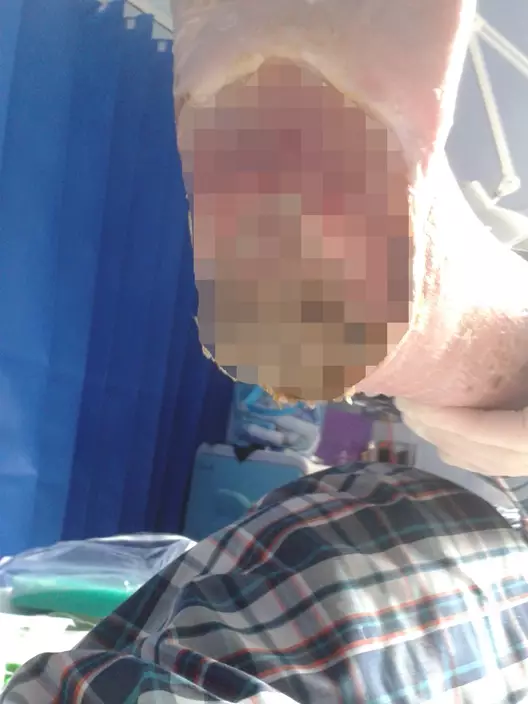
GRAPHIC WARNING Michael's infected foot before the maggots had been applied (Collect/PA Real Life)
But, within six months of having the maggot therapy, his wound had shrunk to just 3cm by 1cm, as the wriggly critters had gorged on all the dead skin, simultaneously disinfecting the wound.
Now, on the road to a full recovery, Michael is an enthusiastic supporter of the treatment, saying: “I would recommend the maggots to anyone.
“Admittedly, I had a bit of trepidation about having these things crawling around on my body for such long periods of time, while I was at home, trying to get on with my life and in bed at night, while I was sleeping.”
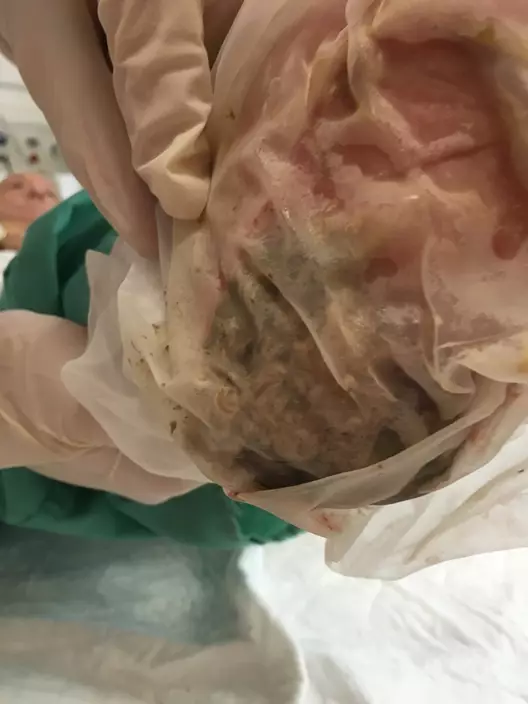
Michael's heel with the maggots in situ beneath a gauze (Collect/PA Real Life)
He added: “But they were marvellous and really helped to sort me out.”
With the infection inside his bone and deep within the tissue of his foot, doctors at Swansea’s Morriston Hospital had first conducted debridement surgery, to remove dead matter, in August 2017 – resulting in cutting away 80 per cent of his heel.
Despite their best efforts, though, some of the infection still remained, which if left untreated could spread further, making amputation the only option.

Michael has used a wheelchair since the infection in his foot started last year (Collect/PA Real Life)
“The doctors told me they’d have to start thinking of alternatives, one of which was vacuum therapy, where they tried to suck out the dead tissue,” he said.
“Unfortunately, though, that didn’t work enough and by this stage the wound in my foot was quite big. That’s when they suggested that maggots could be the answer.”
Applied on two separate occasions in April 2018, Michael’s foot was then wrapped in gauze, “like a teabag,” according to Michael, before the maggots were attached to the wound on his heel.
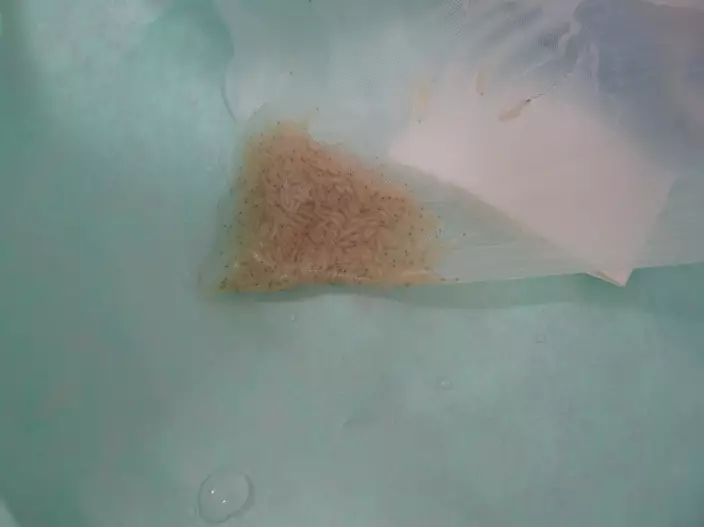
The maggots are kept in place on the wound using gauze material (Collect/PA Real Life)
Left on for a week at a time, confined within the bandages, they were able to eat away, painlessly, at the dead flesh.
“I really couldn’t feel a thing, but it was a little odd to think that I had these foreign bodies eating away at a part of my body while I was going about my daily business,” he said.
The maggots – which grew in size as they chomped their way through his dead foot – were a huge success.
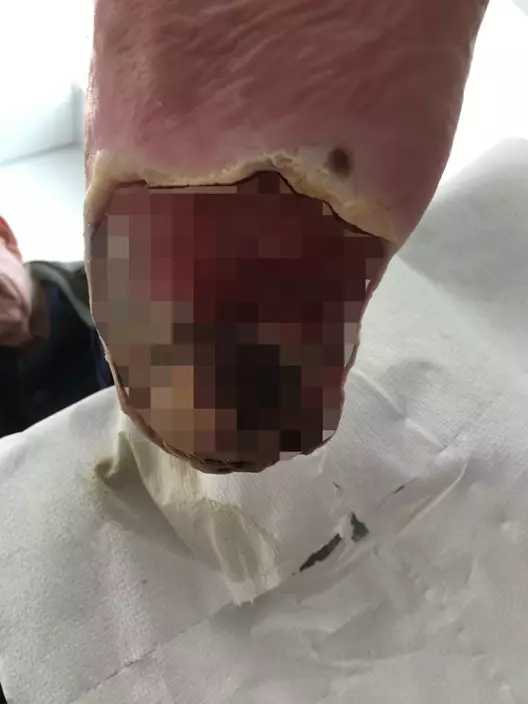
GRAPHIC WARNING Michael's foot after two bouts of maggot therapy (Collect/PA Real Life)
Now Michael, who is currently using a wheelchair, says he is recovering well, adding: “Hopefully I won’t be wheelchair-bound for much longer and I’ll be back up on my feet again, using a prosthetic.
“But in any case, those maggots helped me out an awful lot and I feel genuinely grateful to them and the hospital for suggesting it.
“I know a lot of people will have negative preconceptions about maggots and would turn their noses up at the idea – but my advice would be give it a go. No matter how grisly something might seem, if it can help get you out of trouble then it has to be worth it.”

GRAPHIC WARNING Michael in Morriston hospital receiving treatment (Collect/PA Real Life)
Meanwhile, Rosalyn Thomas, a podiatry specialist at Morriston Hospital who did the treatment, praised the use of maggots to treat these kind of wounds.
She said: “There are many benefits to using maggot therapy.
“They are efficient and cost effective and patients and they can clean wounds in two or three days leaving healthy tissue to allow wound healing to progress as their saliva has antibiotic properties that help keep the wound clean. They are really like blind legless surgeons!”
MINNEAPOLIS (AP) — Federal agents carrying out immigration arrests in Minnesota's Twin Cities region already shaken by the fatal shooting of a woman rammed the door of one home Sunday and pushed their way inside, part of what the Department of Homeland Security has called its largest enforcement operation ever.
In a dramatic scene similar to those playing out across Minneapolis, agents captured a man in the home just minutes after pepper spraying protesters outside who had confronted the heavily armed federal agents. Along the residential street, protesters honked car horns, banged on drums and blew whistles in attempts to disrupt the operation.
Video of the clash taken by The Associated Press showed some agents pushing back protesters while a distraught woman later emerged from the house with a document that federal agents presented to arrest the man. Signed by an immigration officer, the document — unlike a warrant signed by a judge — does not authorize forced entry into a private residence. A warrant signed by an immigration officer only authorizes arrest in a public area.
Immigrant advocacy groups have conducted extensive “know-your-rights” campaigns urging people not to open their doors unless agents have a court order signed by a judge.
But within minutes of ramming the door in a neighborhood filled with single-family homes, the handcuffed man was led away.
More than 2,000 immigration arrests have been made in Minnesota since the enforcement operation began at the beginning of December, said Homeland Security spokesperson Tricia McLaughlin.
Homeland Security Secretary Kristi Noem told Fox News on Sunday that the administration would send additional federal agents to Minnesota to protect immigration officers and continue enforcement.
The Twin Cities — the latest target in President Donald Trump’s immigration enforcement campaign — is bracing for what is next after 37-year-old Renee Good was shot and killed by an immigration officer on Wednesday.
“We’re seeing a lot of immigration enforcement across Minneapolis and across the state, federal agents just swarming around our neighborhoods,” said Jason Chavez, a Minneapolis city councilmember. “They’ve definitely been out here.”
Chavez, the son of Mexican immigrants who represents an area with a growing immigrant population, said he is closely monitoring information from chat groups about where residents are seeing agents operating.
People holding whistles positioned themselves in freezing temperatures on street corners Sunday in the neighborhood where Good was killed, watching for any signs of federal agents.
More than 20,000 people have taken part in a variety of trainings to become “observers” of enforcement activities in Minnesota since the 2024 election, said Luis Argueta, a spokesperson for Unidos MN, a local human rights organization .
“It’s a role that people choose to take on voluntarily, because they choose to look out for their neighbors,” Argueta said.
The protests have been largely peaceful, but residents remained anxious. On Monday, Minneapolis public schools will start offering remote learning for the next month in response to concerns that children might feel unsafe venturing out while tensions remain high.
Many schools closed last week after Good’s shooting and the upheaval that followed.
While the enforcement activity continues, two of the state’s leading Democrats said that the investigation into Good's shooting death should not be overseen solely by the federal government.
Minneapolis Mayor Jacob Frey and U.S. Sen. Tina Smith said in separate interviews Sunday that state authorities should be included in the investigation because the federal government has already made clear what it believes happened.
“How can we trust the federal government to do an objective, unbiased investigation, without prejudice, when at the beginning of that investigation they have already announced exactly what they saw — what they think happened," Smith said on ABC’s "This Week."
The Trump administration has defended the officer who shot Good in her car, saying he was protecting himself and fellow agents and that Good had “weaponized” her vehicle.
Todd Lyons, acting director of U.S. Immigration and Customs Enforcement, defended the officer on Fox News Channel’s “The Sunday Briefing.”
"That law enforcement officer had milliseconds, if not short time to make a decision to save his life and his other fellow agents,” he said.
Lyons also said the administration’s enforcement operations in Minnesota wouldn't be needed “if local jurisdictions worked with us to turn over these criminally illegal aliens once they are already considered a public safety threat by the locals.”
The killing of Good by an ICE officer and the shooting of two people by federal agents in Portland, Oregon, led to dozens of protests in cities across the country over the weekend, including New York, Los Angeles, Washington D.C. and Oakland, California.
Contributing were Associated Press journalists Giovanna Dell’Orto in Minneapolis; Thomas Strong in Washington; Bill Barrow in Atlanta; Christopher Weber in Los Angeles; and John Seewer in Toledo, Ohio.
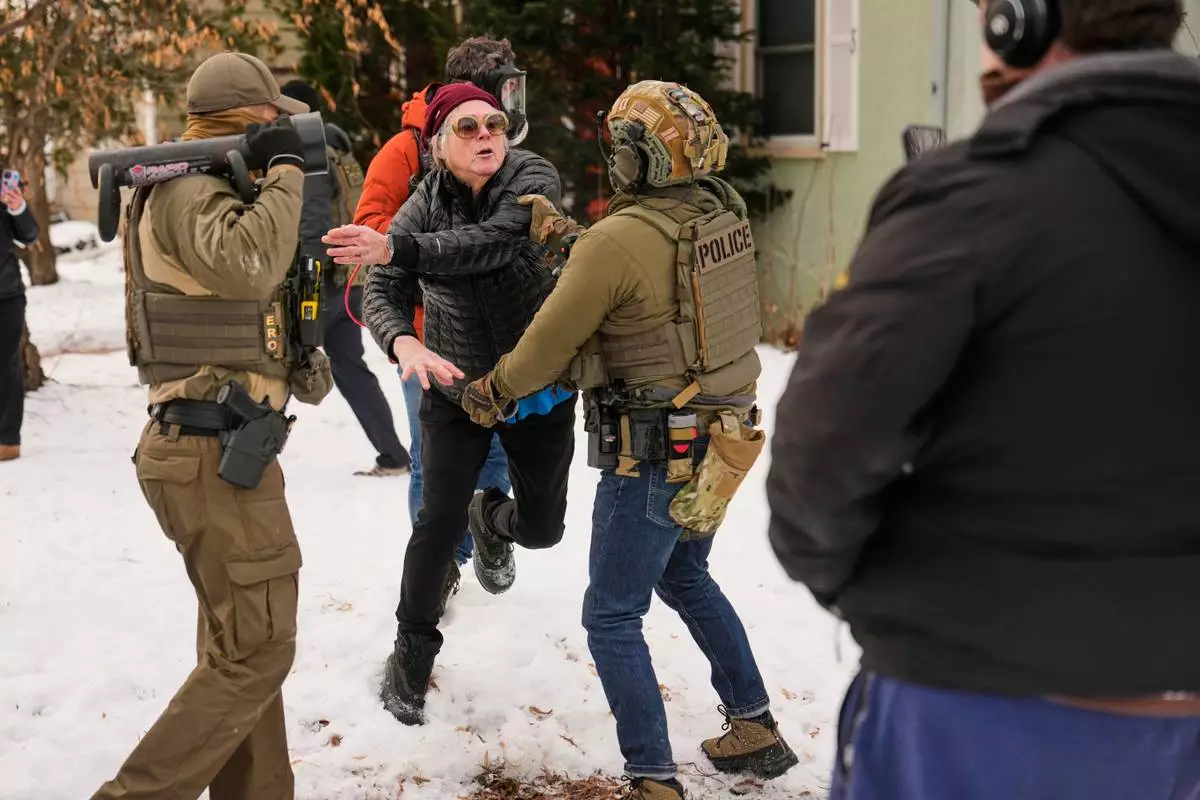
A woman gets into an altercation with a federal immigration officer as officers make an arrest Sunday, Jan. 11, 2026, in Minneapolis. (AP Photo/John Locher)
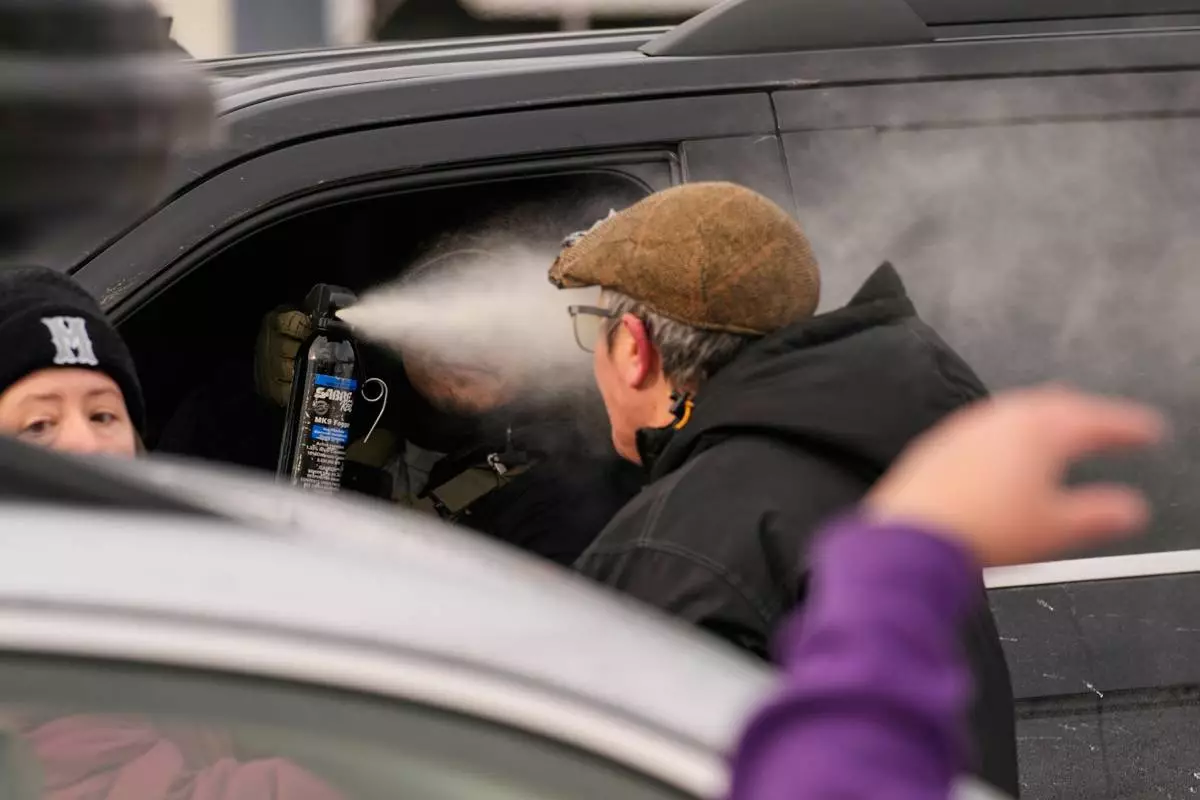
A federal immigration officer deploys pepper spray as officers make an arrest Sunday, Jan. 11, 2026, in Minneapolis. (AP Photo/John Locher)
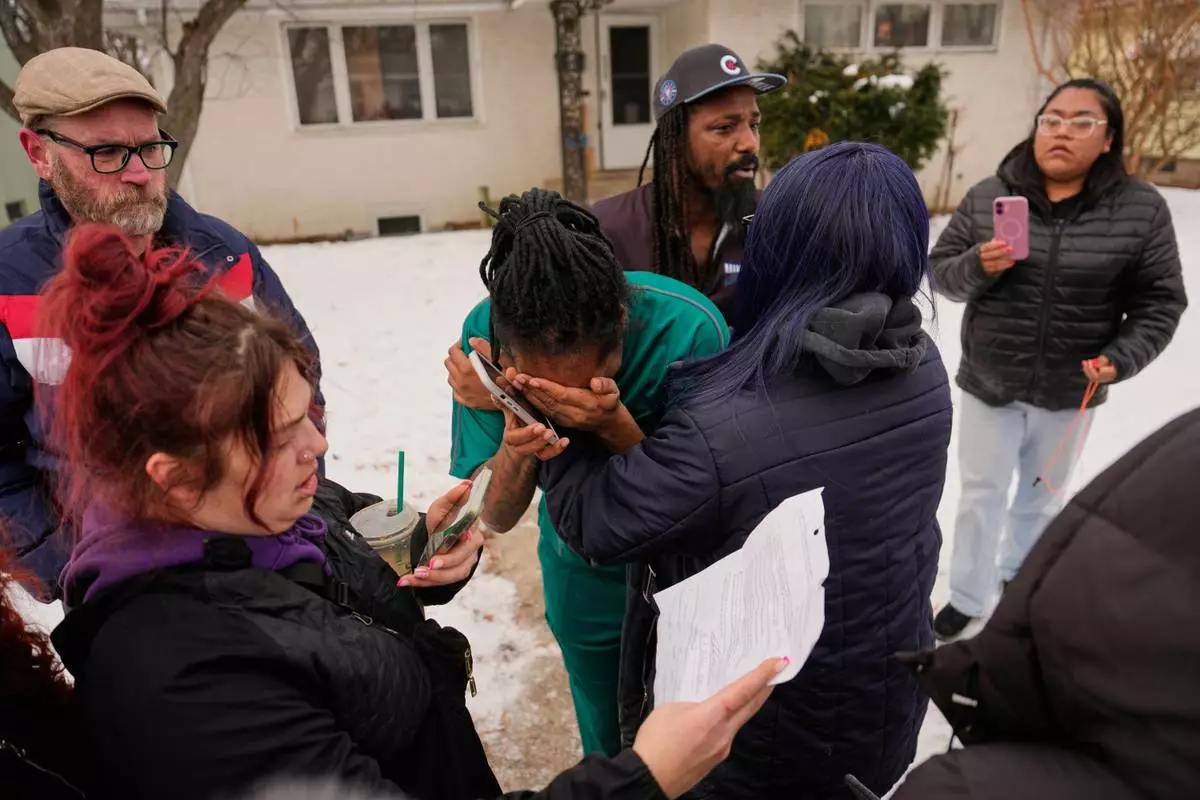
A family member, center, reacts after federal immigration officers make an arrest Sunday, Jan. 11, 2026, in Minneapolis. (AP Photo/John Locher)
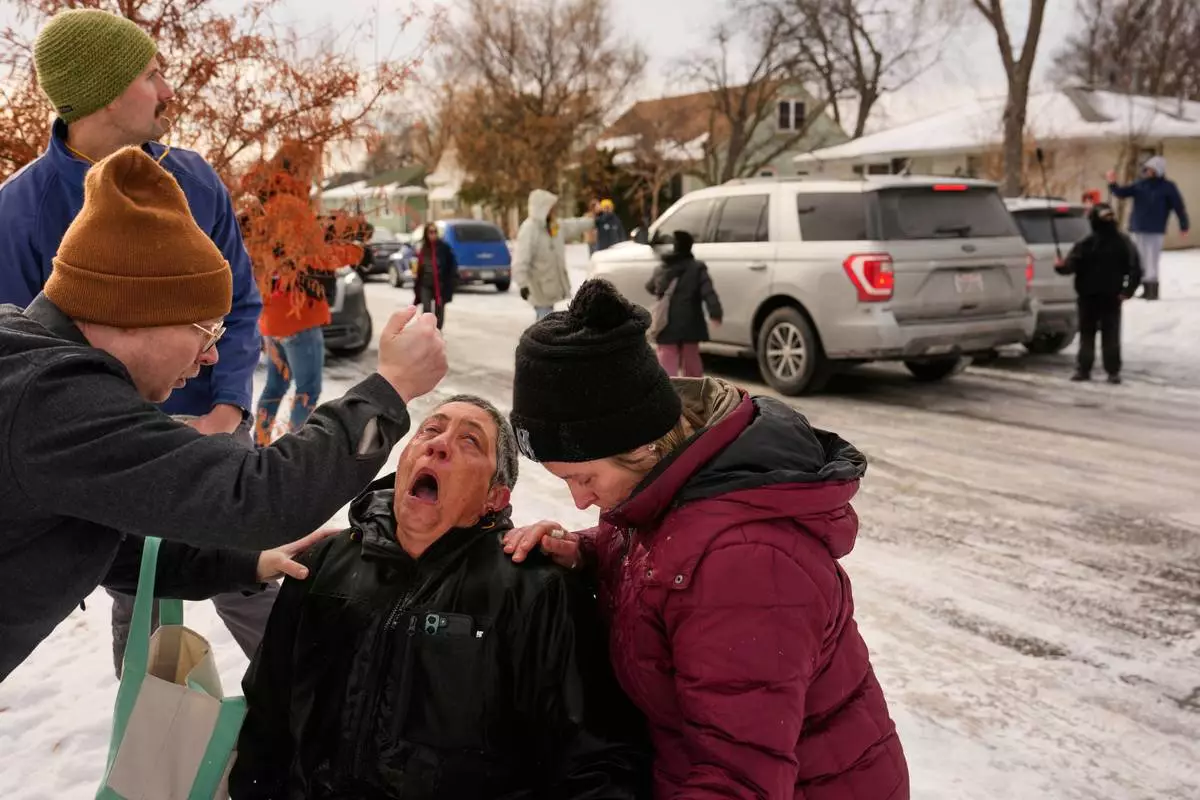
Bystanders are treated after being pepper sprayed as federal immigration officers make an arrest Sunday, Jan. 11, 2026, in Minneapolis. (AP Photo/John Locher)
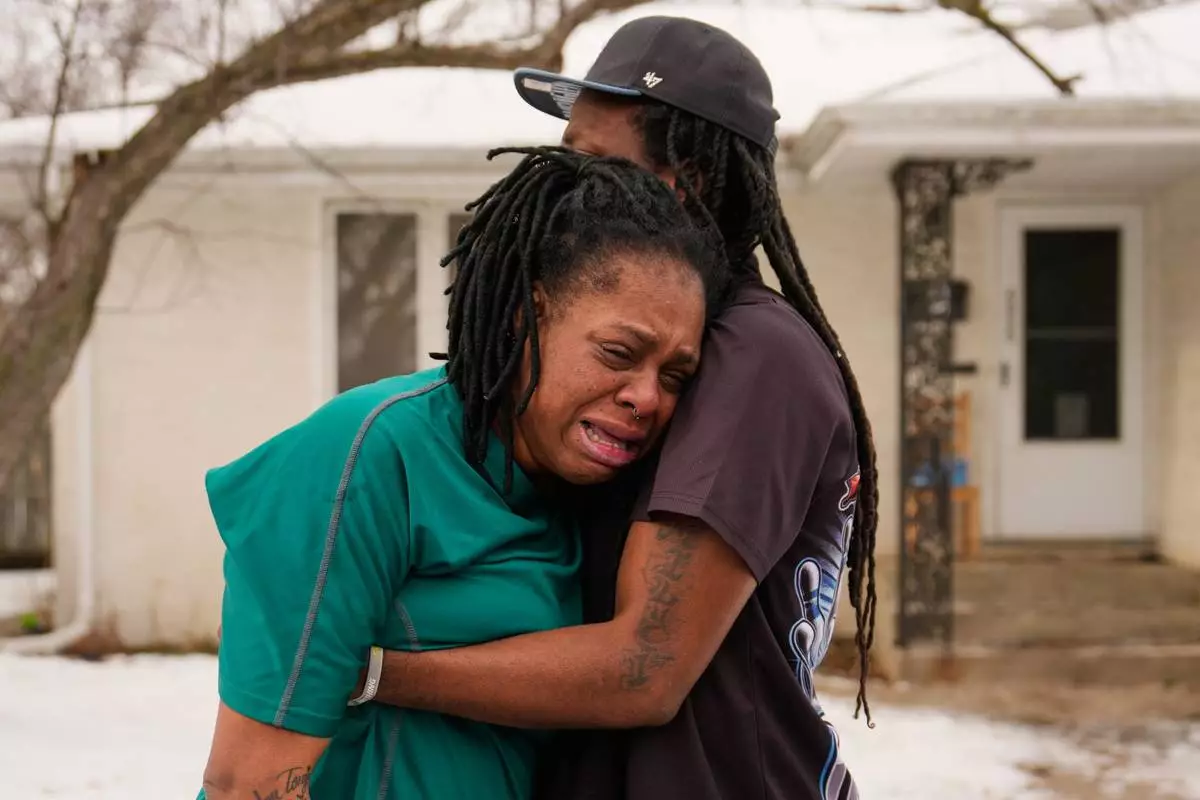
A family member reacts after federal immigration officers make an arrest Sunday, Jan. 11, 2026, in Minneapolis. (AP Photo/John Locher)
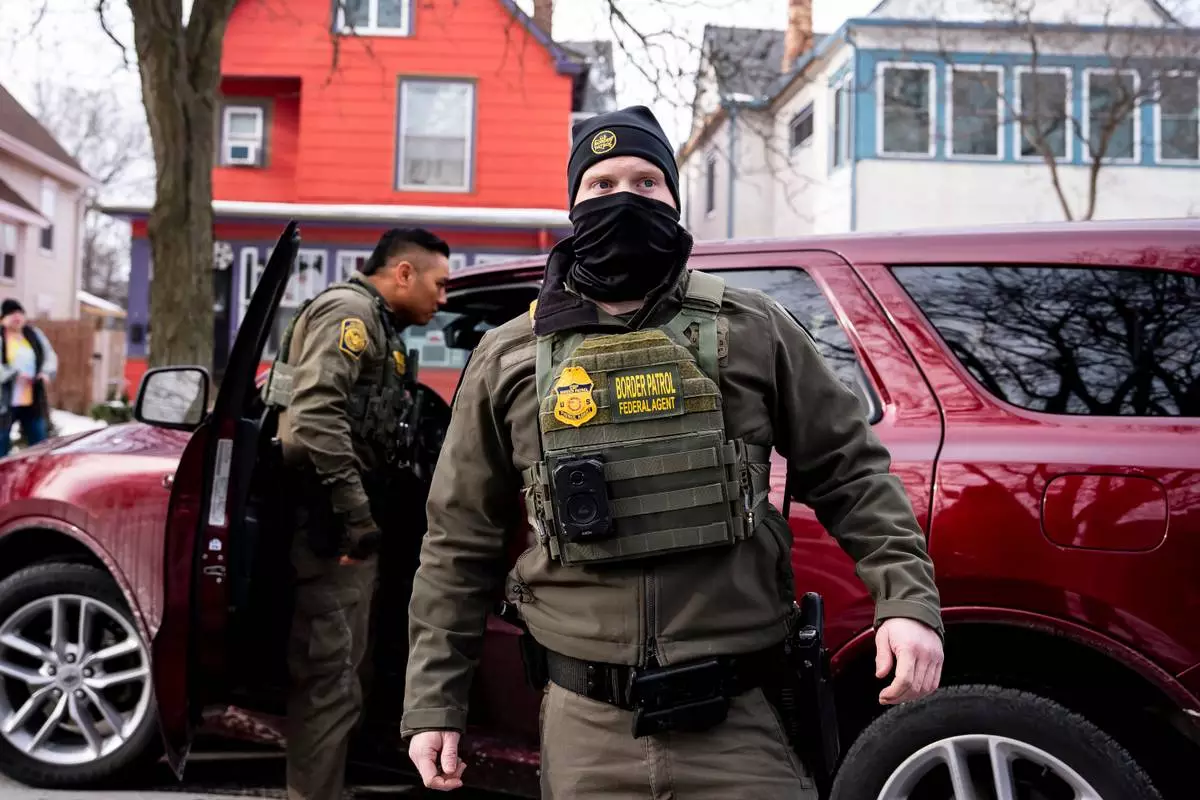
Federal agents look on after detaining a person during a patrol in Minneapolis, Minn., Sunday, Jan. 11, 2026. (Christopher Katsarov/The Canadian Press via AP)

Bystanders react after a man was detained by Immigration and Customs Enforcement (ICE) agents during a traffic stop, Sunday, Jan. 11, 2026, in Robbinsdale, Minn. (AP Photo/John Locher)

People stand near a memorial at the site where Renee Good was fatally shot by an ICE agent, Sunday, Jan. 11, 2026, in Minneapolis. (AP Photo/Jen Golbeck)

A man looks out of a car window after being detained by Immigration and Customs Enforcement (ICE) agents during a traffic stop, Sunday, Jan. 11, 2026, in Robbinsdale, Minn. (AP Photo/John Locher)
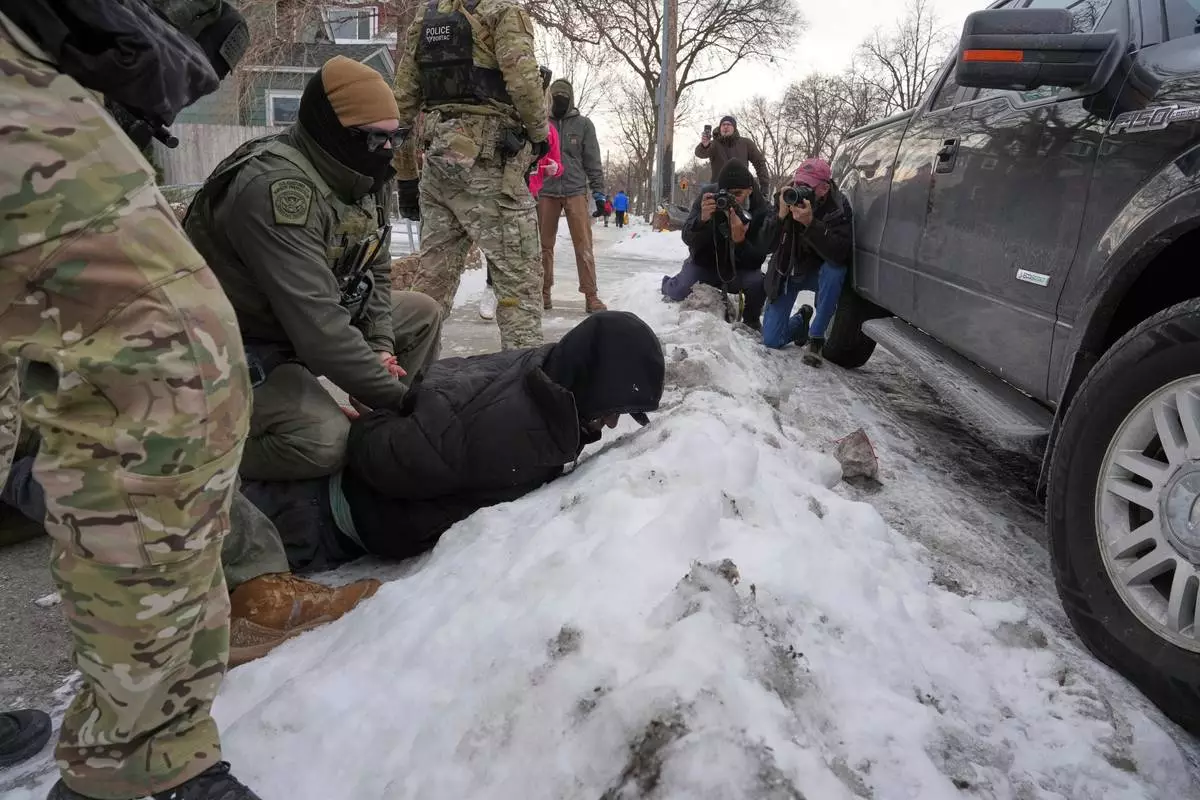
Border Patrol agents detain a man, Sunday, Jan. 11, 2026, in Minneapolis. (AP Photo/Adam Gray)
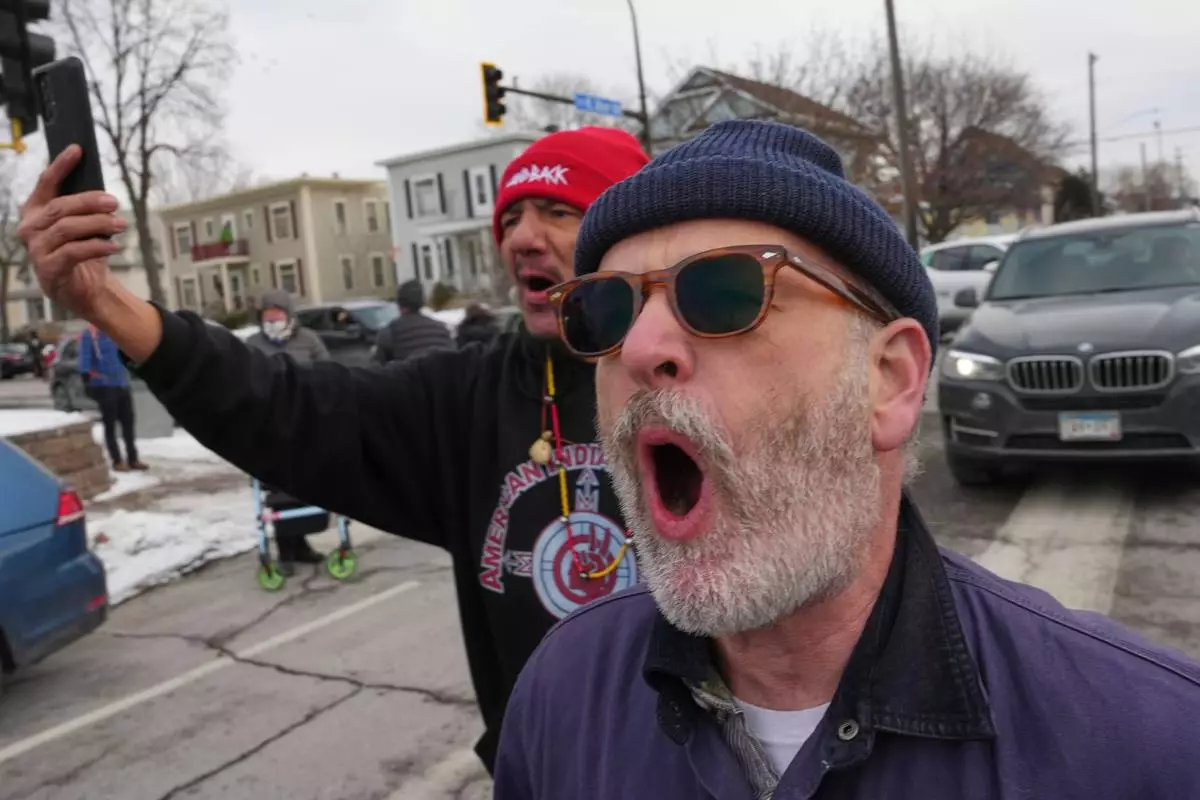
People shout toward Border Patrol agents making an arrest, Sunday, Jan. 11, 2026, in Minneapolis. (AP Photo/Adam Gray)

Demonstrators protest outside the White House in Washington, Saturday, Jan. 10, 2026, against the Immigration and Customs Enforcement agent who fatally shot Renee Good in Minneapolis. (AP Photo/Jose Luis Magana)

Minneapolis Mayor Jacob Frey holds a news conference on Saturday, Jan. 10, 2026, in Minneapolis. (AP Photo/Jen Golbeck)

Protesters react as they visit a makeshift memorial during a rally for Renee Good, who was fatally shot by an ICE officer earlier in the week, Saturday, Jan. 10, 2026, in Minneapolis. (AP Photo/John Locher)