The supermarket’s festive campaign features Kevin and his family for a third year running, with shoppers clamouring to get their hands on the toys.
Aldi’s Christmas character Kevin the Carrot has inspired shoppers to queue at supermarkets to get their hands on newly launched stuffed toys in his likeness.
Queues were reported ahead of stores opening as families woke up early to get their hands on the toys.
Earlier this month, Aldi released its Christmas campaign featuring Kevin for a third consecutive year.
His popularity has led the retailer to describe him as “just a humble carrot who stole the nation’s heart”.

This year’s campaign also introduces new character Pascal the Parsnip, who is determined to cause misery to Kevin, his wife Katie and their three children Chantenay, Baby Carrot and Jasper.
Shoppers took to Twitter to record their efforts to secure their toy, with some having an early start to ensure their place at the front of the queue.



An Aldi spokeswoman said: “Demand for our Kevin the Carrot toys has been exceptionally high. To avoid any disappointment, this year we increased the range by adding new characters such as Pascal the Parsnip, as well as the amount of soft toys available in each store.
“We also limited purchases to two variants per customer so as many people as possible had the chance to buy these products. As with all our Specialbuys products, these are only available while stocks last.”
The small Kevin the Carrot plush toy, available for £3.99, has already sold out online.
Customers can also buy a large Kevin the Carrot plush toy for £19.99, plush carrot kids for £2.99 each, Katie the Carrot for £3.99 and Pascal the Parsnip for £3.99, all of which have sold out online.
Millions of people around the world celebrated Orthodox Christmas on Wednesday, nearly two weeks after much of the world marked the holy day.
Certain Eastern Orthodox churches, including those in Russian and other traditions, follow the ancient Julian calendar. It runs 13 days later than the Gregorian calendar, used by Catholic and Protestant churches as well as by much of the secular world for everyday use.
The Ethiopian Orthodox Church and some other Oriental Orthodox churches — which are distinct from Eastern Orthodox but share many traditions — also celebrated Christmas on Wednesday.
Other Eastern Orthodox, including those in the Greek tradition, celebrate Christmas on the same Dec. 25 date as Catholic and Protestant churches.
Most Orthodox agree that Dec. 25 is the date of Christmas, or the Feast of the Nativity, as they call it. The question is whether Dec. 25 falls on Dec. 25 or Jan. 7.
That requires a little unpacking.
The ancient church in the Roman Empire set its religious feasts based on the Julian calendar, but after more than a millennium, that calendar had increasingly gotten out of alignment with the solar year.
Sixteenth century Pope Gregory XIII approved a revised, more astronomically precise calendar, which bears his name. It abruptly shifted the calendar several days forward to make up for lost time (literally) and added a more precise calculation of leap years. Protestant churches eventually followed the Catholic lead in adopting the calendar, as did secular governments.
All Eastern Orthodox kept to the old calendar until 1923, when an inter-Orthodox gathering adopted a revised Julian calendar that essentially mirrors the Gregorian. Most (but not all) churches in the Greek Orthodox tradition have adopted this, as have those in Romanian, Bulgarian and other traditions.
But the Russian Orthodox Church, the largest communion in Eastern Orthodoxy, has stayed on the old calendar, observing Christmas on Jan. 7 on the new calendar, as have Serbian, Georgian and some other Orthodox. Some Orthodox in Ukraine have begun to observe Christmas on Dec. 25, while others have retained the Jan. 7 observance.
One notable exception is the Armenian Orthodox tradition, which observes Christmas on Jan. 6.
In the United States, observances vary. Churches in the Greek and Antiochian traditions observed Christmas on Dec. 25. Some churches in the Slavic tradition, including Serbian and smaller Russian churches, observe it on Jan. 7.
Traditions vary, but typically the big worship service is the night before. In Serbian Orthodox churches, worship often begins with a short outdoor ceremony involving the burning of an oak branch or young oak tree, accompanied by a full-throated proclamation of the birth of Christ.
Associated Press religion coverage receives support through the AP’s collaboration with The Conversation US, with funding from Lilly Endowment Inc. The AP is solely responsible for this content.
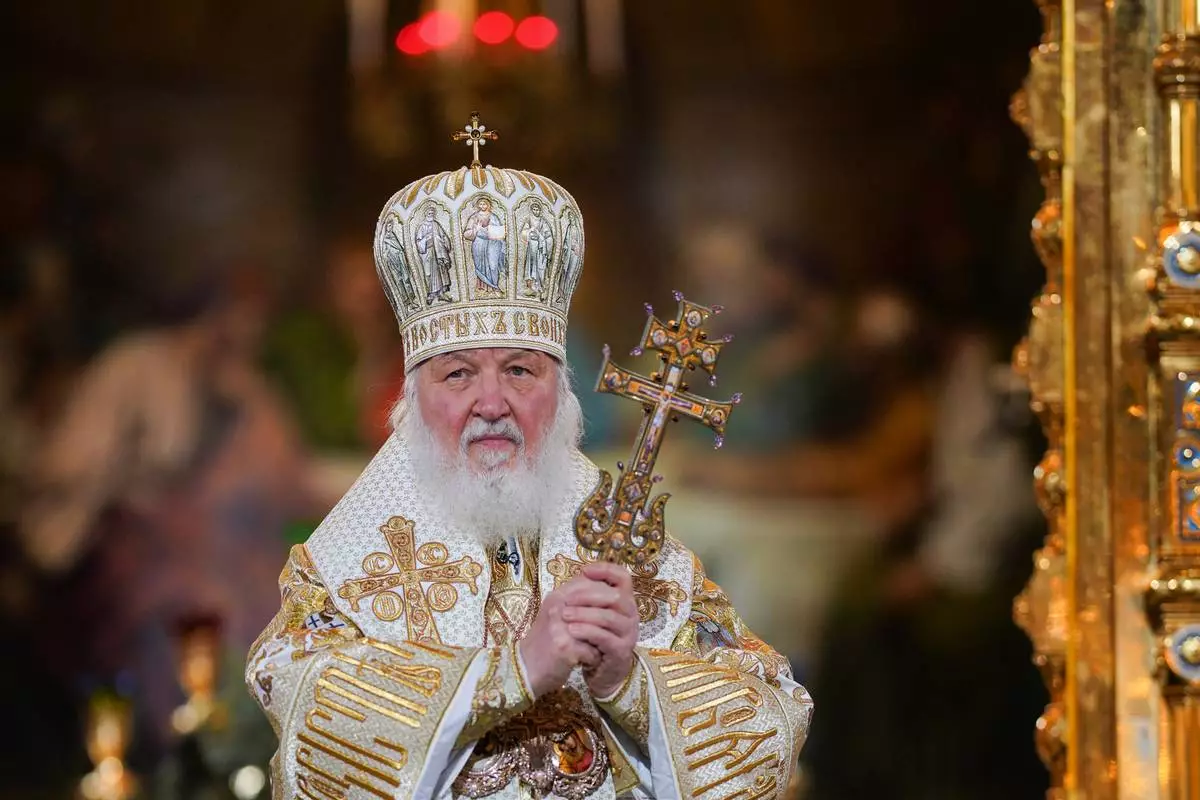
In this photo released by Russian Orthodox Church Press Service, Russian Orthodox Patriarch Kirill delivers the Orthodox Christmas service in the Christ the Saviour Cathedral in Moscow, on Wednesday, Jan. 7, 2026. (Igor Palkin/Russian Orthodox Church Press Service via AP)
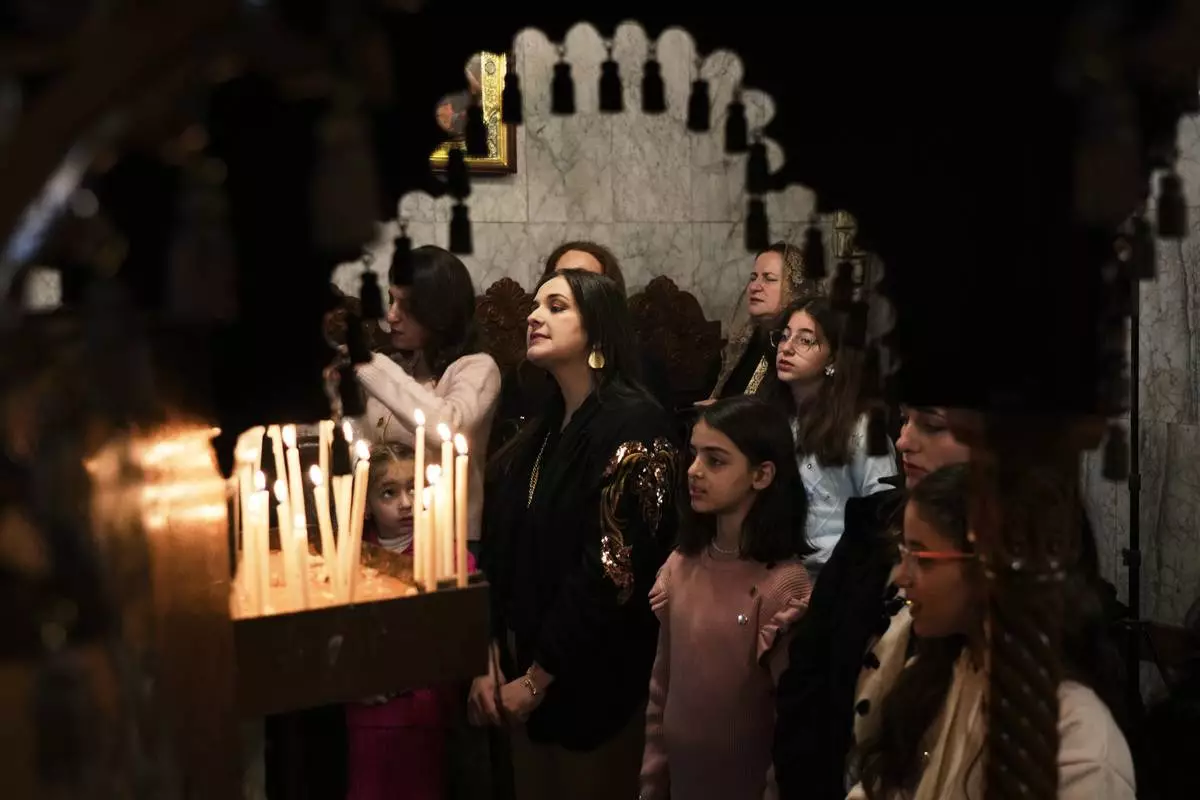
Palestinian Orthodox worshippers attend Christmas Mass at the Orthodox Church of St. Porphyrius in Gaza City Wednesday, Jan. 7, 2026. (AP Photo/Jehad Alshrafi)
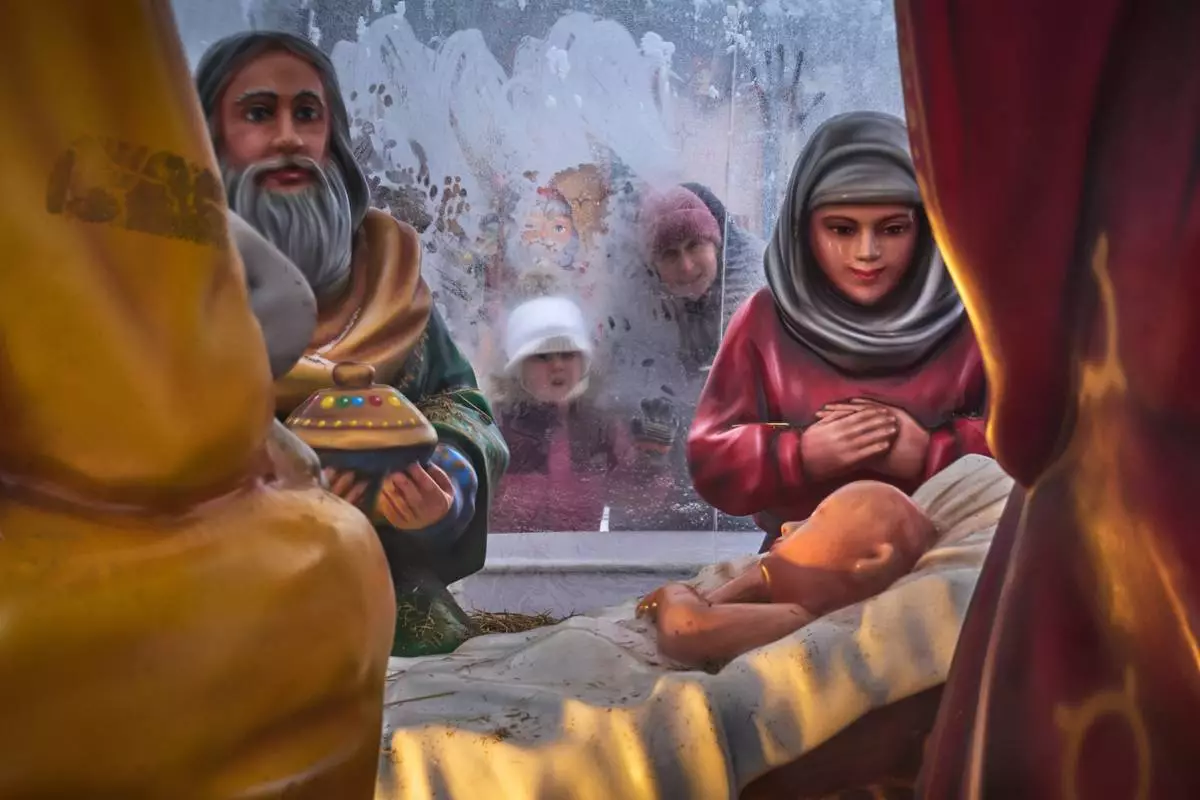
People look through a frosted plastic tent into a Christmas crib installed near Kazansky Cathedral during Orthodox Christmas celebrations in St. Petersburg, Russia, Wednesday, Jan. 7, 2026. (AP Photo/Dmitri Lovetsky)
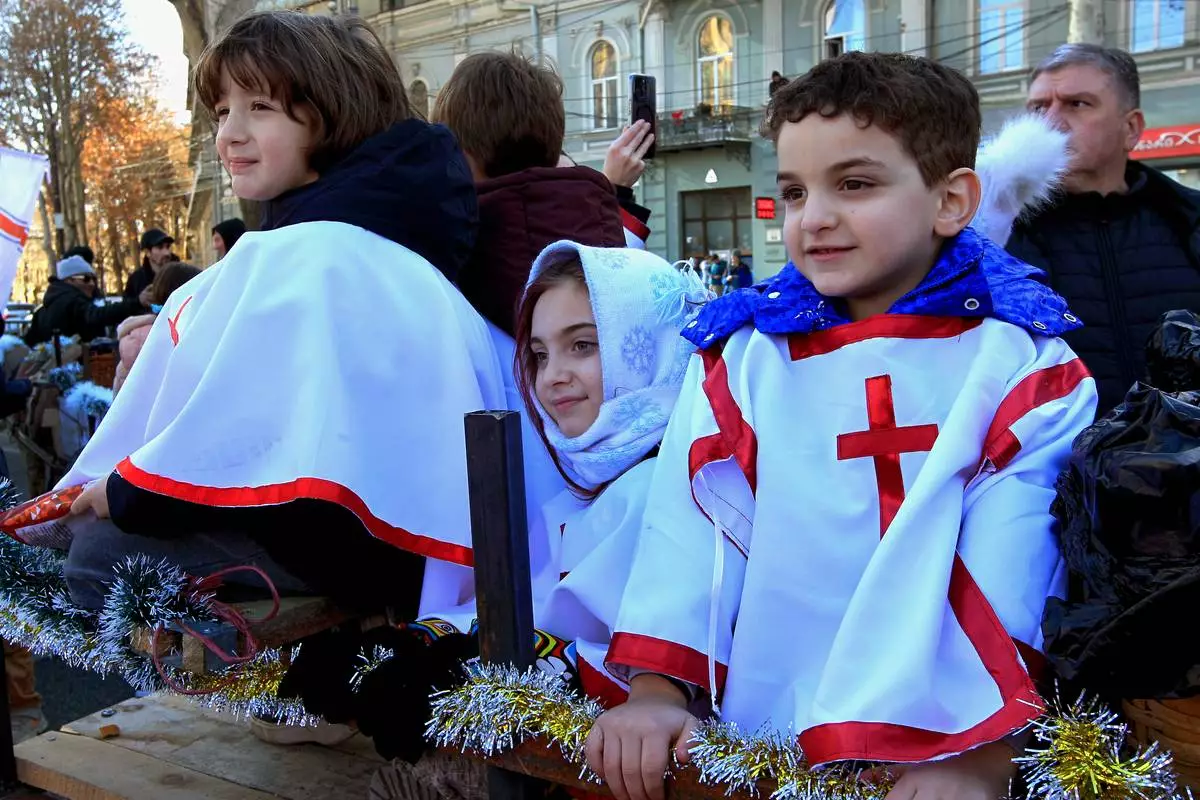
Georgian children take part in a religious procession to the Holy Trinity Cathedral to mark Orthodox Christmas in Tbilisi, Georgia, Wednesday, Jan. 7, 2026, with the building of Georgian Parliament on the left. (AP Photo/Shakh Aivazov)
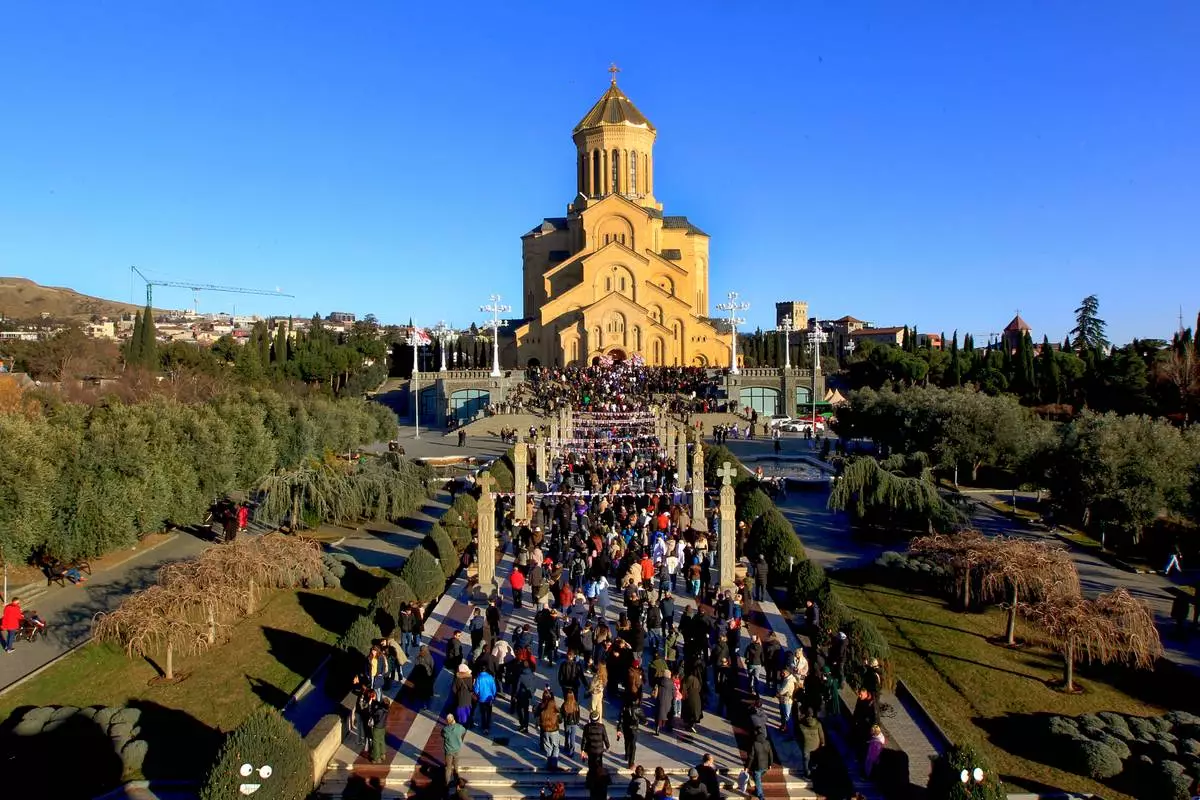
Georgians with national flags take part in a religious procession to the Holy Trinity Cathedral to mark Orthodox Christmas in Tbilisi, Georgia, Wednesday, Jan. 7, 2026. (AP Photo/Shakh Aivazov)