The New York trial of a prominent Hong Kong businessman charged in a United Nations-linked bribery conspiracy is set to begin.
Jury selection starts Monday for the trial of Dr. Chi Ping Patrick Ho.
Ho was arrested a year ago on charges accusing him of paying bribes so a Chinese energy conglomerate could secure business advantages. He has been held without bail.
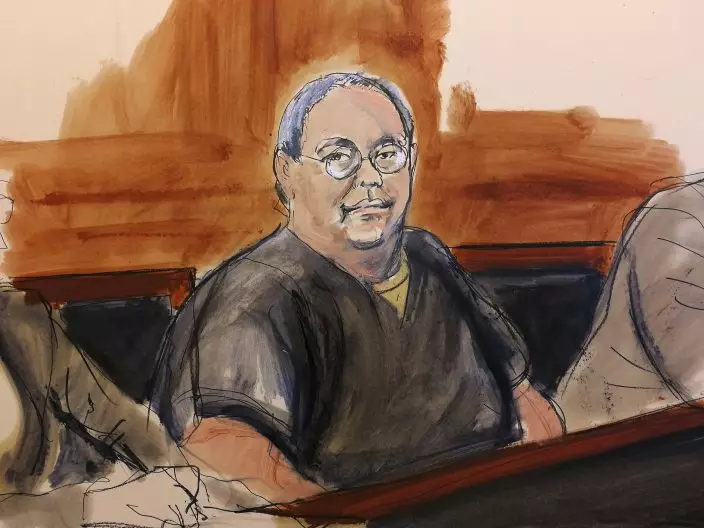
FILE - In this Feb. 5, 2018 courtroom sketch, former Hong Kong home affairs secretary Dr. Chi Ping Patrick Ho, a prominent businessman charged in a United Nations-linked bribery scandal, attends his bail hearing in New York. Jury selection starts for Ho's bribery trial starts Monday, Nov. 26, 2018 in New York. He was arrested in 2017 on charges he paid bribes so a Chinese energy conglomerate could secure business advantages. (Elizabeth Williams via AP, File)
His lawyer says Ho is looking forward to clearing his name. Ho was once Hong Kong's home affairs secretary.
Ho has insisted he is not guilty of charges that he conspired in October 2014 to bribe the president of Chad and the Ugandan foreign minister.
Prosecutors say Ho's former co-defendant will testify at trial that Ho arranged a $2 million bribe to be delivered to Chad's president in gift boxes.
DUBAI, United Arab Emirates (AP) — A volunteer member of Iran's paramilitary Revolutionary Guard was killed in a western province during widening demonstrations sparked by the Islamic Republic's ailing economy, authorities said Thursday, marking the first fatality among security forces during the protests.
The death Wednesday night of the 21-year-old volunteer in the Guard's Basij force may mark the start of a heavier-handed response by Iran's theocracy over the demonstrations, which have slowed in the capital, Tehran, but expanded to other provinces.
The state-run IRNA news agency reported on the Guard member’s death but did not elaborate. An Iranian news agency called the Student News Network, believed to be close to the Basij, directly blamed demonstrators for the Guard member's death, citing comments from Saeed Pourali, a deputy governor in Iran's Lorestan province.
The Guard member “was martyred ... at the hands of rioters during protests in this city in defense of public order,” he reportedly said. Another 13 Basij members and police officers suffered injuries, he added.
“The protests that have occurred are due to economic pressures, inflation and currency fluctuations, and are an expression of livelihood concerns," Pourali said. "The voices of citizens must be heard carefully and tactfully, but people must not allow their demands to be strained by profit-seeking individuals.”
The protests took place in the city of Kouhdasht, over 400 kilometers (250 miles) southwest of Tehran.
Iran's civilian government under reformist President Masoud Pezeshkian has been trying to signal it wants to negotiate with protesters. However, Pezeshkian has acknowledged there is not much he can do as Iran's rial currency has rapidly depreciated, with $1 now costing some 1.4 million rials.
Meanwhile, state television separately reported on the arrests of seven people, including five it described as monarchists and two others it said had linked to European-based groups. State TV also said another operation saw security forces confiscate 100 smuggled pistols, without elaborating.
The protests have become the biggest in Iran since 2022, when the death of 22-year-old Mahsa Amini in police custody triggered nationwide demonstrations. However, the demonstrations have yet to be countrywide and have not been as intense as those surrounding the death of Amini, who was detained over not wearing her hijab, or headscarf, to the liking of authorities.
Iran's theocracy had declared Wednesday a public holiday across much of the country, citing cold weather, likely as a bid to get people out of the capital for a long weekend. The Iranian weekend is Thursday and Friday, while Saturday marks Imam Ali's birthday, another holiday for many.
The protests, taking root in economic issues, have heard demonstrators chant against Iran's theocracy as well. The country's leaders are still reeling after Israel launched a 12-day war against the country in June. The U.S. also bombed Iranian nuclear sites during the war.
Iran has said it is no longer enriching uranium at any site in the country, trying to signal to the West that it remains open to potential negotiations over its atomic program to ease sanctions. However, those talks have yet to happen as U.S. President Donald Trump and Israeli Prime Minister Benjamin Netanyahu have warned Tehran against reconstituting its atomic program.
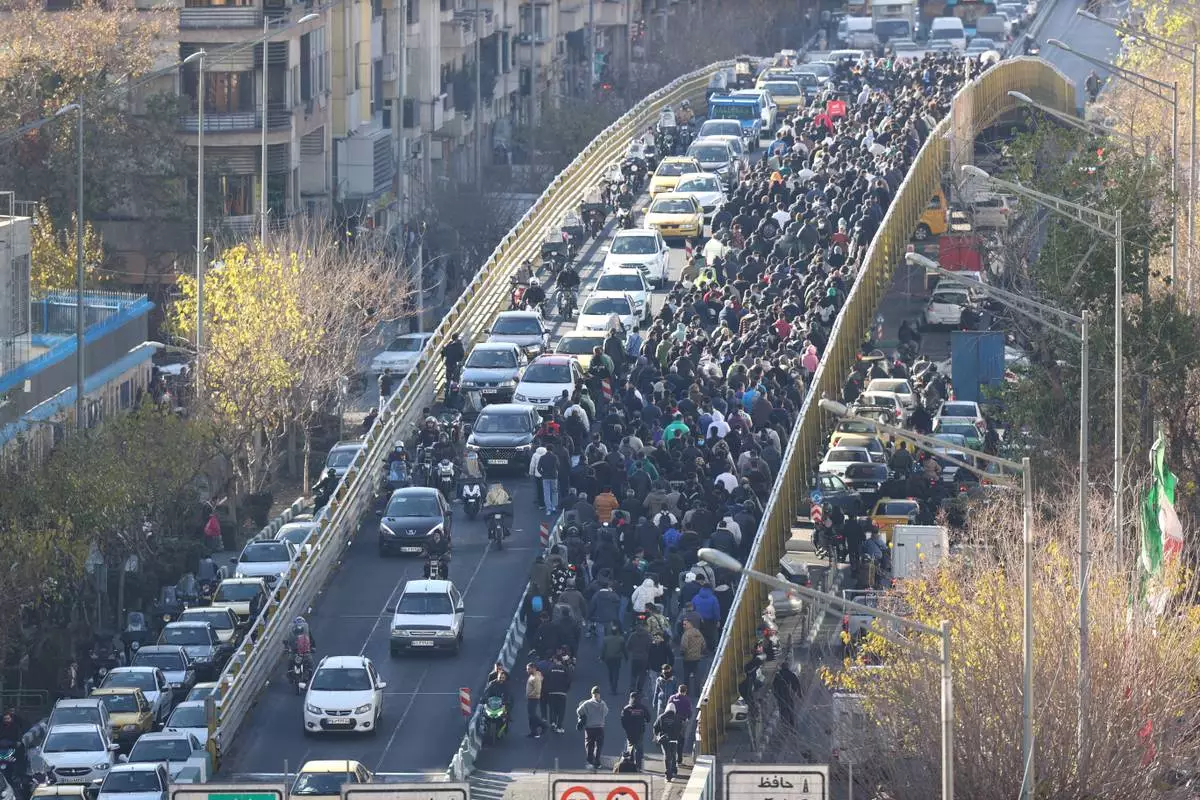
Protesters march in downtown Tehran, Iran, Monday, Dec. 29, 2025. (Fars News Agency via AP)
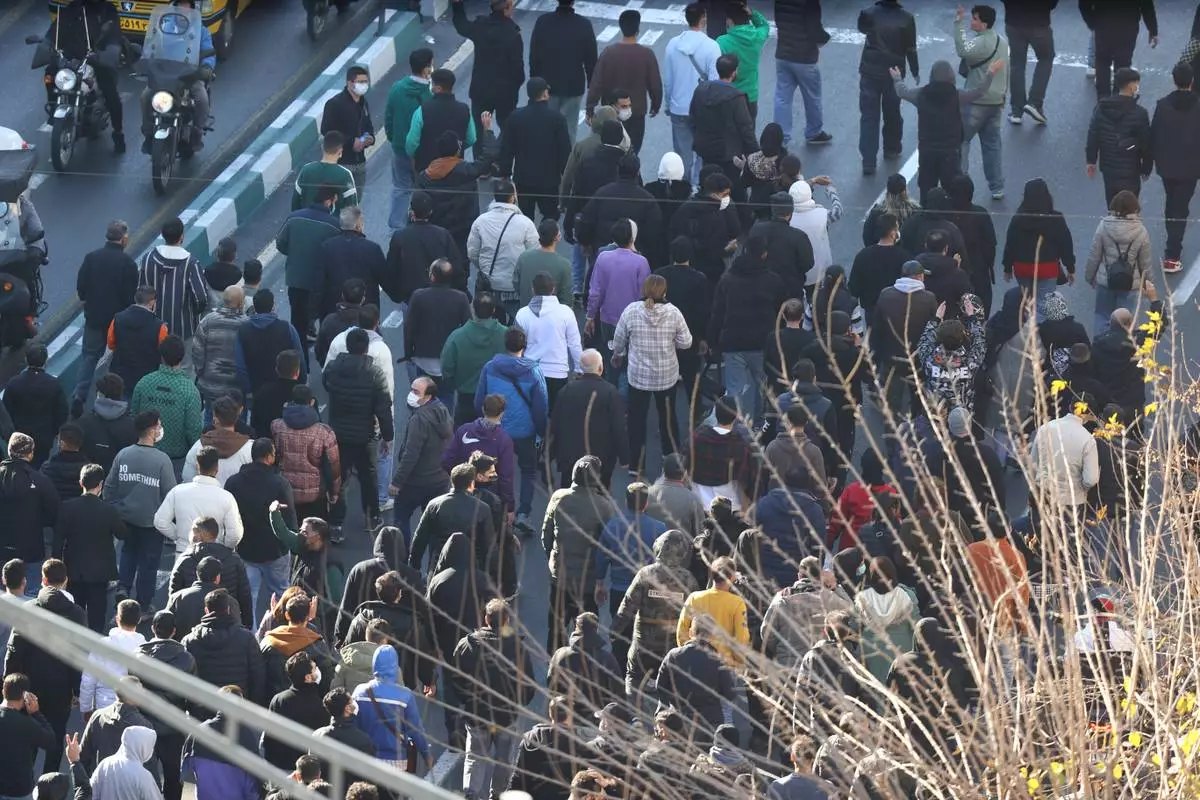
Protesters march in downtown Tehran, Iran, Monday, Dec. 29, 2025. (Fars News Agency via AP)