Two members of Nasa’s Jet Propulsion Laboratory celebrated the achievement with an impressive handshake.
Nasa’s newest probe on a two-year mission to Mars, InSight, made a successful landing on the planet on Monday afternoon, triggering delighted celebrations across the globe.
When the announcement was made that InSight had landed and the mission was a success, Nasa employees were obviously thrilled, with two mission controllers launching into an impressive handshake to celebrate.
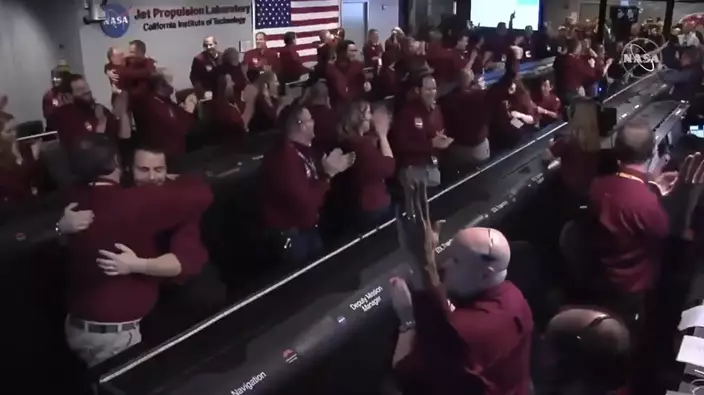
Video screencap
The uplifting moment from inside the agency’s California Jet Propulsion Laboratory quickly went viral, garnering tens of thousands of retweets.
In a statement, Nasa Administrator Jim Bridenstine said: “Today, we successfully landed on Mars for the eighth time in human history.
“This accomplishment represents the ingenuity of America and our international partners and it serves as a testament to the dedication and perseverance of our team.”
People on social media obviously loved the multi-part handshake complete with high-fives and dance moves, with some claiming that the moment was even more exciting than the Mars landing itself.

The InSight probe touched down on Mars’ Elysium Planitia area north of its equator after travelling at 13,200mph through the planet’s atmosphere.
Nasa’s $814 million (£633 million) mission aims to explore how the planet was formed and map its core, crust, and mantle.
A second device will burrow five metres into the planet’s surface, measuring Mars’ temperature, while a third experiment will determine how Mars wobbles on its axis.
CAPE CANAVERAL, Fla. (AP) — For the second time this year, NASA moved its moon rocket from the hangar out toward the pad Friday in hopes of launching four astronauts on a lunar fly-around next month.
If the latest repairs work and everything else goes NASA's way, the Space Launch System could blast off as early as April 1 from Florida's Kennedy Space Center. The Artemis II crew went into quarantine this week in Houston.
The 322-foot (98-meter) rocket began the slow 4-mile (6.4-kilometer) trek in the middle of the night, transported atop a massive crawler used since the 1960s Apollo era. The trip was held up for several hours by high wind but completed by midday, 11 hours after it began.
The three Americans and one Canadian will zip around the moon in their capsule and then come straight home without stopping. Their mission should have been completed by now, but hydrogen fuel leaks and clogged helium lines forced two months of delay.
While technicians plugged the leaks at the pad, the helium issue could only be fixed in the Vehicle Assembly Building, forcing NASA to roll the rocket back at the end of February.
The last time NASA sent astronauts to the moon was during Apollo 17 in 1972. The new Artemis program aims for a two-person landing in 2028.
The Associated Press Health and Science Department receives support from the Howard Hughes Medical Institute’s Department of Science Education and the Robert Wood Johnson Foundation. The AP is solely responsible for all content.
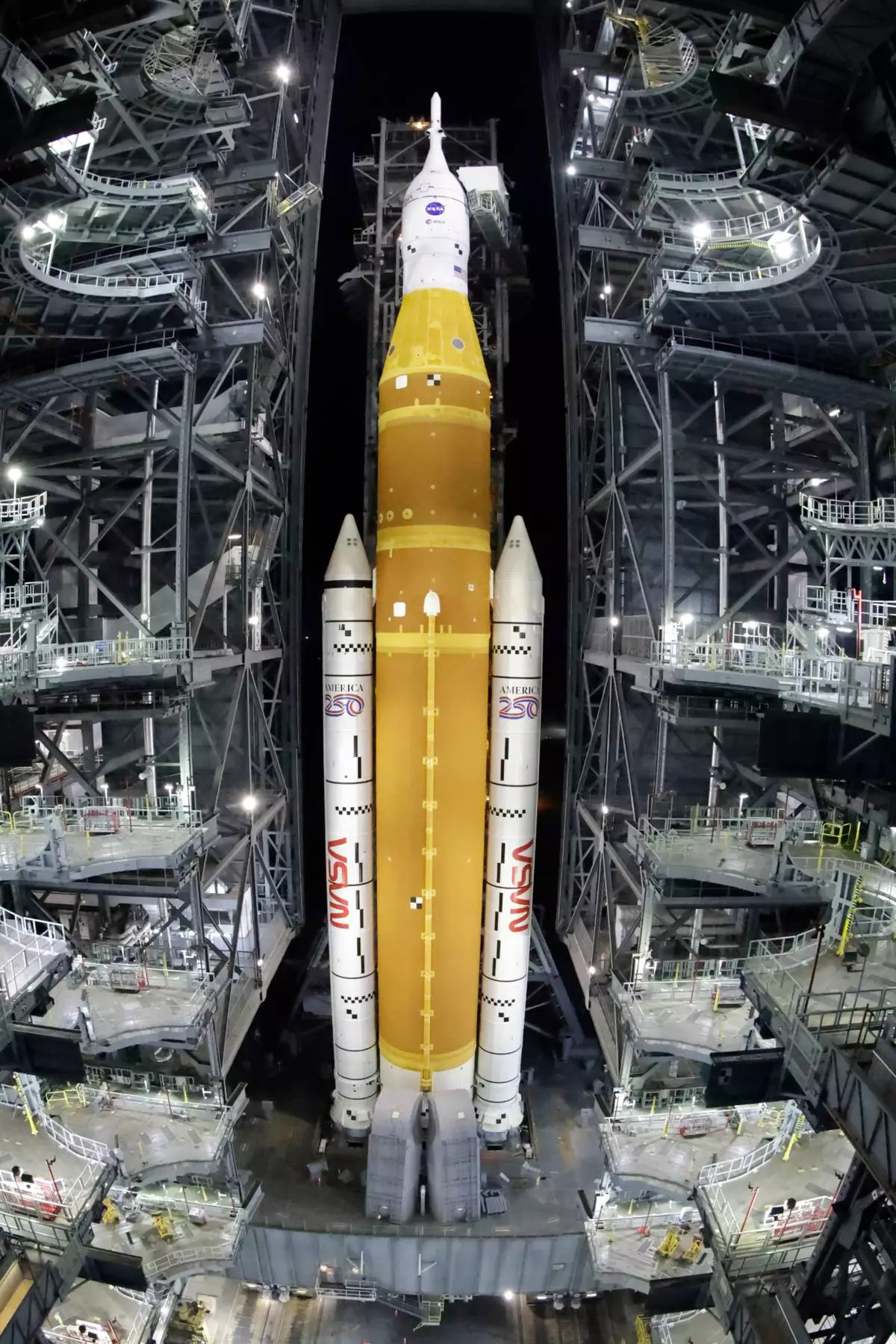
The NASA Artemis II rocket with the Orion spacecraft aboard leaves the Vehicle Assembly Building moving slowly to pad 39B at the Kennedy Space Center in Cape Canaveral, Fla., Friday, March 20, 2026. (AP Photo/Terry Renna)
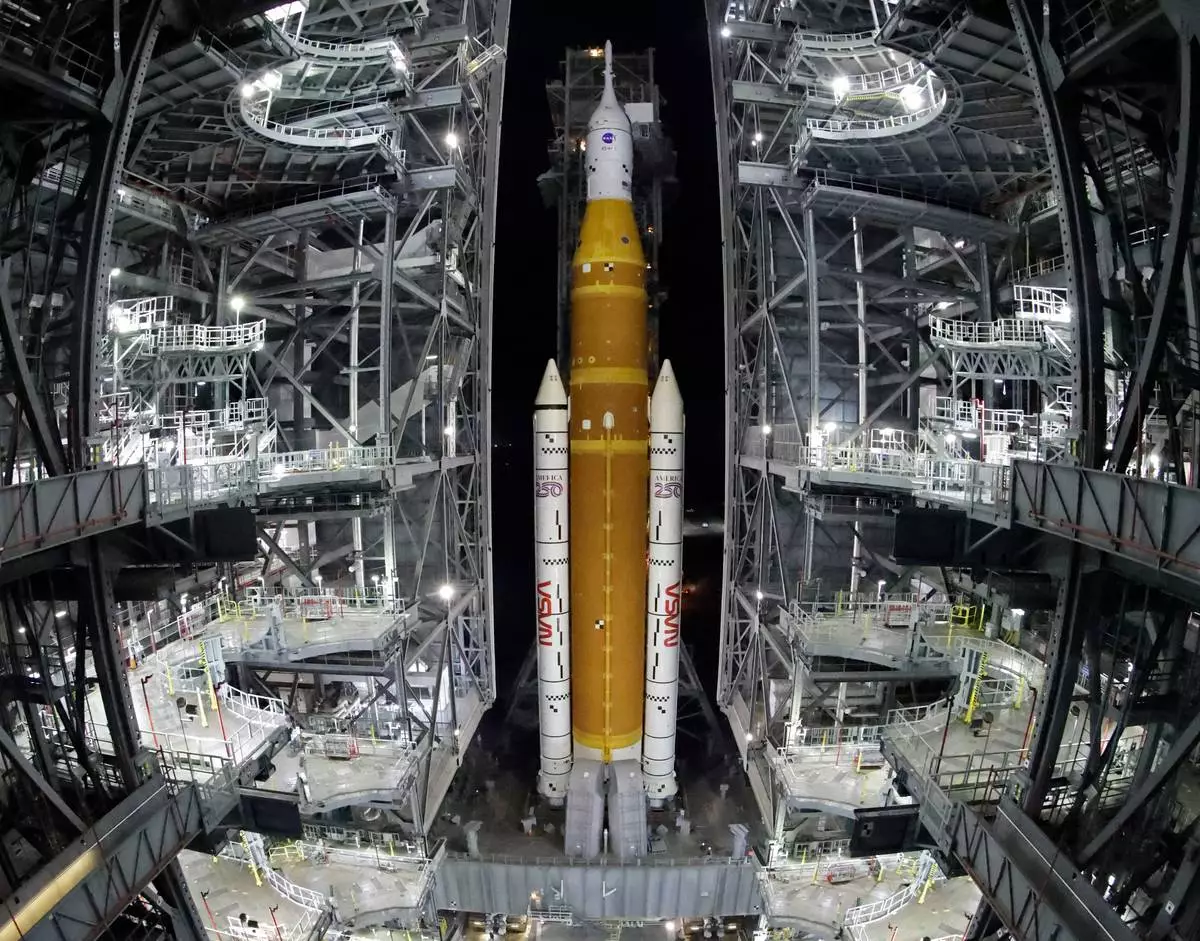
The NASA Artemis II rocket with the Orion spacecraft aboard leaves the Vehicle Assembly Building moving slowly to pad 39B at the Kennedy Space Center in Cape Canaveral, Fla., Friday, March 20, 2026. (AP Photo/Terry Renna)
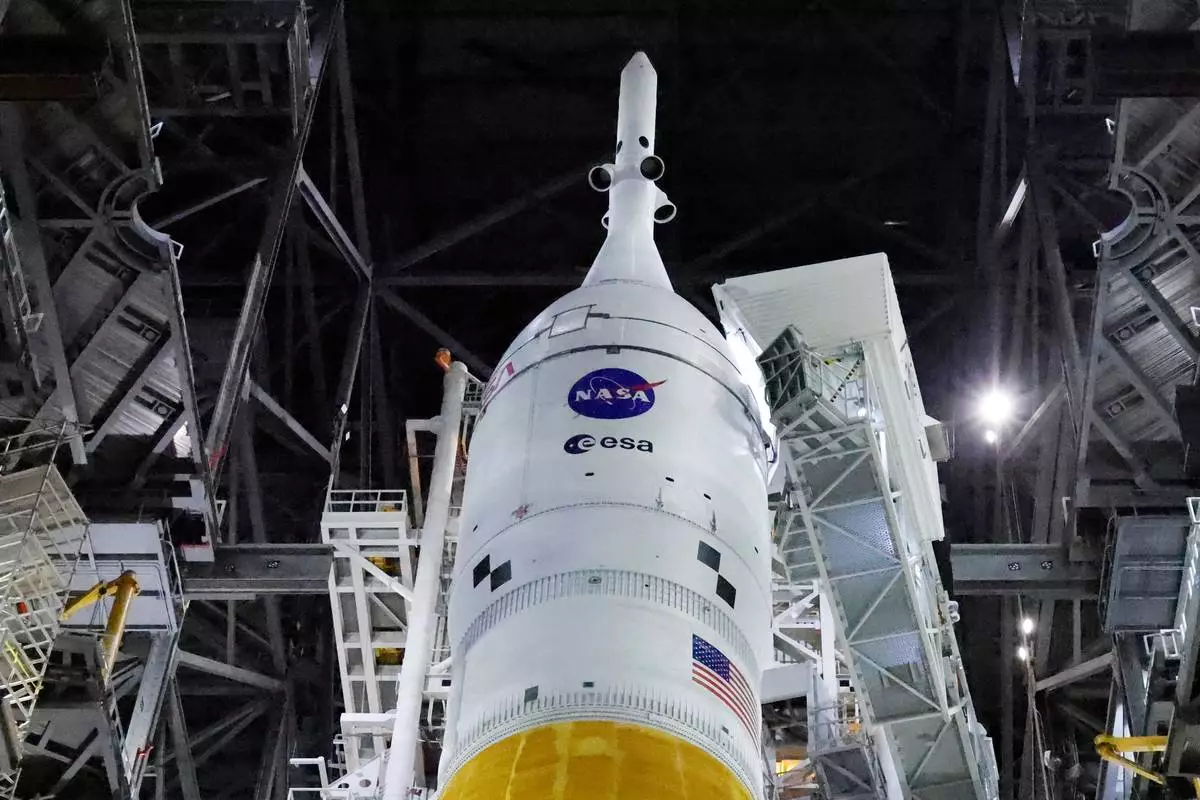
The Orion spacecraft sits on top of the NASA Artemis II rocket in the Vehicle Assembly Building before rollout to pad 39B at the Kennedy Space Center in Cape Canaveral, Fla., Thursday, March 19, 2026. (AP Photo/Terry Renna)
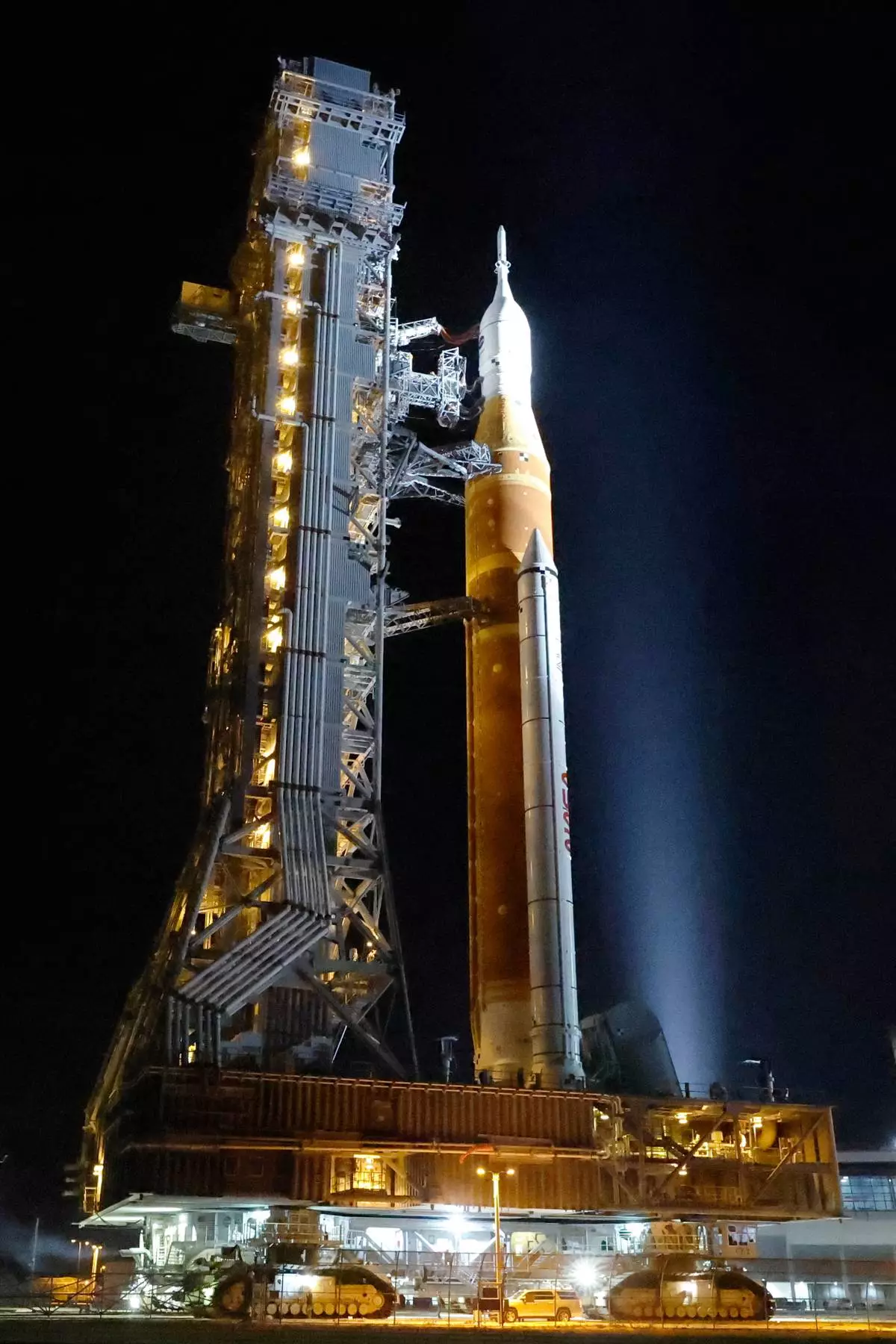
The NASA Artemis II rocket with the Orion spacecraft aboard leaves the Vehicle Assembly Building moving slowly to pad 39B at the Kennedy Space Center in Cape Canaveral, Fla., Friday, March 20, 2026. (AP Photo/Terry Renna)
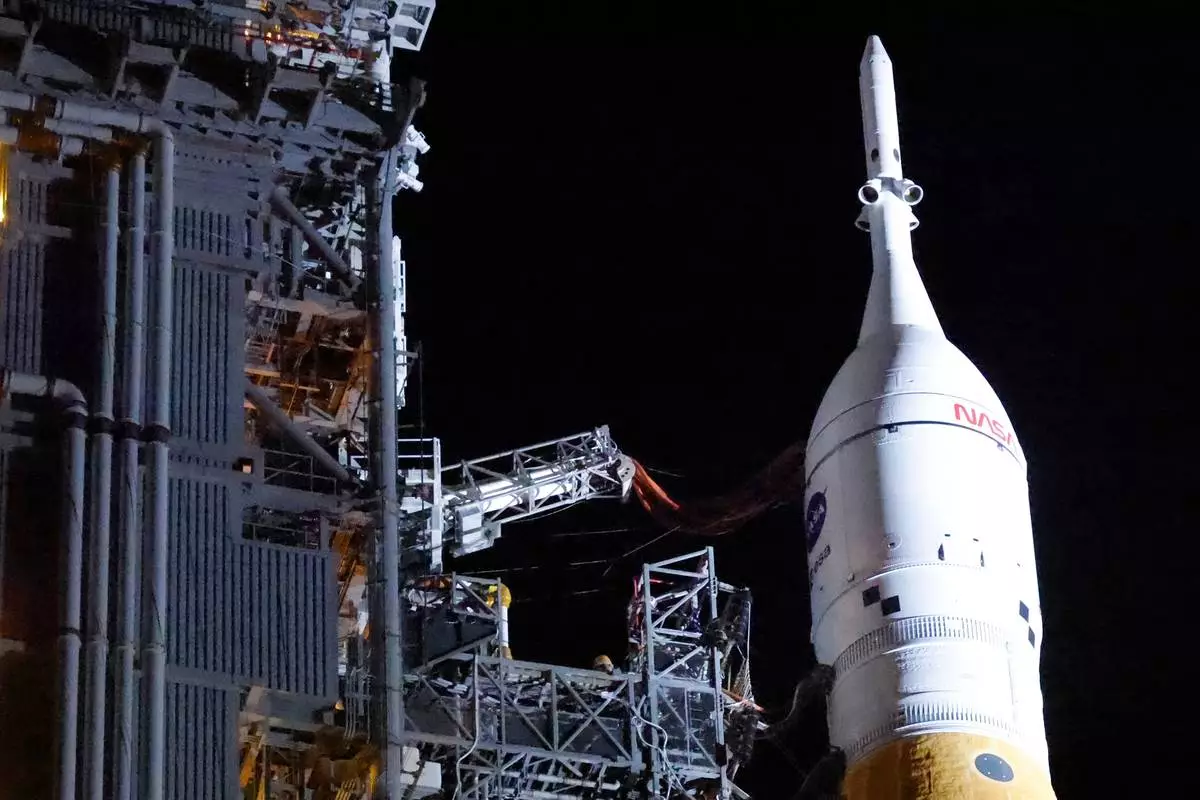
The NASA Artemis II rocket with the Orion spacecraft aboard leaves the Vehicle Assembly Building moving slowly to pad 39B at the Kennedy Space Center in Cape Canaveral, Fla., Friday, March 20, 2026. (AP Photo/Terry Renna)
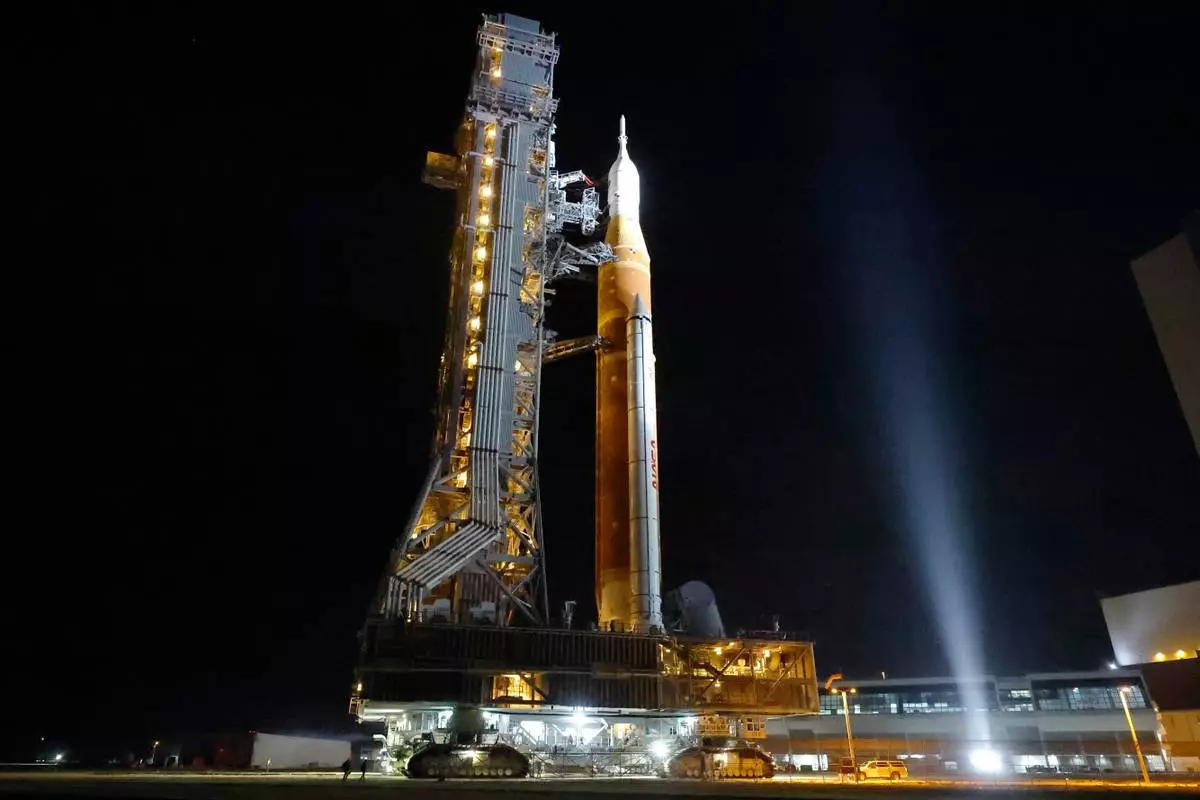
The NASA Artemis II rocket with the Orion spacecraft aboard leaves the Vehicle Assembly Building moving slowly to pad 39B at the Kennedy Space Center in Cape Canaveral, Fla., Friday, March 20, 2026. (AP Photo/Terry Renna)
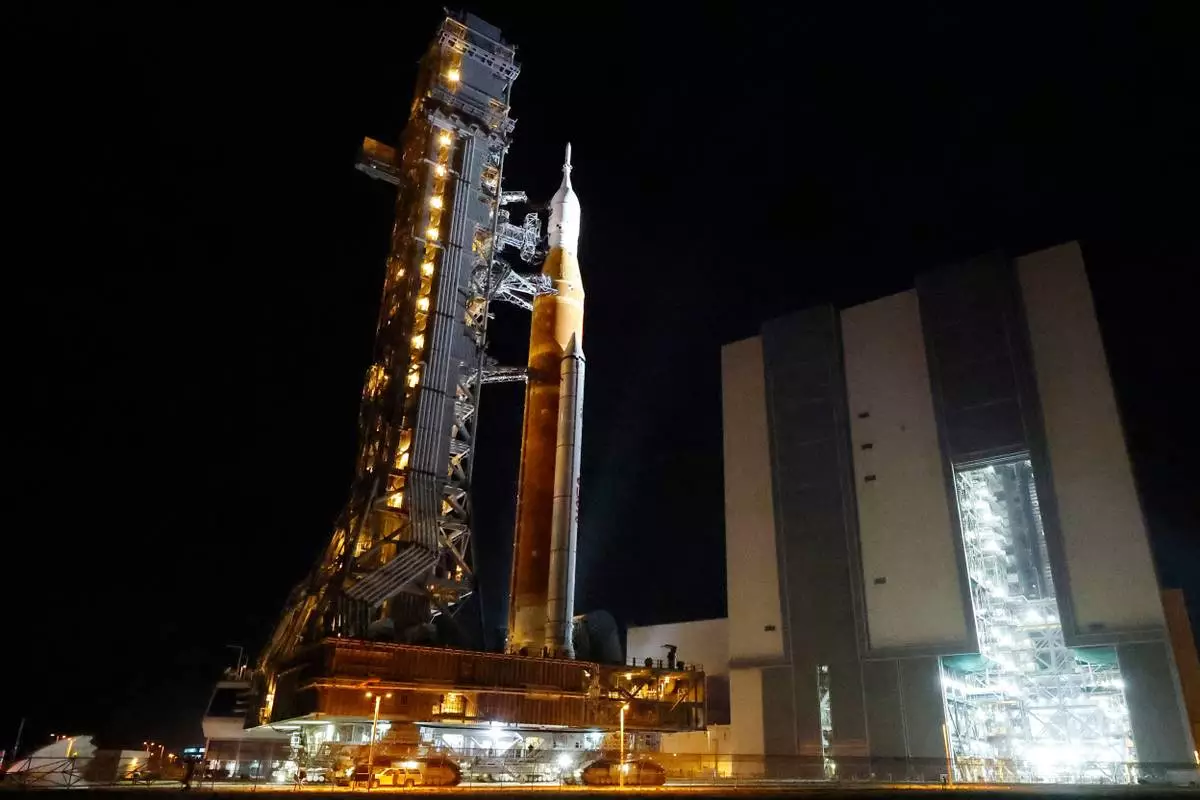
The NASA Artemis II rocket with the Orion spacecraft aboard leaves the Vehicle Assembly Building moving slowly to pad 39B at the Kennedy Space Center in Cape Canaveral, Fla., Friday, March 20, 2026. (AP Photo/Terry Renna)