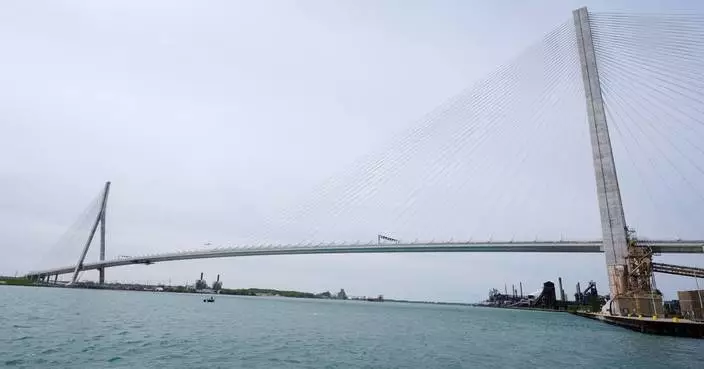
The Latest on the demolition of part of New York's Tappan Zee Bridge (all times local):
11:10 a.m.
A big chunk of the Tappan Zee Bridge has gone down in history.
The eastern section of the old bridge in New York dropped straight down into the Hudson River as it was demolished with explosives Tuesday morning.
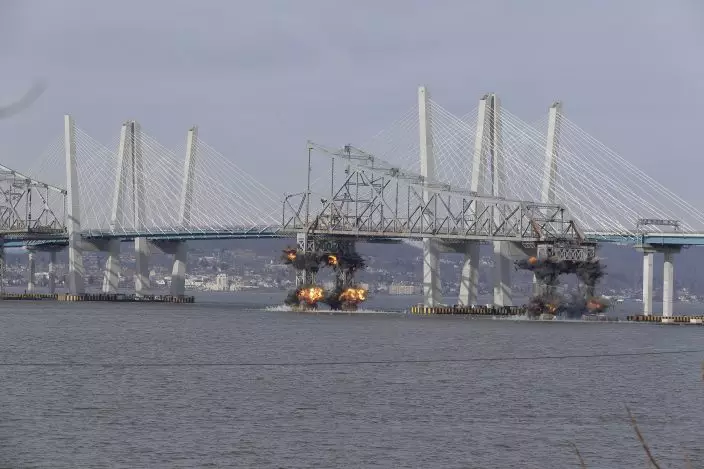
A section of the old Tappan Zee Bridge is brought down with explosives in this view from Tarrytown, N.Y., Tuesday, Jan. 15, 2019. (AP PhotoSeth Wenig)
After the billowing black smoke cleared, it remained about half submerged. The remnants will be salvaged and recycled.
Crowds gathered along both sides of the river to view the spectacle.
The Tappan Zee has been replaced by the Gov. Mario M. Cuomo Bridge, which carries Interstate 87 traffic over the Hudson River about 30 miles (50 kilometers) north of New York City.
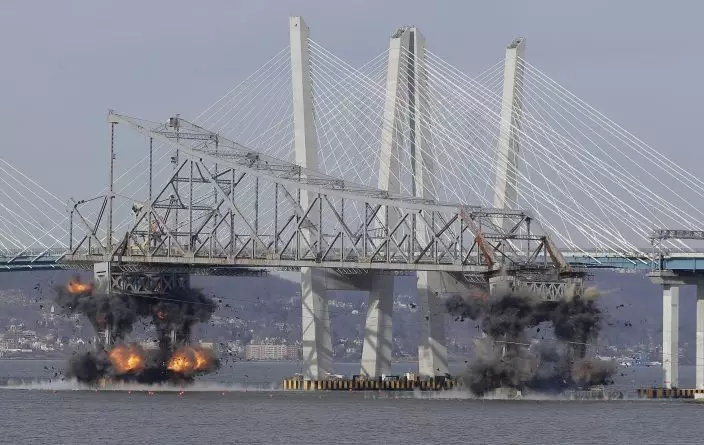
A section of the old Tappan Zee Bridge is brought down with explosives in this view from Tarrytown, N.Y., Tuesday, Jan. 15, 2019. (AP PhotoSeth Wenig)
7:45 a.m.
TARRYTOWN, N.Y. — A big chunk of the old Tappan Zee Bridge is about to go down in New York history.
Demolition with explosives is scheduled on Tuesday morning to remove the eastern part of the former bridge between Westchester and Rockland counties.
It's already been replaced by the Gov. Mario M. Cuomo Bridge, which carries Interstate 87 traffic over the Hudson River about 30 miles (48 kilometers) north of New York City.
The Tappan Zee, which opened in 1955, was a poster child for America's crumbling infrastructure. Shifting steel plates gave drivers unnerving glimpses through road cracks of the chasm below.
There are plans to dismantle the western portion without explosives sometime this year.
BRUSSELS (AP) — NATO’s top military officer is weighing alternative plans to defend Europe should it come under attack from Russia, after the United States announced that it is cutting the number of aircraft and warships that it would provide in a security crisis.
The so-called NATO Force Model is Plan A for making forces from the 32 member nations available in times of peace, crisis or war. It sets out the military assets that commanders can call on in phases over the first six months of any conflict.
But last month, the Pentagon warned its NATO allies that it would be scaling down its commitment to focus on potential threats elsewhere, notably from China in the Indo-Pacific region.
European countries and Canada had waited impatiently for over a year for the Trump administration to detail its plans after it warned that Europe is no longer a top U.S. security priority. They knew cuts were coming, but not how big, fast or what kind.
U.S. Gen. Alex Grynkewich, NATO’s supreme allied commander, said that “the United States is still committed to providing limited but critical capabilities to the alliance.”
“We need to focus on things that we can acquire quickly, that we can field quickly, and that we can scale rapidly and sustain over time, and that goes for long-range fires” as well as drones, Grynkewich said at the ILA Berlin Air Show on Thursday.
“Those sorts of things can help us mitigate the near-term risk should we find ourselves needing to deter and defend,” he added.
After allies met on June 2-3 to assess gaps left by the U.S. move, Grynkewich said that European allies and Canada should fill them by supplying manned and unmanned aircraft, and with naval vessels. It should happen “now and in the near term,” he said.
The precise nature of the cuts remains secret, but media reports in Germany and the U.S. suggest that an aircraft carrier with its support group of warships and aircraft as well as a submarine would leave the European theater. Aerial refueling planes and dozens of fighter jets would no longer be available.
All are in short supply in Europe, and it’s unclear where they might be found in a hurry. Still, Washington wants to know how its allies intend to backfill these assets by the time President Donald Trump and his NATO counterparts meet for a summit in Turkey on July 7-8.
On Friday, NATO military headquarters announced that it will cut back its security force in Kosovo by withdrawing some troops and equipment. KFOR began deploying in 1999 to keep the peace between Kosovo and Serbia.
Once composed of 50,000 personnel, KFOR has been routinely scaled back over the years as tensions eased, although 1,000 additional troops were deployed there in 2023, after fresh violence erupted.
“The current conditions provide an opportunity to optimize KFOR’s size and posture further,” Grynkewich said. His team declined to say what forces might leave and whether any Americans would go.
“It’s not about numbers, it’s about optimization, and about ensuring the safety and security of all people living in Kosovo, and more broadly the region,” his spokesman said.
The United States currently has 590 troops deployed with KFOR, second only among its 31 contributing nations to Italy, with 907 personnel. U.S. Black Hawk helicopters are also stationed at the sprawling U.S. base there, Camp Bondsteel.
In any case, Grynkewich said in Berlin that intelligence reports and Russian troop movements suggest “Russia is not looking for a conflict with NATO.” Russia is also currently bogged down in the war on Ukraine and struggling to recruit enough troops.
Governments and intelligence services in Europe have warned that Russian President Vladimir Putin could be in a position to launch an attack elsewhere on the continent within three to five years, especially if he wins in Ukraine.
Associated Press writers Kirsten Grieshaber in Berlin and Zana Cimili in Pristina, Kosovo, contributed to this report.
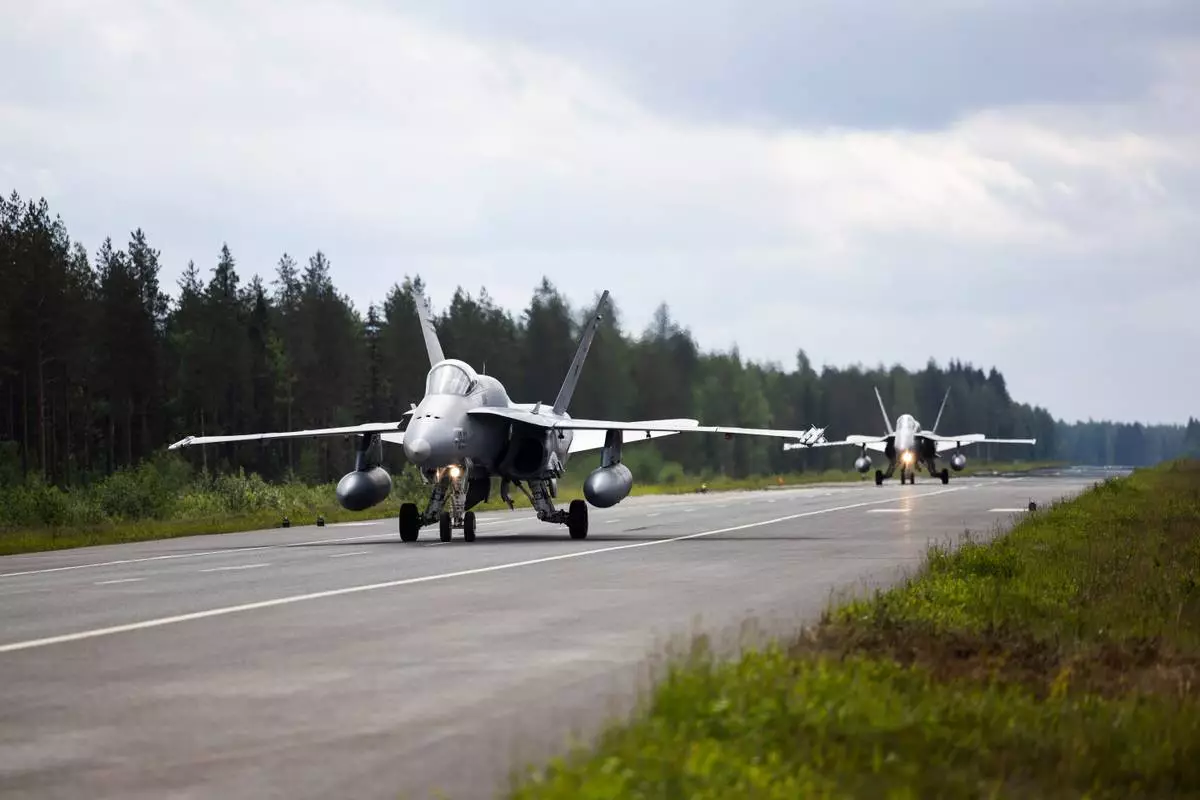
F/A-18 Hornet multi-role fighters of the Finnish Air Force take off from a road strip during NATO's Ramstein Flag 26 exercise in Tervo, Finland, Wednesday June 10, 2026. (Matias Honkamaa/Lehtikuva via AP)
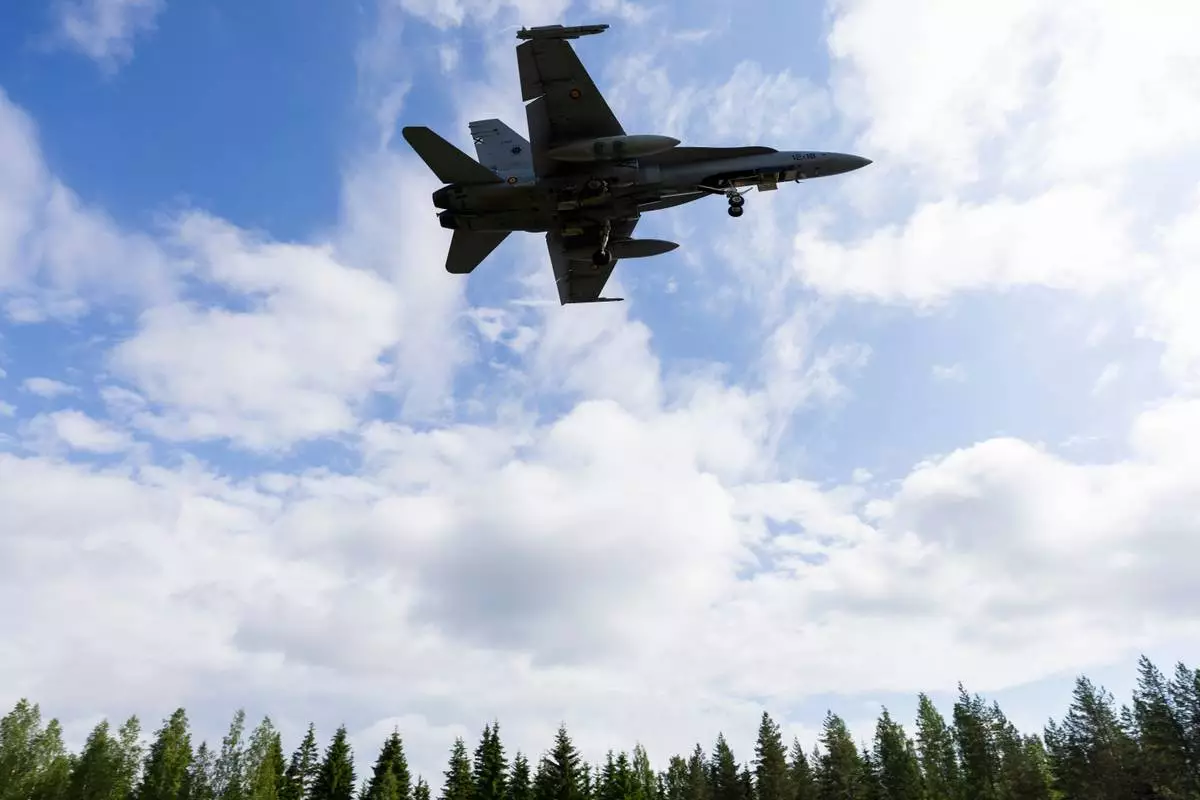
A F/A-18 Hornet multi-role fighter of the Finnish Air Force lands on a road strip during NATO's Ramstein Flag 26 exercise in Tervo, Finland, Wednesday June 10, 2026. (Matias Honkamaa/Lehtikuva via AP)