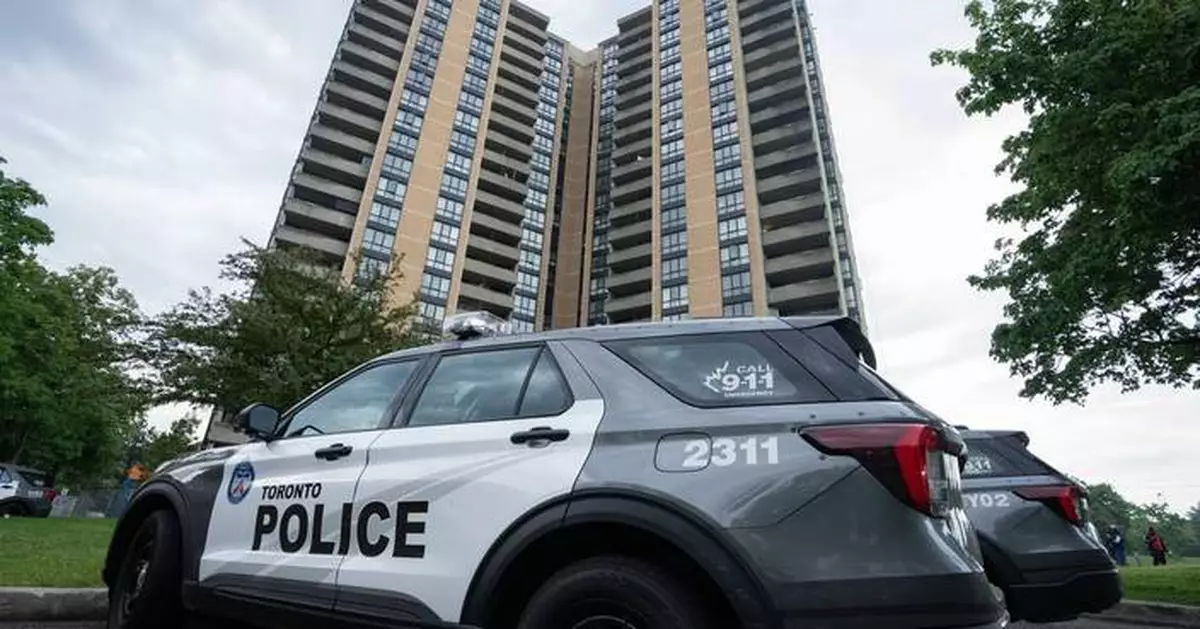
OTTAWA, Ontario (AP) — A Toronto police officer was shot and killed Thursday by a suspect in the investigation into a shooting attack that damaged the facade of the U.S. Consulate in the Canadian city in March, police said.
Police officer Marc Pinizotto, who was 43 and had been on the force for 18 years, died of his wounds in a hospital, Toronto Police Chief Myron Demkiw said at a news conference. He said one suspect was in custody at a hospital in critical condition.
Click to Gallery
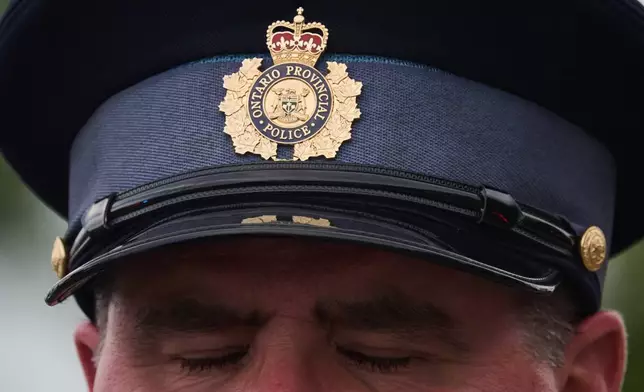
A police officer pauses as he stands for the arrival of a procession with the body of Toronto Police Const. Marc Pinizzotto, who was killed in the line of duty, at the Chief Coroner's office, in Toronto, Thursday, June 11, 2026. (Sammy Kogan/The Canadian Press via AP)
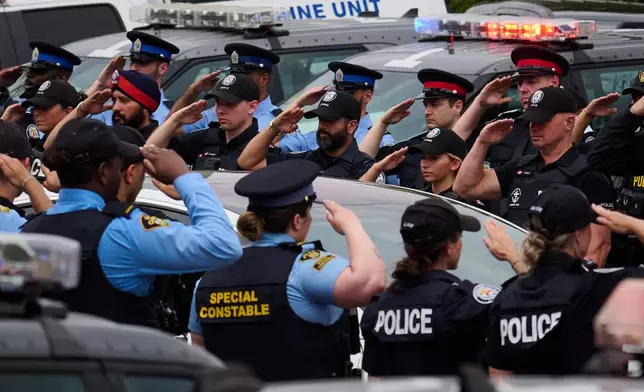
Police salute during a procession with the body of Toronto Police Const. Marc Pinizzotto, who was killed in the line of duty, at the Chief Coroner's office in Toronto, Thursday, June 11, 2026. (Sammy Kogan/The Canadian Press via AP)
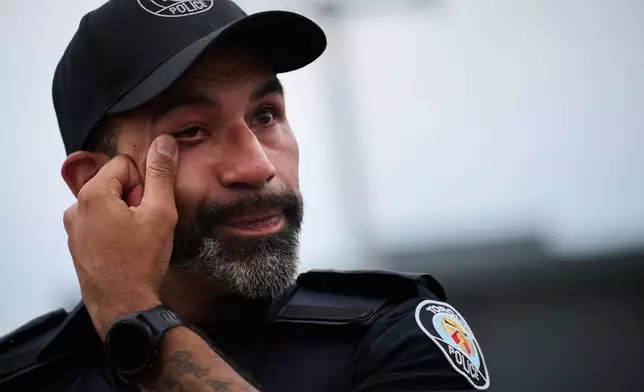
A police officer wipes away a tear after a procession with the body of Toronto Police Const. Marc Pinizzotto, who was killed in the line of duty, at the Chief Coroner's office in Toronto, Thursday, June 11, 2026. (Sammy Kogan/The Canadian Press via AP)
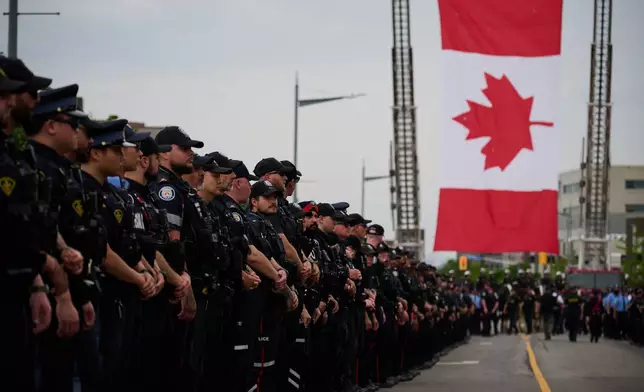
Police stand by for the arrival of a procession with the body of Toronto Police Const. Marc Pinizzotto, who was killed in the line of duty, at the Chief Coroner's office in Toronto, Thursday, June 11, 2026. (Sammy Kogan/The Canadian Press via AP)
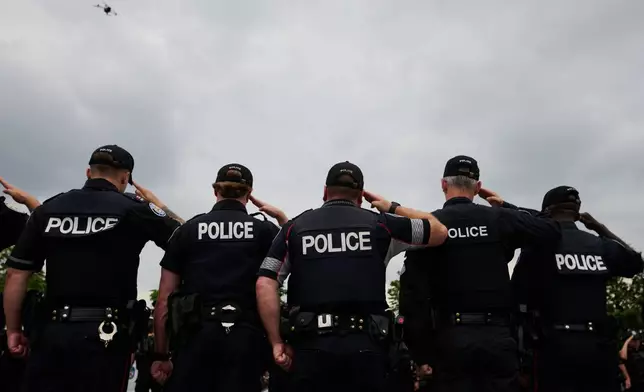
Police salute during a procession with the body of Toronto Police Const. Marc Pinizzotto, who was killed in the line of duty, at the Chief Coroner's office in Toronto, Thursday, June 11, 2026. (Sammy Kogan/The Canadian Press via AP)
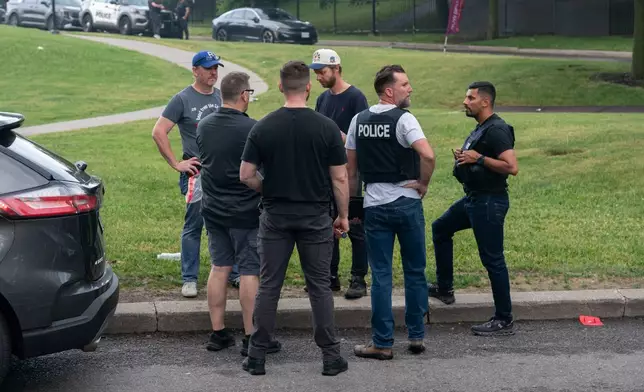
Investigators work the scene where a Toronto Police officer was shot in Toronto on Thursday, June 11, 2026. (Arlyn McAdorey/The Canadian Press via AP)
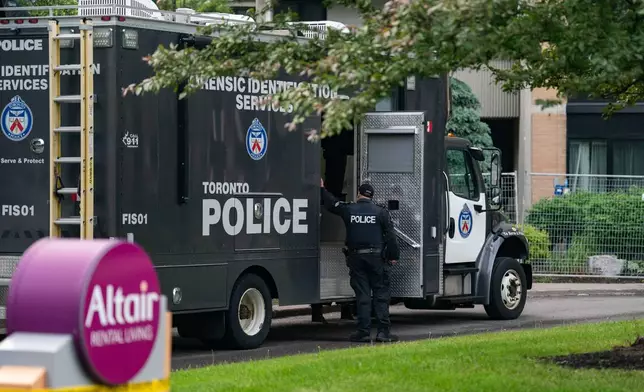
Investigators work the scene where a Toronto Police officer was shot in Toronto on Thursday, June 11, 2026. (Arlyn McAdorey/The Canadian Press via AP)
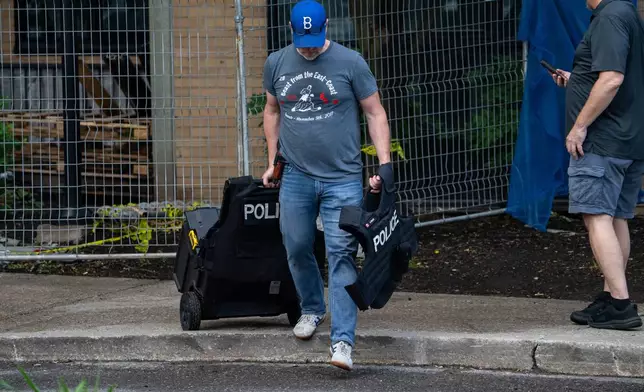
Investigators work the scene where a Toronto Police officer was shot in Toronto on Thursday, June 11, 2026. (Arlyn McAdorey/The Canadian Press via AP)
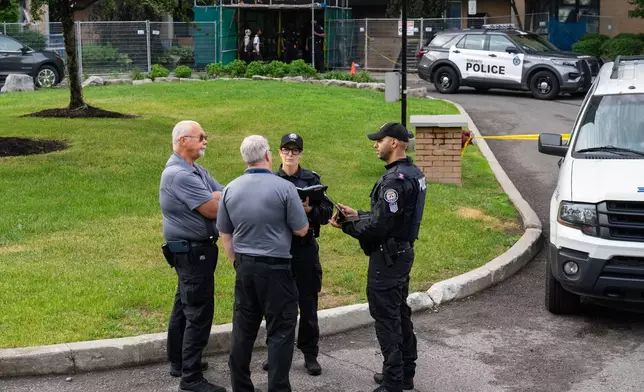
Investigators work the scene where a Toronto Police officer was shot in Toronto on Thursday, June 11, 2026. (Arlyn McAdorey/The Canadian Press via AP)
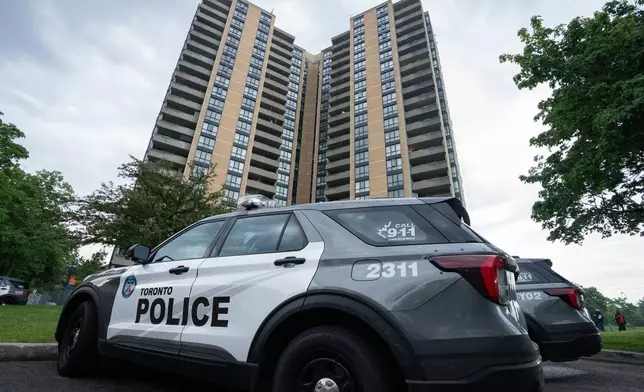
Investigators work the scene where a Toronto Police officer was shot in Toronto on Thursday, June 11, 2026. (Arlyn McAdorey/The Canadian Press via AP)
Nicholas Bennett, 19, of Toronto, will be charged with first degree murder. Another individual, Zara Jabbi, 19, remains outstanding. He is wanted in connection with the March shooting at the U.S. Consulate.
“I urge you to turn yourself in,” Demkiw said in reference to Jabbi.
Canadian police had said in March that two individuals emerged from a white Honda RV SUV at around 4:30 a.m. and fired multiple shots at the U.S. consulate building before fleeing. The shooting damaged the outside of the building but did not cause any injuries.
The consulate attack in March followed heightened tensions over the war launched by the U.S. and Israel against Iran in late February, and it had followed gunfire attacks on two Toronto-area synagogues the previous weekend.
The investigation that led to Pinizotto's death "concerned a number of shootings, including the shooting at the United States consulate on University Avenue. There were several search warrants executed this morning,” Demkiw said.
Toronto Mayor Olivia Chow said she’s known the mother of the deceased officer for the 20 years.
“Their grief is shared across this city,” Chow said.
The officer was shot in the early morning in an apartment unit, said Monica Hudon of Ontario's Special Investigations Unit, which investigates incidents involving police officers where there has been a death. The suspect shot first, Hudon said.
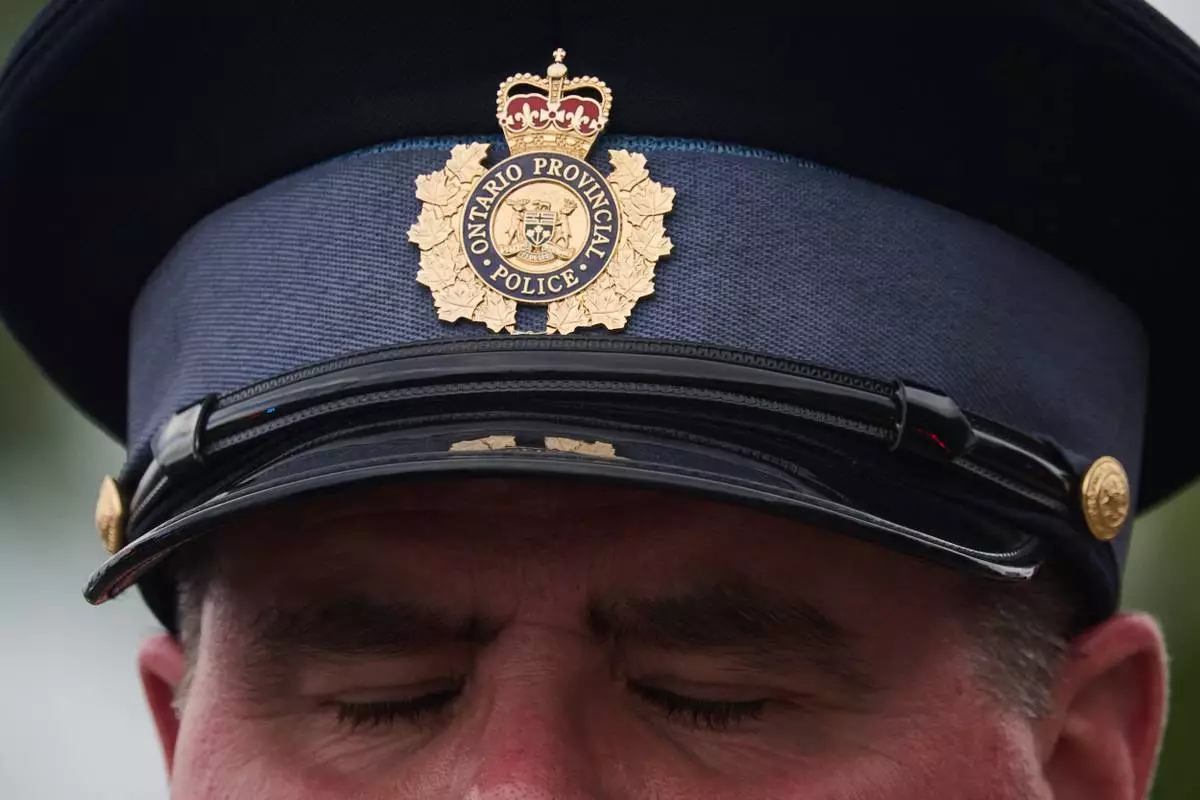
A police officer pauses as he stands for the arrival of a procession with the body of Toronto Police Const. Marc Pinizzotto, who was killed in the line of duty, at the Chief Coroner's office, in Toronto, Thursday, June 11, 2026. (Sammy Kogan/The Canadian Press via AP)
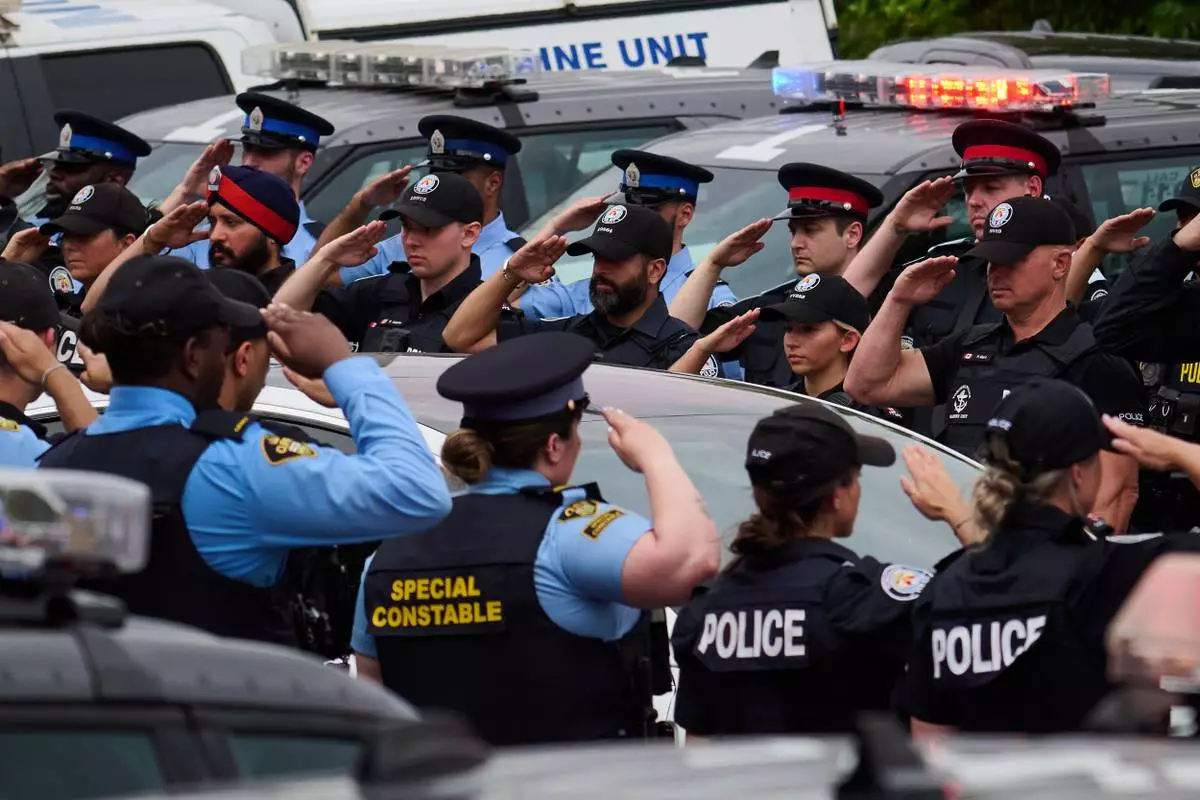
Police salute during a procession with the body of Toronto Police Const. Marc Pinizzotto, who was killed in the line of duty, at the Chief Coroner's office in Toronto, Thursday, June 11, 2026. (Sammy Kogan/The Canadian Press via AP)
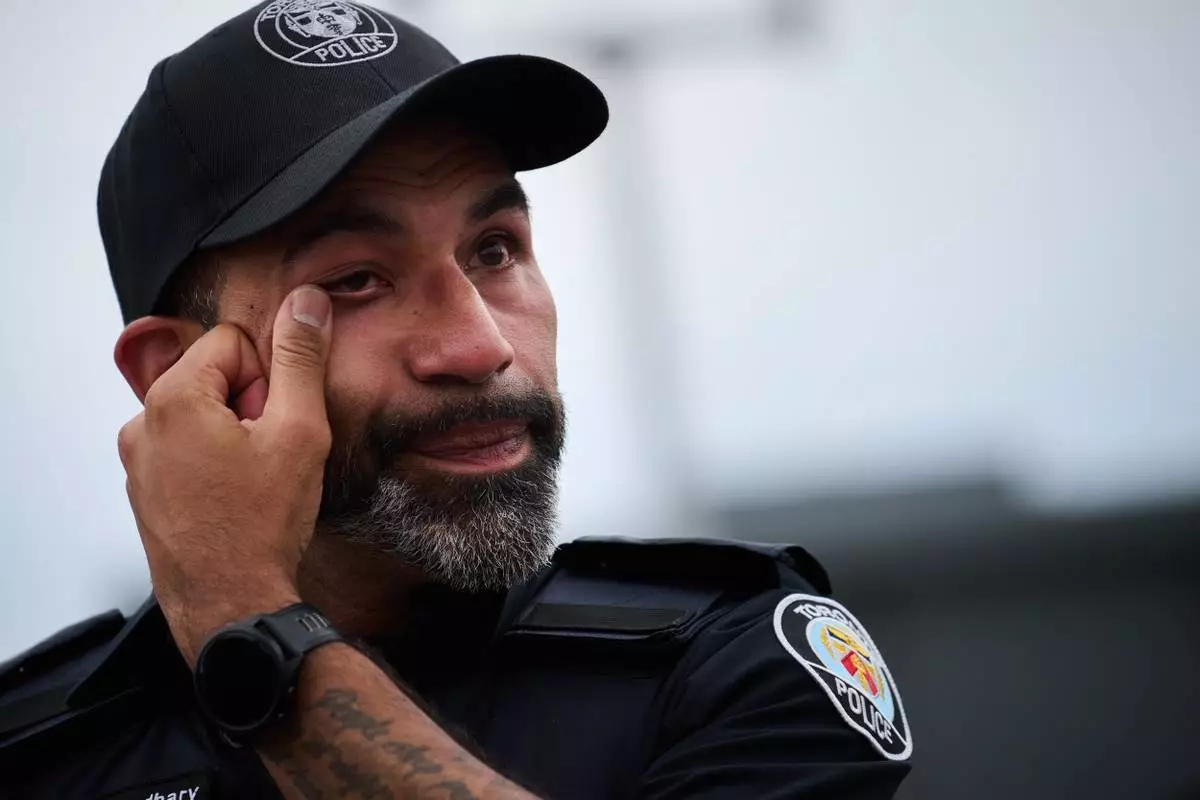
A police officer wipes away a tear after a procession with the body of Toronto Police Const. Marc Pinizzotto, who was killed in the line of duty, at the Chief Coroner's office in Toronto, Thursday, June 11, 2026. (Sammy Kogan/The Canadian Press via AP)
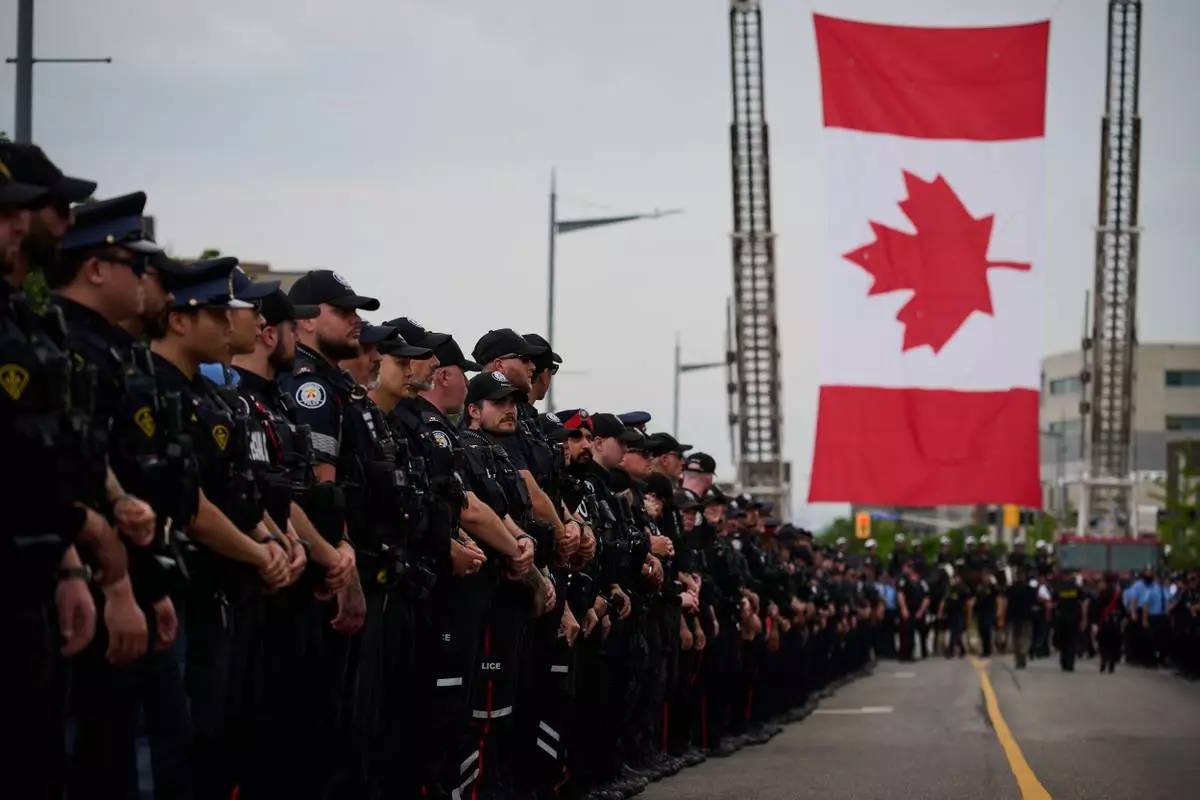
Police stand by for the arrival of a procession with the body of Toronto Police Const. Marc Pinizzotto, who was killed in the line of duty, at the Chief Coroner's office in Toronto, Thursday, June 11, 2026. (Sammy Kogan/The Canadian Press via AP)
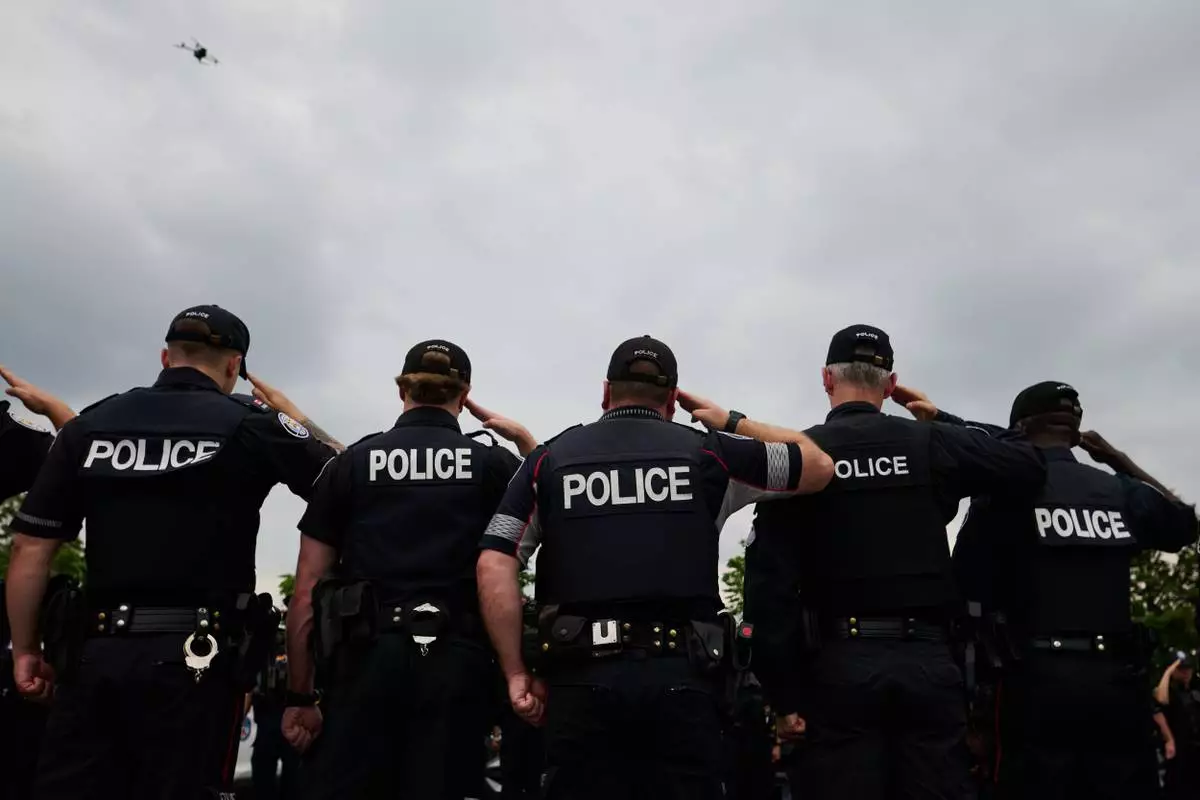
Police salute during a procession with the body of Toronto Police Const. Marc Pinizzotto, who was killed in the line of duty, at the Chief Coroner's office in Toronto, Thursday, June 11, 2026. (Sammy Kogan/The Canadian Press via AP)
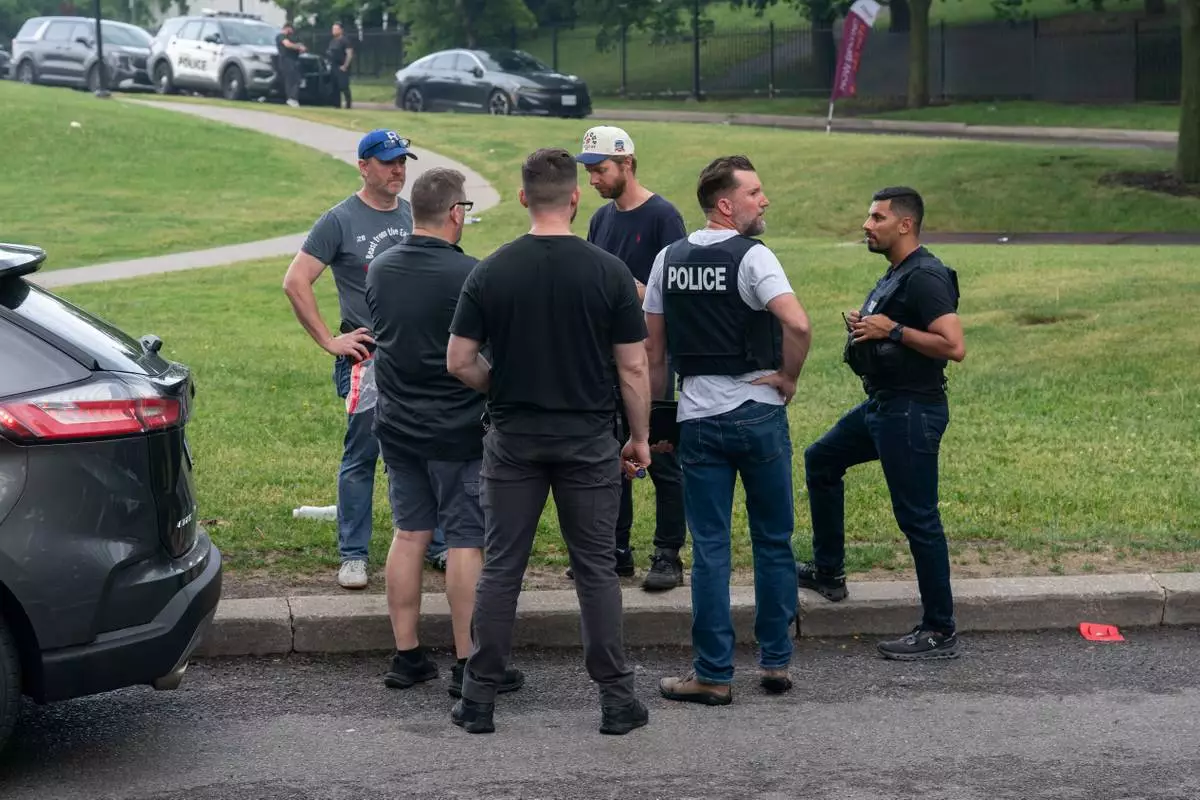
Investigators work the scene where a Toronto Police officer was shot in Toronto on Thursday, June 11, 2026. (Arlyn McAdorey/The Canadian Press via AP)
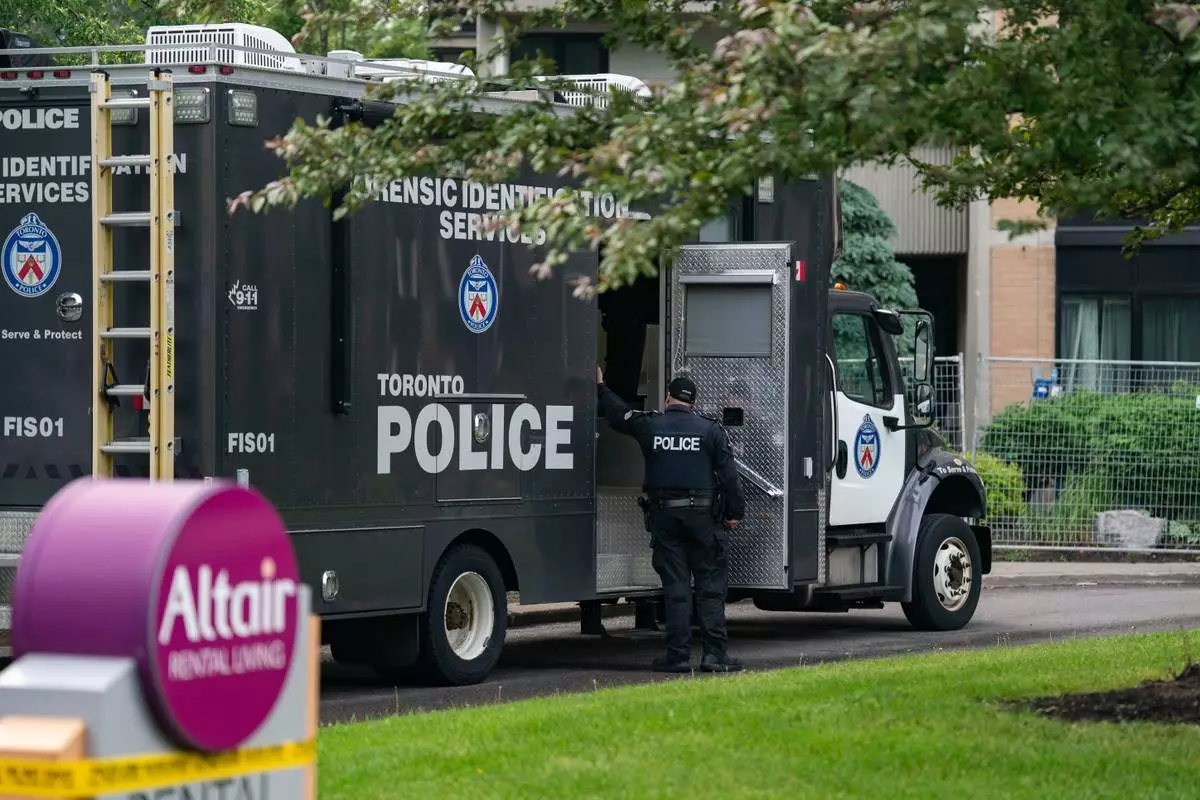
Investigators work the scene where a Toronto Police officer was shot in Toronto on Thursday, June 11, 2026. (Arlyn McAdorey/The Canadian Press via AP)
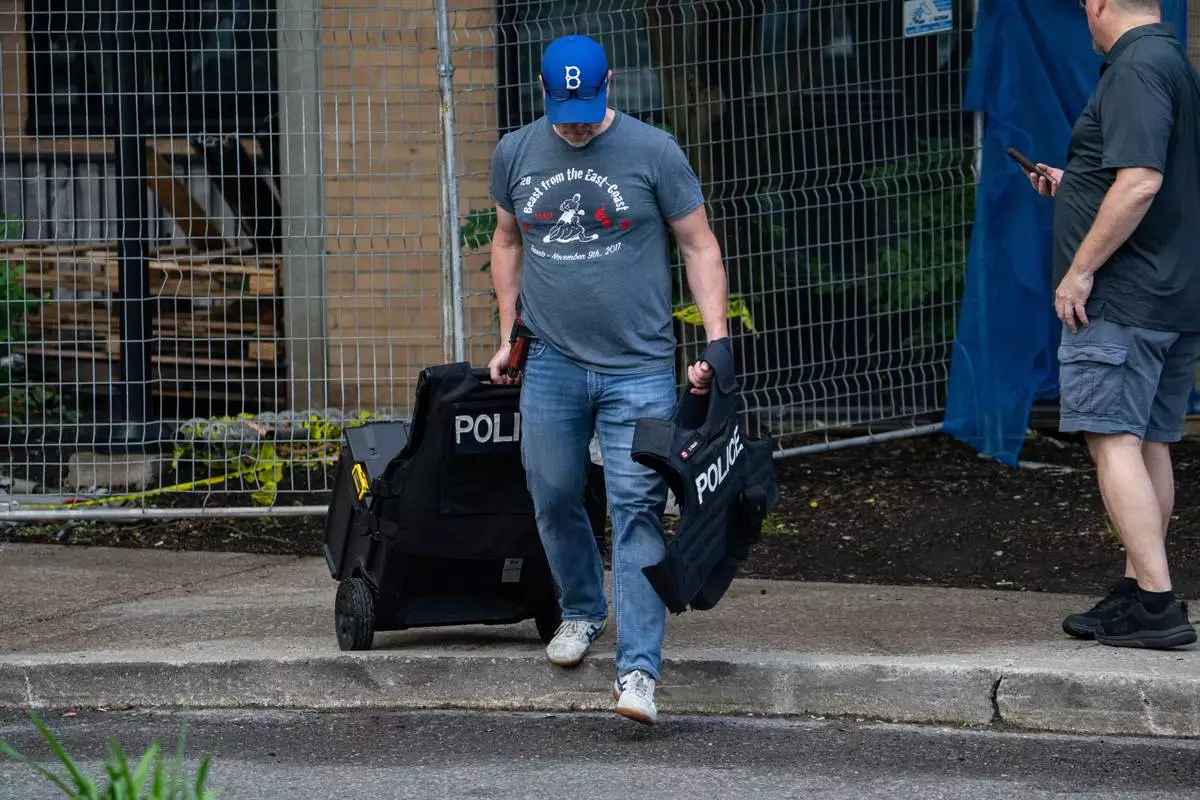
Investigators work the scene where a Toronto Police officer was shot in Toronto on Thursday, June 11, 2026. (Arlyn McAdorey/The Canadian Press via AP)
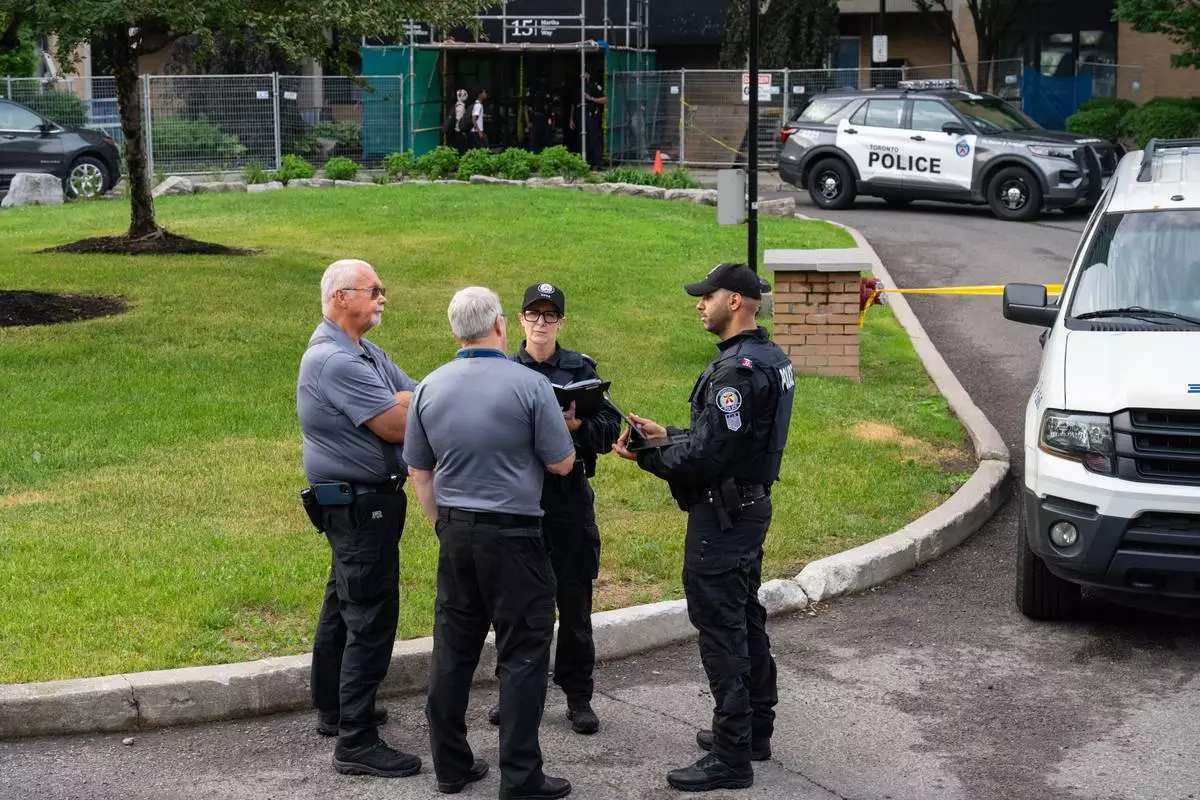
Investigators work the scene where a Toronto Police officer was shot in Toronto on Thursday, June 11, 2026. (Arlyn McAdorey/The Canadian Press via AP)
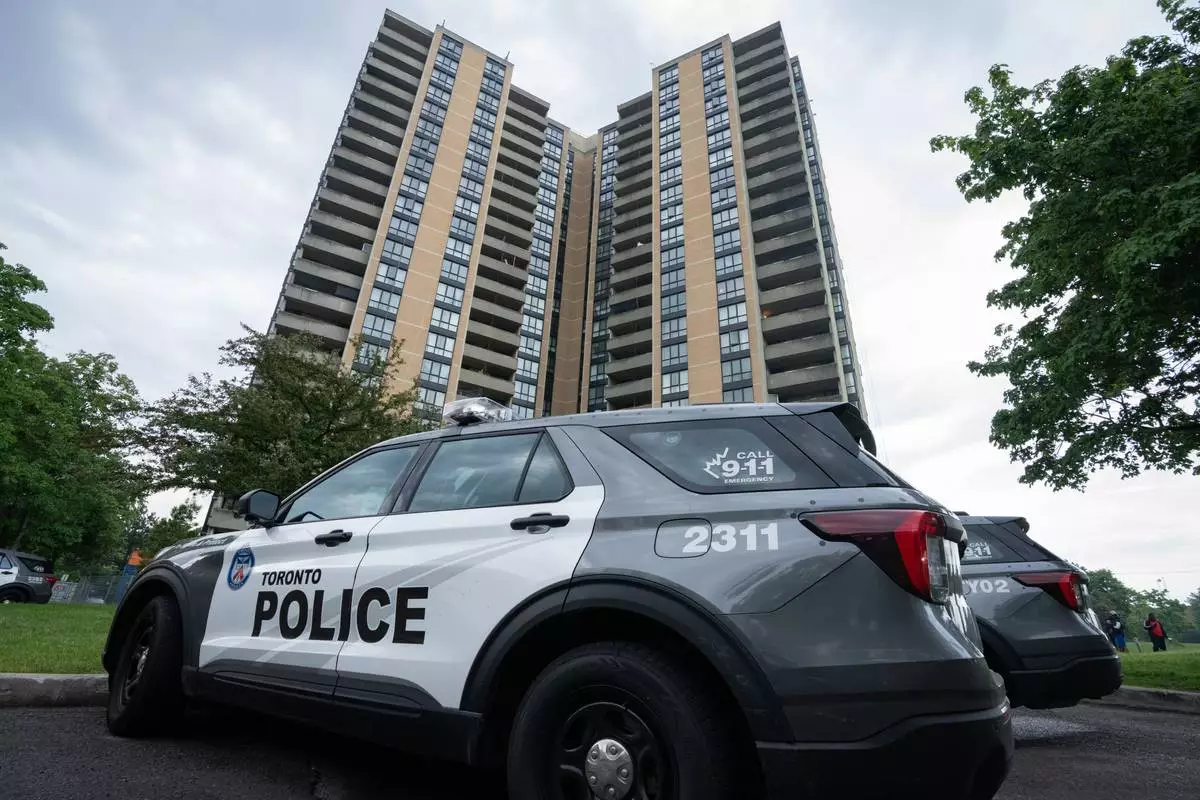
Investigators work the scene where a Toronto Police officer was shot in Toronto on Thursday, June 11, 2026. (Arlyn McAdorey/The Canadian Press via AP)