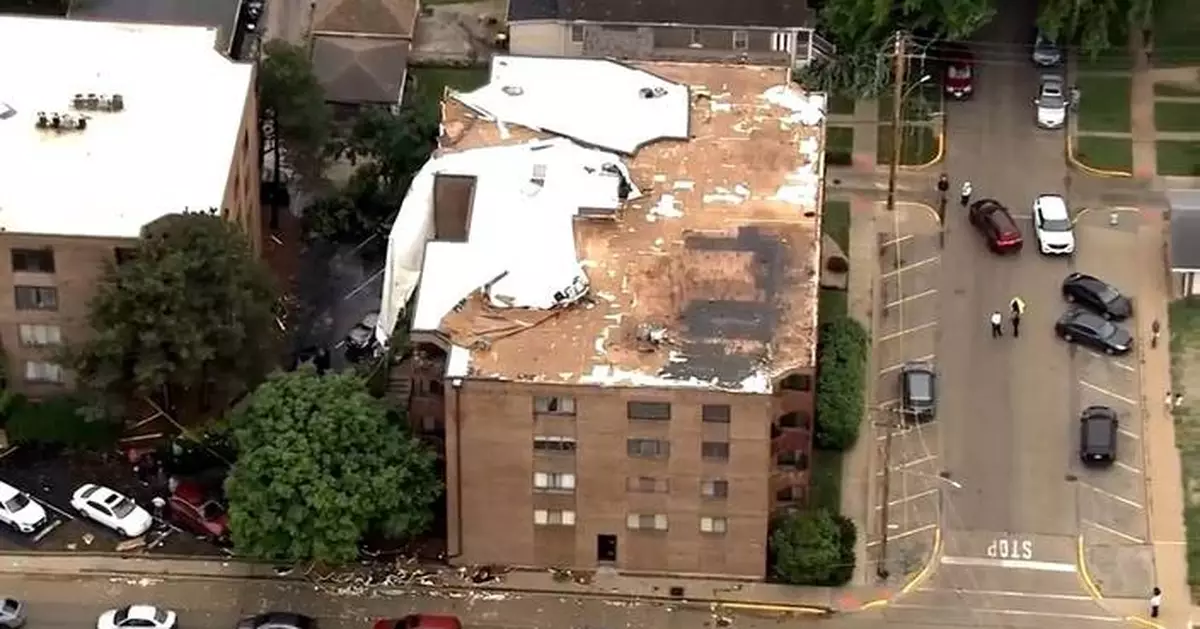
At least three tornadoes battered communities outside Chicago on Thursday, leveling homes and ripping down trees and power poles, while storms grounded flights for some and knocked out power for hundreds of thousands in the Midwest and Northeast.
As a large column of air descended on Merrillville, Indiana, a town about 33 miles (53 kilometers) southeast of Chicago, the city’s police warned residents to take cover. By the evening, downed trees and power lines blocked the streets, homes were torn up and part of a high school's roof was ripped off.
Meanwhile, emergency crews were in the nearby manufacturing and farm city of Streator, Illinois, as the community reeled from tornado damage. A reunification center for displaced residents was set up in its city hall and the Red Cross opened a shelter.
Streator Mayor Tara Bedei said there were no reported deaths. “We are incredibly grateful for the safety of our residents and the quick action of emergency personnel,” she said in a statement.
Strong storms delayed or halted flights at airports in some cities, including Chicago, Philadelphia and New York on Thursday. Parts of the Northeast and mid-Atlantic also strained under high heat and humidity.
The tornadoes came after severe storms swept through the Midwest Wednesday, knocking out power, damaging buildings and canceling flights.
In Des Moines, Iowa, a 54-year-old man died at a homeless encampment in a park after being hit by a tree that “broke apart and fell during strong storms,” police said in a statement. The man was found critically injured Thursday morning and died at the scene, authorities said. There were no immediate reports of other deaths or injuries from the storms.
Tornado warnings were also in place in Chicago and in parts of Indiana and Michigan Thursday, according to the National Weather Service. In Chicago, a series finale between the White Sox and the Atlanta Braves was postponed due to rain.
Jennifer Hall was in her garage in Elkhart, Indiana, as the winds and rain picked up Thursday evening. Suddenly, she said, she heard a loud crash and discovered a tree limb had gone through the roof of her rental home. She used buckets to catch the rain coming in from the hole.
“I’m just nervous because it’s just been one thing after another,” said Hall, explaining she just had surgery and her husband is out of town.
Shane Tipton stepped out of his truck in Unionville, Missouri, Wednesday afternoon to find a twister bearing down, said his daughter, Kylie Rouse. He rushed to get his 87-year-old dad out of his mobile home.
They made it back to the truck, drove just far enough away and watched as the tornado obliterated the home. Shattered cabinets, furniture and appliances littered the ground. Clothes hung in trees. They believe they lost one of their hunting dogs, who has been missing since it struck.
“Everything's destroyed,” Rouse told The Associated Press in a phone interview Thursday. “It was scattered clear for miles. If my grandpa would have been in there, there's no way that he would be alive.”
Residents of Springfield, Illinois, believe a tornado touched down in their area late Wednesday. Two buildings at the Animal Protective League shelter in Springfield were heavily damaged, but none of the nearly 150 cats and 28 dogs housed there were injured, said Deana Corbin, the group's executive director.
“It pretty much wiped out our shelter facility, took the roofs off both of our buildings,” Corbin said. “It’s a miracle. We were so blessed to not have any injuries of either people or animals.”
The community pitched in to take in all the cats and dogs temporarily, including a local animal control center, veterinarians and residents, she said.
Damage also was reported at Abraham Lincoln Capital Airport in Springfield.
Weather service meteorologist Frank Pereira said the system that produced the storms, including high winds and hail, was moving eastward Thursday, fueled by cool air from Canada clashing with warm, humid air from the South.
Potentially dangerous heat and high humidity arrived Thursday and was expected to continue Friday for a swath of the East Coast from the mid-Atlantic to the Northeast, where daily high record temperatures could be broken in numerous places, the weather service said. Temperatures in the mid-90s Fahrenheit (mid-30s Celsius) were expected, but with the humidity it could feel like 100 degrees Fahrenheit (38 degrees Celsius) or more, the service said.
Philadelphia declared a heat health emergency for Thursday and Friday, activating cooling centers, home visits by field teams, outreach to people experiencing homelessness and other services. New York City officials were also urging residents to take precautions, including drinking plenty of water and finding a cool place to stay if they do not have air conditioning.
At various points Wednesday and Thursday, ground stops were issued at Chicago's O’Hare International and Midway International airports, and at John F. Kennedy International Airport in New York.
The Pittsburgh International Airport experienced a temporary power outage after a storm produced an “extraordinary” power surge, the airport said.
More than 1,000 flights going into and out of Chicago had been delayed or canceled, according to FlightAware, a flight tracking website.
Commonwealth Edison Company, which provides electric service across northern Illinois, said the storms had downed poles and wires. On X, it wrote that it expected “80% restoration” by late Saturday.
This story was first published June 11. It was updated on June 12 to correct that police said a man in Des Moines hit by a fallen tree was found Thursday, not Wednesday.
Associated Press reporters Hannah Fingerhut in Des Moines, Iowa, and Gene Johnson in Seattle contributed.
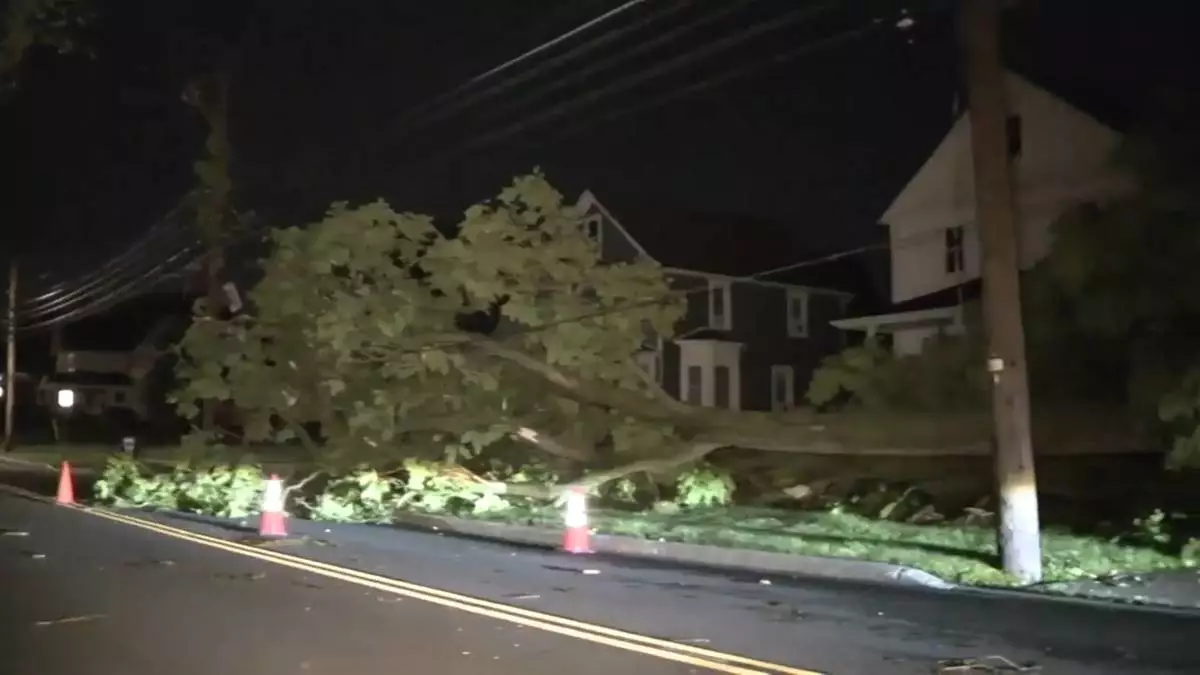
This frame grab from video shows a downed tree after storms struck Amherst, Ohio, west of Cleveland on Wednesday, June 10, 2026. (AP Photo/Courtesy WEWS/NEWS5) TELEVISION OUT
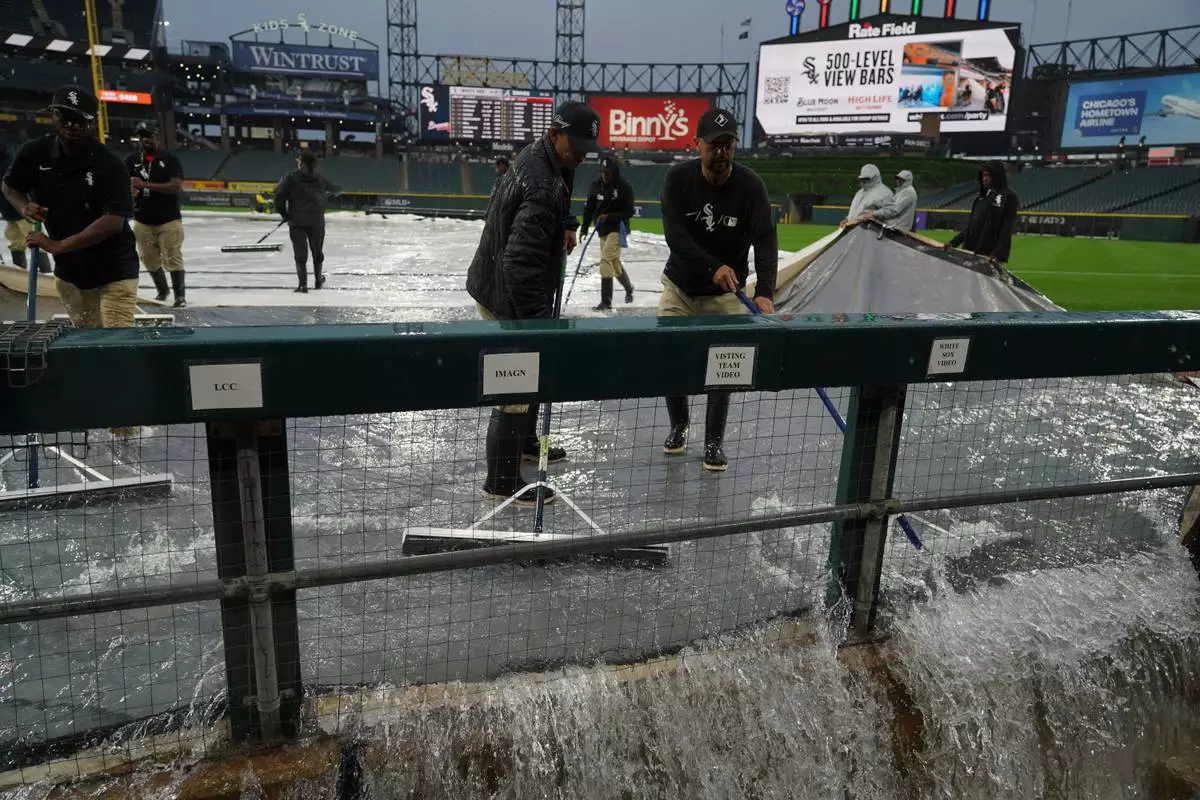
Grounds crew remove water from the field after severe thunderstorms came through the Chicago area before a baseball game between the Chicago White Sox and the Atlanta Braves, Wednesday, June 10, 2026, in Chicago. (AP Photo/David Banks)
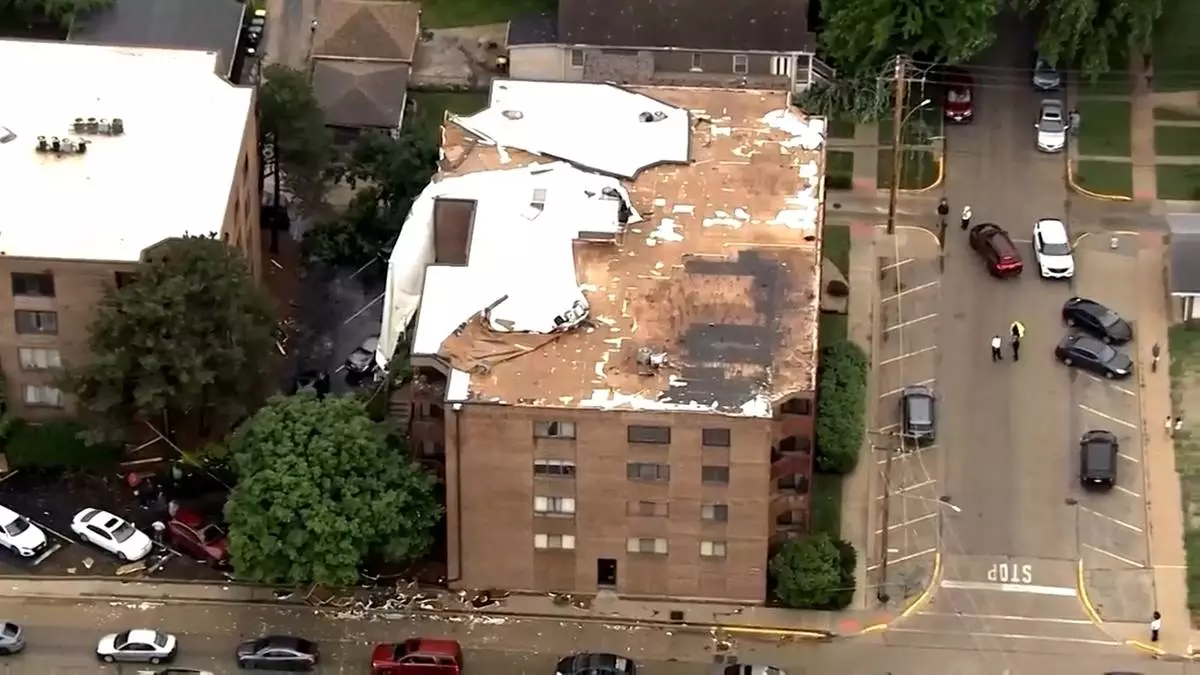
This frame grab from aerial video shows a building in Stickney, Illinois, after its roof was damaged by the severe storms that struck the Chicago area on Wednesday, June 10, 2026. (AP Photo/Courtesy WMAQ-TV in Chicago) TELEVISION OUT

DUBAI, United Arab Emirates (AP) — The U.S. military on Saturday announced its first troop deaths due to direct Iranian fire since the opening days of the war, saying two were killed and another was missing in an attack on a base in Jordan.
They were killed Friday as the U.S. and partner forces defended against ballistic missile and drone attacks, a statement said. Four other service members were medically evacuated to Jordanian hospitals and later discharged. The dead were not identified.
Since the war began, 16 U.S. service members have been killed and over 430 wounded.
Minutes earlier, Iran’s supreme leader warned of “unforgettable lessons” if the U.S. keeps attacking the Islamic Republic. The remarks read out on state TV and attributed to Mojtaba Khamenei, still unseen since the war began, also called President Donald Trump’s signature “worthless and invalid.”
The comments came hours after a negotiator said Tehran was suspending its commitments to the interim deal signed about a month ago and aimed at permanently ending the fighting.
Tehran's declarations snapped another fragile thread as the war shows no end in sight. Now Khamenei warns of “lessons” not only from Iran but its armed proxies in the region, calling them the “Axis of Resistance."
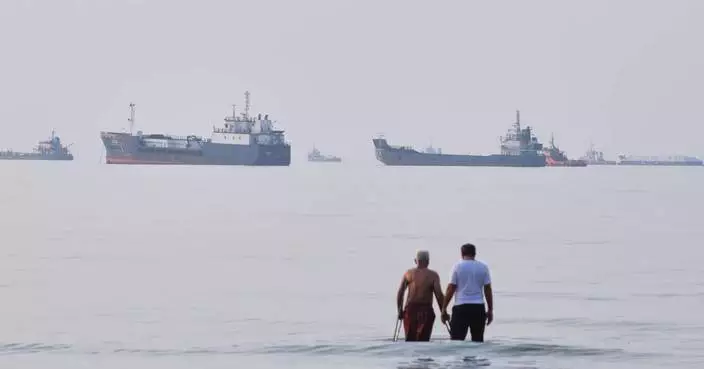
The battle over the Strait of Hormuz has intensified in a conflict increasingly focused on control of the essential waterway that previously carried a fifth of the world's crude oil. The strikes threaten civilians and infrastructure, including desalination plants for drinking water, while the global economy again is on alert.
The U.S. has violated its commitments under the deal that was signed about a month ago and now Iran is “no longer implementing them,” Kazem Gharibabadi, Iran’s deputy foreign minister, told state TV.
There was no new word on mediation efforts.
The most significant damage from Iranian strikes on Saturday occurred in Kuwait, where a water desalination plant and an oil facility were hit, according to the Kuwait authorities and the Kuwait Petroleum Corporation. Both declined to provide locations.
The strikes injured several people at the oil facility and caused a fire at the desalination plant, forcing several power generation units offline. It was the second attack against a desalination plant in two days in the tiny desert nation that depends on desalination for 90% of its drinking water.
Several firefighters and a worker were injured while battling two other blazes sparked by Iranian strikes, according to the Kuwait Fire Force. Kuwait briefly closed its airspace due to missile threats, and Kuwait Airways said it was rescheduling most flights to and from the capital.
Meanwhile, Iraq said it shot down attack drones over the city of Irbil. Jordan’s state-run Petra news agency said the kingdom’s air defense systems had downed Iranian missiles, while air sirens sounded multiple times in Bahrain throughout the day and in Saudi Arabia in the morning, according to their governments.
The secretary general of the six-nation Gulf Cooperation Council, Jasem Mohamed al-Budaiwi, accused Iran of war crimes for strikes on infrastructure and civilian facilities.
The U.S. Central Command said early Saturday that its seventh straight night of strikes hit “surveillance sites, military logistics infrastructure, underground weapons storage, and maritime capabilities.”
U.S. airstrikes hit an electricity and desalination plant in Iran’s southern Hormozgan province, Iranian state TV reported. IRNA said the Bonji desalination plant was destroyed, cutting off water supplies to about 10,000 people, and that a desalination plant on strategic Qeshm Island inside the strait was damaged.
Overnight strikes damaged two tunnels and a bridge, disrupting one of the main highways toward Bandar Abbas, Iran’s main port that sits near the narrowest part of the strait, according to Iran's state-run news agency. IRNA said three bridges were hit Saturday, including one on a route to Bandar Abbas.
Iran acknowledged “attacks on power infrastructure” during the U.S. airstrikes for the first time Friday when its Energy Ministry issued a call for people to use less power in southern provinces “experiencing extreme heat.” It did not specify what was hit.
Iranian authorities said at least 50 people have been killed and more than 500 wounded in U.S. strikes in the past three weeks, including eight killed in a strike on a bridge Friday.
Iran effectively closed the strait to shipping traffic after the war started with U.S. and Israeli strikes on Feb. 28. That sent the price of oil soaring and has given Tehran significant leverage in negotiations.
Iran has said the strait must be under its sole control and that vessels should pay fees to Tehran, even though the world for decades has considered it an international waterway. It fired on ships on recent days. Crossings through the strait fell to a three-week low, according to an international shipping tracker.
Trump has resumed threats to target power stations and bridges to try to compel Iran to loosen its hold. The U.S. in the past week reimposed a naval blockade on Iranian ports to halt its shipments of crude oil.
A growing amount of the region’s energy is being shipped through pipelines, but not nearly enough to offset the decline in shipping.
Before the war began, the U.S. had been in talks with Iran over its nuclear program. Trump now faces political pressure to end the war and avoid the kind of prolonged Middle East conflict he had campaigned against.
Ezzidin reported from Cairo and Toropin from Washington. Associated Press writers Amir Vahdat in Tehran; Melanie Lidman in Tel Aviv, Israel and Stella Martany in Irbil, Iraq contributed to this report.
A man displays a placard with portraits of the current and late supreme leaders and the late Revolutionary Guard Gen. Qassem Soleimani at the Islamic Revolution Square in downtown Tehran, Iran, Saturday, July 18, 2026. (AP Photo/Vahid Salemi)
People look at books which are placed for sale on a street in downtown Tehran, Iran, Saturday, July 18, 2026. (AP Photo/Vahid Salemi)
A woman walks past a mural depicting a portrait of the late Iranian Supreme Leader Ayatollah Ali Khamenei, who was killed in the U.S. and Israel strike on Feb. 28, in downtown Tehran, Iran, Saturday, July 18, 2026. (AP Photo/Vahid Salemi)
Pro-government demonstrators gather at a square in Tehran, Friday, July 17, 2026. (AP Photo/Vahid Salemi)
Women sit beneath a banner reading in English, "Kill Trump," during a pro-government rally in Tehran, Friday, July 17, 2026. (AP Photo/Vahid Salemi)
Women gather during a pro-government rally as one holds a sign reading in English, "Kill Trump," in Tehran, Friday, July 17, 2026. (AP Photo/Vahid Salemi)
Pro-government demonstrators gather at a square in Tehran, Friday, July 17, 2026. (AP Photo/Vahid Salemi)