Here are the answers Britons have been searching for in the build-up to the key vote in Parliament.
As MPs debate Theresa May’s Withdrawal Agreement ahead of a vote in Parliament, the British public has been looking for answers online.
Here are the most-Googled questions ahead of the crucial vote on Tuesday evening.
1. What time is the Brexit vote?
Theresa May will wrap up five days of debate on her Withdrawal Agreement in the House of Commons with a concluding statement at the Despatch Box at around 6.30pm.
Voting is likely to begin at 7pm, starting with four amendments and culminating in the meaningful vote itself.
The process of voting on each amendment takes around 15 minutes, so the final result is expected around 8.15-8.30pm.
2. What is the backstop?
The backstop arrangement outlined in the Prime Minister’s deal would create a single EU-UK customs area to ensure there is no hard border on the island of Ireland.
This means the UK would continue to follow the EU’s tariffs and rules on customs, avoiding the need for checks between the EU and UK – including Northern Ireland and the Republic – until a new relationship is decided.
Northern Ireland would need to follow some of the EU’s single market rules, including laws on goods, agricultural production, veterinary controls and state aid rules.
It is this point that has led many – including Northern Ireland’s Democratic Unionist Party and a number of Conservative backbenchers – to oppose the deal.
3. What are the Brexit amendments?
MPs proposed 13 amendments to the Prime Minister’s deal over the course of the debate and Speaker John Bercow revealed four will be put to the vote on Tuesday evening.
Labour leader Jeremy Corbyn’s amendment, backed by his front bench, dismisses Mrs May’s deal outright, instead calling on the Government to “pursue every option” to stop the UK leaving the EU without a deal. The Lib Dems added their own amendment to Mr Corbyn’s proposal, naming a second referendum as one of the options, but this was not selected for debate by the Speaker.
An amendment from the SNP leader in the Commons, Ian Blackford, calls on the UK Government to “respect the will” of the Scottish Parliament and Welsh Assembly by scrapping the Brexit deal as it is “damaging for Scotland, Wales and the nations and regions of the UK as a whole”. Instead it demands an extension to Article 50 to give the UK more time to agree a course of action.
Senior Tory Brexiter Sir Edward Leigh’s amendment says the Government should tear up the Withdrawal Agreement if the EU does not agree to end the backstop by the end of 2021.
The final amendment, tabled by Conservative Leaver John Baron, will only be debated if the Leigh proposals fail. It seeks to give the UK power to terminate the backstop without permission from the EU.
4. What is Theresa May’s Brexit deal?
The 585-page Withdrawal Agreement text will provide the basis of a legally binding treaty. It covers the future rights of EU citizens living in the UK and UK nationals in the EU, the £39 billion the UK owes in promised contributions, and protocols on Gibraltar and UK sovereign base areas in Cyprus.
It also provides for a transition period after the UK leaves the EU in March, running to the end of 2020, with the option of a one-off extension if more time is needed to conclude an agreement on the future relationship.
Crucially it also covers the backstop, intended to ensure there is no return to the hard border between Northern Ireland and the Republic if negotiations on the future relationship have not been completed.
5. How will my MP vote on the Brexit deal?
Every MP from the SNP, Lib Dems, DUP, Plaid Cymru and Green Party is expected to vote against the deal, as well as most Labour MPs. Labour members who have indicated they will vote with the Government include Kevin Barron, Jim Fitzpatrick and John Mann.
Former Labour minister Frank Field and ex-Lib Dem MP Stephen Lloyd, both sitting as independents, have said they will back the deal.
At least 81 Conservative MPs have recently said publicly that they plan to vote against the deal and some estimates put total rebel numbers as high as 113, pushing the total potential vote against the deal beyond the 400 mark.
With 650 MPs in the Commons – of whom the Speaker, his deputies and the seven Sinn Fein MPs do not cast a vote – this puts Mrs May’s possible tally at around 240-250, low enough to break historic records for the worst Government defeat of modern times.
The PM and her whips have been working through the day to bring that number down and it is always possible that critics of the deal will have a last-minute change of mind.
6. What is happening with Brexit?
After more than a year of negotiations, Mrs May presented her EU Withdrawal Bill to Parliament in November but it was immediately dismissed by hard Brexiteers within her own party, leading to a string of Cabinet resignations.
Hours before Parliament was due to vote on the deal in December, sensing a heavy defeat, the PM delayed the vote and returned to Brussels to seek reassurances about its implications.
After surviving a vote of no-confidence from her own party, Mrs May pushed the vote back to January 15 but she is still expected to lose heavily.
7. How many days until Brexit?
As of Tuesday January 15, there are 73 days to go until Britain is due to leave the EU, on March 29.
8. Is the UK stockpiling food for Brexit?
Some businesses and families have said they are stockpiling food as a precaution for a no-deal scenario in which it takes a lot longer for cargo to come through customs at the UK border.
Tesco and Marks & Spencer, as well as companies like Premier Foods – which owns Bisto, Mr Kipling and Majestic Wine – have announced plans for stockpiling.
Quick-thinking entrepreneurs are selling so-called Brexit survival kits of freeze-dried food for hundreds of pounds, although a Government spokesman said there was “no need” to stockpile items in the box, according to the BBC.
In December, official documents showed the Government was drawing up plans to avoid food shortages in hospitals, although the full extent of Government plans are not known.
9. How many people voted for Brexit?
A little over 17.4 million people voted to leave the EU in the 2016 referendum, compared with just over 16.1 million who voted to remain.
Turnout was 33.6 million, meaning 52% of those taking part voted to leave.
10. What happens if there is a no-deal Brexit?
A no-deal situation arises if the UK quits the EU without an agreement covering issues like the Irish border, expats’ rights in Europe, a future trade deal or customs and border checks.
Predictions about the seriousness of leaving the EU without a deal vary, but separate assessments from Whitehall and the Bank of England in November painted a grim picture of the impact of a no-deal Brexit on the UK economy.
The Bank warned Britain could be tipped into a recession worse than the financial crash, with an 8% cut in GDP, unemployment surging by as much as 7.5% and house prices falling by almost a third.
A cross-Government analysis found the UK economy would be 9.3% smaller after 15 years if Britain leaves without a deal.
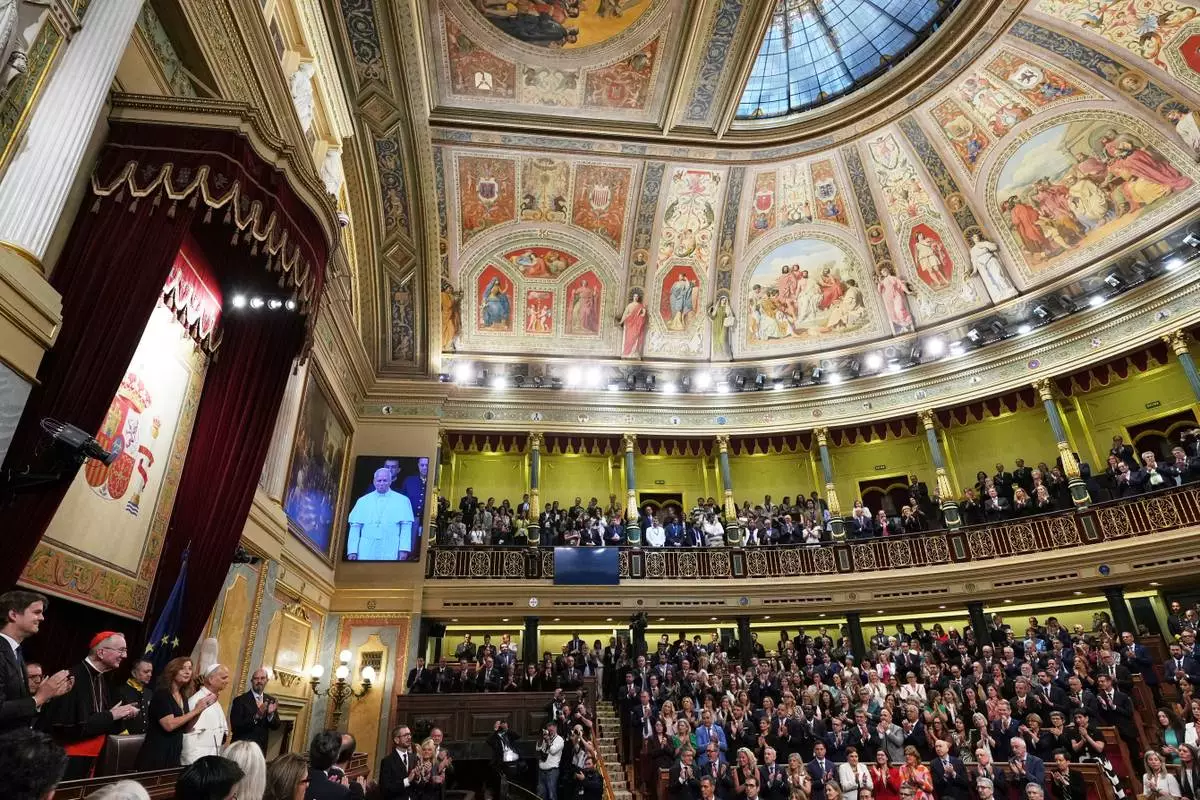
MADRID (AP) — Spanish lawmakers gave Pope Leo XIV a standing ovation on Monday after he called for respect for migrants' rights and international law in a historic address to parliament that signaled a new level of acceptance of the Catholic Church in the overwhelmingly secular country.
In the first-ever papal address to Spanish lawmakers, the American pope said a “moral renewal” was necessary in legislatures and public life to ensure respect for the inherent dignity of all people, including migrants, the unborn and the most vulnerable.
“The moral greatness of a nation is manifested, above all, in its capacity to accompany, protect and love those lives that are most fragile,” Leo said.
Speeches by popes to foreign legislatures are rare, since they can imply recognition of a religious leader by lawmakers. Pope Francis addressed a joint session of the U.S. Congress in 2015, and Pope Benedict XVI addressed his native German Bundestag in 2011.
That Leo was invited to speak to Las Cortes Generales showed a level of acceptance for the Catholic Church in a political setting that might have been unthinkable even a few years ago. The Catholic Church was a pillar of Gen. Francisco Franco’s dictatorship, enjoying broad control and influence over Spanish society, but that waned after democracy took root in the 1970s.
While many Spaniards still identify as Catholic, religious observance has dropped sharply amid secularizing trends seen in other once-staunchly Christian countries.
And yet lawmakers gave Leo a 7-minute standing ovation with chants of “Viva el Papa!” — “Long live the pope!”
Leo's weeklong visit to Spain — the first since Benedict visited in 2011 — has drawn large crowds, with an estimated 1.5 million people turning out for Mass on Sunday in a downtown plaza and 600,000 young people for a prayer vigil.
Leo's speech came Monday as Israel and Iran traded fire, threatening to drag the Middle East back into a full-scale regional war. The pope repeated his demand for dialogue, “diplomatic courage” and the "the obligation of states to resolve their disputes through the peaceful means offered by international law.”
He also lamented that European defense budgets were being built up as countries confront the threat posed by Russia following its full-scale invasion of Ukraine and the Trump administration’s threats to reduce financial and military support for the continent.
“It is therefore a cause for concern that, in various parts of the world — and in Europe as well — rearmament is once again being presented as an almost inevitable response to the fragility of the international situation,” Leo said.
He repeated his demand for “rigorous ethical oversight” of automated weapons systems created by artificial intelligence “so that decisions regarding life and death are never left to automated systems nor removed from the moral responsibility of the human person.”
Spain’s Socialist-led government has bucked a trend in Europe and the United States by defending immigration on economic and humanitarian grounds, launching a legalization push earlier this year for hundreds of thousands of immigrants without authorization. Prime Minister Pedro Sánchez has highlighted the benefits to the economy with an aging workforce and low birth rate.
Leo called for strengthened international efforts to prevent the smuggling of migrants and create conditions where they can choose to stay home.
For those who flee conflict, poverty and climate change, he called for welcome and integration. Pope Francis made the plight of refugees reaching Europe a hallmark of his papacy, and Leo has insisted especially on the dignity of migrants in his native United States amid the Trump administration’s crackdown.
“This gives rise to a twofold demand for social justice: to offer safe and legal pathways, a respectful welcome and real opportunities for integration; and, at the same time, to promote the right to remain in one’s own land, working to ensure that no one has to leave their home due to a lack of peace, security or decent living conditions, including economic inequalities and the effects of the climate crisis,” Leo said.
Leo cited the 16th century Spanish intellectual tradition, known as the School of Salamanca, that gave rise to concepts of international law and inherent human rights after Spain’s colonial conquests of the Americas.
He praised the theologians involved in the movement who “understood that reason could not be invoked to legitimize whatever force or self-interest that seemed convenient” and that there were “moral limits of power.”
“It must be acknowledged that society and the church herself did not always live up to these insights found in their own Christian tradition,” Leo said.
It was a reference to the Catholic Church’s own role in the trans-Atlantic slave trade and colonial conquest, and recalled Leo’s recent apology for the role the Holy See played in legitimizing slavery.
Leo's visit comes at a delicate time for Sánchez.
Sánchez’s Socialist Party has been hammered by corruption scandals, though none have directly implicated him. Probes have touched some of Sánchez's closest confidants, as well as his wife and brother.
As they play out in the courts, Spain is increasingly frayed by political polarization. Sánchez's minority government has been unable to pass legislation, including a budget for the past three years.
Leo, in an apparent reference to polarization, warned that “political pluralism should not degenerate into the constant disparagement of one's adversary."
Spain's progressive leader, who is an atheist, and the pope have converged on major issues including opposing the war in Iran. Both have been outspoken critics of the Trump administration.
Last month, after visiting Leo in the Vatican, Sánchez called the pope's voice “a moral compass in the fight against injustice."
Traditionally, the Catholic Church in Spain has been closer to the conservative Popular Party than the Socialist Party, which championed social issues including same-sex marriage and abortion rights.
However, by placing issues of justice at the center of their public discourse, Pope Francis and now Leo have narrowed the gap between the Vatican and progressive governments, said Rafael Ruiz Andrés, a sociology professor at Complutense University of Madrid who specializes in religious dynamics.
Associated Press religion coverage receives support through the AP’s collaboration with The Conversation US, with funding from Lilly Endowment Inc. The AP is solely responsible for this content.
Pope Leo XIV is flanked by Francina Armengol, President of the Congress of Deputies of Spain, left, and Pedro Rollan Ojeda, President of the Senate of Spain, as he meets with members of the Spanish Parliament at the Congress of deputies, in Madrid, Monday, June 8, 2026. (AP Photo/Alessandra Tarantino)
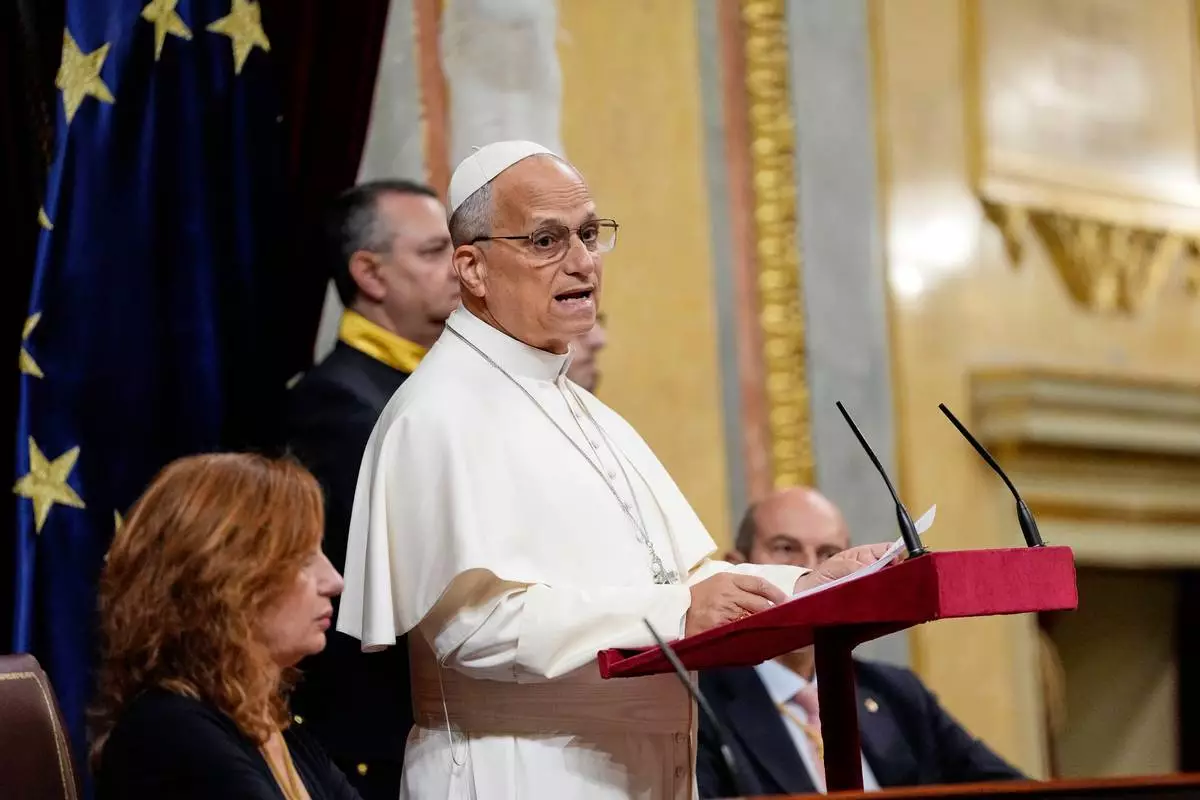
Pope Leo XIV delivers his speech as he meets with members of the Spanish Parliament at the Congress of Deputies, in Madrid, Monday, June 8, 2026. (AP Photo/Alessandra Tarantino)
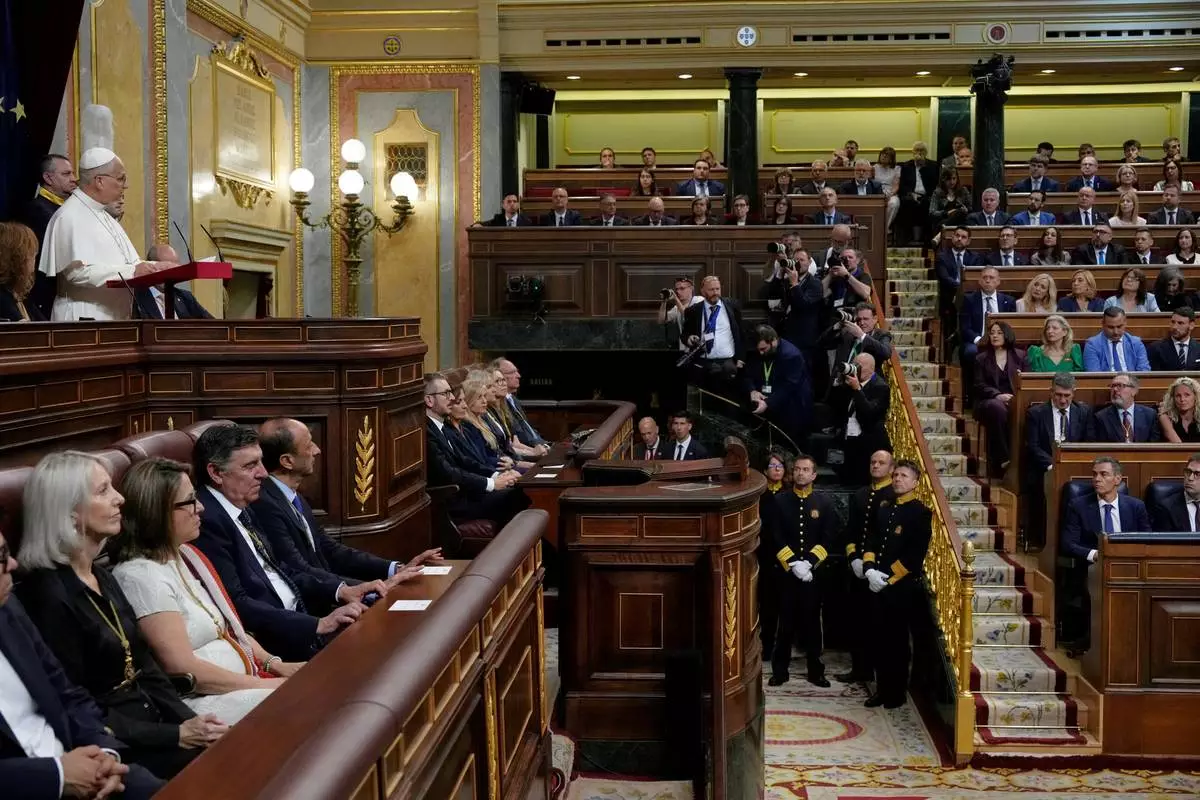
Pope Leo XIV delivers his speech as he meets with members of the Spanish Parliament at the Congress of Deputies, in Madrid, Monday, June 8, 2026. (AP Photo/Alessandra Tarantino)
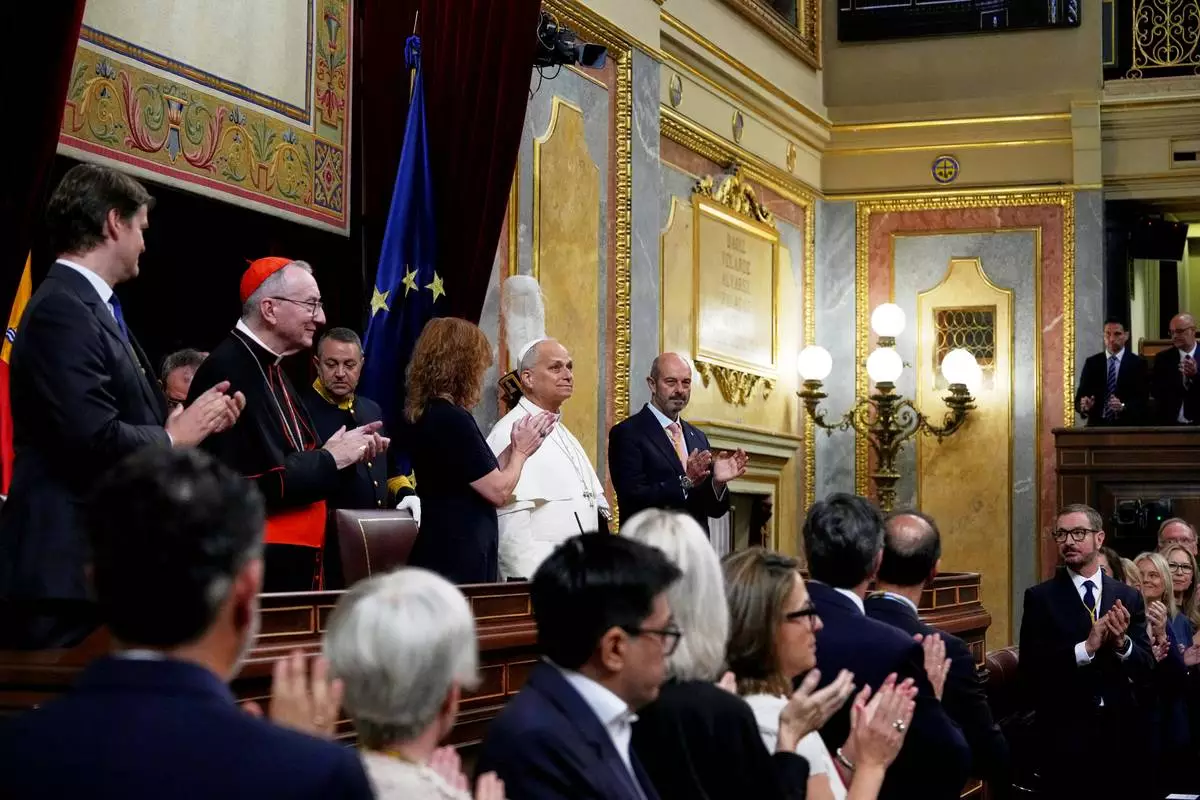
Pope Leo XIV meets with members of the Spanish Parliament at the Congress of Deputies, in Madrid, Monday, June 8, 2026. (AP Photo/Alessandra Tarantino)
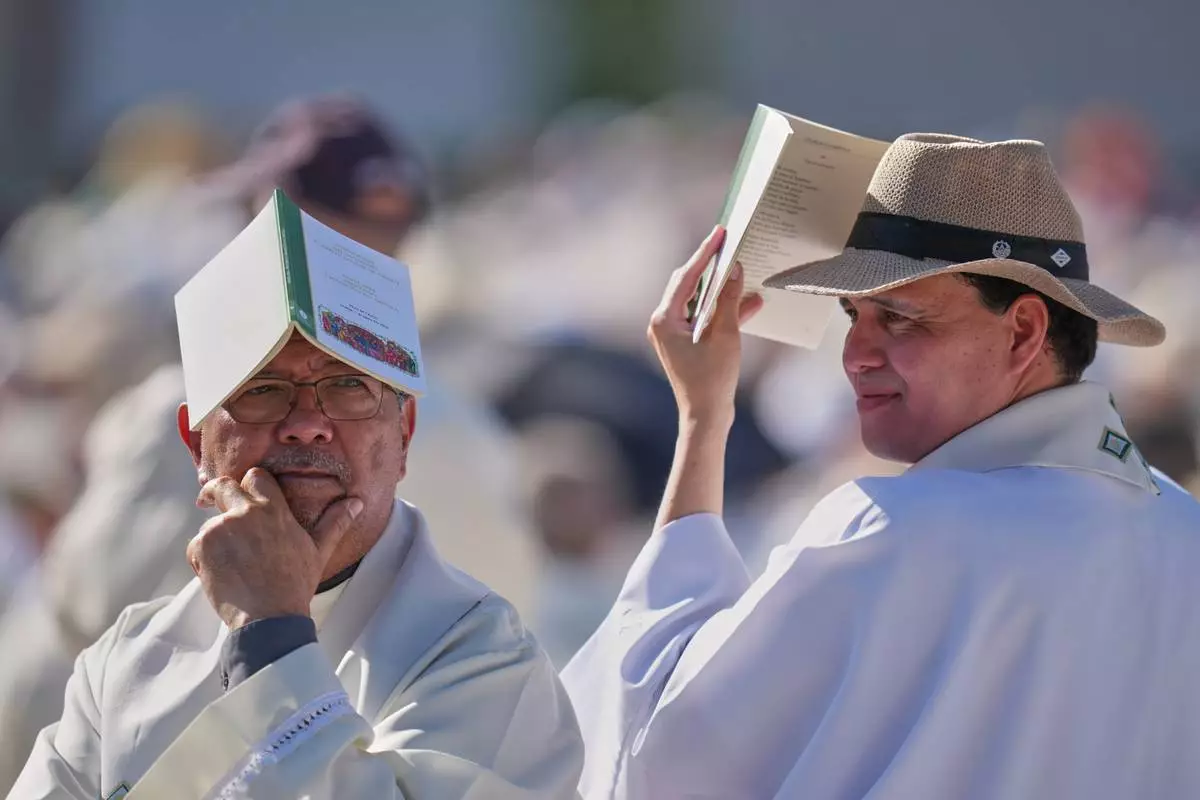
Priests wait for the arrival of Pope Leo XIV ahead of a Holy Mass and Corpus Christi procession at Plaza de Cibeles in Madrid, Spain, Sunday, June 7, 2026, on the second day of his seven-day apostolic visit to mainland Spain and the Canary Islands. (AP Photo/Manu Fernandez)
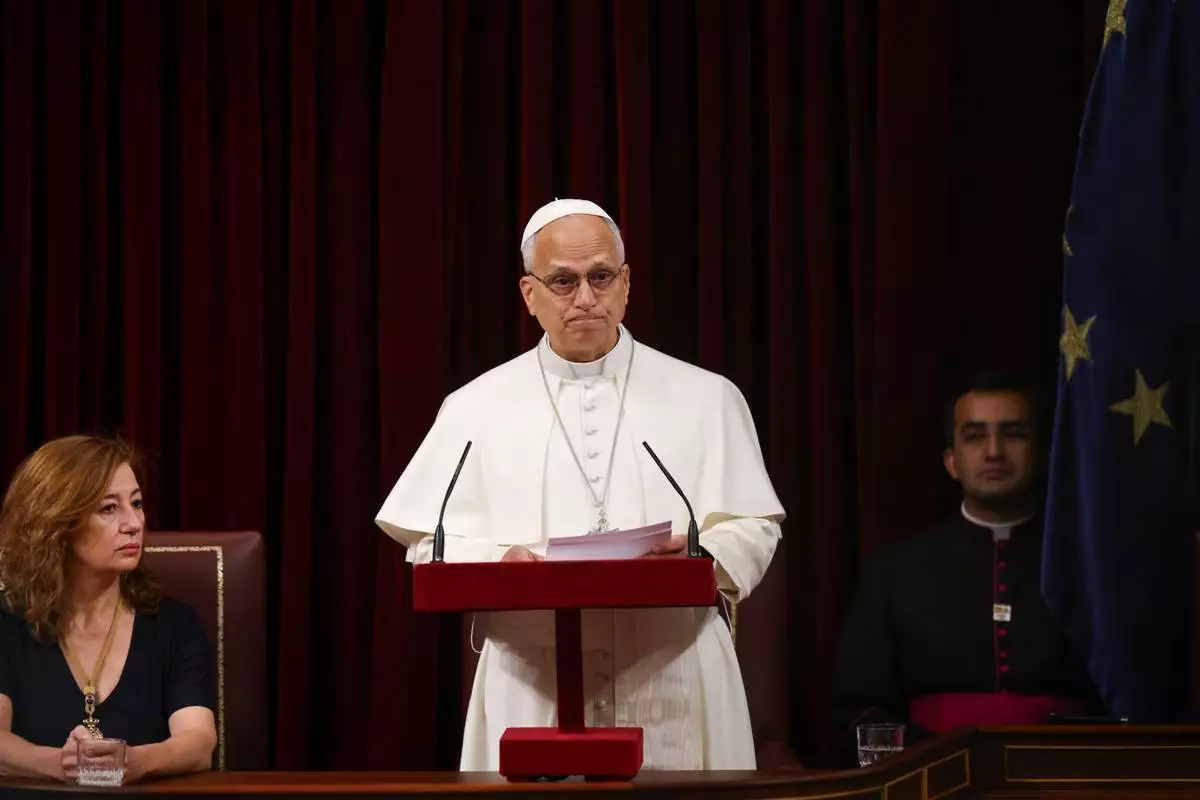
Francina Armengol, President of the Congress of Deputies of Spain, looks on as Pope Leo XIV speaks at the Spanish Parliament in Madrid, Monday, June 8, 2026. (Yara Nardi/Pool Photo via AP)
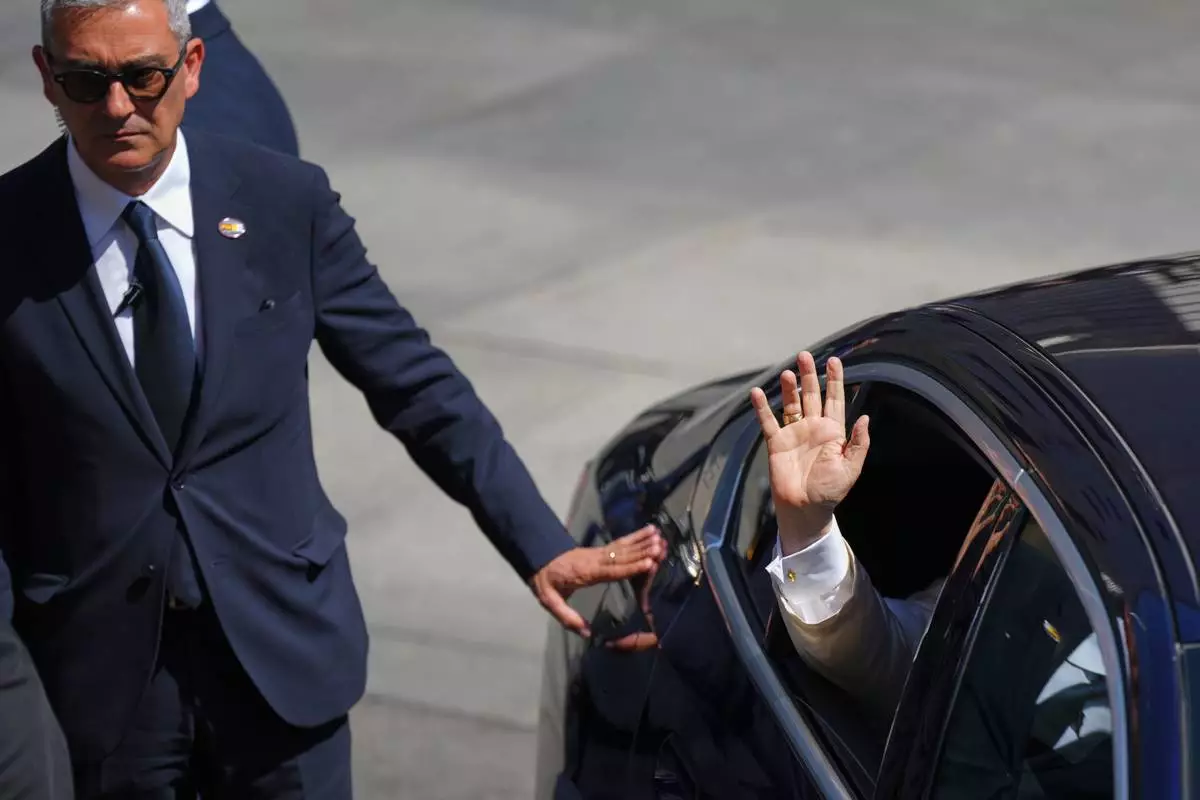
Pope Leo XIV waves as he exits the Spanish parliament in Madrid, Spain, Monday, June 8, 2026. (AP Photo/Manu Fernandez)
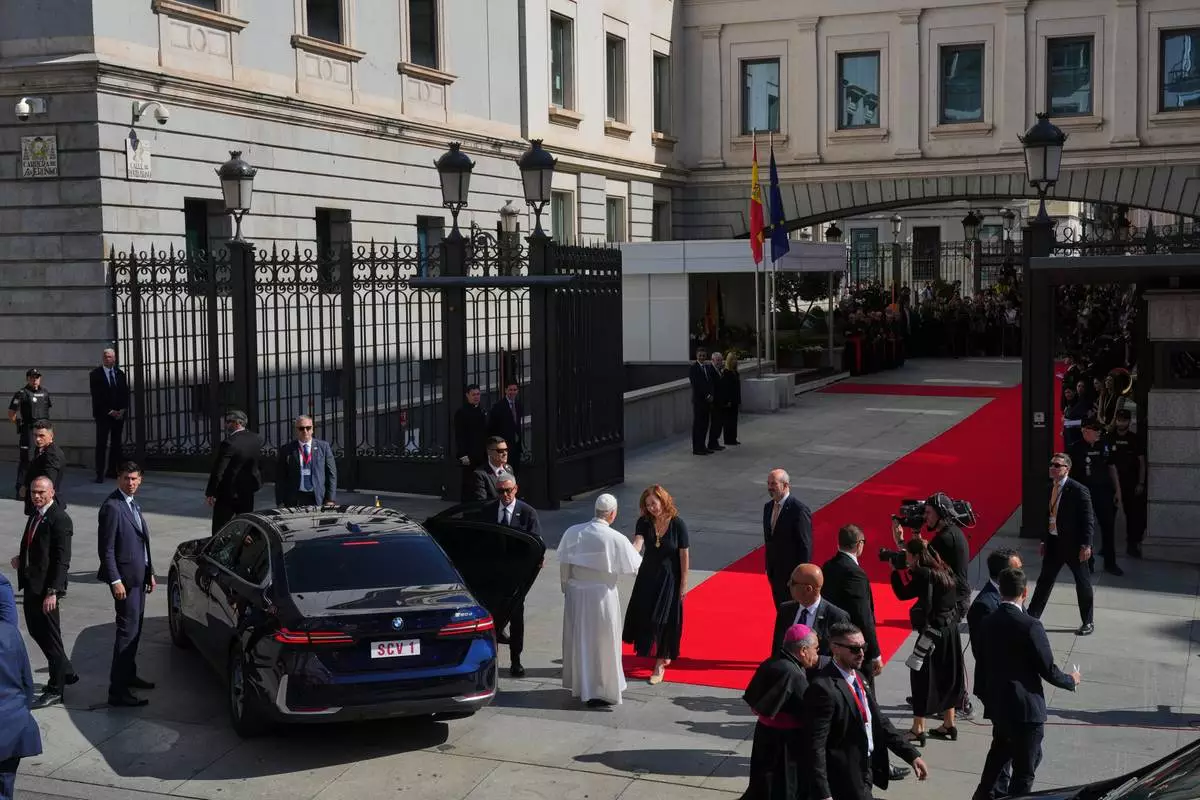
Pope Leo XIV is welcomed by the President of the Spanish Parliament Francina Armengol upon his arrival at the Spanish parliament in Madrid, Spain, Monday, June 8, 2026. (AP Photo/Manu Fernandez)
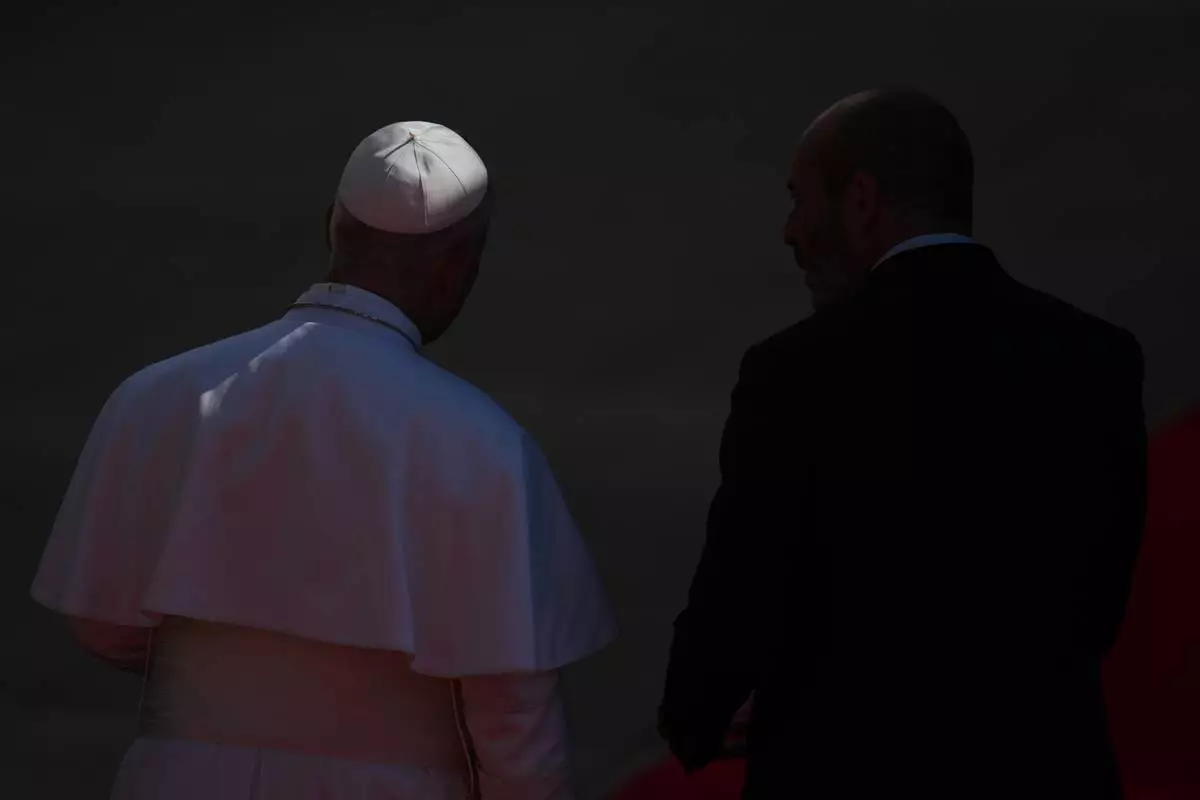
Pope Leo XIV, left, arrives at the Spanish parliament in Madrid, Spain, Monday, June 8, 2026. (AP Photo/Manu Fernandez)