
Skip to Content Facebook Feature Image

Jumpy market gives young investors first big test of resolve

News

Jumpy market gives young investors first big test of resolve
News

News

Jumpy market gives young investors first big test of resolve

2019-01-28 23:09 Last Updated At:23:20

After gliding through years where stocks mostly just rose, a generation of investors last year suddenly confronted a hard financial truth: Stocks are risky and can plunge at any moment.

For older investors, the nearly 20 percent drop in the S&P 500 index from late September through Christmas Eve was a reminder of the fear that gripped markets during the 2008 financial crisis, though not as bad. But for many investors in their 20s and early 30s, it was the first test of their mettle since they opened 401(k) and brokerage accounts.

So how did they do? The answer is crucial because these younger savers are on the hook to pay for more of their retirements than their parents or grandparents.
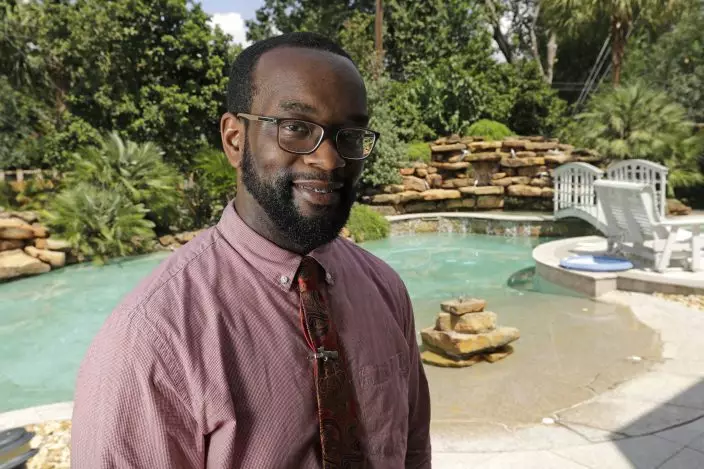
FILE- In this Aug. 17, 2018, file photo Marcus Harris poses at his home in Spring, Texas. Harris is a 35-year-old internal-medicine physician in the Houston area. Last summer, when stocks were setting record after record, Harris felt confident that he would be able to handle a severe downturn, even though he had yet to experience one in his five years of investing. When the market started skidding on worries about a slowing economy and President Donald Trump’s trade war with China, though, Harris acknowledges he felt some trepidation. (AP PhotoDavid J. Phillip, FIle)

FILE- In this Aug. 17, 2018, file photo Marcus Harris poses at his home in Spring, Texas. Harris is a 35-year-old internal-medicine physician in the Houston area. Last summer, when stocks were setting record after record, Harris felt confident that he would be able to handle a severe downturn, even though he had yet to experience one in his five years of investing. When the market started skidding on worries about a slowing economy and President Donald Trump’s trade war with China, though, Harris acknowledges he felt some trepidation. (AP PhotoDavid J. Phillip, FIle)

The fear was that many would panic at their first brush with a severe downturn, sell their stocks and lock in the losses. Investing is an area where many experts say a participation trophy is an unquestionably good thing. Given enough years, stocks have gone on to recover from every one of their past declines.

Early indications are that millennial investors generally avoided panic. And not only are they still participating, but many embraced the volatility and saw it as an opportunity to buy more stocks at lower prices, according to data from brokerages.

At Fidelity, for example, millennial investors put in twice as many buy as sell orders for stocks and stock funds during the last three months of 2018, when the S&P 500 plunged 14 percent for its worst quarterly performance in nearly seven years.

They were actually more aggressive about buying stocks than they were a year earlier, at the end of 2017, when the S&P 500 closed out one of its strongest and calmest years in decades.

Older generations of investors also embraced the tumult in recent months and picked up their buying activity for stocks, though they were not as aggressive as millennials. Baby Boomers had roughly 1.3 buy orders for every sell order during last year's fourth quarter, for example. The data cover Fidelity's 20.8 million retail brokerage accounts.

The decisions did not come stress-free. Consider Marcus Harris, a 35-year-old internal-medicine physician in the Houston area.

Last summer, when stocks were setting record after record , Harris felt confident that he would be able to handle a severe downturn, even though he had yet to experience one in his five years of investing.

When the market started skidding on worries about a slowing economy and President Donald Trump's trade war with China, though, Harris acknowledges he felt some trepidation.

He had set his phone to notify him when some of the stocks he owns hit certain prices, both on the high and the low end. At work, as the S&P 500 careened lower in December to its worst month in nearly a decade, he got used to hearing often from his phone.

"It was probably five times a day," he said. "Ding! This stock has hit your low. Ding! That stock hit your low."

"It was a little scary, looking at my retirement account saying, 'Man, that's a lot of salary gone,'" he recalled. Harris eventually turned off the notifications. But he also said that he knew he had many years to go before he needed to use the money.

He ended up putting more money into stocks late last year, hoping to buy low. "I got age on my side," Harris said. "This is a 30-year plan."

The reaction was similar for many clients of Charles Adi, financial adviser at Blueprint 360 in Houston.

Before the downturn, Adi had discussed many times with his clients market volatility and the importance of sticking with an investment plan. But he got more worried calls than he was expecting as markets tumbled.

"You think your clients are going to act one way because you have these conversations, and they reassure you they know the game plan, but you really don't know what's going to happen in the moment," he said. "More often than not, the conversation I had was: 'You told me there were going to be some fluctuations, but I didn't understand what you meant. Are we going to change the plan?'"

In the end, most held steady. Only four of his clients moved their investments out of stocks and into cash, and three of them were older.

For many of his younger clients, he suggested viewing the drops as an opportunity to double down on stocks they were familiar with and had already reaped gains from, such as Netflix, Amazon and marijuana stocks. Many agreed.

Millennial investors were close to flat in terms of being net buyers or sellers of stocks at TD Ameritrade. That's similar to how they behaved in 2015, when the S&P 500 lost more than 10 percent in one five-day stretch.

"Not freaked out at all," said JJ Kinahan, chief market strategist at TD Ameritrade. "My theory, given the limited sample size, is that because of their age, they're willing to take more risk and see it as a buying opportunity."

Of course, the customers at TD Ameritrade are a self-selected group of people: those who chose to invest. The majority of younger households don't own any stocks at all.

A shade more than 41 percent of all households led by someone under 35 own stocks in some way, according to the latest data from the Federal Reserve. For all other age groups, except those 75 or older, more than half of households own stocks. The figures include both people who actively trade stocks and others who have a target-date retirement mutual fund in a 401(k) that they never touch.

But the rate of stock ownership has been going up in recent years for younger households. The most recent tally, from 2016, showed the highest rate of ownership for young households since 2007, before the financial crisis hit its peak.

Recent weeks have brought some relief for investors, as the S&P 500 has climbed about 12 percent since hitting a bottom on Christmas Eve.

That includes Harris, the doctor whose phone was dinging so often in December. "A few days after Christmas," he said, "I turned the notifications back on."

PROVIDENCE, R.I. (AP) — The investigation into the Brown University mass shooting shifted Thursday when authorities said they were looking into a connection between the shooting and an attack two days later near Boston that killed a professor from Massachusetts Institute of Technology.

The attacker at Brown killed two students and wounded nine others on Saturday. Some 50 miles (80 kilometers) away MIT professor Nuno F.G. Loureiro was killed Monday night in his home in the Boston suburb of Brookline.

Here are some answers to questions about the attacks and investigations:

Authorities have not divulged much information yet. Three people familiar with the matter who were not authorized to discuss an ongoing investigation and spoke on condition of anonymity confirmed the shift in investigation. Two of the people said investigators had identified a person of interest in the shootings and were actively seeking that individual.

The FBI previously said it knew of no links between the cases.

It’s been nearly a week since the shooting at Brown. There have been other high-profile attacks in which it took days or longer to make an arrest, including in the brazen New York City sidewalk killing of UnitedHealthcare’s CEO last year, which took five days.

Frustration is mounting in Providence that the person behind the Brown attack managed to get away and that a clear image of their face has yet to emerge.

Authorities have released several security videos of a person they think might have carried out the Brown attack. They show the individual standing, walking and even running along the streets, but their face is masked or turned away in all of them.

The state attorney general said the wing of the engineering building where the attack happened has few “if any” cameras, and investigators believe the shooter entered and left through a door that faces a residential street bordering campus. The building is on the edge of campus, which might explain why the cameras Brown does have didn’t capture footage of the person.

Loureiro, 47, who was married, joined MIT in 2016 and was named last year to lead the school’s Plasma Science and Fusion Center, where he worked to advance clean energy technology and other research. The center, one of MIT’s largest labs, had more than 250 people working across seven buildings when he took the helm. He was a professor of physics and nuclear science and engineering.

Authorities have not speculated on why he was killed and no suspect is in custody.

We still don't know. Although police said this week that they believe Brown was purposefully targeted and that the videos suggest the masked person had been casing the building, no one has taken credit for the attack and investigators apparently still hadn't identified a suspect as of Thursday.

The investigation was taking place as Brown was sending out early decision notifications.

Police say they still don't know. The finals study session was for a “Principles of Economics” course that attracts hundreds of students each semester, but police are still tracking down how many may have been in the room.

The two students who were killed and the nine others injured were studying for a final in a first-floor classroom in an older section of the engineering building when the shooter walked in and opened fire.

Those killed were 19-year-old sophomore Ella Cook and 18-year-old freshman MukhammadAziz Umurzokov. Cook, whose funeral is Monday, was active in her Alabama church and served as vice president of the Brown College Republicans. Umurzokov’s family immigrated to the U.S. from Uzbekistan when he was a child, and he aspired to be a doctor.

As for the wounded, six were in stable condition Thursday, officials said. The other three were discharged.

Whittle reported from Portland, Maine. Contributing were Associated Press reporters Kimberlee Kruesi, Amanda Swinhart, Robert F. Bukaty, Matt O'Brien and Jennifer McDermott in Providence; Michael Casey in Boston; Heather Hollingsworth in Mission, Kansas; Kathy McCormack and Holly Ramer in Concord, New Hampshire; Christopher Weber in Los Angeles; and Alanna Durkin Richer, Mike Balsamo and Eric Tucker in Washington.

This combo image made with photos provided by the FBI and the Providence, Rhode Island, Police Department shows a person of interest in the shooting that occurred at Brown University in Providence, R.I., Saturday, Dec. 13, 2025. (FBI/Providence Police Department via AP)

This combo image made with photos provided by the FBI and the Providence, Rhode Island, Police Department shows a person of interest in the shooting that occurred at Brown University in Providence, R.I., Saturday, Dec. 13, 2025. (FBI/Providence Police Department via AP)

A memorial of flowers and signs lay outside the Barus and Holley engineering building at Brown University, on Hope Street in Providence, R.I., on Tuesday, Dec 16, 2025. (AP Photo/Matt OBrien)

A memorial of flowers and signs lay outside the Barus and Holley engineering building at Brown University, on Hope Street in Providence, R.I., on Tuesday, Dec 16, 2025. (AP Photo/Matt OBrien)

A Brown University student leaves campus, Tuesday, Dec. 16, 2025, after all classes, exams and papers were canceled for the rest of the Fall 2025 semester following the school shooting, in Providence, R.I. (AP Photo/Robert F. Bukaty)

A Brown University student leaves campus, Tuesday, Dec. 16, 2025, after all classes, exams and papers were canceled for the rest of the Fall 2025 semester following the school shooting, in Providence, R.I. (AP Photo/Robert F. Bukaty)

Recommended Articles