

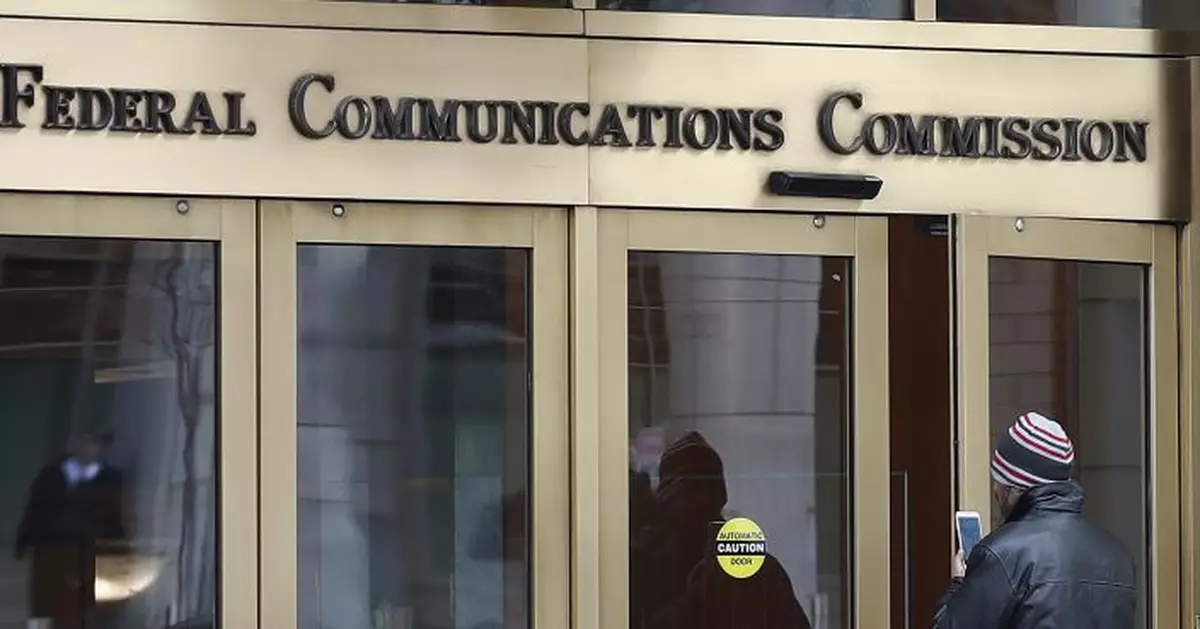
Tech companies and nearly two dozen U.S. states clashed with the government in federal court Friday over the repeal of net neutrality, a set of Obama-era rules aimed at preventing big internet providers from discriminating against certain technology and services.
Judges challenged arguments made by both sides in the faceoff in an appeals court in Washington.
Lawyers for the states and the companies tried to persuade the three-judge panel to restore the net neutrality regime, set in 2015 during the Obama administration and repealed in December 2017 at the direction of a regulator appointed by President Donald Trump. The companies challenging the FCC action include Mozilla, developer of the Firefox web browser, and Vimeo, a video-sharing site.
The net neutrality rules had banned cable, wireless and other broadband providers from blocking or slowing down websites and apps of their choosing, or charging Netflix and other video services extra to reach viewers faster.
The practice of slowing down transmission is known as "throttling."
The action by the Federal Communications Commission rolling back the neutrality rules "is a stab in the heart of the Communications Act," said attorney Pantelis Michalopoulos, referring to the Depression-era law that established the FCC.
The FCC wrongly classified the internet as an information service rather than a telecoms service, using that as a rationale for not cracking down on misconduct by big internet providers, Michalopoulos said, who represents Mozilla and the other companies in the case.
Government lawyers, as well as big internet providers such as AT&T, Verizon and Comcast, argued to keep net neutrality repealed.
Thomas Johnson, the FCC's general counsel, said the agency's "light-touch" regulatory scheme, requiring the internet providers to disclose their practices and operations, provides adequate safeguards. The internet — used more extensively to transmit information — is different both in nature and function from phone service, Johnson maintained. It therefore should be regulated as an information service and not subject to the utility-style oversight of phone companies, he said.
The politically charged issue has emerged from its origins as an engineering challenge to become an anti-monopoly rallying point and even a focus for "resistance" to the Trump administration.
Once Trump took office, net neutrality became one of his first targets as part of broader government deregulation. The FCC chairman he appointed, Ajit Pai, made rolling back net neutrality a top priority.
On the other side, support for net neutrality comes from many of the same people who also are critical of the data-vacuuming tech giants that benefit from it. Politicians have glommed on to the cause to appear consumer-friendly.
The Democratic takeover of the House in November's midterm elections could revive efforts to enshrine net neutrality in federal law, though Trump likely would veto any such attempts.
At the hearing in the U.S. Appeals Court for the District of Columbia, Judge Stephen Williams questioned Michalopoulos's assertions on the FCC wrongly classifying the internet as an information service. Telephone services, too, offer an array of customer products, he said. On the question of broadband providers charging premiums for faster service, Williams said a large majority of consumers prefer cheaper, lower-speed options, citing polls.
The judges are weighing whether the FCC had the authority to nix the 2015 rules and get out of the business of enforcing net neutrality. It appeared that Williams was sympathetic to the FCC's arguments, while Judge Patricia Millett raised possible legal avenues for the companies and states suing the agency, and Judge Robert Wilkins was the swing vote, said Doug Brake, director of broadband and spectrum policy for the Information Technology and Innovation Foundation, a Washington think tank.
The judges could decide to can the repeal or send it back to the FCC for a redo if they have specific objections.
"Today we fought for an open and free internet that puts consumers first, Mozilla Chief Operating Officer Denelle Dixon said after the hearing. "We believe the FCC needs to follow the rules like everyone else."