No one going to see "The Wedding Guest" should expect a typical rom-com. The always-likable Dev Patel does star in it as a hunky guy who travels to a wedding party but he's not been invited and he really ruins the wedding.
That's because he's brought along not a tasteful 10-piece bakeware set as a gift for the happy couple but duct tape, fake passports, some guns and zip ties. His hope is to put the bride in his trunk.
Michael Winterbottom, the director of "24 Hour Party People" and "A Mighty Heart," has channeled Quentin Tarantino for his latest, a sparse and often quiet love story set against some of the most crowded spots in Pakistan and India.
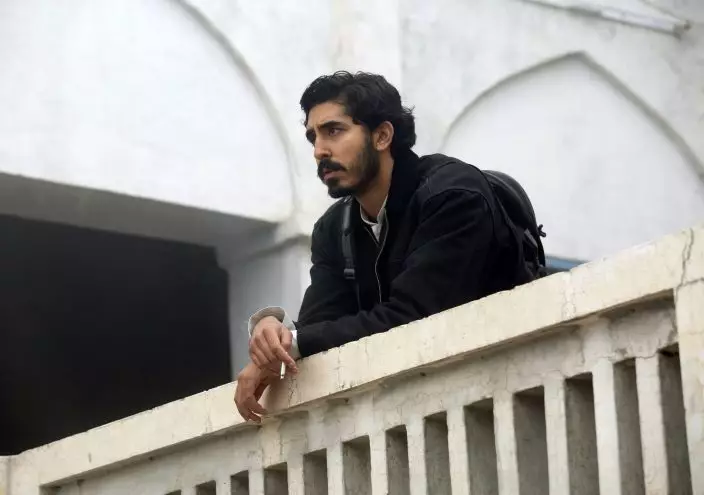
This image released by IFC Films shows Dev Patel in a scene from "The Wedding Guest." (Ganesh PatilIFC Films via AP)
The poster for the film is a little misleading, with Patel in full menacing mode beside an ominous looking fire (look close: Is that a body?). There is violence onscreen, but this is not "Reservoir Dogs." The trailer also pumps up the thriller aspect of the film but it's much slower than that.
"The Wedding Guest " has actually got a thin story, but one saved by great acting and electric footage, from the rooftops in Amritsar to the crowded streets of Jaipur, as our heroine and hero travel through India, which we are told is "the perfect place to get lost."
Patel ("Slumdog Millionaire" and "Lion") plays a mysterious guy named Jay who goes to Pakistan from the United Kingdom to kidnap bride-to-be Samira (a riveting Radhika Apte).
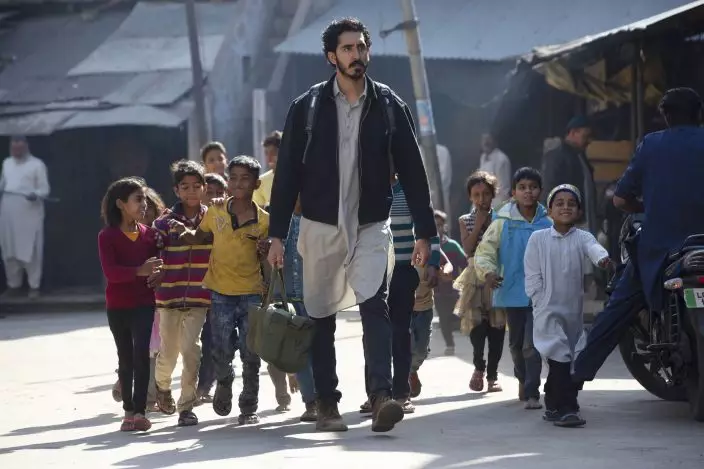
This image released by IFC Films shows Dev Patel in a scene from "The Wedding Guest." (Ganesh PatilIFC Films via AP)
But things don't go according to plan and the kidnapping plot quickly unravels, forcing Jay and Samira, now weirdly teammates, to scramble. Will they become something more than captive and mercenary? Will her family and the police catch up to them?
Winterbottom's script is maddeningly thin on backstory or any revealing dialogue. We never learn why Jay is so proficient with weapons and SIM cards or what he thinks about really anything. We never learn much about Samira, either, or plumb the depths of her unhappiness.
Winterbottom seems to want us to see them just as they are now, rushing from Mumbai to Delhi to Goa, taking cars, trains, mopeds and buses. Many scenes are silent or contain just a few words. ("We have to go," is barked multiple times.) It is a film that requires careful watching to try to unlock the body language and determine if there is a double-cross or a romance brewing.
Patel and Apte have a slow-burning chemistry. Their characters didn't exactly meet-cute — remember the zip ties and duct tape? — and rushing from hotel room to bus stations isn't exactly conducive to emotional connection. Above all, they are smooth, cool, resourceful and unruffled.
Winterbottom has proven very adept at road pictures — "The Trip," ''The Trip to Italy," ''The Trip to Spain" and "On the Road" — and you might be forgiven this time for believing he's less interested in Patel and Apte than in celebrating the colors, sounds and hustle of the streets of India. The soundtrack includes Desi tunes by DJ Vips, DJ Raj and DJ Harpz.
So "The Wedding Guest" might not completely work as a thriller or a satisfying rom-com, but for anyone missing India or planning to go, it's a film worth getting lost in.
"The Wedding Guest," an IFC Films release, is rated R for "language, some violence and brief nudity." Running time: 94 minutes. Two and a half stars out of four.
MPAA definition of R: Restricted. Under 17 requires accompanying parent or adult guardian.
Online: https://m.youtube.com/watch?v=BO0BDQEslwQ
Mark Kennedy is at http://twitter.com/KennedyTwits
ISLAMABAD (AP) — The United States and Iran began historic face-to-face negotiations Saturday in Pakistan, days after a fragile, two-week ceasefire was announced, as the war that has killed thousands of people and shaken global markets entered its seventh week.
The White House confirmed the direct nature of the talks, a rare instance of high-level engagement.
Iran's state-run news agency said three-party talks including Pakistan began after Iranian preconditions, including a reduction in Israeli strikes on southern Lebanon, were met, and after U.S. and Iranian officials met separately with Pakistani Prime Minister Shehbaz Sharif.
The U.S. delegation led by Vice President JD Vance and the Iranian one led by Parliament Speaker Mohammad Bagher Qalibaf were discussing how to advance the ceasefire already threatened by deep disagreements and Israel's continued attacks against the Iranian-backed Hezbollah in Lebanon.
Since the Islamic Revolution in Iran in 1979, the most direct U.S. contact had been in 2013 when President Barack Obama called newly elected President Hassan Rouhani to discuss Iran’s nuclear program. The most recent highest-level meetings were between Secretary of State John Kerry and counterpart Mohammad Javad Zarif during negotiations over the program.
Now talks are underway between Vance, a reluctant defender of the war who has little diplomatic experience and warned Iran not to “try and play us,” and Qalibaf, a former commander with Iran's powerful Revolutionary Guard who has issued some of Iran's most fiery statements since fighting began.
Iran doubled down on parts of its earlier proposal, with its delegation telling Iranian state television it had presented some of the plan’s ideas as “red lines” in meetings with Sharif. Those included compensation for damage caused by U.S.-Israeli strikes that launched the war on Feb. 28 and releasing Iran’s frozen assets.
The war has killed at least 3,000 people in Iran, 1,953 in Lebanon, 23 in Israel and more than a dozen in Gulf Arab states, and caused lasting damage to infrastructure in half a dozen Middle Eastern countries. Iran's chokehold on the vital Strait of Hormuz has largely cut off the Persian Gulf and its oil and gas exports from the global economy, sending energy prices soaring.
Reflecting the high stakes, officials from the region said Chinese, Egyptian, Saudi and Qatari officials were in Islamabad to indirectly facilitate the talks. The officials spoke on condition of anonymity to discuss the sensitive matter.
In Tehran, residents told The Associated Press they were skeptical yet hopeful about the talks after weeks of airstrikes left destruction across their country of some 93 million people. Some said the path to recovery would be long.
“Peace alone is not enough for our country, because we’ve been hit very hard, there have been huge costs,” 62-year-old Amir Razzai Far said.
Meanwhile, Israel pressed ahead with strikes in Lebanon after saying there is no ceasefire there. Iran and Pakistan have disagreed. The Lebanese state-run news agency reported at least three people killed.
Ahead of the talks, President Donald Trump accused Iran of using the Strait of Hormuz, a key artery for global energy supplies, for extortion, and told reporters Friday it would be opened “with or without them.”
Iran’s closure of the strait has proved its biggest strategic advantage in the war. Around a fifth of the world’s traded oil had typically passed through on over 100 ships a day. Only 12 have been recorded transiting since the ceasefire.
On Saturday, Trump said on social media that the U.S. had begun “clearing out” the strait, but it was unclear whether he was referring to the reported use of mines there or Iran’s broader ability to control the area.
Iranian Foreign Minister Abbas Araghchi had said Tehran was entering negotiations with “deep distrust” after strikes on Iran during previous rounds of talks. Araghchi, part of Iran’s delegation in Pakistan, said Saturday that his country was prepared to retaliate if attacked again.
Iran and the United States outlined competing proposals ahead of the talks.
Iran’s 10-point proposal called for a guaranteed end to the war and sought control over the Strait of Hormuz. It included ending fighting against Iran’s “regional allies," explicitly calling for a halt to Israeli strikes on Hezbollah.
The United States’ 15-point proposal includes restricting Iran’s nuclear program and reopening the strait.
Negotiations between Israel and Lebanon are expected to begin Tuesday in Washington, Lebanese President Joseph Aoun’s office said Friday, after Israel's surprise announcement authorizing talks despite the countries lack of official relations.
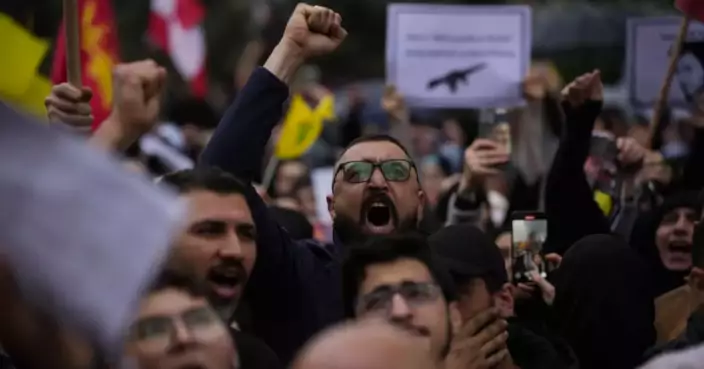
But thousands in Lebanon protested the planned negotiations, and Prime Minister Nawaf Salam said he had postponed a planned trip to Washington “in light of the current internal circumstances.” It was not immediately clear what that meant for the talks.
Israel wants the Lebanese government to assume responsibility for disarming Hezbollah, much like was envisaged in a November 2024 ceasefire. But it is unclear whether Lebanon's army can confiscate weapons from the militant group, which has survived efforts to curb its strength for decades.
Israel’s insistence that the ceasefire in Iran does not include a pause in its fighting with Hezbollah has threatened to sink the deal. The militant group joined the war in support of Iran in the opening days. Israel followed up with airstrikes and a ground invasion.
The day the Iran ceasefire deal was announced, Israel pounded Beirut with airstrikes, killing more than 300 people in the deadliest day in Lebanon since the war began, according to the country's Health Ministry.
The spot price of Brent crude, the international standard for oil prices, was above $94 on Saturday, up more than 30% since the war started.
And new pressures emerged in Europe for travelers.
The head of Airports Council International-Europe, Olivier Jankovec, warned the European Union that a ″systemic jet fuel shortage’’ could come within three weeks because of the blockage of the Strait of Hormuz.
Jankovec said in a letter obtained by the AP that the crunch could impact the summer travel season and ″significantly harm the European economy.’′
Metz reported from Jerusalem, Castillo from Beijing and Magdy from Cairo. Associated Press writer Josh Boak contributed.
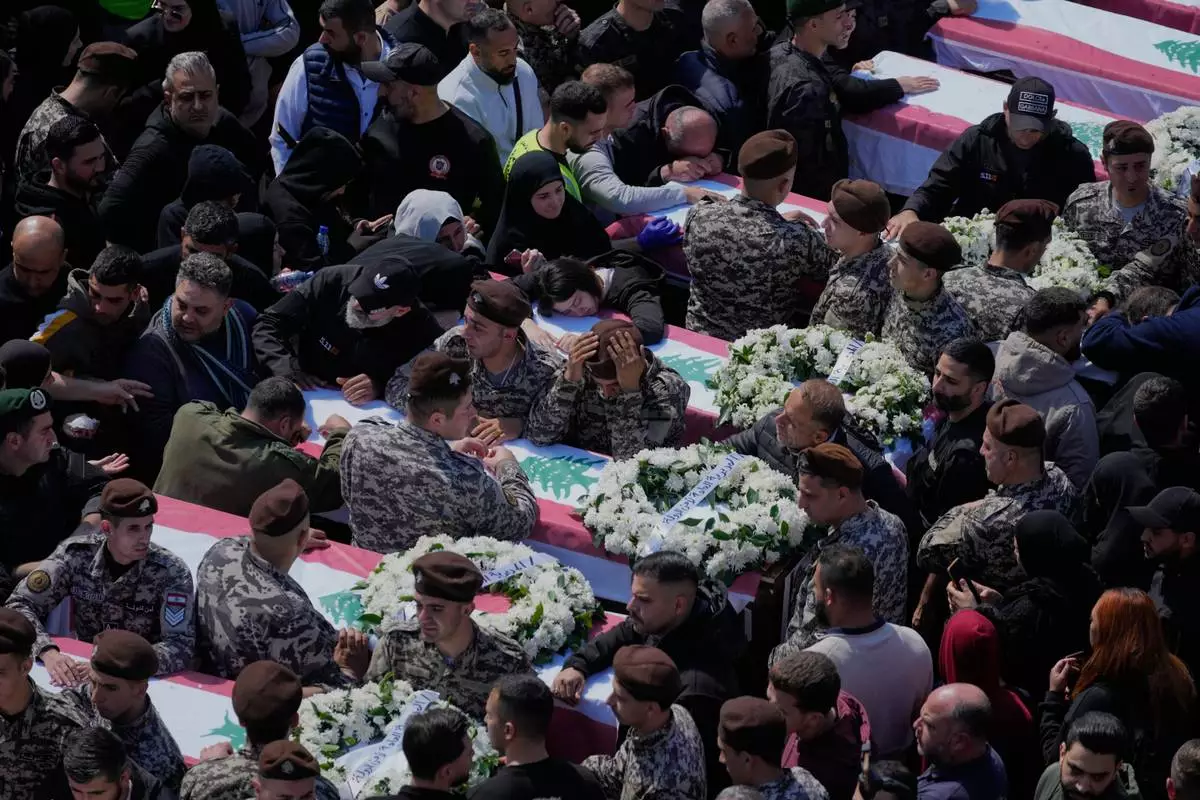
Colleagues mourn over the coffins during the funeral of 13 state security officers killed the previous day in an Israeli strike in the Lebanese coastal city of Sidon, Saturday, April 11, 2026. (AP Photo/Mohammed Zaatari)
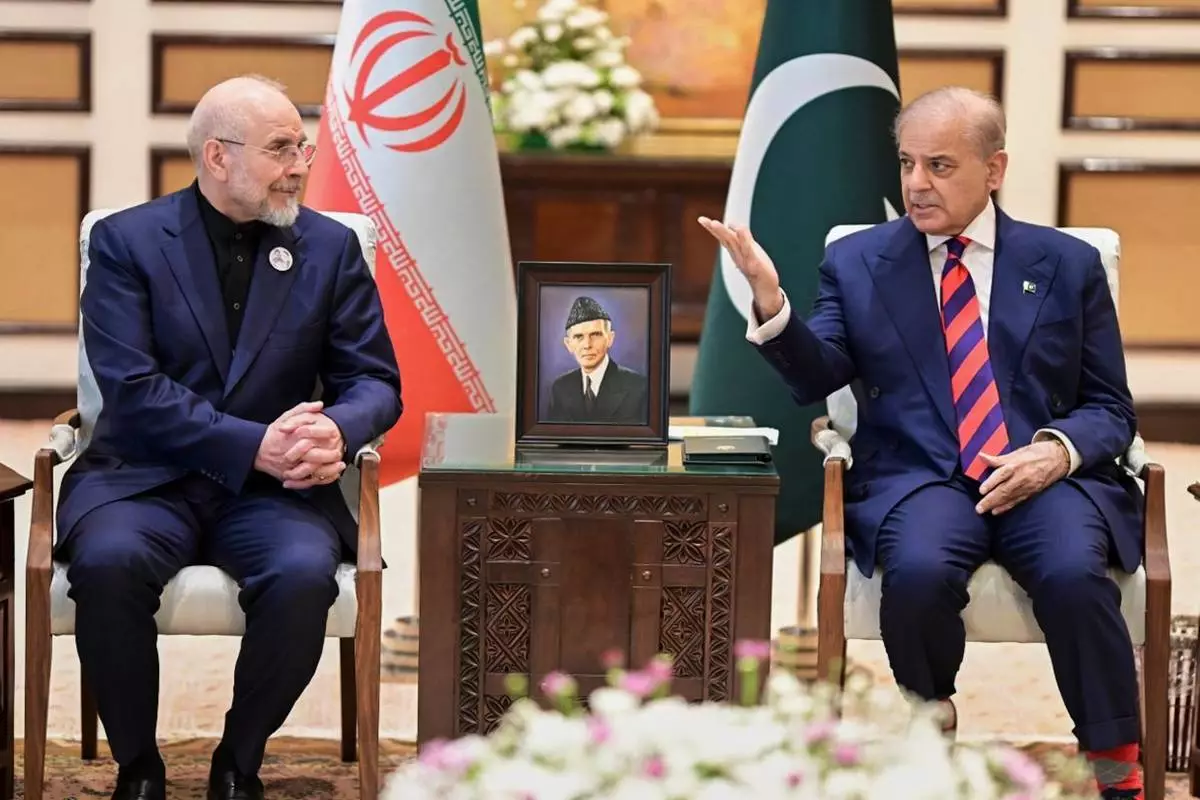
In this photo released by the Pakistan Prime Minister Office, Iran's Parliament Speaker Mohammad Bagher Ghalibaf, left, meets with hand with Pakistani Prime Minister Shehbaz Sharif, in Islamabad, Pakistan, Saturday, April 11, 2026 (Pakistan Prime Minister Office via AP)
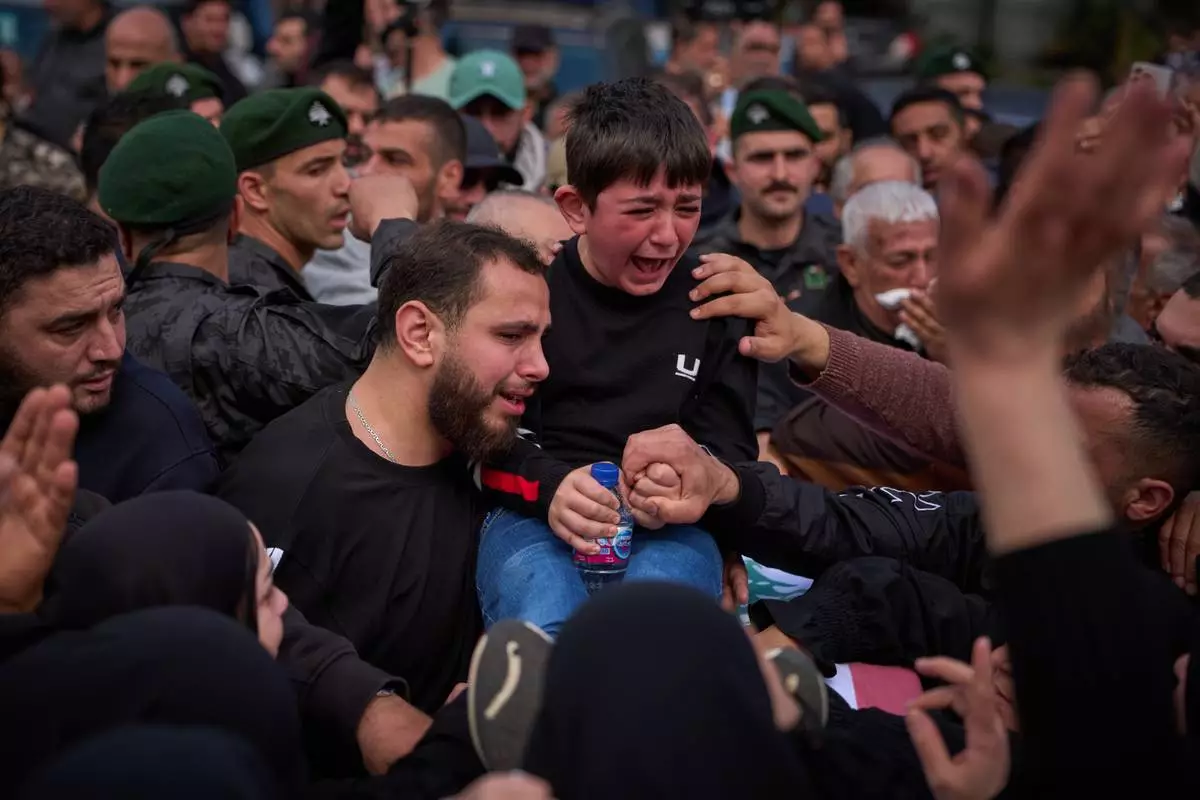
Mohammed, 8, weeps next to the coffin of his father, Hussein Makkah, during the funeral of 13 state security officers killed the previous day in an Israeli strike in Lebanon’s coastal city of Sidon, Lebanon, Saturday, April 11, 2026. (AP Photo/Emilio Morenatti)
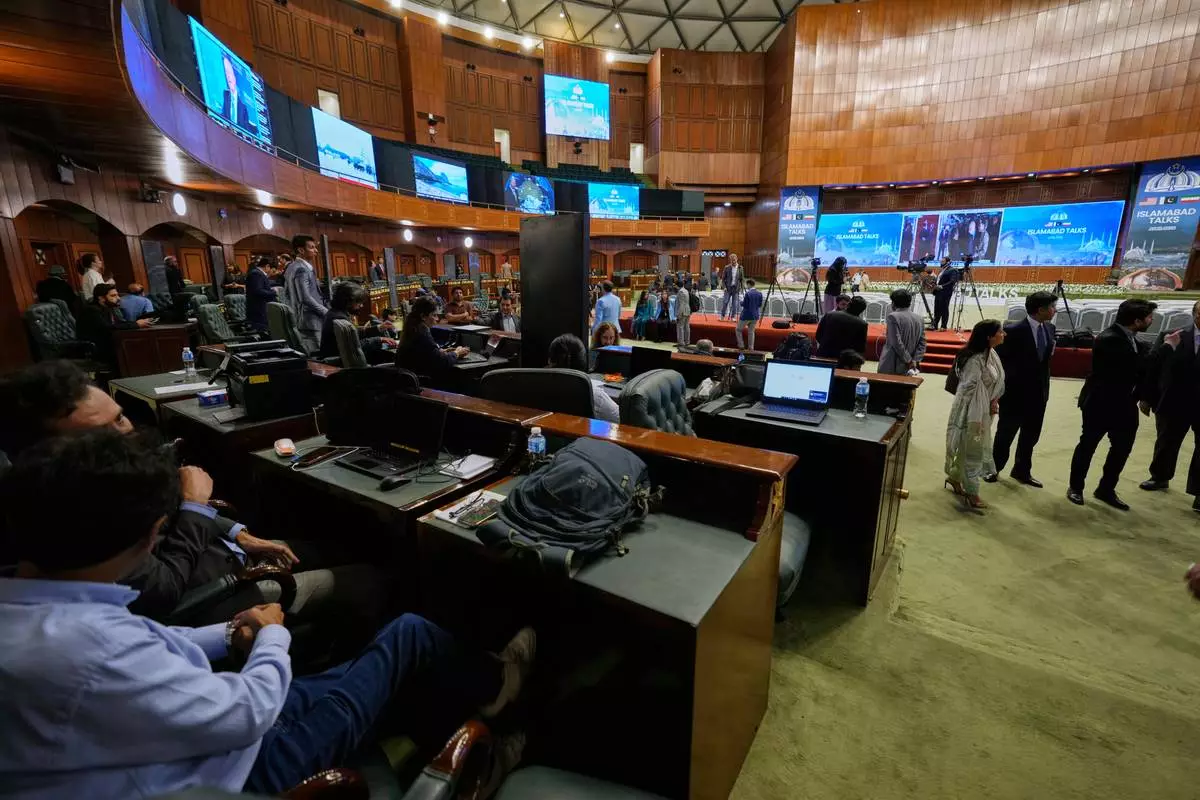
Members of the media work at a media center setup for the coverage of the US-Iran talks, in Islamabad, Pakistan, Saturday, April 11, 2026. (AP Photo/Anjum Naveed)
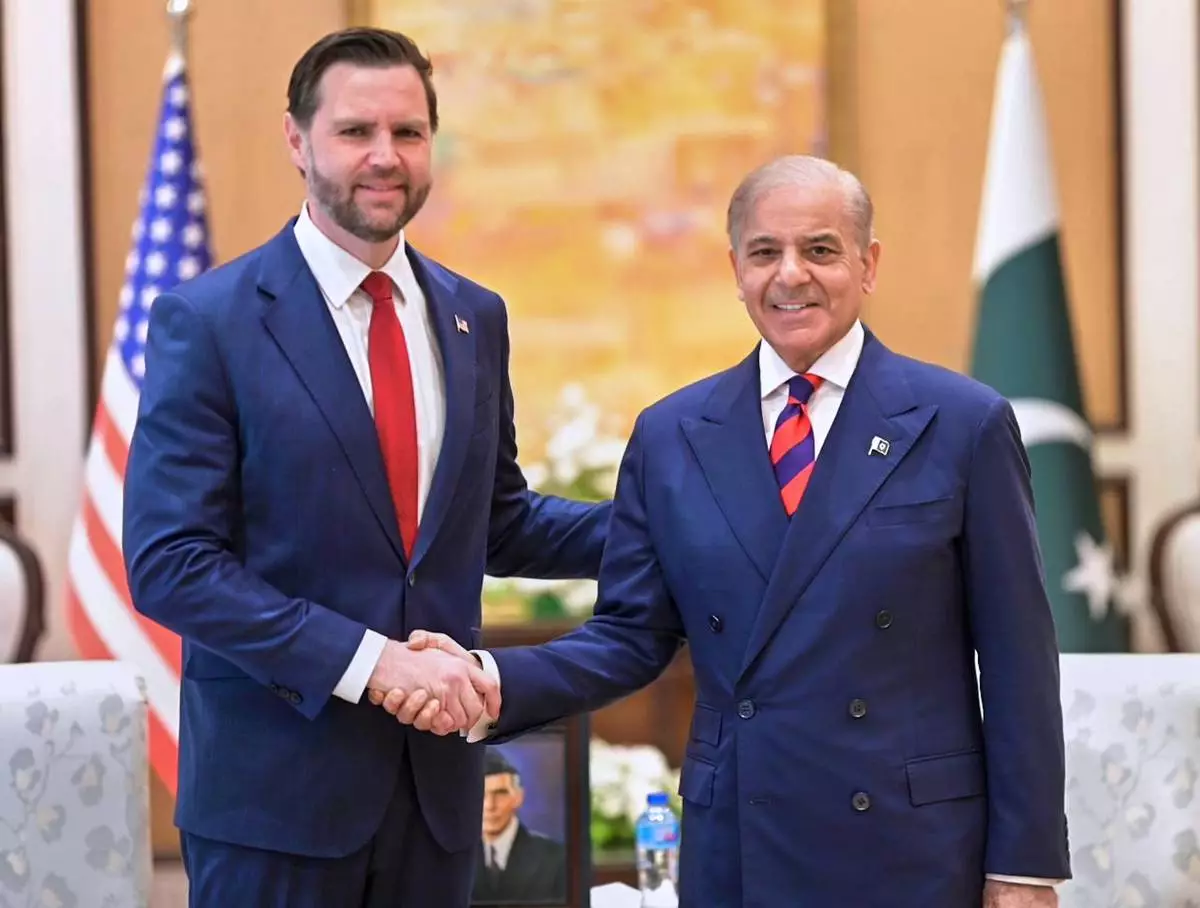
In this photo released by the Pakistan Prime Minister Office, U.S. Vice President JD Vance, left, shakes hand with Pakistani Prime Minister Shehbaz Sharif prior to their meeting, in Islamabad, Pakistan, Saturday, April 11, 2026 (Pakistan Prime Minister Office via AP)
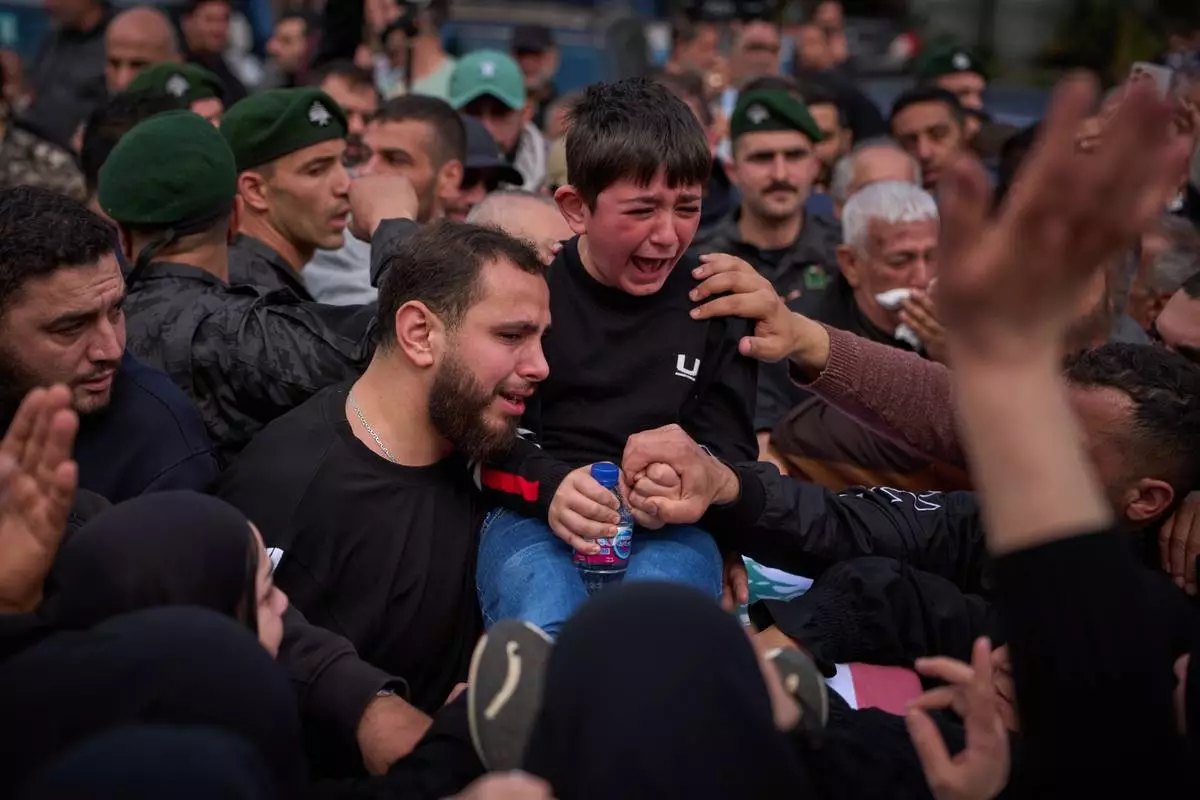
Mohammed, 8, weeps next to the coffin of his father, Hussein Makkah, during the funeral of 13 state security officers killed the previous day in an Israeli strike in Lebanon’s coastal city of Sidon, Lebanon, Saturday, April 11, 2026. (AP Photo/Emilio Morenatti)
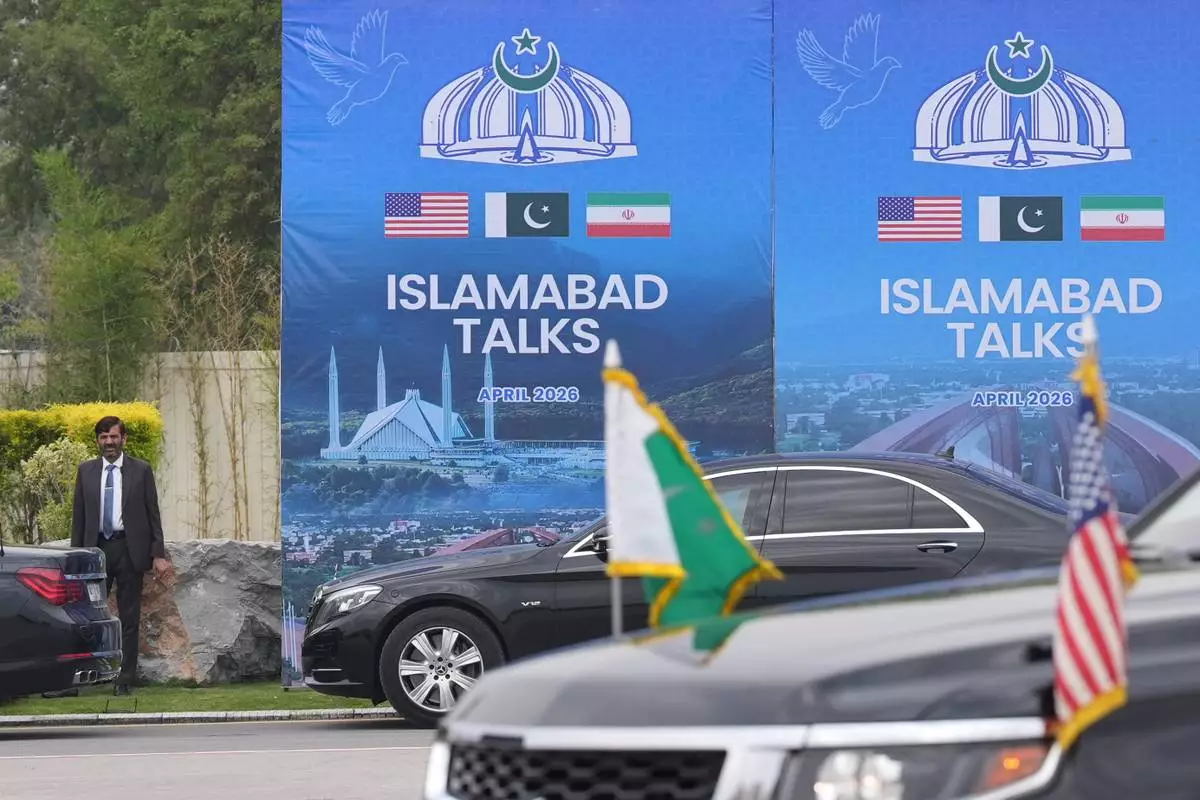
A Pakistani official is seen during the arrival of the U.S. Vice President JD Vance for talks with Iranian officials in Islamabad, Pakistan, Saturday, April 11, 2026. (AP Photo/Jacquelyn Martin, Pool)
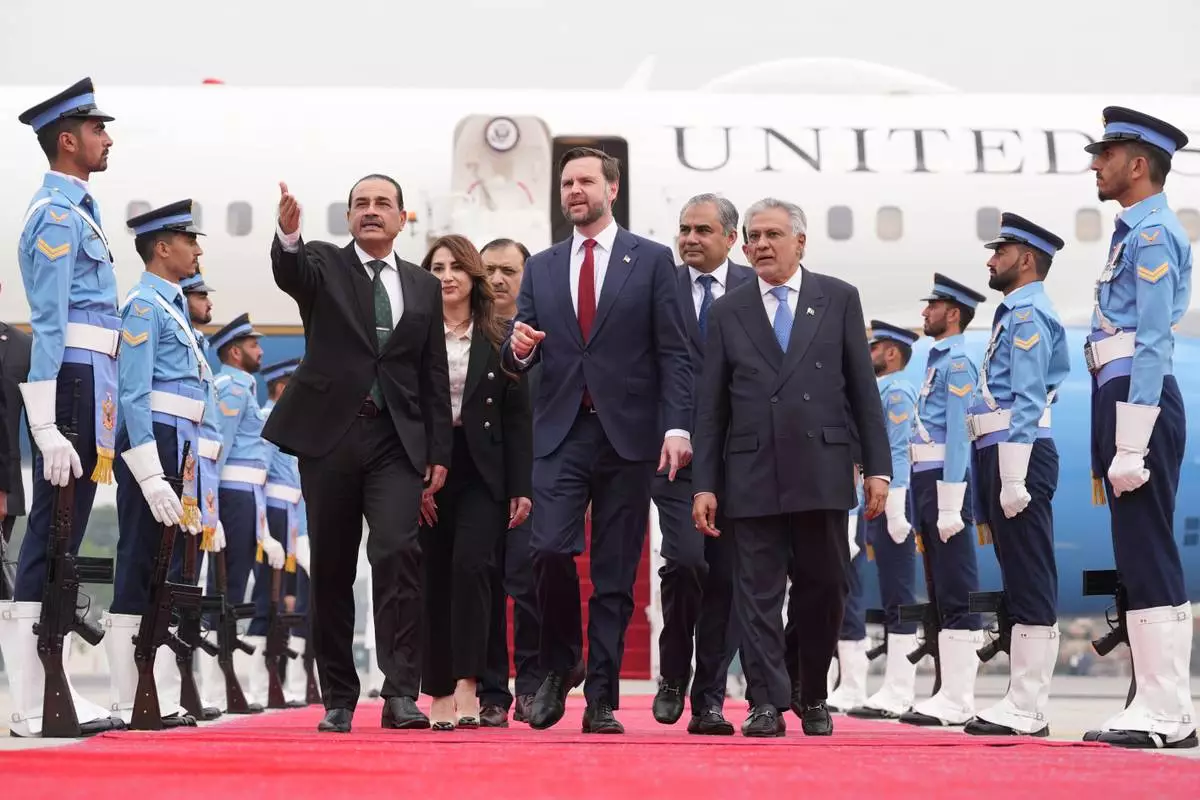
U.S. Vice President JD Vance, center, walks with Pakistan's Chief of Defence Forces and Chief of Army Staff Field Marshall Asim Munir, left, and Pakistani Deputy Prime Minister and Foreign Minister Mohammad Ishaq Dar after arriving for talks with Iranian officials in Islamabad, Pakistan, Saturday, April 11, 2026. (AP Photo/Jacquelyn Martin, Pool)
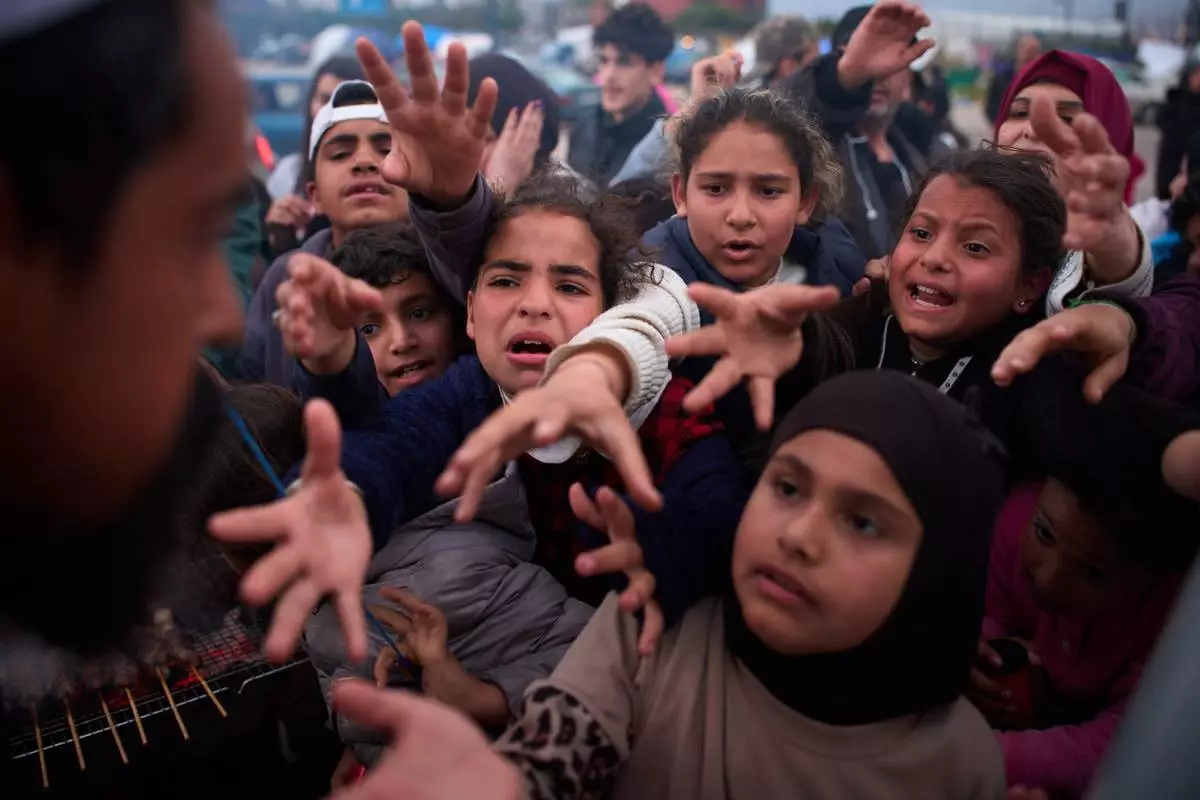
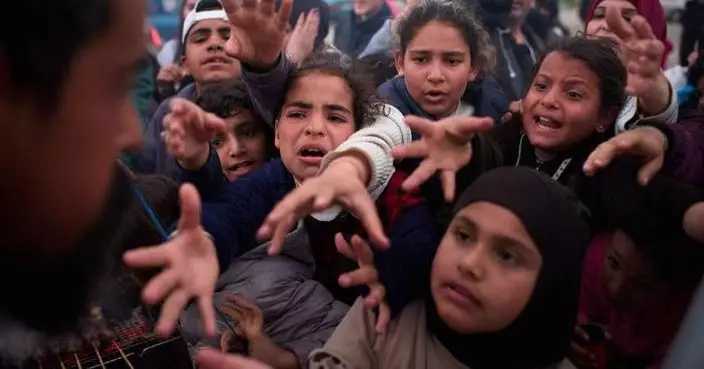
Displaced families extend their hands while waiting for donated food beside the tents they use as shelters after fleeing Israeli bombardment in southern Lebanon, in Beirut, Lebanon, Thursday, April 9, 2026. (AP Photo/Emilio Morenatti)
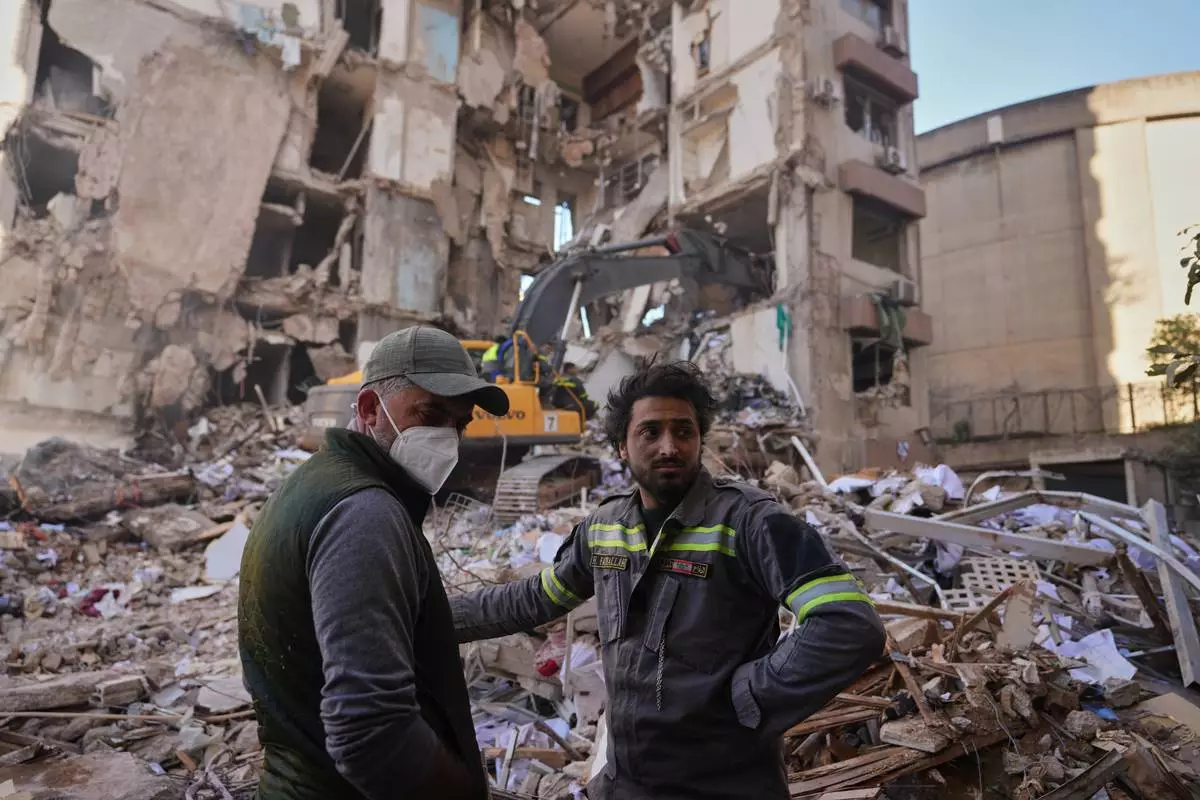
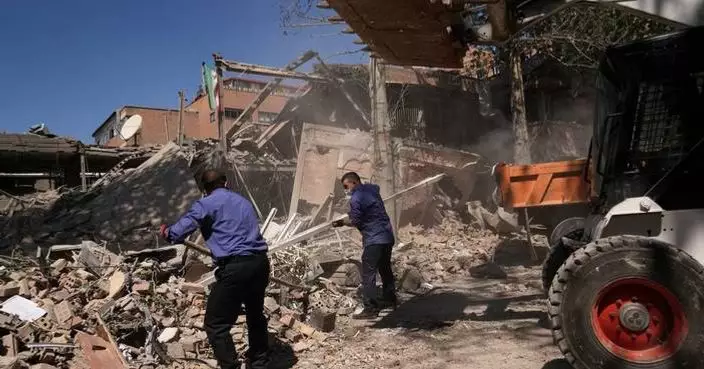
A Lebanese civil defense worker, right, stands with a resident at the site of a building destroyed in an Israeli airstrike a day earlier in central Beirut, Lebanon, Thursday, April 9, 2026. (AP Photo/Hassan Ammar)
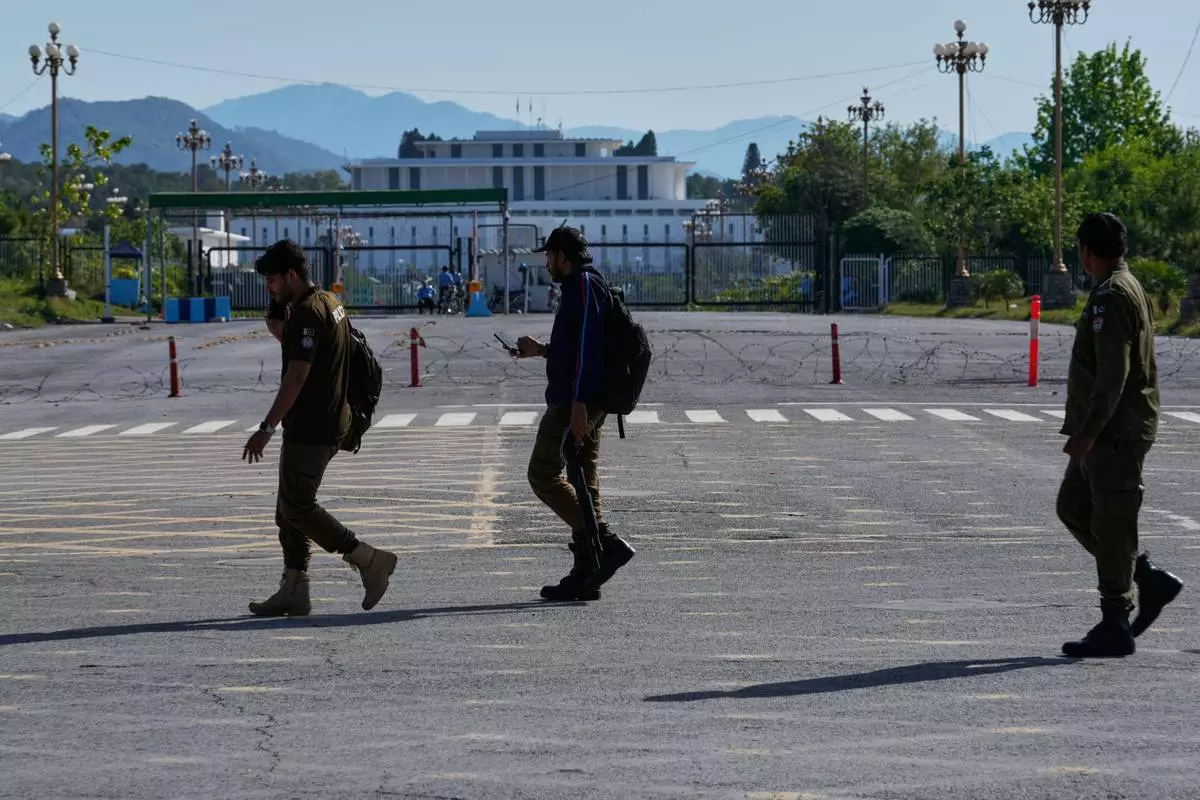
Police officers take position in Islamabad, Pakistan, to ensure security ahead of possible negotiations between Iran and the United States, Friday, April 10, 2026. (AP Photo/Anjum Naveed)
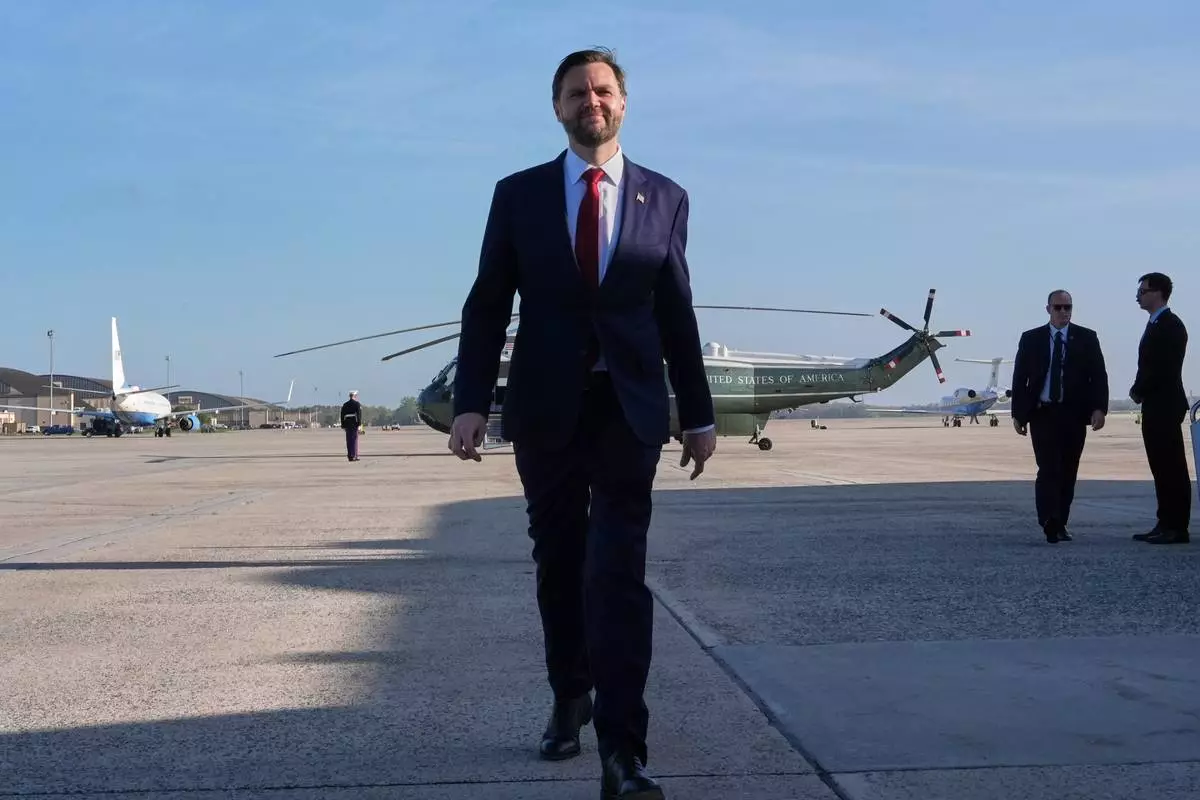
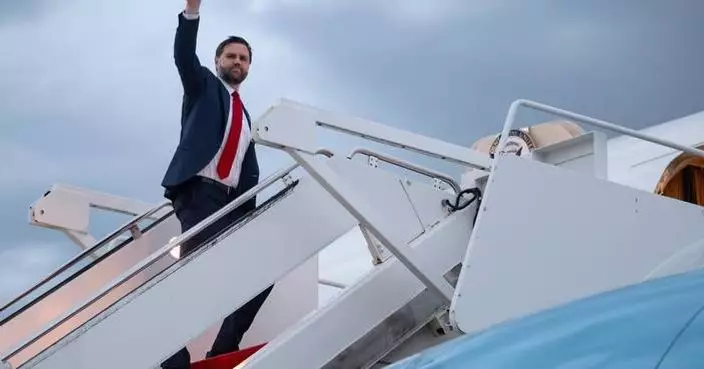
Vice President JD Vance walks to speak with the Press before boarding Air Force Two, Friday, April 10, 2026, at Joint Base Andrews, Md., for expected departure to Pakistan, for talks on Iran. (AP Photo/Jacquelyn Martin, pool)
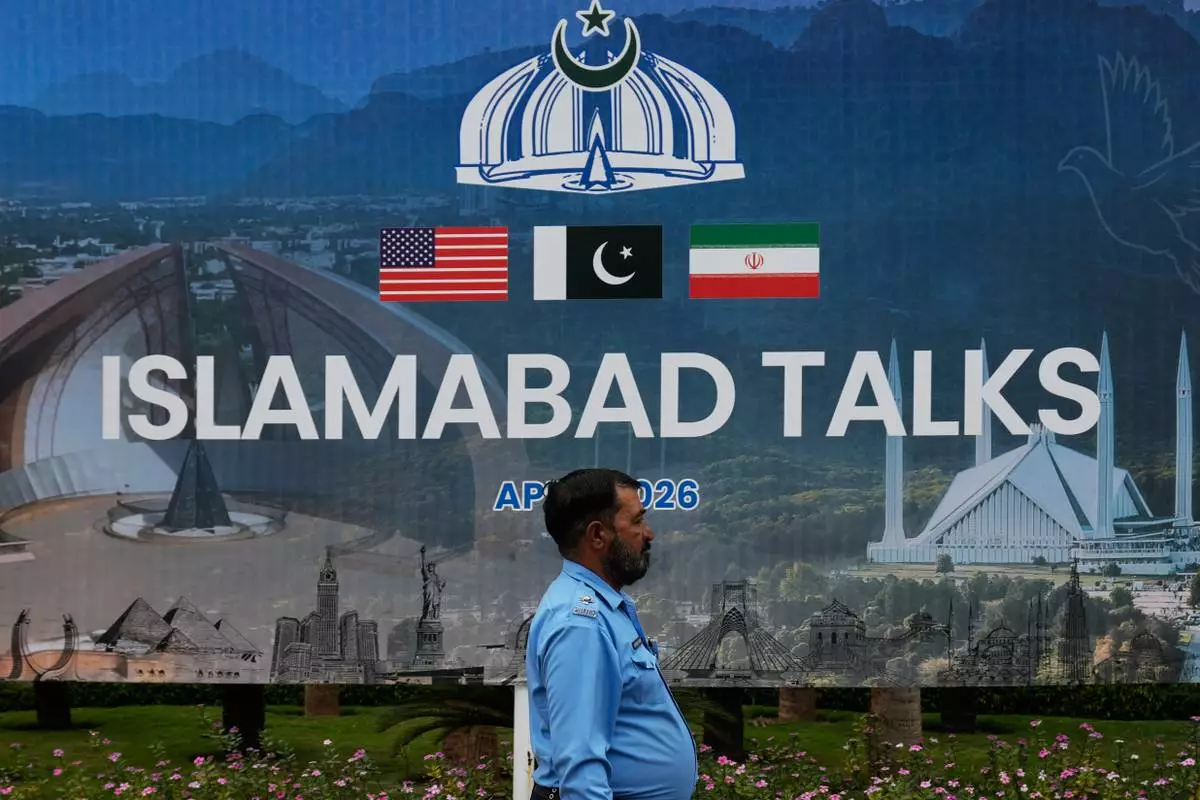
A police officer walks past a billboard regarding the United States and Iran negotiations, outside a media facilitation center in Islamabad, Pakistan, Saturday, April 11, 2026. (AP Photo/Anjum Naveed)