Skip to Content Facebook Feature Image

R. Kelly in jail over child support; TV interview to resume

ENT

R. Kelly in jail over child support; TV interview to resume
ENT

ENT

R. Kelly in jail over child support; TV interview to resume

2019-03-07 13:54 Last Updated At:14:00

R. Kelly's day began with a nationally televised broadcast in which he whispered, cried and ranted while pleading with viewers to believe him: He'd never had sex with anyone under 17 and never held anyone against her will.

The day ended with a trip to jail after the embattled R&B singer told a judge he could not pay $161,000 in back child support he owes his children's mother.

Kelly no doubt hoped the raw interview aired Wednesday on "CBS This Morning" would help sway public opinion about the charges filed last month that accuse him of sexually abusing three girls and a woman. The interview was his first public defense since being charged and the first time he addressed allegations in the Lifetime series "Surviving R. Kelly," which aired in January. The documentary alleged that he held women captive and ran a "sex cult."
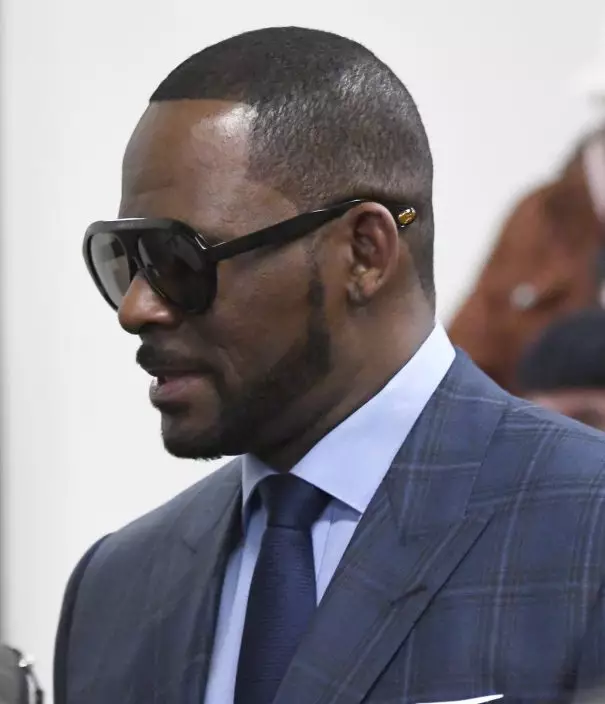
Musician R. Kelly arrives at the Daley Center for a hearing in his child support case at the Daley Center, Wednesday, March 6, 2019, in Chicago. Kelly was charged last month with sexually abusing four females dating back to 1998, including three underage girls. He's pleaded not guilty.  (AP PhotoMatt Marton) (AP PhotoMatt Marton)

Musician R. Kelly arrives at the Daley Center for a hearing in his child support case at the Daley Center, Wednesday, March 6, 2019, in Chicago. Kelly was charged last month with sexually abusing four females dating back to 1998, including three underage girls. He's pleaded not guilty. (AP PhotoMatt Marton) (AP PhotoMatt Marton)

But experts said his appearance was also risky and could backfire if it gives prosecutors more information to use against him at trial. That's why most defense attorneys urge clients to keep quiet.

"In my history as a prosecutor, I loved it when a defendant would say things or make comments about his or her defense," said Illinois Appellate Judge Joseph Birkett, who said he did not watch the Kelly interview and was speaking only as a former prosecutor. "I would document every word they said ... (and) I could give you example after example where their statements backfired."

There have been cases in which people who spoke up pointed to evidence that ultimately helped win their freedom, but, Birkett said, "historically it's a bad idea."

One recent example was "Empire" actor Jussie Smollett, who was charged with falsely reporting a racist, anti-gay attack in Chicago. In charging documents, prosecutors cited statements he made during an interview on ABC's "Good Morning America" identifying two people in a still photo of the surveillance video as his attackers. Two brothers pictured in the photo later told police that Smollett had paid them to stage the attack because he wanted a raise and to further his career.

In Kelly's case, he and his attorney might have decided they had nothing to lose after the Lifetime series, said Fred Thiagarajah, a prominent Newport Beach, California, attorney and former prosecutor.

"A lot of the public already thinks he's guilty, and there is a very negative image of him, so the only thing he might think he can do is try to change their minds," Thiagarajah said. If the evidence against him is overwhelming, "this kind of interview might be kind of a Hail Mary" to influence a potential jury pool.

But the dangers of such an interview might outweigh any benefits if Kelly locked himself into a particular defense, Thiagarajah said. "He may not know all the evidence against him."

In the CBS interview, for example, he denied ever having sex with anyone under 17, even though he married the late singer Aaliyah when she was 15, and a videotape given to prosecutors in his current case purports to show Kelly having sex with a girl who repeatedly says she's 14. Kelly's attorney, Steve Greenberg, has said his client did not "knowingly" have sex with underage girls.

Thiagarajah said he might allow a client to do such an interview — but only if he were confident the client could keep his emotions in check and "stick to a script."

"If you get someone who is ranting and raving, I would never let that kind of person ever do an interview," he said.

On Wednesday's broadcast, Kelly's emotions swung wildly as he explained he was simply someone with a "big heart" who was betrayed by liars who hoped to cash in.

In a particularly dramatic moment, he angrily stood up and started pacing, his voice breaking as he yelled, "I didn't do this stuff! This is not me!" He cried as he hit his hands together, saying, "I'm fighting for my (expletive) life."

He insisted people were trying to ruin his 30-year career, but then said his fight was "not about music."

"I'm trying to have a relationship with my kids and I can't do it" because of the sex-abuse allegations, he shouted. "You all just don't want to believe it."

Hours later, Kelly went to the child-support hearing "expecting to leave. He didn't come here to go to jail," said his publicist, Darryll Johnson, who said Kelly was prepared to pay $50,000 to $60,000. He said Kelly did not have the whole amount because he has not been able to work.

A spokeswoman for the Cook County Sheriff's Office said Kelly would not be released from jail until he pays the full child-support debt. His next hearing was scheduled for March 13.

After his Feb. 22 arrest in Chicago, Kelly spent a weekend in jail before someone posted his $100,000 bail. His defense attorney said at the time that Kelly's finances were "a mess."

Following the court hearing, the publicist said that the singer "feels good" about the TV interview.

CBS said it interviewed Kelly for 80 minutes. More of the interview is expected to air Thursday.

Interviews with two women who live with Kelly — Joycelyn Savage and Azriel Clary — also are set to air Thursday. Savage's parents insist she is being held against her will. Kelly suggested during the interview that her parents were in it for the money and blamed them for his relationship with their daughter, saying they brought her to watch him perform when she was a teenager.

A lawyer representing the couple bristled at the allegation, saying Timothy and Jonjelyn Savage never asked for or received money from Kelly. The couple said they have not spoken to their 23-year-old daughter for two years and asked Kelly to make her available to talk to them.

"At no point did this family sell their daughter to anyone or provide their daughter for anything for money," attorney Gerald Griggs said Wednesday during a news conference.

Kelly acknowledged in the interview that he had done "lots of things wrong" when it comes to women, but he said he had apologized. The singer blamed social media for fueling the allegations against him. He also said that all of his accusers are lying.

The 52-year-old recording artist has been trailed for decades by allegations that he violated underage girls and women and held some as virtual slaves. Kelly has consistently denied any sexual misconduct and was acquitted of child pornography charges in 2008. Those charges centered on a graphic video that prosecutors said showed him having sex with a girl as young as 13.

He has pleaded not guilty to 10 counts of aggravated sexual abuse.

Rising from poverty on Chicago's South Side, Kelly broke into the R&B scene in 1993 with his first solo album, "12 Play," which produced such popular sex-themed songs as "Your Body's Callin'" and "Bump N' Grind." He has written numerous hits for himself and other artists, including Celine Dion, Michael Jackson and Lady Gaga. One of his best-known hits is "I Believe I Can Fly."

Associated Press writer Kate Brumback in Atlanta contributed to this story.

Check out the AP's complete coverage of the investigations into R. Kelly.
GENEVA (AP) — Iran and the United States prepared to meet Thursday in Geneva for nuclear negotiations, talks viewed as a last chance for diplomacy as America has gathered a fleet of aircraft and warships to the Middle East to pressure Tehran into a deal.

U.S. President Donald Trump wants a deal to constrain Iran’s nuclear program, and he sees an opportunity while the country is struggling at home with growing dissent following nationwide protests last month. Iran meanwhile has maintained it wants to continue to enrich uranium even as its program sits in ruins following Trump ordering an attack in June on three of the Islamic Republic's nuclear sites.

If an American attack happens, Iran has said all U.S. military bases in the Mideast would be considered legitimate targets, putting at risk tens of thousands of American service members. Iran has also threatened to attack Israel following a bruising 12-day war last year, meaning a regional war again could erupt across the Middle East.

“There would be no victory for anybody — it would be a devastating war,” Iranian Foreign Minister Abbas Araghchi told India Today in an interview filmed Wednesday just before he flew to Geneva.

“Since the Americans' bases are scattered through different places in the region, then unfortunately perhaps the whole region would be engaged and be involved, so it is a very terrible scenario.”

Araghchi again will sit across from Steve Witkoff, a billionaire real estate developer and friend of Trump who serves as a special Mideast envoy for the president. The two men held multiple rounds of talks last year that collapsed after Israel launched its war against Iran in June. These latest talks are again being mediated by Oman, a sultanate on the eastern edge of the Arabian Peninsula that's long served as an interlocutor between Iran and the West.

Araghchi met Oman's Foreign Minister Badr al-Busaidi after arriving in Geneva on Wednesday night. The men “reviewed the views and proposals that the Iranian side will present to reach an agreement on the Iranian nuclear program, based on the guiding principles agreed upon in the previous round of negotiations,” a report from the state-run Oman News Agency said. Al-Busaidi will pass on Iran's offer to American officials on Thursday, it added.

In this round of negotiations after the June war, Trump has pushed to halt Iran's enrichment of uranium entirely, as well as address Tehran's ballistic missile program and its support of regional militant forces. Iran has maintained the talks must remain focused only on nuclear issues.

U.S. Secretary of State Marco Rubio told reporters Wednesday that Iran is “always trying to rebuild elements” of its nuclear program. He said that Tehran is not enriching uranium right now, “but they’re trying to get to the point where they ultimately can.”

Iran has said it hasn't enriched since June, but it has blocked inspectors from the International Atomic Energy Agency from visiting the sites America bombed. Satellite photos analyzed by The Associated Press also has shown activity at two of those sites, suggesting Iran is trying to assess and potentially recover material there.

The West and the IAEA say Iran had a nuclear weapons program until 2003. Before the June attack, it had been enriching uranium up to 60% purity — a short, technical step away from weapons-grade levels of 90%.

U.S. intelligence agencies assess that Iran has yet to restart a weapons program, but has “undertaken activities that better position it to produce a nuclear device, if it chooses to do so.” While insisting its program is peaceful, Iranian officials have threatened to pursue the bomb in recent years.

“The principle’s very simple: Iran cannot have a nuclear weapon,” U.S. Vice President JD Vance told reporters at the White House on Wednesday.

Vance said Trump is “sending those negotiators to try to address that problem” and “wants to address that problem diplomatically.”

“But, of course, the president has other options as well,” Vance added.

If the talks fail, uncertainty hangs over the timing of any possible attack.

If the aim of potential military action is to pressure Iran to make concessions in nuclear negotiations, it’s not clear whether limited strikes would work. If the goal is to remove Iran’s leaders, that will likely commit the U.S. to a larger, longer military campaign. There has been no public sign of planning for what would come next, including the potential for chaos in Iran.

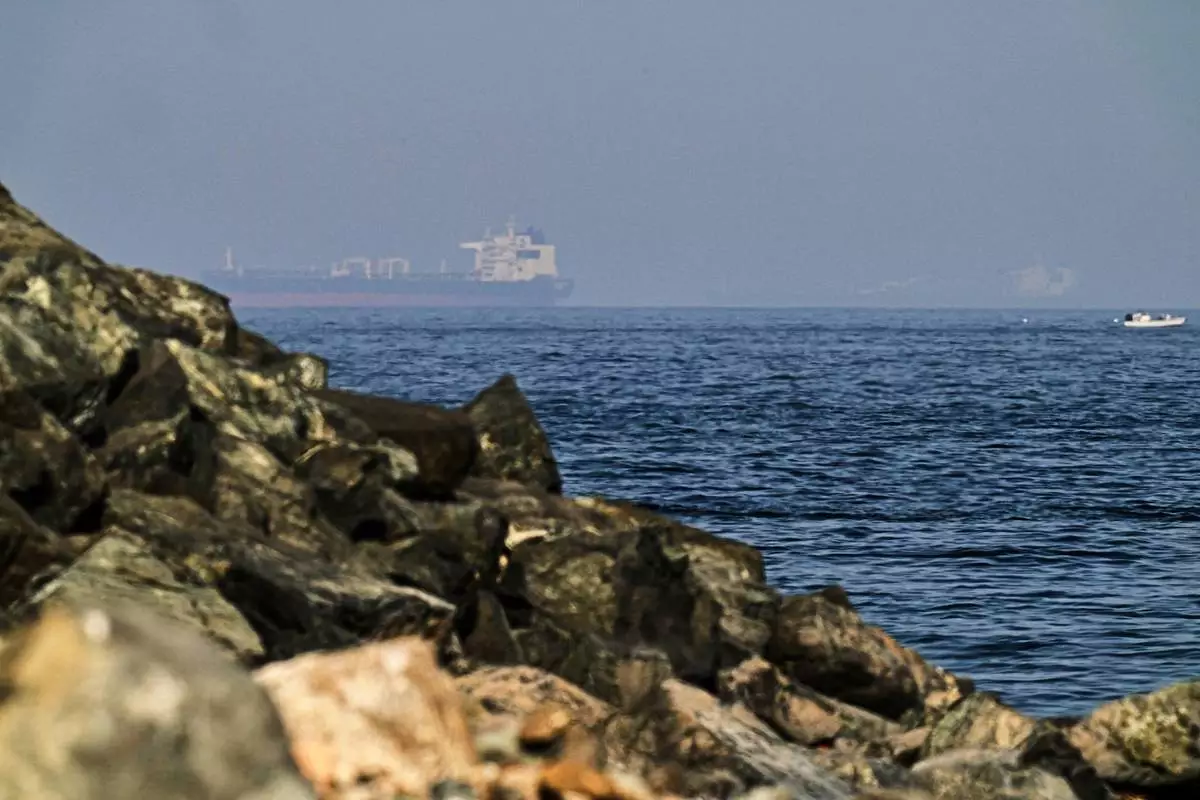
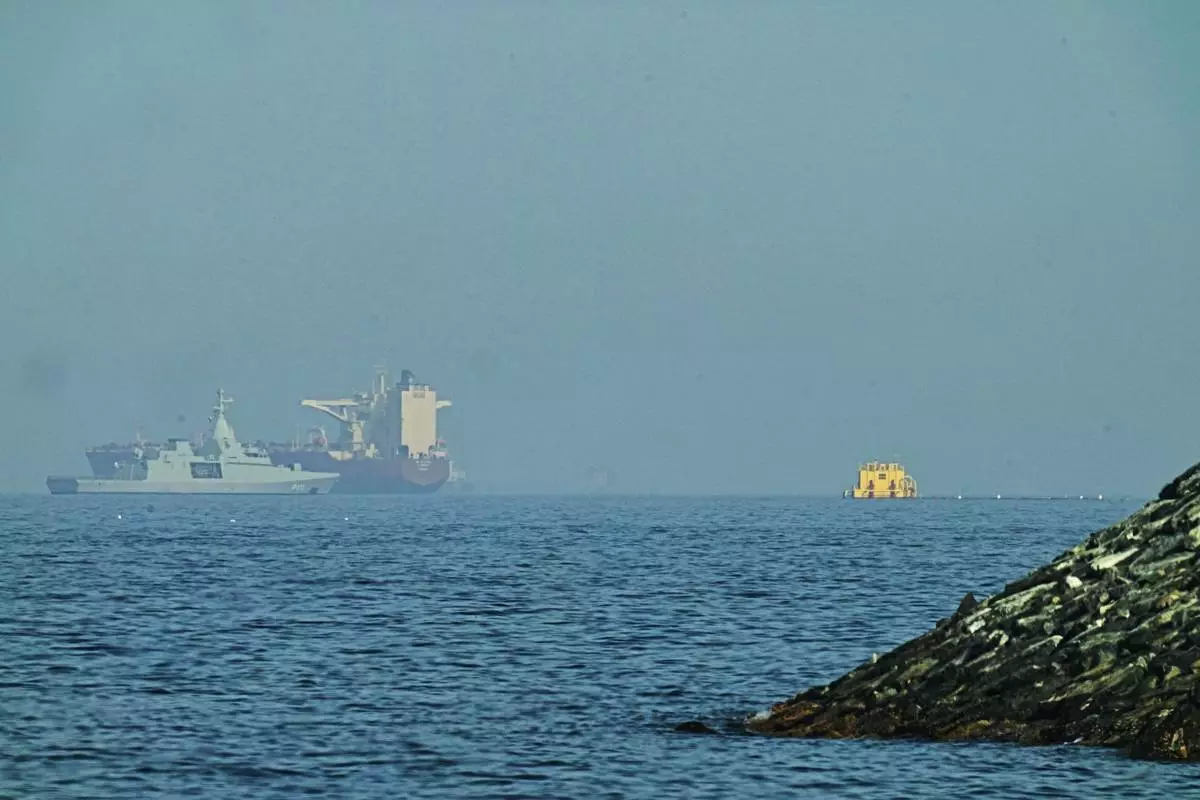
There is also uncertainty about what any military action could mean for the wider region. Tehran could retaliate against the American-allied nations of the Persian Gulf or Israel. Oil prices have risen in recent days in part due to those concerns, with benchmark Brent crude now about $70 a barrel. Iran in the last round of talks said it briefly halted traffic in the Strait of Hormuz, the narrow mouth of the Persian Gulf through which a fifth of all oil traded passes.

Satellite photos shot Tuesday and Wednesday by Planet Labs PBC and analyzed by the AP appeared to show that American vessels typically docked in Bahrain, the home of the U.S. Navy’s 5th Fleet, were all out at sea. The 5th Fleet referred questions to the U.S. military’s Central Command, which declined to comment. Before Iran’s attack on Qatar in June, the 5th Fleet similarly scattered its ships at sea to protect against a potential attack.

Gambrell reported from Dubai, United Arab Emirates, and Melanie Lidman from Jerusalem. Associated Press writer Will Weissert in Washington contributed to this report.

Vehicles drive past the Saint Sarkis church and a painting of the late Iranian revolutionary founder Ayatollah Khomeini in downtown Tehran, Iran, Wednesday, Feb. 25, 2026. (AP Photo/Vahid Salemi)

Vehicles drive past the Saint Sarkis church and a painting of the late Iranian revolutionary founder Ayatollah Khomeini in downtown Tehran, Iran, Wednesday, Feb. 25, 2026. (AP Photo/Vahid Salemi)

A woman walks past a painting on the wall of a girls school at Enqelab-e-Eslami, or Islamic Revolution, street in downtown Tehran, Iran, Wednesday, Feb. 25, 2026. (AP Photo/Vahid Salemi)

A woman walks past a painting on the wall of a girls school at Enqelab-e-Eslami, or Islamic Revolution, street in downtown Tehran, Iran, Wednesday, Feb. 25, 2026. (AP Photo/Vahid Salemi)

Commuters drive past Saint Sarkis church and a mural of the late Iranian revolutionary founder Ayatollah Khomeini in downtown Tehran, Iran, Wednesday, Feb. 25, 2026. (AP Photo/Vahid Salemi)

Commuters drive past Saint Sarkis church and a mural of the late Iranian revolutionary founder Ayatollah Khomeini in downtown Tehran, Iran, Wednesday, Feb. 25, 2026. (AP Photo/Vahid Salemi)

Recommended Articles